
 01
01 How thin it has to be
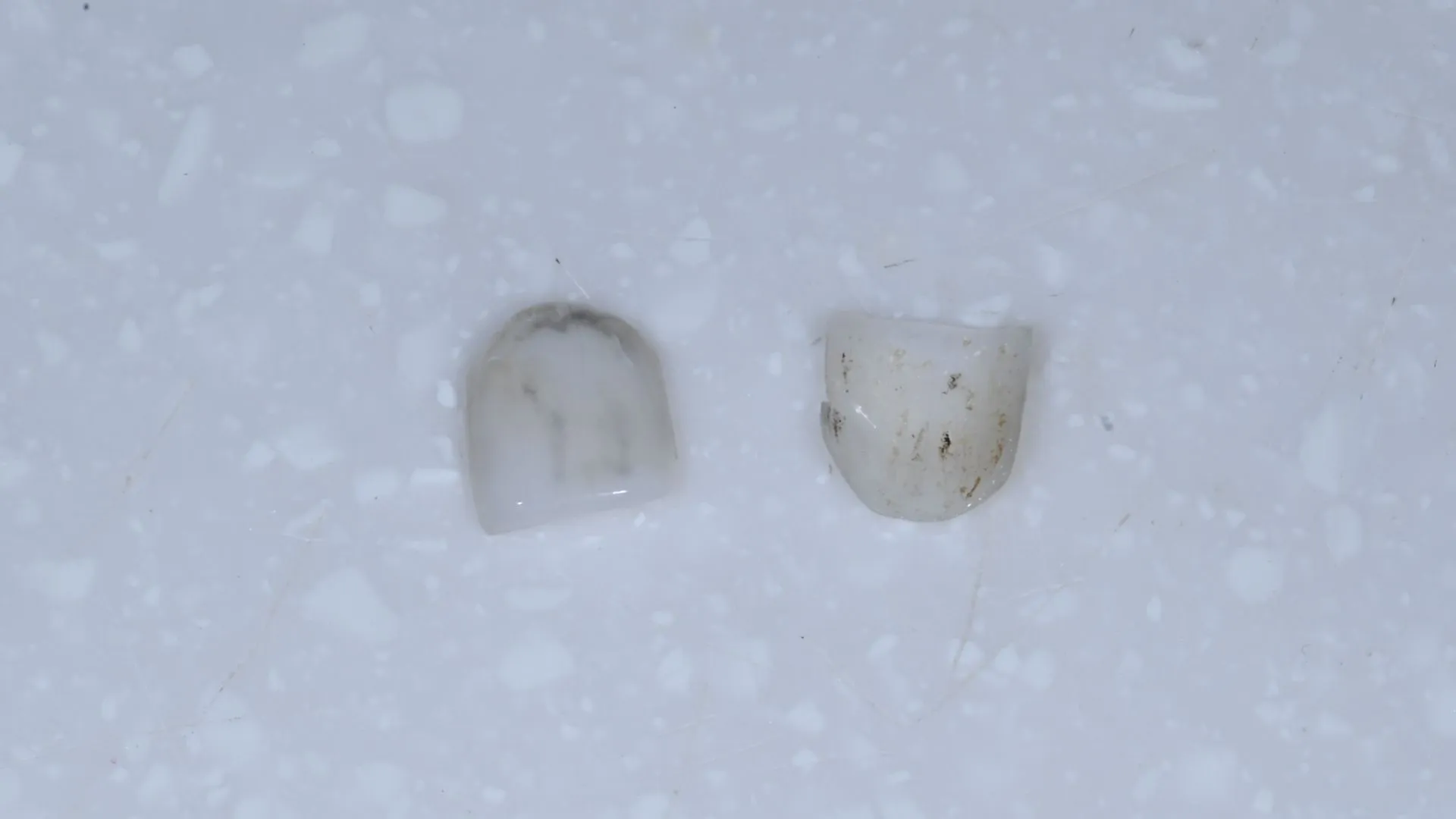
The closer to no-prep, the more you need a material that can be made very thin. Without thickness to spare, options narrow.
Materials
“I’d like e.max” is something we hear often. But material is not chosen by brand — it is chosen by the thickness and translucency that particular tooth needs. What you gain and what you give up differs with each.
 PORCELAIN VENEER
 The Trade-off
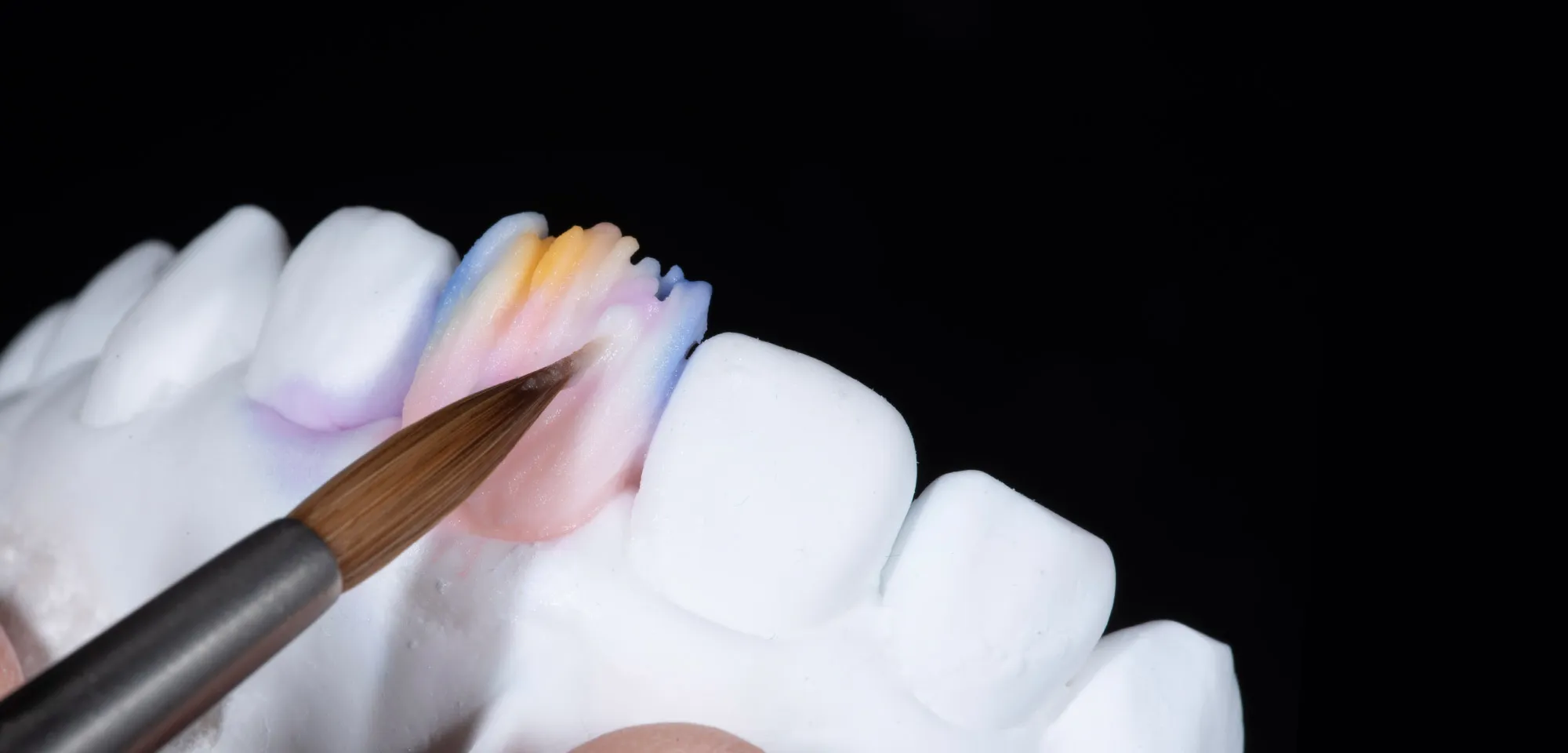
The more crystalline a ceramic is, the stronger it is; the less crystalline, the more light passes through. Raise the strength and translucency falls; keep the translucency and there is a limit to how thin it can go. No material is simply superior — the answer depends on how thin this tooth needs to be, how dark the substrate is, and how heavy the bite is.
Side by Side
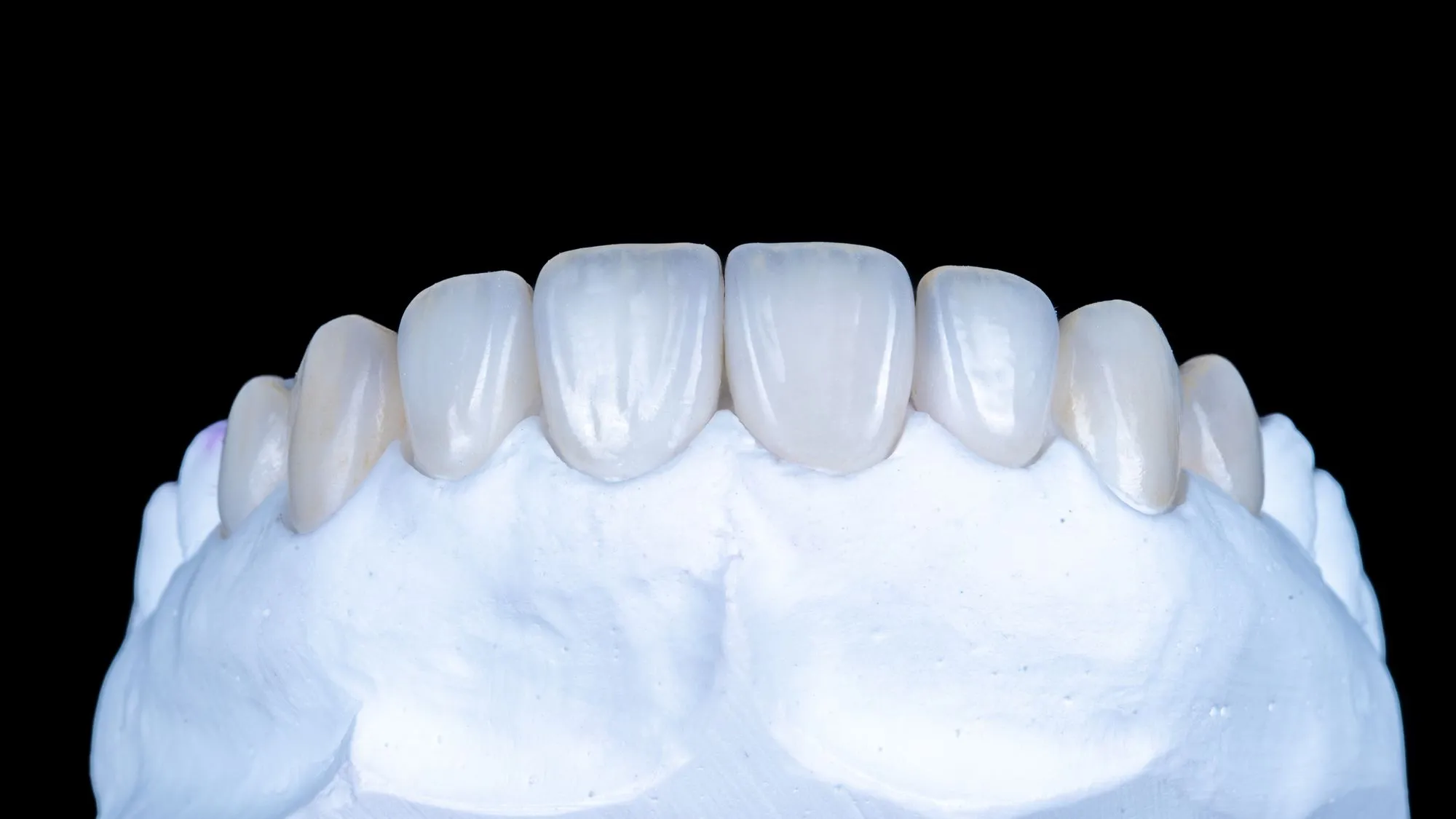
The materials actually used or commonly asked about for veneers.
| Material | Character | Where it is used |
|---|---|---|
| Feldspathic porcelain | Most natural translucency, can go very thin | Bright substrate, minimal reduction |
| Glass-ceramic (lithium disilicate) | Balance of translucency and strength | Most anterior veneers |
| Zirconia | Strongest, but transmits less light | High-load posterior work and crowns |
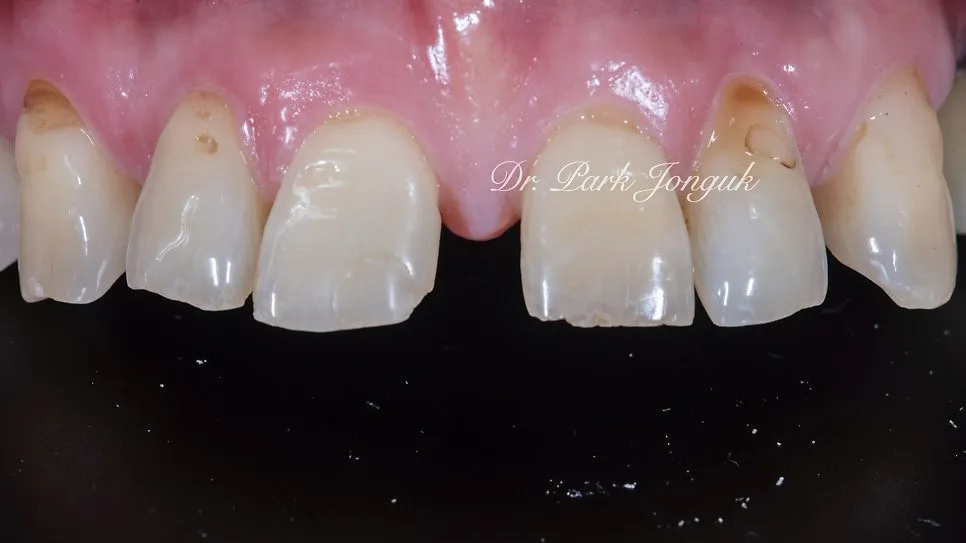
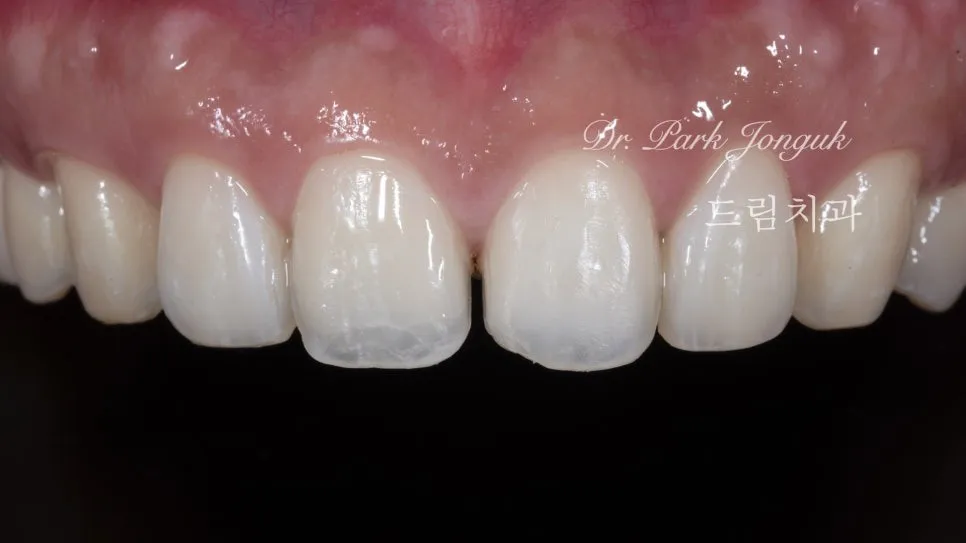
BEFORE / AFTER
Real veneer cases treated by Dr. Park Jonguk at Dream Dental Clinic, Gangnam. Tap a photo to compare before and after up close.
The before-and-after photos above are real clinical cases treated at Dream Dental Clinic, Gangnam (Dr. Park Jonguk). Results vary with each patient’s condition, and every procedure carries the possibility of individual variation and side effects.
Evidence
A systematic review pooling thirteen studies reported figures separated by material. You can read the numbers directly below.
Meta-analysis of 13 studies — 89% cumulative survival (median follow-up 9 years)
Glass-ceramic reached 94% and feldspathic porcelain 87%; complications were fracture/chipping 4%, debonding 2%, severe discoloration 2%, and secondary caries 1%.
Morimoto S, Albanesi RB, Sesma N, Agra CM, Braga MM. Main Clinical Outcomes of Feldspathic Porcelain and Glass-Ceramic Laminate Veneers: A Systematic Review and Meta-Analysis of Survival and Complication Rates. Int J Prosthodont. 2016;29(1):38-49. PMID 26757327
Estimated survival 82.9% at 20 years (94.4% at 5, 93.5% at 10)
318 veneers in 84 patients, mean follow-up 118 months. Ceramic fracture accounted for 44.8% of failures, and existing parafunction such as bruxism carried a 7.7-times greater risk of failure.
Beier US, Kapferer I, Burtscher D, Dumfahrt H. Clinical performance of porcelain laminate veneers for up to 20 years. Int J Prosthodont. 2012;25(1):79-85. PMID 22259802
Preparations confined to enamel survived at 99% — dentin exposure raised failure risk about tenfold
580 veneers followed for up to 12 years gave 86% overall survival, and 94% when only the margins remained in enamel — what mattered was where the preparation stopped, not merely how much was removed.
Gurel G, Sesma N, Calamita MA, Coachman C, Morimoto S. Influence of enamel preservation on failure rates of porcelain laminate veneers. Int J Periodontics Restorative Dent. 2013;33(1):31-9. PMID 23342345
These figures are general clinical outcomes reported in the academic literature. They are not our clinic’s own results and do not guarantee an individual outcome — your course depends on your teeth, bite, and habits.
What Decides It
Not the brand — these four conditions.
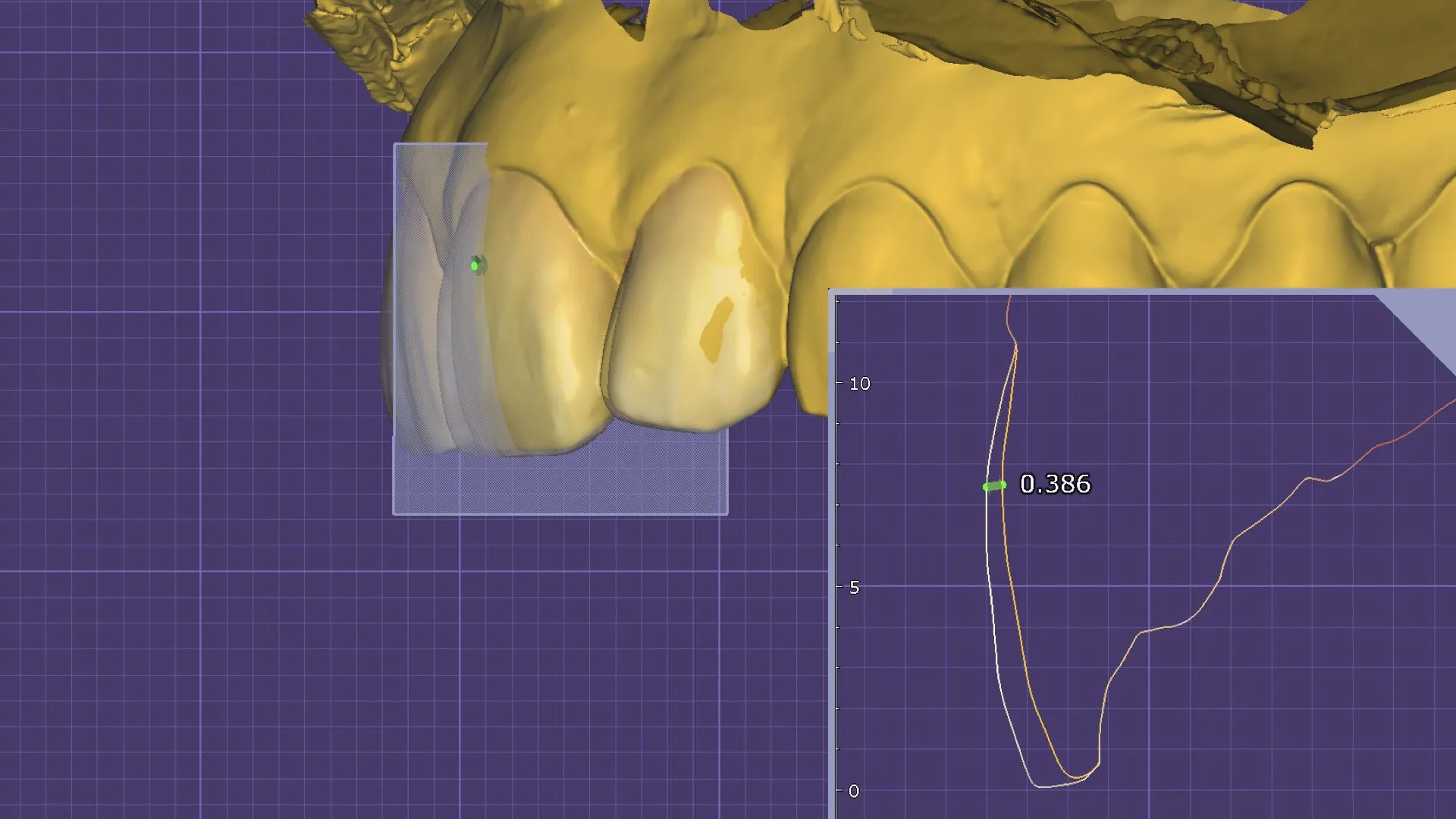
01 The closer to no-prep, the more you need a material that can be made very thin. Without thickness to spare, options narrow.
 02
02 Masking a dark tooth needs either a less translucent material or a thicker layer. A highly translucent ceramic will let it show through.
 03
03 A habit of tearing with the incisal edge, or grinding, changes both thickness and material.
 04
04 Glass-based ceramics etch and silanate reliably. Zirconia bonds differently, which is why it is rarely used for thin veneers.
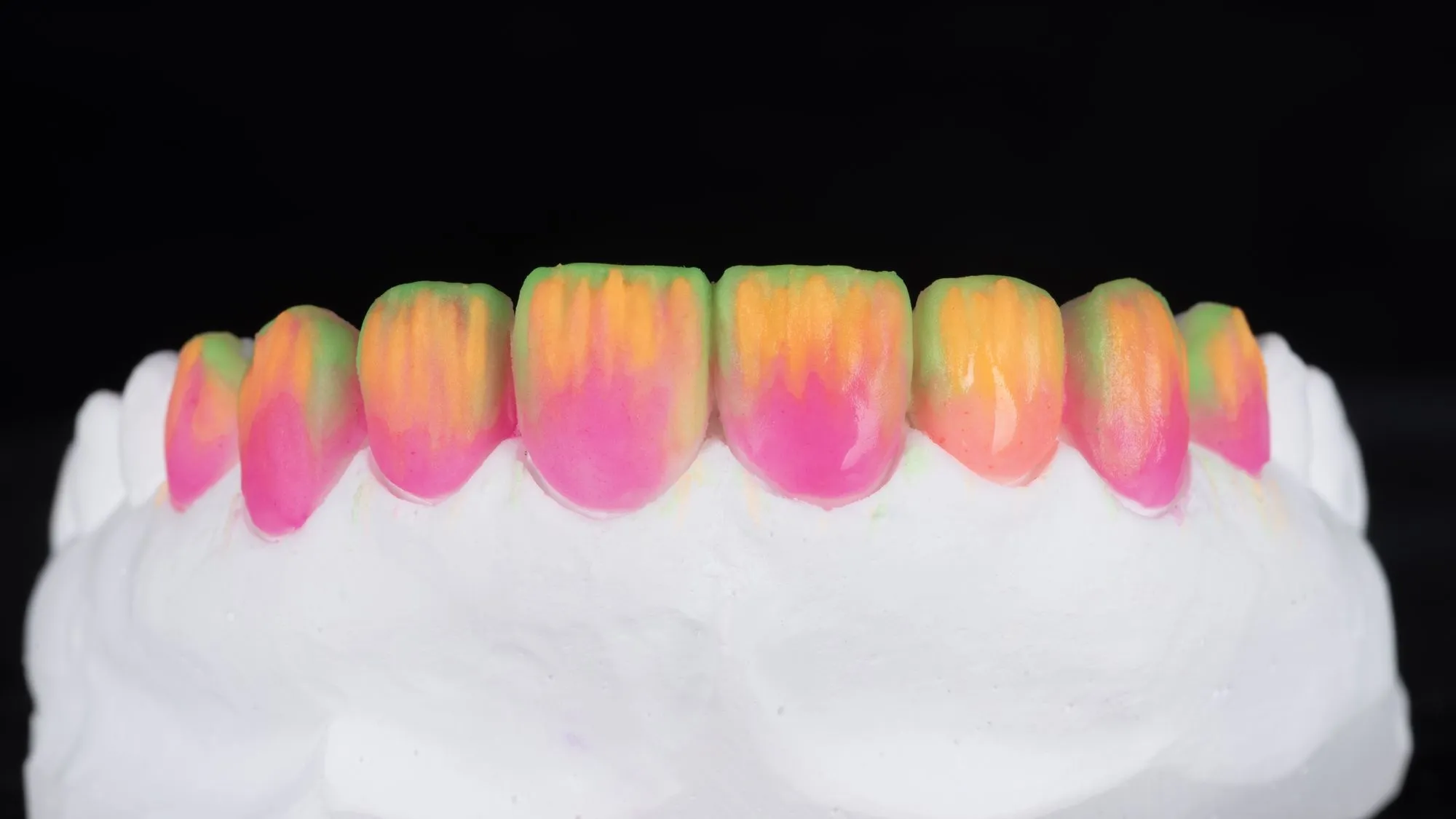
{ Material is decided by the thickness the tooth needs, not by the brand name. }
Common Myths
Things we frequently find ourselves correcting in consultation.
How We Choose
We do not pick a material and then fit the tooth to it. It runs the other way.
Measure the substrate shade
How much darkness has to be masked is the starting point for material and thickness.
Calculate the thickness the target form needs
A 3D scan tells us how many millimetres are needed per area.
Check occlusion and habits
Where load falls, we change either thickness or material.
Look at bonding conditions
Where enamel remains, the advantage of glass-based ceramics grows.
It can differ tooth by tooth
Even across one person’s front teeth, different positions sometimes call for different choices.
Quick Consult
Leave your number and we will call you back during clinic hours.
Request Received
We will contact you during clinic hours. For urgent matters, please call +82-2-3448-0028.
The available range depends on your condition. Feel free to ask us.
FAQ
Glass-ceramic balances translucency and strength well, which is why it is widely used for anterior veneers. It is more accurate to say it suits most conditions than to call it best.
They are possible, but rarely chosen for thin anterior veneers. Zirconia transmits less light, which costs naturalness, and it bonds differently from glass-based ceramics.
Its strength is relatively lower, but it can be made very thin and its translucency is excellent. It has a long record in the literature with reported survival, and we select it when the conditions suit.
Tell us your preference and we will take it into account. If the condition of the tooth does not suit that material, we explain why and suggest another.
Our published fee is KRW 1,300,000 per veneer (VAT excluded) regardless of material. We do not charge a supplement for one material over another.
Dental ceramics are metal-free inorganic materials and allergic reactions are rare. Reactions to adhesives or existing restorations do occur, so please tell us your history in advance.
Related
This page is general information about the treatment. Diagnosis, treatment options, and duration vary by individual condition — an in-person examination is how we plan your actual care.
Articles
How the same topic is judged chairside, written up with real cases.
Once the substrate shade and required thickness are measured, the options usually narrow on their own. We explain them alongside the measurements.