
Size, shape, and shade
The whole tooth is rebuilt in a new form, so changes can be planned on a scale surface-bonded veneers can’t reach.
All-Ceramic Crowns
Unlike laminate veneers bonded to the front surface, an all-ceramic crown covers the entire tooth. It is the choice when a tooth needs full restoration — and when you want its size, shape, and shade improved together. It is also widely used for crowns after root canal treatment.
 ESTHETIC CARE
 All-Ceramic Crown
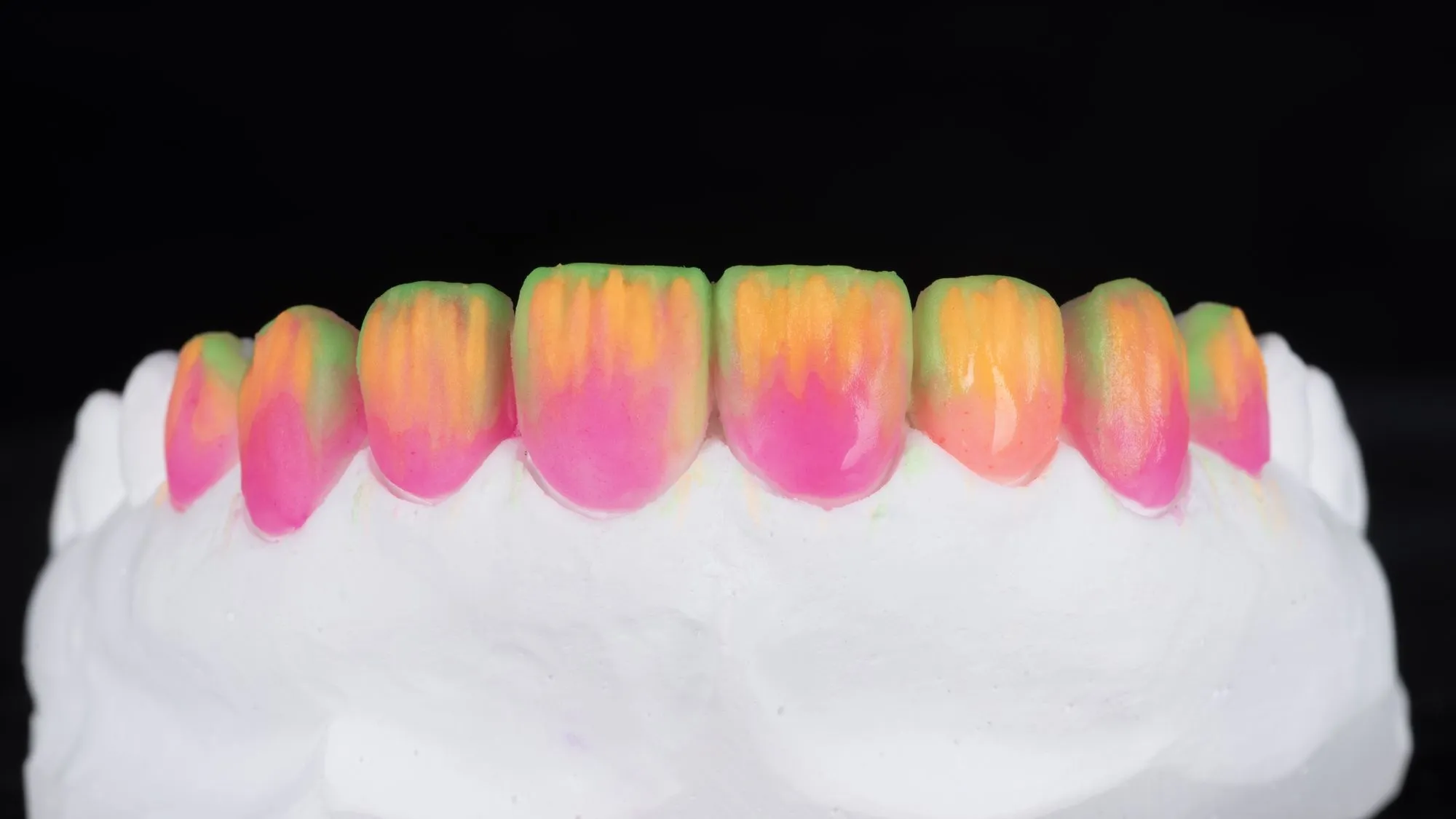
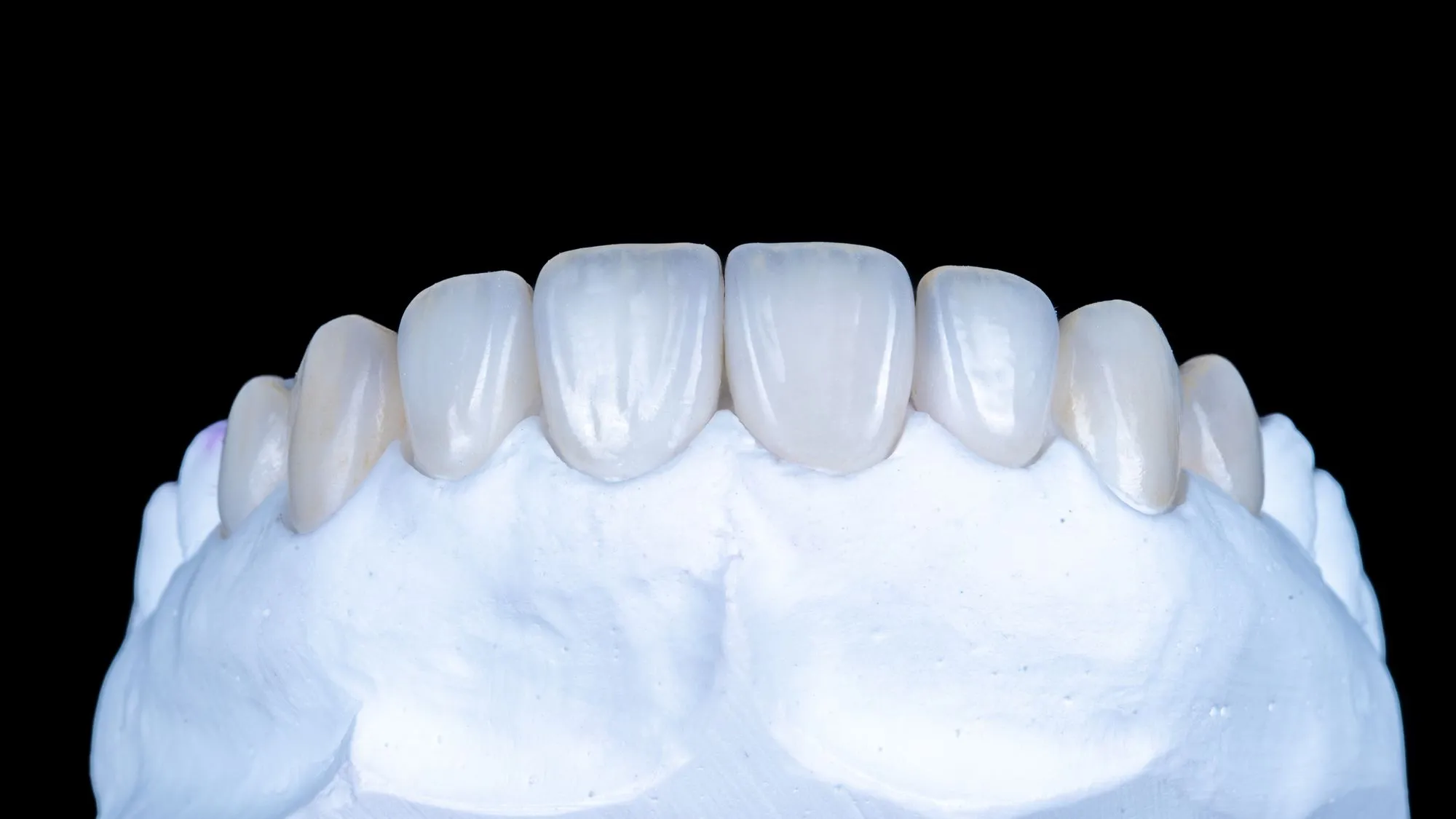
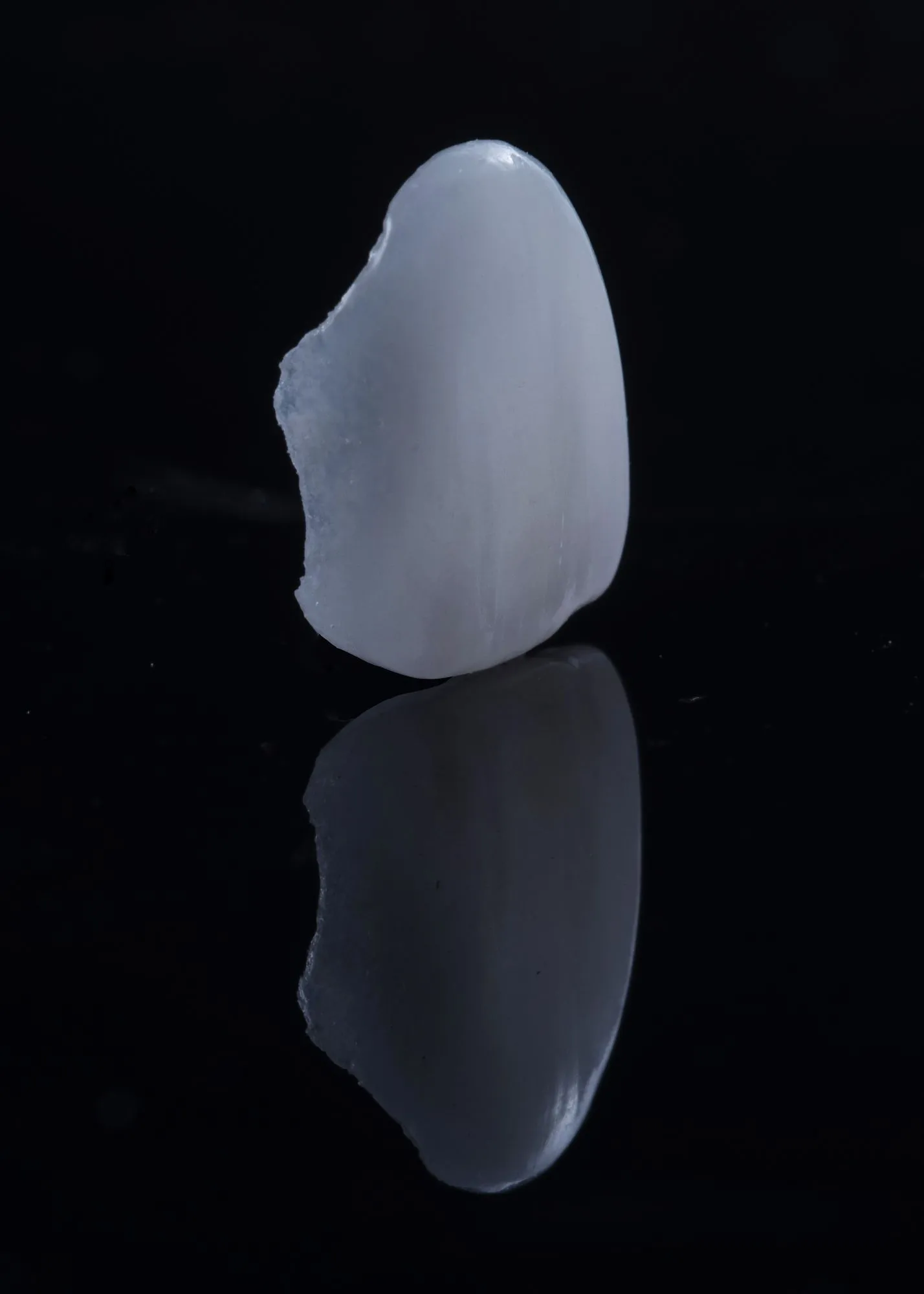
A crown made entirely of ceramic, with no metal, that caps the whole tooth. Where a laminate veneer bonds to the front surface, an all-ceramic crown wraps the tooth completely — which is why it can change size, shape, and shade on a much broader scale.
Dream Point
Because the crown covers the entire tooth, far more varied changes in size and shape become possible than with surface bonding.
The whole tooth is rebuilt in a new form, so changes can be planned on a scale surface-bonded veneers can’t reach.
Recreating the natural color and translucency of teeth is treated as central to a natural-looking result.
Widely used to wrap and protect teeth that have completed root canal treatment.
Where needed, you can expect an improvement in alignment similar to what orthodontic treatment achieves.
Indications
If any of these sound familiar, it’s worth reviewing all-ceramic options at your check-up.
Laminate vs All-Ceramic
A veneer bonds to the surface; a crown wraps the whole tooth. The trimming involved and the range of change differ accordingly.
| Laminate veneer | All-ceramic crown | |
|---|---|---|
| How it restores | Bonded thinly to the front of the tooth | Covers the entire tooth |
| Tooth reduction | Light reshaping of the surface enamel | Reduction from enamel into dentin |
| What can change | Shape and shade | Size, shape, and shade — all three |
An all-ceramic crown allows more change — and calls for more tooth reduction in return. That reach is why it’s sometimes chosen as one way to improve alignment, and as another route to a whole new look for your teeth.
PFM vs All-Ceramic
Front-tooth crowns were long made as PFM — a thin porcelain layer over a metal core. The structural difference between the two shows in the color and at the gum line.
| PFM (metal-ceramic) | All-ceramic | |
|---|---|---|
| Structure | Porcelain layered over a metal core | Ceramic throughout, no metal |
| Color | The metal inside can show through with a dull, grayish cast | Color and translucency close to natural teeth |
| Over time | Staining can appear near the gums; a metal line may show if gums recede | No metal, so staining and exposed metal lines are less of a concern |
Process
Diagnosis & planning
Remaining tooth structure and nerve status decide whether a crown is right — or whether something more conservative still works.
Preparation & provisional
The tooth is shaped for the crown and a provisional keeps looks and function until completion.
Shade design
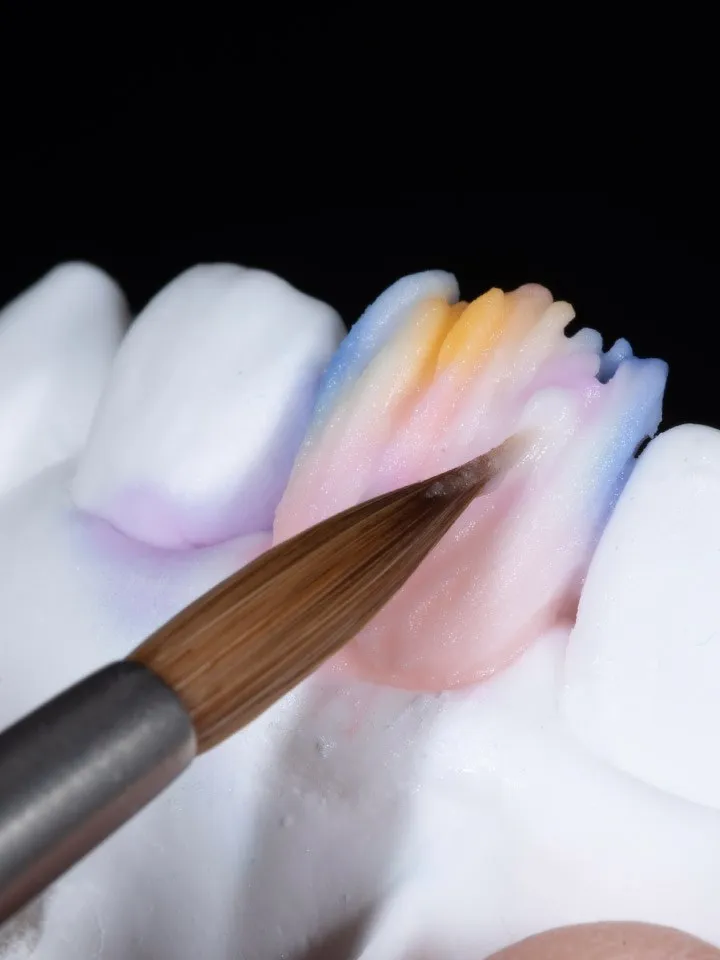
Neighboring shade and translucency are recorded and designed to the same standard as our veneers.
Try-in & bonding
The finished crown is verified at try-in, then precisely bonded.
Bite adjustment & check-up
Occlusion is tuned and care routines explained.
Quick Consult
Leave your number and we will call you back during clinic hours.
Request Received
We will contact you during clinic hours. For urgent matters, please call +82-2-3448-0028.
The available range depends on your condition. Feel free to ask us.
FAQ
The deciding factor is how much healthy tooth remains. A sound tooth needing front-surface improvement points to the more conservative veneer; a root-canal-treated tooth or one with extensive damage or decay points to a crown that wraps and protects it. We always start from the more conservative option.
A tooth without its nerve loses internal moisture and grows brittle over time. When damage is extensive, wrapping it in a crown is the recommended way to protect what remains for the long term.
Modern ceramics — zirconia, lithium disilicate — are strong enough for everyday function in most cases. We choose the material for the position and bite force involved, and adjust the occlusion to manage fracture risk.
Yes — our anterior all-ceramic crowns are designed to the same aesthetic standard as our veneers. With no metal, no dark line shows at the gums, and layered ceramics recreate the depth of a natural tooth.
The disclosed fees are KRW 1,300,000 for an anterior all-ceramic crown and KRW 700,000 for a ceramic crown (as of 2026). Scope can vary with tooth condition; the exact figure is confirmed after diagnosis.
Two visits as a rule: one for preparation and the provisional, one for try-in and bonding. A provisional carries you comfortably through the fabrication days, and if root canal treatment comes first, that time is added.
Zirconia’s strength suits load-bearing positions like molars; lithium disilicate’s translucency suits aesthetic front teeth. We choose by position, bite force, and shade requirements — and explain the reasoning.
Brush and floss as with natural teeth, paying special attention to the margin where crown meets gum — that is what decides its lifespan. Avoid chewing ice, and have the bite and margins reviewed at regular check-ups.
Yes — replacing a PFM whose metal line shows at the gums or has stained is one of the most common requests. The old crown is removed, tooth and gum condition assessed, any needed treatment completed, and the new crown made.
Ceramic barely changes color, so coffee and tea are little threat. Margins and neighboring natural teeth can still shift over the years, which may create a mismatch — if you plan to whiten, do it before the crown is made.
Provisionals are temporarily cemented, so sticky foods (caramel, gum) can pull them off and hard foods can crack them — chew on the other side. If one comes off or breaks, it is not an emergency; keep it and come in for re-cementing.
The crown cannot decay, but caries can start at the margin where crown meets tooth. That is why margin brushing and flossing matter — and why check-ups catch margin problems while they are still small.
It varies with bite, habits, and margin care, but a well-designed, well-bonded crown often serves beyond a decade. Regular check-ups on the occlusion and margins are the foundation of protecting that span.
Yes — the rule is the same: shade and form are confirmed in your mouth and bonded only after your approval. A single front-tooth crown lives or dies by its match to the neighbors, so the try-in is checked all the more carefully.
This page is general information about the treatment. Diagnosis, treatment options, and duration vary by individual condition — an in-person examination is how we plan your actual care.
Whether a tooth needs full restoration or you want its size, shape, and shade changed, we’ll examine first and guide you to what fits. Reception until 5:30 pm weekdays, 12:30 pm Saturdays.