
The natural teeth seen alongside
If only four front teeth are treated, the canine beside them becomes the reference. Go much brighter than it and the junction shows.
Shade and tone
“Give me the brightest shade.” We hear it often. But shade is not decided by brightness alone. How translucent it is, what light you are standing in, and the colour of the neighbouring teeth and gums all act together.
 PORCELAIN VENEER
 Three Axes
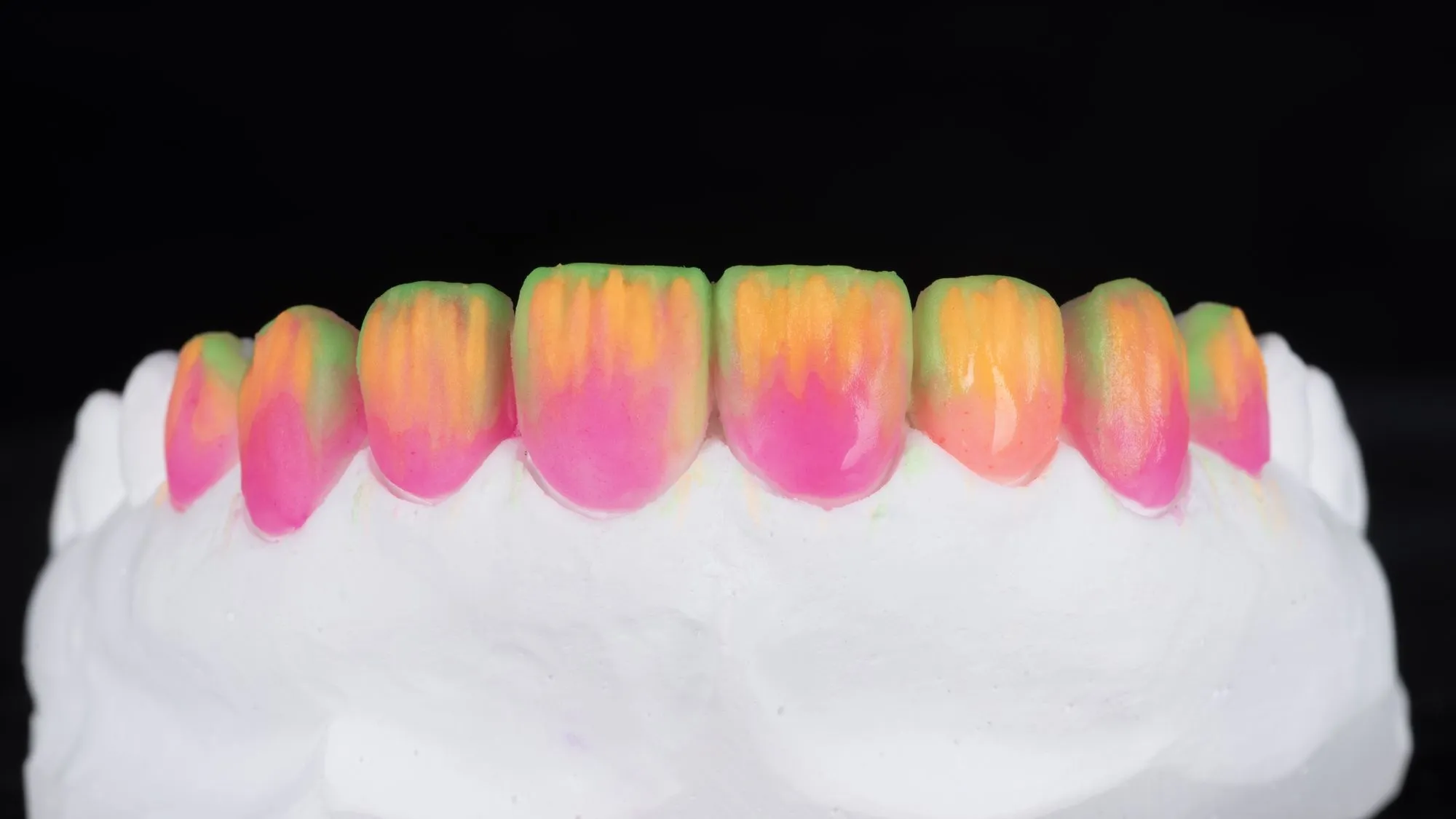
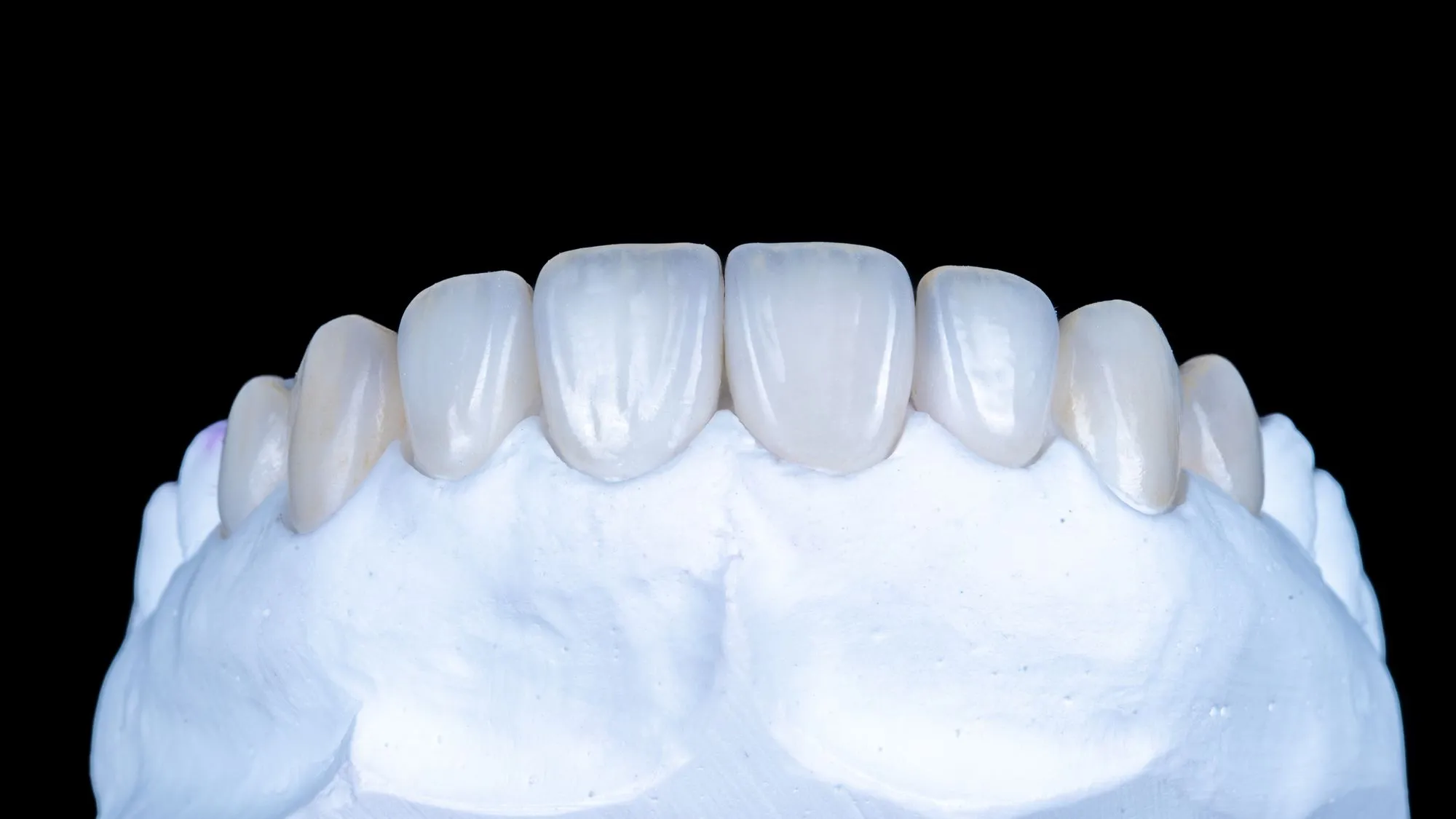
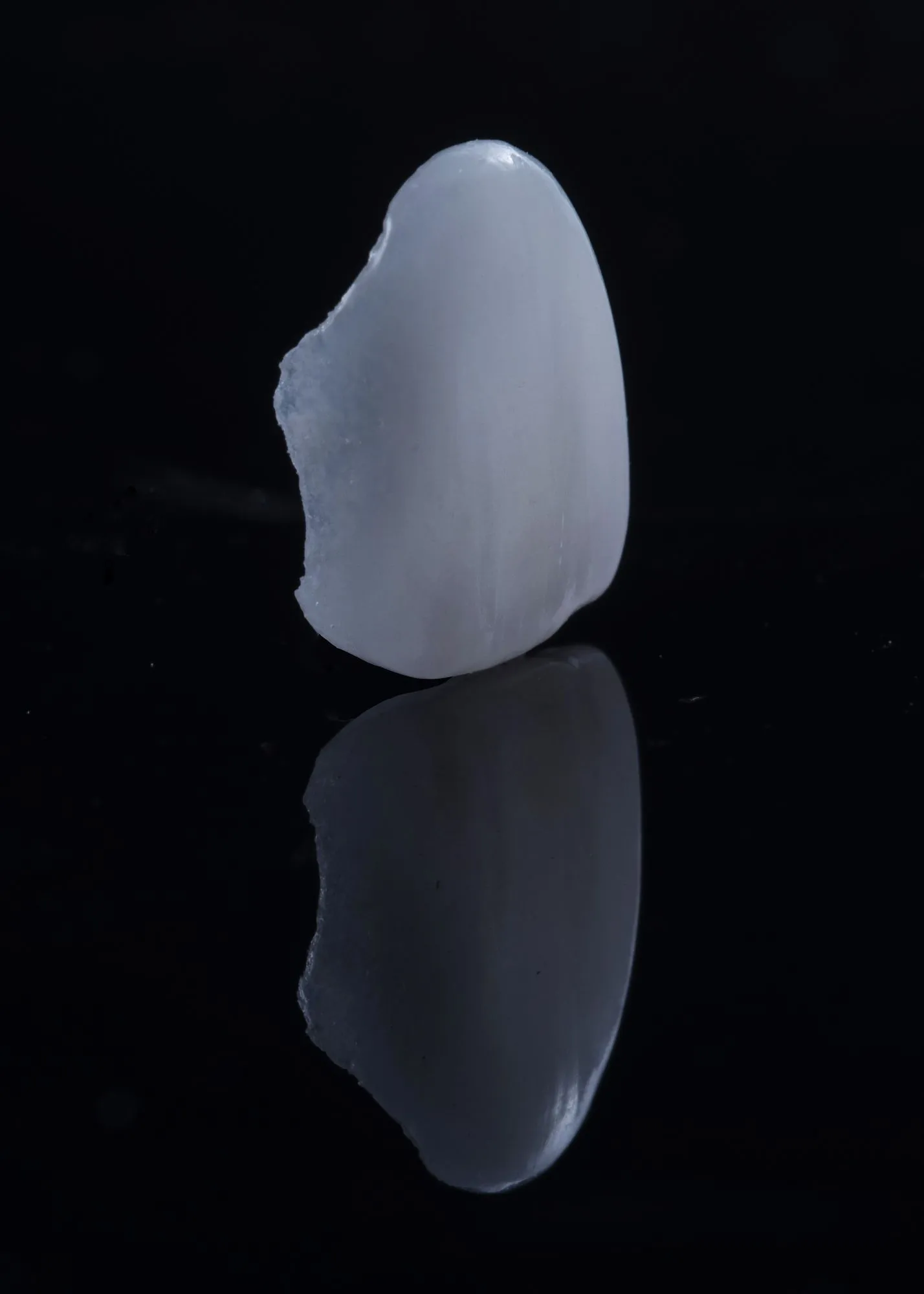
Tooth colour is made of brightness (value), the yellow-red content (chroma), and how much light passes through (translucency). Shade-guide codes such as A1 or B1 describe only the first two. What usually decides whether a result reads as natural is the third. A uniform white with nothing showing through looks applied, however bright; a shade whose incisal edge lets a little light through reads as natural even when it is bright.
What Decides It
Choosing a shade by looking only at the tooth is how results end up looking off. We look at all of this.
If only four front teeth are treated, the canine beside them becomes the reference. Go much brighter than it and the junction shows.
The same shade reads brighter against redder gums or darker skin. It has to be judged within the face.
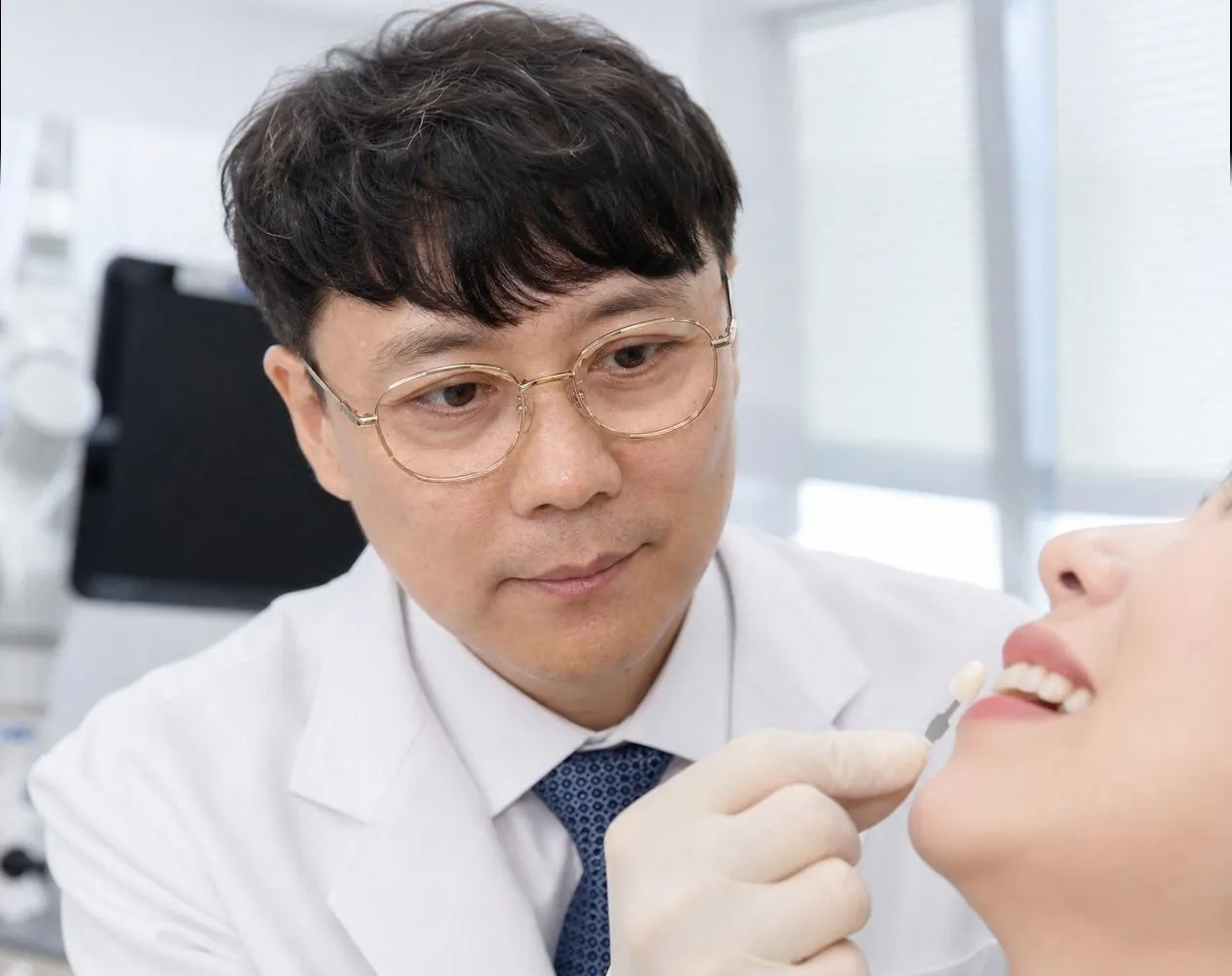
Surgery light, fluorescent light, daylight and camera flash all render colour differently. We check under several.
The thinner the veneer, the more the tooth beneath shows through. A dark substrate changes the thickness or material needed to reach a bright shade.
BEFORE / AFTER
Real veneer cases treated by Dr. Park Jonguk at Dream Dental Clinic, Gangnam. Tap a photo to compare before and after up close.
The before-and-after photos above are real clinical cases treated at Dream Dental Clinic, Gangnam (Dr. Park Jonguk). Results vary with each patient’s condition, and every procedure carries the possibility of individual variation and side effects.
Choosing
There is no single answer, but the options divide roughly like this.
| Direction | Suits | Watch for |
|---|---|---|
| One step brighter than natural | Treating only part of the arch | Translucency must match so the junction hides |
| Bright but translucent | Treating the whole front line | Some variation between lighting conditions |
| Uniformly very bright | Stage or camera work, a clear purpose | Can look artificial at close range |
| Identical to natural teeth | Restoring only one or two teeth | A gap appears if the natural teeth darken later |
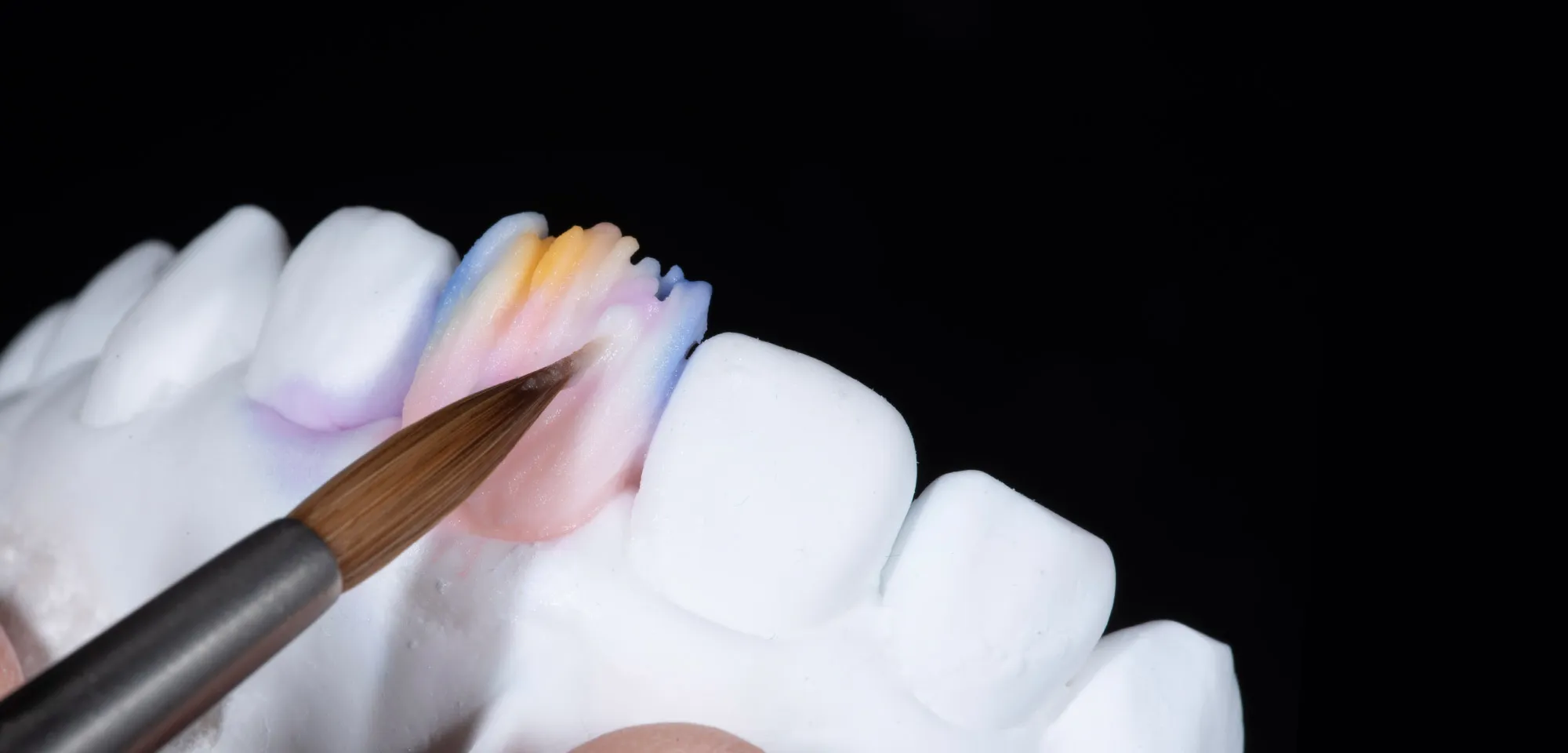
{ Translucency, more than brightness, is what makes a result look natural. }
Process
Shade is not chosen hurriedly at the end; it is checked from early in the design.
Record the baseline
We document the existing tooth colour with a shade guide and photographs.
Decide whether to whiten first
Brightening the surrounding natural teeth first widens the range of shades available.
View the target in simulation
Brightness and translucency are compared over your own facial photograph.
Try-in under real lighting
The restorations are placed temporarily and checked under several light sources.
Adjust in our in-house laboratory
If the shade is off, layers are corrected on site and checked again.
Keeping It
The ceramic itself does not stain. Everything around it, however, changes.
Evidence
Seeing how often colour-related problems are actually reported makes clear where attention belongs.
Meta-analysis of 13 studies — 89% cumulative survival (median follow-up 9 years)
Glass-ceramic reached 94% and feldspathic porcelain 87%; complications were fracture/chipping 4%, debonding 2%, severe discoloration 2%, and secondary caries 1%.
Morimoto S, Albanesi RB, Sesma N, Agra CM, Braga MM. Main Clinical Outcomes of Feldspathic Porcelain and Glass-Ceramic Laminate Veneers: A Systematic Review and Meta-Analysis of Survival and Complication Rates. Int J Prosthodont. 2016;29(1):38-49. PMID 26757327
Cumulative survival 93% at 10–11 years (96% at 5–6, 91% at 12–13)
A prospective series of 304 veneers placed by a single prosthodontist, with at least 80% of each preparation in enamel; failures were esthetic in 31% and mechanical in 31%.
Layton D, Walton T. An up to 16-year prospective study of 304 porcelain veneers. Int J Prosthodont. 2007;20(4):389-96. PMID 17695870
Estimated survival 82.9% at 20 years (94.4% at 5, 93.5% at 10)
318 veneers in 84 patients, mean follow-up 118 months. Ceramic fracture accounted for 44.8% of failures, and existing parafunction such as bruxism carried a 7.7-times greater risk of failure.
Beier US, Kapferer I, Burtscher D, Dumfahrt H. Clinical performance of porcelain laminate veneers for up to 20 years. Int J Prosthodont. 2012;25(1):79-85. PMID 22259802
These figures are general clinical outcomes reported in the academic literature. They are not our clinic’s own results and do not guarantee an individual outcome — your course depends on your teeth, bite, and habits.
Quick Consult
Leave your number and we will call you back during clinic hours.
Request Received
We will contact you during clinic hours. For urgent matters, please call +82-2-3448-0028.
The available range depends on your condition. Feel free to ask us.
FAQ
You can. But a large step away from the neighbouring natural teeth makes the junction visible. Brightening the whole line, or easing the brightness slightly while raising translucency, reads more naturally.
The ceramic itself does not stain. The bond line and the adjacent natural teeth can change, though, so the overall impression may shift.
If only part of the arch is being veneered, usually yes. Bringing the natural teeth to the brightness you want and then matching to it reduces the problem of the natural teeth darkening alone later.
Polishing can restore gloss, but the colour itself cannot be changed. Changing shade means remaking, which is why we check thoroughly at try-in.
Flash exaggerates surface reflection and renders teeth brighter and flatter than they are. If you are photographed often, we design with a little more translucency to account for it.
That is in fact what looks natural. In natural dentition the canine is slightly deeper than the central incisor, and the incisal edge is more translucent. We reproduce these differences deliberately.
This page is general information about the treatment. Diagnosis, treatment options, and duration vary by individual condition — an in-person examination is how we plan your actual care.
Articles
How the same topic is judged chairside, written up with real cases.
A shade code alone does not settle it. We look at it within your face and under real light, together.