
 01
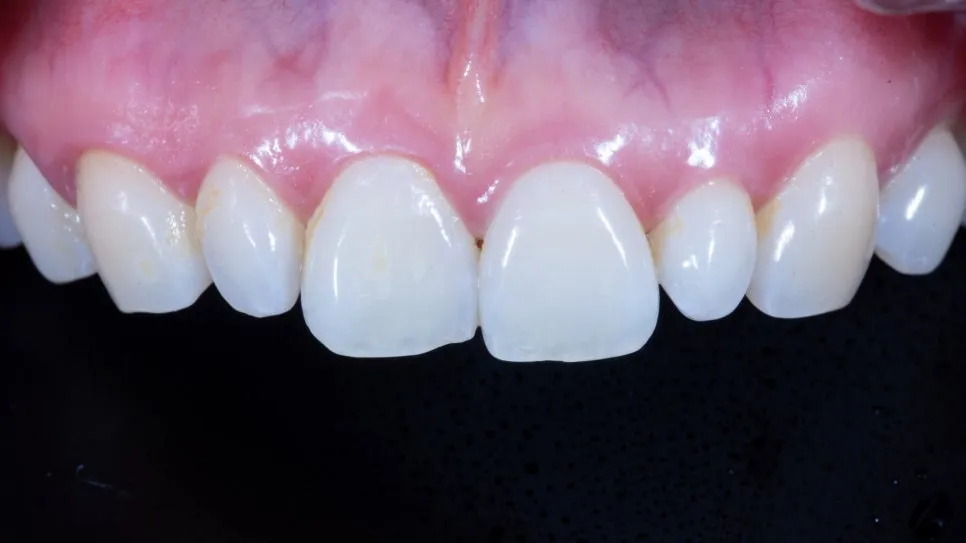
01 Extrinsic staining (surface)
Coffee, tea, wine, and smoking stains on the surface — often improved by cleaning and bleaching, which we consider before veneers.
Discolored Teeth
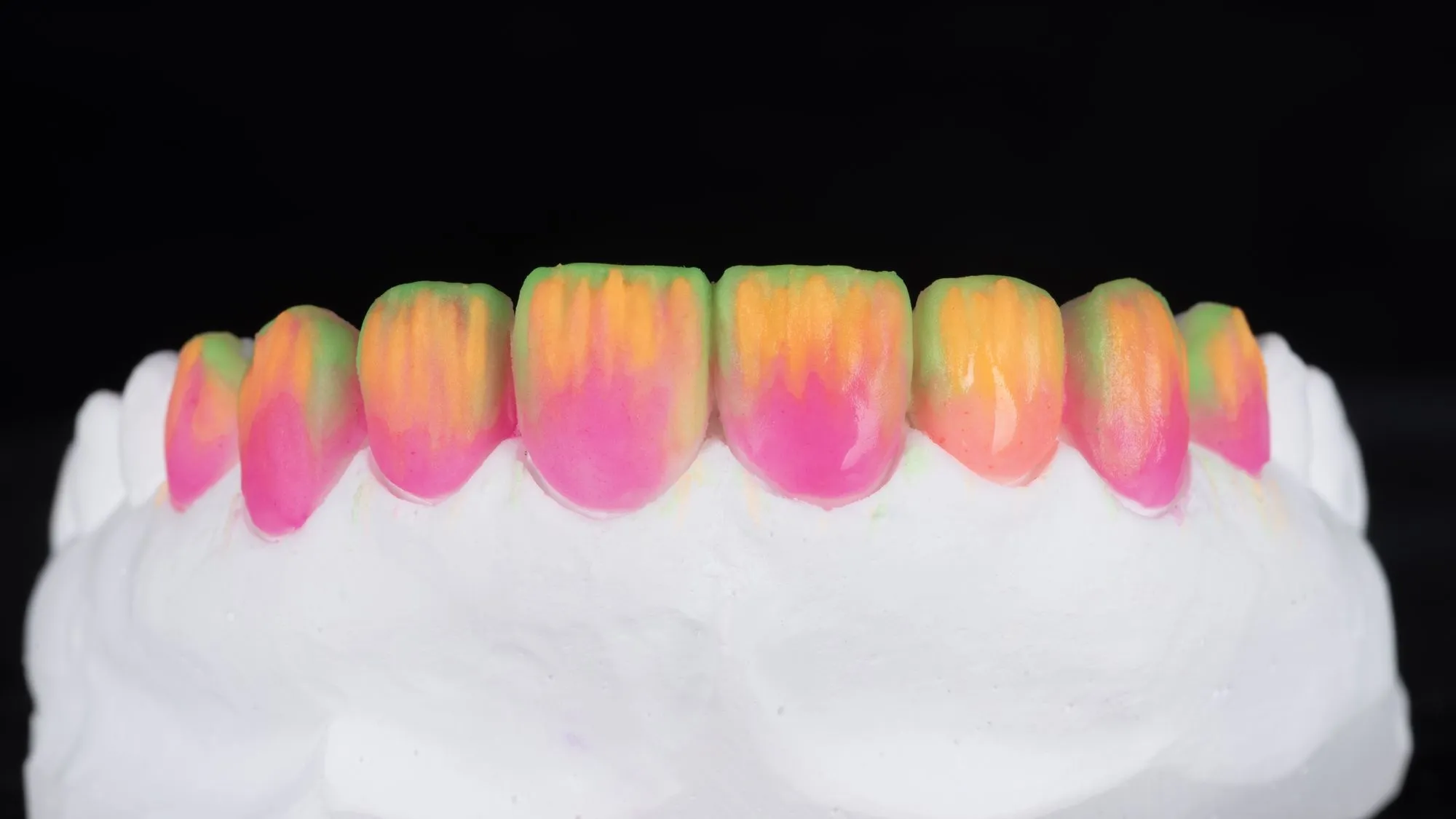
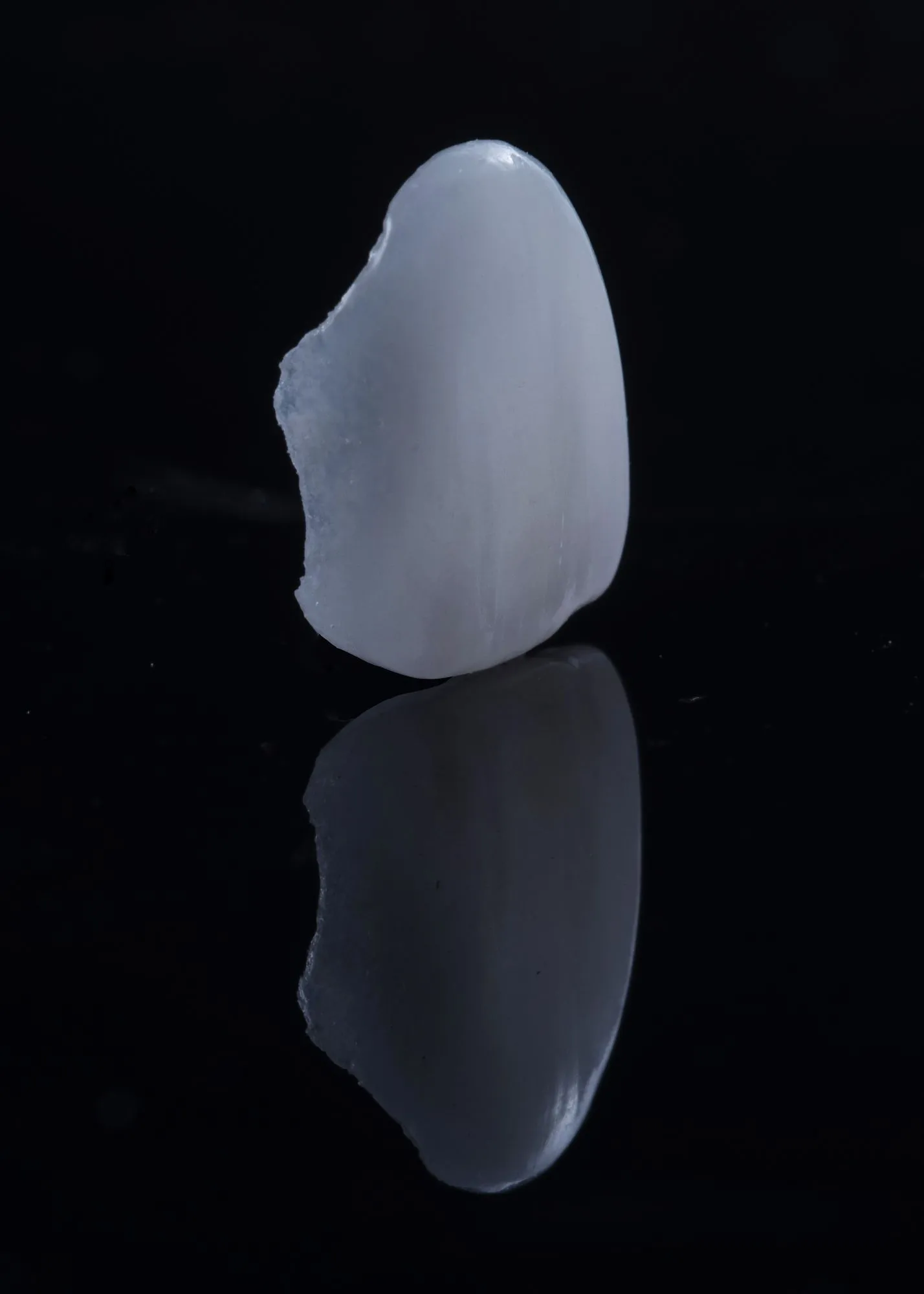
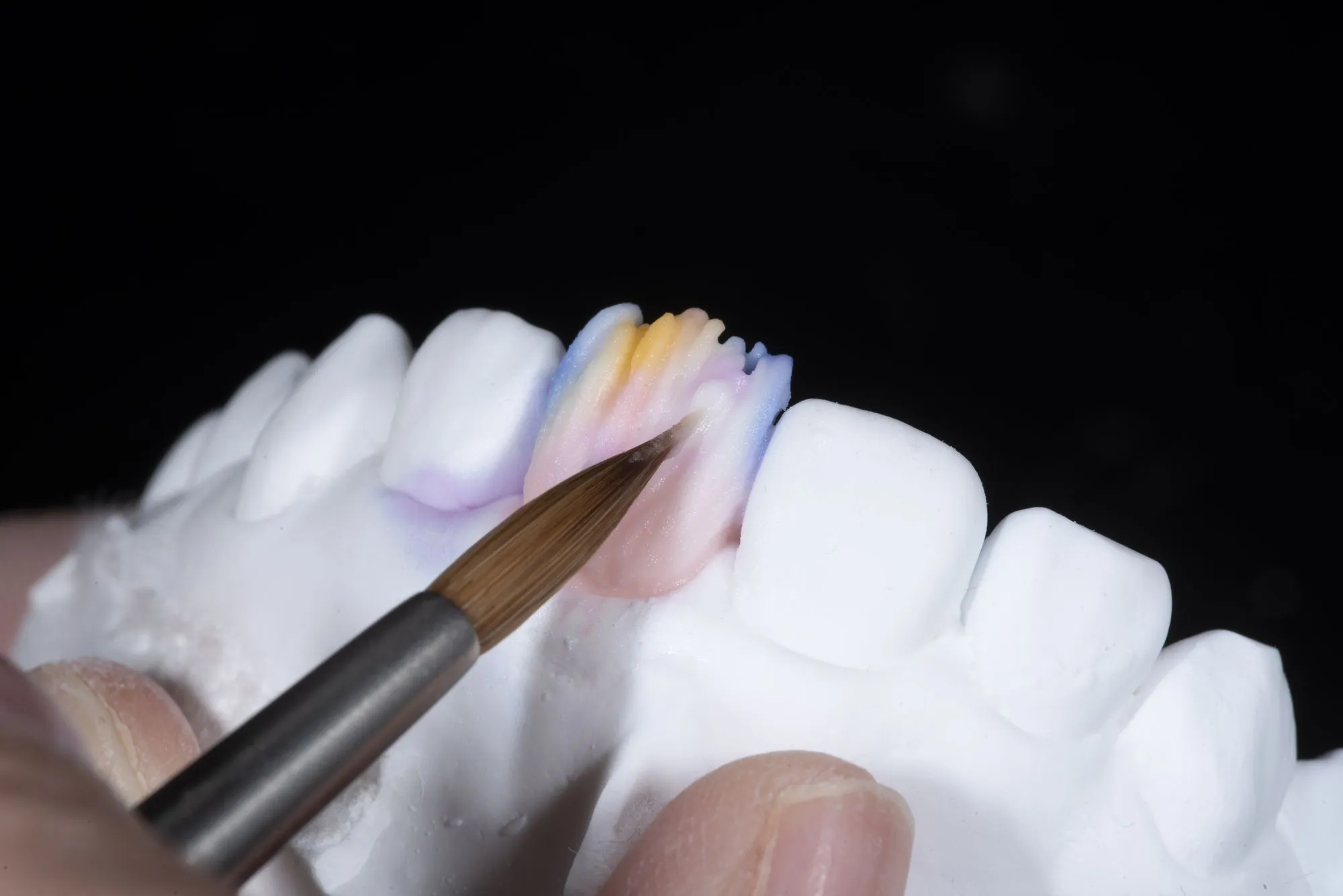
The darker the stain, the more the balance matters between the layer that masks it and the layers that carry translucency. We layer ceramics by hand to mask the dark base while bringing the shade close to the translucency of natural enamel.
 PORCELAIN VENEER
 Discoloration
Surface stains from coffee or tea can lighten with bleaching. But discoloration from within — tetracycline bands, a tooth darkened after root-canal treatment, fluorosis — often cannot reach the shade you want by bleaching alone.
Four Causes
Where the discoloration comes from decides the right path: bleaching, internal bleaching, or veneers.
01 Coffee, tea, wine, and smoking stains on the surface — often improved by cleaning and bleaching, which we consider before veneers.
 02
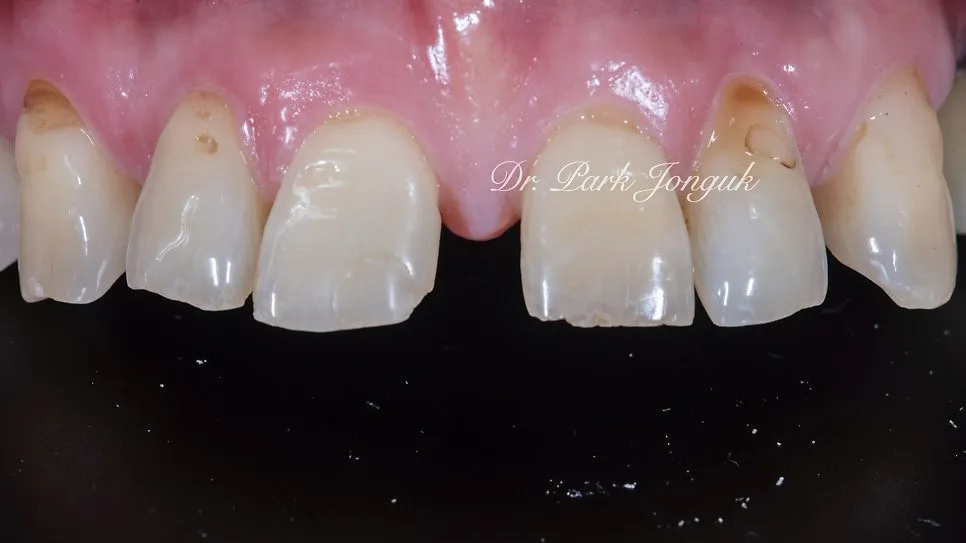
02 Grey-brown banding left in the dentin by childhood medication — the classic case where bleaching hits its limit and masking-layer veneer design becomes the primary answer.
 03
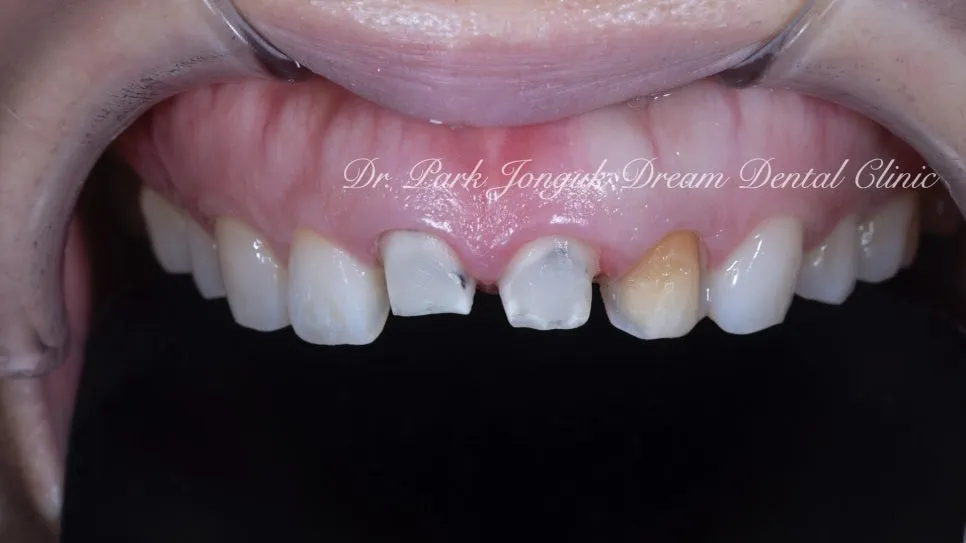
03 A single tooth darkening after nerve damage or root-canal treatment — internal bleaching is tried first, or veneers when front-tooth shade harmony matters.
 04
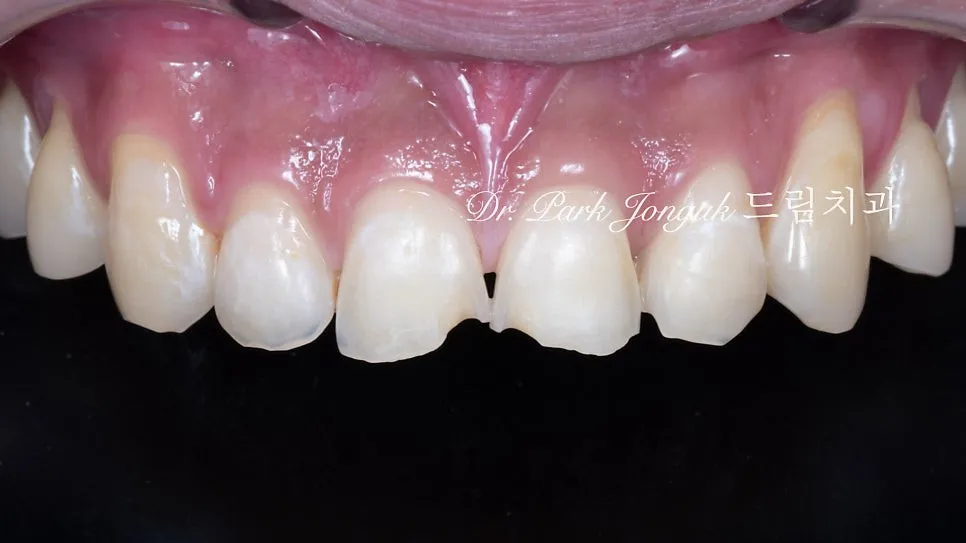
04 Enamel thins with age, letting the yellower dentin show through — usually alongside shape and length loss, which is why veneers are often considered.
BEFORE / AFTER
Real veneer cases treated by Dr. Park Jonguk at Dream Dental Clinic, Gangnam. Tap a photo to compare before and after up close.
The before-and-after photos above are real clinical cases treated at Dream Dental Clinic, Gangnam (Dr. Park Jonguk). Results vary with each patient’s condition, and every procedure carries the possibility of individual variation and side effects.
Indications
When the cause is inside the tooth, or shape concerns come with the shade, veneers may be the right option.
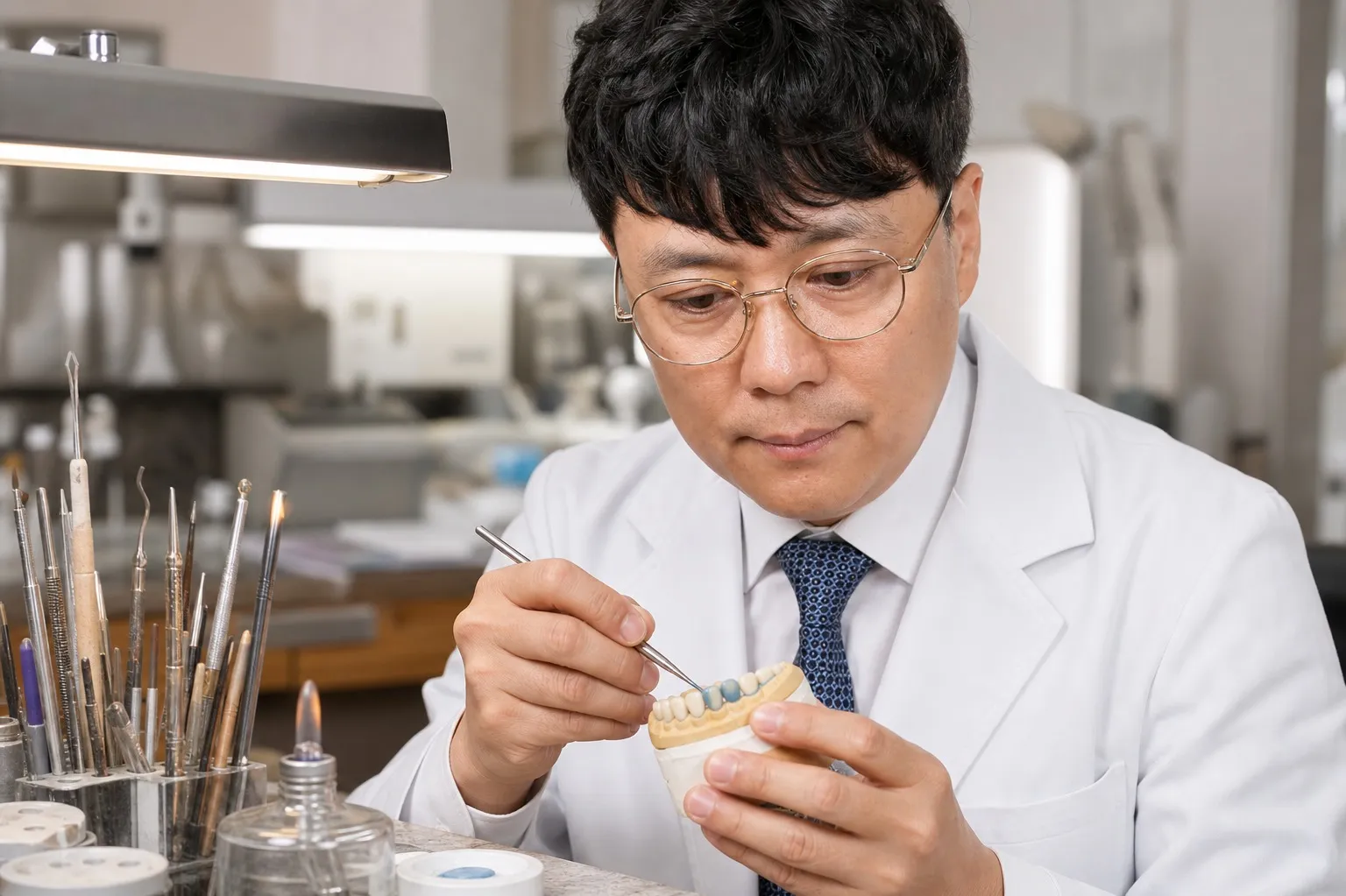
The darker the tooth, the stronger the temptation to hide it under opaque ceramic. But natural beauty lives in translucency — that is why we insist on the multilayer build-up.
Color Science
Color is made in layers, not in one coat. Twenty years of shade records guide every case.
Thickness and value of the masking layer are calculated against the darkness underneath, so nothing shows through.
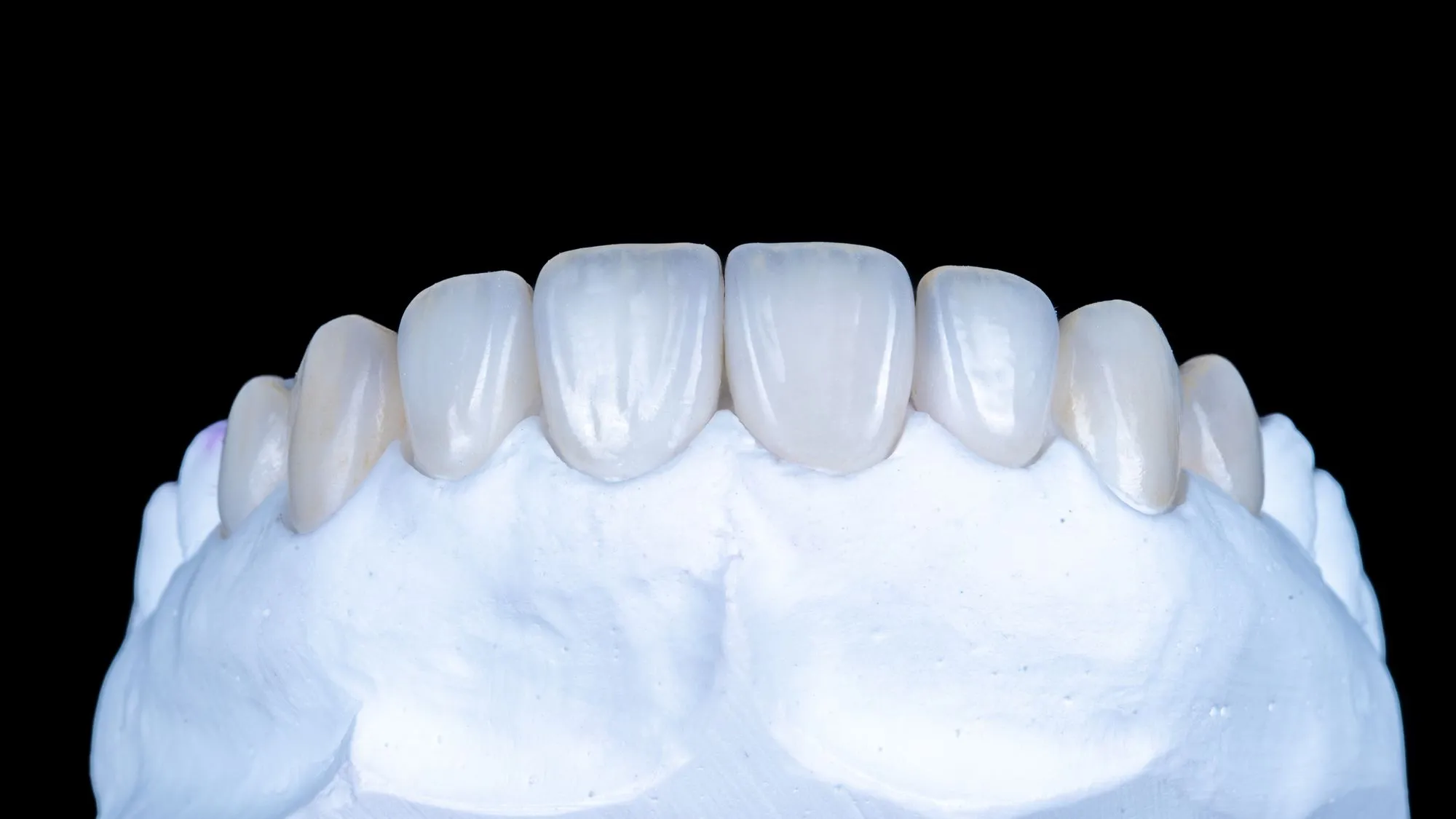
Dentin, enamel, and translucent layers are stacked by hand so that light passes and reflects much as it does in natural enamel.
The target is not paper-white but a shade that belongs with your other teeth — chosen together on the shade guide.
When only one tooth has darkened after a root canal, the key is a shade match that blends with its neighbors. It is counted among the hardest shade work.
Options
| Veneers | Professional bleaching | |
|---|---|---|
| Best for | Internal, drug-related, restorative stains | Surface stains (coffee, tea, smoking) |
| Shade stability | Ceramic rarely discolors | Can re-stain with habits |
| Shape | Corrected together | Shade only |
| Visits | Usually 1–2 | Several sessions |
Process
Cause diagnosis
Surface or internal? If bleaching is enough, that is what we recommend.
Shade design
Target shade and masking thickness planned and previewed digitally.
Minimal prep
Only as much as the discoloration requires.
Build-up & bonding
Hand-layered shells, precisely bonded.
Check-up
Final shade check in daylight and room light.
Unlike resin, ceramic holds its shade over time — one reason coffee drinkers worry less about staining.
By Severity
Tetracycline discoloration spans a wide range — from a faint yellow-brown tint to deep grey-blue banding. The severity grades used in the literature guide both the masking design and what can honestly be expected.
Little masking burden — a thin shell can already reach a clear shade. A combined plan with bleaching is also considered.
The masking layer is designed one value step brighter. The standard indication for multilayer build-up, with a natural result to be expected.
Each band needs its own masking power, so the layer recipe varies zone by zone — precision work that may require extra shell thickness.
When veneer thickness alone cannot mask it, we say so — presenting alternatives including all-ceramic crowns. Forcing a veneer is the worst outcome.
Quick Consult
Leave your number and we will call you back during clinic hours.
Request Received
We will contact you during clinic hours. For urgent matters, please call +82-2-3448-0028.
The available range depends on your condition. Feel free to ask us.
FAQ
For surface stains, bleaching is often enough — and it is what we recommend first. When the cause is inside the tooth, as with tetracycline bands or post-root-canal darkening, bleaching hits its limit and veneers come into view. Sorting this out is the first step of diagnosis.
The masking layer’s thickness and value are calculated against the severity of the stain. A natural shade can be expected even over banding, though very severe cases may need more shell thickness — we tell you honestly what range is achievable.
Yes. The hardest part of a single-tooth case is matching the neighbors, and multilayer build-up adjusts shade and translucency layer by layer to match them. Depending on the tooth, internal bleaching may be considered first.
The goal is not “white teeth” but the clear shade of a natural tooth. The shade is chosen alongside your other teeth and skin tone, and confirmed together at try-in under daylight and room light before bonding.
Ceramic strongly resists staining, so the veneer’s own shade barely changes. Margins and neighboring natural teeth can still stain — rinsing after staining drinks and regular check-ups keep the balance.
Depending on their depth, white spots sometimes respond to microabrasion or resin infiltration; when they are extensive or come with shape concerns, veneers even them out. We always start from the least invasive option.
The gum margin is where the shell is thinnest — the most sensitive zone in a discolored case. The masking layer is designed to carry through to the margin, and the gum-line shade is verified at try-in before bonding.
A freshly bleached shade settles slightly over the following days, so when bleaching and veneers are combined, the final shade is chosen only after it stabilizes — usually one to two weeks. The order and interval are built into the plan.
Yes. Discolored resin is removed, the tooth underneath assessed, and the shell designed accordingly. If decay is found, the conservative-dentistry specialist treats it first within the same plan.
The extent of the discoloration decides. A single tooth darkened after a root canal needs just that one; generalized staining like tetracycline usually means the six to eight teeth your smile reveals. We always quote from the minimum.
Before bonding, the shade can be corrected layer by layer and reviewed again. Masking recipes make discolored cases especially try-in-sensitive, so we confirm under daylight and room light — and bond only after your approval.
Veneers serve the smile zone — the front teeth. Molar discoloration is usually a matter of function and restoration rather than aesthetics, better served by load-bearing options like crowns or inlays.
Ceramic actually resists coffee and tea staining better than natural enamel, which makes it a good material for habitual coffee drinkers. Just rinse after staining drinks and keep regular check-ups to manage the margins and neighboring teeth.
Masking may demand more thickness budget, but that is different from a bulky surface. The needed thickness is gained inside the tooth through reduction design, while the finished outer contour stays on the same line as its neighbors.
Yes. Nicotine staining is cleared with scaling and whitening while internal discoloration is planned for veneers — a combined approach is standard. Since smoking works against gum health and margin staining, we also recommend pausing around treatment.
This page is general information about the treatment. Diagnosis, treatment options, and duration vary by individual condition — an in-person examination is how we plan your actual care.
Articles
How the same topic is judged chairside, written up with real cases.
Bleaching or veneers — find out honestly which your discoloration needs. Registration until 17:30 weekdays, 12:30 Saturdays.