
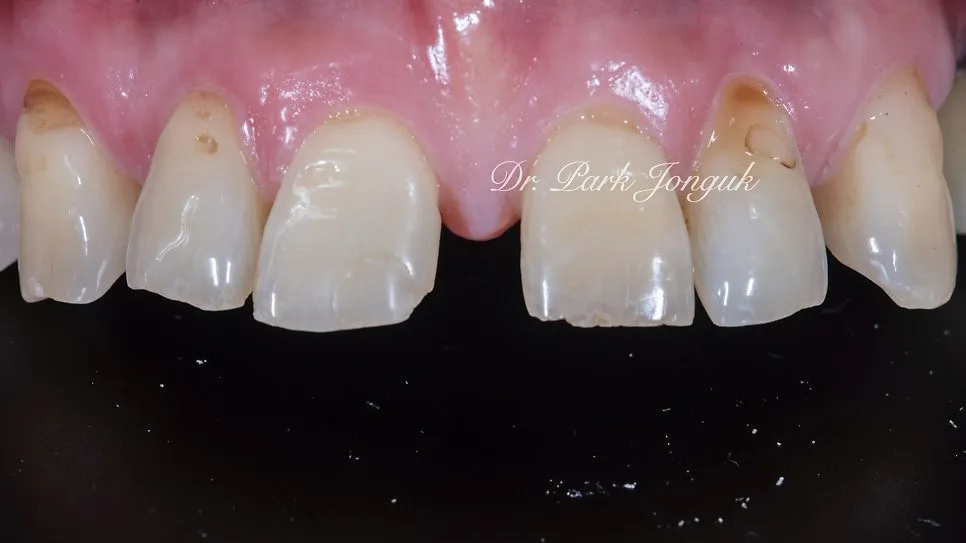
 01
01 Discolored teeth
Tetracycline staining that whitening cannot lift, and teeth darkened after root canal treatment, can be masked with ceramic color and translucency.
Veneers Overview
A porcelain veneer is a thin ceramic shell bonded to the front surface of a tooth to improve its color, shape, and size. Which teeth qualify, how no-prep differs from minimal-prep, what the process and cost look like — twenty years of veneer practice, summarized on one page.
 PORCELAIN VENEER
 Laminate Veneer
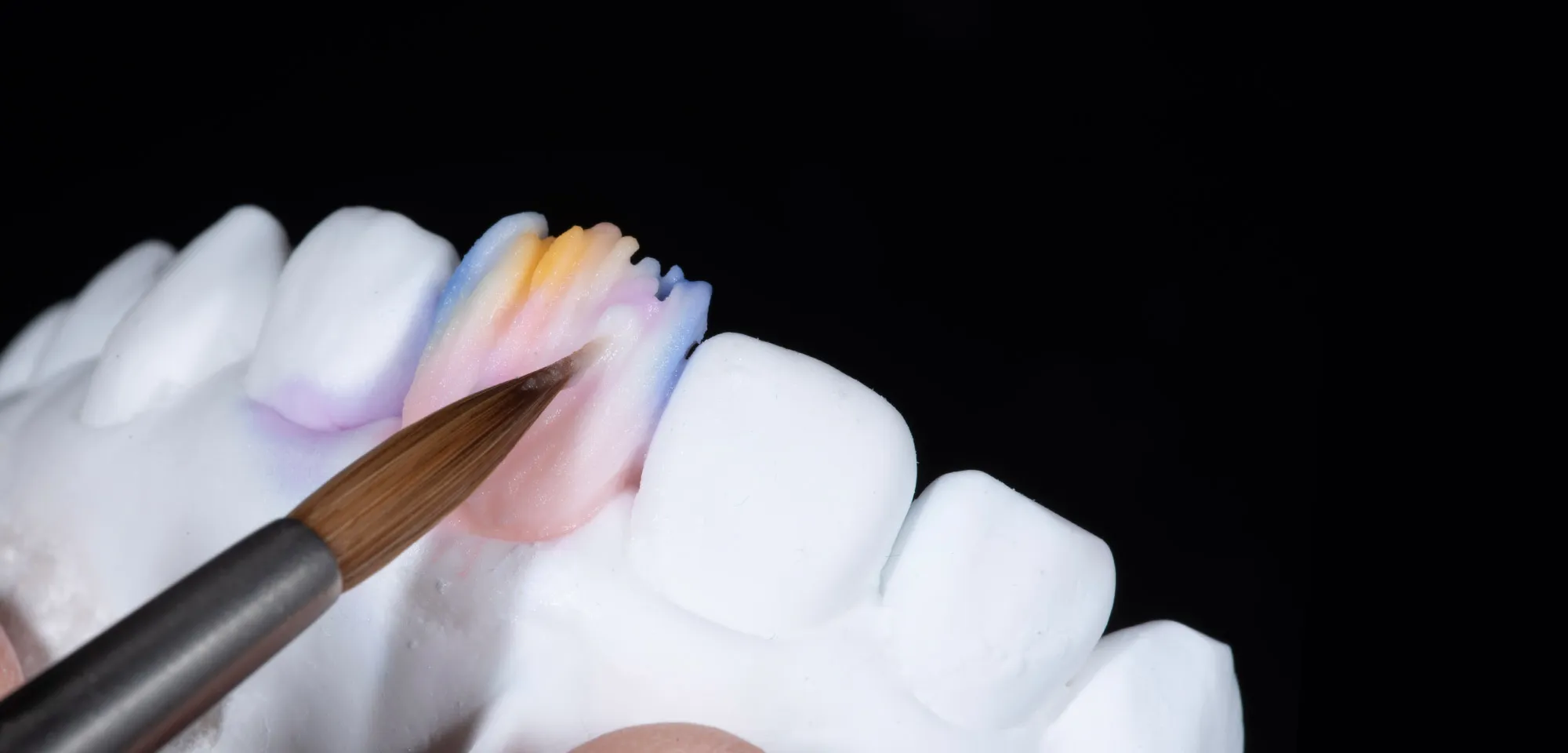
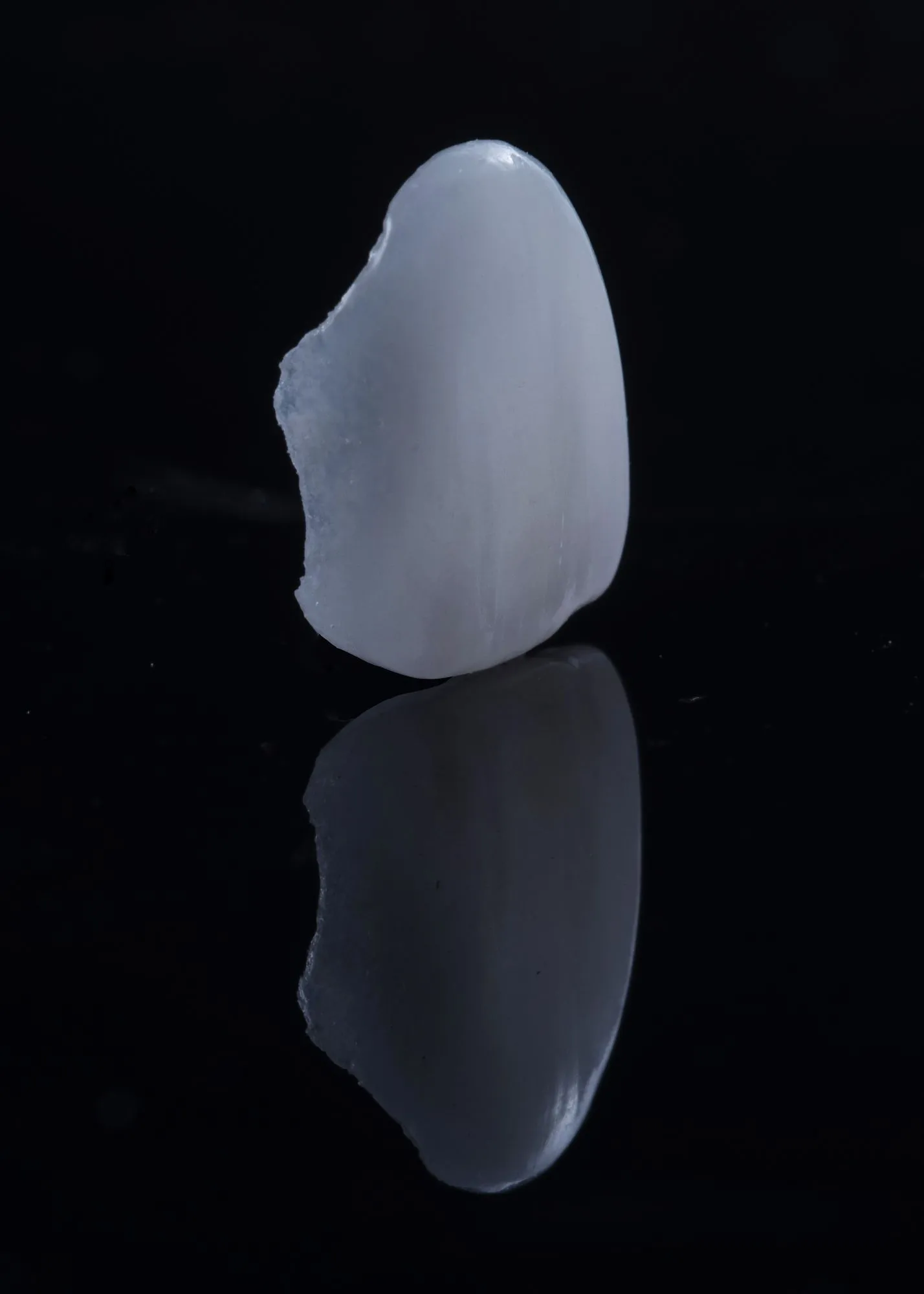
A laminate veneer is a ceramic shell thinner than a fingernail — 0.1 to 0.5 mm — bonded to the front of a tooth. Unlike a crown, which covers the whole tooth, a veneer treats only the visible surface, preserving far more natural tooth while improving discoloration, gaps, chips, and undersized teeth.
What It Solves
When the cause lies in the color, shape, or size of the tooth itself, veneers are often the answer. Each linked page explains the criteria in detail.
01 Tetracycline staining that whitening cannot lift, and teeth darkened after root canal treatment, can be masked with ceramic color and translucency.
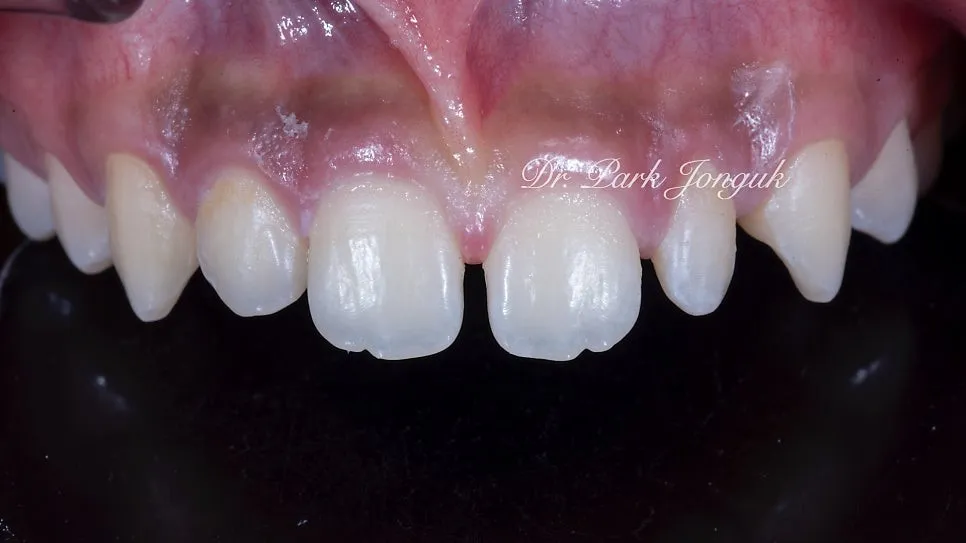 02
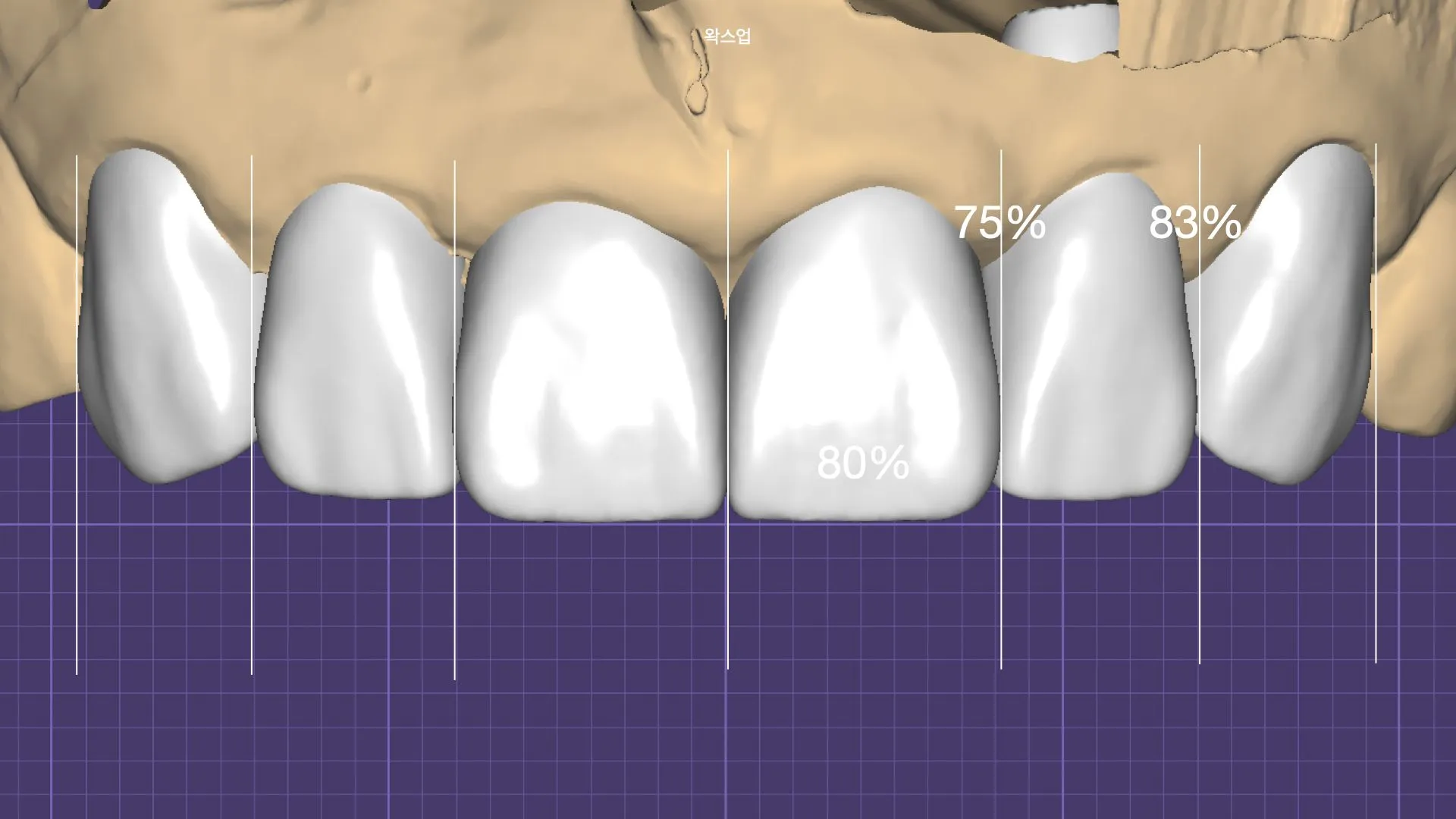
02 By distributing the space across neighboring teeth by ratio, the gap can be planned closed without the two front teeth turning wide.
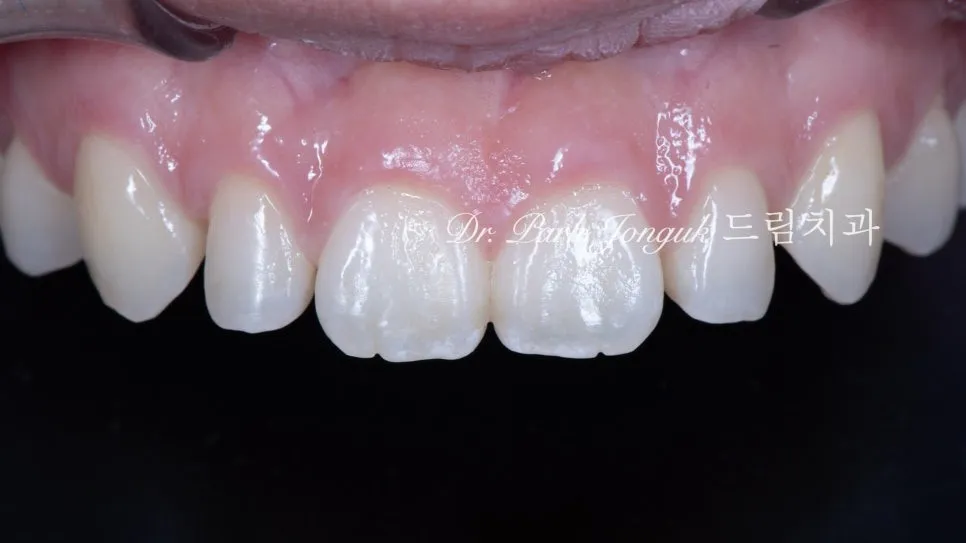 03
03 Minor misalignment can sometimes be improved in a few visits instead of years of braces. Whole-arch problems still call for orthodontics.
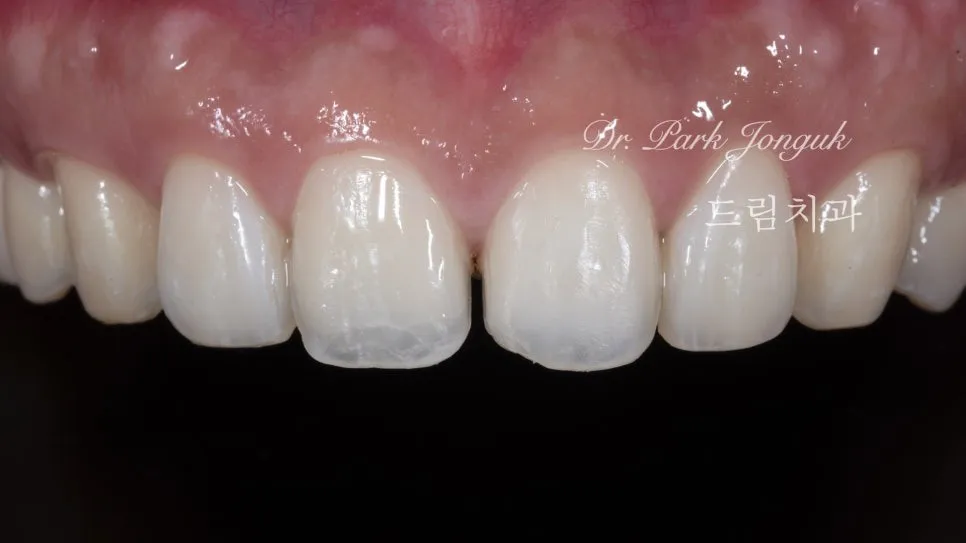 04
04 Front teeth shortened by wear or chipped at the edges are rebuilt in ceramic that is harder than what was lost.
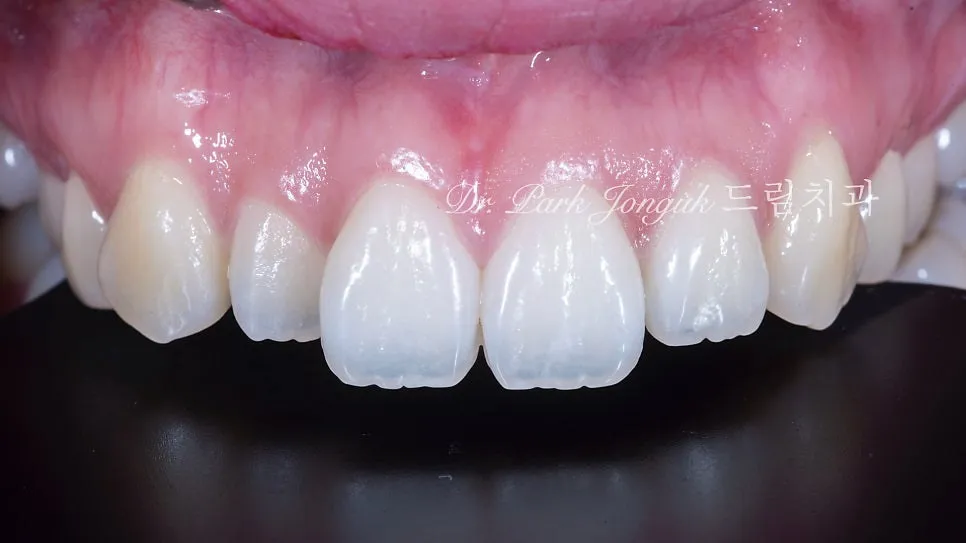 05
05 Undersized laterals that break the smile’s symmetry are a classic indication for no-prep veneers — form is added, nothing is removed.
BEFORE / AFTER
Real veneer cases treated by Dr. Park Jonguk at Dream Dental Clinic, Gangnam. Tap a photo to compare before and after up close.
The before-and-after photos above are real clinical cases treated at Dream Dental Clinic, Gangnam (Dr. Park Jonguk). Results vary with each patient’s condition, and every procedure carries the possibility of individual variation and side effects.
One principle decides everything: if the concern comes from the tooth itself, think veneers; from the whole bite, think orthodontics; from heavy structural damage, think crowns. We sort your case honestly at diagnosis.
Three Tiers
Veneers are first classified by how much tooth is trimmed. Our rule has not changed in twenty years: look for the no-prep option first, and when trimming is needed, only the calculated minimum.
| Criteria | No-prep | Micro-prep | Minimal-prep |
|---|---|---|---|
| Reduction | None | A trace, under the microscope | Only what the design requires |
| Anesthesia | Not needed | Not needed | Light anesthesia |
| Provisionals | Not needed | Not needed | Required |
| Best for | Small, even, non-protruding teeth | Teeth needing surface refinement | Larger changes of form |
Fabrication
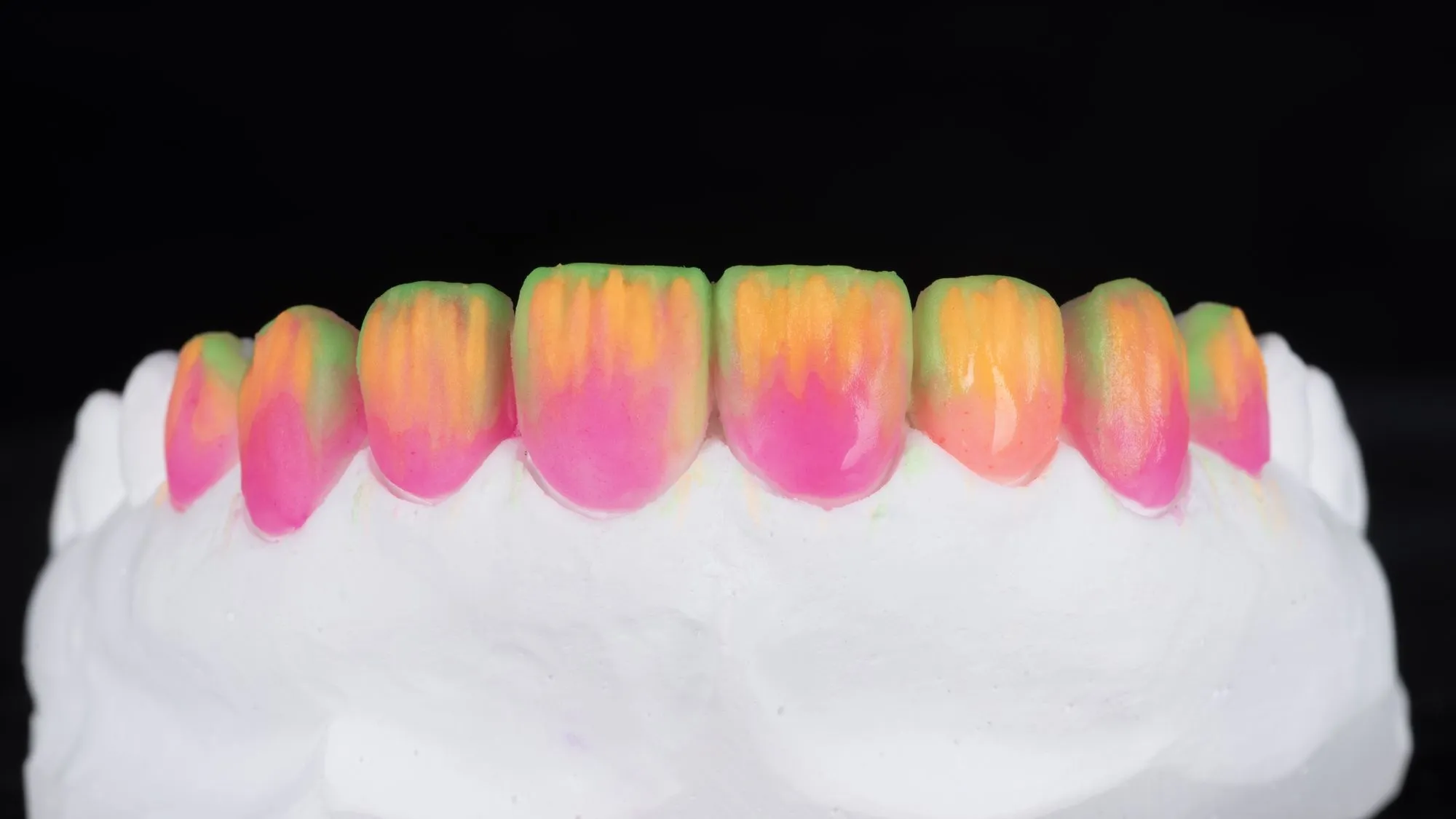
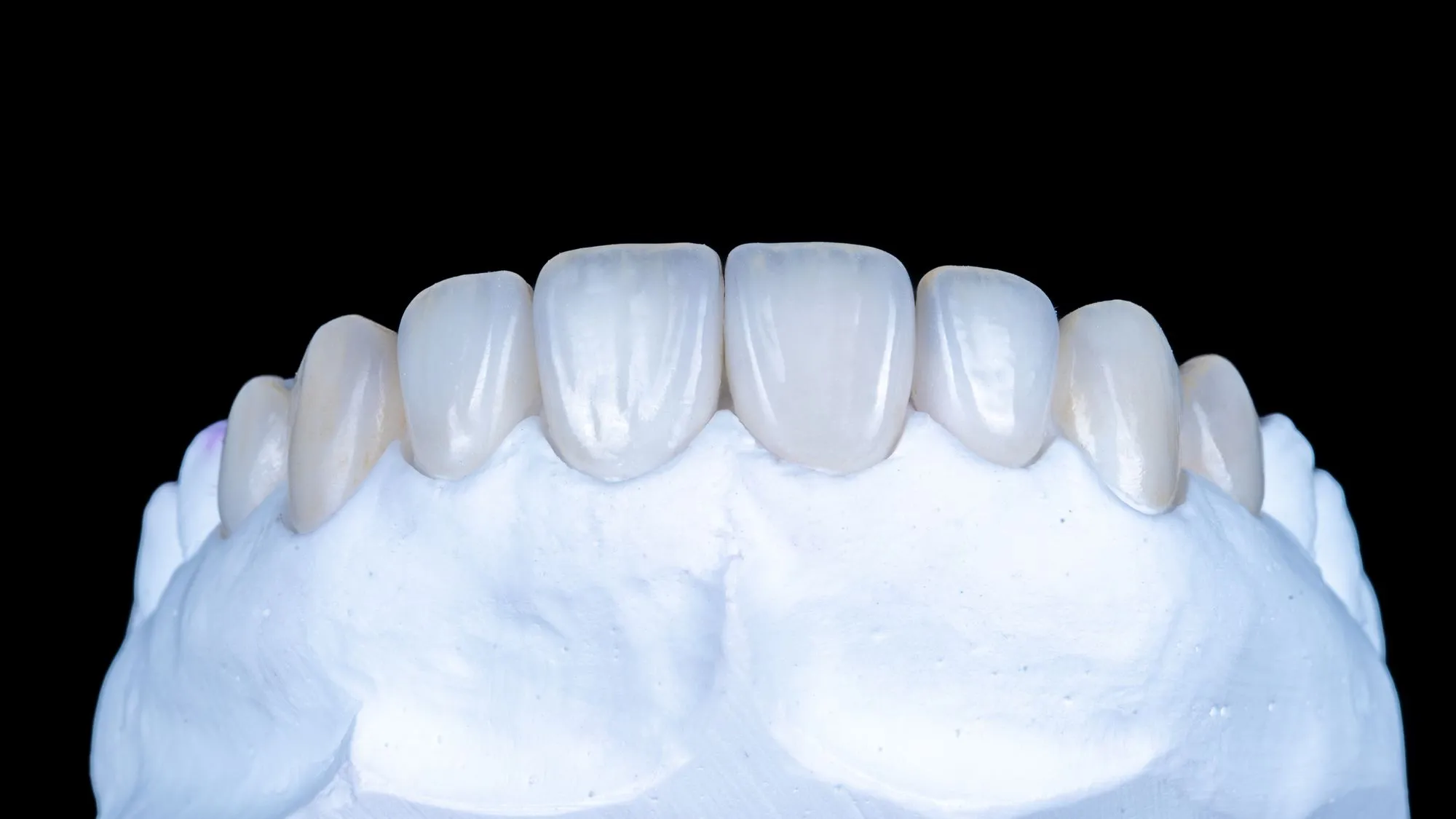
The same veneer can be made in quite different ways, and each builds its shade differently. We hand-layer four to five ceramics: the multilayer build-up method.
| Criteria | One-day / single ceramic | Multilayer build-up |
|---|---|---|
| Fabrication time | 20–30 minutes | Several days |
| Ceramics used | One | Four to five |
| Shade and translucency | Expressed within one block | Built up across several layers |
Compare
“So which one do I need?” is the most common question in aesthetic consults. The four treatments do different jobs — matching the right one to your concern is what makes results last.
| Criteria | Veneer | Crown | Whitening | Resin |
|---|---|---|---|---|
| Coverage | Front surface | Caps the whole tooth | Color only | Spot repair |
| Tooth preserved | No-prep to minimal | Full reduction | None removed | Almost none |
| Improves | Shade, shape, size, gaps | Heavy damage, RCT teeth | Brightness | Small gaps and chips |
| Shade stability | Ceramic — barely changes | Ceramic — barely changes | Can re-stain | Discolors and wears |
| Best for | Front-tooth aesthetics | Heavily damaged teeth | Healthy but stained teeth | Minor, provisional fixes |
By Life Stage
The same veneer answers different worries at different stages of life — these are the four we meet most in consults.
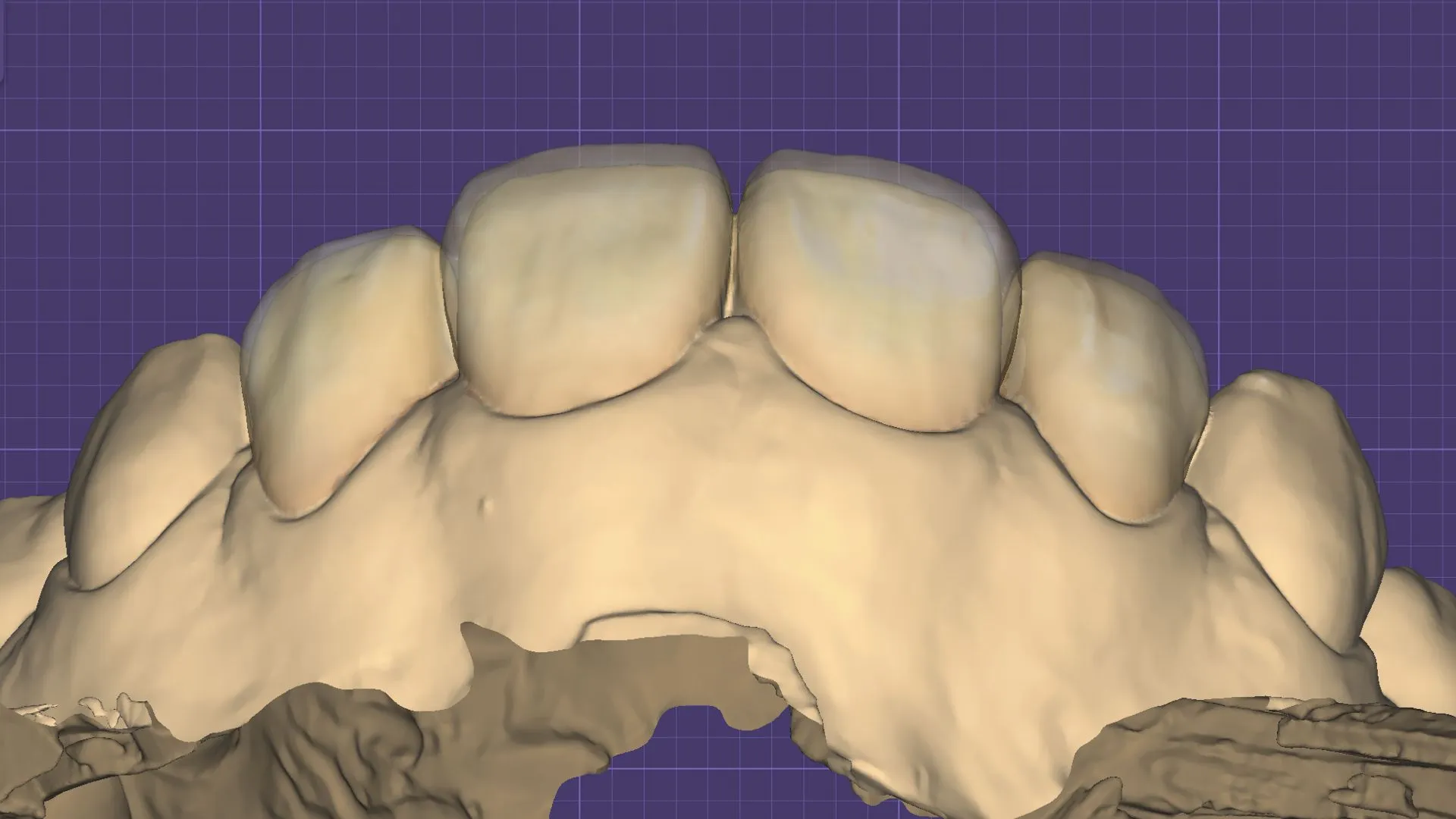 01
01 Healthy enamel makes this a favorable window for no-prep. Local concerns like a central gap often finish with two veneers, and treatment can be scheduled around weddings or interviews.
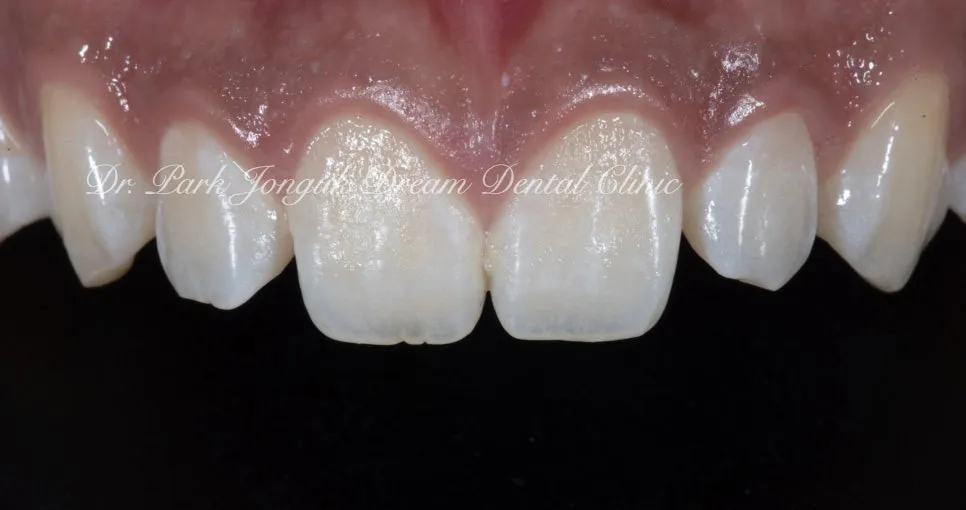 02
02 Coffee and wine staining meets blotchy old fillings. Whether whitening will do, or internal discoloration calls for veneers, is the fork in the road — sorted at diagnosis.
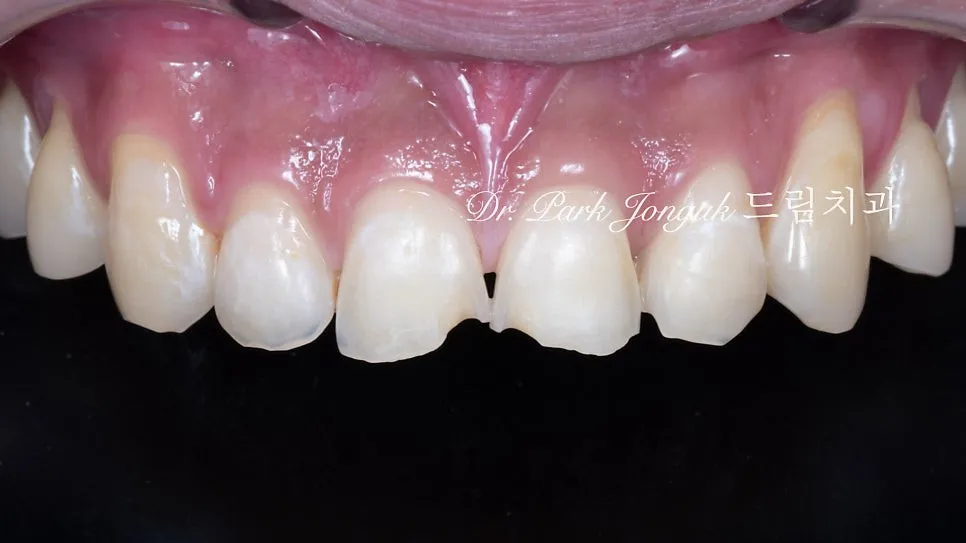 03
03 When shortened edges and yellowing arrive together, we consider veneers, which can address form and shade together. Gums and bite are examined first for a safe plan.
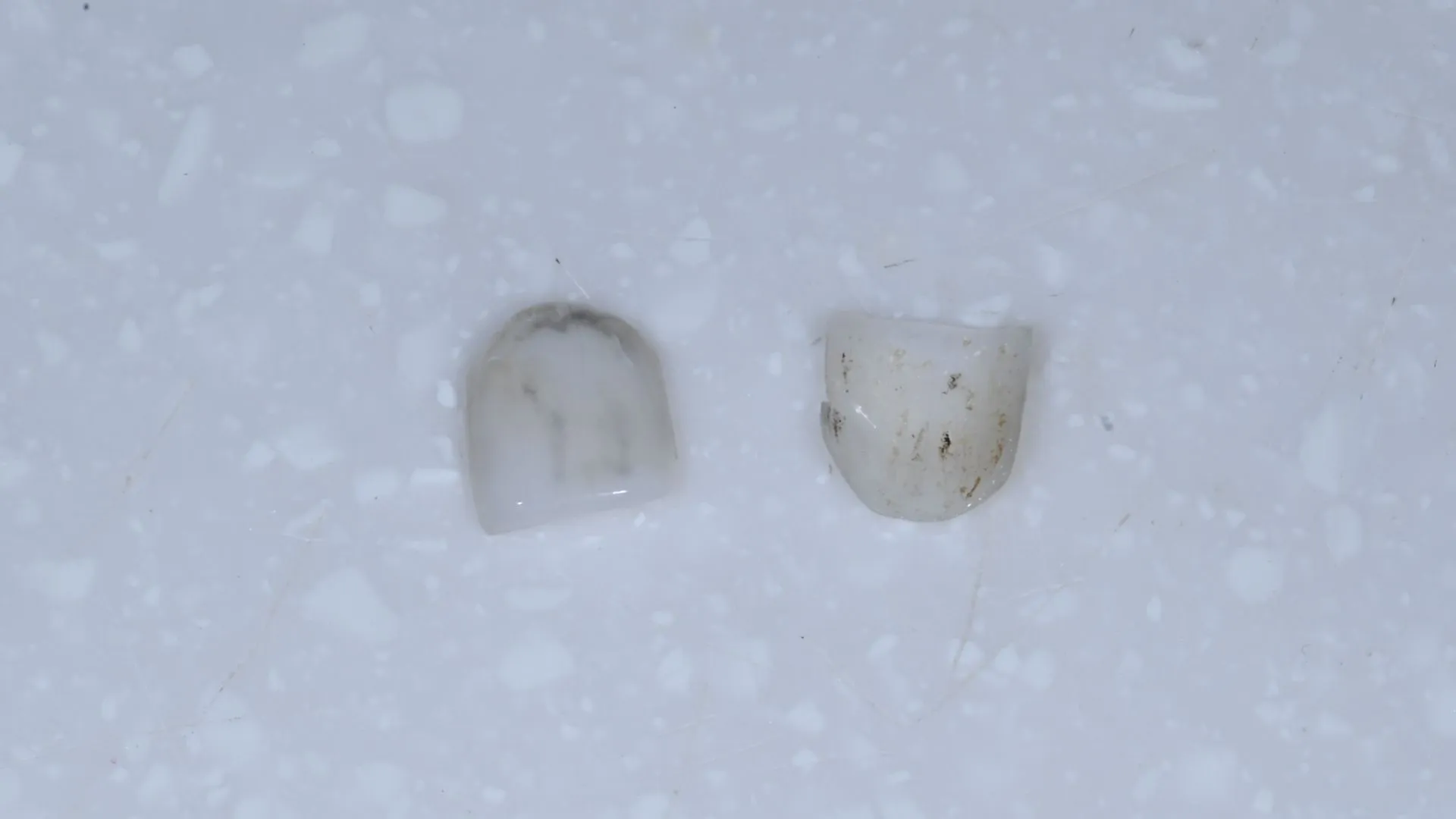 04
04 Shade or shape complaints, or gum inflammation from existing veneers — laser removal lets you start over without additional reduction.
Why Dream
Twenty years of veneer-focused practice, kept to the same structure — we explain with process, not promises.
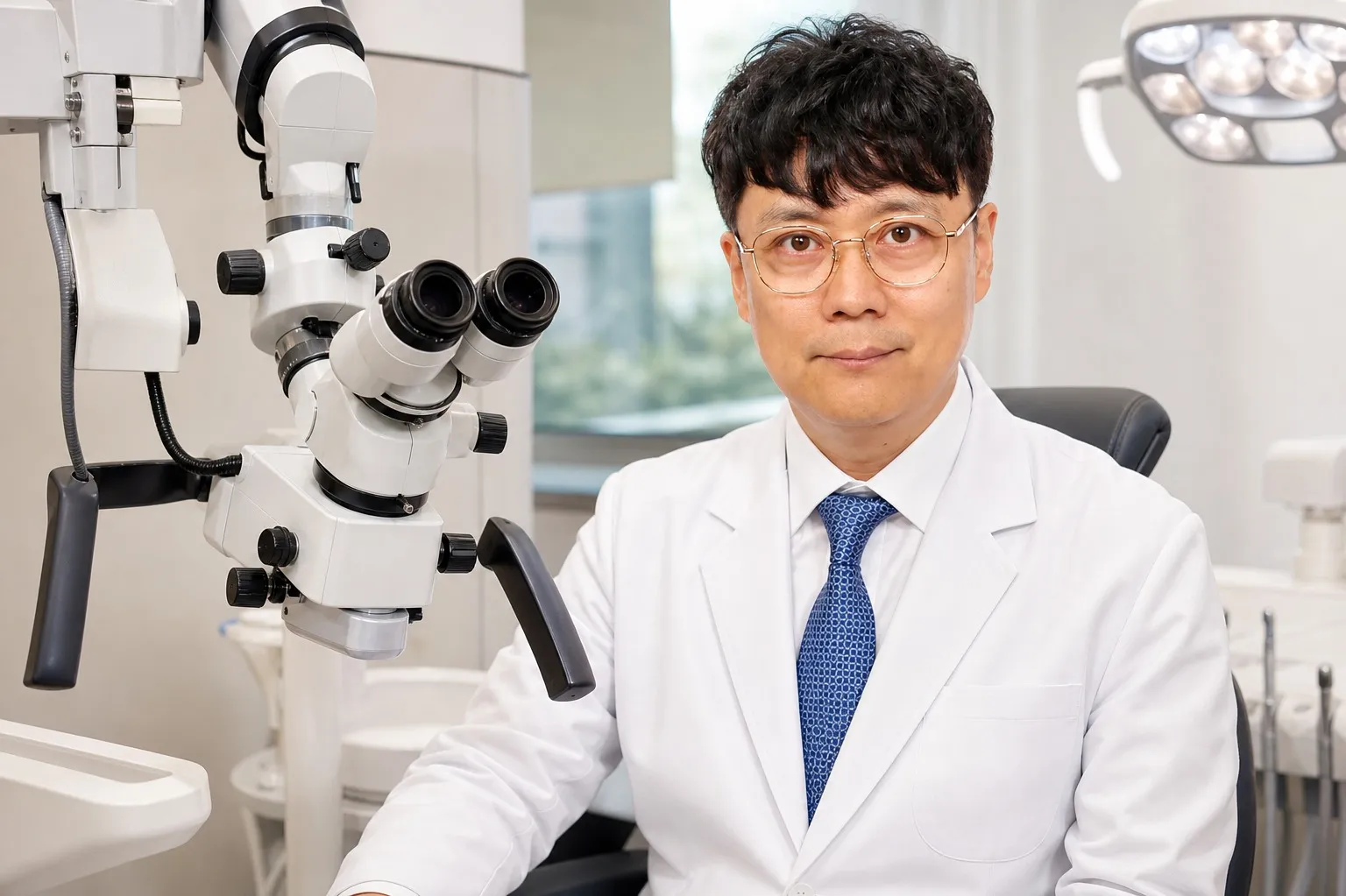 01
01 Aesthetics designed on top of a tooth-saving specialty. Looking for the no-prep option first is a habit the residency builds.
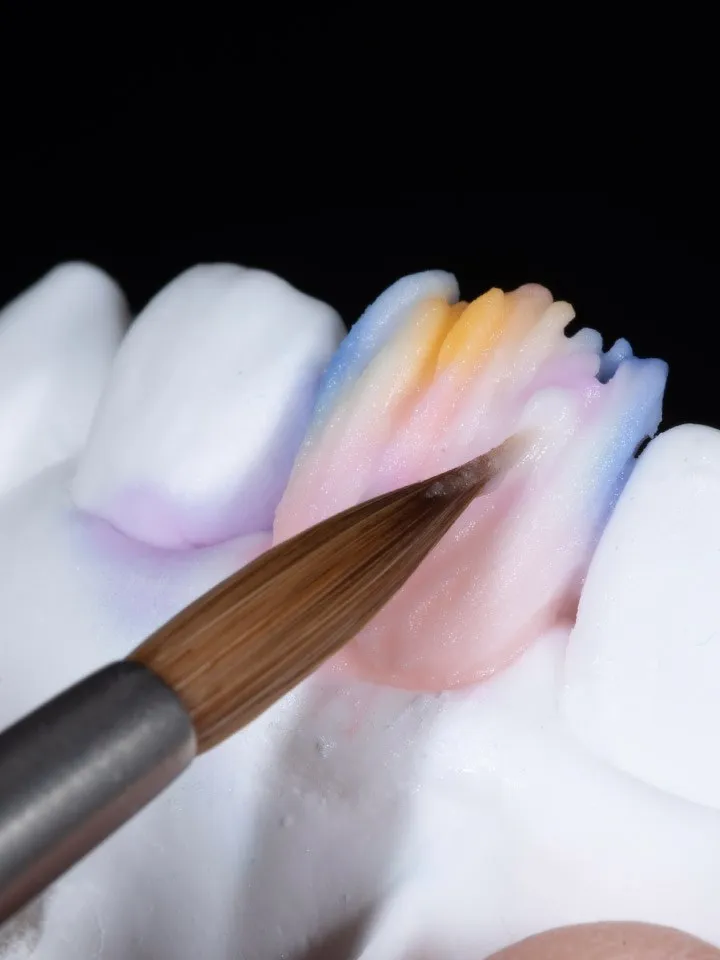 02
02 No outsourced lab. The shade and translucency observed chairside go straight to our in-house lab and are layered into the ceramic there.
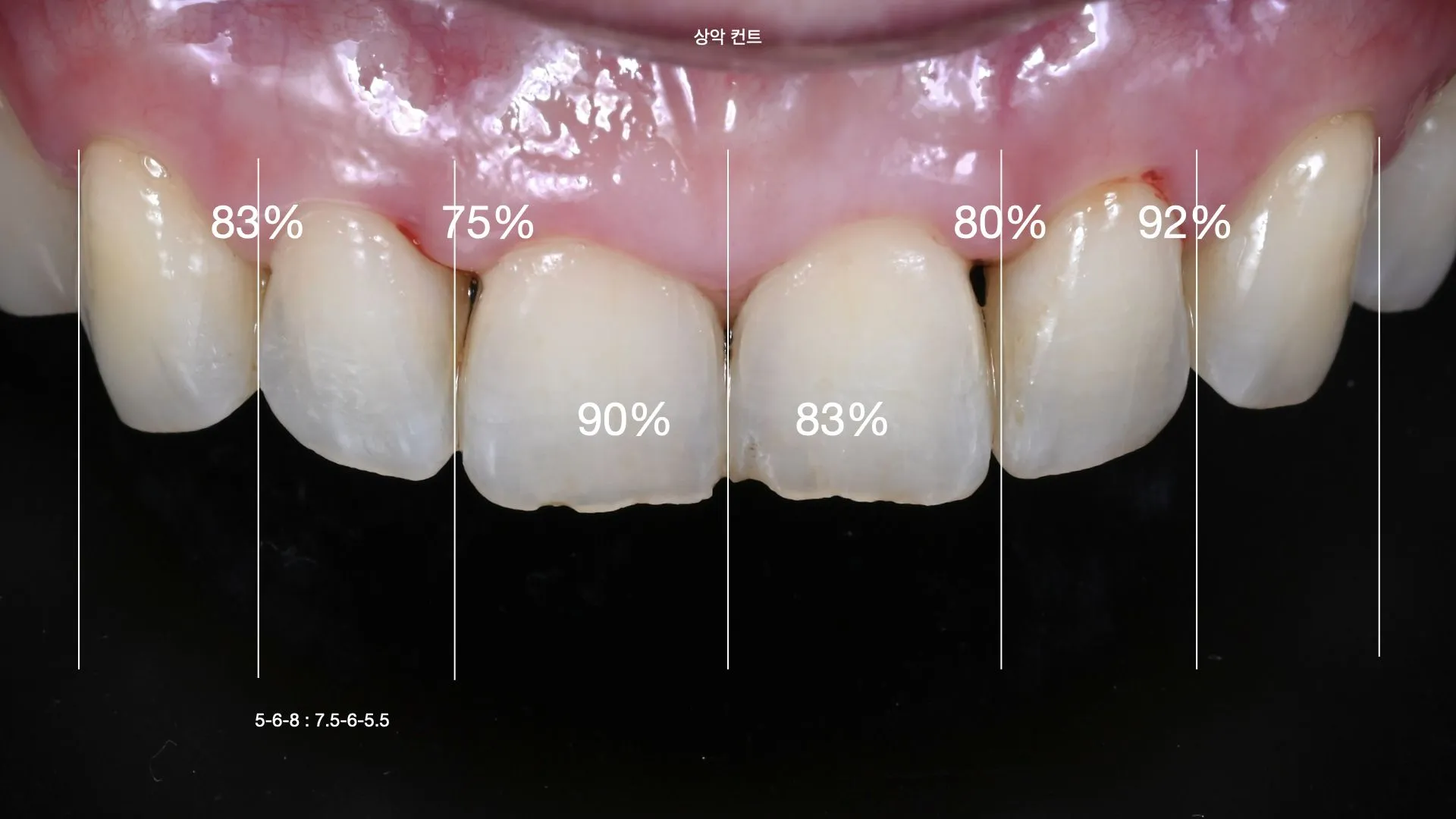 03
03 Park’s AES computes required reduction per region to 0.01 mm — no-prep eligibility is a number, not a feeling.
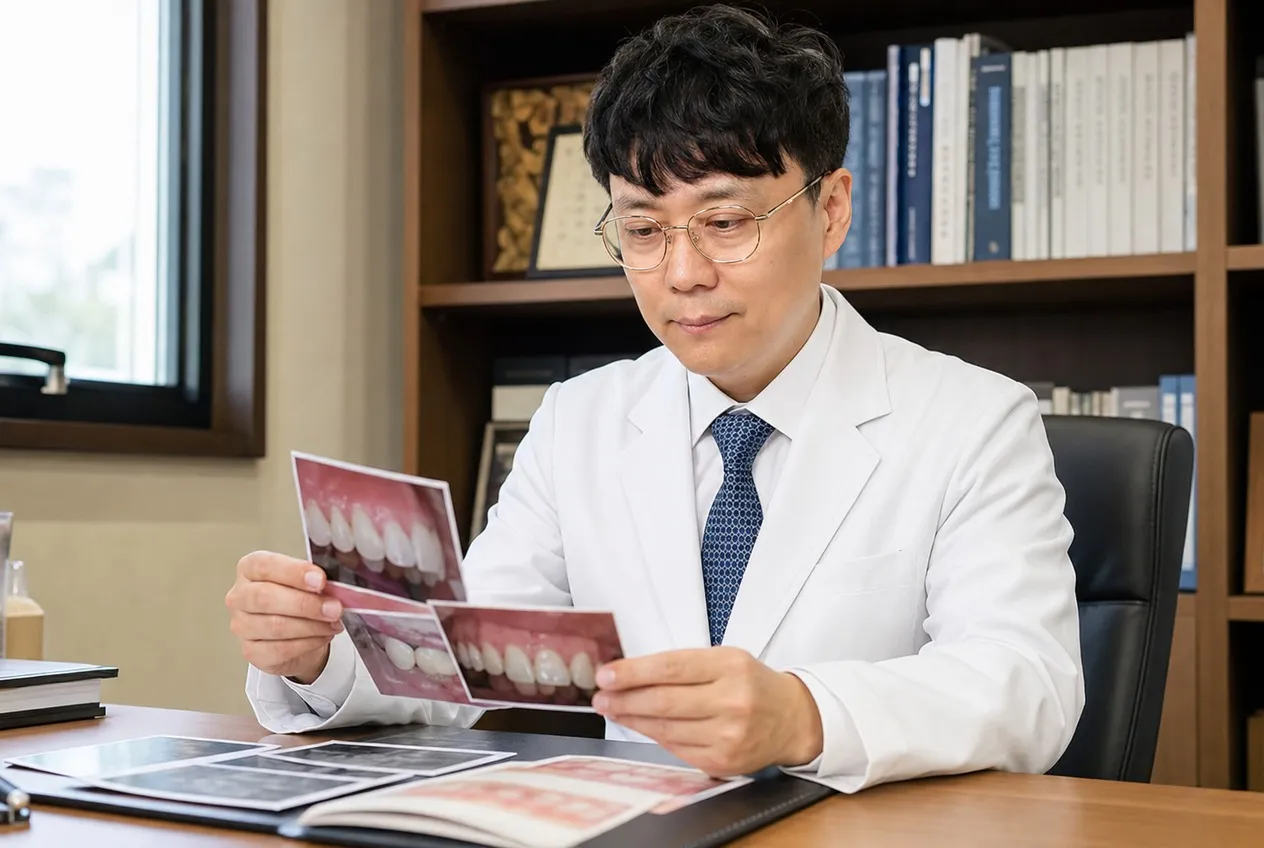 04
04 Cases that belong to orthodontics or crowns are told so. Some consultations end with no treatment recommended — a twenty-year principle.
Process
Most cases finish in two to three visits over one to two weeks. See the process page for a detailed look at comfort and timing.
Consultation & diagnosis
We examine your teeth, sort your case among veneers, orthodontics, and crowns, and determine whether no-prep is possible.
Digital design
Park’s AES analyzes tooth proportion and the smile line, planning any required reduction per region down to 0.01 mm.
Preparation (skipped if no-prep)
If your teeth qualify for no-prep, this step does not happen. Otherwise, only the calculated minimum is trimmed.
Multilayer fabrication
In our in-house lab, four to five ceramics are hand-layered stratum by stratum — a process that takes several days.
Try-in & bonding
Shade and form are confirmed together before bonding; the veneer is then precisely cemented and the bite adjusted.
Check-up & care guidance
We verify the bond and walk you through the habits that make veneers last. Regular check-ups are recommended.
The fee is KRW 1,300,000 per tooth for multilayer build-up veneers (VAT excluded, as of 2026). Total costs by tooth count and the full non-covered fee table are disclosed on the pricing page.
Honest Answers
Veneers are a good treatment — not a universal one. Knowing the limits first prevents regret later.
Trimmed enamel does not grow back. That is why we consider the no-prep / minimal-prep decision half of the treatment itself.
Over-aggressive reduction that exposes dentin can cause sensitivity. Calculated reduction greatly lowers that burden.
Ceramic can chip. Bonding design, bite adjustment, and habits such as tooth grinding decide how long a veneer lasts.
Veneered teeth still need cavity and gum care like natural teeth. See the lifespan page for the full care routine.
Misconceptions
These come up in almost every consultation. Correcting them is where a good decision starts.
A myth born of veneers made only to look white. The goal is a clear shade that belongs with your teeth, and layered ceramics vary the translucency layer by layer to come close to natural enamel.
Veneers became a graded-reduction treatment long ago. Many cases finish no-prep or micro-prep, and when trimming is needed it stays within the calculated minimum, in enamel.
Ceramic is a restoration that needs care. Lifespan varies greatly with habits and check-ups — often beyond a decade, but never something to promise as permanent.
Bite and gum conditions rule some cases out. Screening the indication comes before any treatment — and when veneers are wrong for you, we say so.
Before You Visit
Thinking these through beforehand makes the first consultation far more concrete.
Quick Consult
Leave your number and we will call you back during clinic hours.
Request Received
We will contact you during clinic hours. For urgent matters, please call +82-2-3448-0028.
The available range depends on your condition. Feel free to ask us.
FAQ
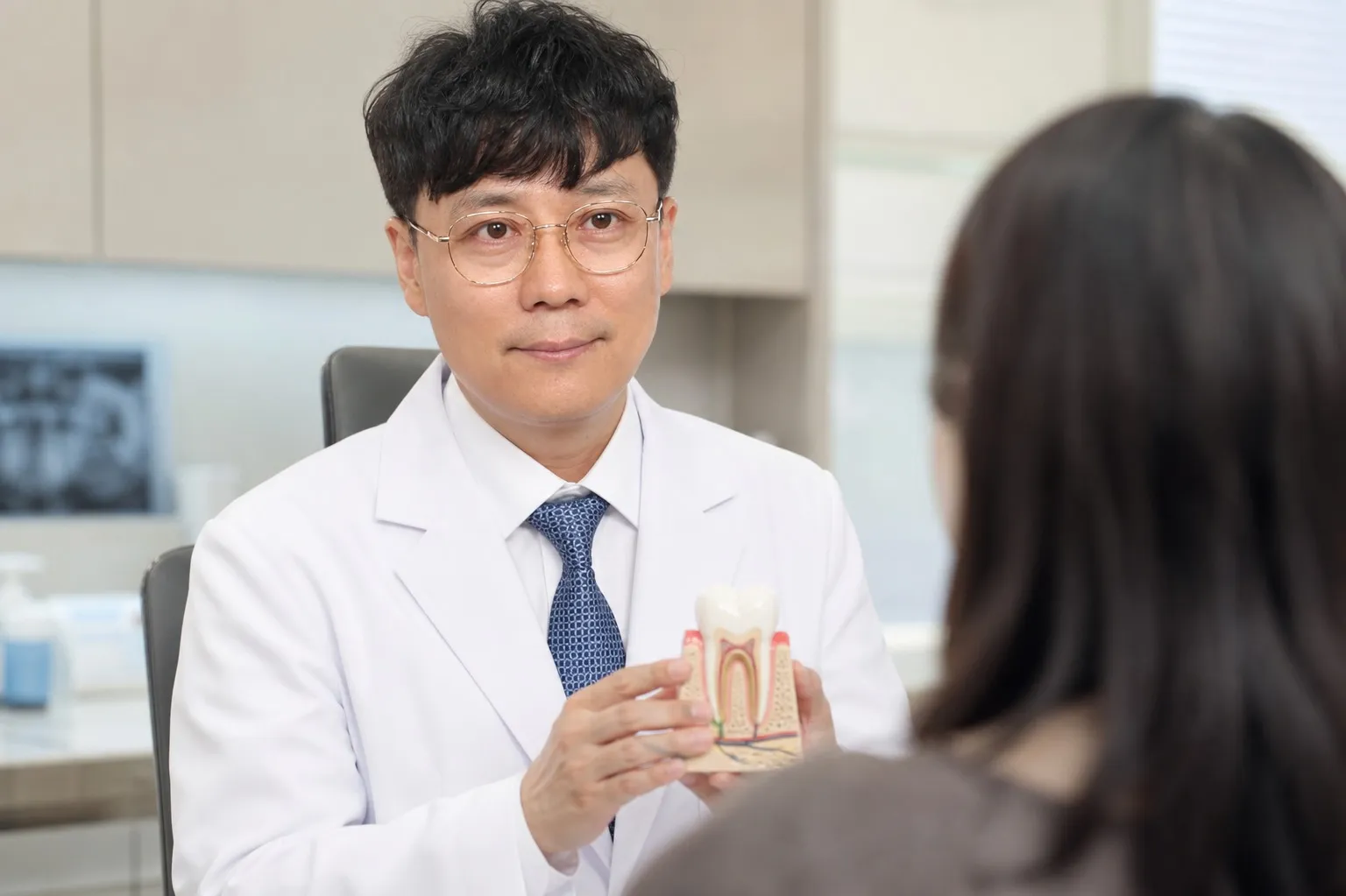
A thin ceramic shell, 0.1–0.5 mm, bonded to the front of a tooth to improve color, shape, and size. Unlike a crown it covers only the visible surface, so far more natural tooth is preserved.
Not necessarily. Teeth that are small, evenly aligned, and non-protruding often qualify for no-prep veneers. When a larger change of form is needed, micro- or minimal-prep is used — always the calculated minimum.
Multilayer build-up veneers are KRW 1,300,000 per tooth (VAT excluded, as of 2026). Costs vary with tooth condition and treatment scope; the full non-covered fee table is disclosed on our pricing page.
It depends on the concern. A gap between the two front teeth is often closed with just two veneers; refreshing the full smile zone usually means six to eight. With multilayer build-up, even two veneers are designed to blend in unnoticed.
No-prep and micro-prep cases usually proceed without anesthesia, so discomfort is minimal. Minimal-prep uses light anesthesia. Brief sensitivity right after bonding is possible and typically settles soon.
Usually two to three visits over one to two weeks. Layering and firing the ceramic in the lab takes several days, so it cannot be finished in a single day.
It varies with care and habits, but well-bonded veneers with a well-adjusted bite often serve for over a decade. Grinding and nail-biting shorten that span, so we guide you through protective habits.
Whitening usually comes first, to set the target shade of the surrounding teeth; the veneers are then fabricated to match. Ceramic does not change color with whitening agents.
The ceramic surface resists staining better than natural enamel. The bonding margins and your natural teeth can still stain, so rinsing after staining drinks and regular check-ups are recommended.
An Er:YAG (water-drop) laser acts selectively on the bonding resin, releasing old veneers while minimizing the burden on the tooth, and new ones are rebuilt with multilayer ceramics. Adding no further reduction is the principle of this removal method.
Decay is treated first — sealing a shell over a cavity lets it progress unseen into far worse damage. Because a conservative-dentistry specialist handles both, cavity care and veneers proceed under one plan.
Inflamed gums destabilize the bonding margin and make line design inaccurate. Scaling and gum treatment come first; the veneer is planned on settled tissue, and periodontal status is checked at the first exam.
Even for no-prep cases without anesthesia, long chair time and radiographs are worth avoiding — non-urgent aesthetic work is generally advised after delivery. We guide what is reasonable by trimester at consult.
An intact debonded shell can often be re-bonded; a fractured one is remade for that tooth alone. Because fabrication is in-house, your shade records remain on file — a single remake still matches its neighbors.
Added thickness can feel unfamiliar for the first days, and most people adapt quickly. Edge position and thickness are designed with speech in mind, and pronunciation is tested at try-in before bonding.
Reshaping broadly means trimming edges to tidy the form; veneers bond a ceramic shell that changes shade and shape together. Minor cases sometimes finish with simple reshaping alone — diagnosis tells you which you need.
A veneer bonds to the front surface; a crown wraps the whole tooth. Healthy teeth needing aesthetic change point to the conservative veneer; root-canal-treated or heavily damaged teeth point to crowns. Remaining tooth structure decides.
Steadily — front-tooth consults from men in client-facing work are common. Masculine teeth read naturally with slightly squarer contours, so gender-appropriate form is part of the design.
Yes — the masking layer can block the base shade and build the target color. But harmony with untreated neighbors matters, so if you want the whole smile brighter, whitening first usually looks more natural.
Possible, but finishing orthodontics first and closing with veneers is the better order. If veneers are already in place, bracket placement can be adapted — discuss both treatments together before planning.
Yes, with conditions: the bite design accounts for grinding and a night guard protects the ceramic during sleep. Undisclosed grinding shortens any restoration’s life, so tell us at diagnosis.
Of course. If the exam shows you need no treatment — or a different one — that is exactly what we will say. Some consultations end without a recommendation to treat; that is our twenty-year rule.
Guide by Topic
Open the page that matches your concern for indications and treatment criteria.
01
Four to five hand-layered ceramics — how fabrication differs from one-day veneers.
Learn more02
The S·A·F criteria for veneers with zero reduction.
Learn more03
Laser removal of old veneers and refabrication.
Learn more04
Closing a gap by sharing it across neighboring teeth by ratio.
Learn more05
The range of misalignment veneers can handle without braces.
Learn more06
Beyond whitening — including tetracycline stains.
Learn more07
Rebuilding worn edges harder than before.
Learn more08
The habits and factors that decide how long veneers last.
Learn more09
From first consult to completion — visits, comfort, and timing.
Learn more10
How many units you need — how the range is decided.
Learn more11
Coverage and tooth reduction — which suits your tooth.
Learn more12
Move the teeth, or rebuild their form.
Learn more13
Finish today or make it last — two materials compared.
Learn more14
Sensitivity, debonding, gum issues — causes and first response.
Learn more15
Whether grinding rules them out, and how design changes.
Learn more16
Adding width and length with almost no reduction.
Learn more17
The triangular gap near the gum — how far it closes.
Learn more18
Translucency over brightness — how a natural tone is set.
Learn more19
Eight things to verify in consultation, not in advertising.
Learn more20
Counting back from the shoot, and designing for studio light.
Learn more21
Glass-ceramic, feldspathic, zirconia — the thickness trade-off.
Learn more22
Conditions on the lower arch, where force comes first.
Learn more23
5 min from Apgujeong Station Exit 4 — location and directions.
Learn more24
How to choose a veneer clinic across Gangnam.
Learn moreThis page is general information about the treatment. Diagnosis, treatment options, and duration vary by individual condition — an in-person examination is how we plan your actual care.
Honest answers, starting with whether no-prep is possible. Registration until 17:30 weekdays, 12:30 Saturdays.