
Anterior Esthetic Veneers: What Every Dentist Should Consider
Hello, I'm Park Jonguk, director of Lamista Academy and Dream Dental Clinic.
Lamista Academy is a seminar group that trains dentists in veneer treatment.
Veneer treatment is still a fairly unfamiliar treatment, even among dentists.
It's only briefly introduced during dental school,
so it's a treatment many dentists have to learn all over again after becoming a dentist,
and even for those who stay on as residents at a university hospital,
it's a treatment that's hard to learn in real depth.
For that reason, at Lamista Academy,
I lecture dentists on veneer treatment.
The biggest distinguishing feature of Lamista Academy's veneer lectures
is that they focus on veneers that are both minimally reductive
and esthetically natural.
Because many clinics doing veneer treatment these days
aim for "fast turnaround" rather than esthetics,
not just patients but even dentists themselves
often come to mistakenly believe that this is simply the limit of what a veneer can look like, esthetically.
Today I'd like to think through why the difference arises
between natural, esthetic veneers and artificial, awkward-looking ones.
1. Differences in the Fabrication Process
The fabrication of veneers broadly falls into two approaches.
One is the handmade method, where a ceramist specializing in veneers fabricates them personally,
and the other is the method usually called the same-day method, fabricated by computer.
In the same-day method, the shape is designed on a computer,
and a milling machine cuts the ceramic to match that design to fabricate the veneer.
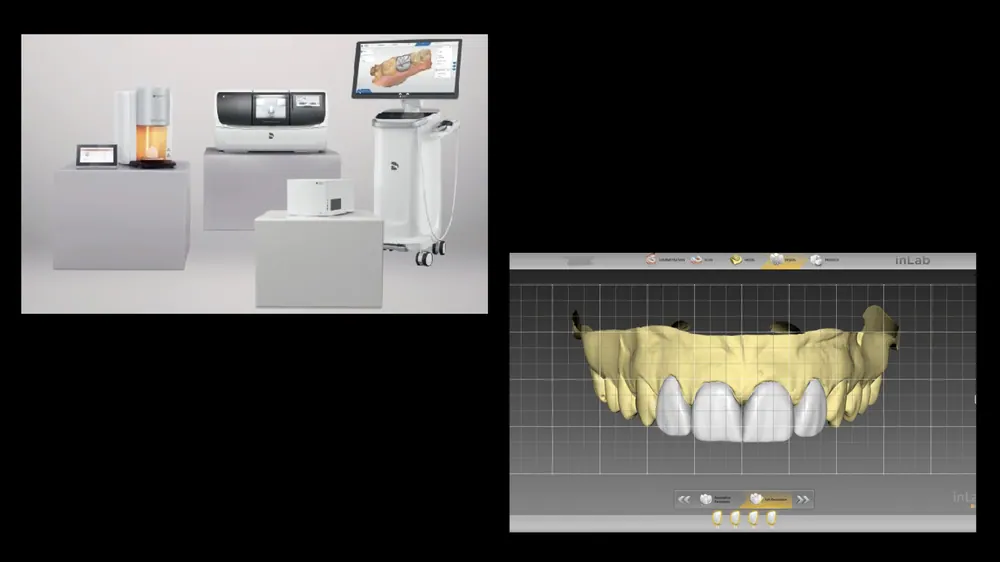
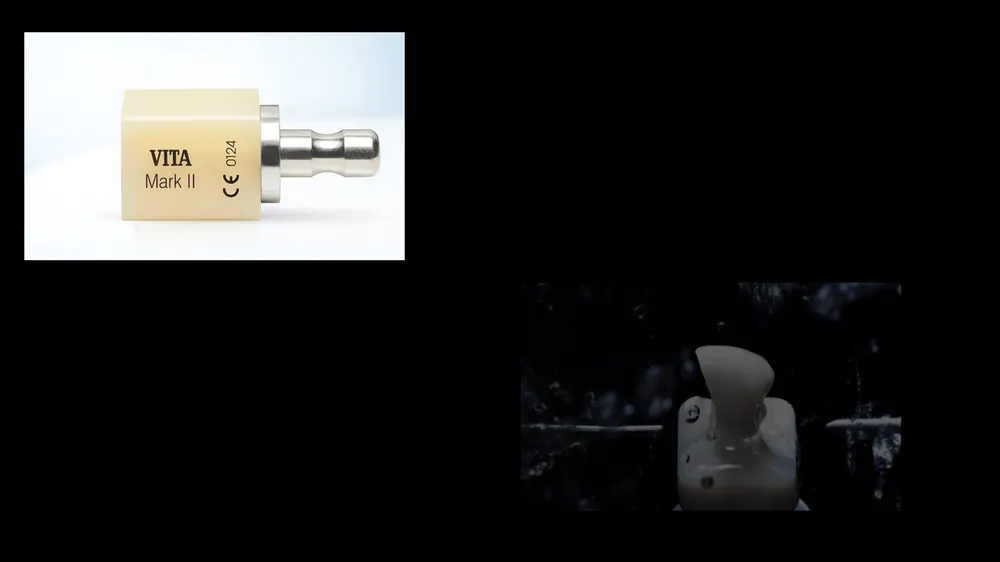
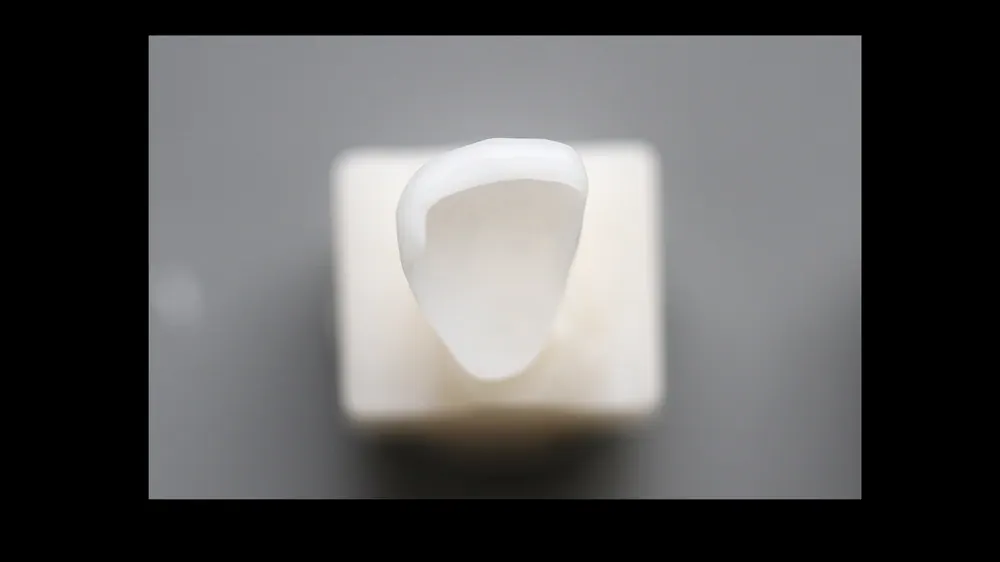
This is how the veneer is fabricated through this process,
and after the design step, it takes the milling machine about 20 minutes to cut out a single veneer.
Even multiple teeth can be finished within a single day, which is why it's usually called the same-day method.
Because this method mostly uses the same materials and the same equipment,
and because the software used to design the veneers is also similar,
the result tends to come out fairly similar regardless of which clinic does it.
The problem is that this similar result usually ends up with an artificial, awkward color and shape.
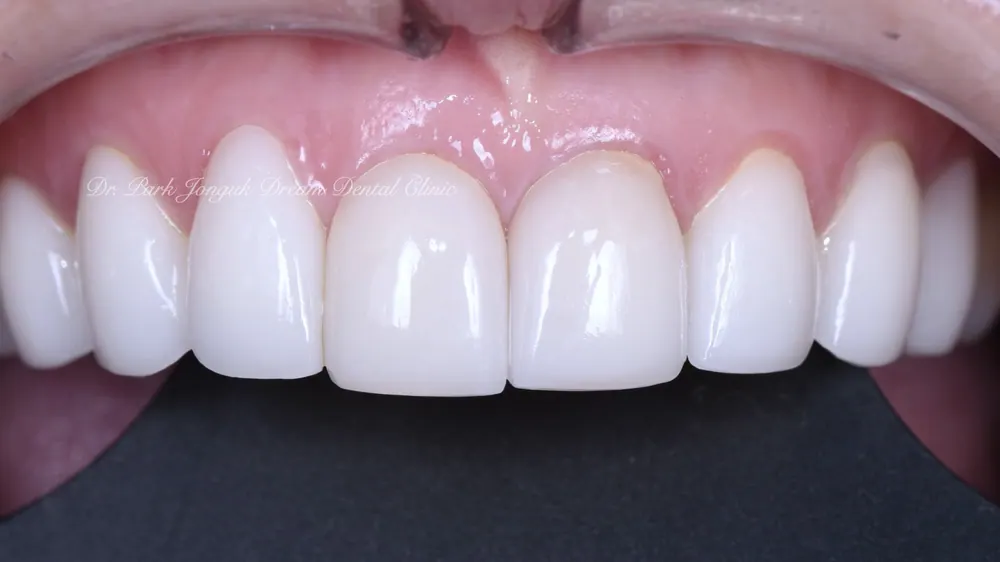
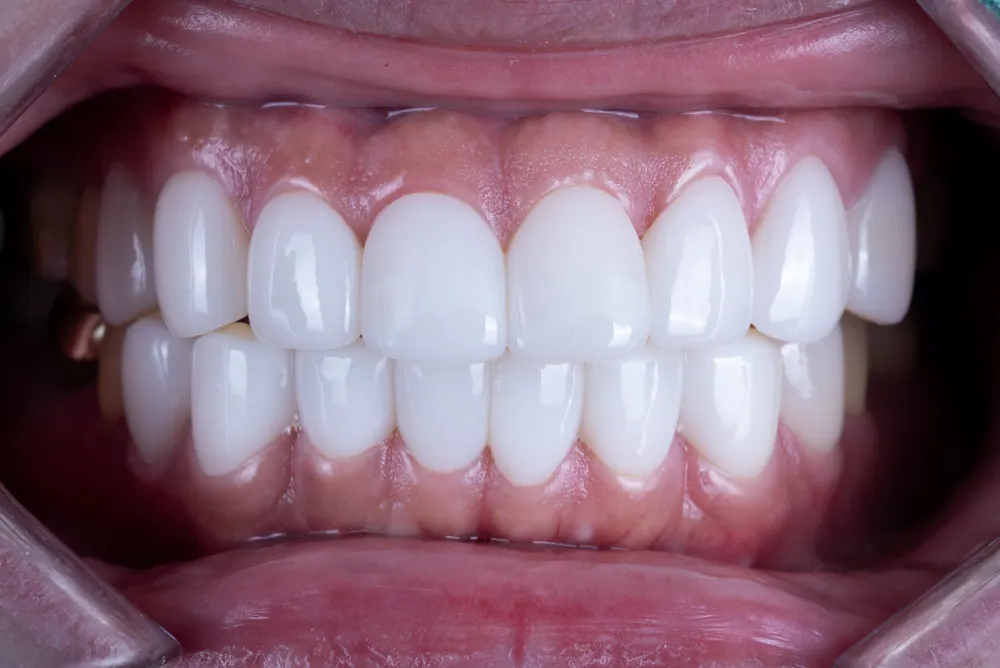
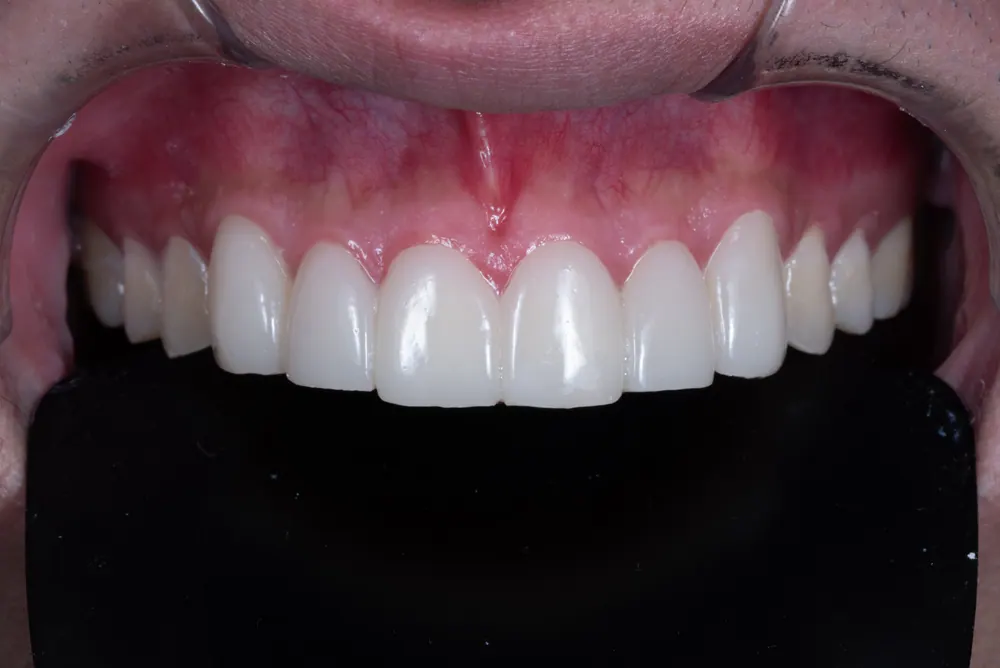
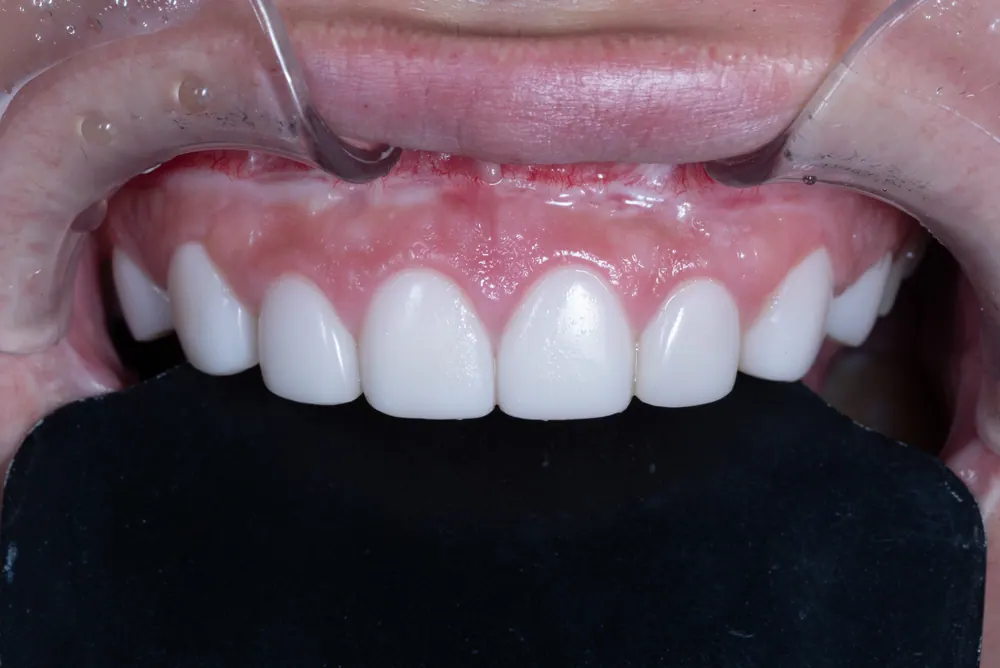
These are the kinds of results you get with same-day veneers.
Every case ends up excessively white and bright,
with no dimensionality in the teeth, and unable to express the range of coloring or translucency of a natural tooth.
A great many patients come to our clinic in exactly this state —
they got treatment hoping their front teeth would look prettier, but many say that now, when talking with people, all they notice is their own teeth.
The other fabrication method for veneers is the handmade method,
and the handmade method itself can also be split into two approaches.
One uses only a single type of ceramic,
while the other carefully combines multiple types of ceramic.
The handmade method made with just one type of ceramic
doesn't differ all that much in result from the same-day method described earlier.
The method made by carefully combining multiple types of ceramic is also called the "buildup" method,
and only this kind of handmade method — the one that includes buildup — can produce a truly esthetic veneer.
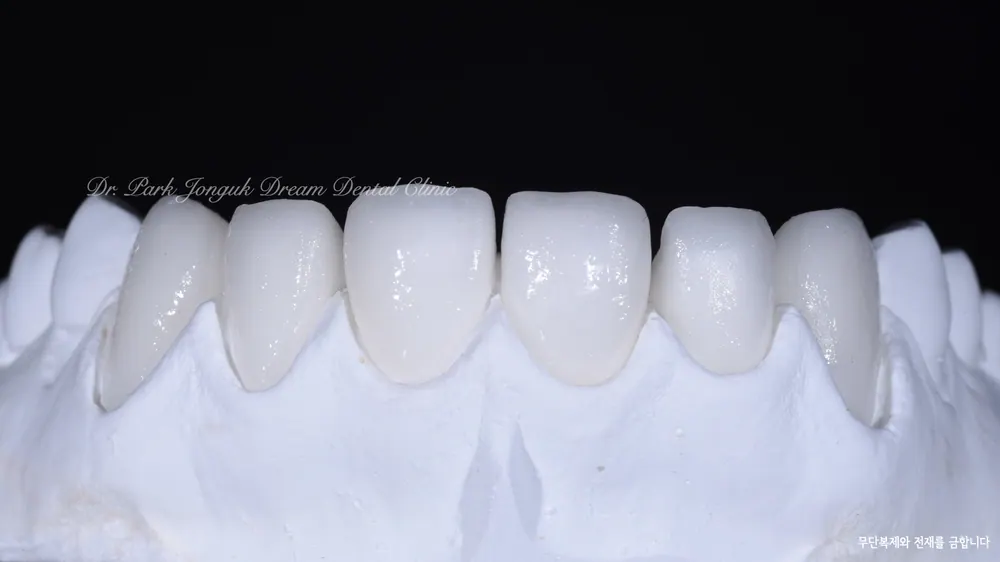
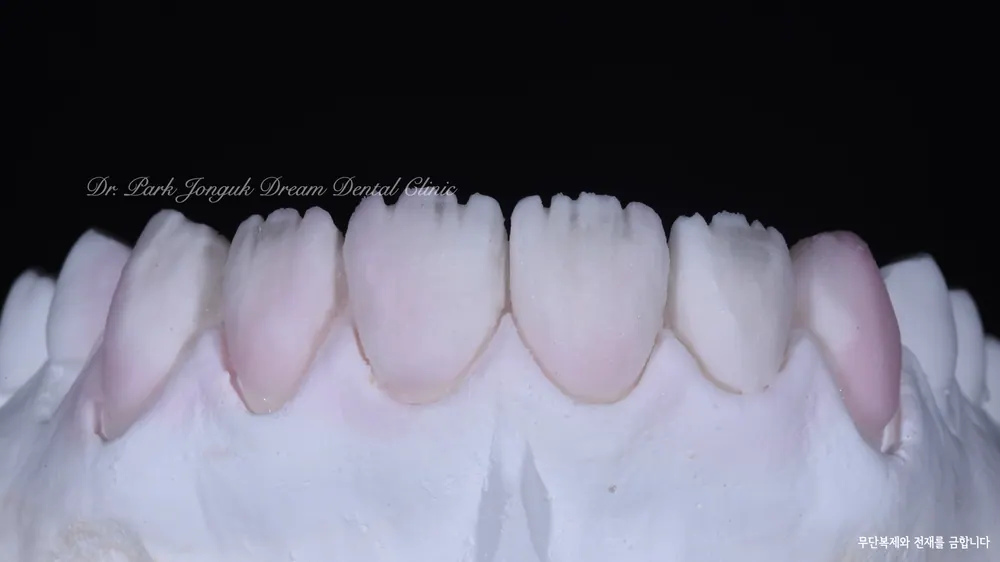
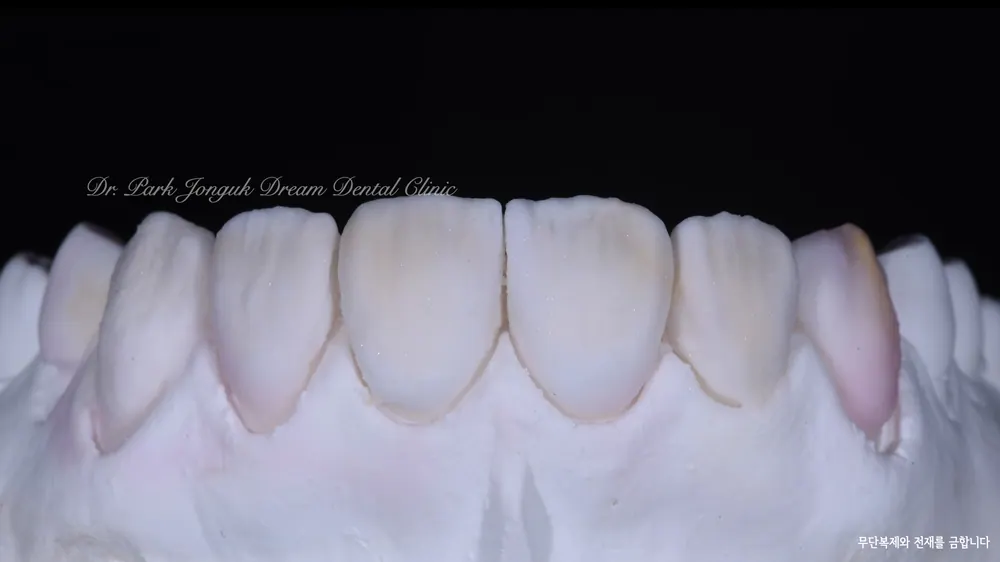
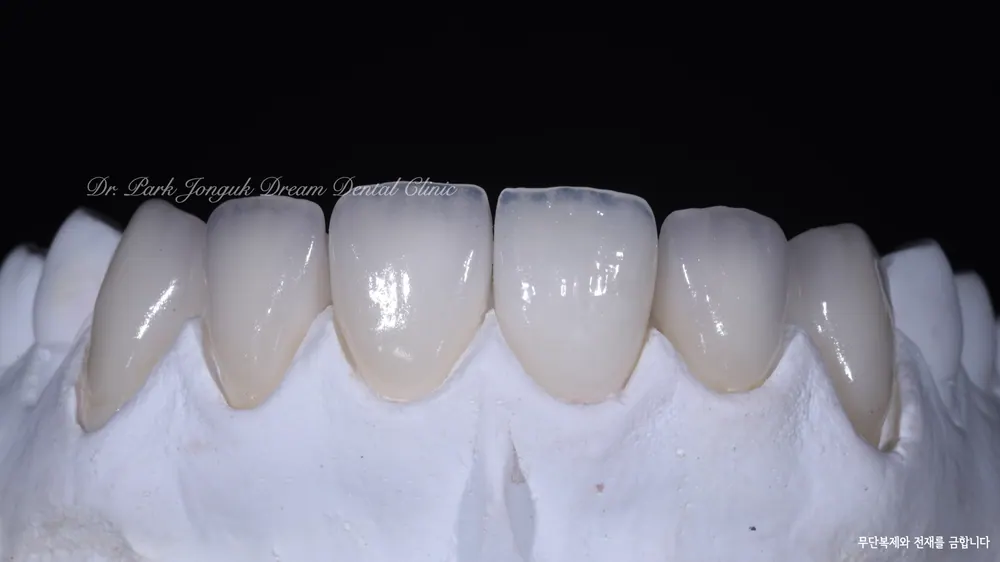
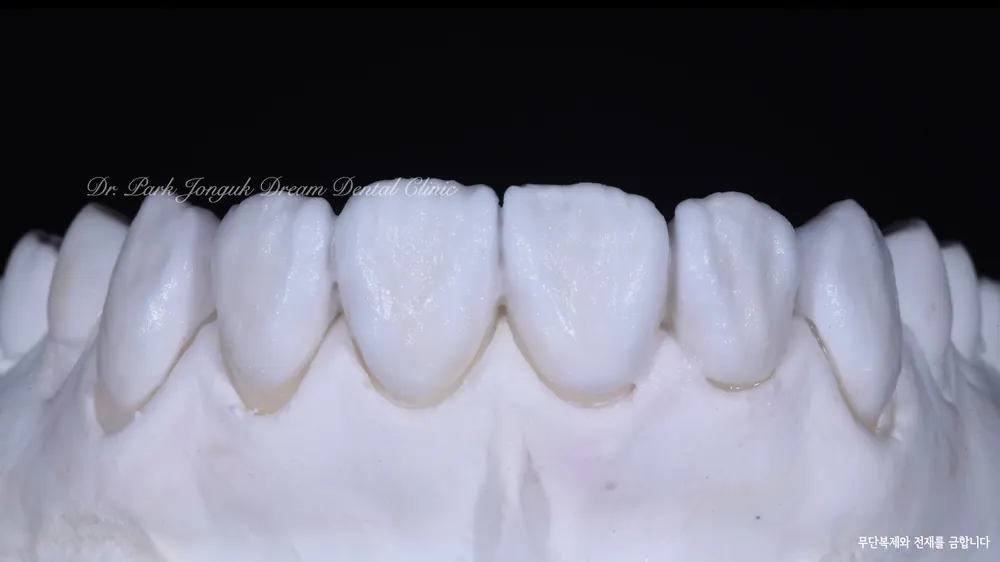
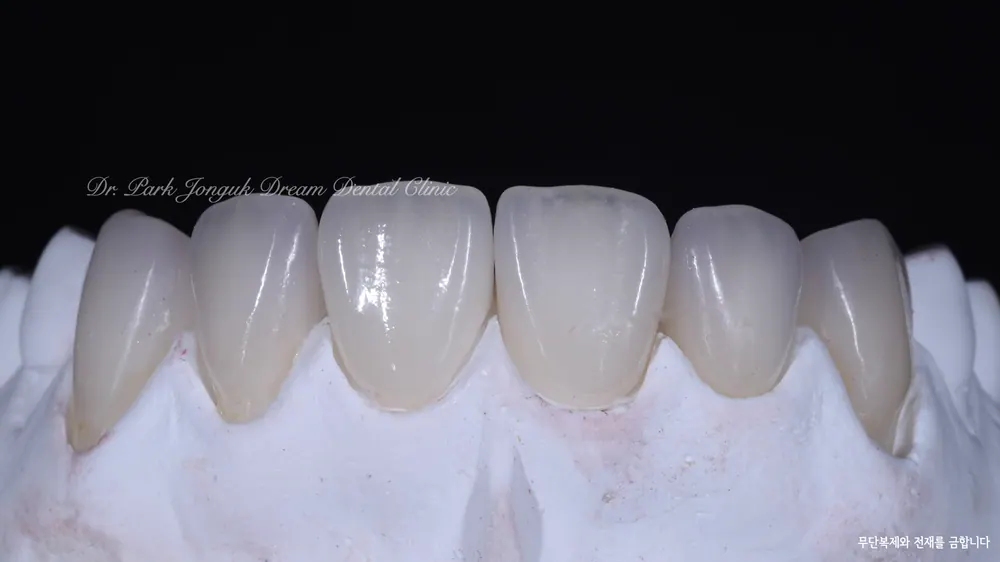
This is the buildup step within the handmade veneer fabrication process.
It's the step where various kinds of ceramic have to be stacked up,
and a ceramist specializing in veneers has to build the tooth shape one by one, by hand.
This produces a veneer that's both natural and esthetically pleasing —
a result that the computer-made, same-day method simply can't match.
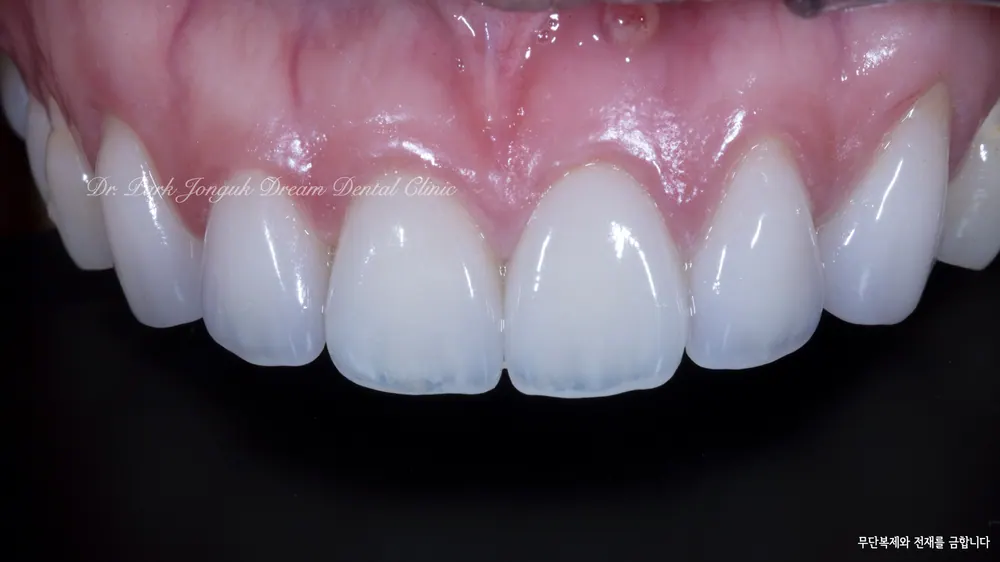
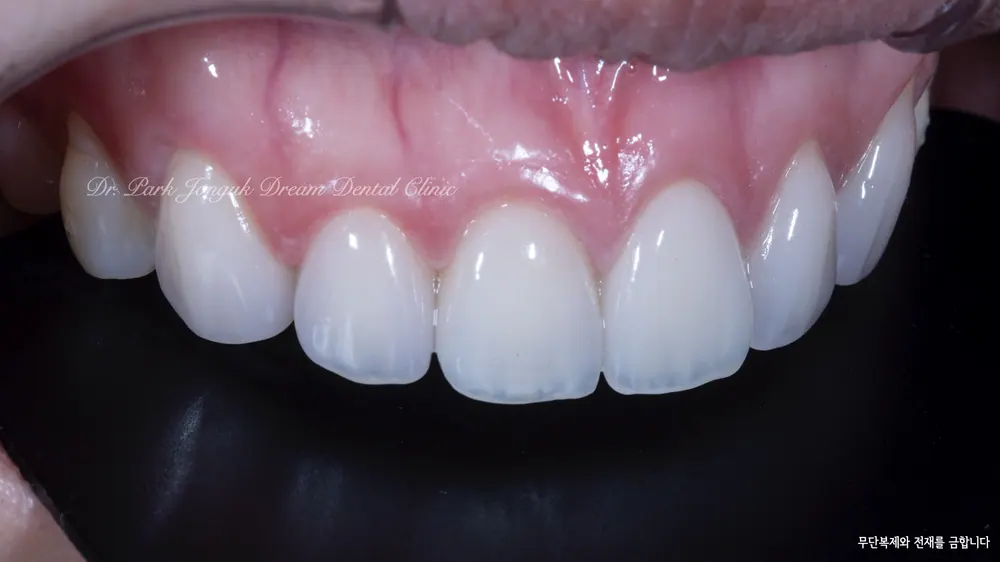
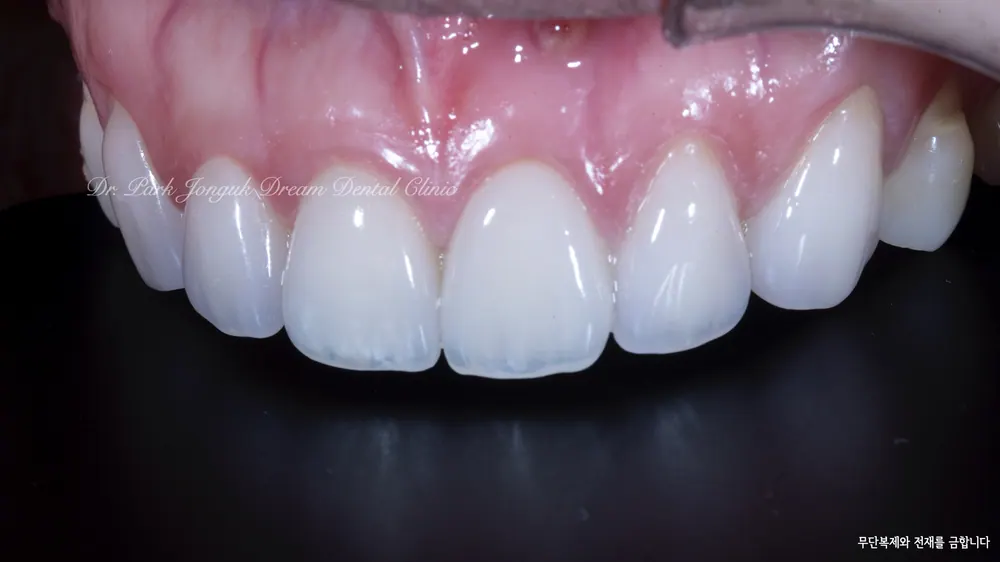
This veneer was fabricated to fully express the natural tooth's range of characteristics.
In this way, the same-day method and the handmade method that includes buildup
show a major difference in the fabrication process, and an even bigger difference in the result.
2. Differences in Treatment Philosophy
Most clinics doing veneer treatment these days have adopted the same-day method.
Since it's a method where, once you've bought the equipment, you can produce results cheaply, quickly, and in high volume from then on,
it makes it considerably easier for a clinic to scale up or become a network chain.
Rather than focusing on the esthetic outcome of the veneer,
it's fabricated with a commercial purpose in mind, so in some cases,
I've even seen clinics explain that this level is simply the esthetic limit of what a veneer can achieve.
At Lamista Academy,
we place strong emphasis on the esthetics of veneers in our lectures.
Whether or not a dentist is aiming for an esthetic result really matters.
The handmade method takes about two to three weeks from the start of treatment to the finish.
For a handmade veneer that includes the buildup process,
the fabrication is so demanding and time-consuming that it inevitably takes a long time.
On top of that, since a highly skilled ceramist is needed, the added time and labor cost end up raising the overall price.
From a dentist's perspective, for a veneer sold at the same price,
it's only natural to want it fabricated at lower cost — but I think this, too, comes down to a difference in treatment philosophy.
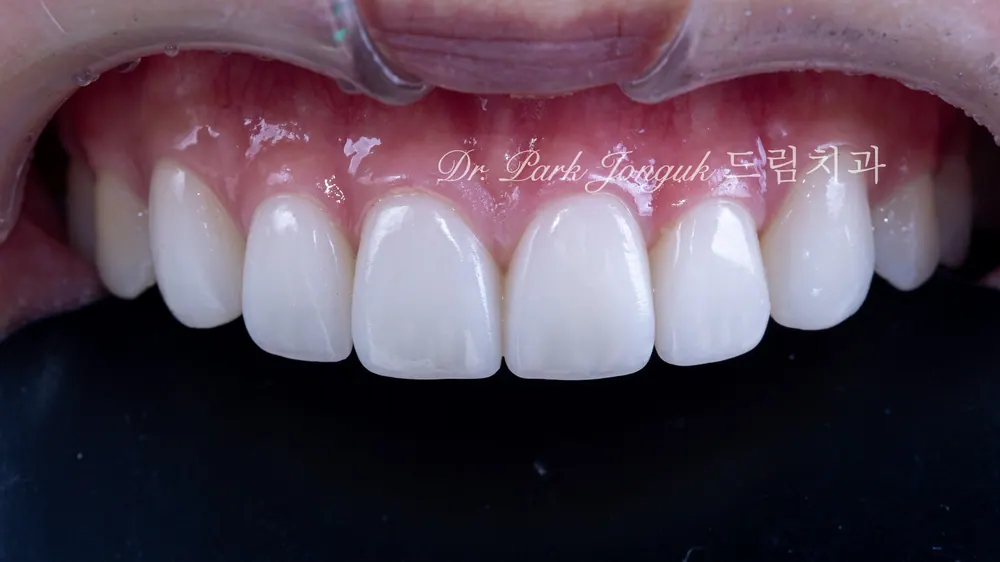
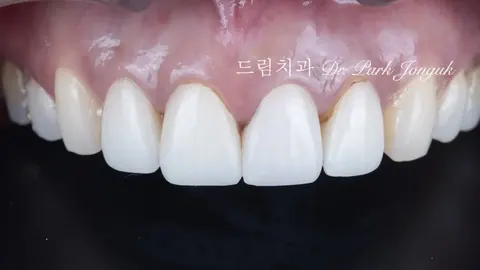
A veneer fabricated to be bright while still keeping its translucency alive.
This is one of the biggest advantages of using a variety of ceramics.
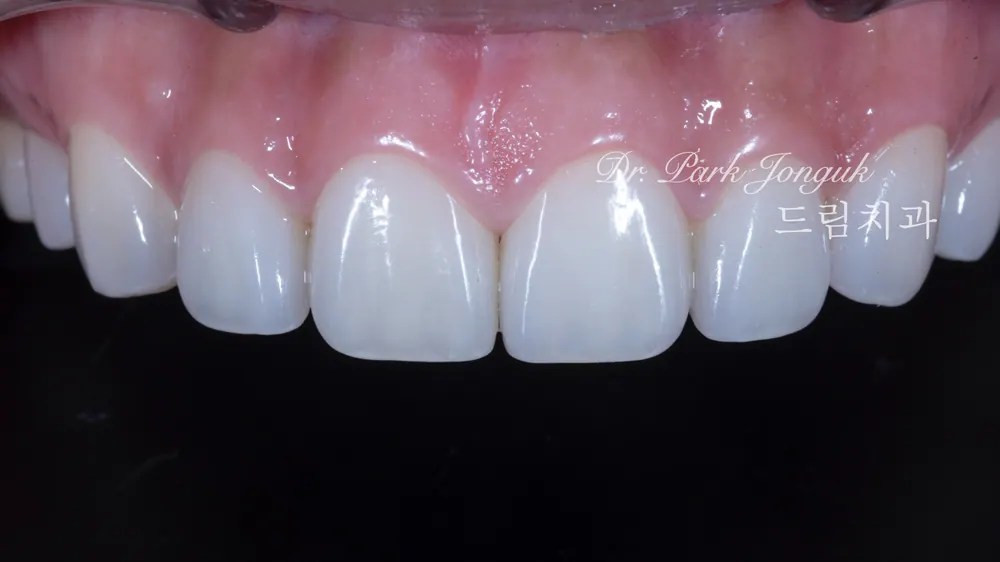
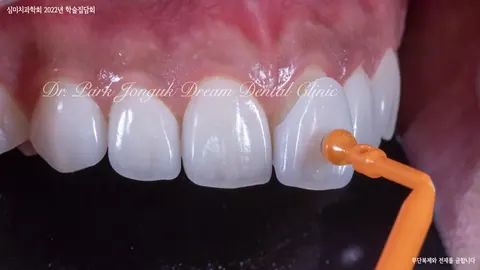
A no-prep veneer with a living sense of dimensionality.
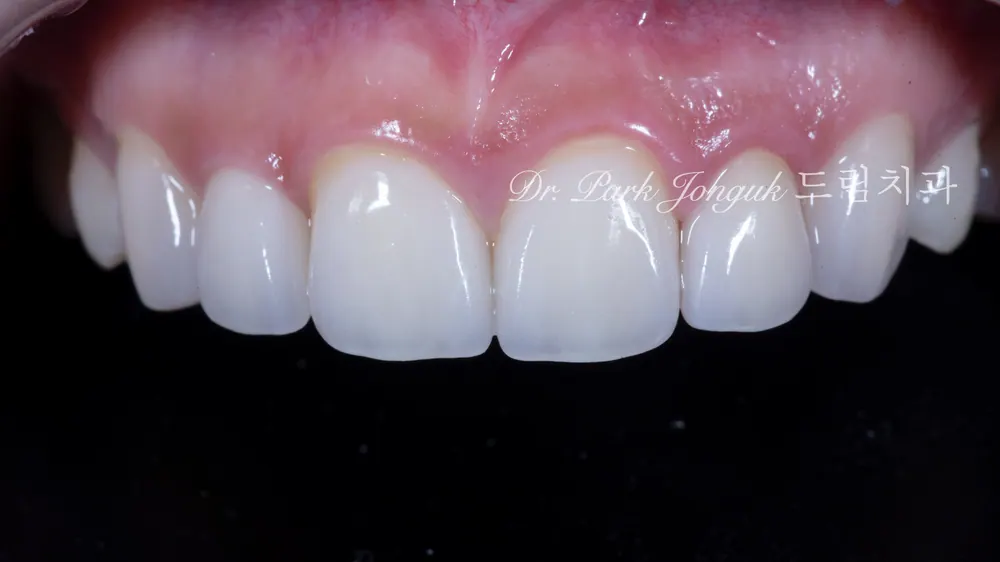
A veneer that preserves a range of natural coloring
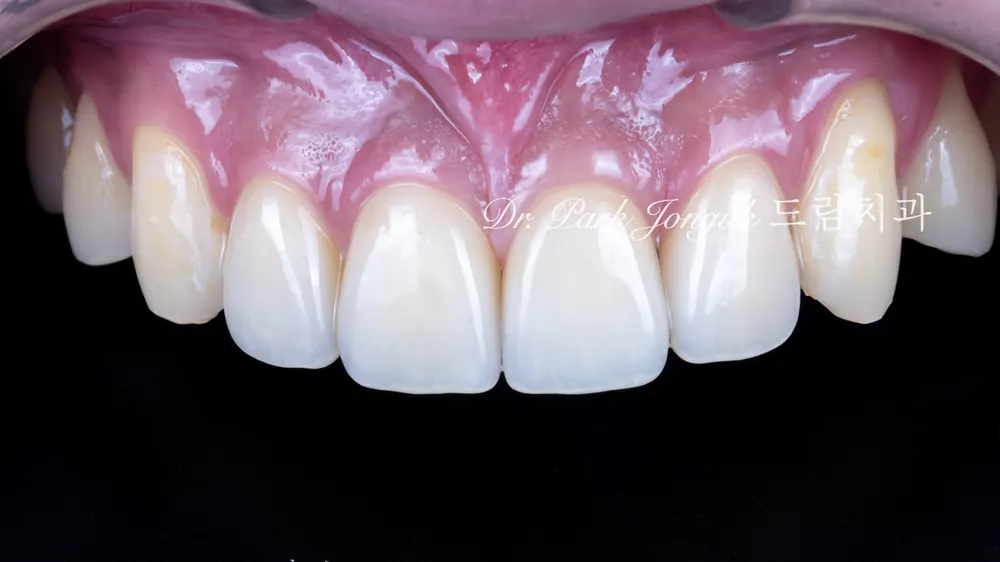
Because the patient disliked overly bright teeth,
the veneer was fabricated to match the color of the surrounding natural teeth as closely as possible.
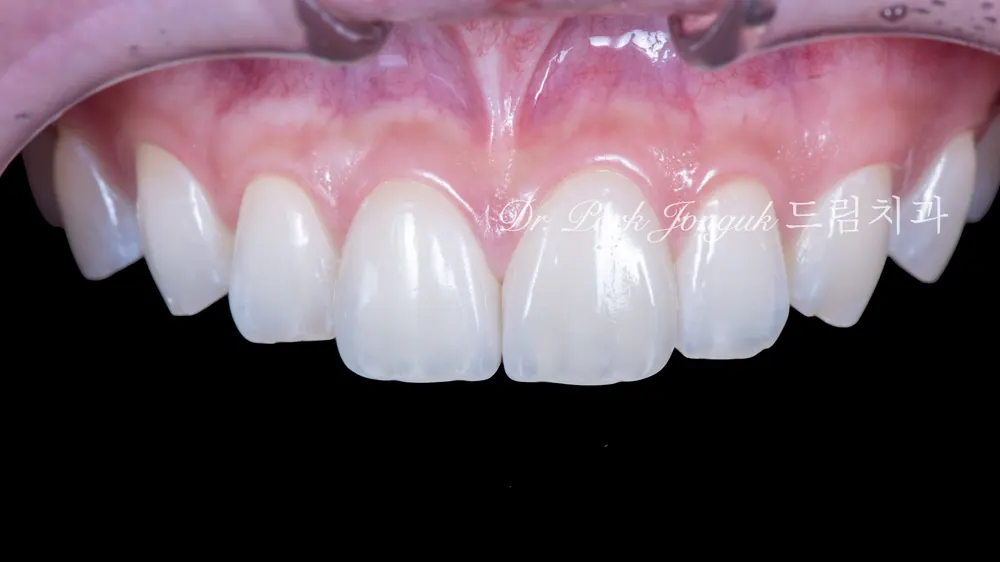
Only the two front teeth among these were treated with veneers.
A veneer with a natural look so well preserved that it's hard to tell apart from the surrounding natural teeth.
3. Is Everything Handmade Automatically Natural?
As esthetic problems with the same-day method have become more common lately,
the number of clinics advertising themselves as "handmade" has also been slowly increasing again.
The problem is that not everything handmade turns out natural.
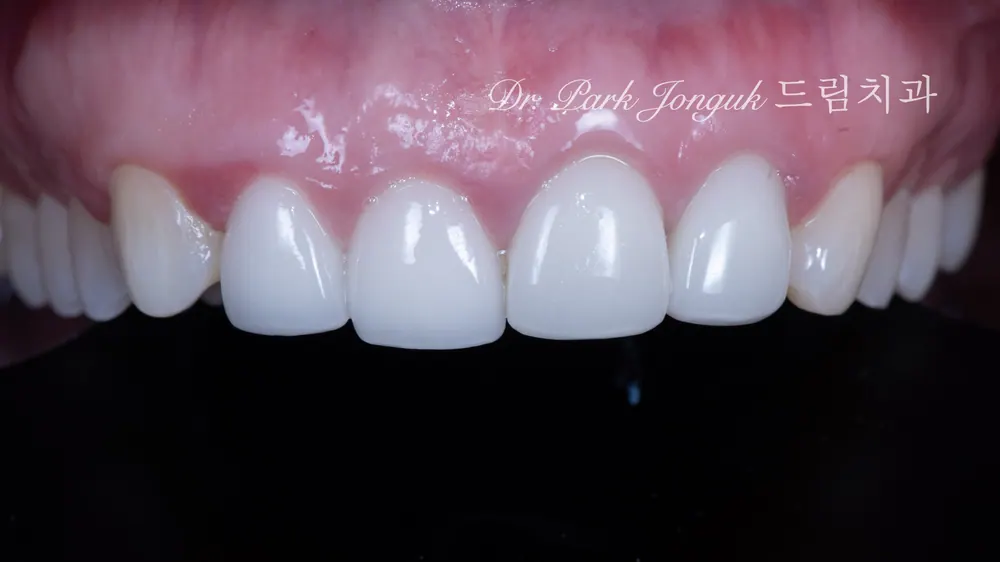
Front teeth that were made by hand but still look awkward and problematic
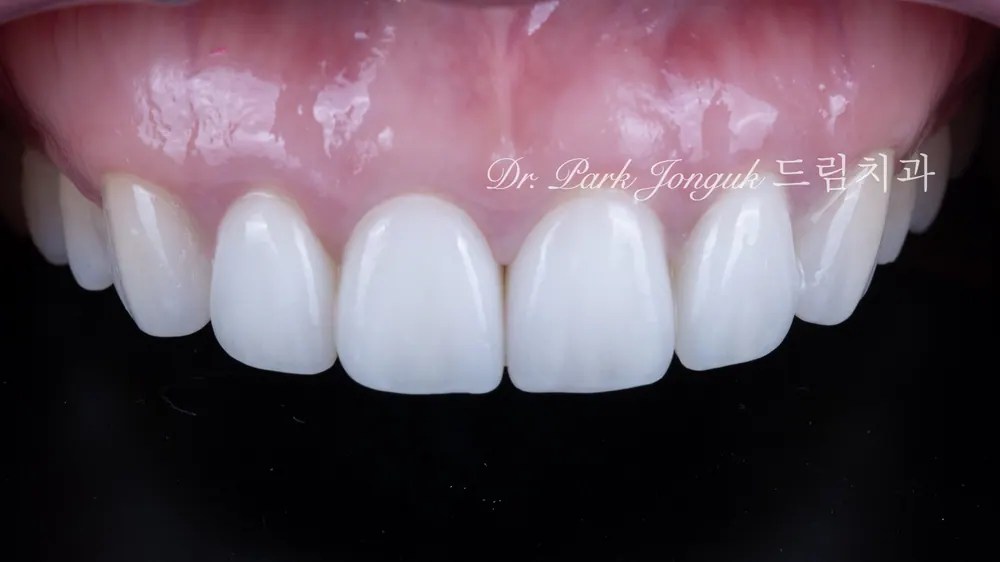
A case redone naturally and beautifully
Even with the handmade method, the result varies enormously depending on how it's made.
For dentists who care about
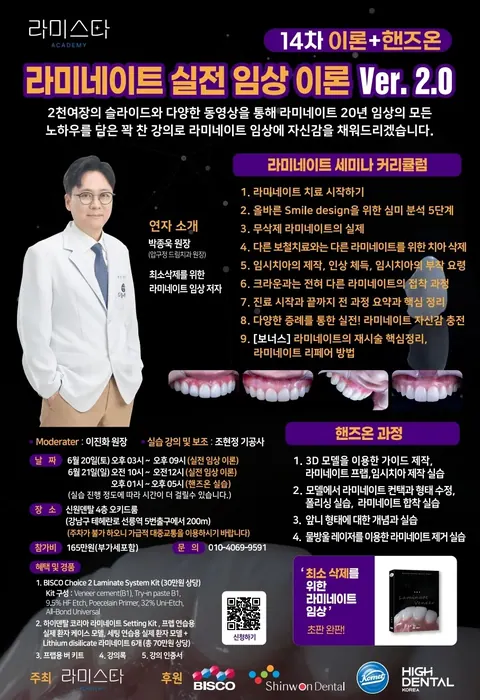
the esthetics of veneers, I'd like to introduce Lamista Academy's May lecture.
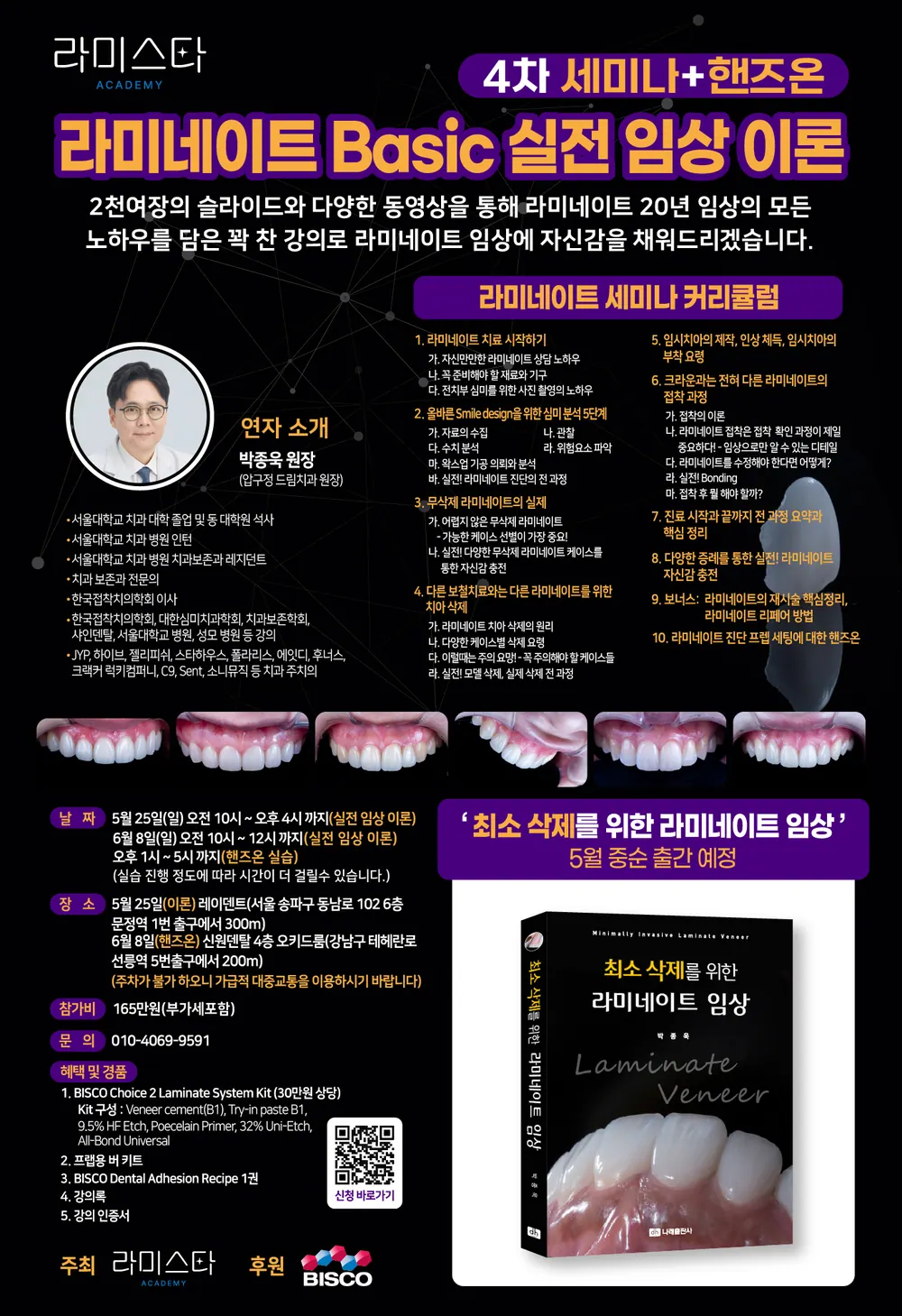
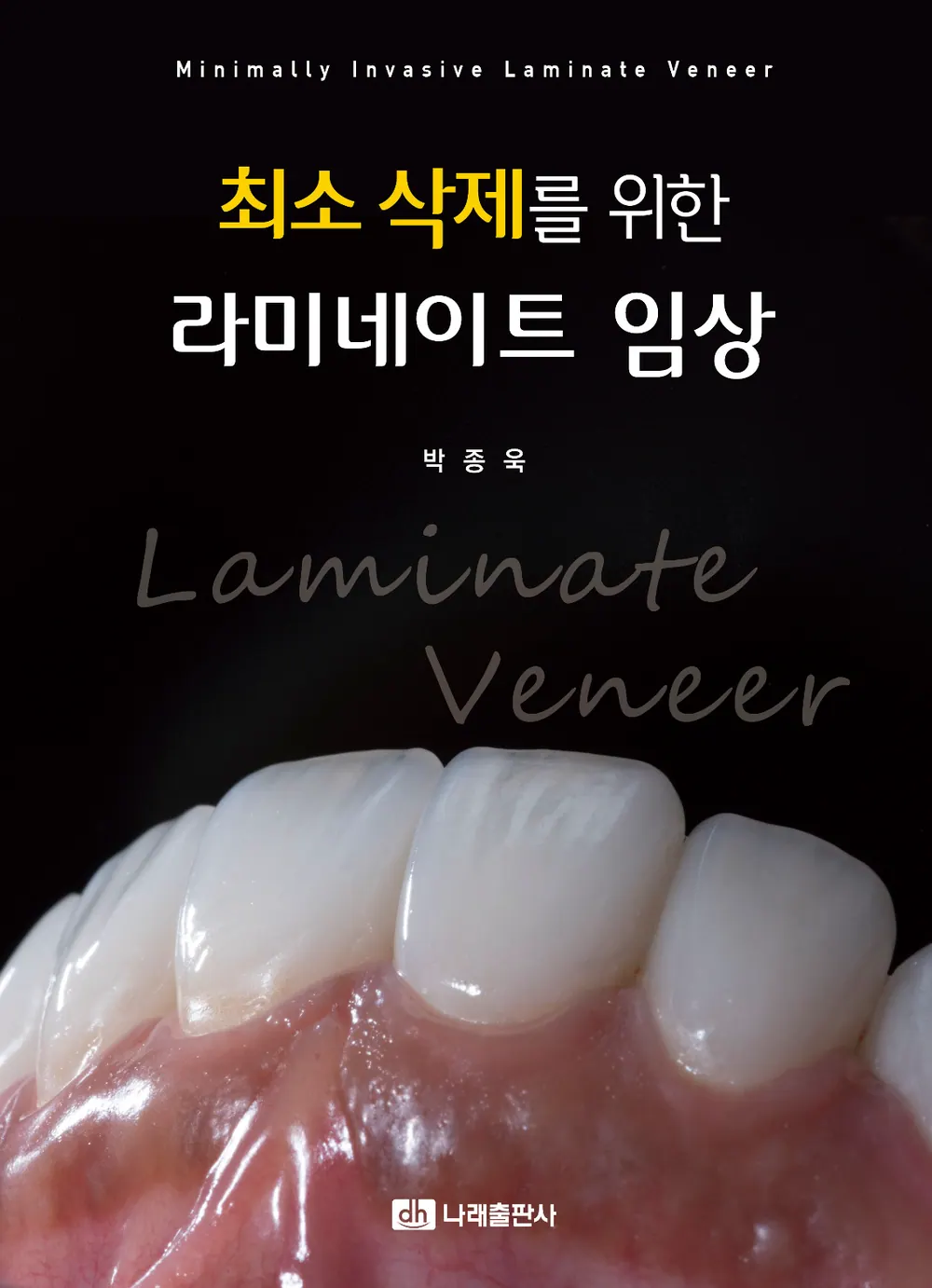
My book, 『최소 삭제를 위한 라미네이트 임상』 (Laminate Clinical Practice for Minimal Reduction), is finally being published on 5/15.
It brings together 20 years of clinical experience with veneers,
with detailed photos and extensive explanations so that every dentist can perform veneer treatment well.
In our country, as a book specializing in veneers,
it can be considered the first textbook of its kind ever published.
This article is a clinical note written by Dr. Park Jonguk of Dream Dental Clinic, Gangnam; the original was published on his blog. The photographs shown are real cases he treated. Results vary with each patient’s condition, and every procedure carries the possibility of individual variation and side effects.
Quick Consult
Request a Callback
Leave your number and we will call you back during clinic hours.
Request Received
We will contact you during clinic hours. For urgent matters, please call +82-2-3448-0028.