
No-prep & micro-prep — no anesthesia
With zero or trace reduction under the microscope, most of these cases proceed without any anesthesia at all.
Process & Comfort
Usually two to three visits, finished within one to two weeks. No-prep and micro-prep cases mostly proceed without anesthesia. From first consult to the first week after bonding — here is the process in its actual order.
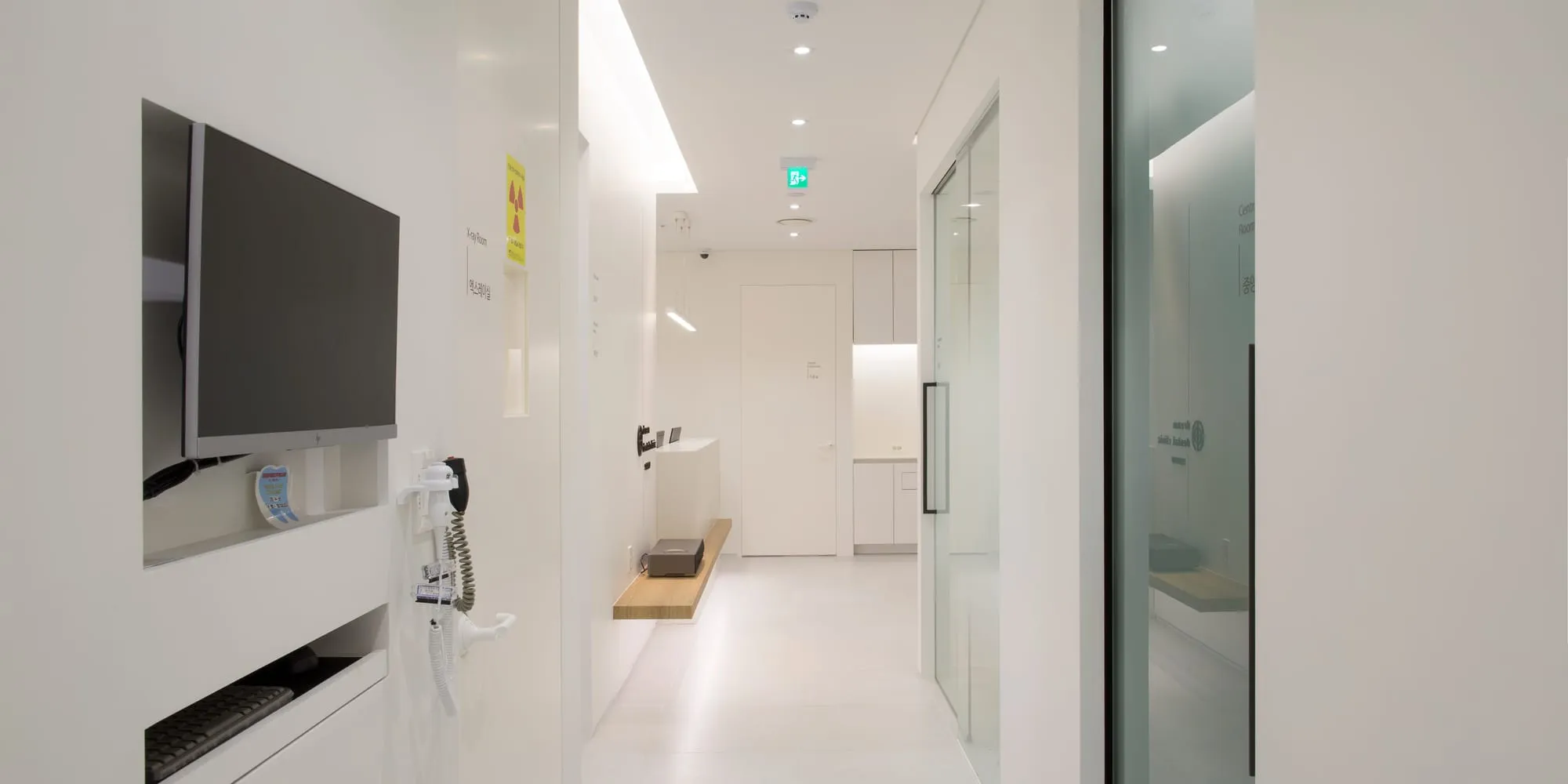 PORCELAIN VENEER
 Timeline
Diagnosis and design happen at the first visit; our in-house lab then spends several days hand-layering the ceramics. Add the try-in and bonding visit, plus a check-up if needed — most cases finish in two to three visits over one to two weeks.
Visit by Visit
Visits may merge or extend depending on your condition — this is the most common flow.
Visit 1 — consult, diagnosis, design (~1 hour)
We listen to your concerns, examine your teeth, and run Park’s AES digital analysis. Whether no-prep is possible, how many veneers you need, and the cost are all answered here. If orthodontics or a crown suits you better, we say so.
(If needed) preparation & provisionals
Minimal-prep cases get light anesthesia, the calculated minimum of trimming, and provisional veneers. No-prep and micro-prep cases skip this step or need no provisionals at all.
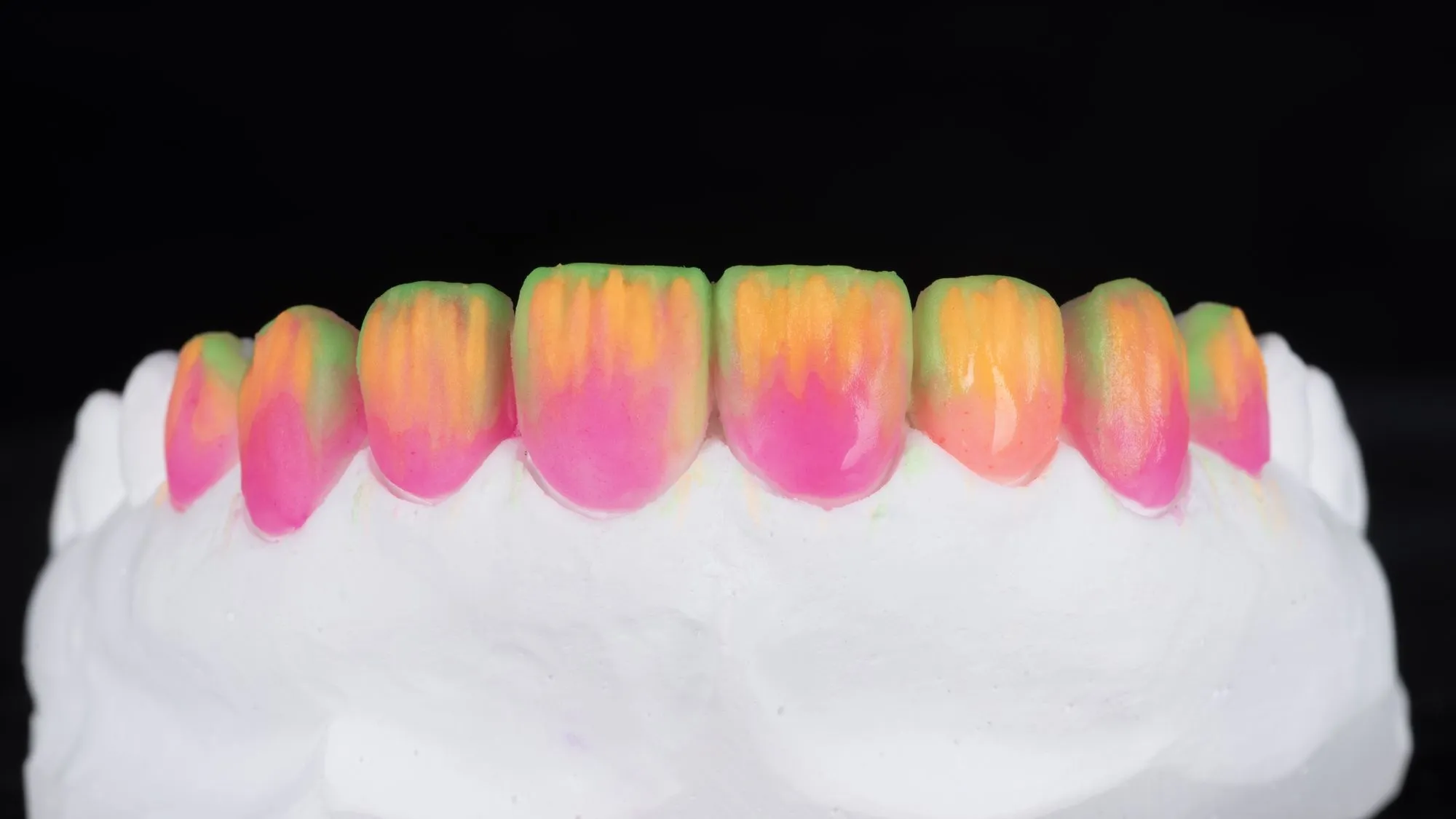
Fabrication — several days in our in-house lab
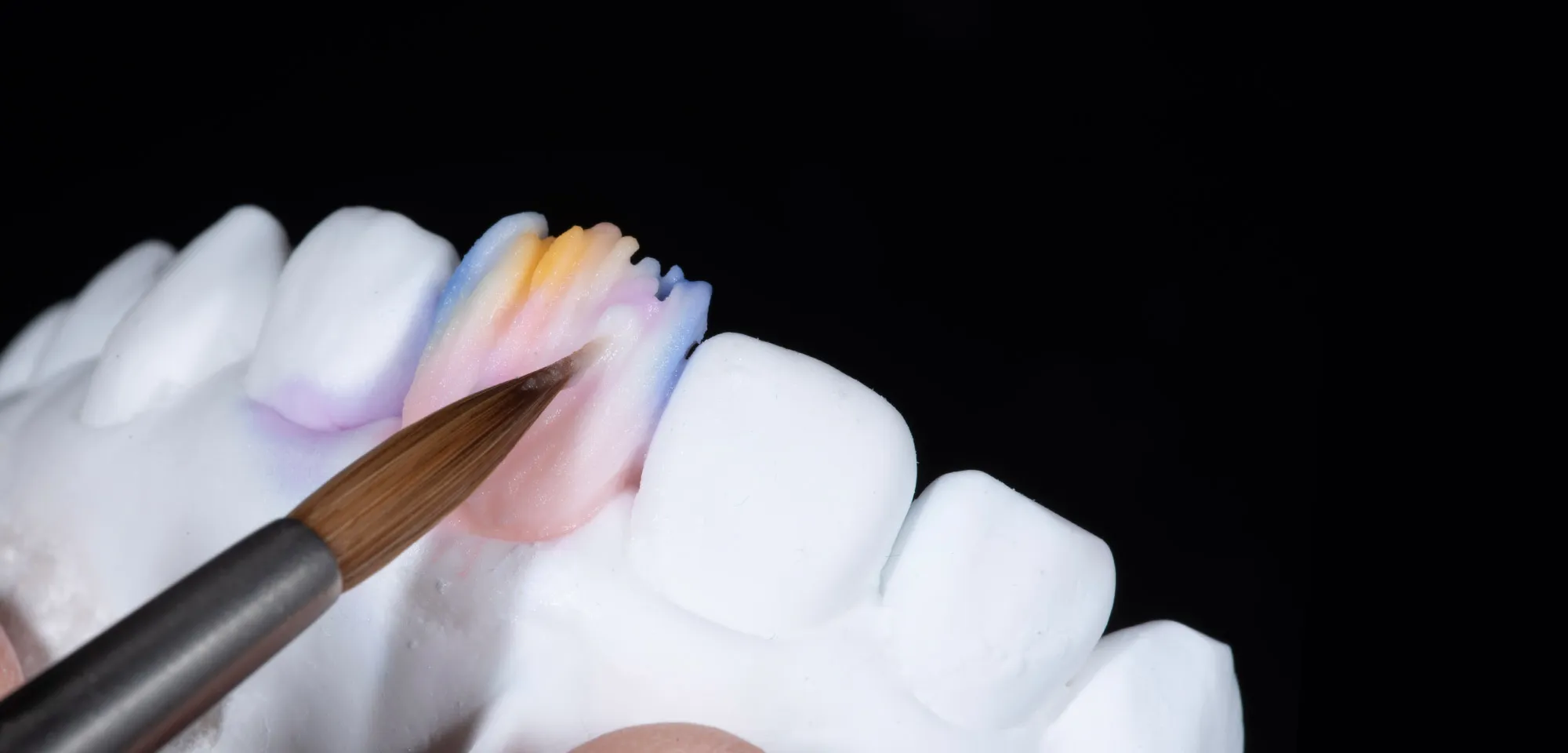
Four to five ceramics are hand-layered to build translucency. The person who diagnosed you designs the shade — the heart of how we work.
Visit 2 — try-in & bonding (1–2 hours)
The finished shells are placed on your teeth before bonding so you can confirm shade and shape together. Only then do we bond, followed by precise bite adjustment.
Visit 3 — check-up
We verify the bond, bite, and gum response, and go over care routines. From here it becomes a 6–12 month check-up cycle.
BEFORE / AFTER
Real veneer cases treated by Dr. Park Jonguk at Dream Dental Clinic, Gangnam. Tap a photo to compare before and after up close.
The before-and-after photos above are real clinical cases treated at Dream Dental Clinic, Gangnam (Dr. Park Jonguk). Results vary with each patient’s condition, and every procedure carries the possibility of individual variation and side effects.
Does It Hurt
Veneers are known to be gentler than implants or crowns because they touch so little of the tooth. Still, here is the honest picture.
With zero or trace reduction under the microscope, most of these cases proceed without any anesthesia at all.
Larger design changes use light anesthesia. For most patients, the pinch of the injection is the discomfort they remember.
Cold sensitivity for a few days is possible and usually settles on its own. If it persists, we check the cause.
We explain each step before doing it, and you can raise your hand to pause at any time. The more nervous you are, the more we recommend checking your no-prep eligibility first.
By Tier
Your experience depends on which tier your teeth qualify for — decided with data at diagnosis.
| Criteria | No-prep | Micro-prep | Minimal-prep |
|---|---|---|---|
| Anesthesia | Usually not needed | Usually not needed | Light anesthesia |
| Provisionals | Not needed | Not needed | Required |
| Visits | Usually 2 | Usually 2 | Usually 2–3 |
| Discomfort | Minimal | Minimal | Controlled by anesthesia |
Anxious Moments
The scary parts are predictable — here is what each one is actually like.
Mainly needed for minimal-prep — and topical gel goes on first to blunt the pinch itself. No-prep and micro-prep usually skip this moment.
The tension about sound and vibration usually outweighs any actual discomfort. So little is trimmed that it is over quickly, and you can raise a hand to pause anytime.
If you have a strong gag reflex, tell us in advance — posture adjustments and fast-setting materials make it far more manageable.
Bonding is precision work done calmly, one tooth at a time. Nothing about it hurts — think of it as enforced rest in the chair.
Before You Start
None of this is required, but it helps us discuss the shape you want in more concrete terms.
First Week
Normal life resumes the same day. Just keep these in mind for the first week.
Day one
If you had anesthesia, eat after it wears off. Avoid sticky foods (caramel, taffy) and very hard foods for the first few days.
Days 2–3
Brief cold sensitivity is a normal settling-in response and usually fades quickly.
One week
Speech and lip sensation adapt to the new contours — any strangeness typically disappears within days.
From then on
Brush and floss as usual, rinse after staining drinks — the full routine is on our lifespan & care page.
Quick Consult
Leave your number and we will call you back during clinic hours.
Request Received
We will contact you during clinic hours. For urgent matters, please call +82-2-3448-0028.
The available range depends on your condition. Feel free to ask us.
FAQ
Not with our method. We make veneers by multilayer build-up, layering and firing four to five ceramics in our in-house lab over several days. One-day veneers milled from a single ceramic block follow a different fabrication process.
Provisionals are only needed for minimal-prep cases, and only for the fabrication window of several days to a week. No-prep and micro-prep cases go about life as usual with no provisionals at all.
Every step is explained before it happens, and raising your hand pauses everything. Anesthesia is topped up whenever needed — this is a controlled procedure, not an endured one.
Not by much. Even six to eight veneers usually finish within the same two to three visits — each appointment simply runs somewhat longer.
Yes — the cement reaches most of its strength immediately. Wait for anesthesia to wear off if you had any, and skip sticky or very hard foods for the first few days.
Tell us your dates in advance. By combining diagnosis and preparation into one visit and scheduling fabrication tightly, we can plan the minimum number of visits together. WhatsApp consultation is available for international patients.
New front-tooth contours can make “s” sounds feel unfamiliar for a few days, but the tongue adapts quickly. We test speech together at try-in before bonding, so lasting speech problems are rare.
Up to the try-in stage, shade and shape can still be revised and the plan adjusted. That is exactly why we bond only after you have fully reviewed and approved the try-in — not rushing is the rule.
When diagnosis and design finish the same day, preparation (if needed) can begin on day one. But shade and form decisions are never rushed — for cases that deserve thought, we recommend confirming the design and proceeding at the next visit.
Brief cold sensitivity for a few days is possible and usually settles within one to two weeks; no-prep and micro-prep cases rarely feel it at all. If it persists or worsens, the bite may need adjusting — come in and have it checked.
Diagnosis appointments are usually available within your preferred week. With a fixed date like a wedding, count fabrication time plus a buffer check-up and start four to six weeks out. Book by phone (+82-2-3448-0028) or KakaoTalk.
They are clinical records for shade design and progress comparison — color and translucency are reproduced from records, not memory. Records are kept for care purposes only and published on our site only with separate consent.
The diagnosis and design visit runs about an hour depending on the examinations; the try-in and bonding visit varies with tooth count and is scheduled with room to spare. Exact times are confirmed when you book.
Veneers rarely need it — no-prep and micro-prep proceed without anesthesia, and even minimal-prep needs only light local anesthesia. If dental fear runs deep, tell us at consult; we start by pacing the treatment in smaller, slower steps.
This page is general information about the treatment. Diagnosis, treatment options, and duration vary by individual condition — an in-person examination is how we plan your actual care.
Articles
How the same topic is judged chairside, written up with real cases.
How many visits, which steps, for your teeth — find out at diagnosis.