
Veneer Failure Comes Down to Who Did It, Not the Material
Not long ago, a patient came in because two front veneers had come loose.
She said it had been two years since she had veneers done elsewhere.
She noticed the edges had turned black while looking in the mirror, and after searching around for a long time, she found her way to us.
As soon as she sat down, she asked me this:
"If I get this redone, won't it just come loose again?"
That one sentence told me everything about the stress she'd been through.
I hear this question dozens of times a year.
Having focused on veneers for over 20 years, I see just as many patients coming in for redos.
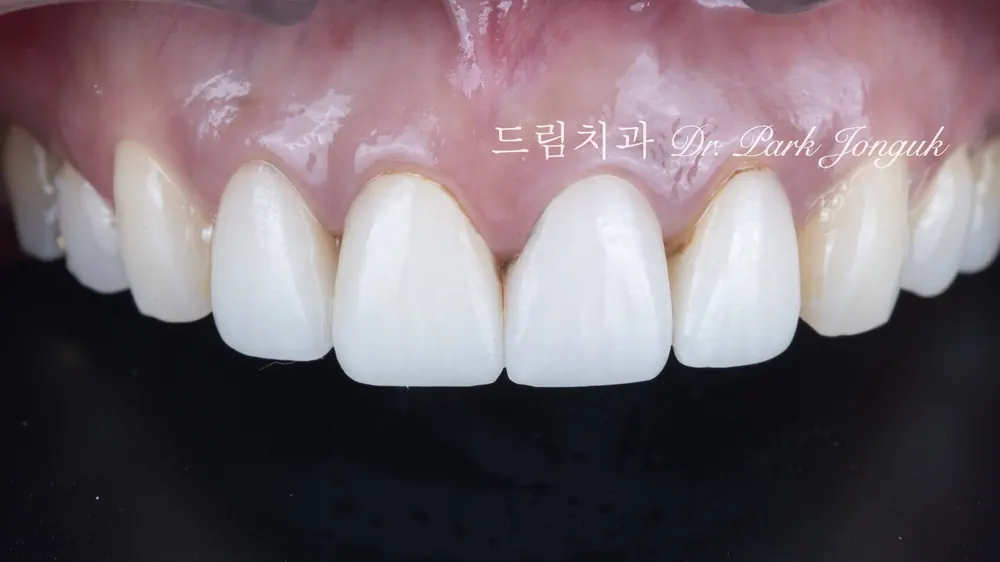
Why Do Veneers Need to Be Redone?
In most cases, it's not the material — it comes down to the process at the time of the initial bonding.
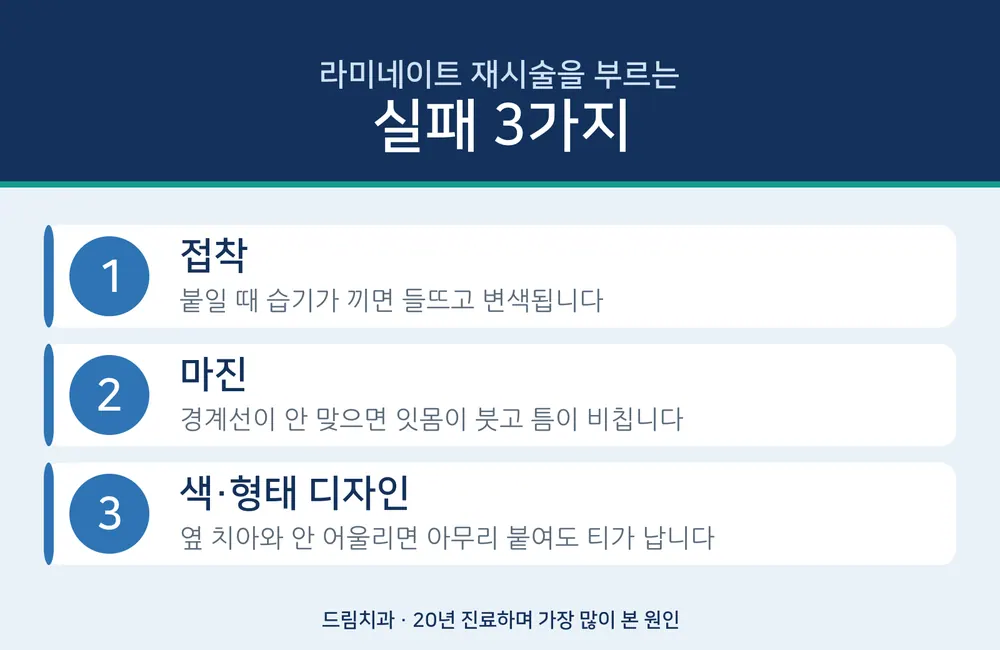
In redo cases, there are three things I actually see most often.
The first is bonding.
A veneer is, in the end, a treatment that 'bonds' a thin piece of ceramic to a tooth,
and if saliva or moisture gets in at the exact moment of bonding, the bond strength weakens.
Over time it lifts, and color seeps in through the gap.
The margin discoloration in the patient I mentioned earlier was exactly this case.
The second is the margin.
That's the border where the veneer meets the tooth.
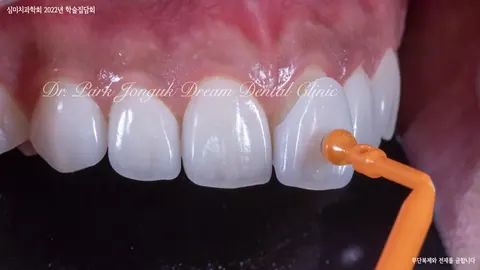
If this line doesn't align with the gumline, the gum can swell, or a dark gap can show through.
The third is color and shape design.
If it doesn't match the adjacent teeth, it will show no matter how well it's bonded.
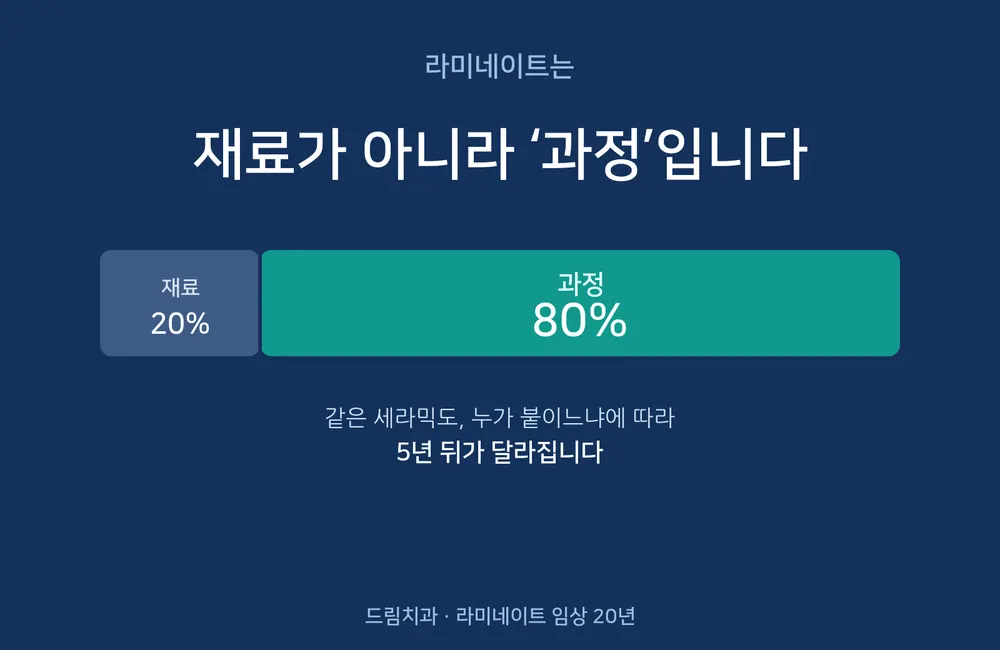
So in the end, it comes down to the dentist's skill
Even with the same material and the same patient, the outcome depends on who performs the treatment.
I say this often in my lectures: with veneers, it's not the material that makes up 80% of the outcome — it's the process.
Even using the exact same ceramic, how well moisture is controlled during the bonding step completely changes how things look five years later.
The same goes for finishing the margin. A difference of just 0.1mm can determine both gum health and esthetics.
Personally, I never bond a veneer while rushed for time.
I've seen far too often, in the redo chair, what happens years later to a veneer that was bonded in a hurry.
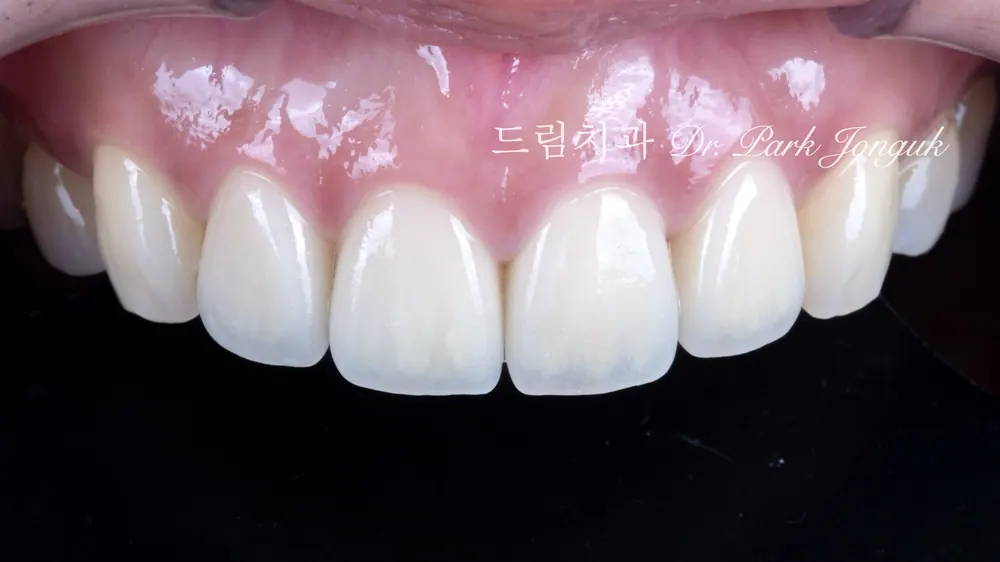
What Patients Should Always Check Before a Redo
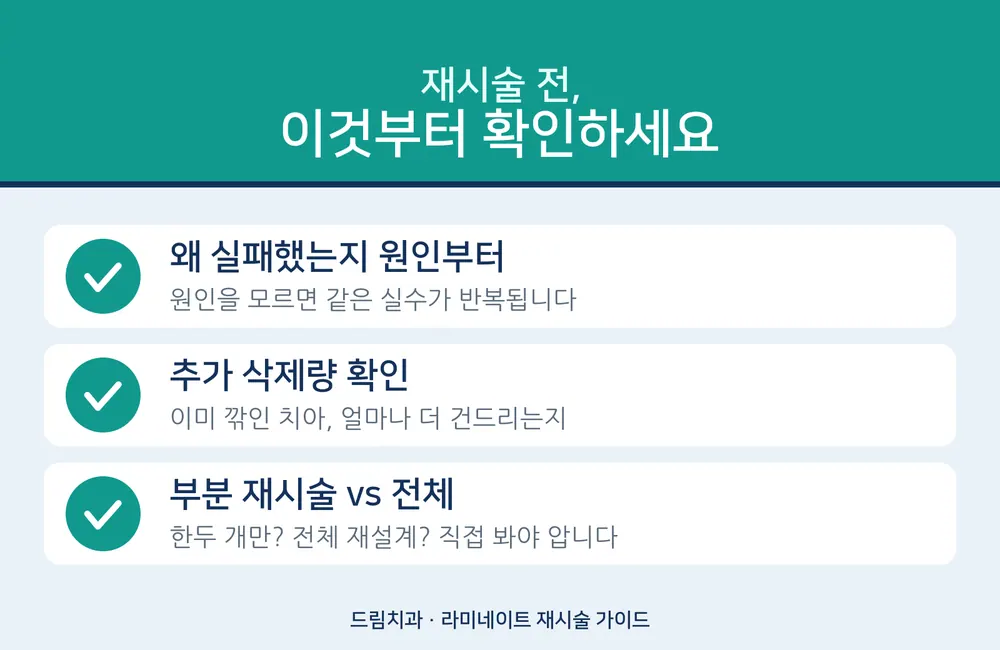
To avoid failing twice, you first have to pin down exactly why the first attempt failed.
Before deciding on a redo, I always look at the 'cause' first.
Whether it's lifted, whether only the color has changed, or whether the gumline is the problem.
If you re-bond without knowing the cause, the same mistake just repeats.
One more thing: if the tooth has already been reduced, you must check exactly how much more it will need to be touched when it's redone.
"How many teeth will need to be redone?"
I get this question a lot too.
Honestly, it varies case by case. Some patients only need one or two teeth touched up, while others need the entire design redone.
That's why I can't give you an answer over the phone. I have to see it in person to know.
In Closing
One thing I can say for certain: redoing is harder than doing it the first time.
You're starting on a tooth that's already been reduced, carrying the conditions of a previous failure. That's exactly why I approach redo cases even more carefully.
I won't make grand promises. Pinpointing exactly why the first treatment failed before starting —
that's the most realistic way to prevent a second failure.
If you're considering a veneer redo, I recommend first checking why your teeth ended up the way they are now.
The Veneer Redo Process
Dream Dental Clinic | 2F, 841 Nonhyeon-ro, Gangnam-gu, Seoul (Apgujeong Station Exit 4)
Written by Park Jonguk, DDS, MS (20 years of veneer clinical practice, author of Korea's first domestic veneer textbook)
This article is a clinical note written by Dr. Park Jonguk of Dream Dental Clinic, Gangnam; the original was published on his blog. The photographs shown are real cases he treated. Results vary with each patient’s condition, and every procedure carries the possibility of individual variation and side effects.
Quick Consult
Request a Callback
Leave your number and we will call you back during clinic hours.
Request Received
We will contact you during clinic hours. For urgent matters, please call +82-2-3448-0028.