
Over-reduction
Drilling past the enamel into dentin invites sensitivity and pain, and the tooth showing through can read darker. Bonding to dentin is also weaker, raising the risk of debonding.
Veneer Revision
Many patients come to us because their existing veneers look unnatural, mismatch in shade, or disappoint in shape. The heart of revision is how the old veneer is removed.
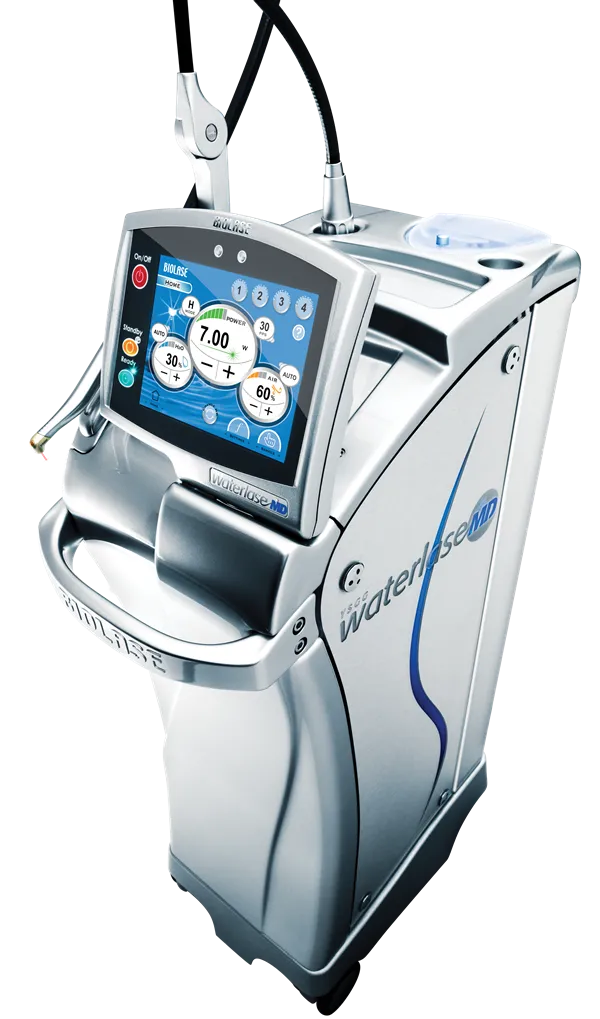 Er:YAG Laser Revision
 Concerns
Why It Fails
Many veneer complications trace back to over-aggressive reduction. Revision starts with finding the cause of what bothers you now — remake without a diagnosis, and the same failure repeats.
Drilling past the enamel into dentin invites sensitivity and pain, and the tooth showing through can read darker. Bonding to dentin is also weaker, raising the risk of debonding.
A restoration seated too deep beneath the gum can leave it swollen, bleeding, and inflamed — often with a dark line showing at the gum margin.
When bonding or bite design is off, veneers chip or come loose — and when shade and translucency are not matched to the neighboring teeth, the veneer can look apart from them.
Redo or Repair
No. Depending on the condition, some cases are solved without full revision. We sort this out first at diagnosis — not remaking veneers that have no reason to be remade is also a principle of revision care.
If the examination shows revision is unnecessary, we tell you so. Only the teeth that need it, only as much as needed — the same principle as first-time treatment.
At the Consult
No records from the original clinic? No problem — each item below is verified directly by examination.
Er:YAG Laser
The Er:YAG (“water-drop”) laser acts selectively on the bonding resin between ceramic and tooth, releasing the veneer.
The beam passes through the ceramic and reaches the bonding resin layer.
Only the resin reacts. The tooth surface remains untouched.
With its bond released, the veneer lifts off intact — revision proceeds with no additional reduction.
Because the tooth surface is not damaged, revision can proceed without any further reduction.
Comparison
Honest Limits
The Er:YAG laser is a fine tool, not a universal one. In the cases below the plan changes — and we tell you at diagnosis.
Laser separation works on the bonding resin beneath thin ceramic shells. Thick crowns and zirconia restorations are removed by other planned methods.
If the previous clinic reduced into dentin, removing the shell still leaves that damage behind. Protective care and the new restoration are planned together.
When caries has progressed under the shell or the tooth itself is fractured, caries treatment or a crown may come before any re-veneering.
Laser release itself does not cut the tooth, but each cycle of cleaning the bonding surface leaves the enamel slightly changed. We assess what enamel remains and confirm this revision is still within a safe range.
Full Journey
Laser separation is just one step. From cause analysis to refabrication, the full journey usually finishes within two to three visits.
Diagnosis of the existing veneers
We identify the cause of your complaint — reduction, bonding, bite, or form — and sort your case among revision, repair, and re-bonding.
Redesign
Park’s AES rebuilds the proportions and smile line the previous treatment missed. The failure cause is removed at the design stage.
Er:YAG laser separation
The laser acts selectively on the bonding resin, releasing the old shells without harming the teeth — no additional reduction.
Surface clean-up
Remaining bonding resin is gently cleared. Teeth with exposed dentin get protective care planned alongside.
Multilayer refabrication
In our in-house lab, four to five ceramics are hand-layered to rebuild the translucency that blends with your natural teeth.
Try-in, bonding & check-up
Shade and form are confirmed before bonding; the bite is adjusted after. Whatever failed last time is re-checked one final time.
By Condition
A revision consult does not always end in “remake everything.” These are the actual paths we plan by condition.
| Your situation | Usual plan | The point |
|---|---|---|
| Only the shade bothers you | Remake the affected teeth | Laser off, then redesign the shade in multilayer ceramic |
| A small chip or roughness | Polishing / repair | Often finished without any refabrication |
| Repeated debonding | Diagnose the cause, then re-bond or remake | Unless the bonding or bite cause is fixed, it repeats |
| Swollen, bleeding gums | Gum treatment → reshape the restoration | When the margin is the cause, remaking settles the gums |
| Unhappy with shape overall | Redesign, then remake | Park’s AES rebuilds proportion and smile line first |
| Margins exposed by gum recession | Gum evaluation → reshape | The recession’s cause is managed first to prevent relapse |
| Suspected decay under the shell | Caries treatment → new restoration plan | Saving the tooth outranks re-veneering |
Actual Case
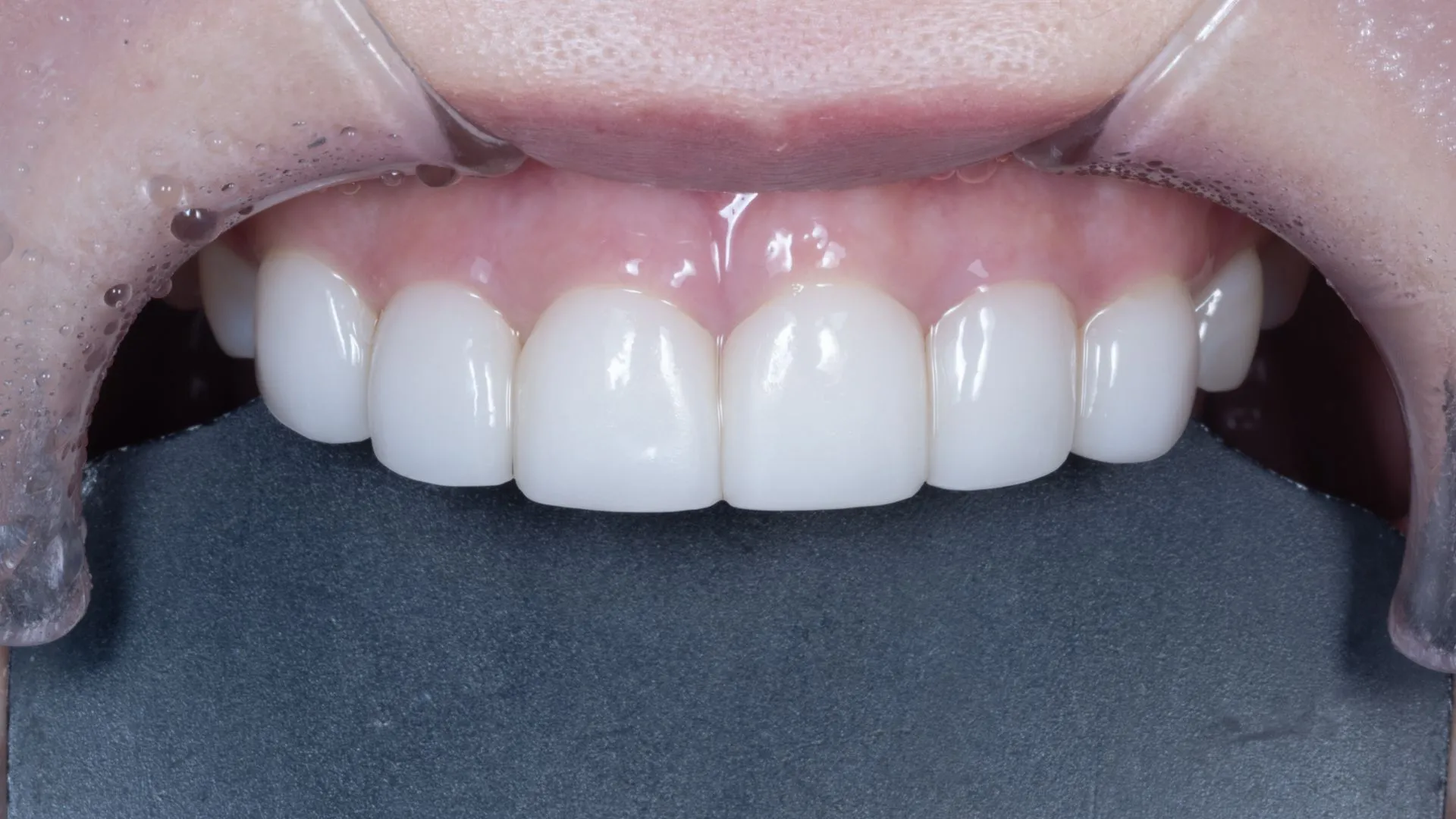
01Before revision — existing veneers
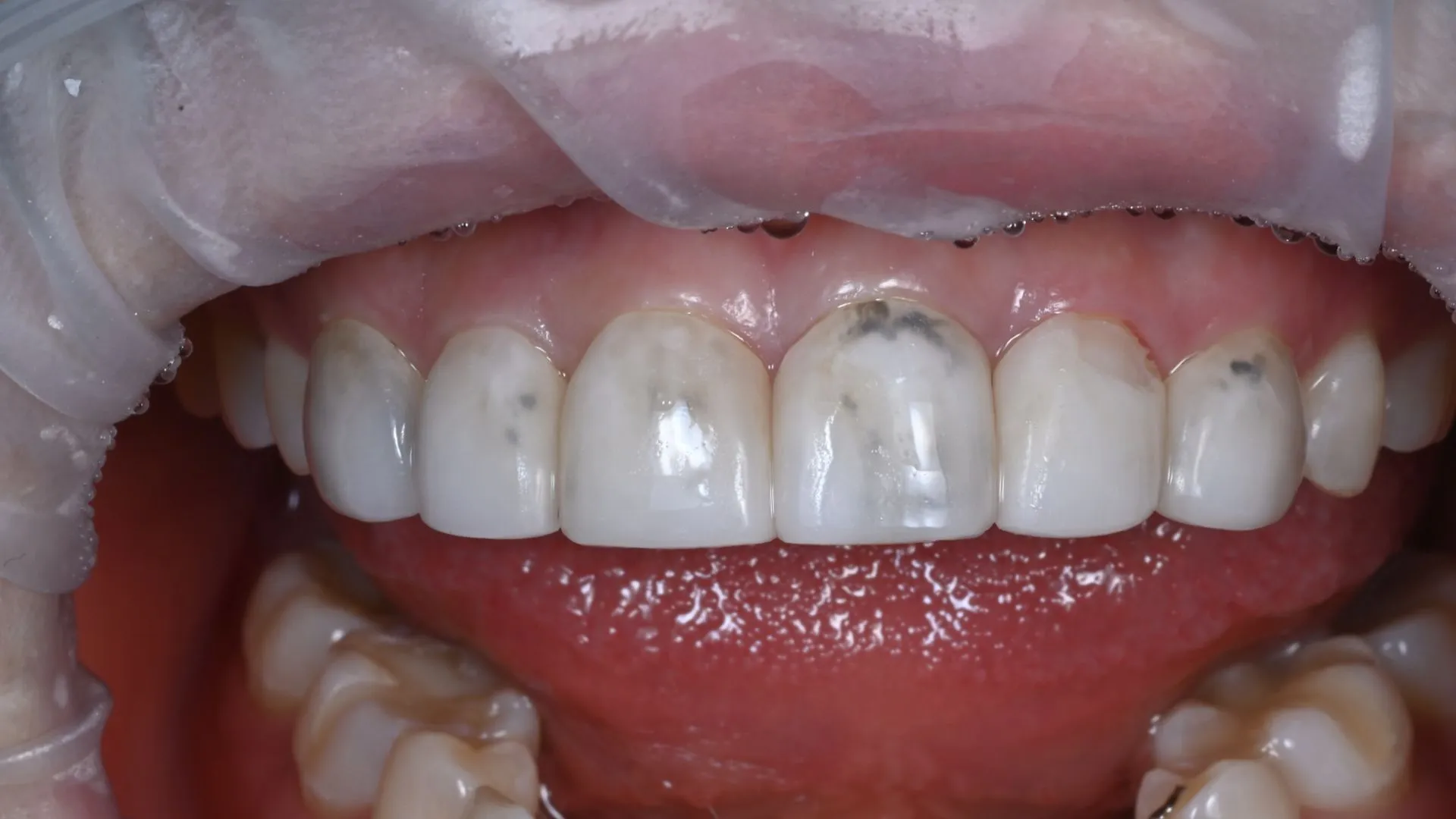
02During the laser pass
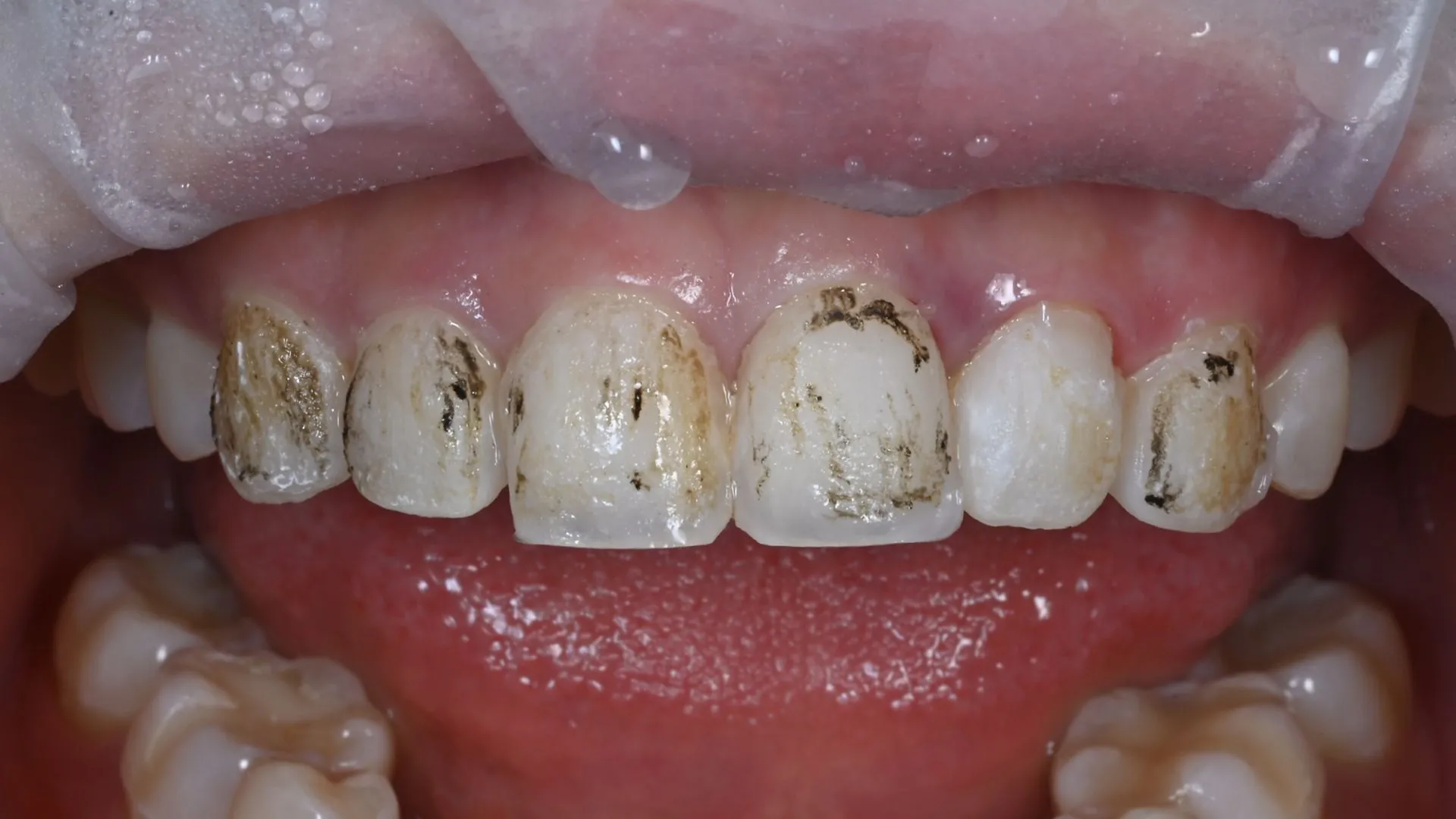
03Resin reaction visible
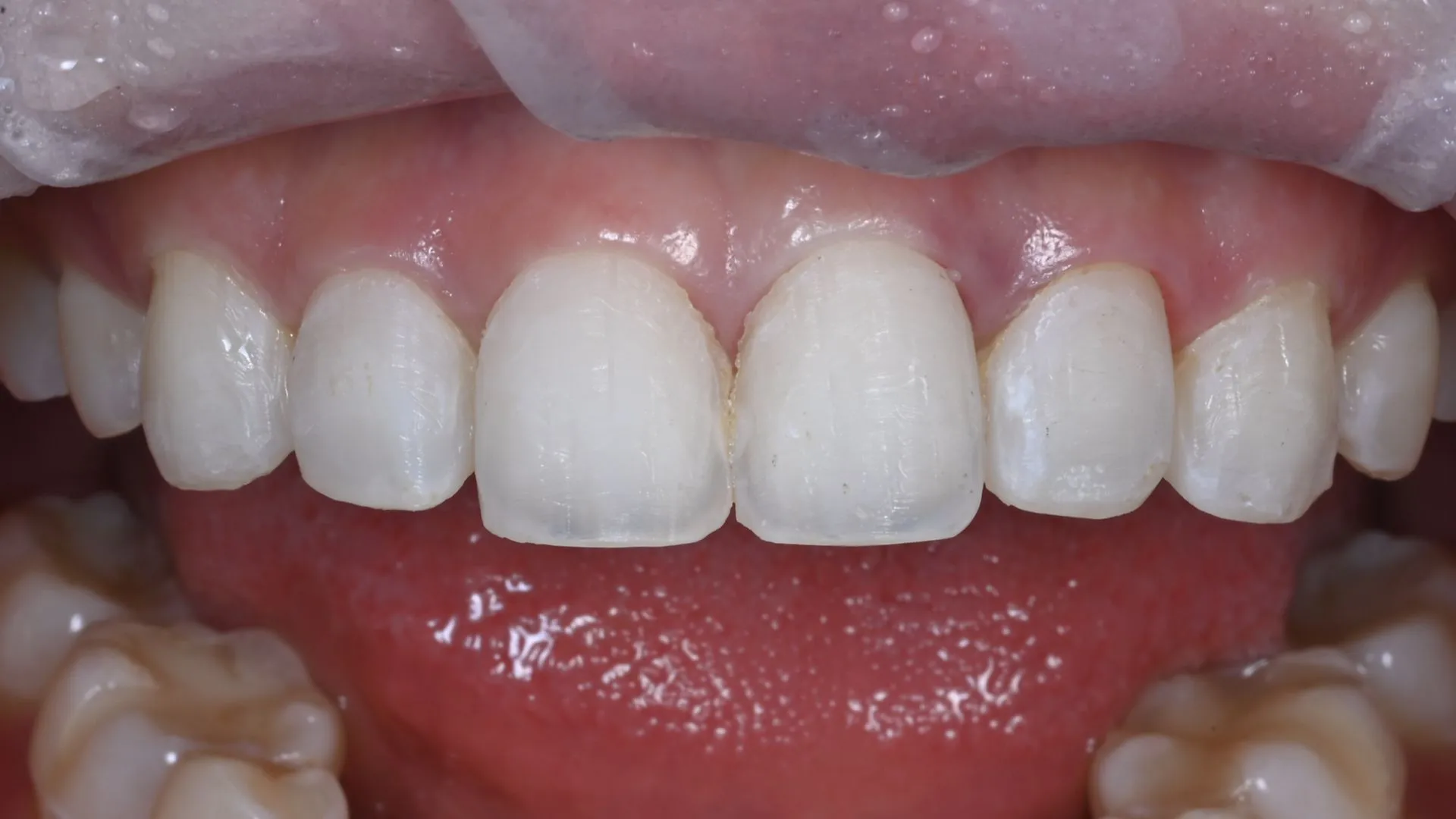
04After removal — undamaged surface
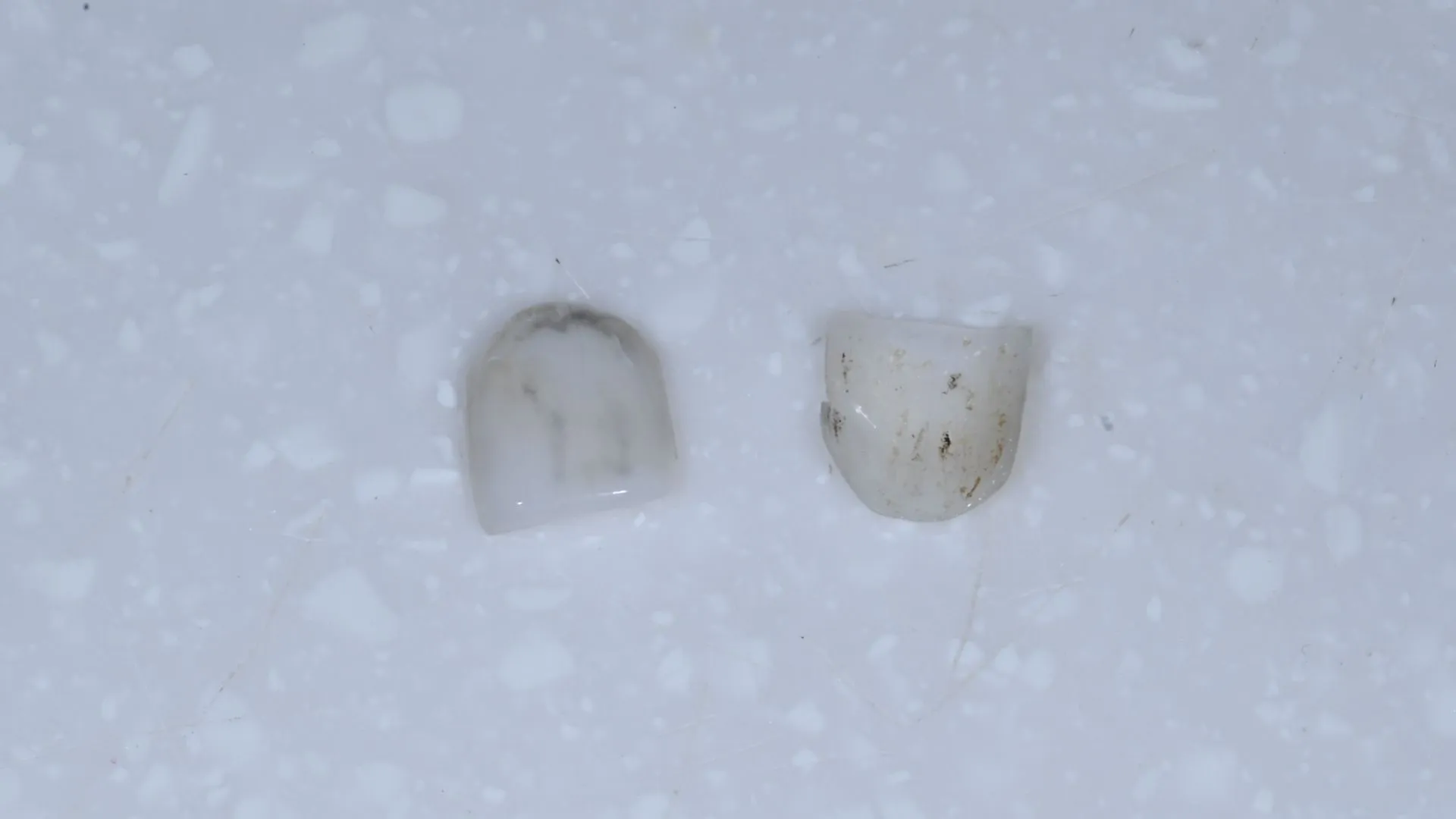
05Existing veneers separated by the laser

06Refabricated veneers complete
Actual Footage
Case 1
Left · front · right — revised in harmony with the neighboring natural teeth


Before & After
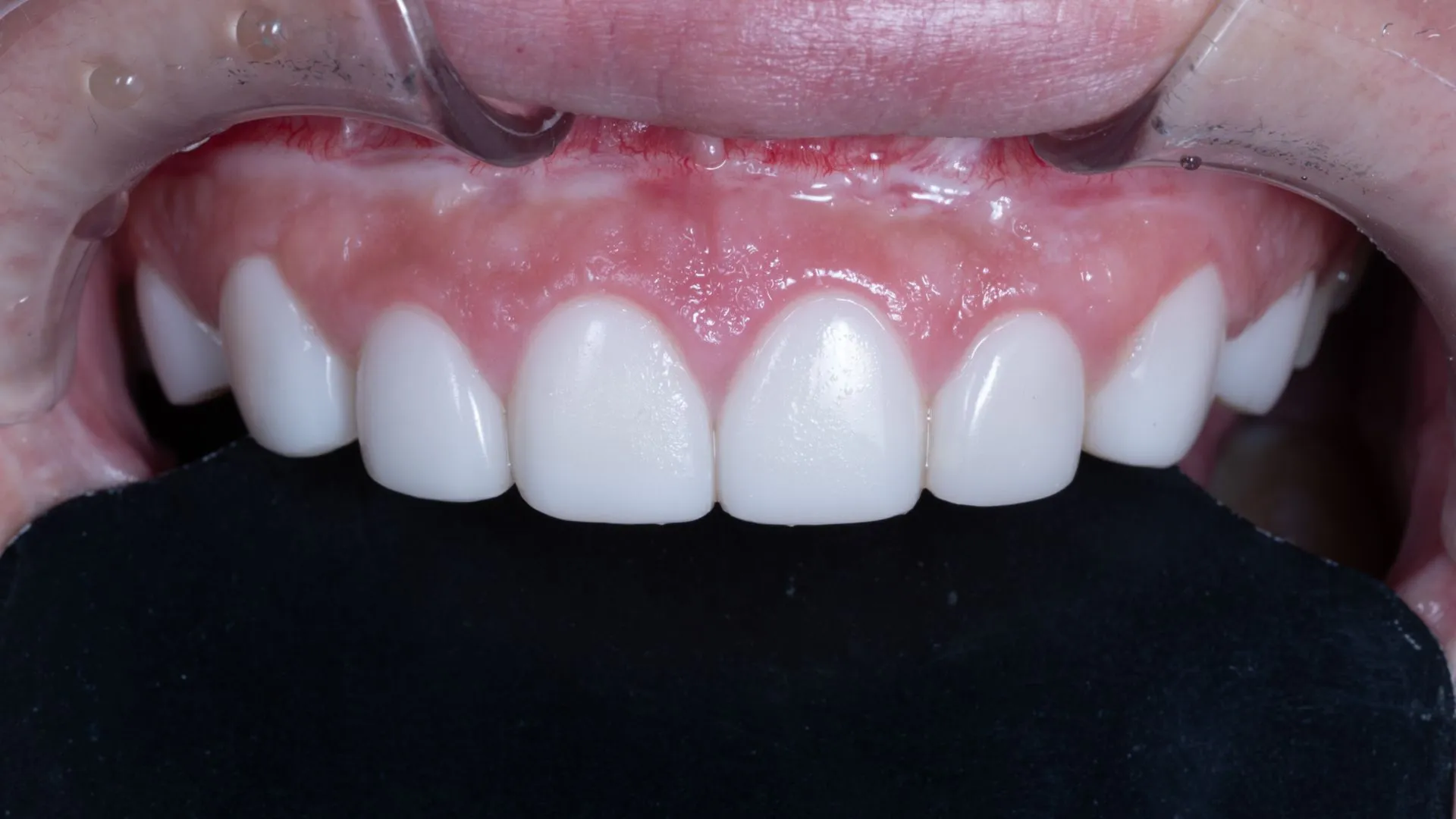
Cost
Revision carries no surcharge. The disclosed fee schedule applies as-is, and only to the teeth that need it.
Multilayer build-up veneers are KRW 1,300,000 per tooth (VAT excluded, as of 2026) — the same disclosed fee as first-time treatment.
Redoing everything is not the default. We first plan revision for just the problematic teeth.
Small chips and clean debonds are often solved without refabrication — at a far smaller cost.
Prior reduction, gum condition, and tooth damage change the scope, so the final figure is confirmed after examination.
The full non-covered fee table is disclosed on our pricing page. Pricing →
Quick Consult
Leave your number and we will call you back during clinic hours.
Request Received
We will contact you during clinic hours. For urgent matters, please call +82-2-3448-0028.
The available range depends on your condition. Feel free to ask us.
FAQ
Grinding the old veneer off with a drill does risk extra reduction — which is why we use the Er:YAG laser instead. It acts only on the bonding resin, releasing the veneer without touching the tooth, so revision proceeds with no additional reduction.
Yes. Even without records of the original treatment, precise diagnosis reveals the reduction and bonding state we need to plan from.
The laser works on the bonding resin, not the tooth, so discomfort is limited. Light anesthesia is used only when the tooth’s condition calls for it.
Yes. Some patients request removal only, and we have done exactly that. If your teeth were reduced for the original veneers, we will discuss how to protect the exposed surfaces afterward.
Refabricated veneers cost the same as new ones — KRW 1,300,000 per tooth (VAT excluded, as of 2026). Repairs and re-bonding cost far less. The exact figure is confirmed after diagnosis.
That fear is exactly why revision begins with cause analysis. We find what went wrong — reduction, bonding, bite, or form — remove it at the design stage, and bond only after you have approved the shade and shape at try-in.
Age itself is not the obstacle. We diagnose the bonding and the remaining tooth to judge laser separability — veneers from long ago are routinely released without additional reduction and remade.
Yes. Only the problematic tooth is laser-released and remade. Multilayer build-up is layered to match the neighboring veneers and natural teeth, so even a single remake aims to blend into the whole.
Not by much — laser separation adds one step, and most cases still finish in two to three visits over one to two weeks. If gum inflammation is involved, a settling period is added up front.
There is no fixed number, but it is not unlimited either — the deciding factor is the enamel that remains. Laser release helps because it does not cut the tooth, yet a tooth already reduced deep may be better served by the crown path than another veneer.
If the original treatment was no-prep, your own tooth reappears as it was; if it was reduced, the trimmed form shows. Reduced teeth get surface protection and a provisional planned until the new shell is ready.
Yes — revision is a chance to redesign the shade from scratch. Too dark before? Go brighter. Too white? Go natural. The target is set together on the shade guide and confirmed at try-in before bonding.
Yes. Regardless of how they were made, the laser reaches the bonding resin beneath any thin ceramic shell.
Teeth that were never reduced usually go without; teeth with reduction history wear a provisional through the fabrication days to manage sensitivity and looks. We confirm which applies at diagnosis.
The basics are the same — brushing, flossing, regular check-ups. But if the previous failure traced to grinding or the bite, cause management such as a night guard is added; leave the same cause and you get the same result.
If the dark line comes from margin staining or leakage, remaking can be expected to improve it. If gum recession has exposed the root, the gums are evaluated first — and we tell you honestly how much redesign can achieve.
Yes — we encourage it. If the exam shows repair or re-bonding is enough, or that nothing needs touching at all, that is what we will say. Not remaking veneers that have no reason to be remade is a revision principle.
Radiographs and examination check for decay and fracture before separation, and the surface is re-inspected after the shell comes off. Anything found is treated by the conservative-dentistry specialist before refabrication begins.
It varies with the number of veneers and their bonding, but removal is usually completed within a single visit — including surface clean-up the same day. The refabrication schedule then follows our in-house lab timeline.
The try-in stage exists to prevent exactly that. Shade and form are confirmed in your own mouth and bonded only after your approval — the structure itself rules out “bond first, regret later.”
Laser separation works the same regardless of count. Whether to remake everything at once or stage it by zone is decided together at planning, weighing bite stability and your schedule.
Nothing is required, but whatever you recall about the original treatment — when it was done, whether teeth were reduced, what material was used — speeds the diagnosis. A pre-treatment photo of your teeth, if one survives, is a great reference for the original form.
BEFORE / AFTER
Real veneer cases treated by Dr. Park Jonguk at Dream Dental Clinic, Gangnam. Tap a photo to compare before and after up close.
The before-and-after photos above are real clinical cases treated at Dream Dental Clinic, Gangnam (Dr. Park Jonguk). Results vary with each patient’s condition, and every procedure carries the possibility of individual variation and side effects.
Articles
How the same topic is judged chairside, written up with real cases.
We assess your current veneers and plan the revision with you.