
Reconstructing the original length
Pre-wear proportions are calculated back, checked against the lip line and speech.
Chipped & Worn Teeth
A chipped corner or teeth ground short age a face more than most people realize. We rebuild the lost length and shape in ceramic — and diagnose the cause of wear so it does not happen again.
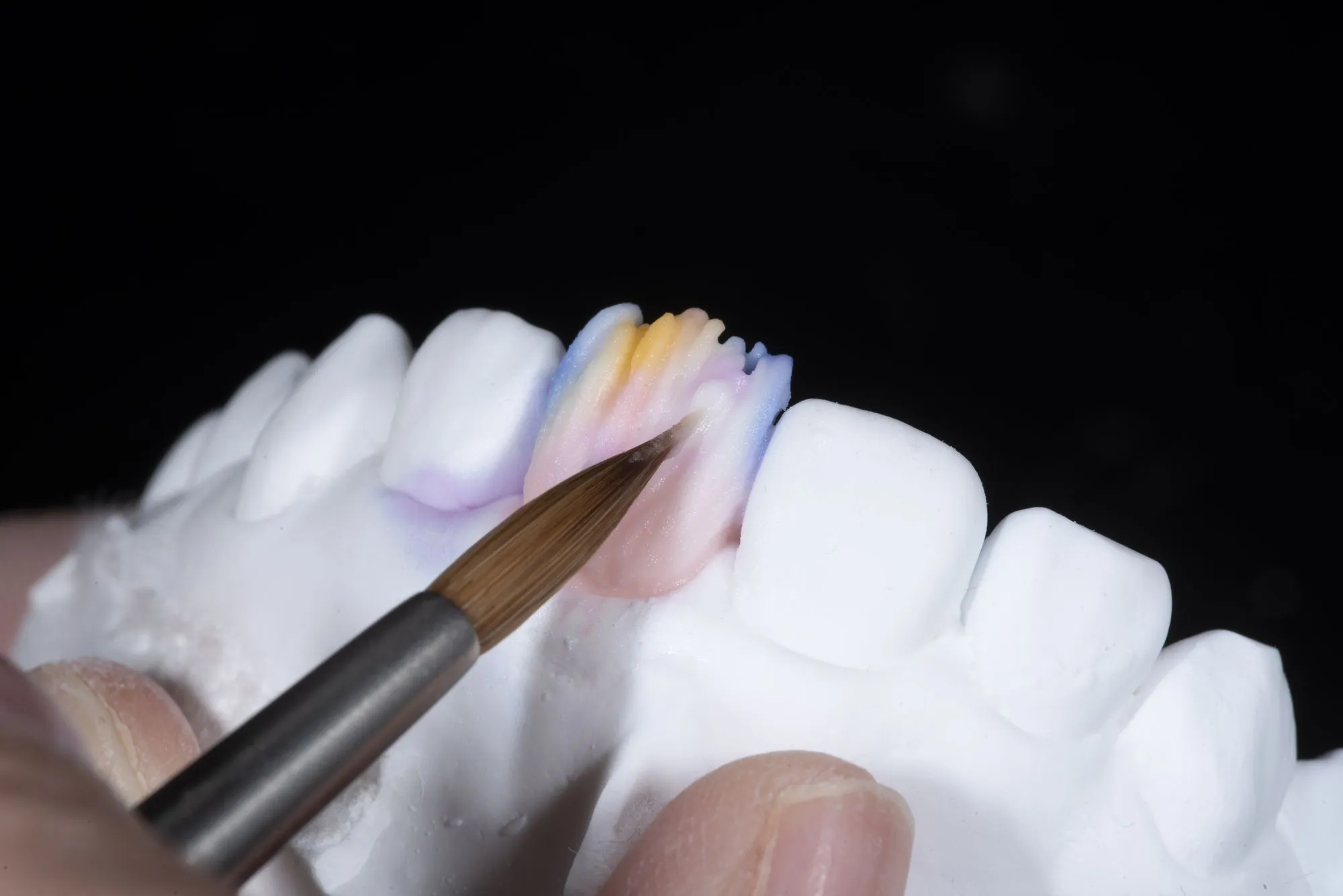 PORCELAIN VENEER
 Chipped & Worn
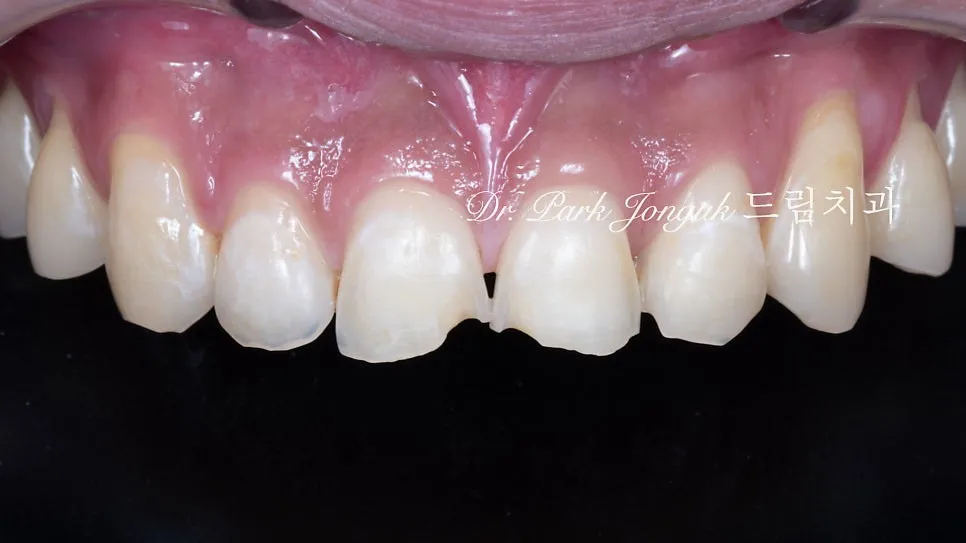
Thin incisal edges chip from impact, but they also wear down slowly — from grinding and clenching, or acid erosion from foods and reflux. Enamel does not grow back; lost form has to be restored.
Indications
BEFORE / AFTER
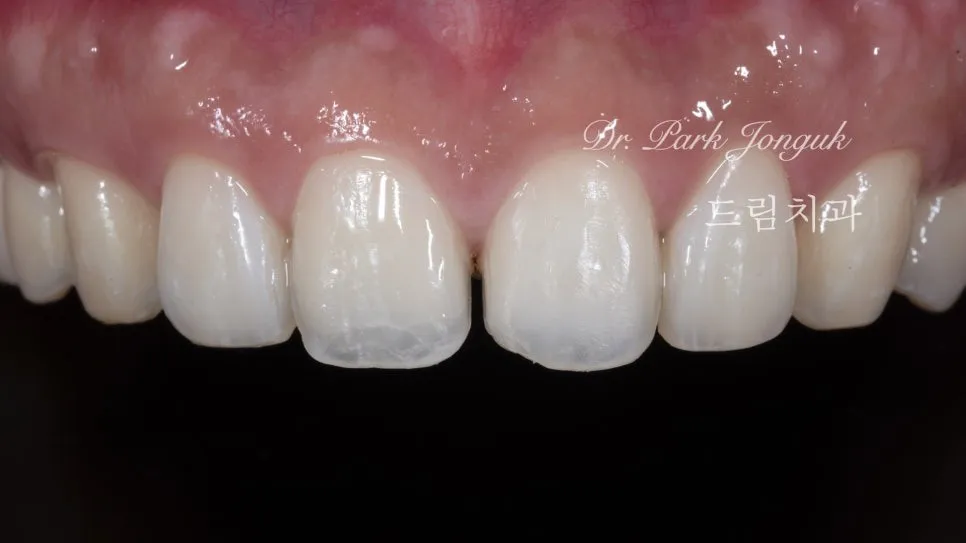
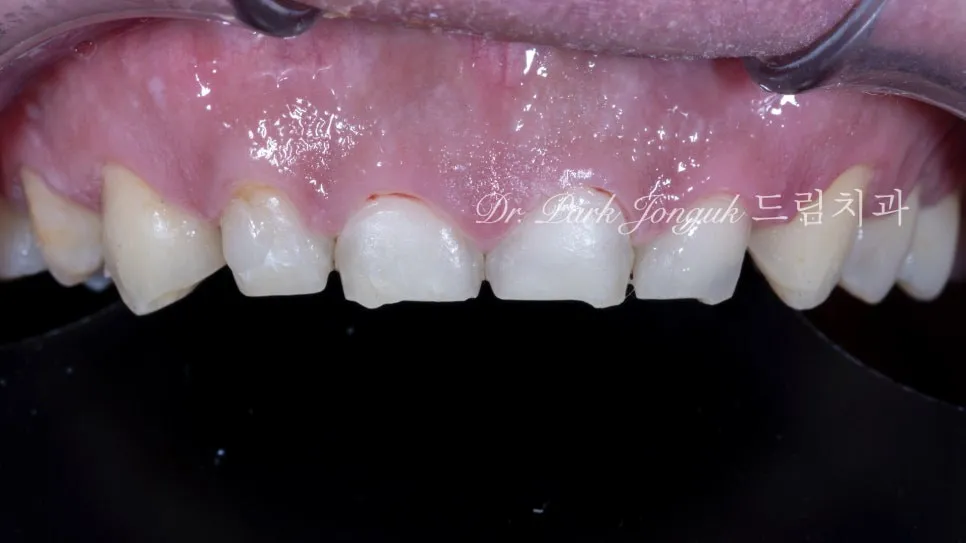
Real veneer cases treated by Dr. Park Jonguk at Dream Dental Clinic, Gangnam. Tap a photo to compare before and after up close.
The before-and-after photos above are real clinical cases treated at Dream Dental Clinic, Gangnam (Dr. Park Jonguk). Results vary with each patient’s condition, and every procedure carries the possibility of individual variation and side effects.
Patching a chip with resin discolors and debonds over time. A veneer wraps the whole incisal edge in ceramic, restoring form and strength together.
How It Works
The goal is not simply longer — it is the length that belongs with your face and lips.
Pre-wear proportions are calculated back, checked against the lip line and speech.
If grinding or bite interference caused the wear, restoration alone will chip again — the cause comes first.
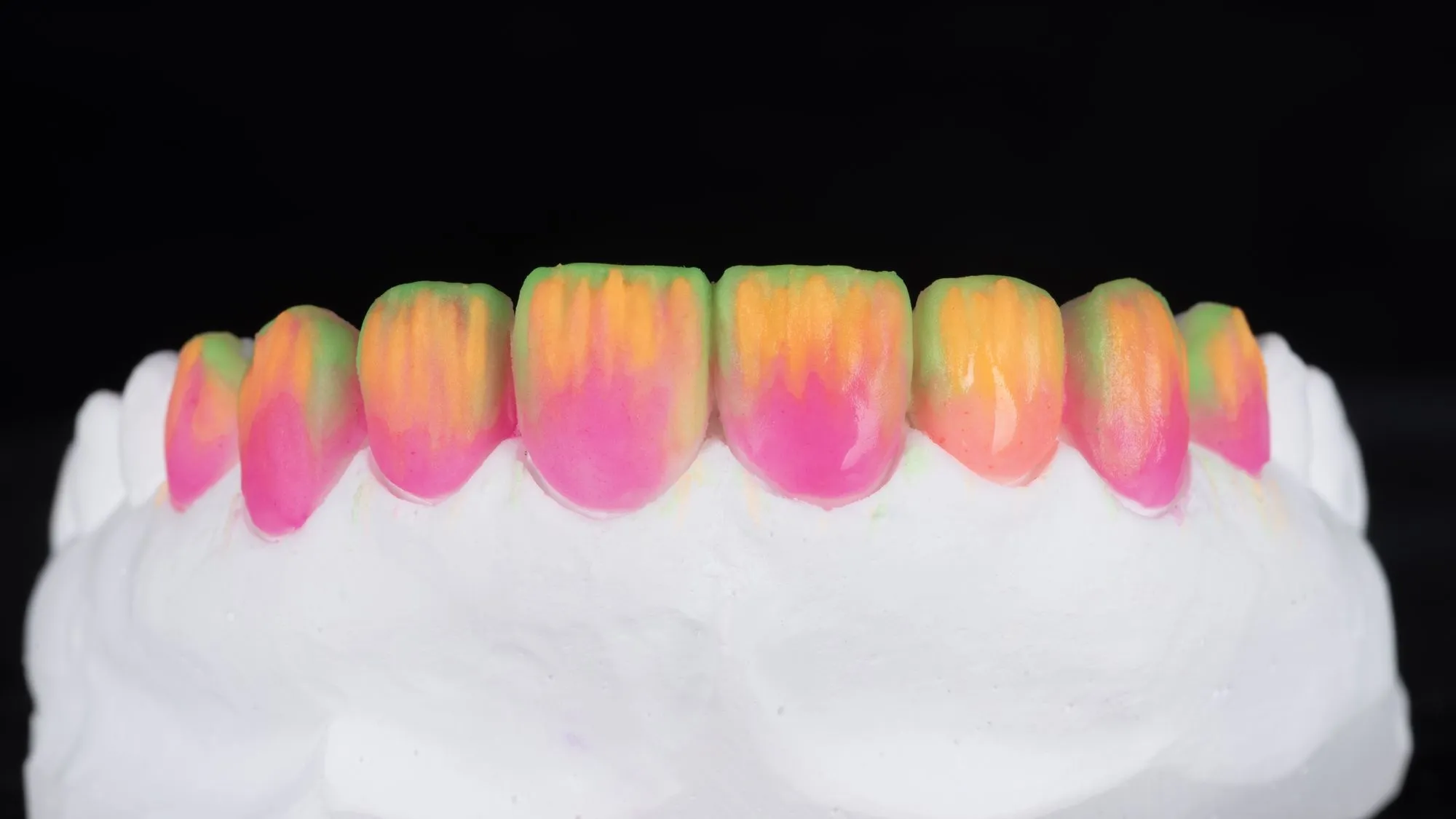
The edge takes the most load. Layered build-up keeps it translucent yet thick enough to bear force.
For grinders, a night guard protects the restored form while you sleep.
Options
| Veneers | Resin bonding | |
|---|---|---|
| Best for | Broad wear or aesthetic front teeth | Emergency repair of small chips |
| Shade stability | Ceramic — rarely discolors | Discolors over time |
| Strength | Wraps the edge, spreads the load | Re-fracture at the bond possible |
| Visits | Usually 1–2 | Same-day |
Process
Wear diagnosis
Cause of fracture or wear, and the bite, are examined first.
Length & form design
Park’s AES plans the restored length against the lip line.
Minimal prep
Remaining tooth structure is preserved; only the bonding surface is refined.
Build-up & bonding
Shells layered thick enough to bear load, precisely bonded.
Bite adjustment & protection
Occlusion tuned; a night guard advised where needed.
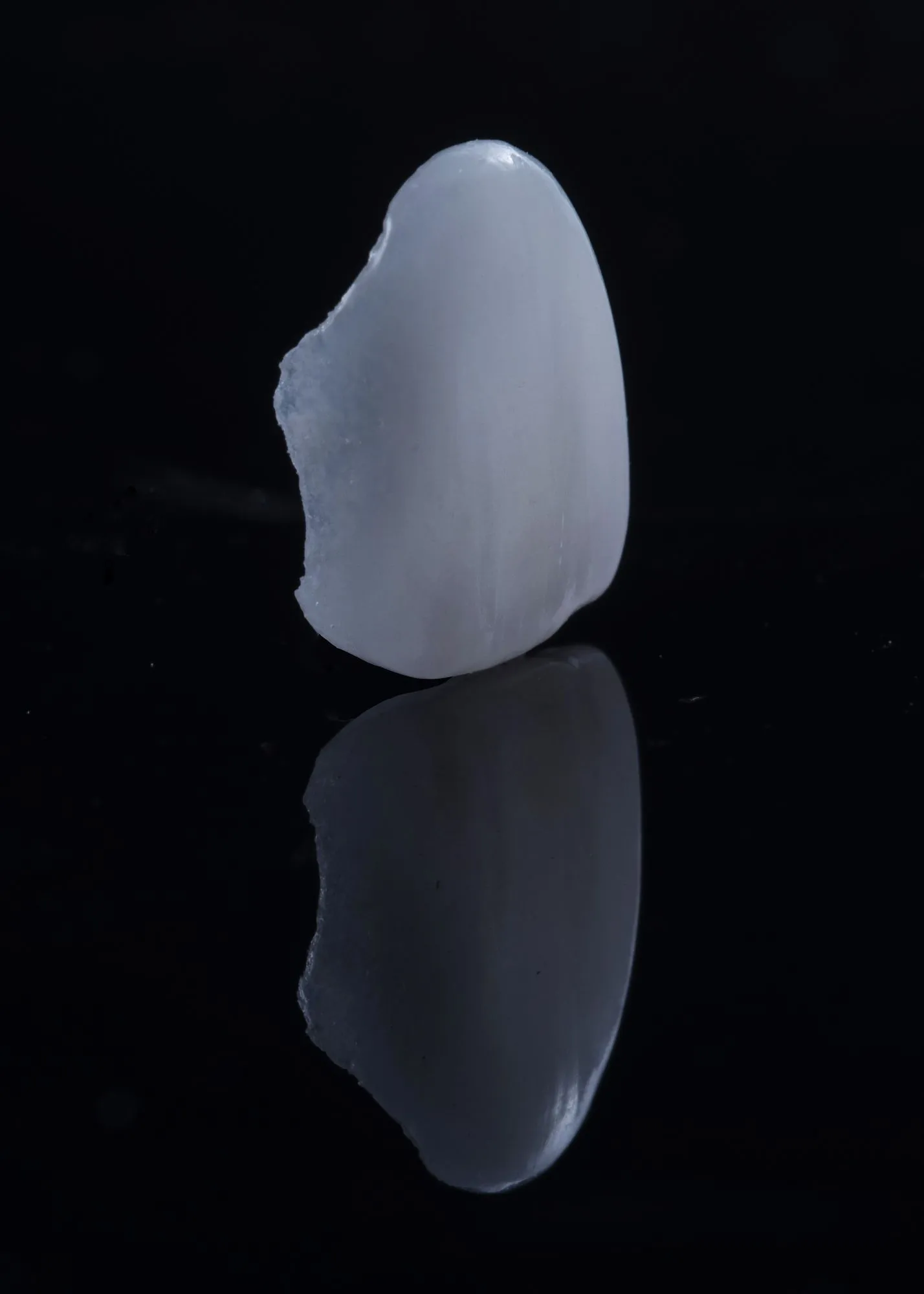
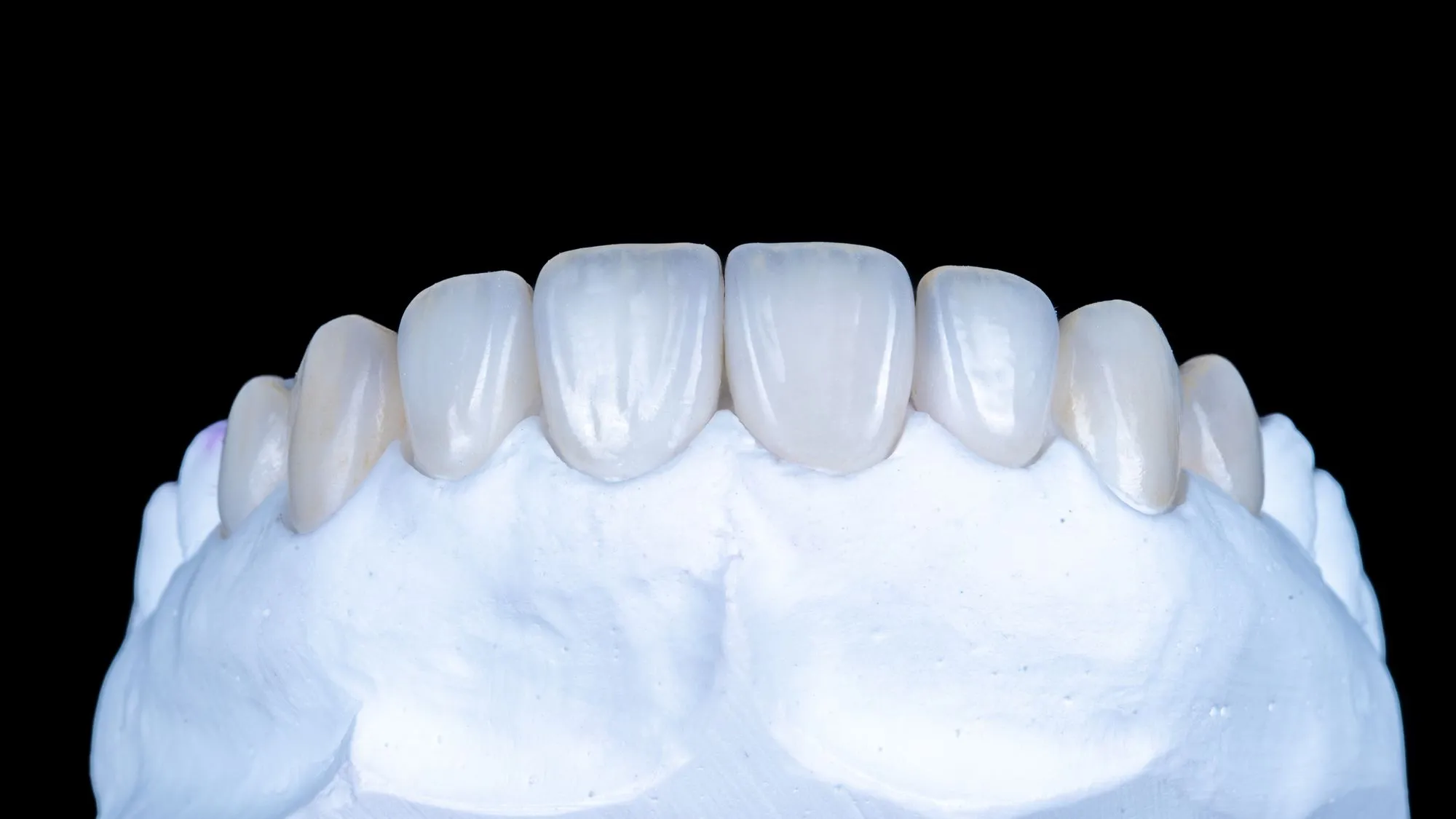
When front-tooth length returns, the whole face reads younger — form is the language of impression.
Three Mechanisms
Dentistry distinguishes three ways teeth wear down. Which mechanism dominates decides both the restoration design and the plan that keeps it from recurring.
 01
01 Grinding and clenching wear opposing teeth flat against each other; the matching wear facets are the telltale sign. A night guard is essential.
 02
02 Hard brushing, toothpicks, nail biting — external friction, often notching teeth near the gums. Habit correction travels with the restoration.
 03
03 Sodas, fruit acids, and reflux dissolve enamel into smooth, rounded hollows. Diet and reflux management must run alongside, or the erosion returns.
Quick Consult
Leave your number and we will call you back during clinic hours.
Request Received
We will contact you during clinic hours. For urgent matters, please call +82-2-3448-0028.
The available range depends on your condition. Feel free to ask us.
FAQ
Repeated chipping usually traces back to the bite and habits. We diagnose the cause of the wear first, build the ceramic to a load-bearing thickness, and adjust the bite — and for grinders, a night guard is planned in to cut the re-fracture risk.
Yes, with conditions: the bite design accounts for the grinding, and a night guard protects ceramic and natural teeth during sleep. Concealing a grinding habit shortens the life of any restoration.
Resin repairs only the chipped spot — fast and inexpensive, but prone to discoloring and debonding over time. A veneer wraps the entire incisal edge in ceramic, restoring form, shade, and strength together — the stronger long-term answer for front teeth.
A deep fracture with nerve exposure or extensive damage may call for root-canal treatment followed by an all-ceramic crown rather than a veneer. We assess the remaining tooth and walk you through options from the most conservative first.
Often, yes. The target length is calculated together with your lip line, speech, and bite — not simply “longer,” but the length that was naturally yours, restored by design.
Thinned enamel exposes the dentin beneath, which is what makes cold sting. Covering the exposed surface in ceramic blocks the stimulus, so improvement can be expected — though sensitivity can also come from decay or cracks, which we rule out at diagnosis.
Lower incisors are smaller and take direct load, making veneer design more demanding — but it is possible in selected cases. For broad wear, a crown may serve better; after a bite exam, upper and lower are planned as one.
A stock guard does not match your bite and can concentrate force on individual teeth. After restoration we recommend a custom guard made to the new edge form — fabricated and adjusted in-house.
A natural-tooth fragment can sometimes be re-bonded depending on its condition — keep it in milk or saline and come in quickly. Even when reattachment is not possible, the fragment is a valuable reference for restoring the original form.
When incisal enamel thins, the edge turns glassy and can develop fine cracks — often a sign that wear is actively progressing. It is worth identifying the cause (grinding, acid) and planning protection before it advances.
The incisors’ cutting function can be expected to improve as length and form return. The restoration is built to bear that load with the bite adjusted accordingly — and when molar wear coexists, we approach it as a whole-bite plan.
Very commonly — it happens in sleep, so morning jaw stiffness, headaches, and flat matching wear facets are the clues. The wear pattern seen at diagnosis reveals grinding in most cases.
Small chips are often fully served by polishing or a resin repair. Veneers enter the picture when wear or fracture is broad, or when you want shade and shape improved together — we always present the least invasive option first.
If it is an existing veneer rather than natural tooth that chipped or came off, we treat it as a revision case. Bonded veneers are separated with a water-drop laser without harming the tooth and then remade; even when only one or two are damaged, we design them so shade and shape carry across the neighbouring teeth. See our veneer revision page for details.
This page is general information about the treatment. Diagnosis, treatment options, and duration vary by individual condition — an in-person examination is how we plan your actual care.
Articles
How the same topic is judged chairside, written up with real cases.
From cause diagnosis to restoration design in one visit plan. Registration until 17:30 weekdays, 12:30 Saturdays.