
Depth of overlap
The shallower the overlap, the better. Deep overlap would demand reduction beyond the safe range — those cases are referred to orthodontics.
Uneven Teeth
When front teeth are only mildly rotated or overlapped, veneers can create an even line without moving a single tooth. Not every case qualifies — we tell you honestly which side yours falls on.
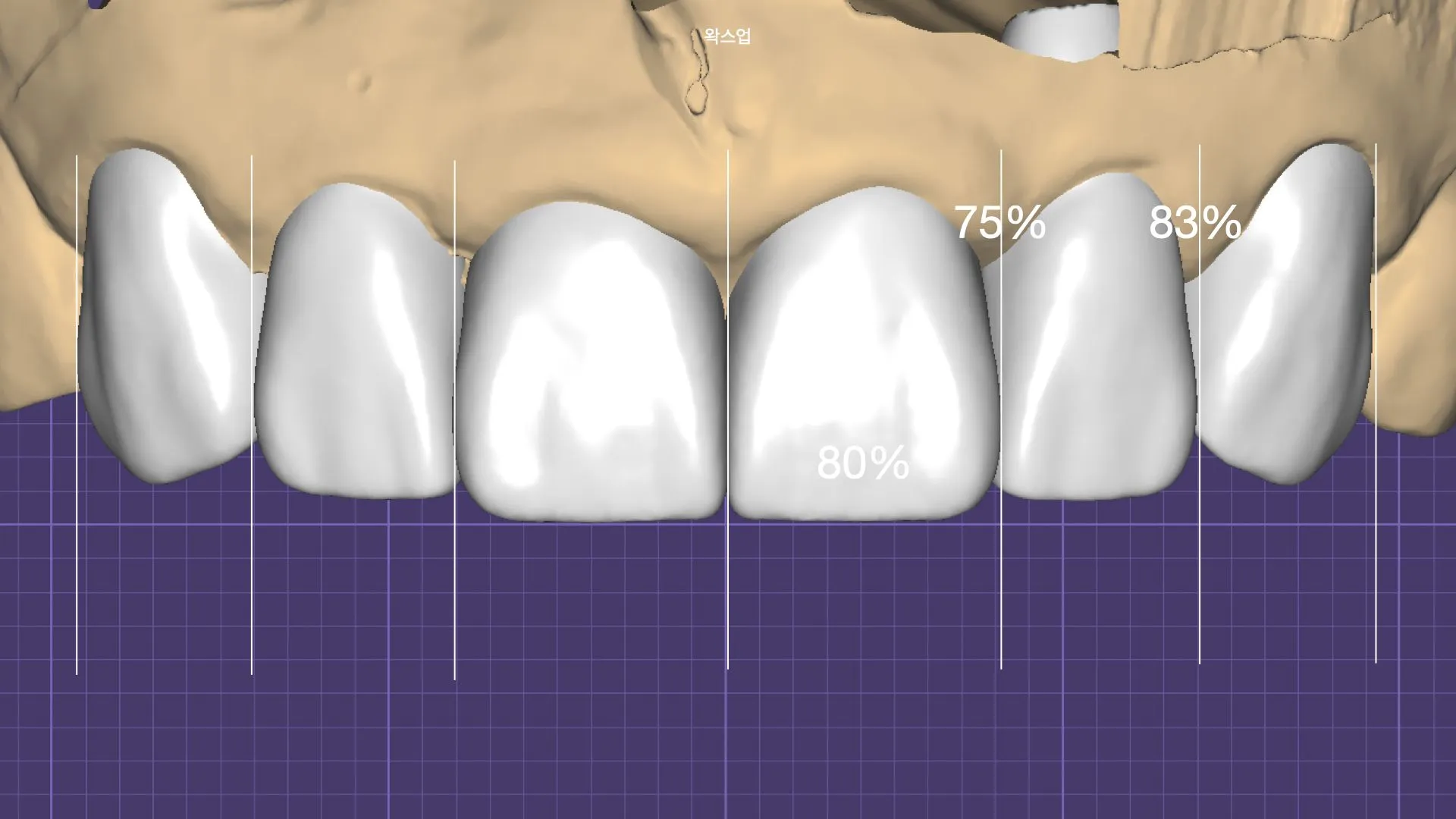 PORCELAIN VENEER
 Mild Crowding
For light overlap or rotation, protruding surfaces are trimmed by a calculated amount and recessed areas are built out in ceramic — redesigning the front line instead of moving the whole arch.
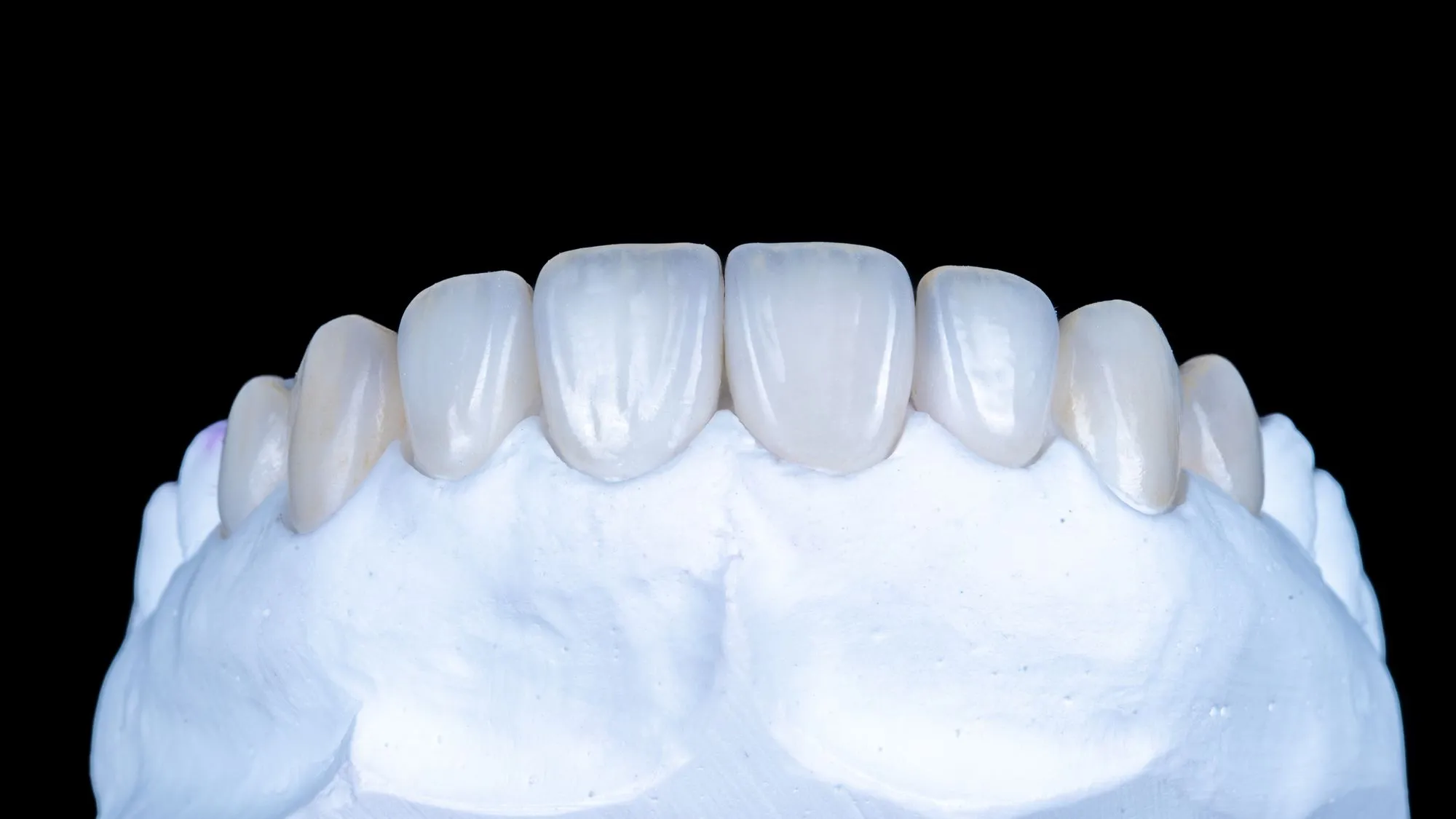
Four Criteria
“Mild” is not a feeling — it is measured. All four criteria come from diagnostic data.
The shallower the overlap, the better. Deep overlap would demand reduction beyond the safe range — those cases are referred to orthodontics.
A slightly rotated tooth can be made to read straight from the front through shell thickness distribution. Larger rotations look unnatural when merely masked.
Unevenness tied to a bite problem comes back as chipping if simply covered. When the bite exam shows interference, we recommend orthodontics.
Smaller teeth leave more room to align by adding rather than trimming — some cases finish no-prep or micro-prep.
BEFORE / AFTER
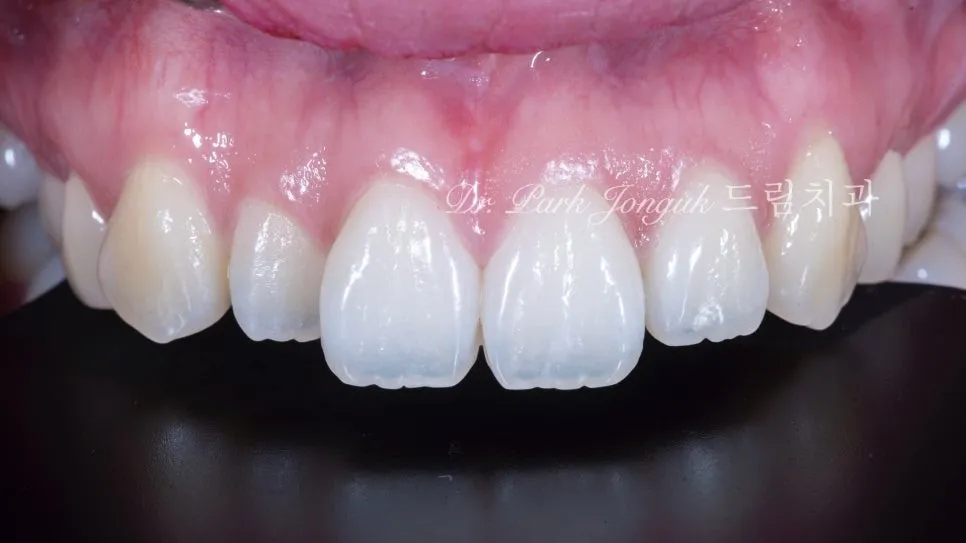
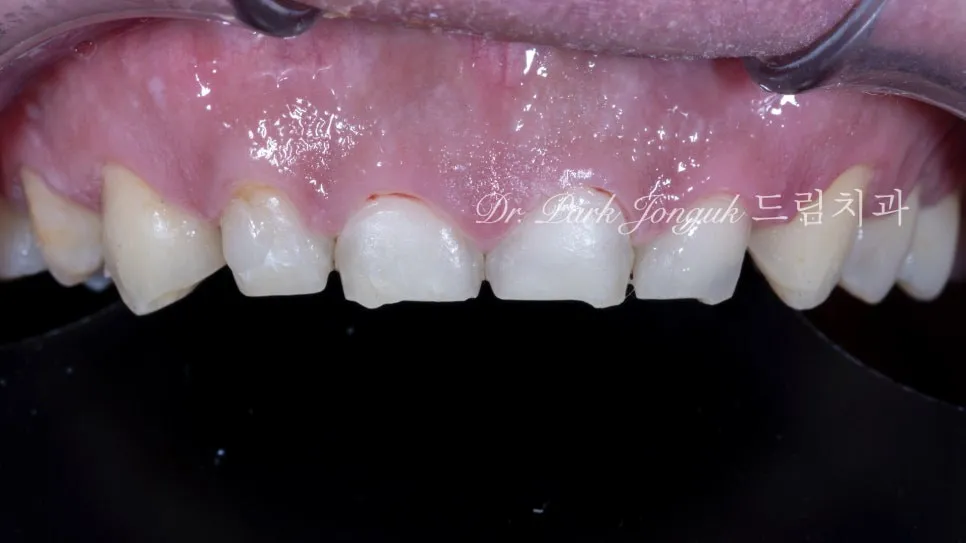
Real veneer cases treated by Dr. Park Jonguk at Dream Dental Clinic, Gangnam. Tap a photo to compare before and after up close.
The before-and-after photos above are real clinical cases treated at Dream Dental Clinic, Gangnam (Dr. Park Jonguk). Results vary with each patient’s condition, and every procedure carries the possibility of individual variation and side effects.
Indications
The deciding factor is severity. These mild cases make veneers a realistic option.
Severe crowding or a true bite problem calls for orthodontics. We never force veneers over a case that needs braces — the diagnosis is told as it is.
How It Works
A conservative-dentistry principle: fit by planning, not by grinding.
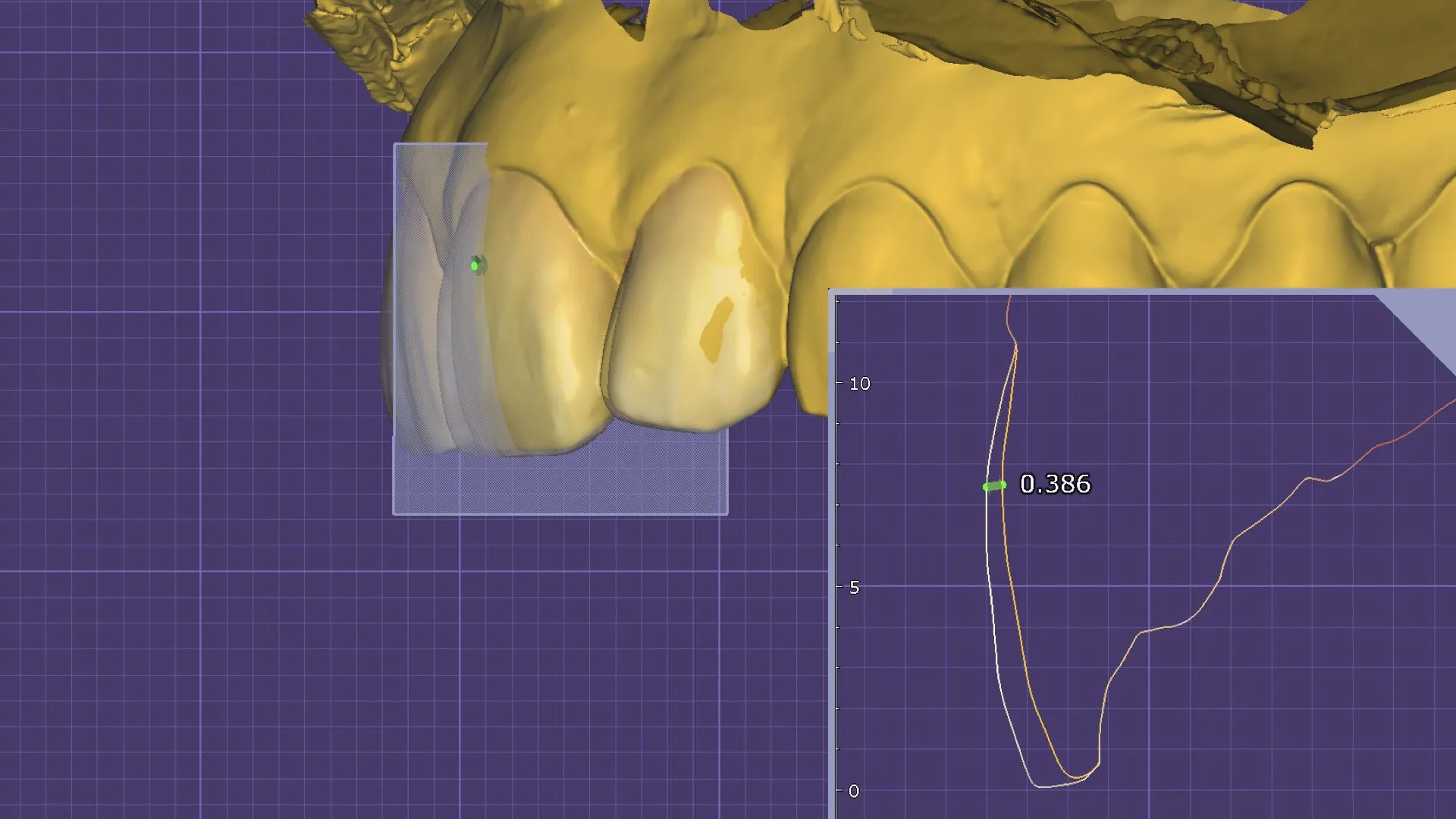 01
01 How much each tooth needs is calculated to 0.01 mm in advance, checked against the distance to the nerve.
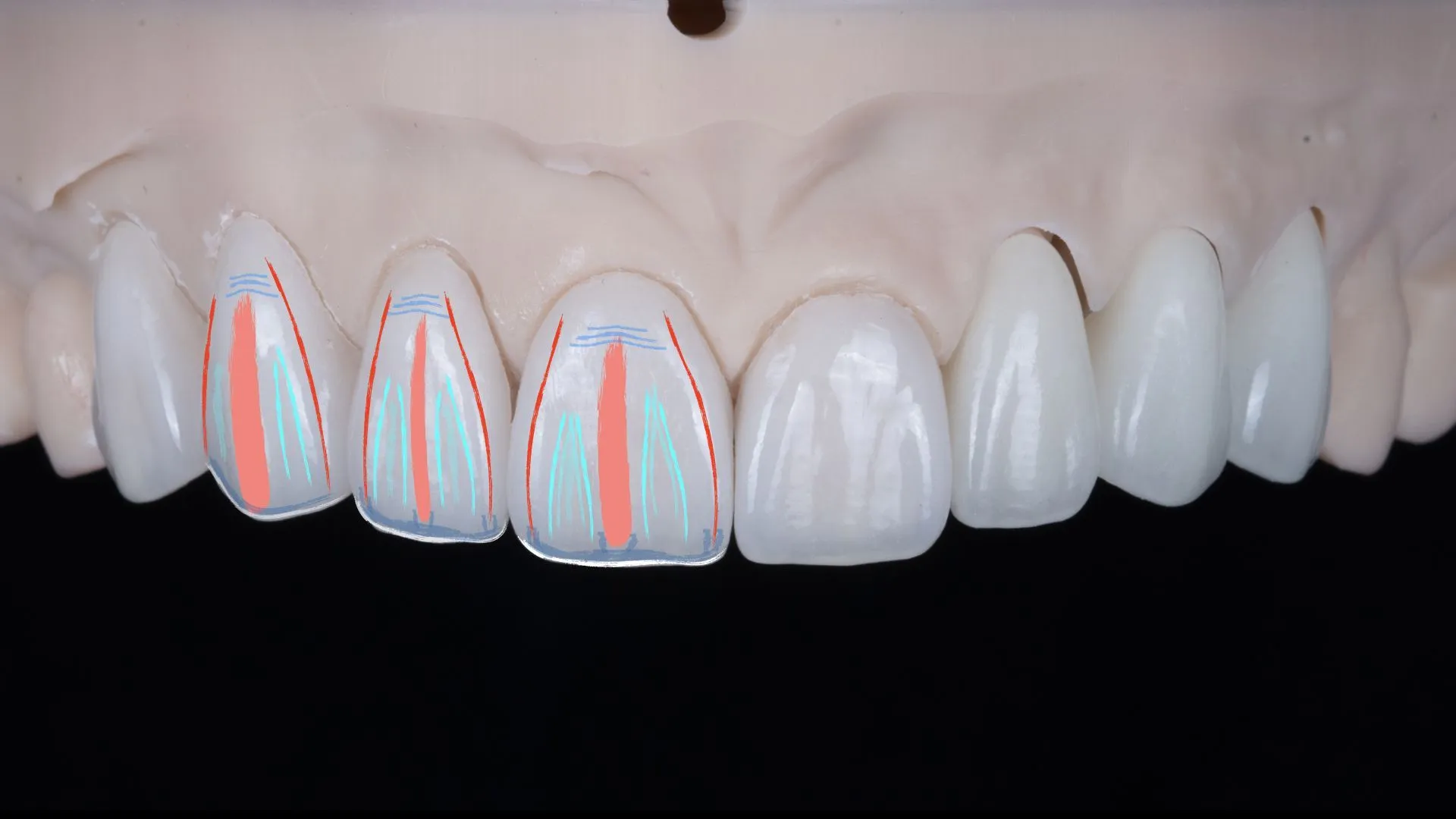 02
02 Shell thickness is distributed so a rotated tooth reads straight from the front.
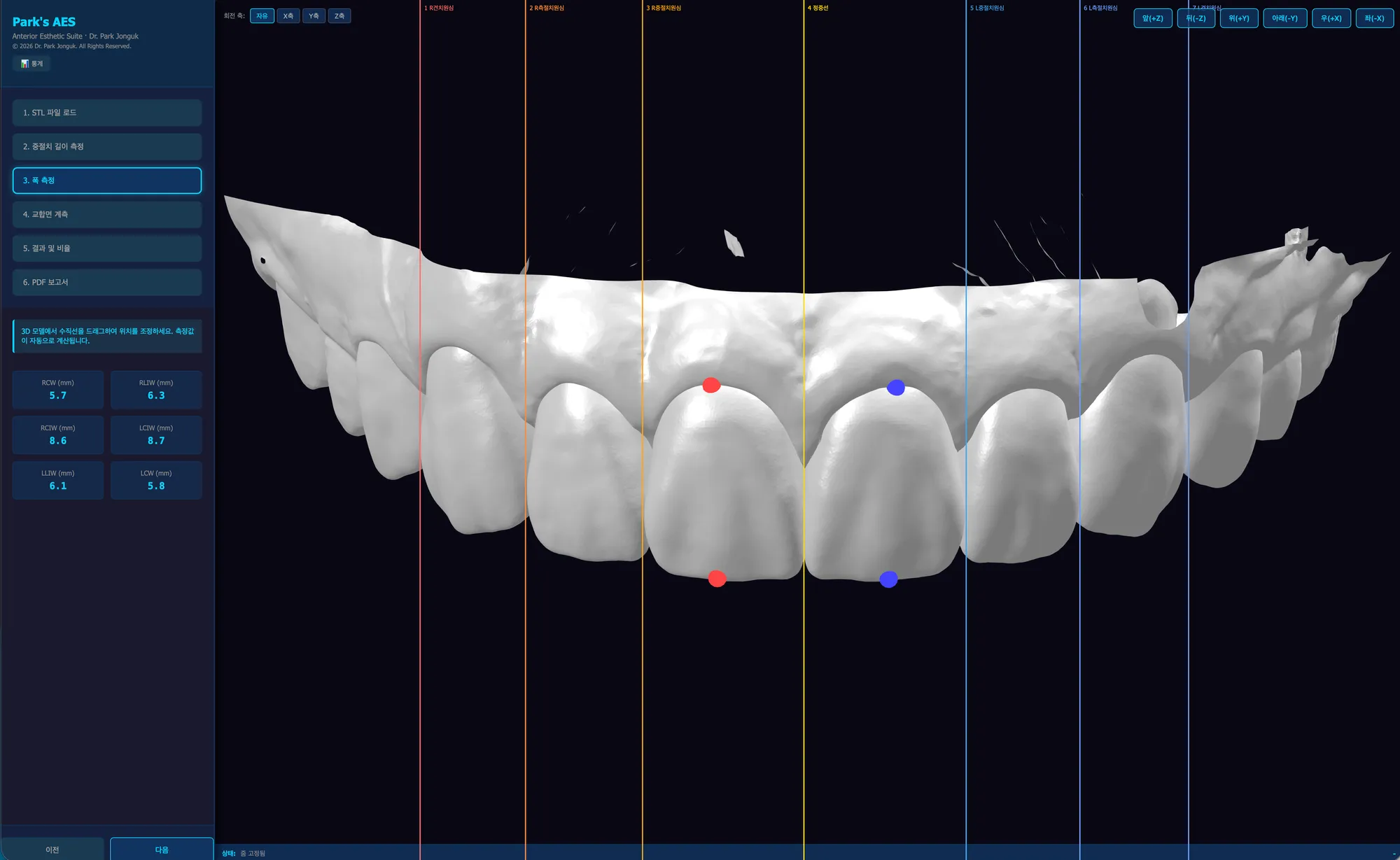 03
03 The smile line is drawn first; each shell is fitted to that line.
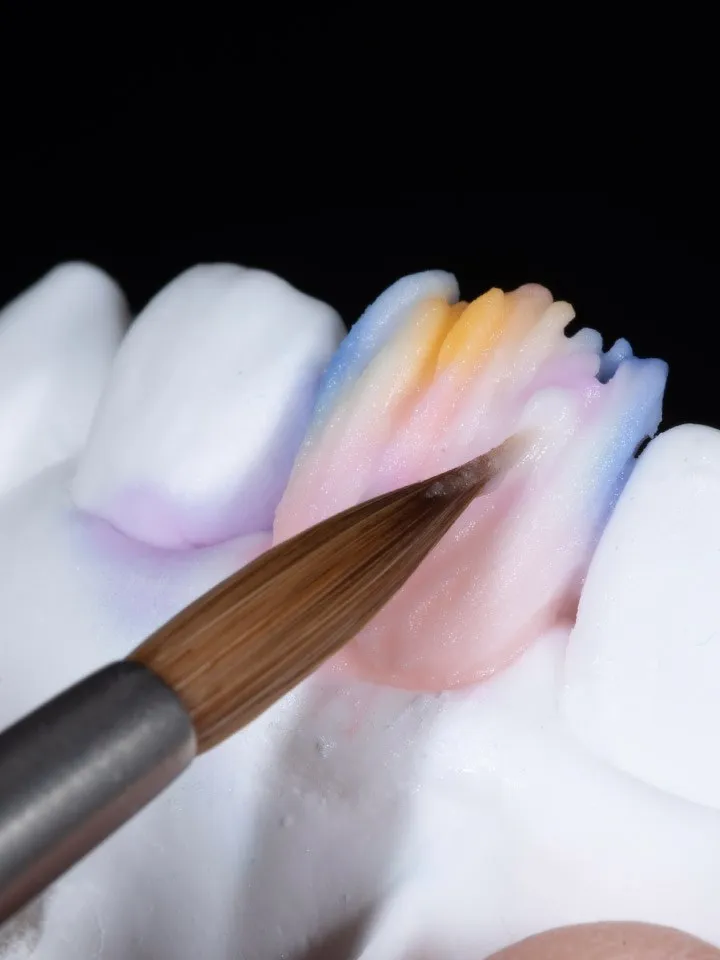 04
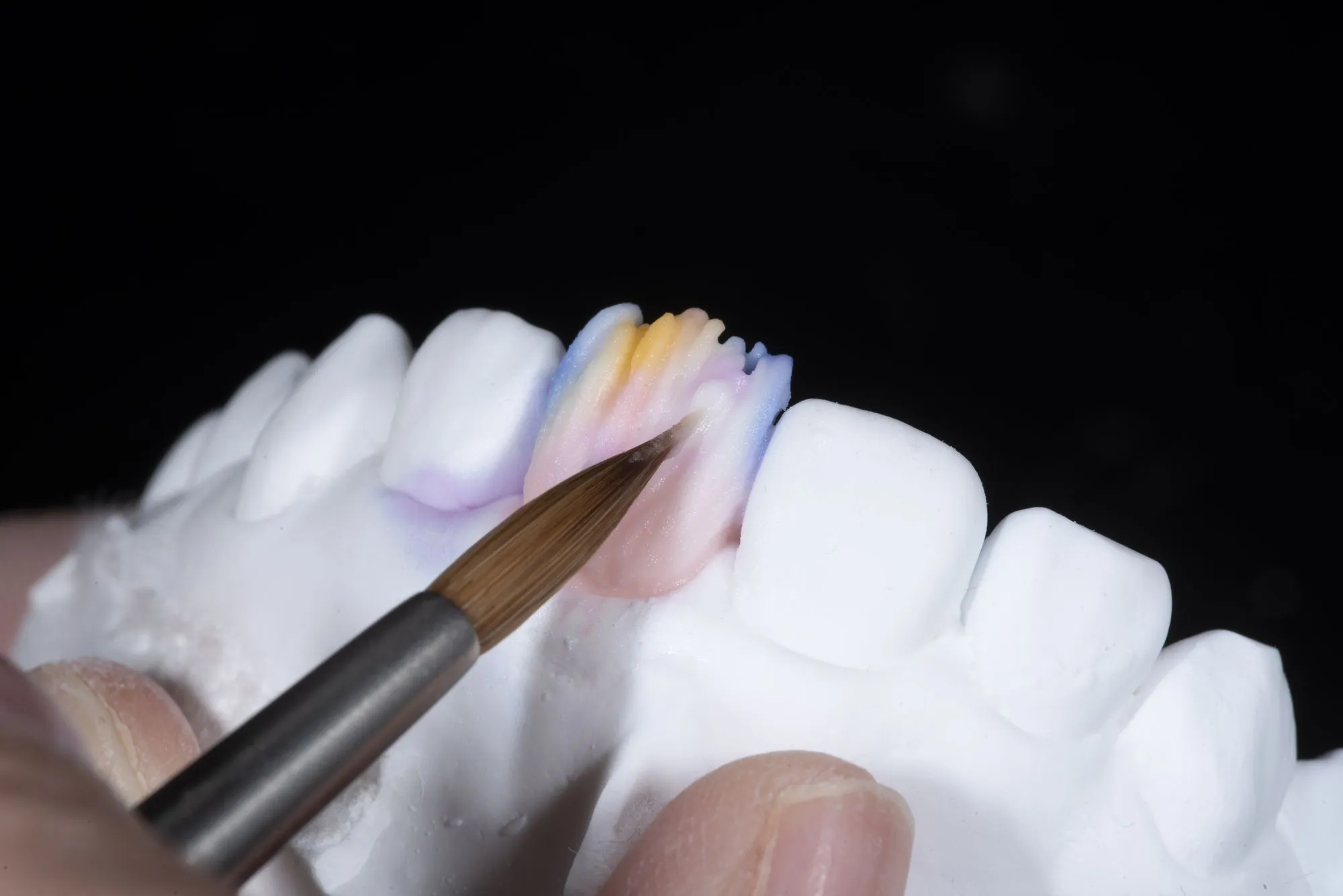
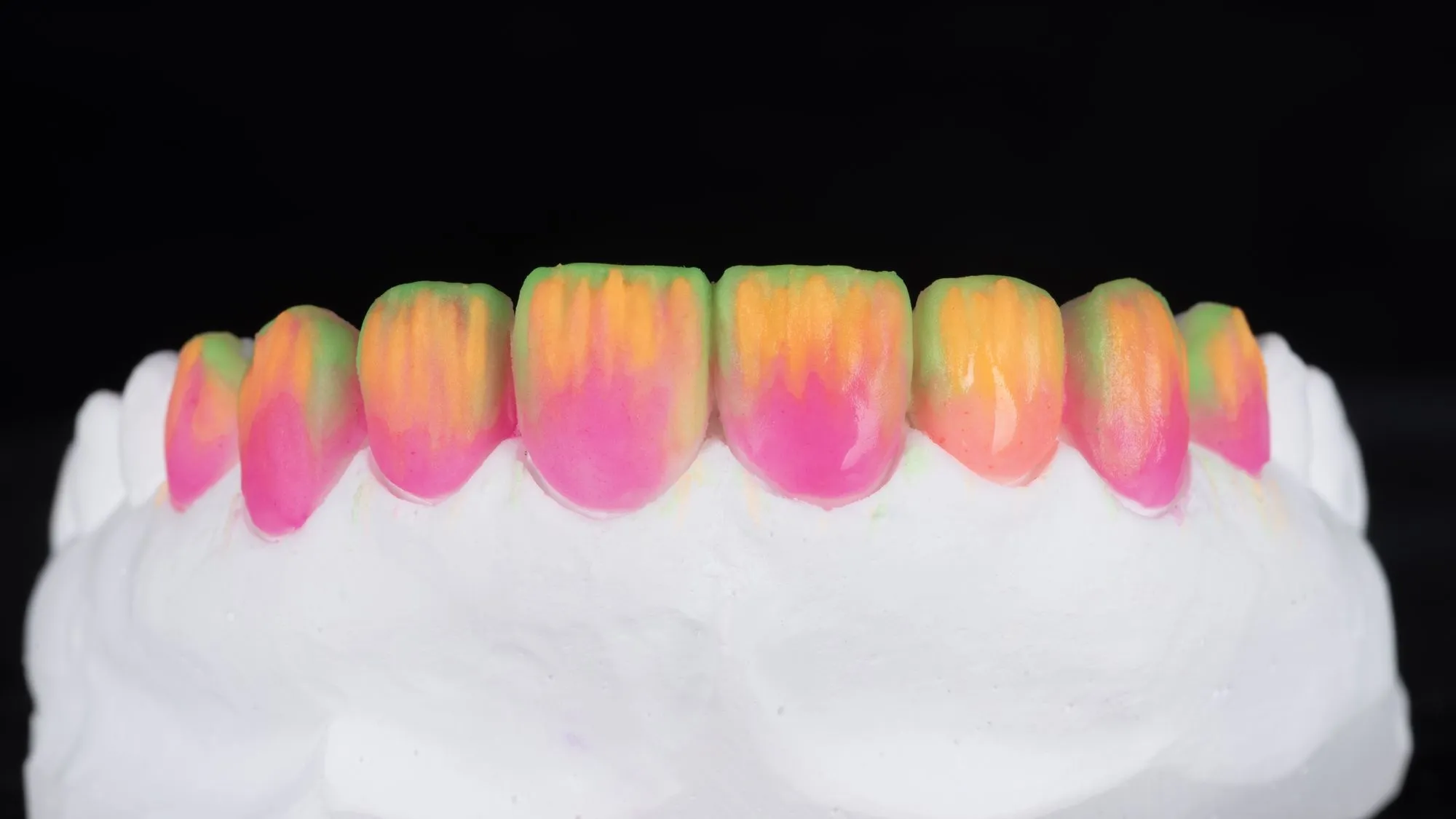
04 Hand-layered ceramics match neighboring translucency so treated teeth do not stand out.
Veneer vs Ortho
| Veneers | Orthodontics | |
|---|---|---|
| Best for | Mild front-tooth unevenness | Whole-arch or bite problems |
| Duration | Usually 1–2 visits | 1–3 years |
| Appliance | None | Braces or aligners |
| Shape & shade | Corrected together | Position only |
| Reduction | Calculated minimum (or none) | None in principle |
Process
Diagnosis
We measure the unevenness and judge whether it falls within veneer range.
Digital line design
Park’s AES plans the smile line and reduction together.
Minimal prep
Only protruding surfaces, only the calculated amount.
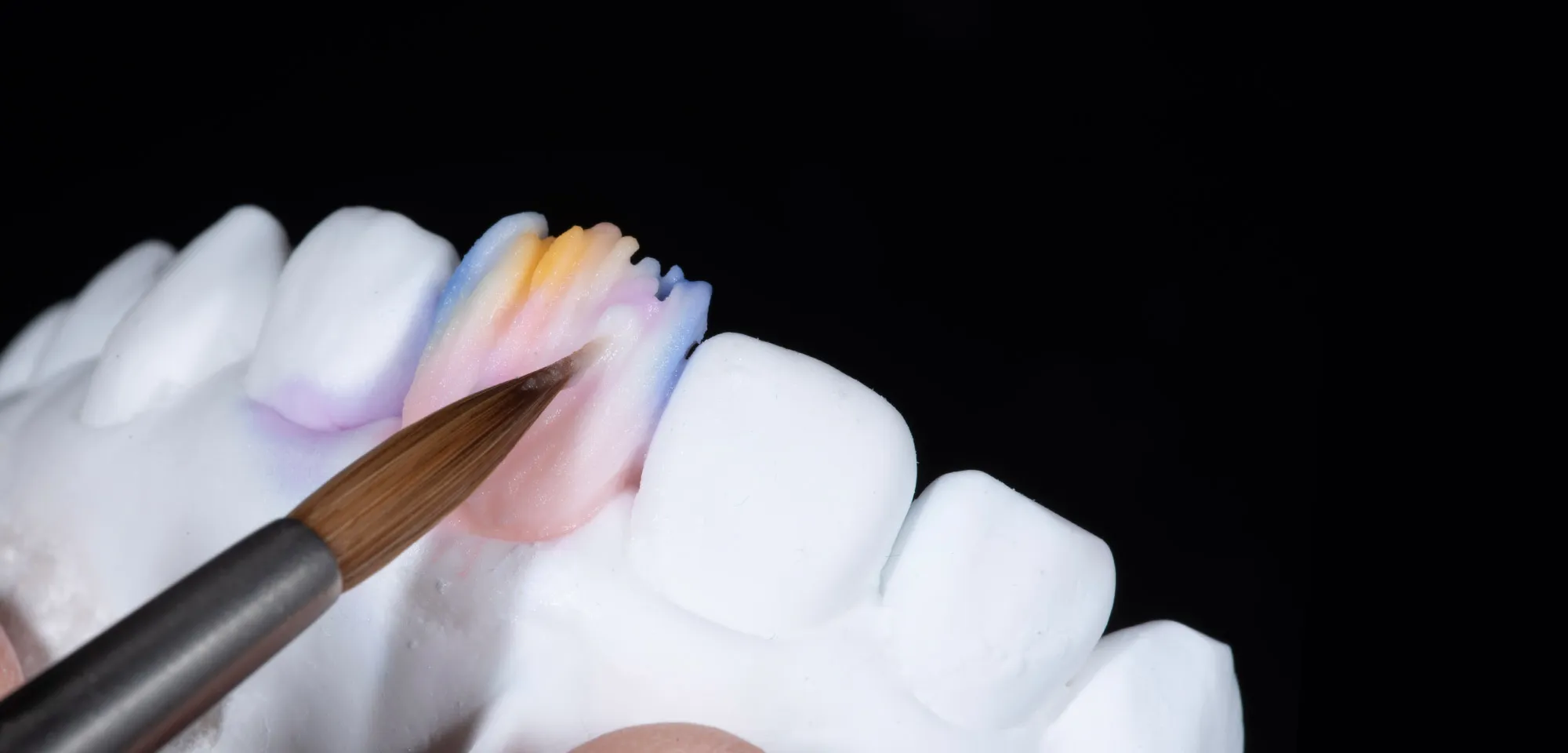
Build-up & bonding
Hand-layered shells, precisely bonded.
Bite check
Occlusion is verified and care routines explained.
Recommending braces when braces are right has been our standard for twenty years — veneers are the fast, natural answer within their indications.
By Pattern
Overlap, rotation, and tilt each demand a different design. Classifying the pattern at diagnosis decides which teeth get trimmed and which get built out.
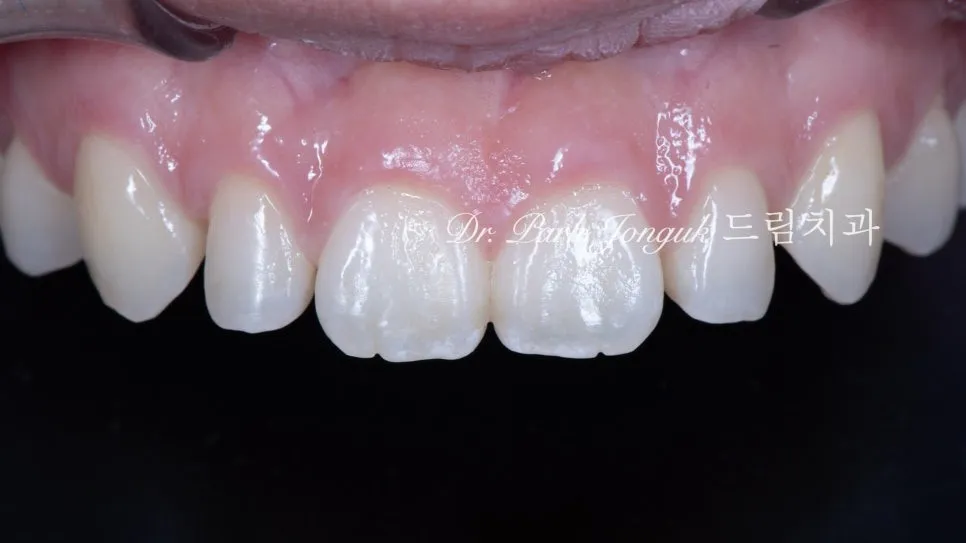 01
01 The forward surface is trimmed by its calculated amount while the recessed neighbor is built out in ceramic, gathering both onto one line.
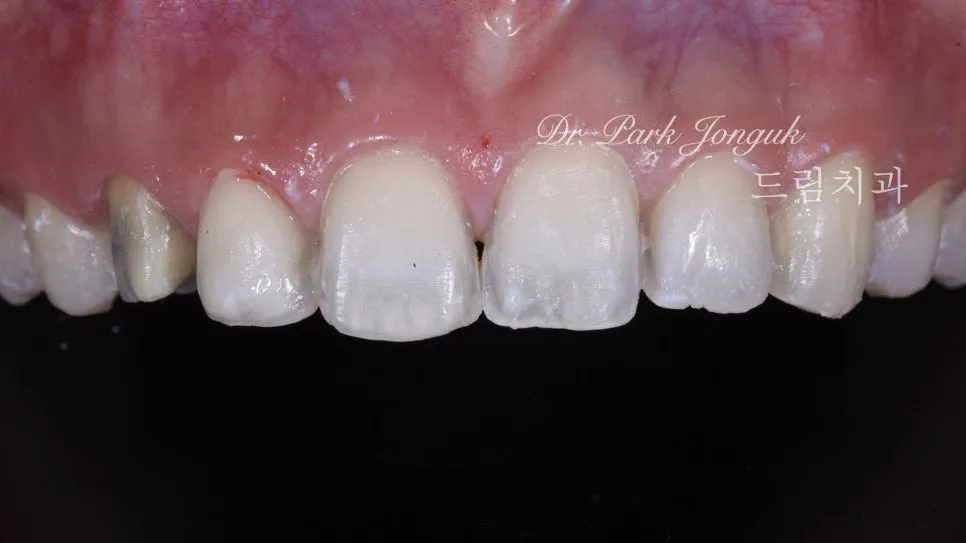 02
02 Thin on the turned corner, thicker on the opposite side — asymmetric shell thickness corrects the view so the tooth reads straight from the front.
 03
03 When the long axis leans, the incisal line and side contours are redrawn so the tilt disappears from the visible silhouette.
 04
04 Uneven edge lengths are the main culprit of an untidy look. Unifying incisal heights along the smile line alone tidies the impression dramatically.
Quick Consult
Leave your number and we will call you back during clinic hours.
Request Received
We will contact you during clinic hours. For urgent matters, please call +82-2-3448-0028.
The available range depends on your condition. Feel free to ask us.
FAQ
Veneers do not move teeth — they redesign the line. For mild overlap and rotation, an even front line can be expected within a few visits. For whole-arch problems, orthodontics is the right answer, and we tell you which side your case falls on.
Only protruding surfaces are trimmed, only by the calculated minimum. Reduction is simulated to 0.01 mm against the distance to the nerve, and recessed areas are built out in ceramic rather than cut.
Veneers cannot change tooth position itself, so they only suit mild cases — and any reduction is irreversible. In return, treatment is fast and shape and shade improve together. We explain both paths so you can choose.
Yes. Multilayer build-up reproduces the neighboring shade and translucency, so a single veneer aims to blend in unnoticed. Occasionally two are recommended for the harmony of the whole line — always with the reason explained.
No. Adults who postponed braces over the years are exactly who choose this treatment most. After checking gum and tooth condition, we plan within a safe range.
Veneers do not move teeth, so orthodontic-style relapse is far less of a concern. Adult teeth can still drift subtly over the years, which is why regular check-ups monitor the bite and the line together.
Overlapped surfaces are hard to brush, so cavities are often found there. Decay is treated first, then the veneer is planned — and since a conservative-dentistry specialist handles both, the two proceed under one plan.
Partial orthodontics truly moves the teeth, correcting root position — at the cost of months and retainers. Veneers keep positions and build the line by form, finishing fast with shade and shape improved together. For deep overlap, we may suggest partial braces first, veneers to finish.
An inward tooth usually needs no trimming at all — it is built out in ceramic to meet the line, making it a likely no-prep case. Bite clearance is confirmed first, as some cases lack the space.
A local irregularity may need only one or two; smoothing the flow of the whole visible line may call for four to six. Looking at your smile-line photos together, we always start from the minimum count.
Once the line is tidied, the overlapped zones that blocked brush and floss shrink, so daily hygiene gets easier. An ordered arrangement pays off in maintenance, not just looks.
Stopping active orthodontics is a decision that depends on your bite and deserves caution. If alignment is largely settled, finishing the remaining concerns with veneers may be possible — we advise at diagnosis, including consulting your orthodontist.
Yes — that asymmetric thickness design is precisely the craft of this treatment. Thin over the prominent area, thicker over the recessed one, all calculated within the safe range of bonding and material thickness so strength holds throughout.
A frequent companion to unevenness. Redesigning the width-to-length ratio can make the tooth read harmoniously sized; when actual size must shrink, the reduction is calculated and kept within safe limits.
This page is general information about the treatment. Diagnosis, treatment options, and duration vary by individual condition — an in-person examination is how we plan your actual care.
Articles
How the same topic is judged chairside, written up with real cases.
Find out honestly whether your case falls within veneer range. Registration until 17:30 weekdays, 12:30 Saturdays.