Veneer Side Effects

Why do veneer
problems happen?

Veneers can cause problems — that much is true. But when we open up the cases that actually went wrong, the fault usually lies less in the procedure itself than in one missing column: the diagnosis, the margin, the habit, or the follow-up.

The microscope — seeing more, cutting less PORCELAIN VENEER

Definition

We call them side effects, but the cause is usually elsewhere

What gets called a “side effect” with veneers is rarely the body reacting to the material. It comes from how much tooth was removed, how precise the line where ceramic meets gum is, whether you grind at night, and whether anyone checks it every six months. Symptoms appear in whichever of those four columns was left empty — which is why the same procedure gives different results.

The build-up brush — each layer placed by hand

What Actually Happens

The five situations we actually see

Listed in the order we have met them over twenty years. Each has a different cause, so each needs a different response.

01

Sensitivity to cold

The most common early symptom. Smoothing the surface can irritate the nerve for a few weeks, and it usually settles. It lasts longer when the reduction went past enamel into dentin, or when decay was not caught at the diagnosis stage.
02

Swollen, bleeding gums

If the line where ceramic meets gum sits too deep under the tissue, or is thick and rough, plaque collects there. Gum inflammation that will not settle despite good brushing is often a margin problem, not a gum problem.

03

Lifting or coming off

When bond strength drops, a veneer can move microscopically and then come away entirely. Precision at bonding, heavy night-time forces such as bruxism, and biting hard things with the front teeth all contribute.

04

Shade drifting out of harmony

Ceramic itself does not change colour. If the shade was chosen wrongly at the start, the gap against the neighbouring natural teeth becomes more obvious over time, and stain at the junction reads as “the colour changed”.

05

Decay on the surfaces not covered

Ceramic cannot decay, but the back and interproximal surfaces the veneer does not cover still can. Those areas need more attention when brushing, not less.

BEFORE / AFTER

Real before & after

Real veneer cases treated by Dr. Park Jonguk at Dream Dental Clinic, Gangnam. Tap a photo to compare before and after up close.

The before-and-after photos above are real clinical cases treated at Dream Dental Clinic, Gangnam (Dr. Park Jonguk). Results vary with each patient’s condition, and every procedure carries the possibility of individual variation and side effects.

Real before & after — Before
Before
Real before & after — After
After

The before-and-after photos above are real clinical cases treated at Dream Dental Clinic, Gangnam (Dr. Park Jonguk). Results vary with each patient’s condition, and every procedure carries the possibility of individual variation and side effects.

Symptom → Cause

The real cause behind each symptom

If something changes, it is better to come in rather than wait for the next scheduled check. Caught early, most of it ends with a partial repair.

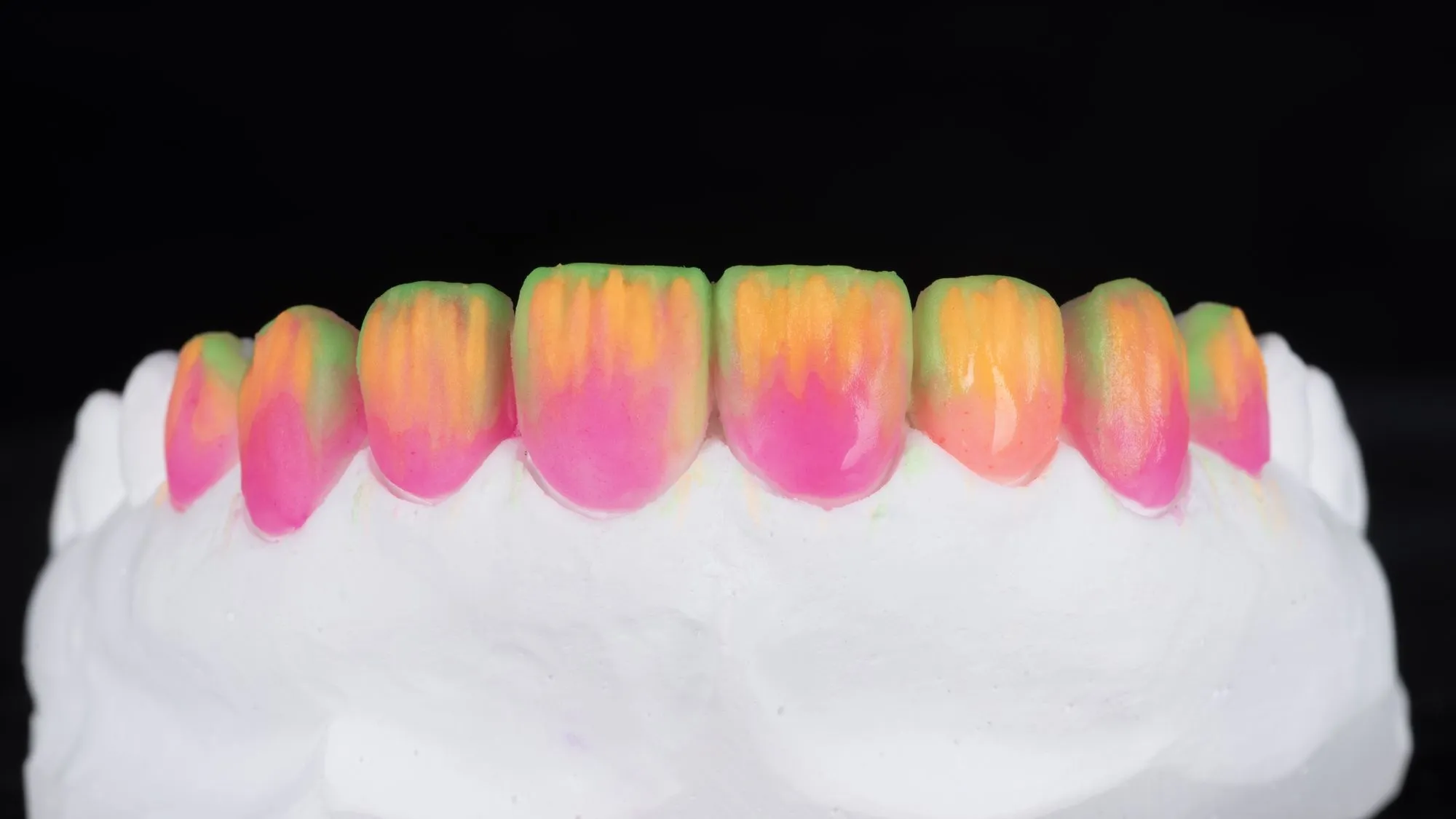
Ceramic layers — shade and translucency built separately (styled image)
SymptomCause we usually findFirst response
Cold sensitivityOver-reduction · undetected decay · temporary nerve irritationCheck pulp status and decay, then desensitising treatment or partial repair
Recurring gum swellingMargin sitting too deep · step or roughness at the marginGum treatment plus refinishing the margin; remake that tooth if needed
Lifting or debondingBond failure · night grinding · front-tooth habitsCheck the bond and re-bond; if repeated, revisit the occlusal design
Shade mismatchWrong shade at the start · stain at the junctionPolish if it is stain; replace only the affected units if it is the ceramic
Decay at the marginPoor cleaning at the junction · gap at the marginTreat the decay, refinish the margin, revisit home care
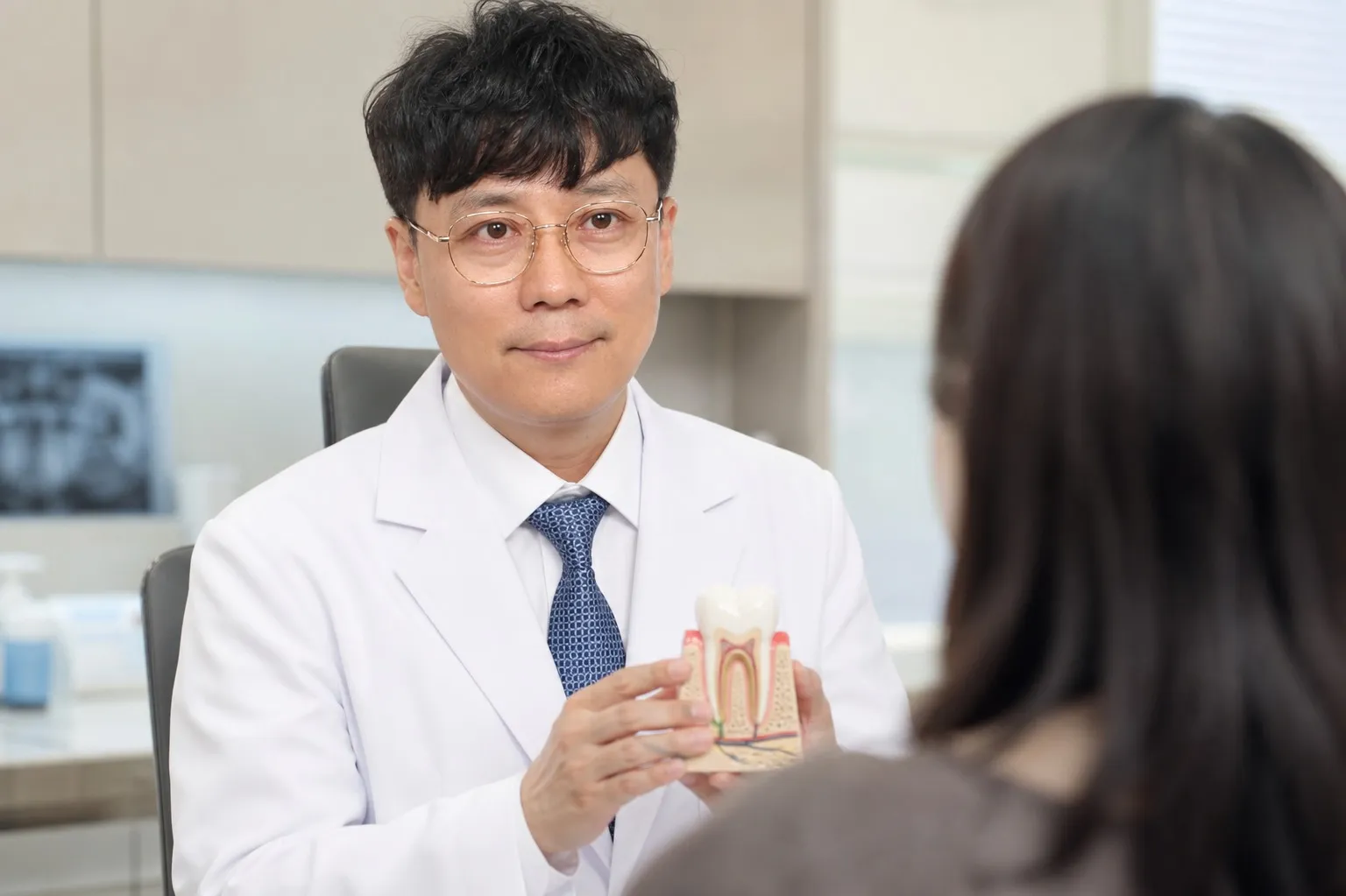
Consultation with Dr. Park Jonguk — we decide the scope before the number (styled image)
Our prep room — preparation happens out of sight

{ Twenty years brought one conclusion. A veneer is not a dangerous procedure — it is a procedure where the details decide. }

Root Causes

What was missing in the cases that went wrong

When we remove the previous work of patients who come to us for a redo, one or more of these four is usually absent.

Ceramic powders — colour begins with the material (styled image)
  • The first examination was shallow — bite, gum condition, night grinding and decay were not verified before treatment.
  • The margin was not precise — roughly half of gum health and longevity is decided at that line.
  • The reduction went past enamel — once dentin is exposed, sensitivity, debonding and gum irritation follow together.
  • There was no recall — caught at a six-month check it is a small repair; missed, it becomes a full replacement.

Evidence

What does the literature report?

How often complications occur is not a matter of opinion — long-term follow-up studies answer it. These figures come from international journals.

  1. 01

    Meta-analysis of 13 studies — 89% cumulative survival (median follow-up 9 years)

    Glass-ceramic reached 94% and feldspathic porcelain 87%; complications were fracture/chipping 4%, debonding 2%, severe discoloration 2%, and secondary caries 1%.

    Morimoto S, Albanesi RB, Sesma N, Agra CM, Braga MM. Main Clinical Outcomes of Feldspathic Porcelain and Glass-Ceramic Laminate Veneers: A Systematic Review and Meta-Analysis of Survival and Complication Rates. Int J Prosthodont. 2016;29(1):38-49. PMID 26757327

  2. 02

    Preparations confined to enamel survived at 99% — dentin exposure raised failure risk about tenfold

    580 veneers followed for up to 12 years gave 86% overall survival, and 94% when only the margins remained in enamel — what mattered was where the preparation stopped, not merely how much was removed.

    Gurel G, Sesma N, Calamita MA, Coachman C, Morimoto S. Influence of enamel preservation on failure rates of porcelain laminate veneers. Int J Periodontics Restorative Dent. 2013;33(1):31-9. PMID 23342345

  3. 03

    Estimated survival 82.9% at 20 years (94.4% at 5, 93.5% at 10)

    318 veneers in 84 patients, mean follow-up 118 months. Ceramic fracture accounted for 44.8% of failures, and existing parafunction such as bruxism carried a 7.7-times greater risk of failure.

    Beier US, Kapferer I, Burtscher D, Dumfahrt H. Clinical performance of porcelain laminate veneers for up to 20 years. Int J Prosthodont. 2012;25(1):79-85. PMID 22259802

These figures are general clinical outcomes reported in the academic literature. They are not our clinic’s own results and do not guarantee an individual outcome — your course depends on your teeth, bite, and habits.

Ceramic blocks — restorations finished in a day

Prevention

Five steps that lower the risk

No procedure carries zero risk. But when all five of these are in place, the room for problems narrows considerably.

  1. 01

    Choose a clinic that spends time on diagnosis

    The accuracy of the first examination shapes everything after it — bite, gums and grinding have to be checked beforehand.

  2. 02

    Go through a temporary stage

    Confirming shape, length and shade in your own mouth before the final decision means far less undoing later.

  3. 03

    Wear a night guard if you grind

    Night-time load is a leading risk for fracture and debonding; the literature also found significantly higher failure risk with parafunction.

  4. 04

    Keep the six-month check

    Seeing the margins and gums on a schedule ends small problems before they grow.

  5. 05

    Adjust hard foods and front-tooth habits

    Avoid ice and hard nuts, avoid tearing with the front teeth, and rinse after strongly coloured drinks.

A veneer shell — porcelain about 0.3 mm thick (styled image)

Is it possible in my case?

The available range depends on your condition. Feel free to ask us.

FAQ

Frequently asked questions

A sterilised instrument tray — prepared fresh for every visit (styled image)
01 How common are veneer complications?

A meta-analysis of 13 studies reported debonding in 2%, fracture or chipping in 4%, severe discoloration in 2% and secondary caries in 1% (Morimoto et al., 2016). These are general figures from the literature and do not guarantee an individual outcome.

02 How long does sensitivity last?

Temporary sensitivity from surface preparation usually settles within a few weeks. If it persists past a month or worsens, the depth of reduction and the presence of decay should be re-examined.

03 My gums keep swelling — will brushing harder fix it?

Not if the margin sits deep under the tissue or has a step. In that case the margin has to be refinished alongside gum treatment.

04 If one veneer fails, must all of them be redone?

No. Found early, a single tooth is usually re-bonded or remade. Replacing several at once is normally only needed when the shade has to be re-matched.

05 Can I have veneers if I grind my teeth?

It changes the design rather than ruling it out — the form is shaped to share the load and a night guard is worn. The criteria are set out on our bruxism page.

06 How is a problem veneer removed?

With an Er:YAG laser that separates the ceramic selectively without grinding the tooth, so the remaining tooth structure is preserved for the redesign.

This page is general information about the treatment. Diagnosis, treatment options, and duration vary by individual condition — an in-person examination is how we plan your actual care.

Uncomfortable with veneers you already have?

If something has changed, it is better checked early. We will tell you what is causing it and how far the work needs to go.