
The uppers were done and now the lowers look dark
Brightening the top makes the bottom read yellower by contrast. Nothing has actually changed except the reference point.
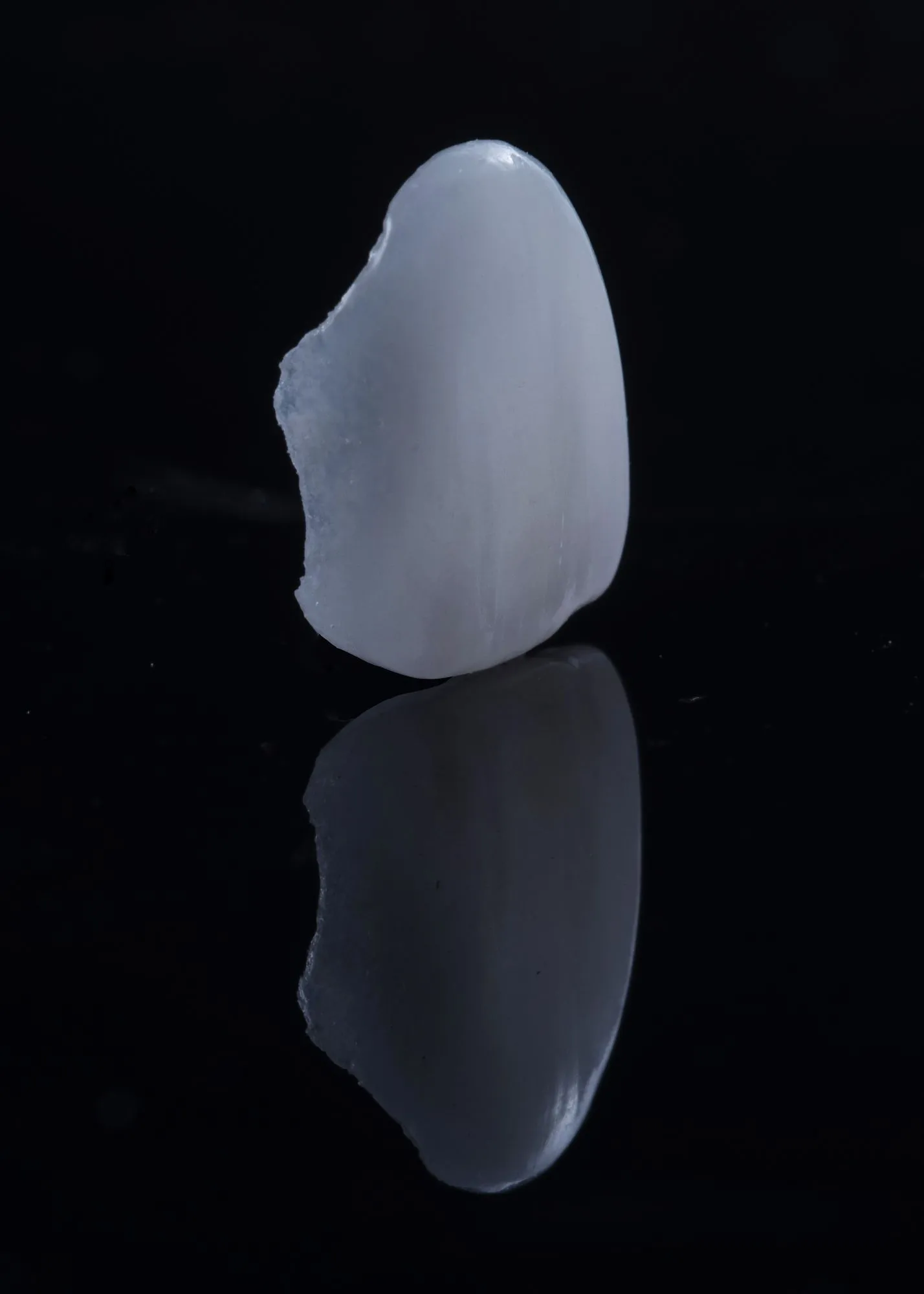
Lower veneers
Brighten the upper teeth and the lower ones start to look dark, which is why people ask about them next. But lower incisors are small and thin, and they strike the upper teeth every time you speak or chew. The same procedure faces stricter conditions here.
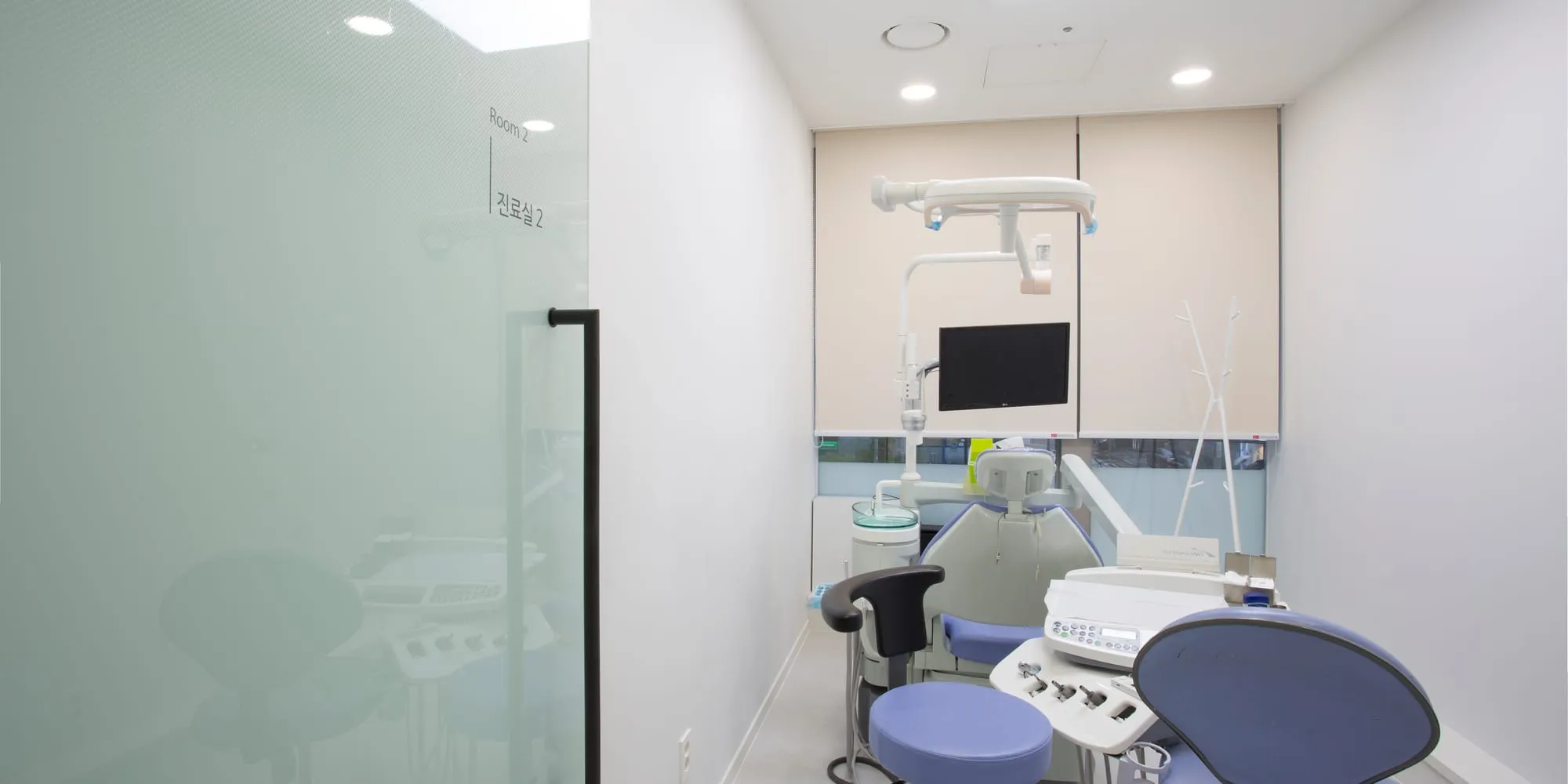 PORCELAIN VENEER
 Why It Differs
Lower incisors are narrower and thinner than the upper ones, which means less enamel remains. They also contact the palatal surfaces of the upper incisors directly whenever you speak or chew. Bond a veneer thinly and it sits where the load lands; build it thicker and it pushes the upper teeth harder. So with lower veneers the first question is not whether they can be done, but how the force will be distributed.
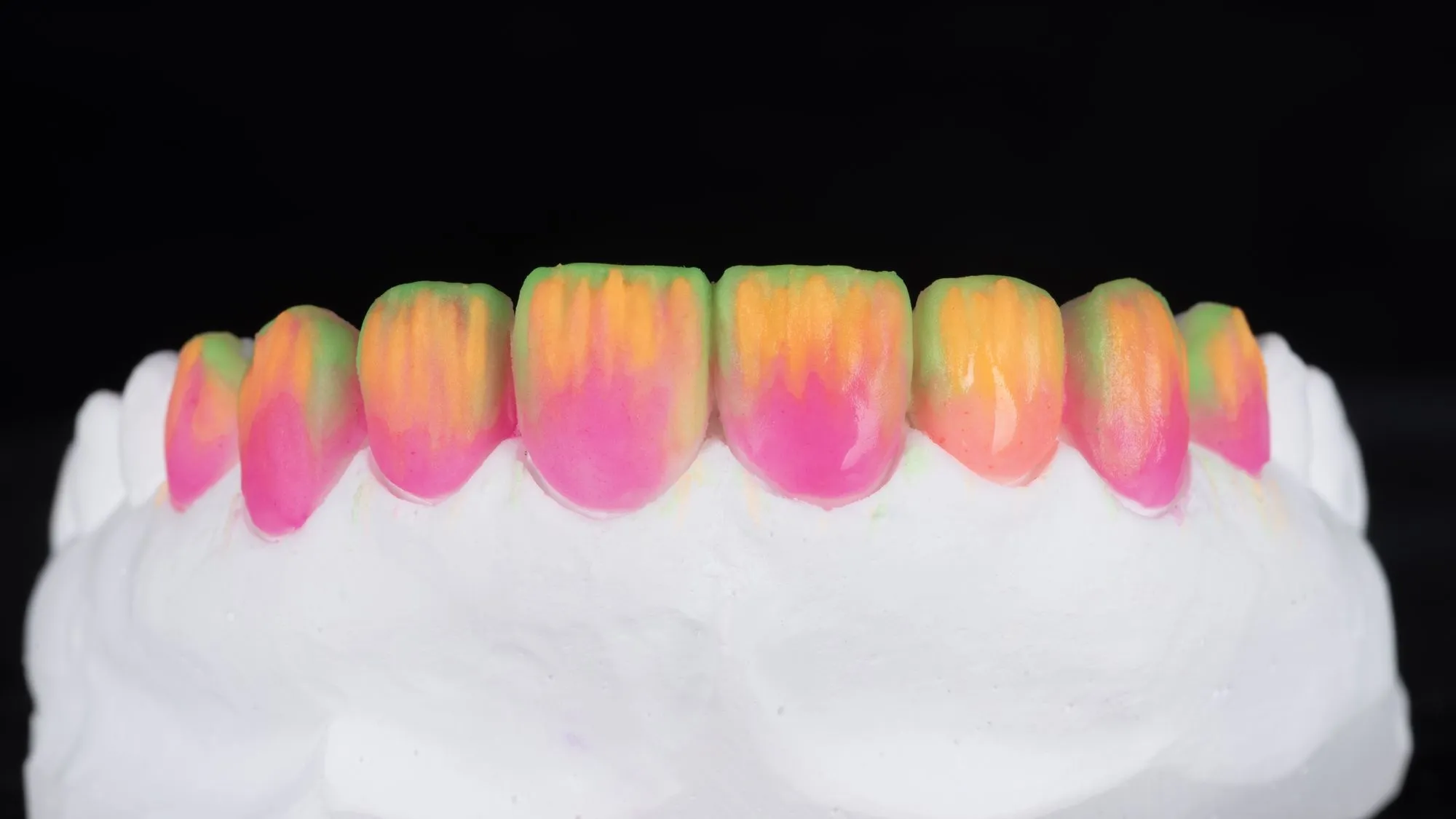
Reasons People Ask
The four reasons we hear most often in consultation.
Brightening the top makes the bottom read yellower by contrast. Nothing has actually changed except the reference point.
Lower incisors commonly crowd again in adulthood. But once the overlap is significant, covering does not solve it.
As the incisal edge thins with wear, light passes through and it reads grey. Here the cause — force — has to be addressed first.
Narrow spaces can be closed by form, but a triangular gap left by receded gum has limits.
BEFORE / AFTER
Real veneer cases treated by Dr. Park Jonguk at Dream Dental Clinic, Gangnam. Tap a photo to compare before and after up close.
The before-and-after photos above are real clinical cases treated at Dream Dental Clinic, Gangnam (Dr. Park Jonguk). Results vary with each patient’s condition, and every procedure carries the possibility of individual variation and side effects.
Upper vs Lower
The same veneer faces different conditions depending on where it sits.
| Upper incisors | Lower incisors | |
|---|---|---|
| Tooth size | Wide and thick | Narrow and thin |
| Remaining enamel | Relatively generous | Limited, so bonding is tighter |
| Occlusal contact | Taken on the palatal surface | The incisal edge strikes directly |
| Visibility | First thing seen when smiling | Seen when speaking or from above |
| Calculus and stain | Comparatively less | Near salivary ducts, so it builds up |
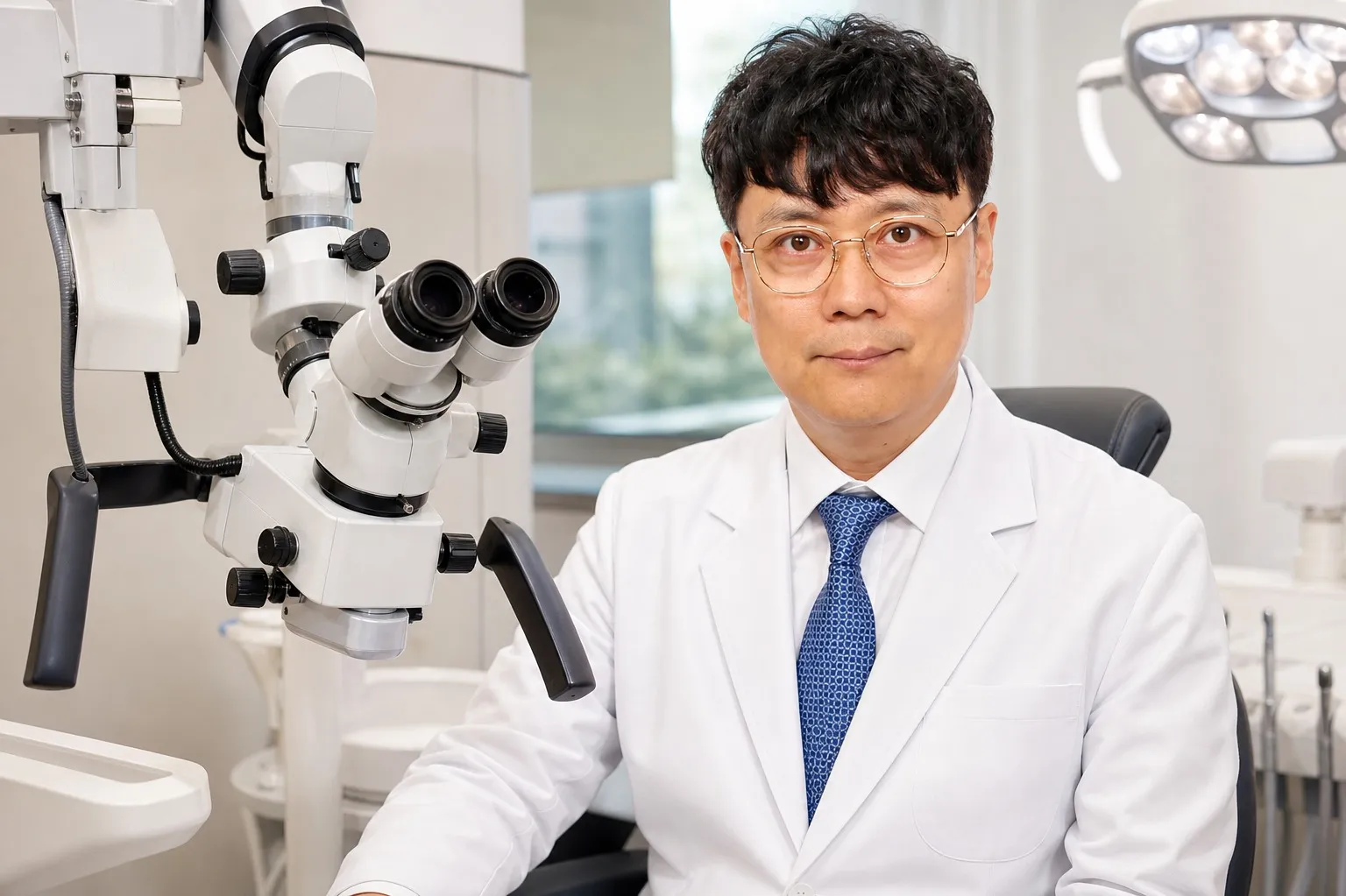
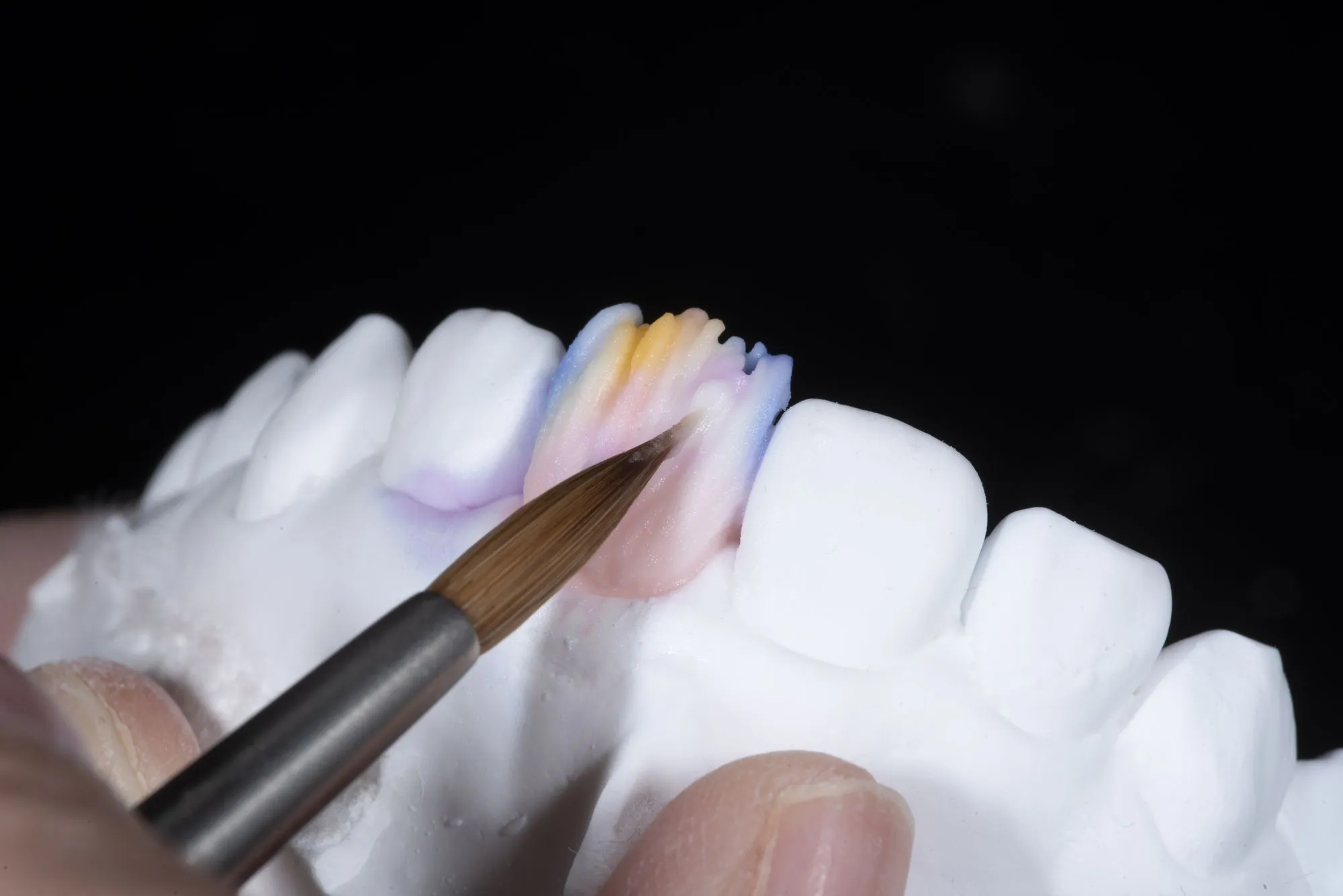
{ For the lower arch, can the force be shared comes before can it be covered. }
When We Hold
If any of these apply, we postpone lower veneers or propose another route first.
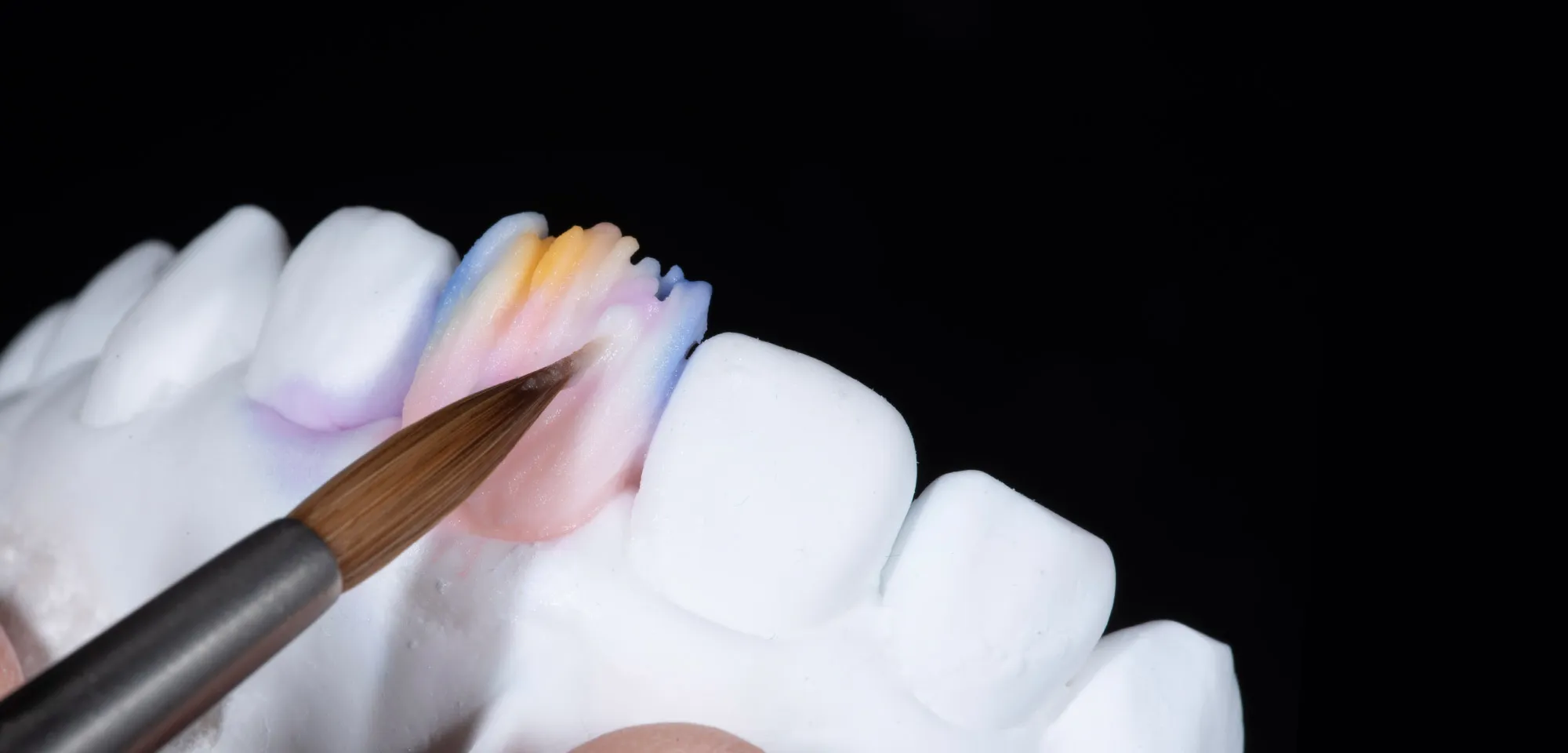
How We Proceed
The order differs down here. Force comes before colour.
Record the occlusion first
We map where and how upper and lower meet, and from that decide where the veneer can sit.
Determine the cause of wear
Grinding and acid erosion call for different treatment and a different sequence.
Design with the uppers
Making the lowers in isolation throws the contact relationship off. We treat both arches as one design.
Keep thickness minimal
With little enamel left, we reduce preparation and add thickness only where it is needed.
Plan a night guard alongside
Where force is the cause, the result is difficult to maintain without one.
Evidence
Long-term studies report both the causes of failure and the risk factors. This matters especially on the lower arch.
Estimated survival 82.9% at 20 years (94.4% at 5, 93.5% at 10)
318 veneers in 84 patients, mean follow-up 118 months. Ceramic fracture accounted for 44.8% of failures, and existing parafunction such as bruxism carried a 7.7-times greater risk of failure.
Beier US, Kapferer I, Burtscher D, Dumfahrt H. Clinical performance of porcelain laminate veneers for up to 20 years. Int J Prosthodont. 2012;25(1):79-85. PMID 22259802
Preparations confined to enamel survived at 99% — dentin exposure raised failure risk about tenfold
580 veneers followed for up to 12 years gave 86% overall survival, and 94% when only the margins remained in enamel — what mattered was where the preparation stopped, not merely how much was removed.
Gurel G, Sesma N, Calamita MA, Coachman C, Morimoto S. Influence of enamel preservation on failure rates of porcelain laminate veneers. Int J Periodontics Restorative Dent. 2013;33(1):31-9. PMID 23342345
Meta-analysis of 13 studies — 89% cumulative survival (median follow-up 9 years)
Glass-ceramic reached 94% and feldspathic porcelain 87%; complications were fracture/chipping 4%, debonding 2%, severe discoloration 2%, and secondary caries 1%.
Morimoto S, Albanesi RB, Sesma N, Agra CM, Braga MM. Main Clinical Outcomes of Feldspathic Porcelain and Glass-Ceramic Laminate Veneers: A Systematic Review and Meta-Analysis of Survival and Complication Rates. Int J Prosthodont. 2016;29(1):38-49. PMID 26757327
These figures are general clinical outcomes reported in the academic literature. They are not our clinic’s own results and do not guarantee an individual outcome — your course depends on your teeth, bite, and habits.
Quick Consult
Leave your number and we will call you back during clinic hours.
Request Received
We will contact you during clinic hours. For urgent matters, please call +82-2-3448-0028.
The available range depends on your condition. Feel free to ask us.
FAQ
Yes. But because the teeth are small and thin and the occlusal contact is direct, we assess the conditions more carefully. Depending on what we find, we sometimes advise against it.
Many people are satisfied with the uppers alone. If the lowers show when you smile broadly or speak, however, the contrast may bother you — so we suggest checking it on simulation beforehand.
It depends on what shows. Four lower incisors is the common range; if more are visible when you smile, we consider six.
It is true that the conditions are less favourable — less enamel and direct load. That is why we plan occlusal adjustment and a night guard alongside them.
If colour is the only issue, whitening comes first. With little room for reduction on the lower arch, solving it by whitening is better for the teeth.
Very mild crowding, yes. But the lower arch is tight, so even a small increase in overlap raises the reduction sharply. In that case we recommend limited orthodontics first.
This page is general information about the treatment. Diagnosis, treatment options, and duration vary by individual condition — an in-person examination is how we plan your actual care.
On the lower arch, distributing force comes before feasibility. After examining it we tell you honestly whether to proceed or wait.