
Diagnosis and preparation on the same day
Form and shade should be designed first. If preparation begins with no measurement or simulation, ask why.
Choosing a clinic
Veneers are hard to undo once started, so where you have them done matters — yet advertising tells you very little. Here we have collected only what you can check for yourself in the consultation room.
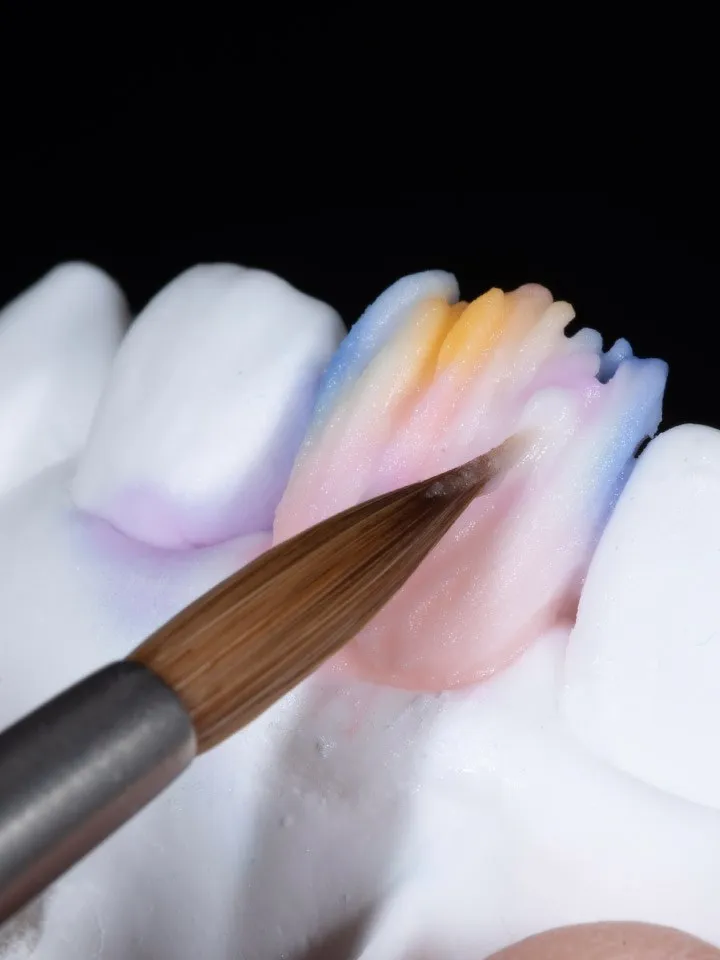
 PORCELAIN VENEER
 The Point
Finished photographs look good everywhere. What a photograph cannot show is how much tooth was removed, how the restoration was made, or what happens if something goes wrong. The measure is not the result, but whether the route to it can be explained. The eight points below can all be checked in a single consultation.
Checklist
Ask these, and watch whether the answers are specific. Answers given in numbers and steps are what count.
BEFORE / AFTER
Real veneer cases treated by Dr. Park Jonguk at Dream Dental Clinic, Gangnam. Tap a photo to compare before and after up close.
The before-and-after photos above are real clinical cases treated at Dream Dental Clinic, Gangnam (Dr. Park Jonguk). Results vary with each patient’s condition, and every procedure carries the possibility of individual variation and side effects.
Warning Signs
None of these is wrong in itself, but each deserves further explanation.
Form and shade should be designed first. If preparation begins with no measurement or simulation, ask why.
Reduction differs by area. Whether it is 0.3 mm or 0.7 mm changes how much enamel is left.
Rather than “six front teeth as standard”, there should be a reason for that number.
A treatment this hard to reverse should not be decided by a date on a promotion.
Ask This
The same question reveals a lot in the form the answer takes.
| Question | What a specific answer looks like |
|---|---|
| How much will you remove? | Figures per area and what enamel remains |
| How is it made? | Where it is fabricated, how it is layered, when it is checked |
| How long will it last? | Published figures, separated from your own risk factors |
| What if it fractures? | Period and cost terms, provided in writing |
| What is the fee? | What is included, and whether VAT applies |
{ A good consultation tells you first what cannot be done. }
Evidence
The variables that recur in the literature are preserving enamel and managing force. Watch whether the consultation addresses both.
Preparations confined to enamel survived at 99% — dentin exposure raised failure risk about tenfold
580 veneers followed for up to 12 years gave 86% overall survival, and 94% when only the margins remained in enamel — what mattered was where the preparation stopped, not merely how much was removed.
Gurel G, Sesma N, Calamita MA, Coachman C, Morimoto S. Influence of enamel preservation on failure rates of porcelain laminate veneers. Int J Periodontics Restorative Dent. 2013;33(1):31-9. PMID 23342345
Estimated survival 82.9% at 20 years (94.4% at 5, 93.5% at 10)
318 veneers in 84 patients, mean follow-up 118 months. Ceramic fracture accounted for 44.8% of failures, and existing parafunction such as bruxism carried a 7.7-times greater risk of failure.
Beier US, Kapferer I, Burtscher D, Dumfahrt H. Clinical performance of porcelain laminate veneers for up to 20 years. Int J Prosthodont. 2012;25(1):79-85. PMID 22259802
Meta-analysis of 13 studies — 89% cumulative survival (median follow-up 9 years)
Glass-ceramic reached 94% and feldspathic porcelain 87%; complications were fracture/chipping 4%, debonding 2%, severe discoloration 2%, and secondary caries 1%.
Morimoto S, Albanesi RB, Sesma N, Agra CM, Braga MM. Main Clinical Outcomes of Feldspathic Porcelain and Glass-Ceramic Laminate Veneers: A Systematic Review and Meta-Analysis of Survival and Complication Rates. Int J Prosthodont. 2016;29(1):38-49. PMID 26757327
These figures are general clinical outcomes reported in the academic literature. They are not our clinic’s own results and do not guarantee an individual outcome — your course depends on your teeth, bite, and habits.
Our Answer
Our answers to the questions above — stated as verifiable facts rather than as claims of comparison.
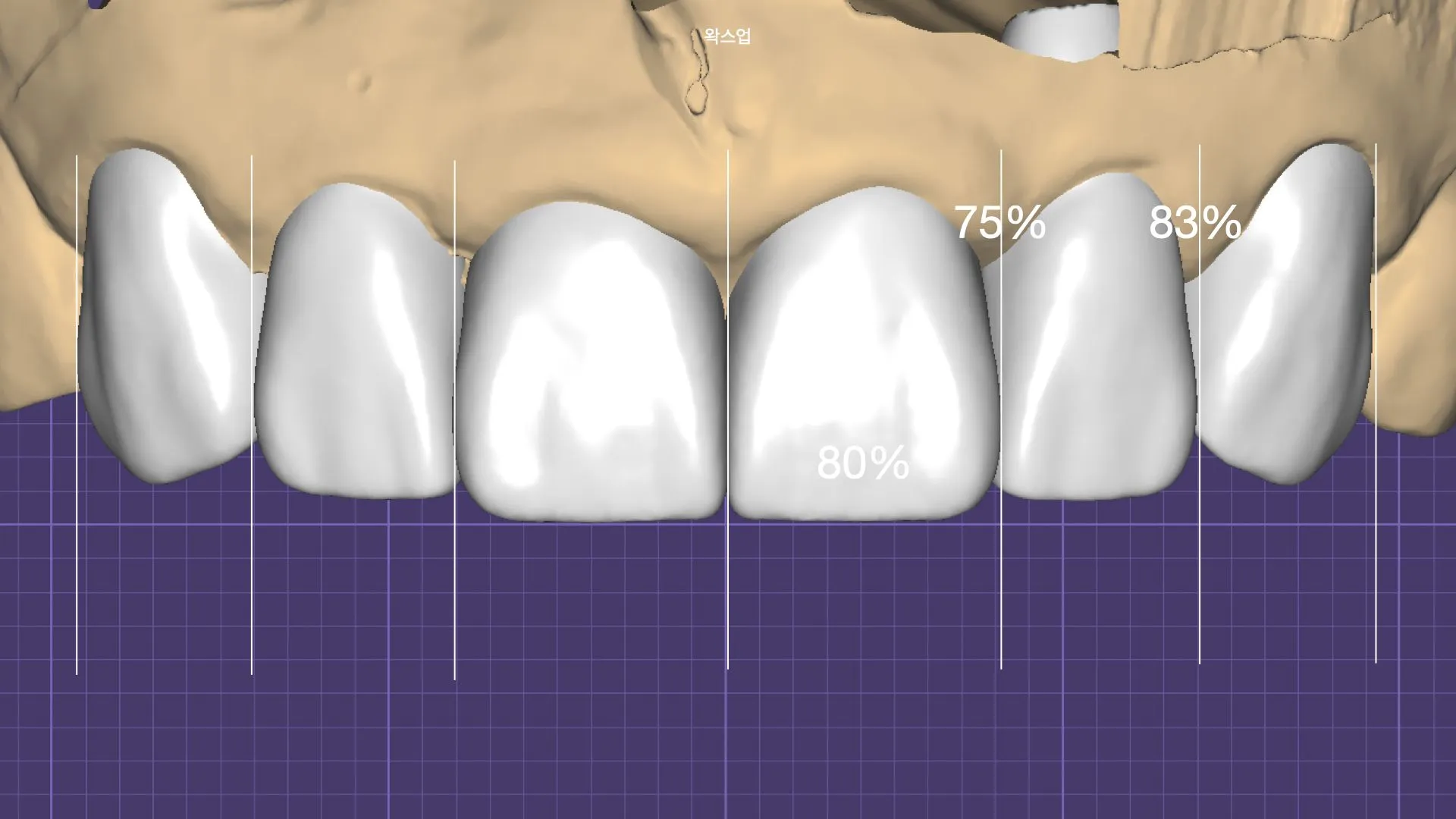
We measure with a 3D scan
Our own digital diagnosis (Park’s AES, patent application 10-2026-0084505) calculates reduction per area.
We show the design first
The target form is confirmed before any preparation, and we proceed with the agreed shape.
We fabricate in our in-house laboratory
Shade and form are adjusted in the same building, so checks and corrections can happen the same day.
We publish our fees on this site
Non-covered items, including KRW 1,300,000 per veneer (VAT excluded), are published openly.
We check grinding and occlusion first
Veneers made without assessing force do not last.
Quick Consult
Leave your number and we will call you back during clinic hours.
Request Received
We will contact you during clinic hours. For urgent matters, please call +82-2-3448-0028.
The available range depends on your condition. Feel free to ask us.
FAQ
Reviews are useful context but a weak criterion. They do not record reduction volume or fabrication process. Checking directly in consultation is more accurate.
Price alone cannot decide it. But what is included — diagnosis, temporaries, adjustments, remake terms — can differ, so compare the total and the conditions together.
We recommend it. The harder a treatment is to reverse, the more worthwhile several explanations become. Where they differ, ask why.
No-prep is an excellent option when the conditions suit it, not something possible in every case. If it is offered where the conditions do not fit, ask for the reasoning.
Shade and form are decided during fabrication. An outside laboratory is not a fault — but it changes how quickly a correction can be reflected.
Get them in writing rather than as a verbal promise. Look at which cases are free of charge, over what period, and how the cause of the damage changes the terms.
This page is general information about the treatment. Diagnosis, treatment options, and duration vary by individual condition — an in-person examination is how we plan your actual care.
Articles
How the same topic is judged chairside, written up with real cases.
You are welcome to put all eight questions to us exactly as written. We answer in figures and procedures.