
 01
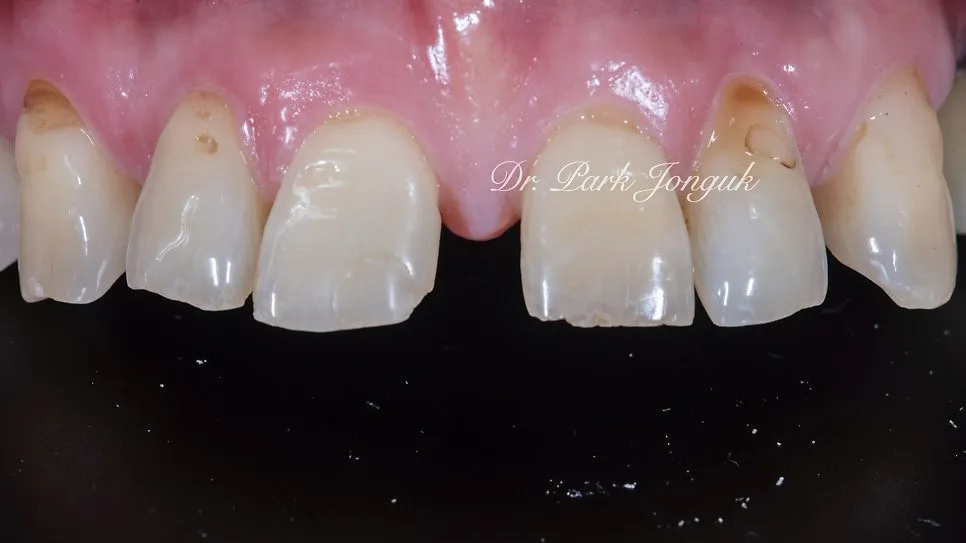
01 The tooth is sound but the colour is not
Even discoloration that whitening cannot lift can be rebuilt over the facial surface as long as the tooth itself is solid.
Veneers vs Crowns
From the outside both look like “making the front teeth beautiful with ceramic”. But one bonds a thin shell to the front of the tooth, and the other cuts the tooth down on every side and caps it. That difference decides how much tooth is left, and the twenty years that follow.
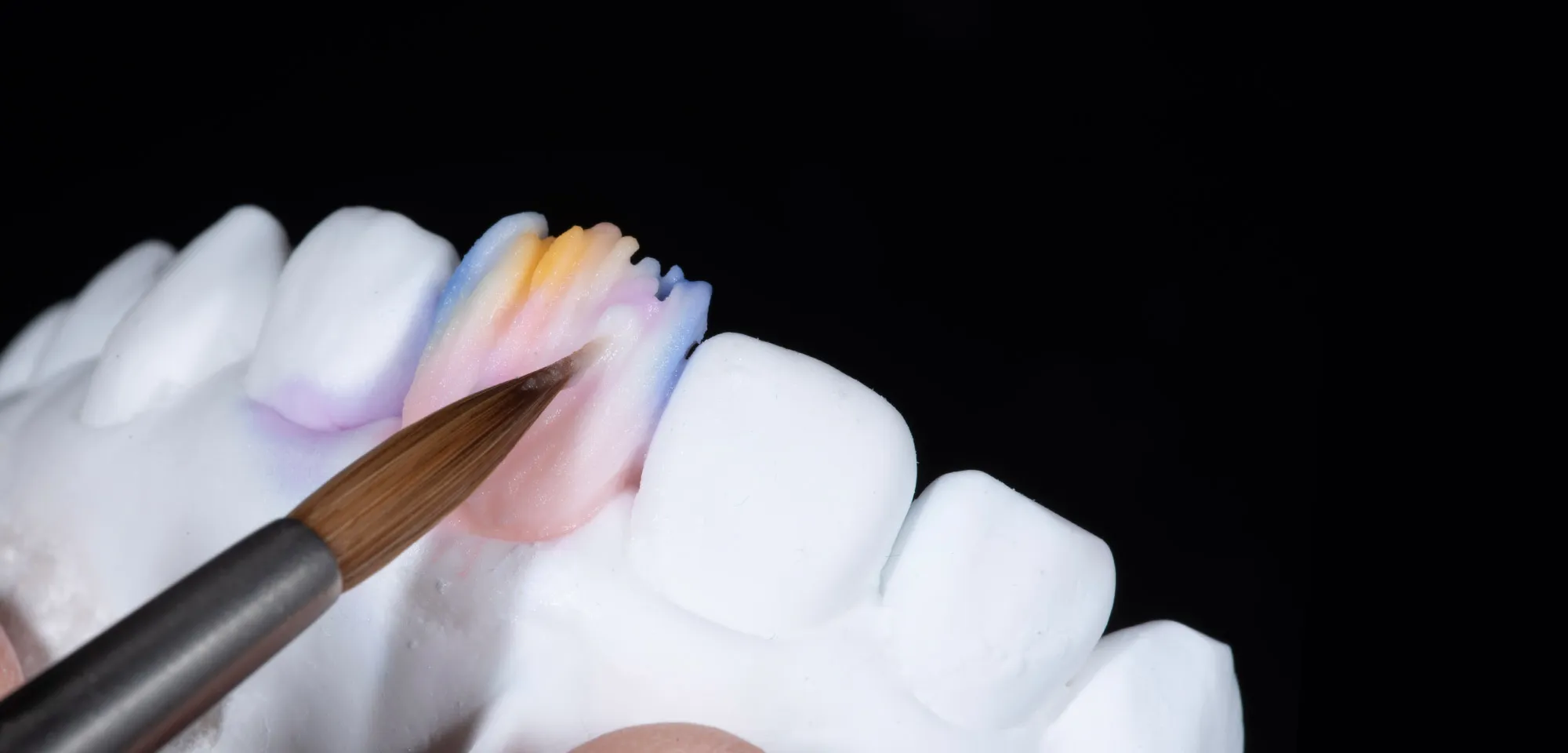 PORCELAIN VENEER
 The Difference
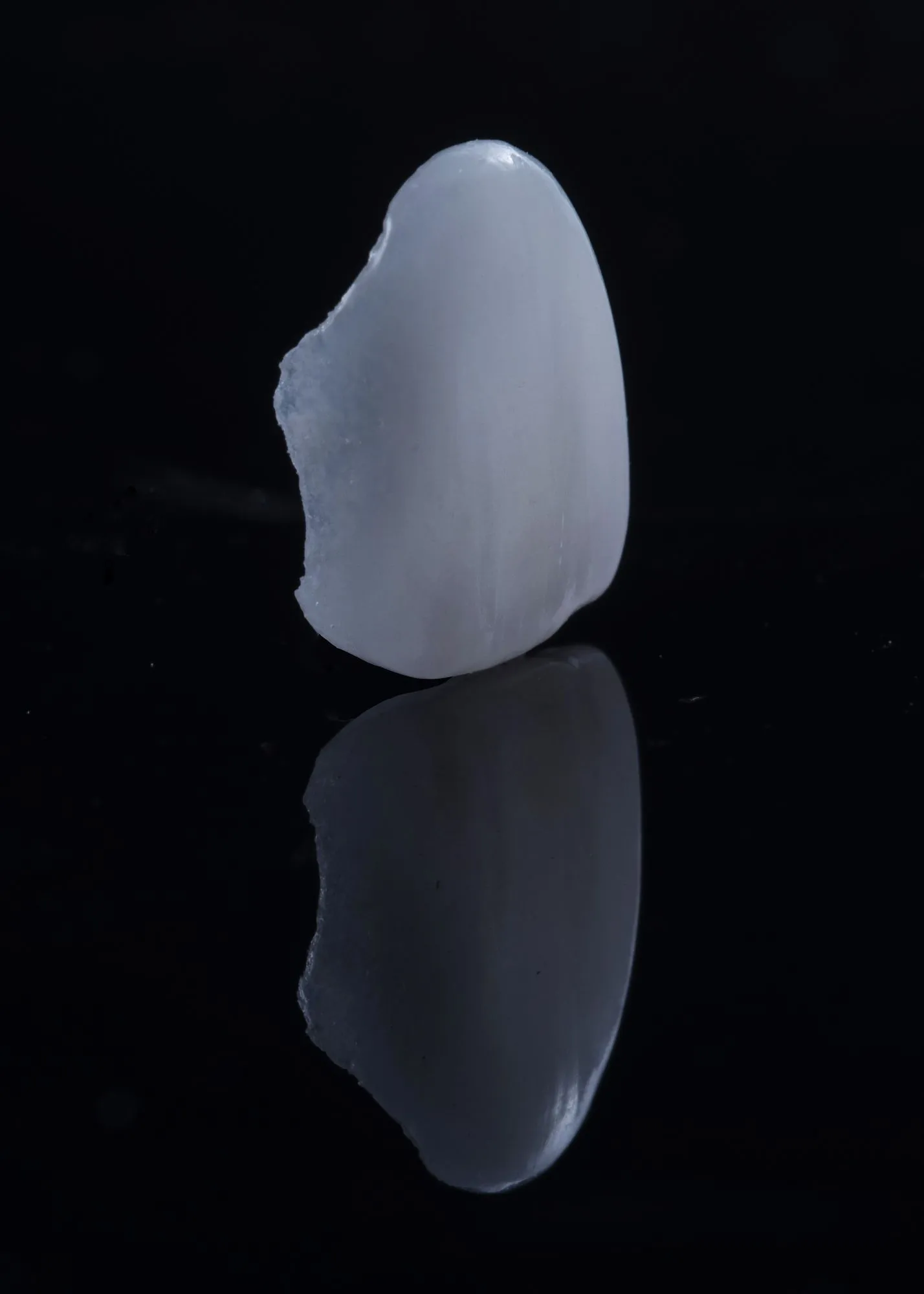
A veneer bonds thin ceramic mainly to the facial surface. A crown is prepared on all sides and caps the tooth like a hat. In a study that actually weighed the tooth structure lost per anterior preparation design, veneers removed 3–30% of the coronal tooth, while all-ceramic and metal-ceramic crowns removed 63–72%. Tooth structure does not grow back, which is what gives those numbers their weight.
Side by Side
The table compares both approaches on the same anterior tooth. Fees are our published rates, VAT excluded.
| Veneer | All-ceramic crown | |
|---|---|---|
| Coverage | Mainly the facial surface (+ incisal edge) | The whole tooth, all sides |
| Tooth removed (literature) | 3–30% of the crown | 63–72% of the crown |
| Bonding substrate | Mostly enamel — favourable for adhesion | A large share of dentin |
| Load on the pulp | Relatively low | Greater reduction sometimes leads to root canal treatment |
| Indication | Colour, form, mild alignment, with enough tooth left | Heavily damaged or root-treated teeth, or heavy load |
| Fee (per unit) | KRW 1,300,000 (VAT excl.) | KRW 1,300,000 |
BEFORE / AFTER
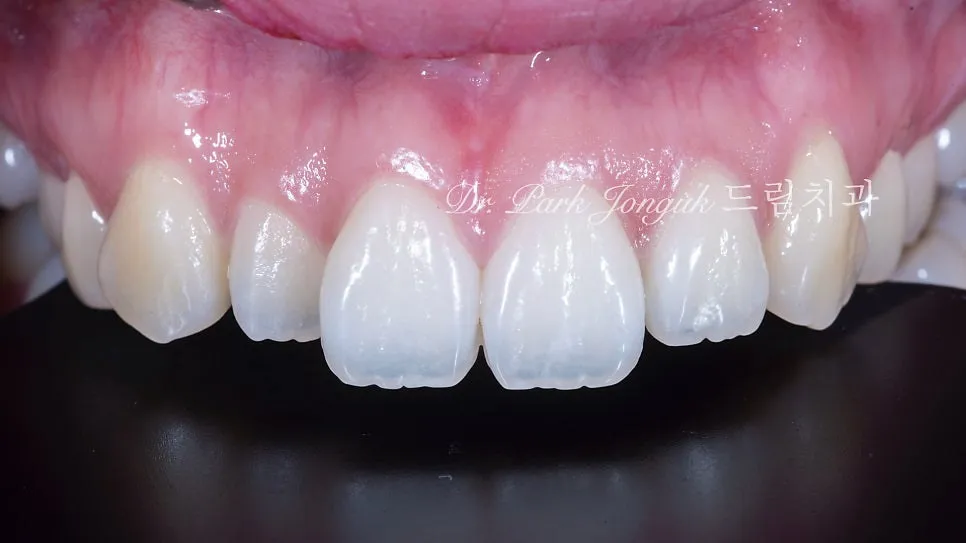
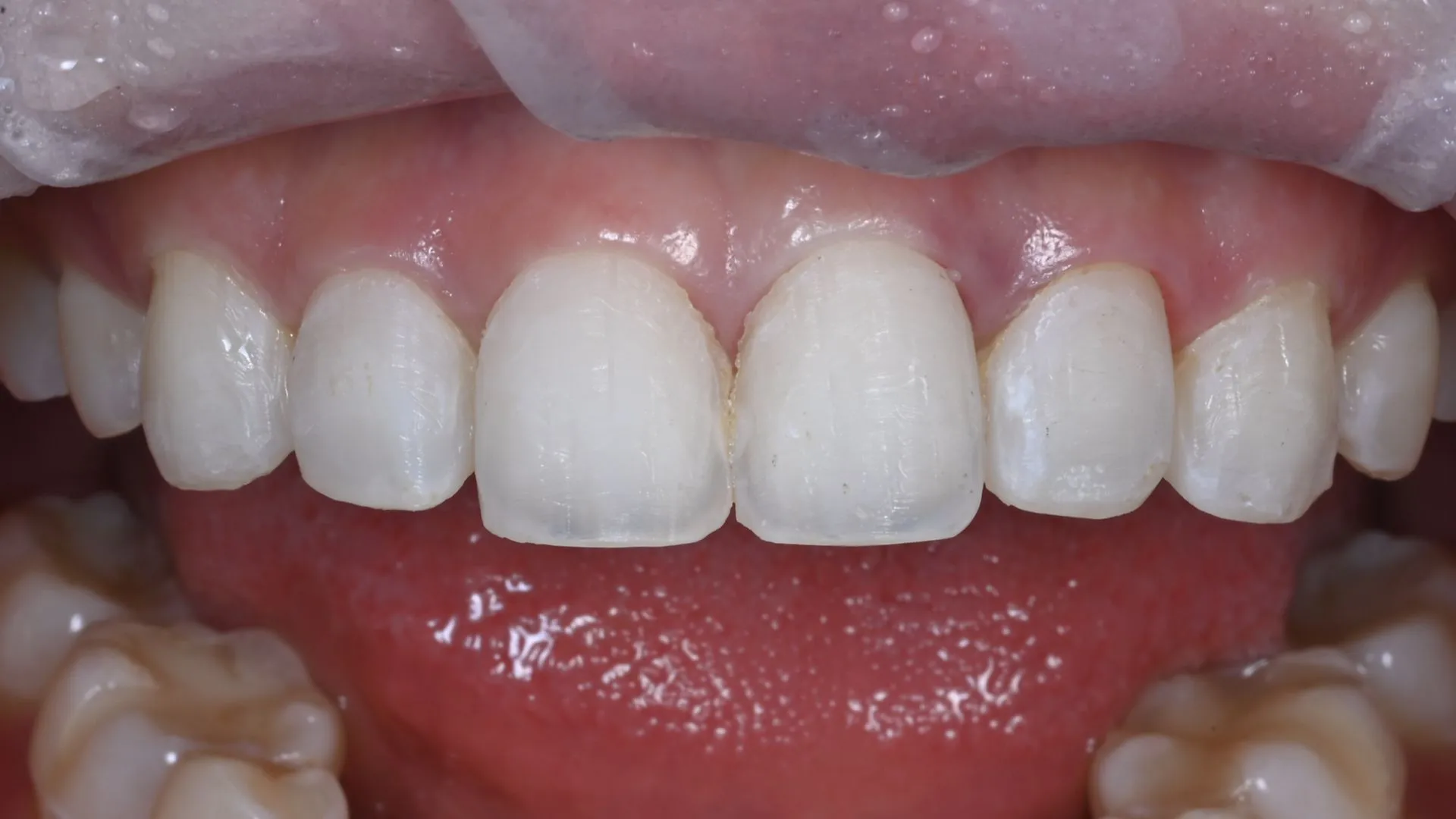
Real veneer cases treated by Dr. Park Jonguk at Dream Dental Clinic, Gangnam. Tap a photo to compare before and after up close.
The before-and-after photos above are real clinical cases treated at Dream Dental Clinic, Gangnam (Dr. Park Jonguk). Results vary with each patient’s condition, and every procedure carries the possibility of individual variation and side effects.
Choose Veneer
If the tooth is essentially healthy and what you want to change is colour and form, the veneer is the natural choice.
01 Even discoloration that whitening cannot lift can be rebuilt over the facial surface as long as the tooth itself is solid.
 02
02 Small lateral incisors, gaps and slightly short incisors are often solved by adjusting thickness and width on the front surface alone.
 03
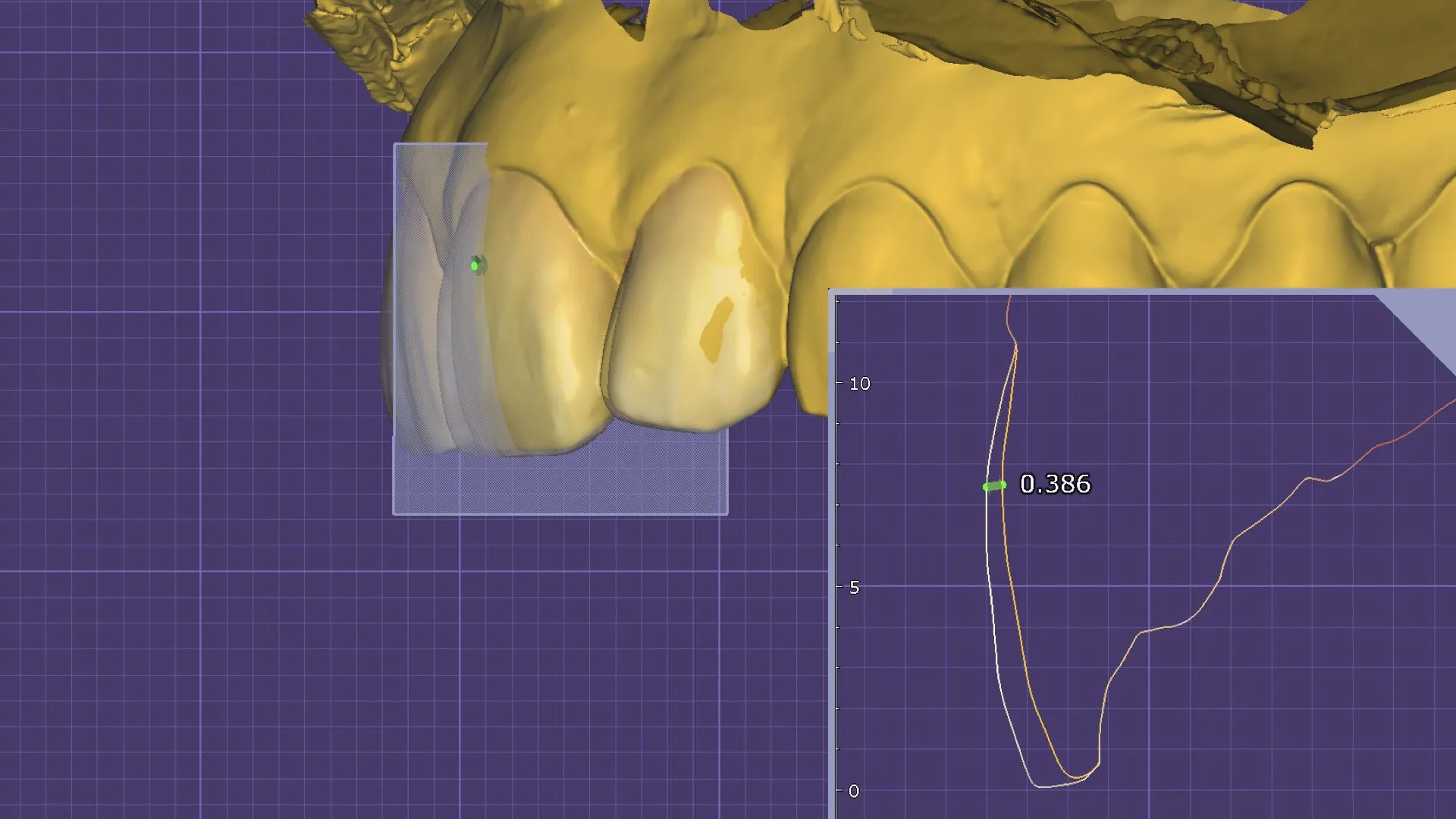
03 Adhesion is strongest to enamel. One study reported 99% survival where the preparation stayed within enamel, which is how much this condition matters.
 04
04 Keeping tooth structure keeps future choices available. Starting with a crown cannot be undone.
Choose Crown
If any of these apply, a crown is the safer choice rather than stretching a veneer to cover it. Forcing a veneer onto a case it cannot handle is where problems begin.
{ Cutting a tooth that a veneer cannot serve, and still calling it a veneer, produces a crown that is only named veneer. }
Evidence
Reduction volume and survival have published figures. They are worth reading alongside the decision.
Tooth structure removed — veneers 3–30% vs crowns 63–72%
A classic study weighing how much tooth is lost per anterior preparation design: a metal-ceramic crown preparation removed 4.3 times more tooth structure than a facial-surface veneer preparation.
Edelhoff D, Sorensen JA. Tooth structure removal associated with various preparation designs for anterior teeth. J Prosthet Dent. 2002;87(5):503-9. PMID 12070513
Preparations confined to enamel survived at 99% — dentin exposure raised failure risk about tenfold
580 veneers followed for up to 12 years gave 86% overall survival, and 94% when only the margins remained in enamel — what mattered was where the preparation stopped, not merely how much was removed.
Gurel G, Sesma N, Calamita MA, Coachman C, Morimoto S. Influence of enamel preservation on failure rates of porcelain laminate veneers. Int J Periodontics Restorative Dent. 2013;33(1):31-9. PMID 23342345
Meta-analysis of 13 studies — 89% cumulative survival (median follow-up 9 years)
Glass-ceramic reached 94% and feldspathic porcelain 87%; complications were fracture/chipping 4%, debonding 2%, severe discoloration 2%, and secondary caries 1%.
Morimoto S, Albanesi RB, Sesma N, Agra CM, Braga MM. Main Clinical Outcomes of Feldspathic Porcelain and Glass-Ceramic Laminate Veneers: A Systematic Review and Meta-Analysis of Survival and Complication Rates. Int J Prosthodont. 2016;29(1):38-49. PMID 26757327
These figures are general clinical outcomes reported in the academic literature. They are not our clinic’s own results and do not guarantee an individual outcome — your course depends on your teeth, bite, and habits.
How We Decide
We do not walk into a consultation with the answer already chosen. We check the following and tell you what is left.
How much tooth remains
What is left after removing old restorations and decay is the first fork in the road.
Where the enamel is
Whether the margin can sit within enamel is the condition on which the veneer stands.
Bite and grinding
Where the load goes and how heavy it is changes both thickness and approach.
The size of the change you want
Whether the tooth axis must move substantially, or only colour and form need refining, splits the answer.
Mixed designs are considered too
Four incisors as veneers and one root-treated tooth as a crown is a common and perfectly sound plan.
Quick Consult
Leave your number and we will call you back during clinic hours.
Request Received
We will contact you during clinic hours. For urgent matters, please call +82-2-3448-0028.
The available range depends on your condition. Feel free to ask us.
FAQ
No — they have different indications. With plenty of tooth left, veneers are favourable; on a heavily damaged or root-treated tooth, a crown is safer. The better treatment is not the one that removes less, but the one that matches the tooth.
Our published fee is KRW 1,300,000 per veneer (VAT excluded) and KRW 1,300,000 per anterior all-ceramic crown. The figures are the same, so you can choose on the condition of the tooth rather than on price.
A tooth already prepared for a crown cannot be un-prepared, so it usually stays a crown. If you have come because the shape or shade looks unnatural, we remake the crown to recover a natural result.
The ceramic is thicker, but the price is less remaining tooth. Where the underlying tooth is sound, thin ceramic bonded to enamel often lasts just as well.
Yes, and it is a common plan. To keep the junction invisible, however, they should be made in the same workflow with matched material and shade.
Think of it as the two ends of a spectrum of reduction: no-prep approaches zero, crowns reach 63–72%. Micro- and minimal-reduction veneers sit in between.
Related
This page is general information about the treatment. Diagnosis, treatment options, and duration vary by individual condition — an in-person examination is how we plan your actual care.
Articles
How the same topic is judged chairside, written up with real cases.
This is not decidable without seeing the tooth. We check what remains and how you bite, then tell you which of the two fits.