
 01
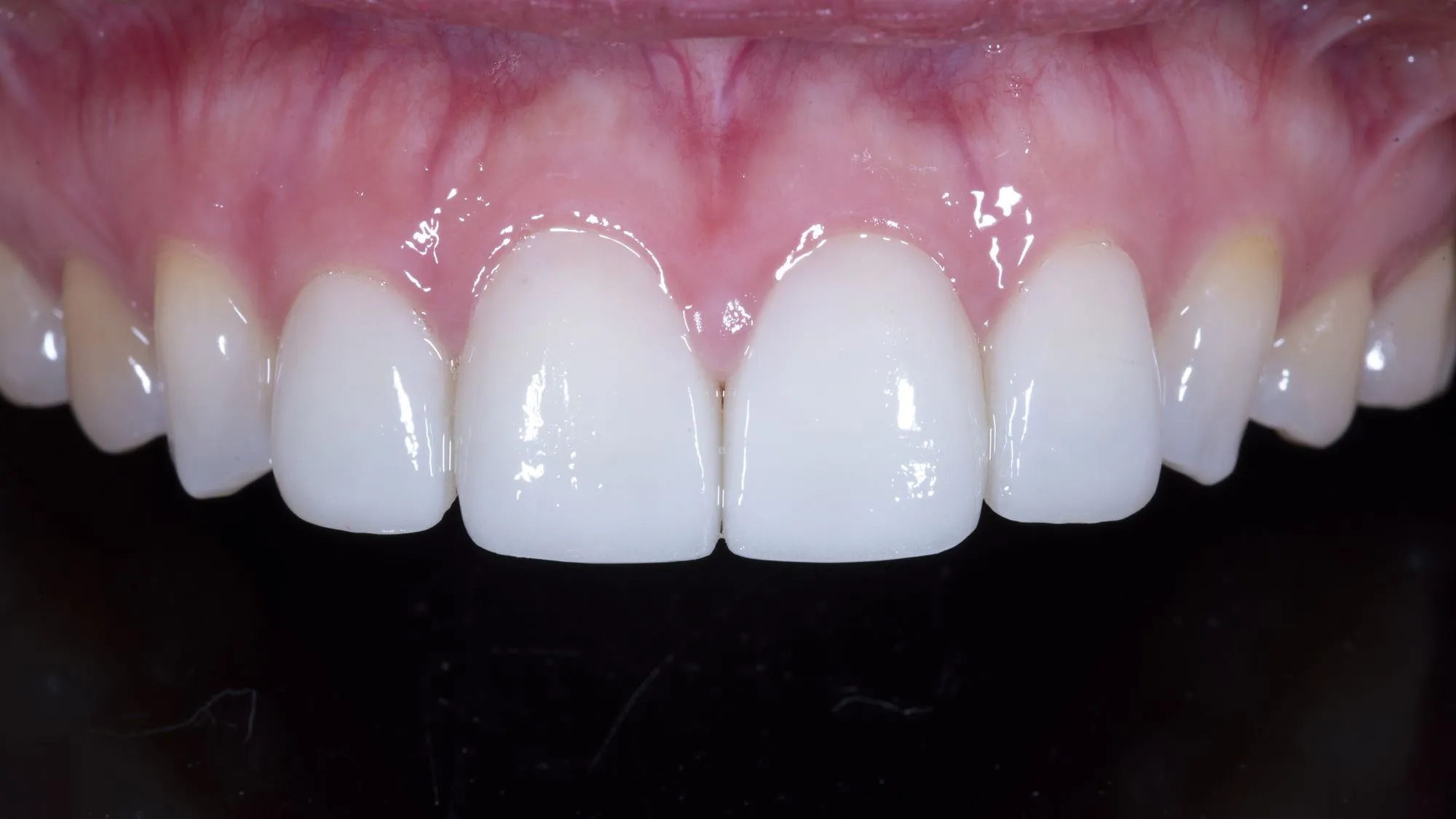
01 Flash renders teeth brighter and flatter
Surface reflection is exaggerated, so teeth look whiter and less dimensional than they are. A little extra translucency photographs more naturally.
Wedding timing
Wedding photographs last a long time. But the answer to “when should I start?” begins not with the ceremony but with the studio shoot — because most of the pictures are made that day.
 PORCELAIN VENEER
 Start From the Date
The studio shoot usually takes place months before the ceremony, and those images go into the invitations and the film — so the real deadline is the shoot. There is one more reason to leave margin: right after completion, form and occlusion need fine adjustment, and the gums need to settle before they photograph at their most natural.
Timeline
General guidance measured from the shoot date. It varies with the condition of your teeth and the number involved.
| Until the shoot | What is possible | We suggest |
|---|---|---|
| 6 months or more | Limited orthodontics plus veneers | Upright the axis, then minimal reduction |
| Around 3 months | Whitening plus veneers | Finish whitening first, then match the shade |
| 1–2 months | Veneers | Fix the number and scope early to keep margin |
| 2–3 weeks | Limited | Partial improvement rather than an overstretched scope |
| Within a week | Esthetic treatment not advised | Scaling and polishing to tidy things up |
BEFORE / AFTER
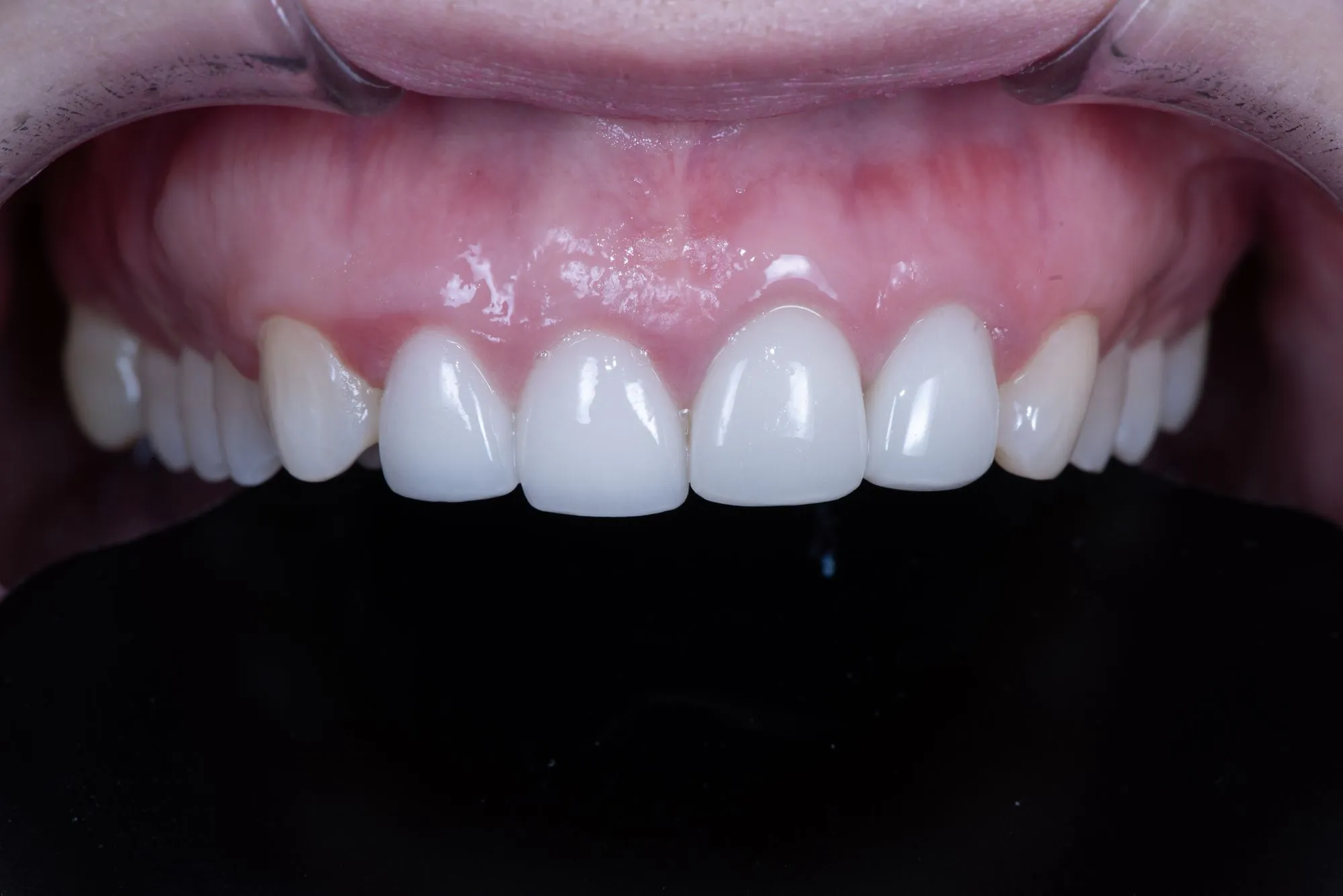
Real veneer cases treated by Dr. Park Jonguk at Dream Dental Clinic, Gangnam. Tap a photo to compare before and after up close.
The before-and-after photos above are real clinical cases treated at Dream Dental Clinic, Gangnam (Dr. Park Jonguk). Results vary with each patient’s condition, and every procedure carries the possibility of individual variation and side effects.
Counting Back
A typical order when time allows. Each interval leaves room for checking and adjustment.
D-90 · Diagnosis and design
We measure with scans and photographs, and decide at this point whether whitening or limited orthodontics is needed.
D-60 · Preparatory treatment
Periodontal treatment or whitening happens here, establishing the colour baseline first.
D-30 · Form fixed, fabrication
The form is confirmed on simulation and made in our in-house laboratory.
D-14 · Bonding and adjustment
After bonding we adjust occlusion and form. This stage needs breathing room.
D-7 · Final check
Surface polish and gum condition are confirmed. No new procedures immediately before the shoot.
For the Camera
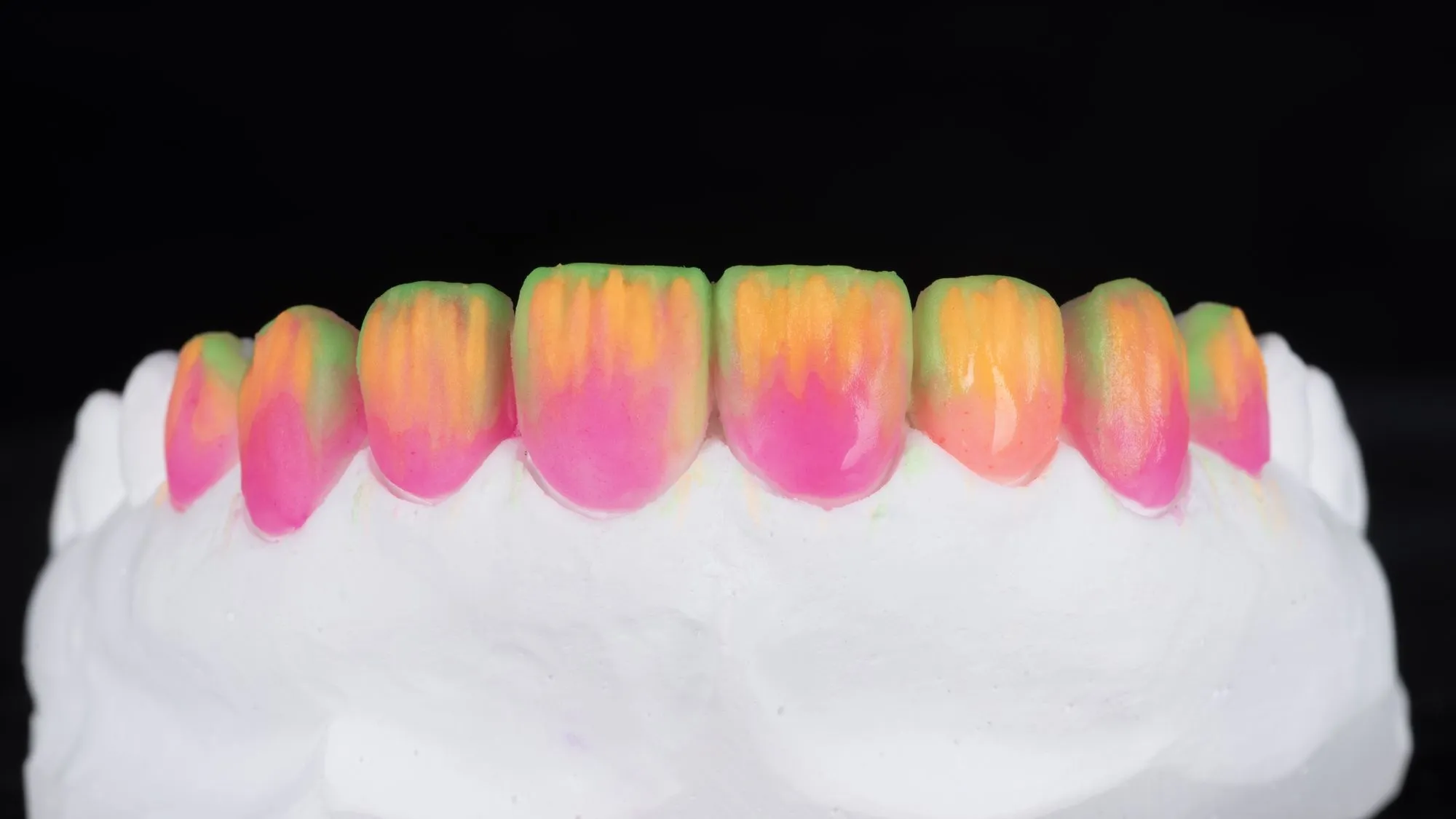
Studio light behaves differently from everyday light, and it belongs in the design.
01 Surface reflection is exaggerated, so teeth look whiter and less dimensional than they are. A little extra translucency photographs more naturally.
 02
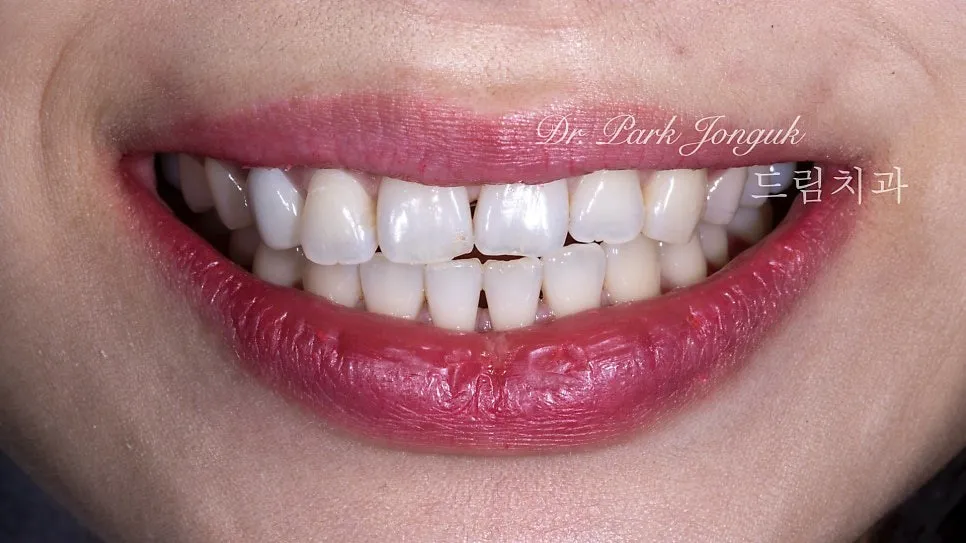
02 Wedding sets are full of close frames. Incisal translucency and fine surface texture are what hold up at that distance.
 03
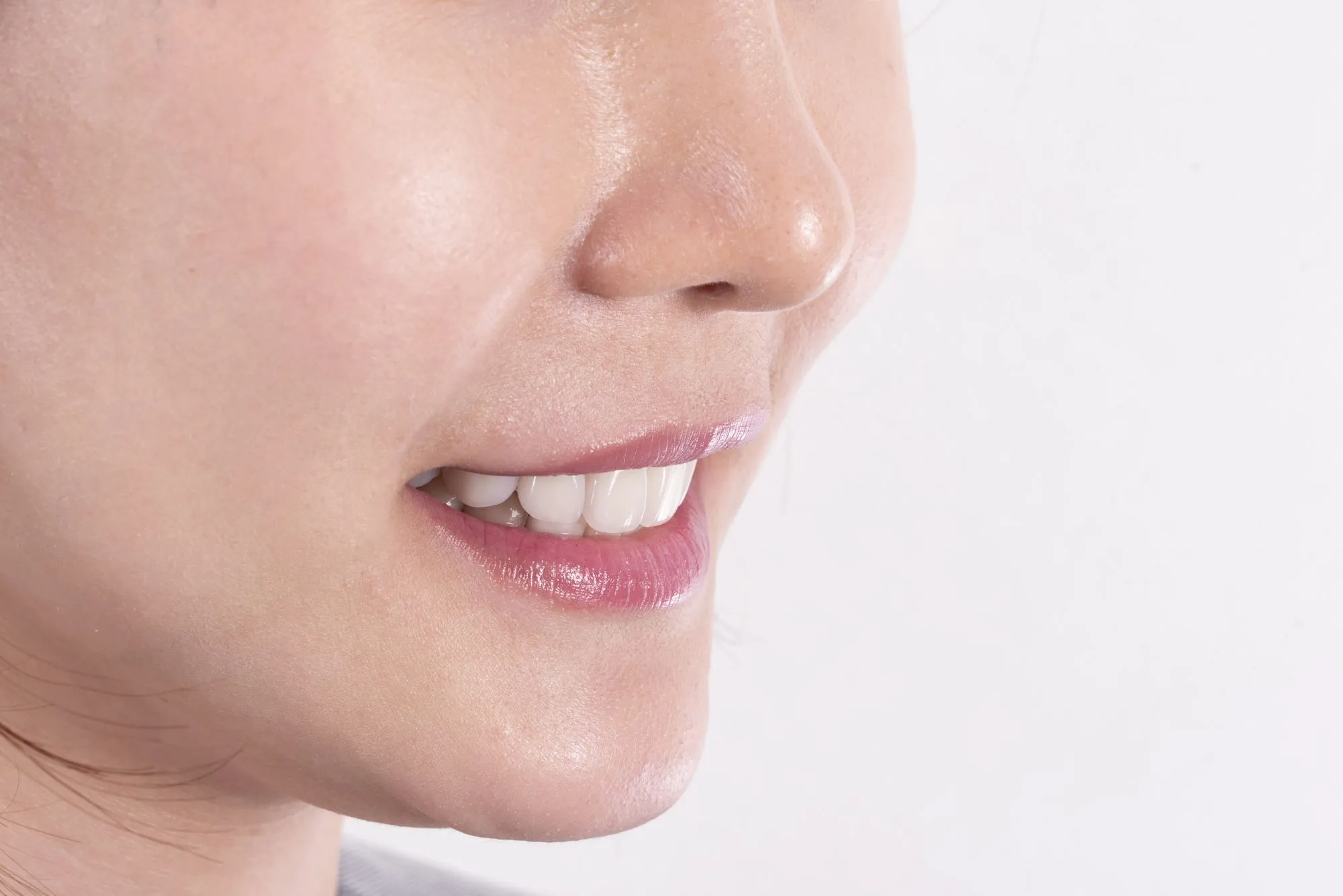
03 Wide smiles show gum as well as teeth. Inflamed gums undo an otherwise good shade and form.
 04
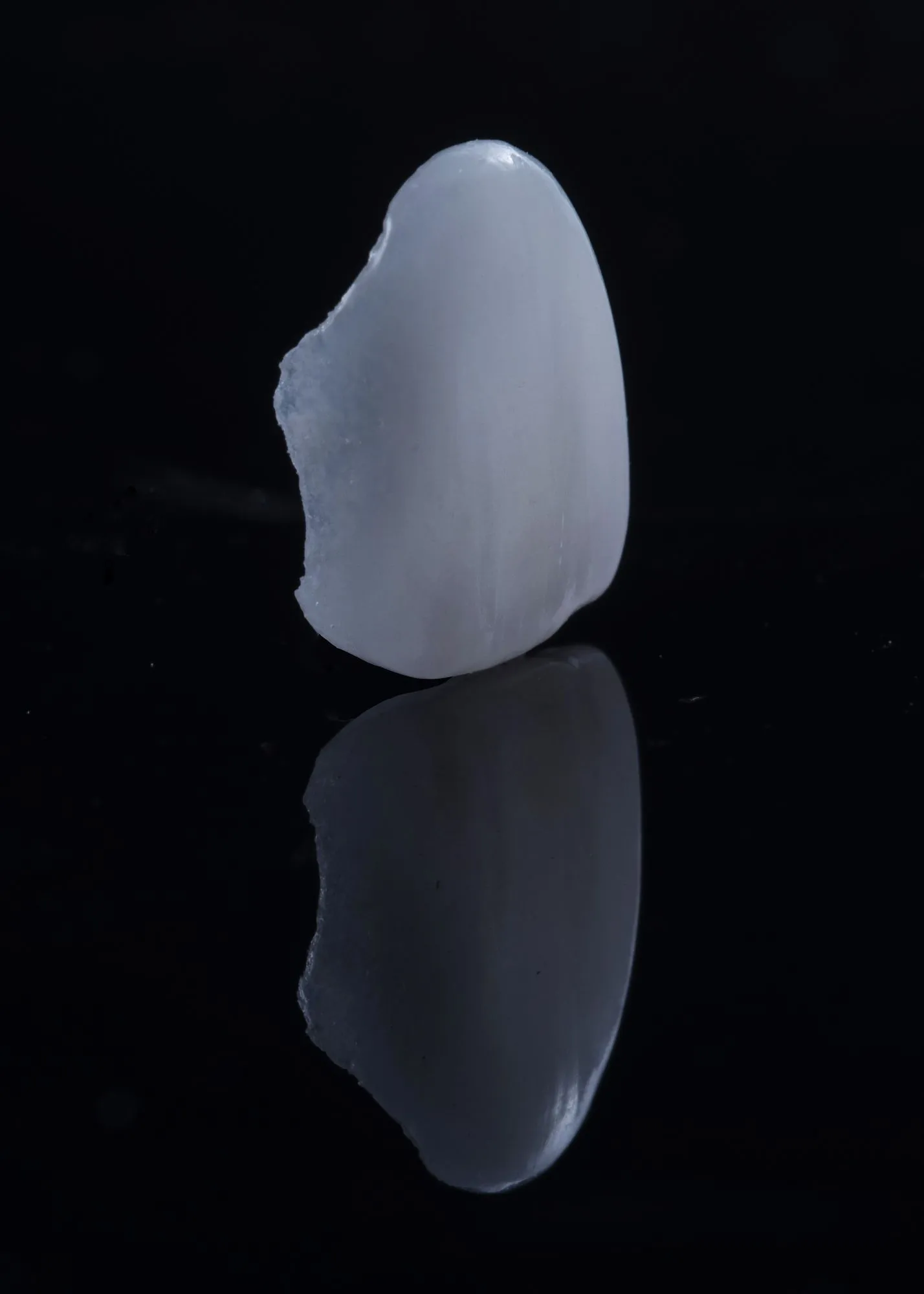
04 Brightening only the teeth can make them float within the face. We set brightness with the makeup tone in mind.
{ Better not to photograph at all than to start right before the shoot. }
Don’t Skip
The tighter the schedule, the more tempting these become to skip — and skipping them costs you not the photographs but the years afterwards.
Evidence
A day or two rarely changes the outcome, but bonding conditions and force management determine the years that follow.
Preparations confined to enamel survived at 99% — dentin exposure raised failure risk about tenfold
580 veneers followed for up to 12 years gave 86% overall survival, and 94% when only the margins remained in enamel — what mattered was where the preparation stopped, not merely how much was removed.
Gurel G, Sesma N, Calamita MA, Coachman C, Morimoto S. Influence of enamel preservation on failure rates of porcelain laminate veneers. Int J Periodontics Restorative Dent. 2013;33(1):31-9. PMID 23342345
Estimated survival 82.9% at 20 years (94.4% at 5, 93.5% at 10)
318 veneers in 84 patients, mean follow-up 118 months. Ceramic fracture accounted for 44.8% of failures, and existing parafunction such as bruxism carried a 7.7-times greater risk of failure.
Beier US, Kapferer I, Burtscher D, Dumfahrt H. Clinical performance of porcelain laminate veneers for up to 20 years. Int J Prosthodont. 2012;25(1):79-85. PMID 22259802
Meta-analysis of 13 studies — 89% cumulative survival (median follow-up 9 years)
Glass-ceramic reached 94% and feldspathic porcelain 87%; complications were fracture/chipping 4%, debonding 2%, severe discoloration 2%, and secondary caries 1%.
Morimoto S, Albanesi RB, Sesma N, Agra CM, Braga MM. Main Clinical Outcomes of Feldspathic Porcelain and Glass-Ceramic Laminate Veneers: A Systematic Review and Meta-Analysis of Survival and Complication Rates. Int J Prosthodont. 2016;29(1):38-49. PMID 26757327
These figures are general clinical outcomes reported in the academic literature. They are not our clinic’s own results and do not guarantee an individual outcome — your course depends on your teeth, bite, and habits.
Quick Consult
Leave your number and we will call you back during clinic hours.
Request Received
We will contact you during clinic hours. For urgent matters, please call +82-2-3448-0028.
The available range depends on your condition. Feel free to ask us.
FAQ
It depends on the number of teeth and their condition. Narrowing the scope often makes it possible, but the deciding factor is whether time remains for adjustment after bonding. We can tell you precisely after examination.
If colour is the only issue, often yes. If you also want to change form, gaps or size, veneers are needed. When both are done, whitening comes first.
The shoot. Those images last longest. Between the shoot and the ceremony we simply continue maintenance and any adjustment needed.
Right after bonding, avoid tearing hard or tough food with the front teeth. Pain or a debond while travelling is difficult to handle, so we suggest a check before you leave.
Yes. Their teeth differ, though, so the number and scope are set individually — usually only the schedule is shared.
You can, and without a deadline there is more room to confirm form and shade properly. If the photographs are not the priority, this is the more comfortable route.
This page is general information about the treatment. Diagnosis, treatment options, and duration vary by individual condition — an in-person examination is how we plan your actual care.
Articles
How the same topic is judged chairside, written up with real cases.
Give us the shoot and ceremony dates and we will count back and tell you what is achievable. We do not recommend an overstretched schedule.