
 01
01 Gaps open on both sides
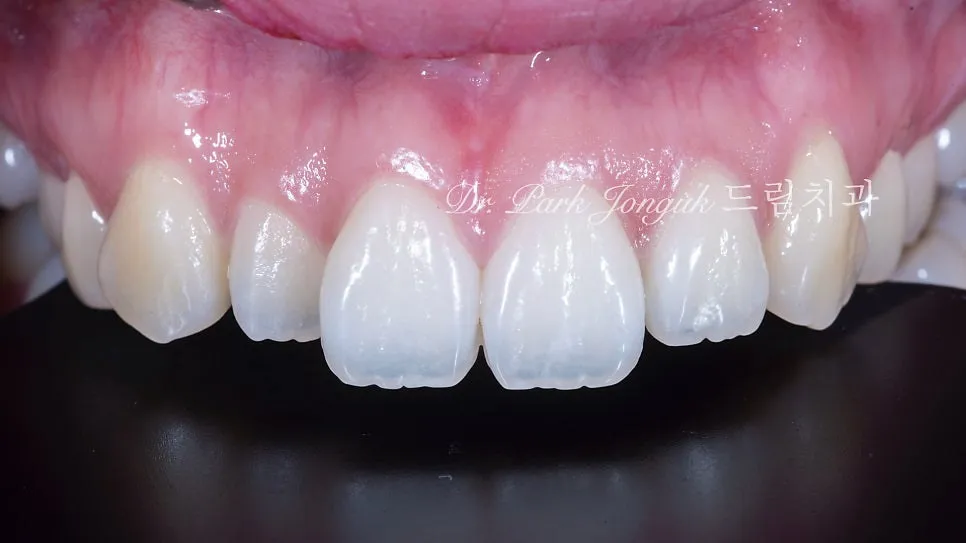
A narrow tooth cannot reach its neighbours, leaving space either side. When you smile, those dark gaps are what people see first.
Peg lateral veneers
If your two central incisors are full-sized but the tooth beside them is small and pointed, that is a peg lateral incisor, commonly called bunny teeth. In this case there is almost nothing to remove — the treatment adds back the width and length that never formed.
 PORCELAIN VENEER
 What It Is
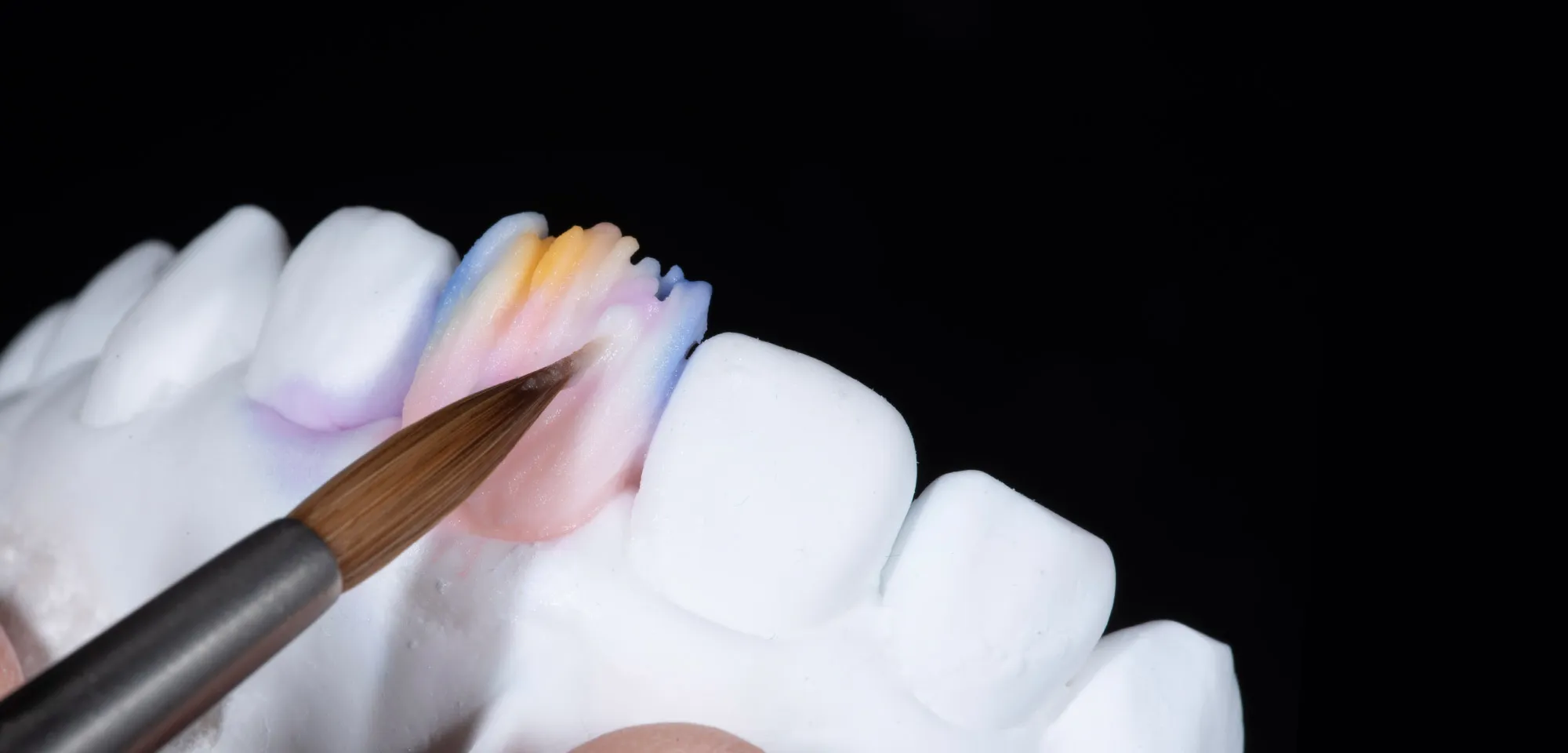
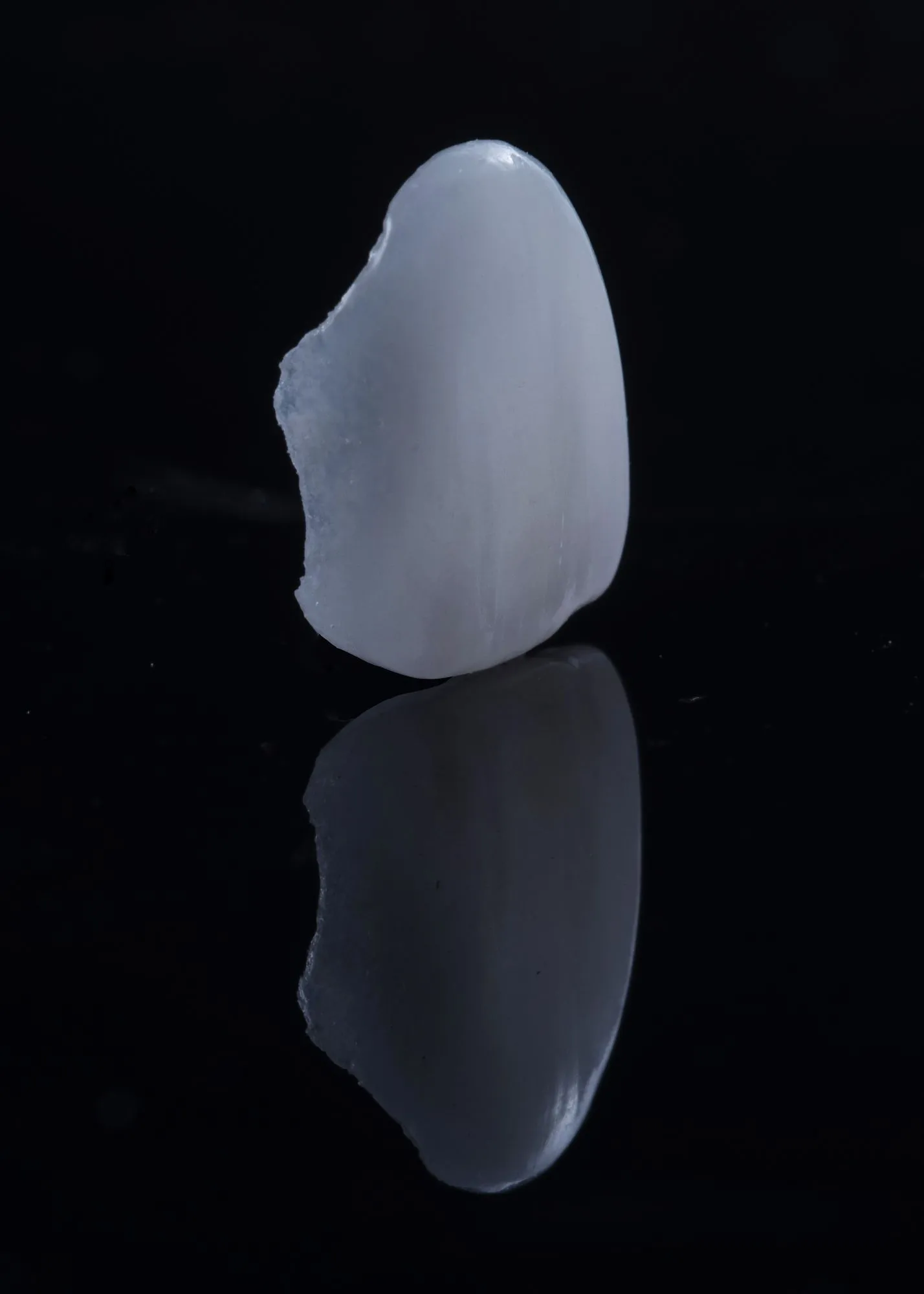
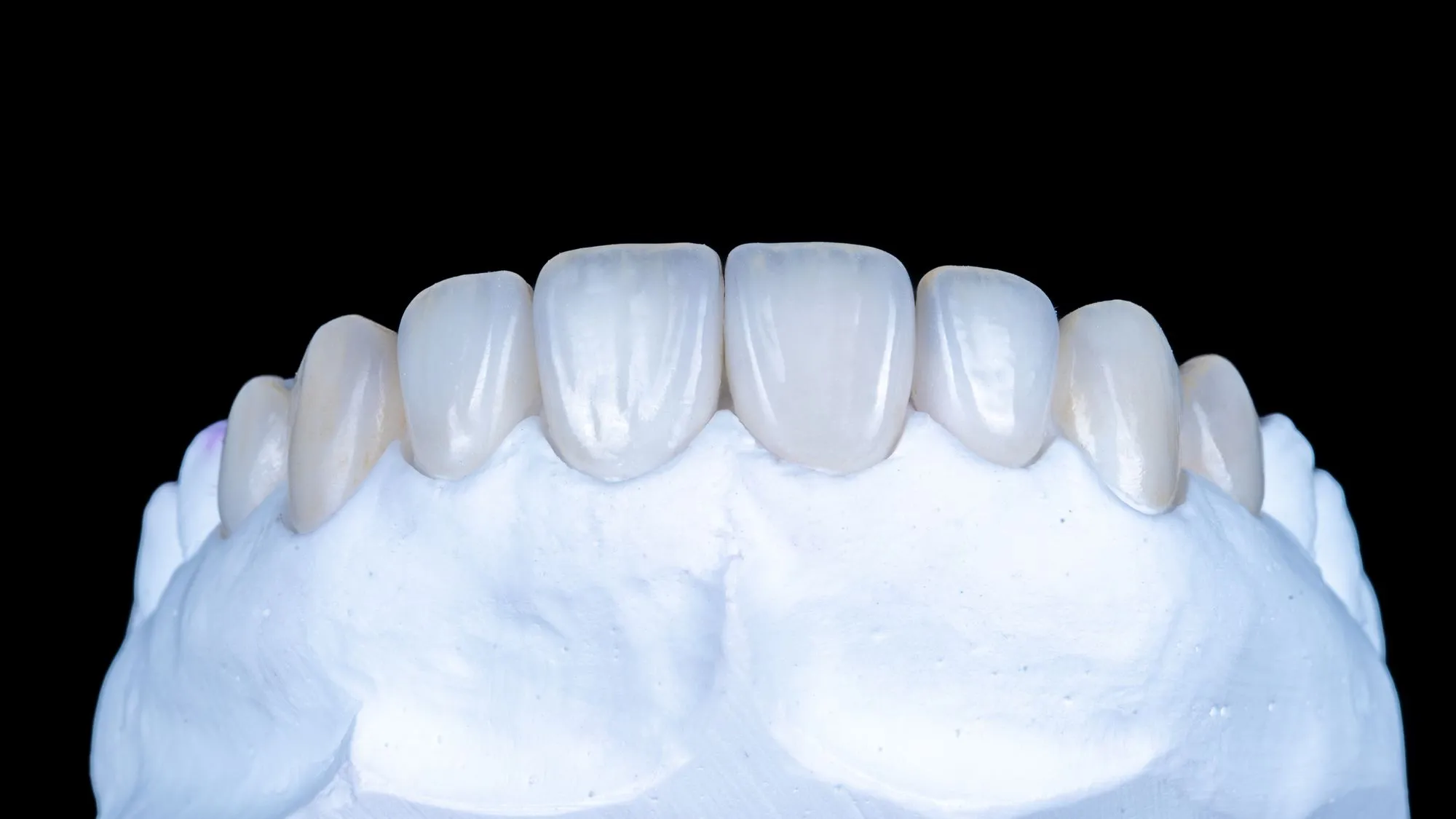
A peg lateral is a tooth that formed smaller than normal — most commonly the upper lateral incisor, right beside the central. The cause is usually genetic, not a failure of care. Because the tooth is already small, no space needs to be created for the ceramic; instead the missing width and length are built back. That makes peg laterals one of the most rewarding indications for a veneer.
The Real Problem
What bothers people about a peg lateral usually happens around it rather than in it.
01 A narrow tooth cannot reach its neighbours, leaving space either side. When you smile, those dark gaps are what people see first.
 02
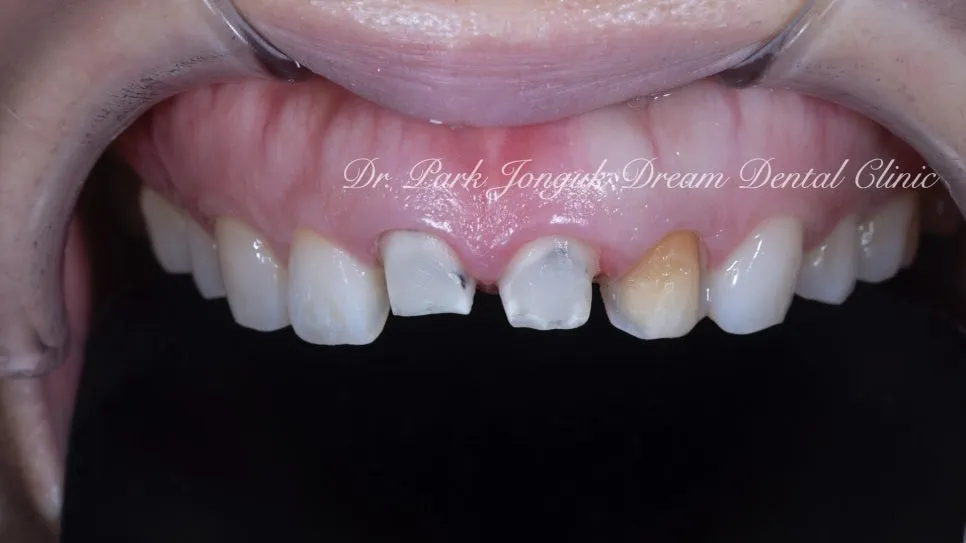
02 With small teeth beside them, the centrals stand out more, creating the “rabbit tooth” impression.
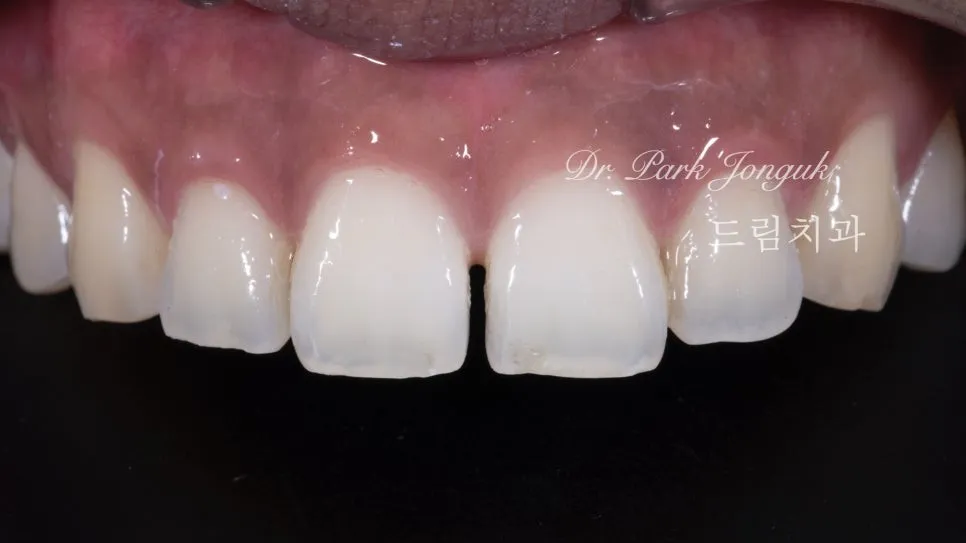 03
03 Without contact points, food lodges between the teeth and the wide embrasures make cleaning tedious.
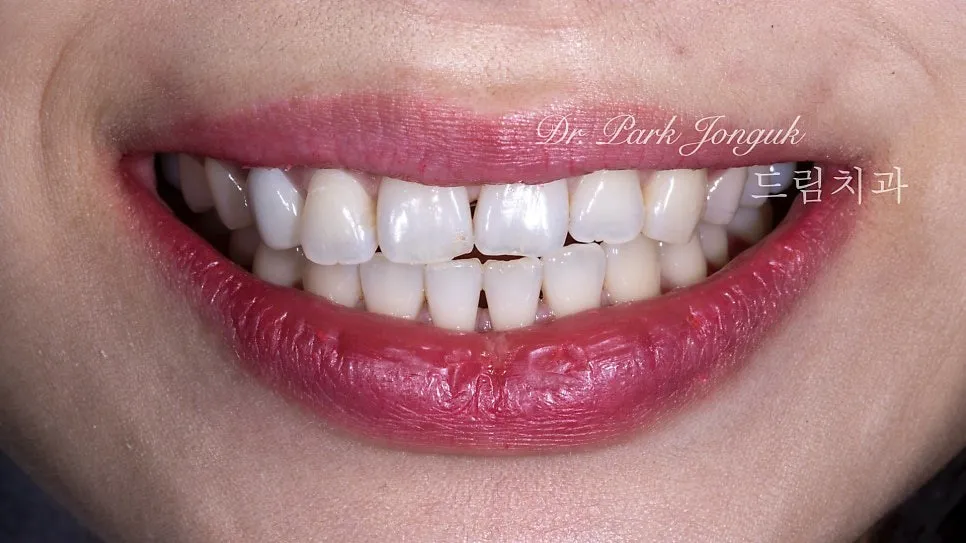 04
04 The lateral incisor is where the smile curve is drawn, so a small one throws the whole line off.
BEFORE / AFTER
Real veneer cases treated by Dr. Park Jonguk at Dream Dental Clinic, Gangnam. Tap a photo to compare before and after up close.
The before-and-after photos above are real clinical cases treated at Dream Dental Clinic, Gangnam (Dr. Park Jonguk). Results vary with each patient’s condition, and every procedure carries the possibility of individual variation and side effects.
Options
There are broadly three ways to handle a peg lateral. None is universally correct — it depends on what we find.
| Approach | Suits | Limits |
|---|---|---|
| Composite bonding | Narrow gaps, wanting it done today | Marginal staining, repeated redos |
| Veneer | Width and length both need building | Hard to reverse |
| Orthodontics, then veneer | Gaps too wide for one tooth to fill | Adds treatment time |
{ The wider the gap, the less natural it looks to enlarge one tooth alone. }
Before We Start
A peg lateral looks simple, but skipping these checks is what makes results look off.
Process
Because there is usually nothing or almost nothing to remove, the process is relatively simple.
Scan and design
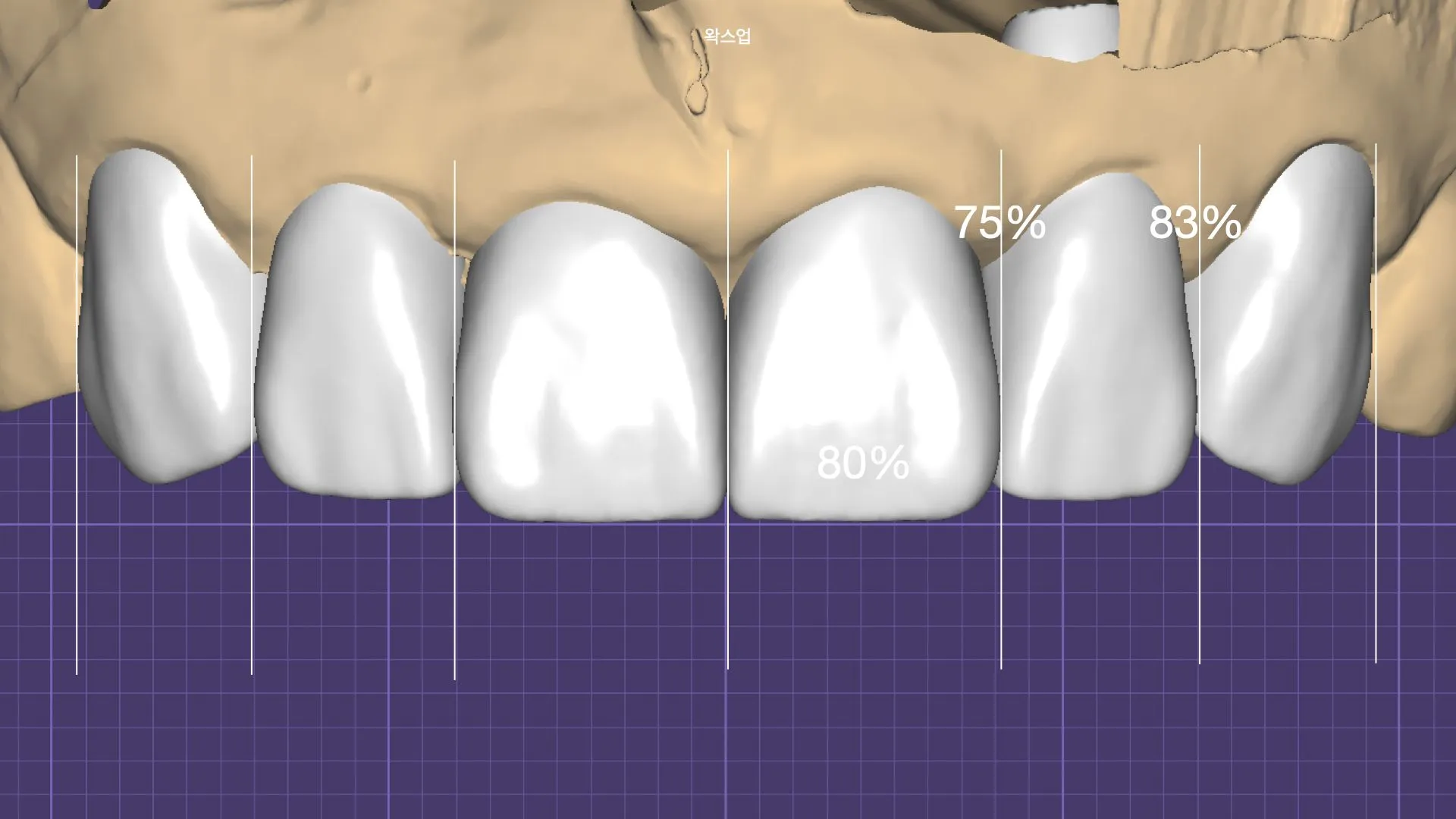
We measure the space and calculate proportion against the centrals to set the target form.
Review the simulation
You see the finished shape in advance, and we decide together how the width is distributed.
Surface preparation if needed
Most cases involve no reduction at all; a sharply pointed form may be eased very slightly.
Fabrication
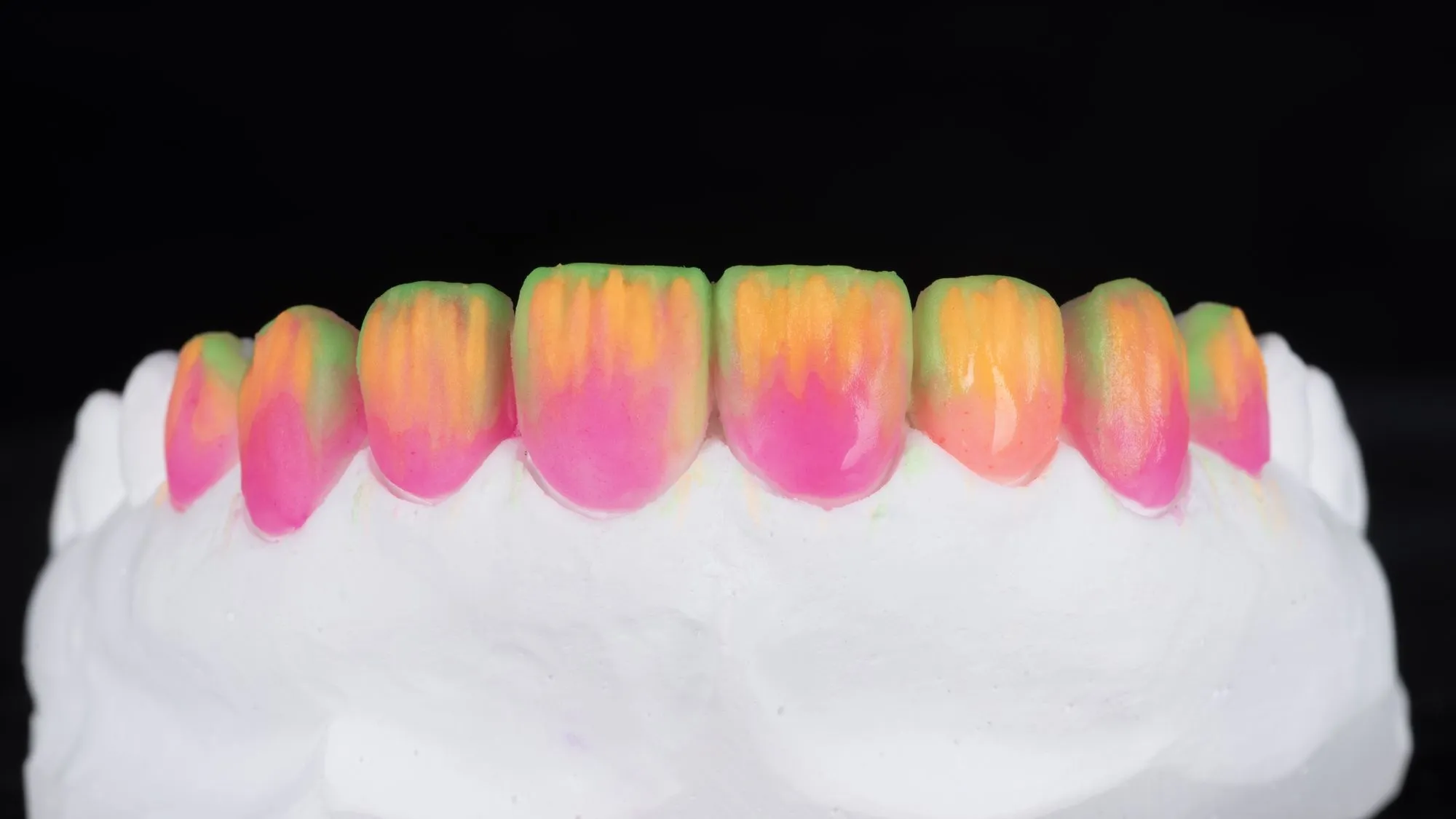
Our in-house laboratory layers shade and translucency to match the neighbouring teeth.
Bonding and adjustment
After bonding we verify contacts and occlusion, then polish to finish.
Evidence
Being able to bond onto intact enamel, as with a peg lateral, works directly in favour of survival.
Preparations confined to enamel survived at 99% — dentin exposure raised failure risk about tenfold
580 veneers followed for up to 12 years gave 86% overall survival, and 94% when only the margins remained in enamel — what mattered was where the preparation stopped, not merely how much was removed.
Gurel G, Sesma N, Calamita MA, Coachman C, Morimoto S. Influence of enamel preservation on failure rates of porcelain laminate veneers. Int J Periodontics Restorative Dent. 2013;33(1):31-9. PMID 23342345
60 ultrathin veneers on unprepared teeth — 100% clinical success at 12 months
It shows promising short-term results for the no-prep approach, but with only six patients over one year it is too early to treat as long-term evidence — read it alongside the longer studies above.
Al-Mokdad A, Swed E, Kadhim M, Kanout S, Al-Mokdad A, Abdo A, Hajeer MY. Clinical Success Evaluation of Ultrathin Ceramic Veneers Bonded to Nonprepared Teeth: An Observational Prospective Cohort Study. Cureus. 2024;16(9):e68699. PMID 39246643
Meta-analysis of 13 studies — 89% cumulative survival (median follow-up 9 years)
Glass-ceramic reached 94% and feldspathic porcelain 87%; complications were fracture/chipping 4%, debonding 2%, severe discoloration 2%, and secondary caries 1%.
Morimoto S, Albanesi RB, Sesma N, Agra CM, Braga MM. Main Clinical Outcomes of Feldspathic Porcelain and Glass-Ceramic Laminate Veneers: A Systematic Review and Meta-Analysis of Survival and Complication Rates. Int J Prosthodont. 2016;29(1):38-49. PMID 26757327
These figures are general clinical outcomes reported in the academic literature. They are not our clinic’s own results and do not guarantee an individual outcome — your course depends on your teeth, bite, and habits.
Quick Consult
Leave your number and we will call you back during clinic hours.
Request Received
We will contact you during clinic hours. For urgent matters, please call +82-2-3448-0028.
The available range depends on your condition. Feel free to ask us.
FAQ
Usually genetics — the tooth simply formed small. It is not caused by brushing or diet, and often runs in the family.
Most of the time, no, or only the surface is eased very slightly. The tooth is already small, so the space for ceramic is already there.
One is possible if only one side is small, but both are often done for symmetry. If the gaps are wide, the centrals may be included so the width can be shared.
We advise against it. Over-enlarging a single tooth breaks the proportions and looks artificial. In that case, closing the space orthodontically or distributing the width across several teeth reads far more naturally.
Not before growth is complete. The gum line and tooth positions keep changing, so a reversible option such as composite is the better way to buy time.
Creating proper contact points is one of the core design goals. However, the triangular space near the gum (black triangle) cannot always be eliminated entirely — it depends on gum height.
This page is general information about the treatment. Diagnosis, treatment options, and duration vary by individual condition — an in-person examination is how we plan your actual care.
Articles
How the same topic is judged chairside, written up with real cases.
It is not only about enlarging a small tooth — how the space either side is distributed decides the result. We measure first, then show you the design.