
 01
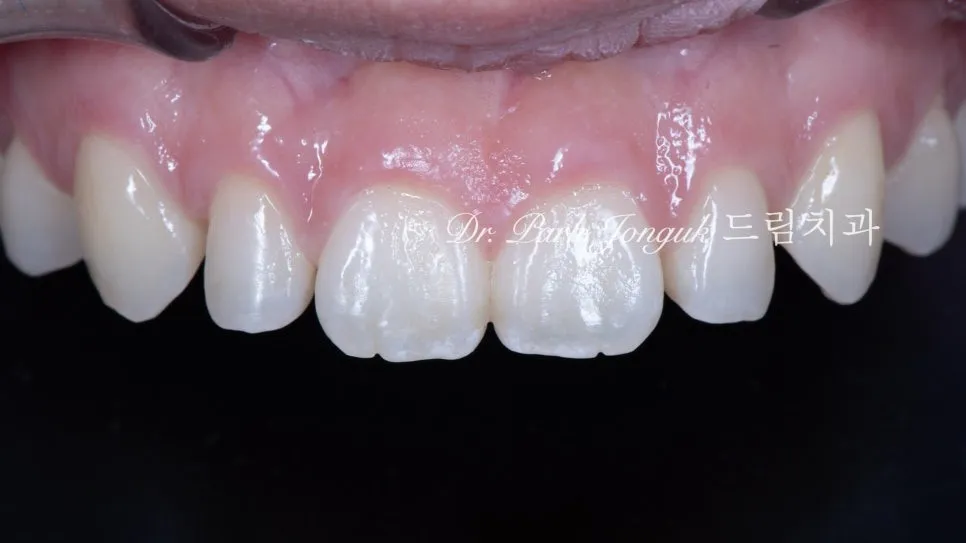
01 Alignment is slight, but colour and size are the real issue
When very mild overlap comes with discoloration or small teeth, finishing orthodontics still leaves the colour and size unchanged.
Veneers vs Braces
“Braces take years — can’t I just do veneers?” It is the question we hear most. The two are not rivals; they take different routes. In some cases orthodontics is the only answer, and in others there is no reason to spend years.
 PORCELAIN VENEER
 Two Different Answers
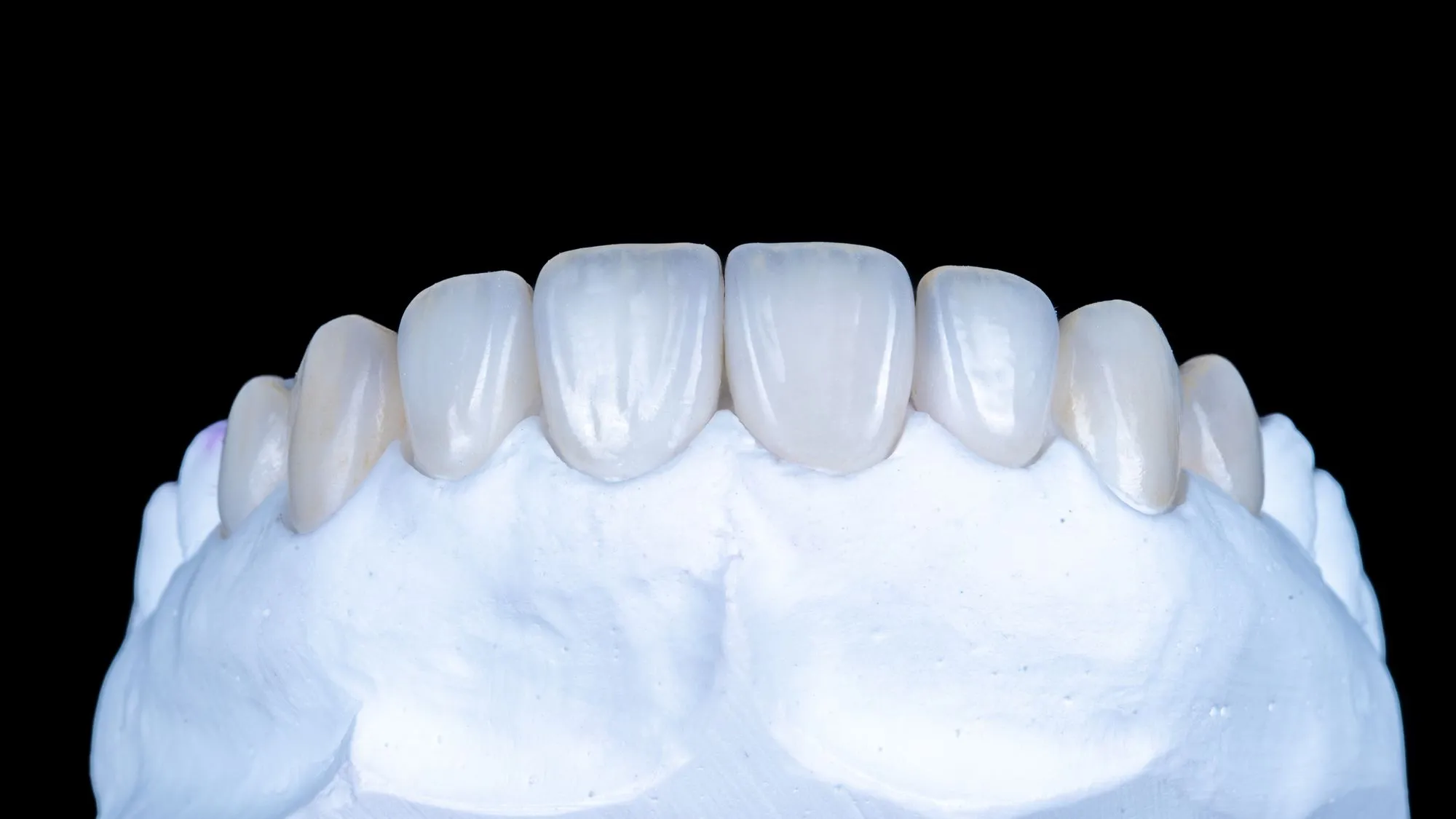
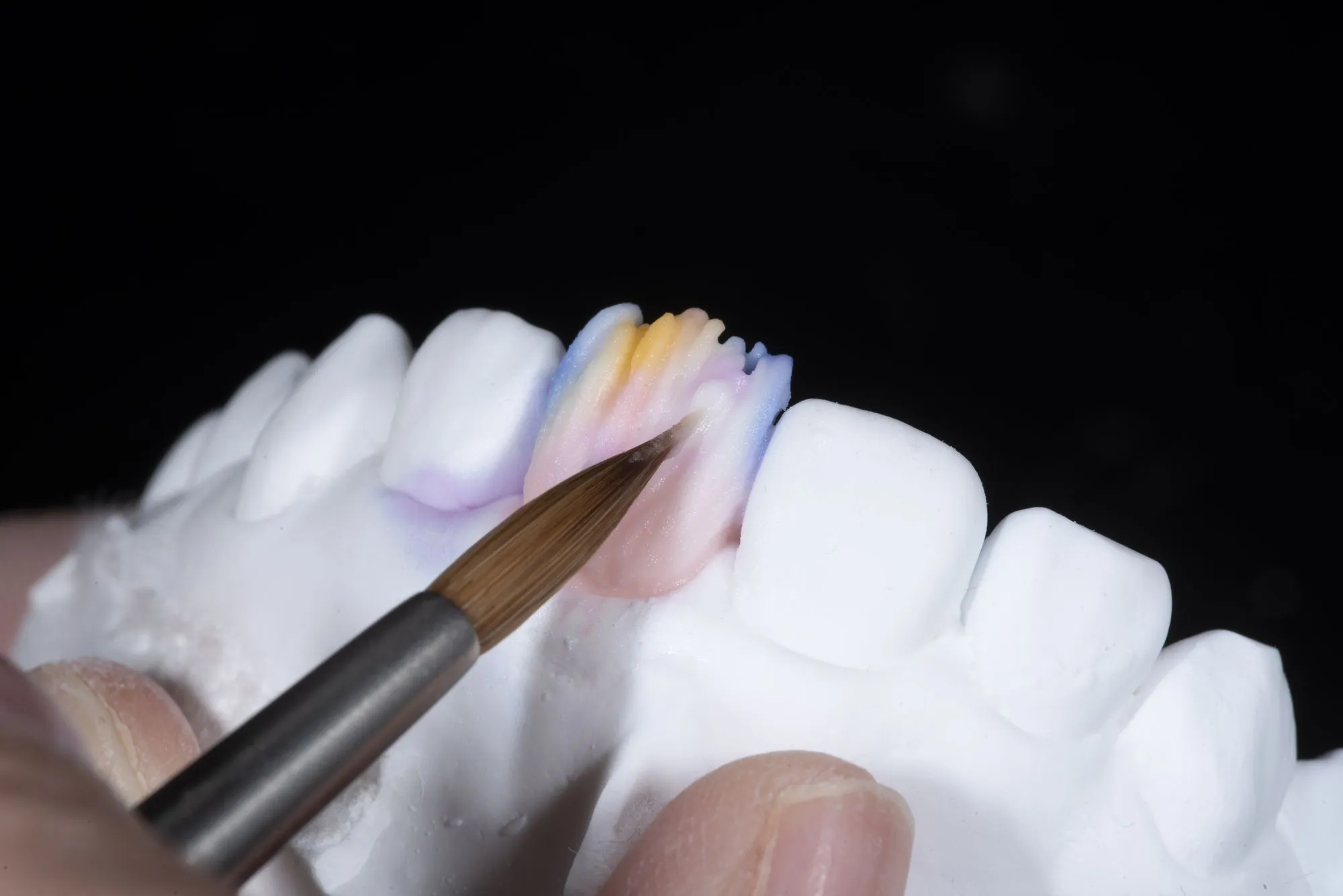
Orthodontics physically moves teeth through bone. You keep your own teeth, and even the root positions can be corrected. In exchange it takes time, and once alignment is settled the colour, size and shape are exactly as they were. Veneers leave position alone and rebuild the form and colour of the front surface. It is done within weeks — but if a tooth that needed moving is only covered, that load has to go somewhere.
Side by Side
How each answers the same concern — “my front teeth are uneven”.
| Veneers | Orthodontics | |
|---|---|---|
| What changes | Form and colour of the tooth | Position of the tooth |
| Duration | Usually 2–3 weeks (2–3 visits) | Usually 1–3 years |
| Tooth reduction | None to minimal (3–30% in the literature) | None |
| Reversible? | Difficult to reverse | Reversible, though retainers are required |
| Colour and size | Addressed together | Not addressed |
| Root position and bite | Cannot be changed | Can be changed |
BEFORE / AFTER
Real veneer cases treated by Dr. Park Jonguk at Dream Dental Clinic, Gangnam. Tap a photo to compare before and after up close.
The before-and-after photos above are real clinical cases treated at Dream Dental Clinic, Gangnam (Dr. Park Jonguk). Results vary with each patient’s condition, and every procedure carries the possibility of individual variation and side effects.
Orthodontics First
If any of these apply, veneers alone should not be the plan. Past this line, the reduction required rises sharply, and even a good-looking result does not last.
Veneers Fit
Conversely, if these describe you, there is little reason to spend years in braces.
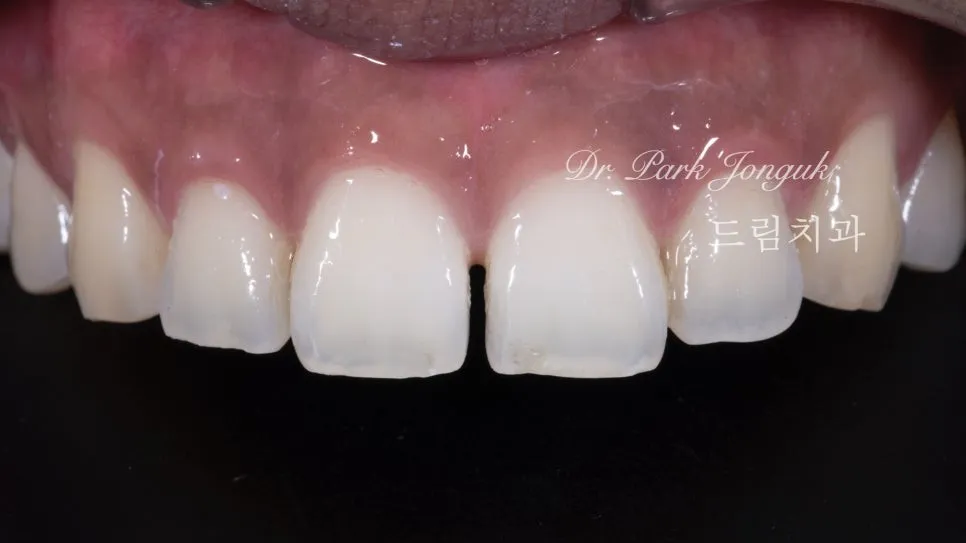
01 When very mild overlap comes with discoloration or small teeth, finishing orthodontics still leaves the colour and size unchanged.
 02
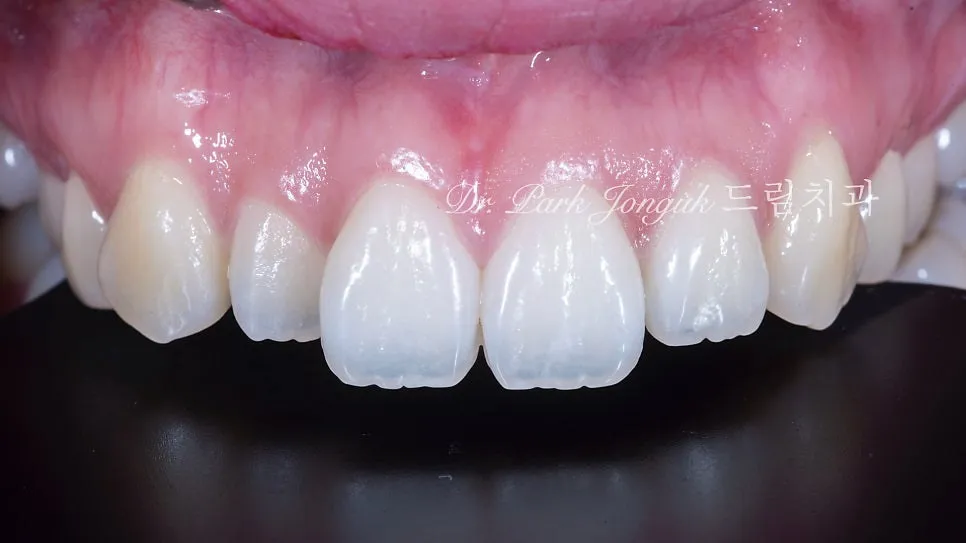
02 Spaces often only need to be closed, and the form can be refined in the same step.
 03
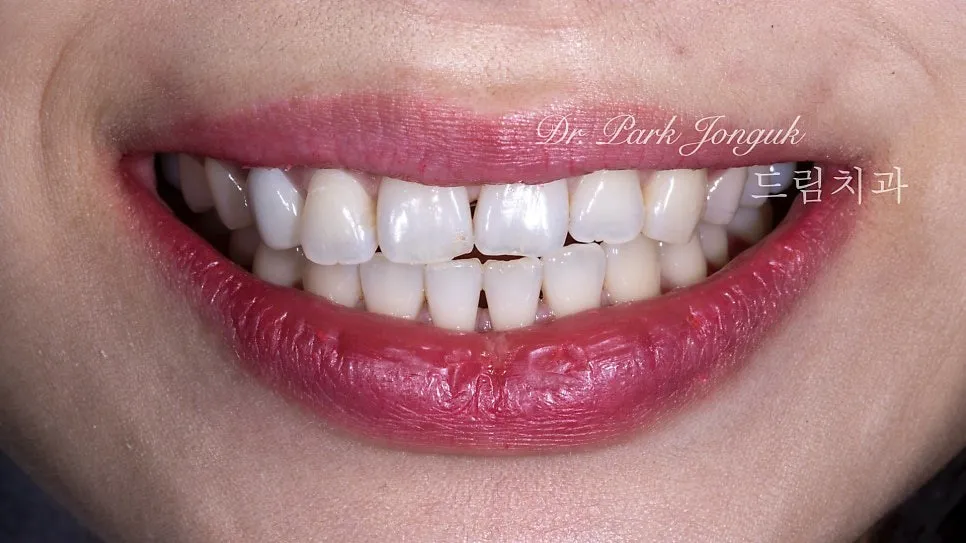
03 Peg laterals and incisors shortened by wear are a problem of size, not position, so moving them does not solve it.
 04
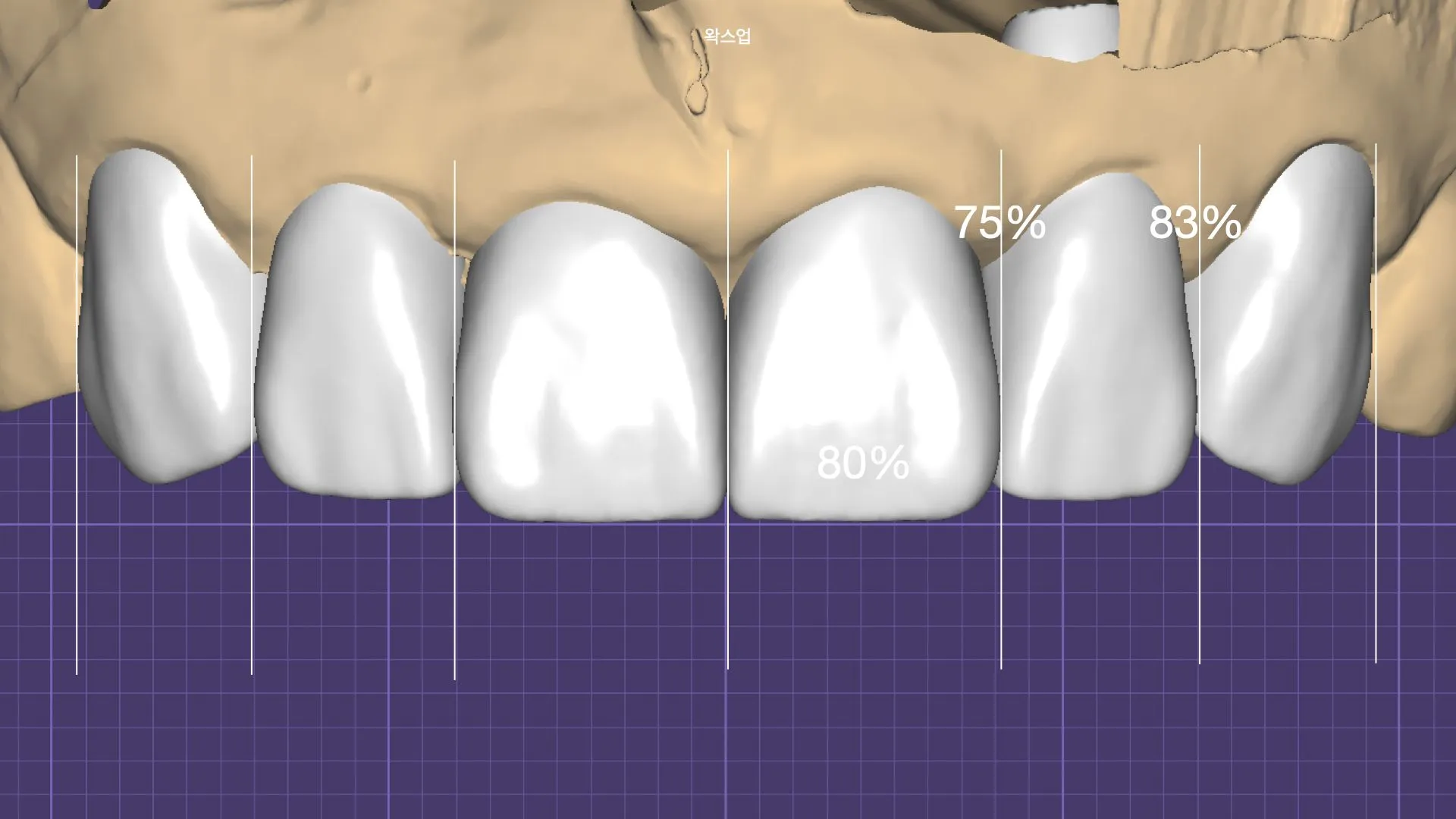
04 With a wedding or an interview on the calendar, finishing within weeks becomes the realistic choice.
{ Cover a tooth that should have been moved, and you end up removing more tooth. }
Combined
The best results usually come not from choosing one, but from putting them in the right order.
Limited orthodontics to upright the axis
Often this is not full treatment but around six months of uprighting a few front teeth.
An upright axis means less reduction
Covering a tilted tooth demands heavy reduction; an upright one stays within minimal preparation.
Retention settles the position
Right after movement the position is unstable, so we hold it for a period before impressions.
Colour and form come last
Veneers finish the colour, size and proportion that orthodontics does not address.
Retainers continue afterwards
Teeth keep drifting even with veneers on them, so retainer wear does not stop.
Evidence
Choosing to cover rather than move shows up directly in reduction volume and bonding substrate. The relevant figures are worth reading.
Preparations confined to enamel survived at 99% — dentin exposure raised failure risk about tenfold
580 veneers followed for up to 12 years gave 86% overall survival, and 94% when only the margins remained in enamel — what mattered was where the preparation stopped, not merely how much was removed.
Gurel G, Sesma N, Calamita MA, Coachman C, Morimoto S. Influence of enamel preservation on failure rates of porcelain laminate veneers. Int J Periodontics Restorative Dent. 2013;33(1):31-9. PMID 23342345
Tooth structure removed — veneers 3–30% vs crowns 63–72%
A classic study weighing how much tooth is lost per anterior preparation design: a metal-ceramic crown preparation removed 4.3 times more tooth structure than a facial-surface veneer preparation.
Edelhoff D, Sorensen JA. Tooth structure removal associated with various preparation designs for anterior teeth. J Prosthet Dent. 2002;87(5):503-9. PMID 12070513
Meta-analysis of 13 studies — 89% cumulative survival (median follow-up 9 years)
Glass-ceramic reached 94% and feldspathic porcelain 87%; complications were fracture/chipping 4%, debonding 2%, severe discoloration 2%, and secondary caries 1%.
Morimoto S, Albanesi RB, Sesma N, Agra CM, Braga MM. Main Clinical Outcomes of Feldspathic Porcelain and Glass-Ceramic Laminate Veneers: A Systematic Review and Meta-Analysis of Survival and Complication Rates. Int J Prosthodont. 2016;29(1):38-49. PMID 26757327
These figures are general clinical outcomes reported in the academic literature. They are not our clinic’s own results and do not guarantee an individual outcome — your course depends on your teeth, bite, and habits.
Quick Consult
Leave your number and we will call you back during clinic hours.
Request Received
We will contact you during clinic hours. For urgent matters, please call +82-2-3448-0028.
The available range depends on your condition. Feel free to ask us.
FAQ
For mild irregularity, yes. But with significant crowding or a tilted axis, the amount that must be removed to cover it rises sharply. Past that point, orthodontics is the tooth-preserving choice.
That needs a conversation with your orthodontist. Depending on how far the teeth have travelled towards the target, finishing where they are may be fine, or a little more movement may be worthwhile.
Orthodontics corrects position, not colour. If whitening is not enough, veneers are the next step — carried out on the condition that retainer wear continues.
It depends on the distance and direction of movement, but uprighting a few front teeth is generally around six months. We give you an exact estimate after diagnosis.
No. Veneers cover the front of the tooth; they do not anchor the root. Teeth drift throughout life, so retainers remain necessary.
Often yes. Even uprighting alone reduces the reduction needed and creates space to build form. If the required movement is very small, however, we do not add the step.
This page is general information about the treatment. Diagnosis, treatment options, and duration vary by individual condition — an in-person examination is how we plan your actual care.
Articles
How the same topic is judged chairside, written up with real cases.
The degree of crowding and the tooth axis usually settle the answer. After diagnosis we tell you whether orthodontics, veneers, or both is right.