
Veneers: Is Whiter Always Prettier? The Pitfall of Overly White Teeth
"Make them white like a celebrity's."
It's something I hear very often in consultations.
But when I hear it, I pause for a moment.
White isn't automatically pretty.
In fact, celebrity teeth we see on screen often turn out to be more natural than expected when seen in person.
They just look bright because of the lighting.
On the other hand, people whose teeth look starkly white even on screen can be a bit much to look at in person.
Sometimes they even look like a stick of xylitol gum.
That scene in the movies where Jim Carrey flashes a huge, stark-white smile —
does that image land? I say it half-jokingly, but that's genuinely what can happen.
I've focused exclusively on veneers for over 20 years,
and quite a few patients come back because of the color. The shape is fine, they say, but it's just too white.
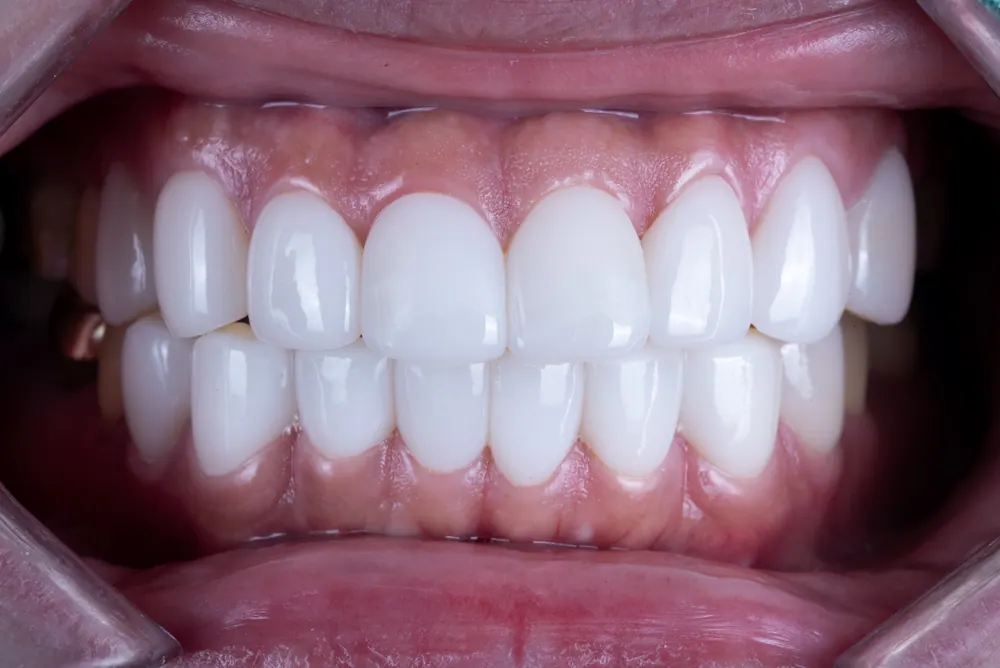
Why do overly white teeth look off?
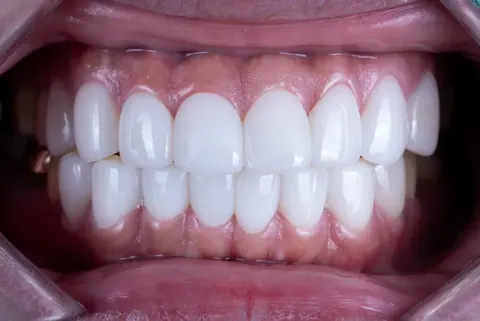
Because the teeth end up looking like they're floating apart from the rest of the face.
A face is a single composition. There's the skin tone, the gum color, the whites of the eyes.
For teeth to look beautiful, they need to blend naturally into that whole picture.
But if the teeth alone glow white like a fluorescent light, they end up looking separate from everything around them.
To anyone looking at them, it registers as, "Huh, those teeth seem like a bit much."
The patient themselves is satisfied looking up close in the mirror, but other people looking from a distance find it off-putting.
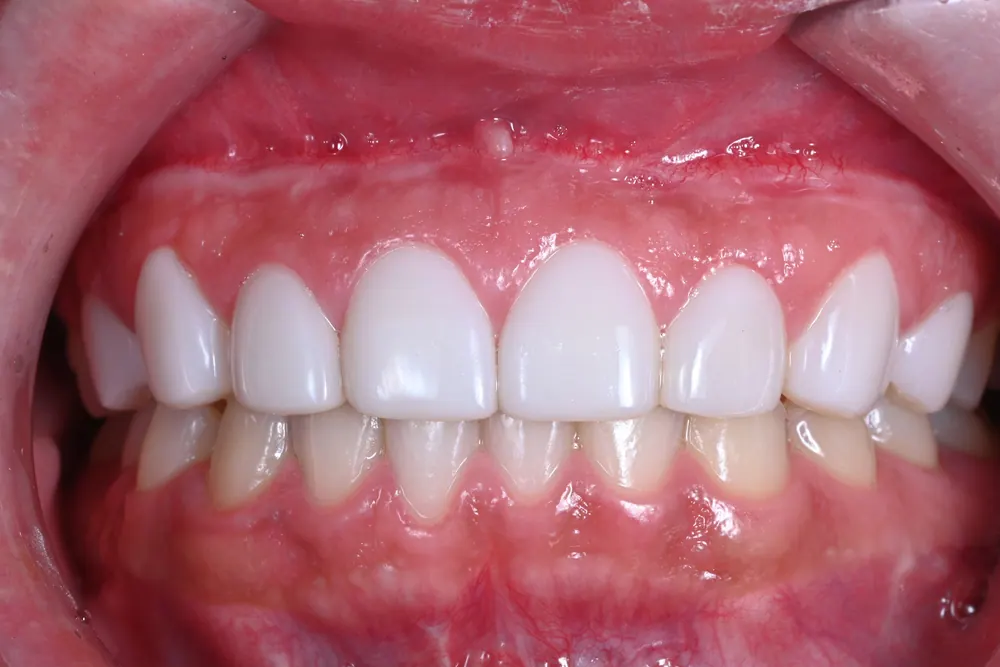
A natural tooth was never a uniform shade of white to begin with
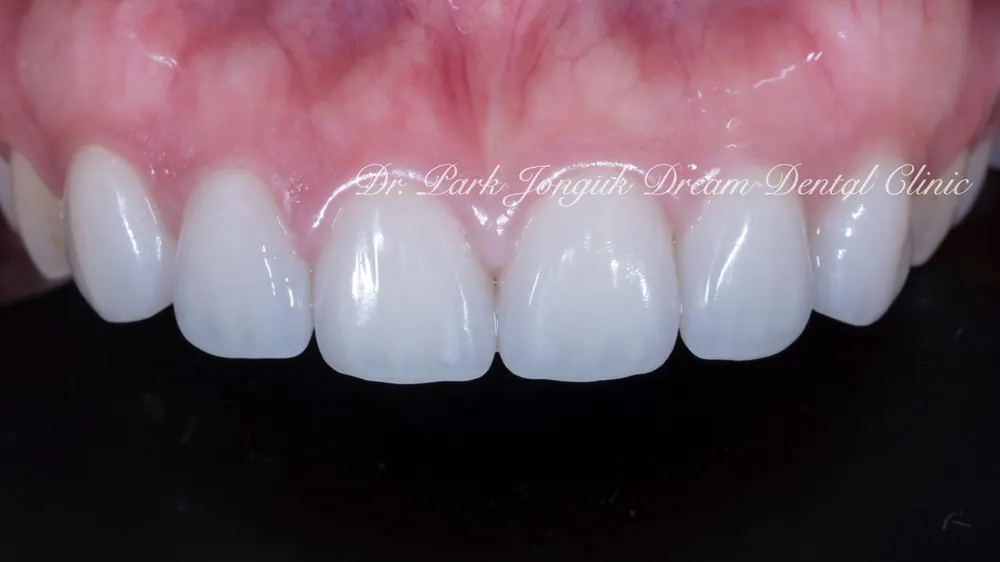
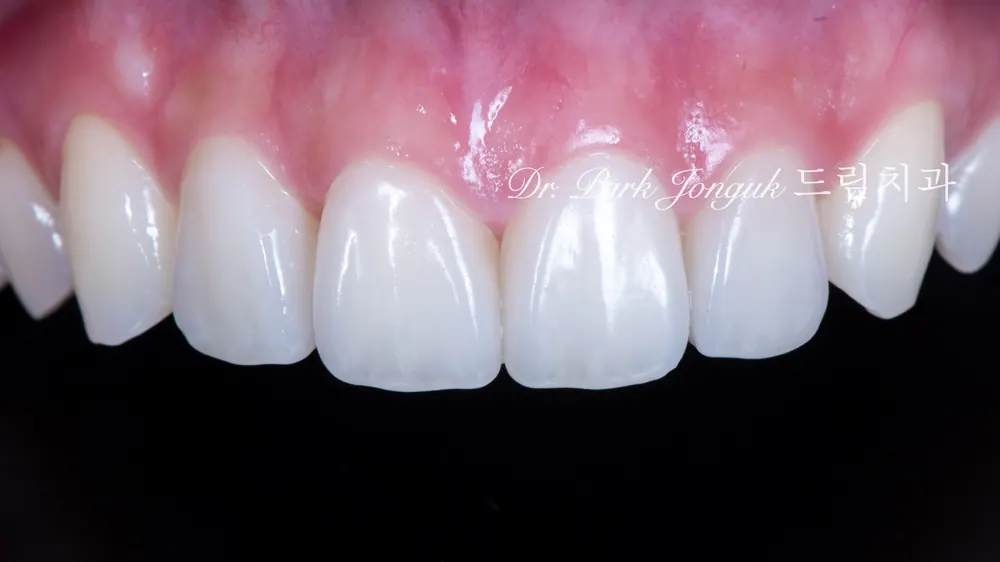
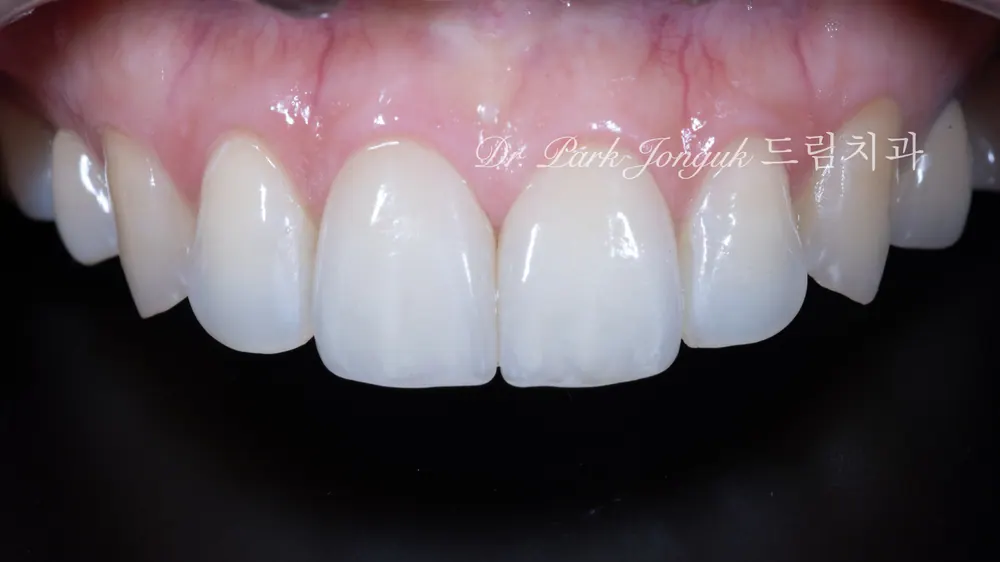
A genuinely natural-looking tooth has subtle color variation alive within it.
Many people don't realize this. If you look closely at a natural tooth,
the tip of the tooth (the biting edge) is slightly translucent with a hint of blue.
The area closer to the gum, on the other hand, is a bit darker with a hint of yellow.
There's a subtle gradient from top to bottom — it's not one uniform block of stark white.
So if the entire tooth is filled in with a single, identical shade of stark white, it actually ends up looking fake.
That's because the subtle gradient disappears.
So how should you choose the color?
It has to be decided by looking at the face, age, and skin tone together.
When I'm deciding on a color, I spend a long time looking at the patient's face.
There's a tool called a shade guide — a set of tooth-color samples at various levels that you hold directly up to the mouth.
We choose together while trying those against the teeth, rather than the patient simply deciding on their own, "give me the brightest one."
What's interesting is that going one shade lower than expected often looks far more natural.
Patients often say at first, "Isn't that a bit dark?" but once we actually hold it up, they say, "Oh, this one's actually better."
Not long ago there was a patient in her thirties who insisted on the starkest white,
but after holding two shade levels side by side against her teeth, she changed her mind on the spot.
Once it's decided, it's hard to change
The color is hard to change freely afterward, so it's important to be careful from the start.
Once a veneer is bonded, it's not easy to simply swap out just the color.
That's why it's important to thoroughly review the color before deciding.
These days, we can show a simulation in advance,
or use what's called a try-in — temporarily placing it on — to preview how that color looks on your own face beforehand.
Skipping this step makes it easy to end up with regrets later.
So, what's the right color?
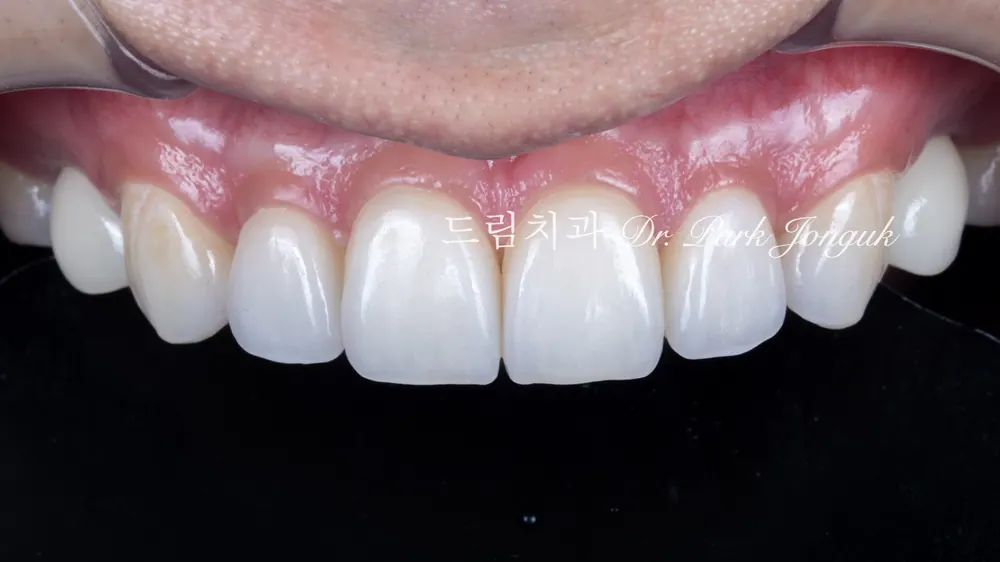
The right answer isn't "the whitest color" — it's "the color that suits me."
This doesn't mean white teeth are automatically bad.
The key is simply whether that degree of white suits your own face.
For some people, a bright shade suits them well,
and for others, a shade lower looks far more natural. It's different from person to person.
The only way to know the right color for your own face is to actually try it against your teeth and see. If you're unsure because of the color,
I'd recommend getting a consultation before deciding.
Differences in the veneer fabrication process
Park Jonguk / Over 20 years treating veneers, author of Korea's veneer-focused book.
This article is a clinical note written by Dr. Park Jonguk of Dream Dental Clinic, Gangnam; the original was published on his blog. The photographs shown are real cases he treated. Results vary with each patient’s condition, and every procedure carries the possibility of individual variation and side effects.
Quick Consult
Request a Callback
Leave your number and we will call you back during clinic hours.
Request Received
We will contact you during clinic hours. For urgent matters, please call +82-2-3448-0028.