
Natural Veneers vs. Artificial-Looking Ones: What's the Difference?
Standing in front of the mirror, your front teeth bother you,
but the worry that "is a truly natural-looking veneer even possible, what if it's obvious at a glance"
keeps a lot of people putting off the decision.
There are clear reasons a veneer ends up looking artificial,
and clear conditions for making it look natural.
Today, drawing on 20 years of clinical experience,
I'll explain "why natural-looking veneers and artificial-looking ones differ."
This article isn't a first-person patient testimonial; it's clinical-perspective information observed in the clinic.
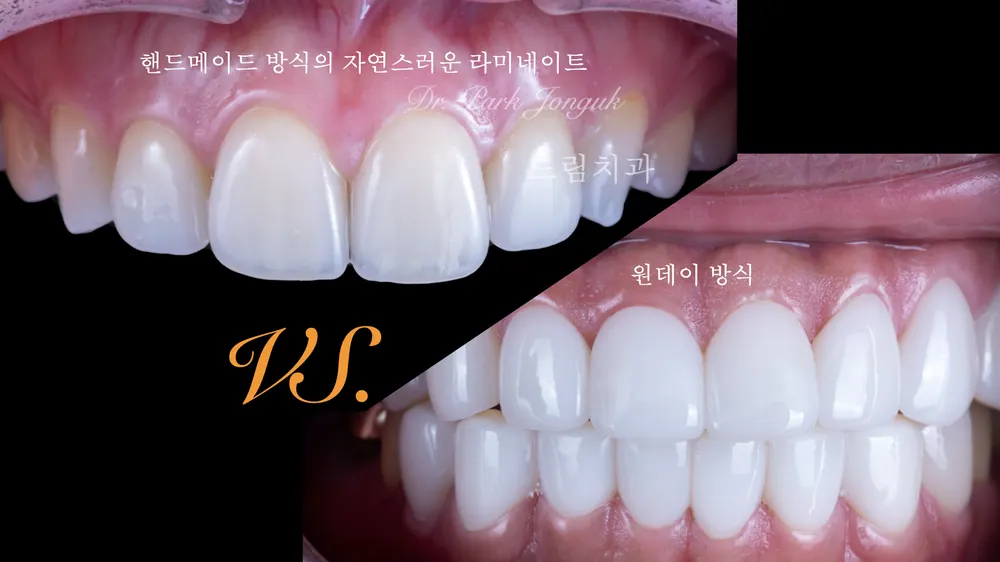
"Will veneers end up looking artificial?": the most common worry
One of the first things I hear most often in consultations is, "I'm worried veneers will look too white and artificial."
That worry isn't unfounded; there really are plenty of cases you can spot as veneers at a glance, even out on the street.
Fortunately, "looking artificial vs. looking natural" isn't a matter of chance; it's a result created by differences in diagnosis, materials, and design.
5 traits of a veneer that looks artificial
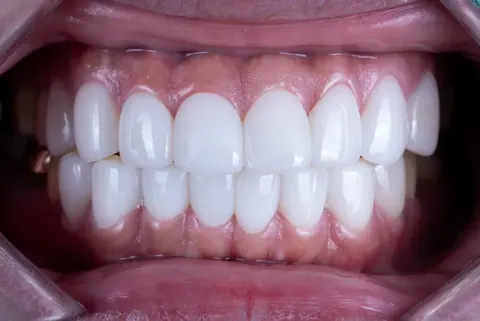
Cases where the veneer is obvious at a glance share these five things in common.
First, when a single, overly white color doesn't match the adjacent natural teeth.
Second, when there's no translucency and light doesn't pass through, so the faint bluish tone visible at the tip of a natural tooth disappears.
Third, when every tooth looks stamped out in the exact same shape, whereas a natural tooth's form differs subtly from position to position.
Fourth, when the gum line doesn't look natural, appearing lifted or showing a visible step.
Fifth, when the size and length applied don't take the face and lip proportions into account.
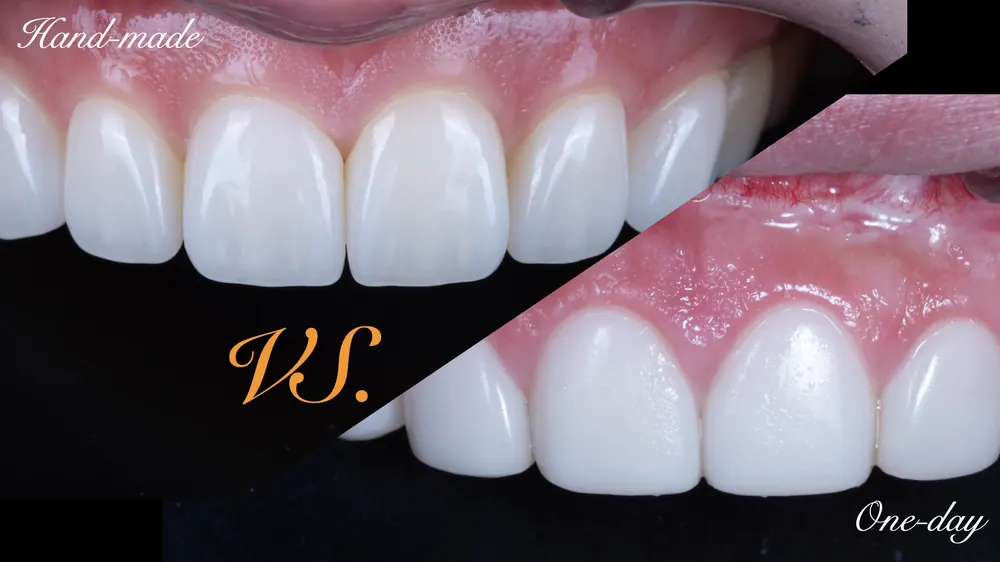
4 conditions that determine a natural-looking veneer
Naturalness isn't created by a single factor, but by four conditions coming together.
Condition 1. The subtle color gradation of a natural tooth
A front tooth isn't a single color.
The tip is slightly translucent, and the area near the gums is a bit darker.
Layering, which expresses this variation within the ceramic, is the starting point of naturalness.
Condition 2. Translucency that lets light pass through
A natural tooth doesn't simply reflect light; it lets a certain portion pass through.
The higher the grade of ceramic, the better this translucency is preserved, expressing that natural feel of the tip showing through slightly.
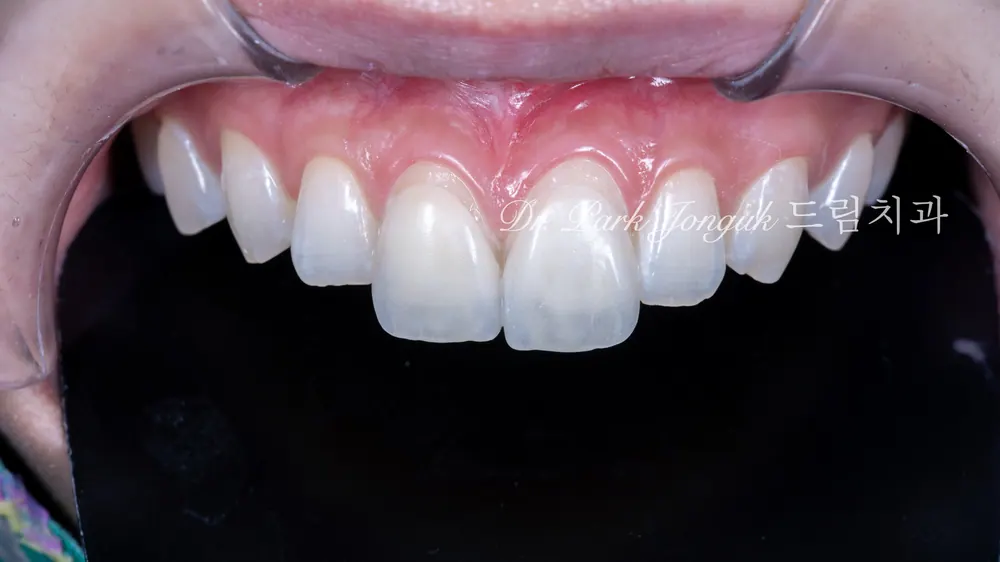
Condition 3. Shape and proportion tailored to the patient
Even among front teeth, one person's may be closer to rectangular, another's rounded, another's thin and long.
Applying a standard shape as-is will look artificial.
Condition 4. Harmony with the gum line and smile line
Even if the tooth itself looks natural, the result becomes awkward if the gum border looks lifted.
The gum line has to be designed together with the tooth for the result to be complete.
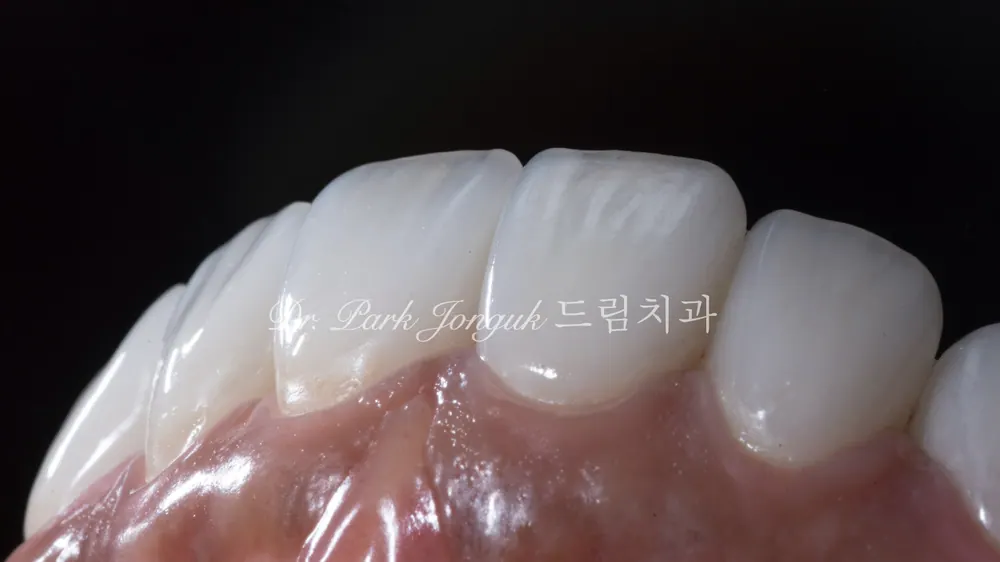
The diagnostic and design process for a natural-looking result
A natural-looking veneer is decided less by the procedure itself than by the stages before it.
Step 1: Precision diagnosis
Photos, digital scanning, smile line, gum line, and occlusion are all evaluated together.
Step 2: Custom design planning
The design takes into account the lip line, facial proportions, and the natural shape of the patient's own teeth.
Step 3: Simulation
The result is visualized in advance, digitally or with a wax-up, and reviewed together with the patient.
Step 4: Fabrication
Fabricating the veneer through build-up with a range of ceramics, rather than the one-day method
Step 5: Precision bonding
After bonding with a dedicated adhesive, the margin and occlusion are finished with precision.
Among these five steps, the simulation and try-in stages have the greatest influence on how satisfied a patient is with the naturalness of the result.
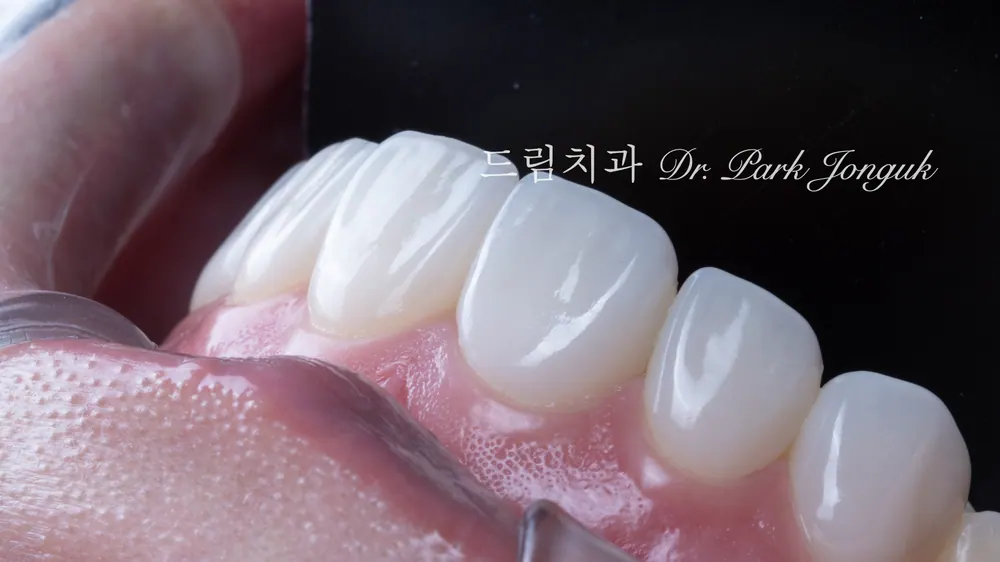
Expressions patients often use when they feel the naturalness for themselves
In cases where the result comes out looking natural, patients commonly say certain things.
"Even my family didn't realize I'd had it done at first." "You can see all the way to the gum line when I smile, but who'd guess it's a veneer?" "It connects naturally with the neighboring teeth, so the veneer doesn't stand out on its own." "The way the tip shows through a little makes it feel like a real tooth."
What these expressions have in common is that they all come from the harmony of multiple factors, not just one. In other words, naturalness is ultimately created by the sum of diagnosis, design, materials, and detail.
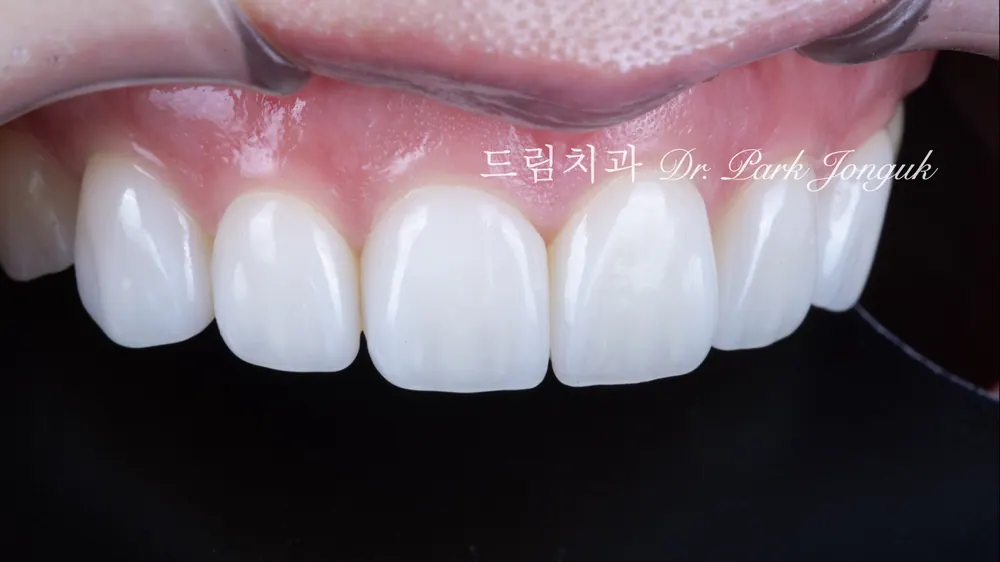
Frequently asked questions (FAQ)
Q1. Can it really not be told apart from a natural tooth?
When color, translucency, shape, and gum line all come together, it can be expressed to a degree that's hard to tell apart unless you look up close. Results vary from person to person.
Q2. How is a natural-looking color decided?
It's decided by considering your own lip color, gum color, adjacent natural teeth, and facial tone together. The "brightest color" isn't automatically the natural one.
Q3. Does the natural look last over time?
The ceramic itself doesn't change color. However, if the color of the adjacent natural teeth changes, or staining builds up at the margin, a difference can become visible over time.
Q4. Are no-prep veneers more natural-looking?
It depends on the case. If no-prep is applied to a case it doesn't suit, it can look thick or even end up less natural.
Q5. Is a natural-looking veneer more expensive?
There can be differences depending on the grade of ceramic, the depth of diagnosis, and the design time involved. The exact cost is determined after diagnosis.
Closing
A natural-looking veneer isn't a result left to chance or luck.
Color gradation, translucency that lets light through, a shape and proportion tailored to the individual, and harmony with the gum line: only when these four conditions are met does it become a "veneer no one can tell."
And what creates these four conditions is the process of diagnosis, design, simulation, and try-in.
The degree of naturalness varies depending on the patient's original tooth condition, gums, and face shape, and results vary from person to person.
The exact color, design, and suitability of the procedure are determined after diagnosis.
💬 When you were weighing whether to get natural-looking veneers, what worried you the most?
Leave a comment and I'll answer step by step from a clinical perspective.
📍 Park Jonguk | Director, Dream Dental Clinic, Apgujeong | 20 years in clinical practice | Author of a related clinical textbook | M.S.
─────────────────────────────
This article is a clinical note written by Dr. Park Jonguk of Dream Dental Clinic, Gangnam; the original was published on his blog. The photographs shown are real cases he treated. Results vary with each patient’s condition, and every procedure carries the possibility of individual variation and side effects.
Quick Consult
Request a Callback
Leave your number and we will call you back during clinic hours.
Request Received
We will contact you during clinic hours. For urgent matters, please call +82-2-3448-0028.