
Why Overly White Veneers Actually Look Unnatural: The Standard for a Natural Color
I watched a Korean film at the theater not long ago. The camera kept cutting to close-ups of the lead actress, and her veneers were so white and unnatural that my eyes kept going straight to them for the whole movie.
There's something I hear often after 20 years of working with veneers.
"I want teeth as white as a celebrity's."
"Please make them the whitest color possible."
But in my clinical experience, I always tell patients the same thing.
White alone doesn't make a tooth beautiful.
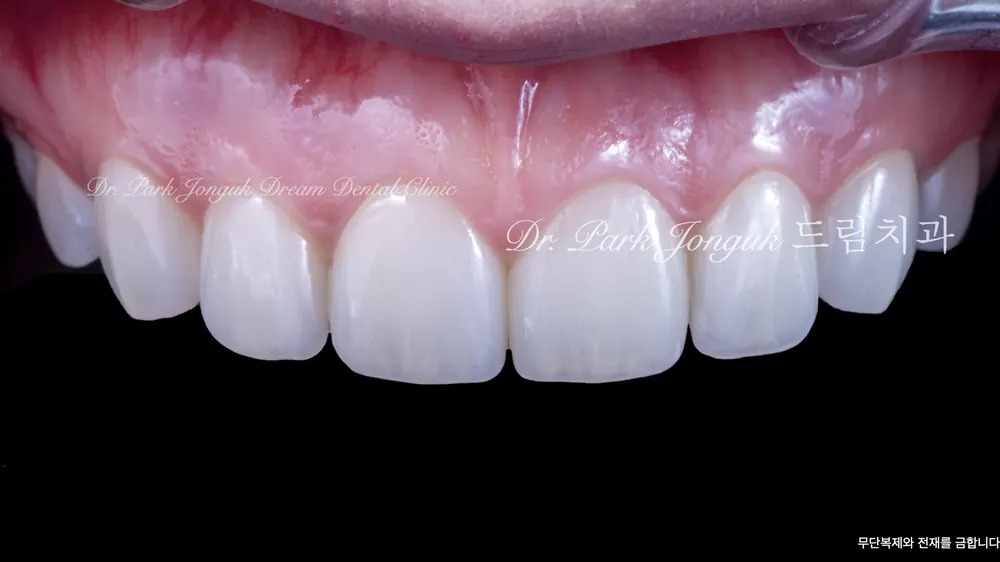
1. Why overly white veneers look unnatural
The teeth are just one part of the whole face. They need to blend with the gums, lips, and skin tone to look natural.
There are three reasons overly white veneers look unnatural.
First, a mismatch with the gum color
Korean gums are typically somewhere between light pink and a deeper pink.
When teeth are made too white, the gums end up looking relatively redder by comparison.
Natural teeth blend smoothly into the gums,
but an excessively white veneer clashes with the gum color.
Second, a clash with skin tone
Asian skin tones tend to lean toward a yellow base.
Cool-toned, pure white teeth end up out of sync with the skin, making the teeth look separate from the rest of the face.
Third, a difference in how light reflects
Natural teeth absorb and reflect light softly.
A veneer made artificially too white reflects light uniformly.
As a result, it stands out especially in photos and videos.
This is exactly why the close-ups in that Korean film looked so unnatural every time.
2. A natural tooth isn't just one color
This is the most important part.
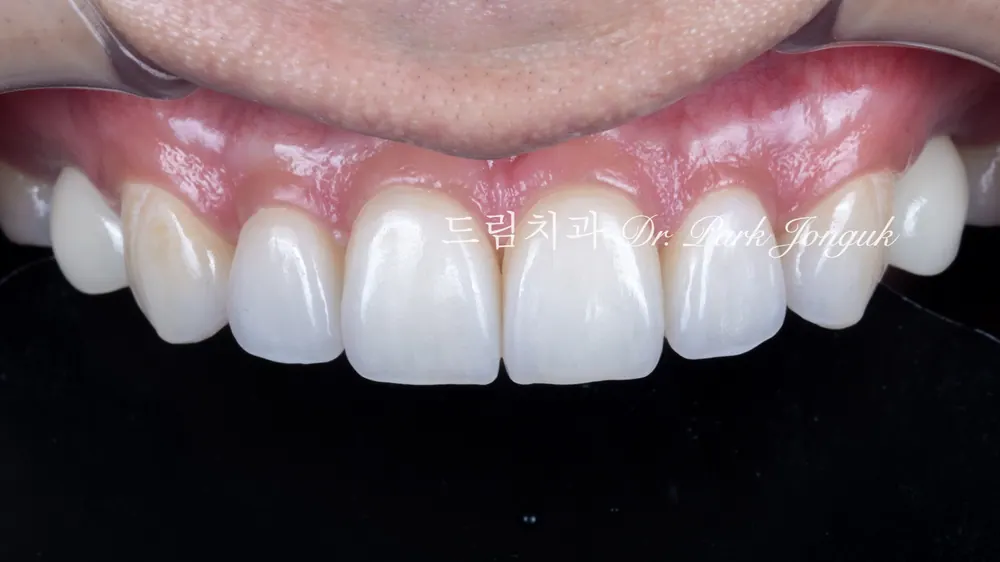
A natural tooth isn't a single, solid color.
The upper part of the tooth (the incisal edge) has a translucent gray tint, the middle is the tooth's own base white, and the area near the gum (the cervical area) has a slightly yellow tint.
In other words, a natural tooth has a gradation of color.
For a veneer to look natural, it has to faithfully reproduce this gradation.
A veneer that's simply white lacks this subtle color variation,
giving it a flat look, almost like it's been coated in nail polish.
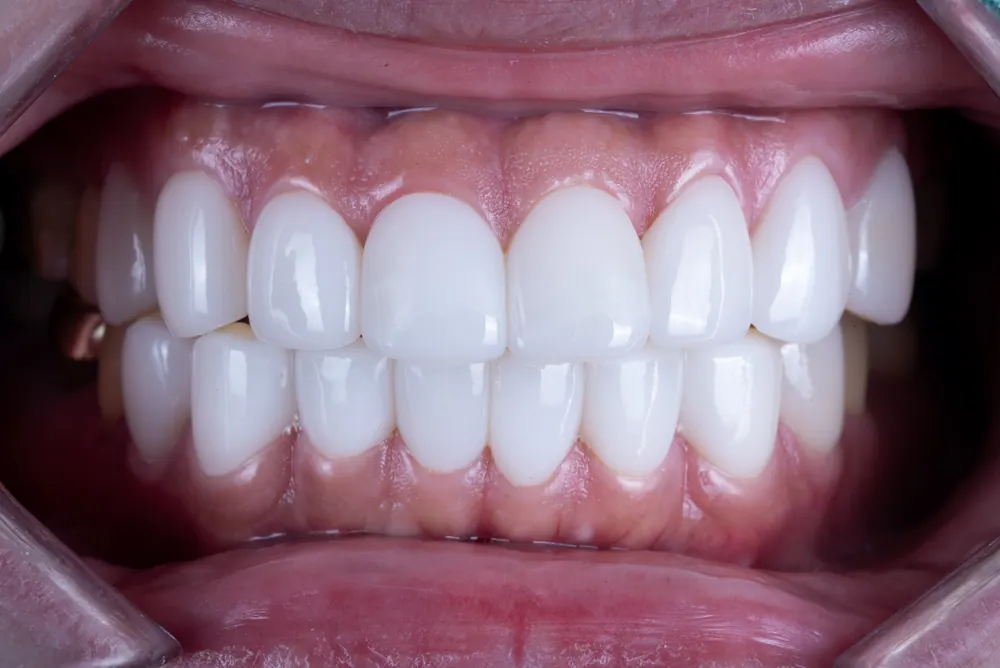
3. The standard for a natural veneer color
There's a VITA shade guide that dental clinics use to choose veneer colors.
For most Korean patients, the natural-looking color range for a veneer falls between A1 and B1.
Of course, depending on occupation, age, and skin tone, a brighter tone can suit some people better.
But a pure white in the BL range is likely to look unnatural in everyday life unless you're someone who's frequently on camera.
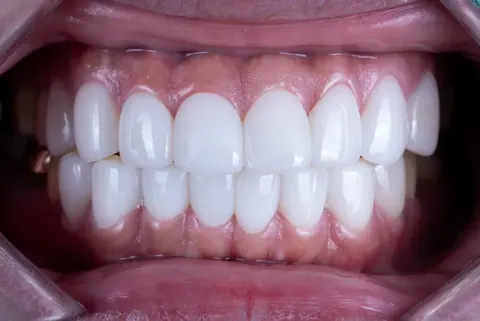
That said, if a BL-range shade is made while still expressing translucency and chroma, it can be bright and still look natural. This is why Dream Dental Clinic's veneers can be bright while still looking natural.
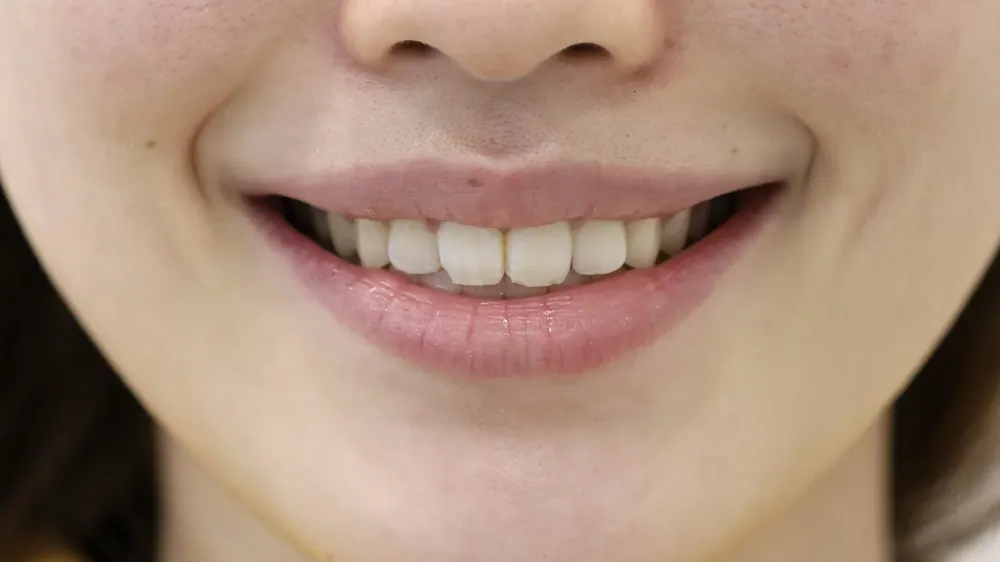
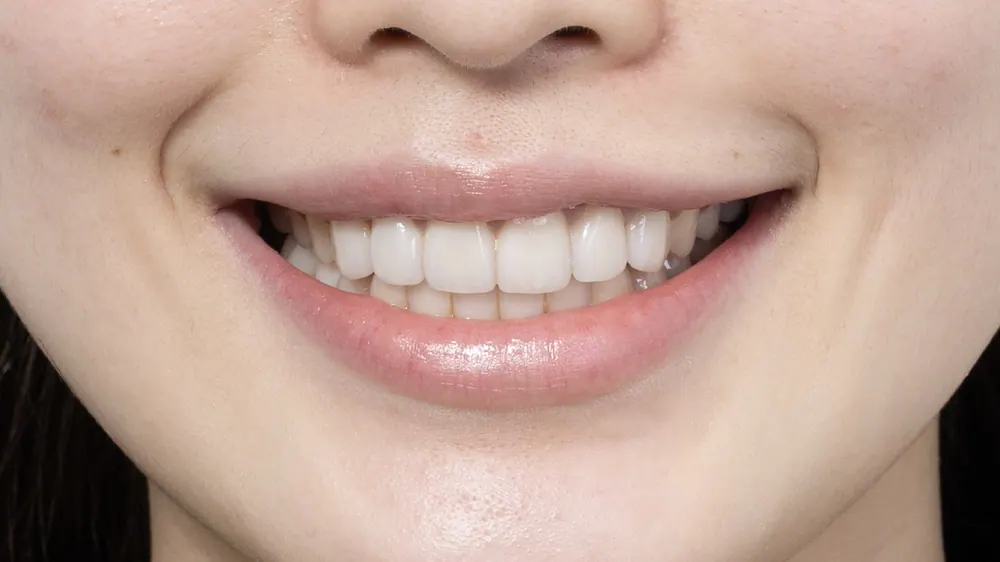
4. Three factors as important as color
There are factors just as important as color in determining how natural a veneer looks.
Form
Teeth aren't rectangles.
The upper front teeth are close to square but with softened corners, while the canines come to a slightly pointed tip.
Making every veneer the same shape looks unnatural.
Translucency
Light passes through the incisal edge of a natural tooth.
A veneer needs this same translucency at the incisal edge to have a sense of depth.
A veneer made opaque ends up looking like porcelain china.
Surface texture
The surface of a natural tooth isn't perfectly smooth.
It has fine lines and subtle contours.
A veneer finished too smooth looks artificial up close.
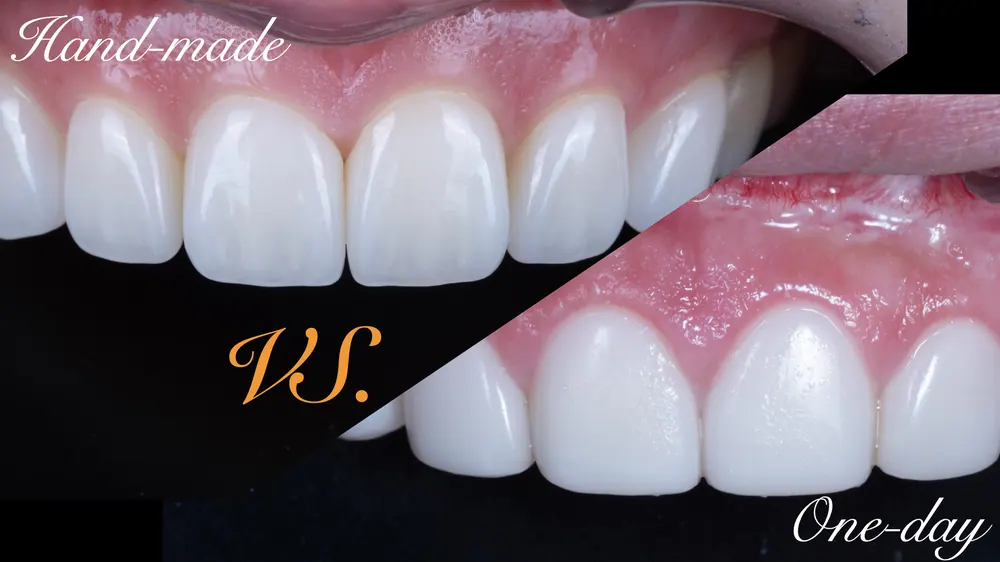
5. Natural veneers vs. artificial veneers
Comparing the two makes the difference clear.
A natural veneer
Falls within the A1 to B1 color range.
Has a living gradation that gives it dimension.
Blends smoothly into the gumline.
Preserves translucency at the incisal edge, so light passes through naturally.
Has fine surface texture, making it indistinguishable from a natural tooth.
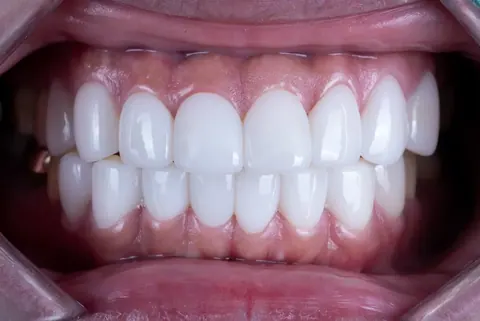
An artificial veneer
Is a uniform white in the BL range.
Looks flat because it's a single, solid color.
Has a gumline that stands out, emphasizing the boundary.
Is an opaque white that light can't pass through.
Has a smooth, china-like surface that makes the artificiality obvious.
This difference is what decides the result, both on camera and at normal conversational distance in everyday life.
Frequently Asked Questions (FAQ)
Q1. Can the color of a veneer be changed after treatment?
Once a veneer is bonded on, its color can't be changed.
That's why deciding on the color before treatment is the single most important step.
It's best to go through thorough consultation and simulation during your visit.
Q2. Is it wrong to want veneers as white as a celebrity's?
It's possible if that's what you want.
But unless you're someone frequently in front of a camera, for broadcast, social media content, or similar,
it's worth knowing in advance that it may look unnatural in everyday life before you decide.
Q3. If the color matches my natural teeth, will it be undetectable that I have veneers?
A precisely matched veneer is hard to tell apart even up close.
This kind of result is possible when the color gradation, incisal translucency, and surface texture of a natural tooth are all faithfully reproduced.
Q4. How should I go about choosing a veneer color?
It helps to check your own skin tone and lip color in the mirror first, and also consider the tones of clothing you wear often.
The most accurate approach is holding shade guides directly up to your teeth in the clinic and comparing them in person.
In closing
The purpose of a veneer is to create a more natural, harmonious smile.
It shouldn't just be a simply white tooth, it should be a tooth that suits your own face and expression well.
There's a phrase that comes to mind most often after 20 years of clinical practice.
"A well-made veneer is one so natural that no one can tell it was ever done."
That's the standard you should keep in mind first when deciding on veneers.
This article is a clinical note written by Dr. Park Jonguk of Dream Dental Clinic, Gangnam; the original was published on his blog. The photographs shown are real cases he treated. Results vary with each patient’s condition, and every procedure carries the possibility of individual variation and side effects.
Quick Consult
Request a Callback
Leave your number and we will call you back during clinic hours.
Request Received
We will contact you during clinic hours. For urgent matters, please call +82-2-3448-0028.