
Worried About Your Front Teeth? Veneers vs. Braces, Which Should You Do First?
You've probably paused in front of the mirror while washing your face in the morning.
Your front teeth look a little crooked, or the color bothers you,
or you catch yourself covering your mouth in photos without meaning to.
At some point, you've probably searched for an answer.
"Braces vs. veneers for front teeth." But the more you search, the more confusing it gets.
Some people say to start with braces, others say veneers are faster.
I'm someone who has focused on veneers for more than 20 years.
And yet one of the things I say most often in my clinic is this:
"For this, braces should come before veneers."
It might sound strange for me not to recommend my own specialty,
but today I want to walk you honestly through that fork in the road.
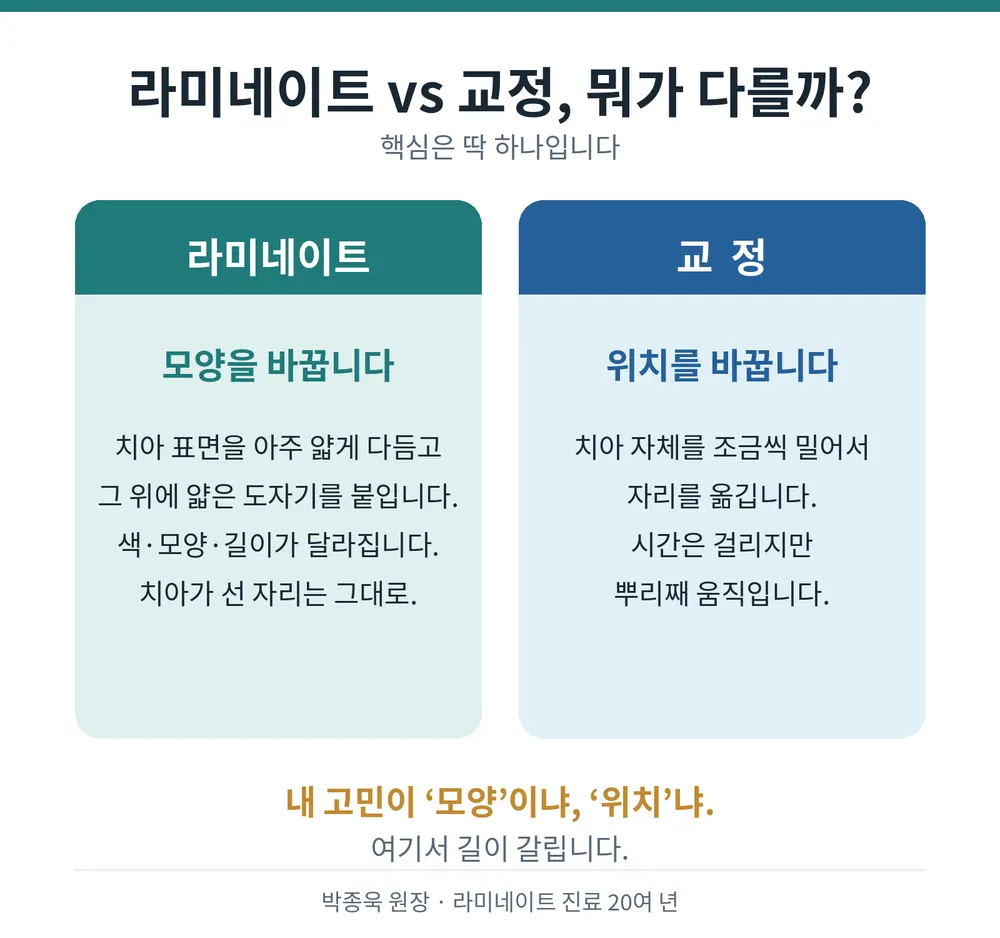
So what's actually different between the two?
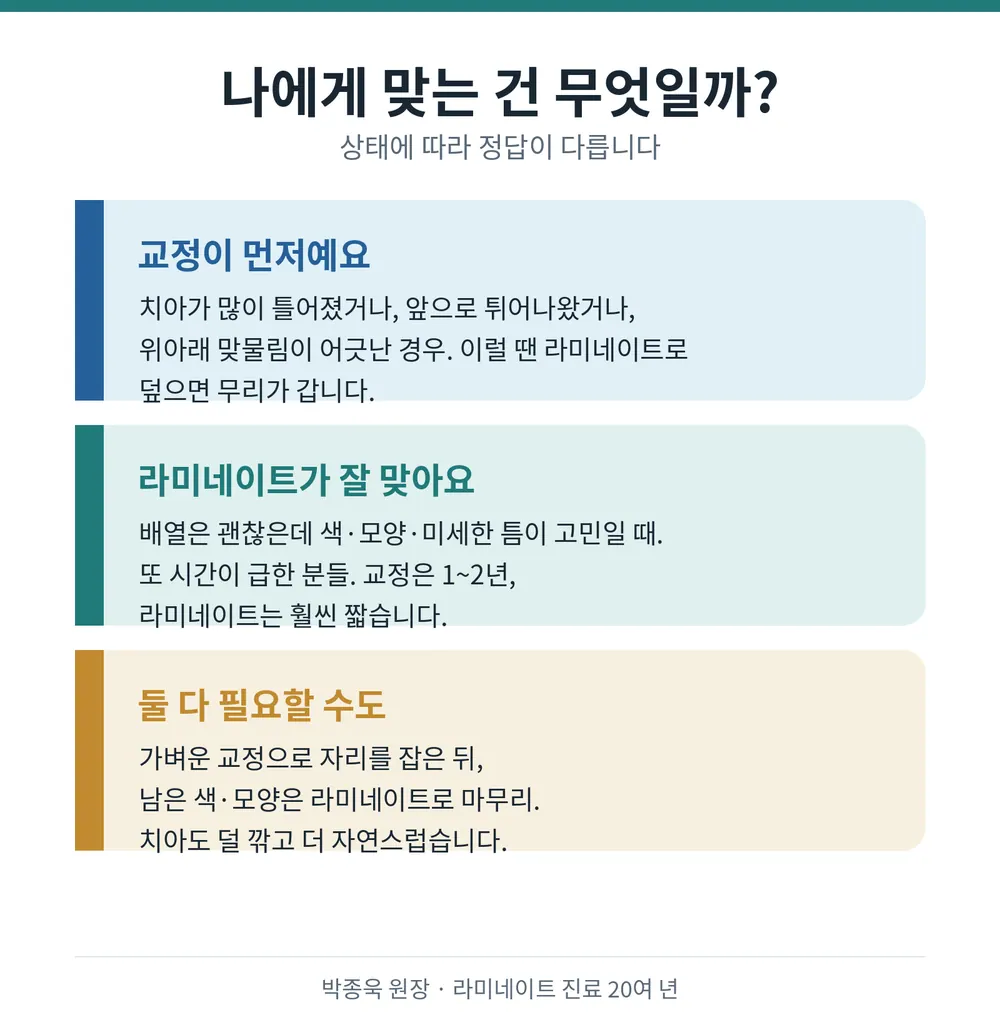
In one line: veneers change the shape, braces change the position.
A veneer is treatment where the surface of the tooth is very lightly reduced,
and then a thin piece of ceramic is bonded on top of it.
It changes the color, shape, and length, while the spot where the tooth stands stays the same.
Braces work the opposite way. The tooth itself is gradually pushed to move its position.
It takes time, but the tooth moves root and all.
So in the end, it comes down to one question: is your concern the "shape" or the "position"?

So when should you do braces first?
If your teeth are significantly misaligned or protruding, braces should come before veneers.
For example, if the front teeth sit noticeably deep inward,
or the upper and lower bite doesn't line up, or there's severe crowding.
Trying to cover this up with a veneer puts too much strain on it.
Forcing a filled-out veneer over a recessed tooth makes it far too thick,
and grinding down a protruding tooth to match sacrifices far too much healthy tooth structure.
That's not a good approach.
Honestly, for patients like this, I don't recommend veneers either.
Just last month, a patient in her late twenties came in saying, "I don't have time for braces, so please just do veneers."
But her entire upper arch was pushed forward.
I explained this at length, and in the end she decided to start with braces. She seemed a little disappointed that day, but I still believe it was the right call.
So when is a veneer the better fit?
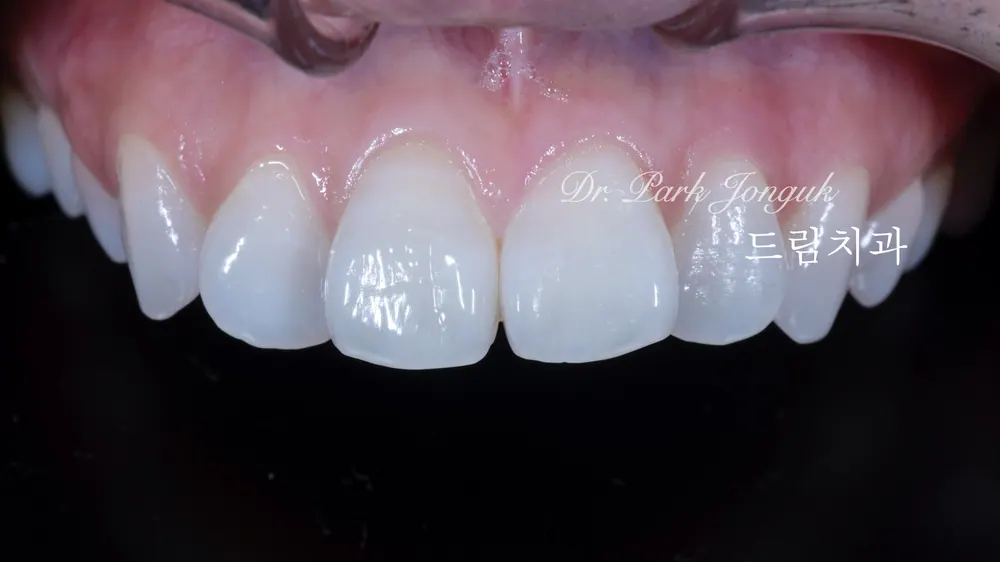
If your tooth alignment is fine and your concern is shape, color, or a small gap, a veneer is a good fit.
Your teeth might already be fairly straight, but yellowed in color,
or there's a small gap between your two front teeth, or one tooth is a bit shorter.
In cases like this, a veneer is far quicker and more efficient.
This especially matters for people short on time. Braces usually take one to two years.
A veneer takes an incomparably shorter time.
Many patients come in ahead of a wedding or another important occasion,
and if the alignment issue isn't severe, a veneer alone is often enough.
But even here, diagnosis comes first.
Not every case that looks "a little crooked" is actually the same.
Two cases can look similar on the outside, but if the tooth's axis is off underneath, the situation is completely different.
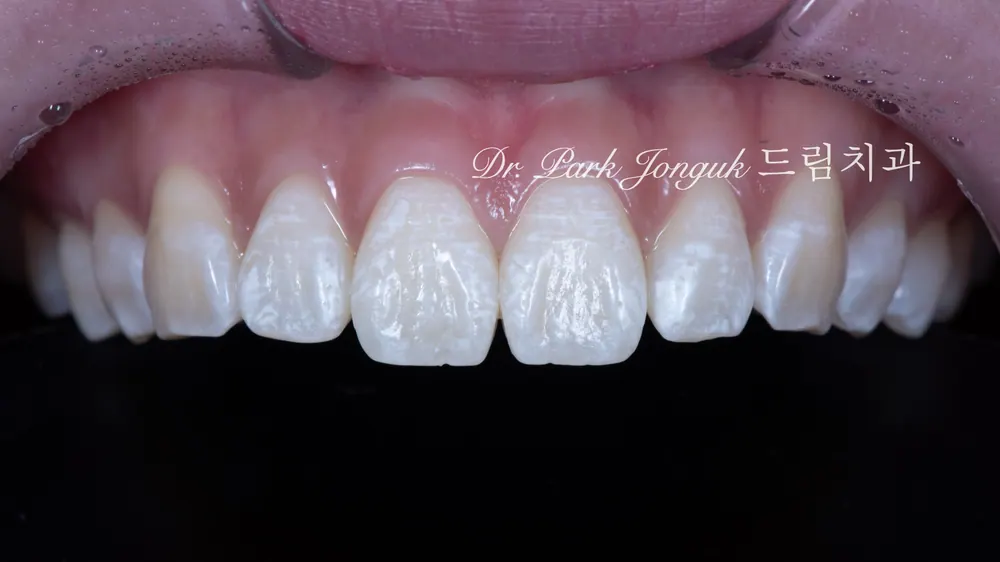
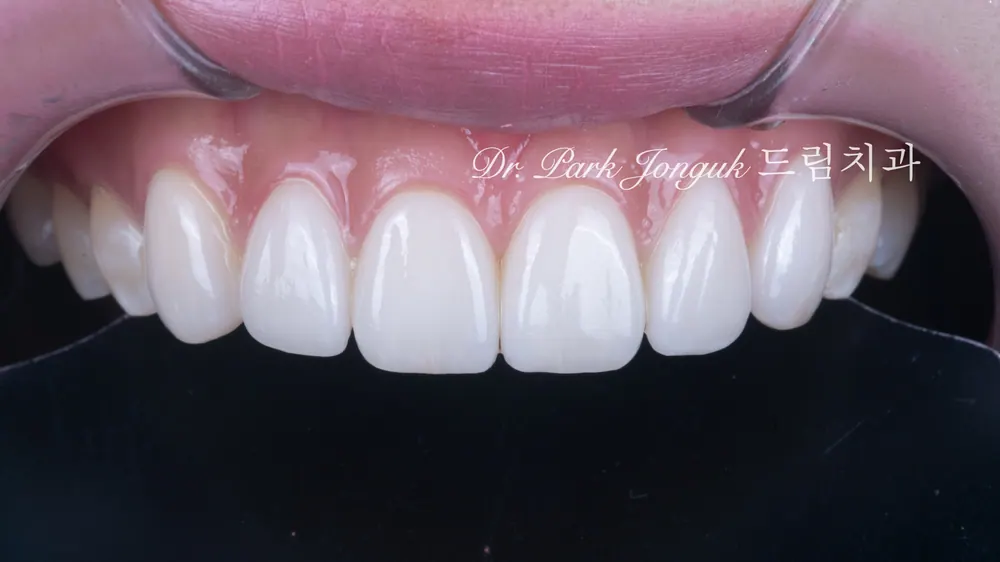
Sometimes you need both.
It's also common to combine light braces to set the overall structure first, then finish with veneers.
Honestly, a lot of people get confused about this.
People often think they have to choose strictly between braces or veneers, but that's not the case.
You use light braces just to get the position in order, then use veneers to refine whatever color or shape issues remain.
This way, less tooth needs to be reduced, and the result looks more natural.
Link to a case where veneers were done after braces
So, what should I do?
The answer is different for everyone, which is why a consultation comes first.
"I don't like my front teeth" can sound like the same complaint,
but for one person the answer is veneers, and for another it's braces first.
That fork in the road can only be judged accurately
by looking directly inside your mouth and checking how your teeth are actually positioned.
It's hard to know just from searching online.
If you're standing in front of the mirror right now, wondering about this,
don't make up your mind one way or the other too soon. Get an accurate diagnosis first.
In the long run, that's the path that takes the best care of your teeth.
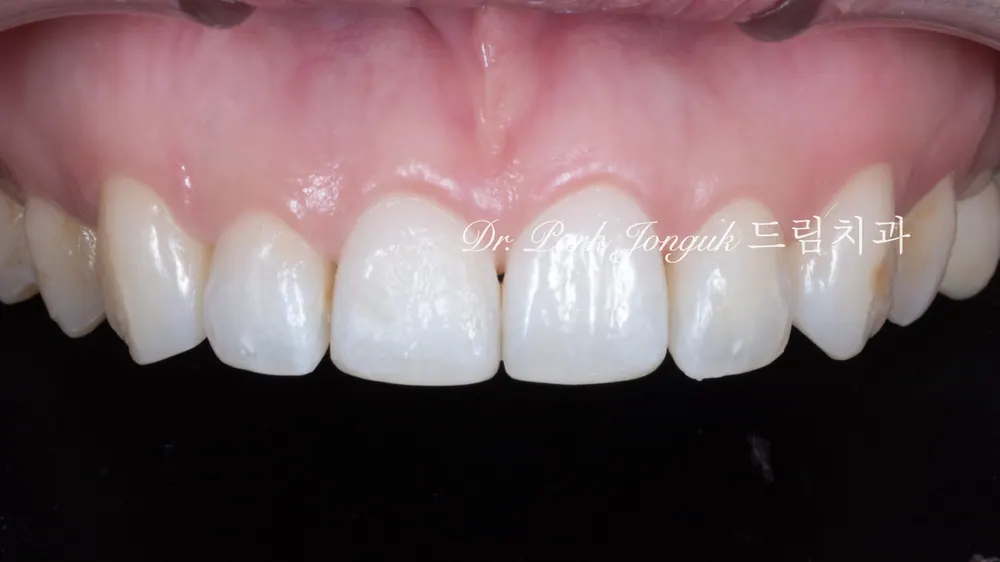
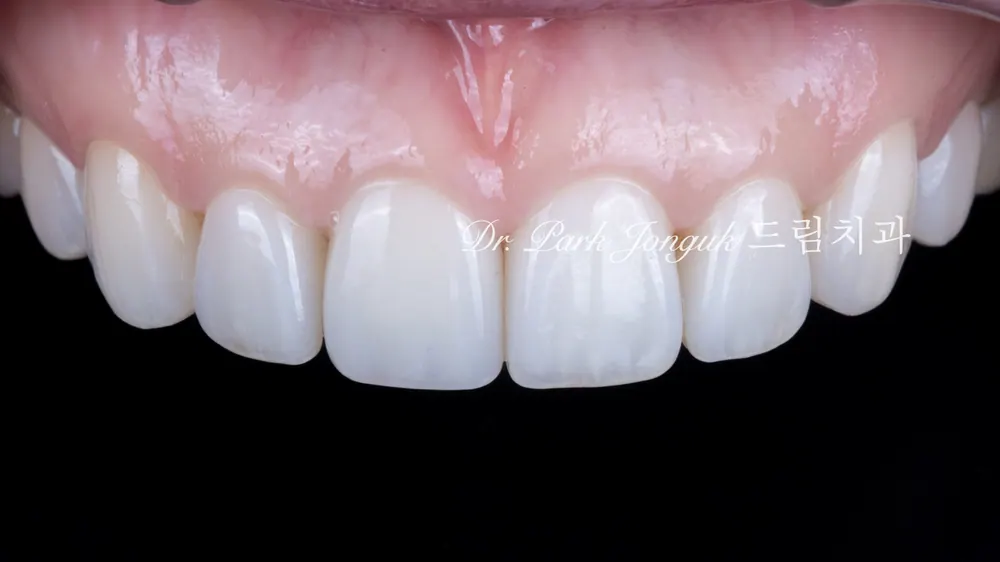
Park Jonguk / Over 20 years treating veneer cases, author of books on veneers published in Korea. Gives lectures on veneers every year.
This article is a clinical note written by Dr. Park Jonguk of Dream Dental Clinic, Gangnam; the original was published on his blog. The photographs shown are real cases he treated. Results vary with each patient’s condition, and every procedure carries the possibility of individual variation and side effects.
-
 Veneers for Protruding Teeth: How to Naturally Fix Large Teeth Orthodontics Couldn't Solve
 -
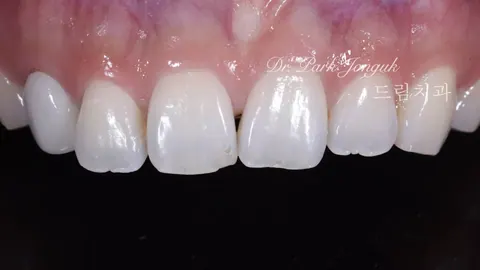 What If Your Front Teeth Shifted Again After Braces? | Front Teeth Veneers That Restored a Balanced Smile
 -
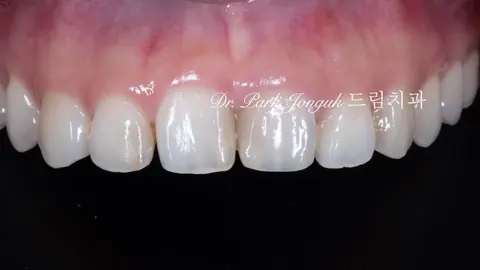 Still Troubled by Front-Tooth Cavities After Orthodontic Treatment? — Solved with Natural-Looking Veneers
Quick Consult
Request a Callback
Leave your number and we will call you back during clinic hours.
Request Received
We will contact you during clinic hours. For urgent matters, please call +82-2-3448-0028.