
Veneers for Protruding Teeth: How to Naturally Fix Large Teeth Orthodontics Couldn't Solve
Hello, this is Dream Dental Clinic in Apgujeong
"I finished orthodontic treatment, but my teeth still look like they stick out."
"My teeth feel like they're protruding, so it's uncomfortable to close my mouth."
"My face is small, but my teeth look big."
A woman in her 20s came to us with concerns like these.
She said that even after completing orthodontic treatment, the feeling of protruding teeth remained.
Today I'm sharing a tricky case that required solving both large-tooth veneers and the sense of protrusion at the same time.
In particular, veneers for protruding teeth really require very careful diagnosis.
Done wrong, you can end up cutting the teeth down too much, or the teeth can even end up looking more protruded.
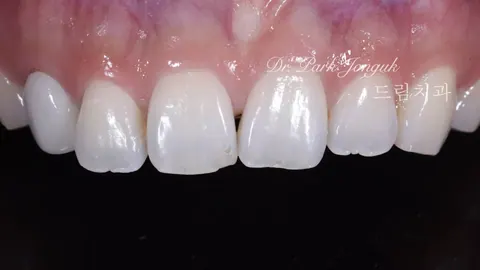
Before treatment: a problem that even orthodontics couldn't solve
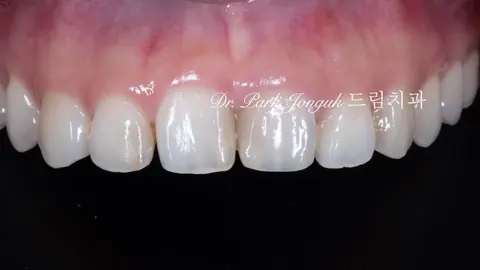
[Photo 1: Front view]
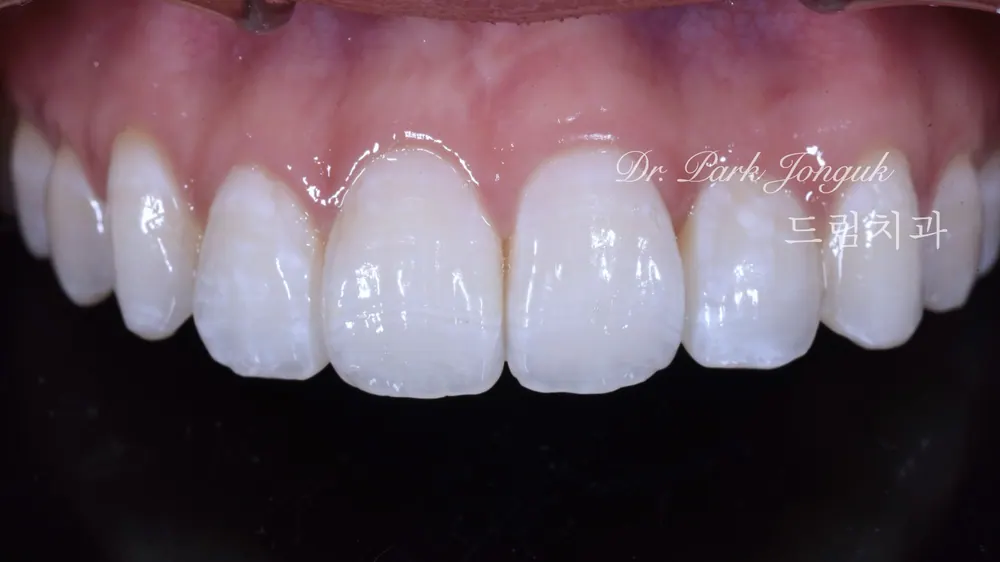
A woman in her 20s came in. She had already completed orthodontic treatment.
The patient's concerns:
❌ Even after orthodontics, the sense of protrusion remained
❌ Her orthodontist had told her, "there's a limit to what orthodontics alone can fix here"
❌ Her teeth were on the large side, making them feel even bigger
❌ Her face was on the smaller side, but her mouth looked like it stuck out because of her teeth
Problems visible from the front:
The teeth are on the large side
Against her smaller face, the size of the teeth stands out and looks even bigger
This is a situation where the teeth absolutely could not be allowed to get any larger
[Photo 2: Side view]
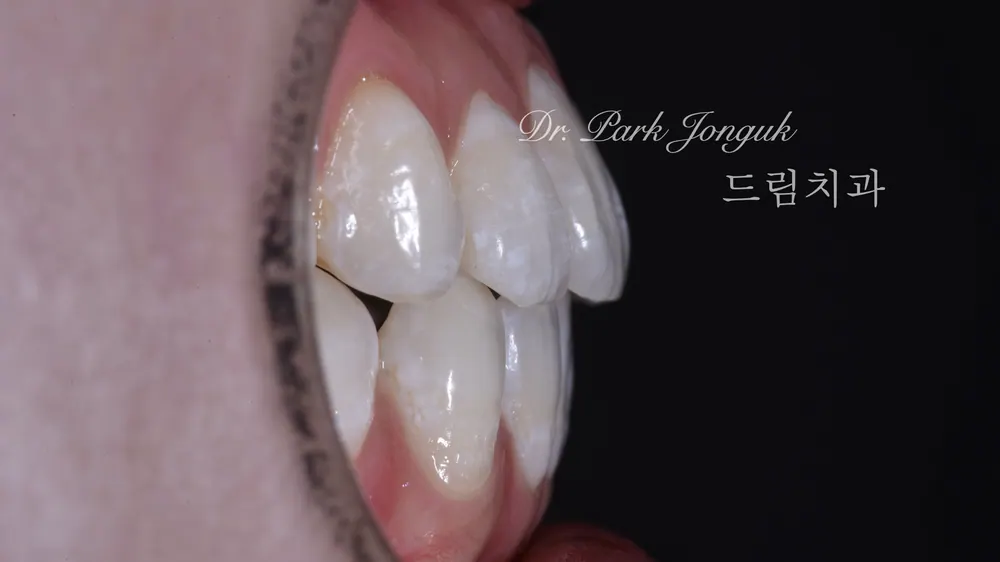
Viewed from the side, the problem is even clearer.
The tips of the teeth protrude forward.
This is the core problem. Orthodontics had straightened the alignment of the teeth,
but the angle at which the teeth themselves stuck out forward hadn't changed much.
Why does orthodontics have limits here?
Orthodontics can change the "position" of the teeth, but it has limits when it comes to changing the "angle" or "shape" of the teeth themselves.
In particular, when there's an underlying bone-position issue, it's difficult to fully resolve with orthodontics alone.
The tricky challenge: veneers for protruding teeth
Why is it difficult?
Veneers for protruding teeth are much more demanding than ordinary veneers.
Problem 1: The amount of tooth reduction. If you make veneers on teeth that stick out forward without careful planning,
you end up having to cut down the teeth enormously.
That's because bringing the tips of the teeth inward requires that much space.
Problem 2: Increased size. This patient's teeth were already on the large side.
Making veneers the ordinary way would inevitably make the teeth even larger.
Problem 3: Patient consent. The solution requires a bit of a technique,
and the patient needs to understand and agree to this part.
The diagnostic process is extremely important.
Wax-up precision diagnosis: finding the solution
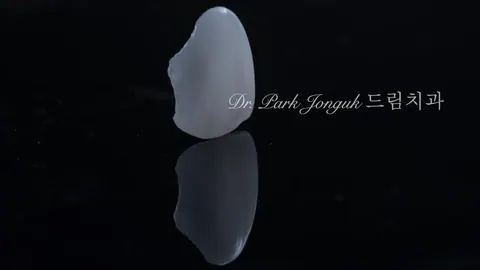
[Photo 3: Wax-up diagnosis]
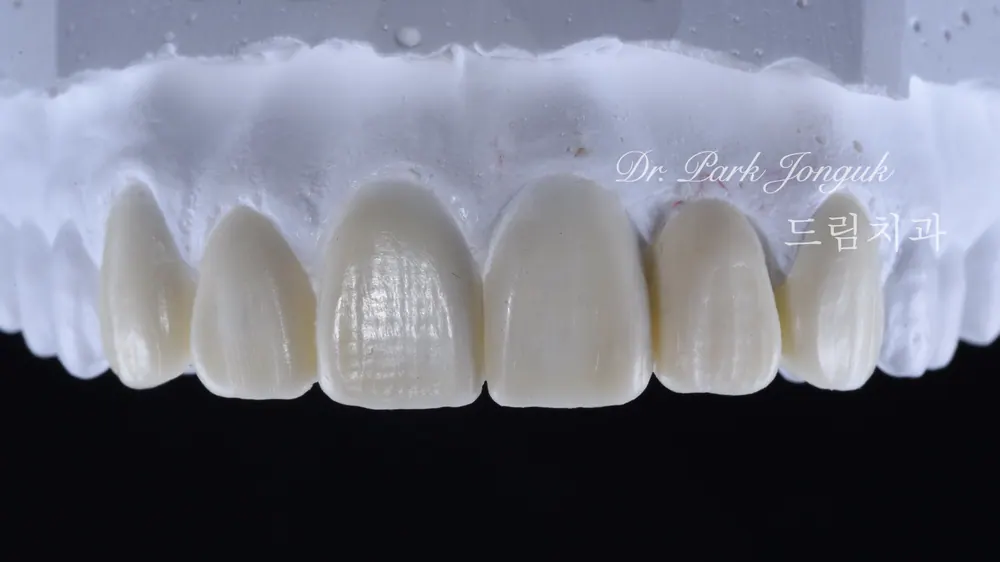
We combined all the data and carried out a wax-up precision diagnosis.
We had to find the optimal solution by considering the face size, tooth size, degree of protrusion, and the patient's wishes all together.
[Photo 4: Explanation of the solution strategy]
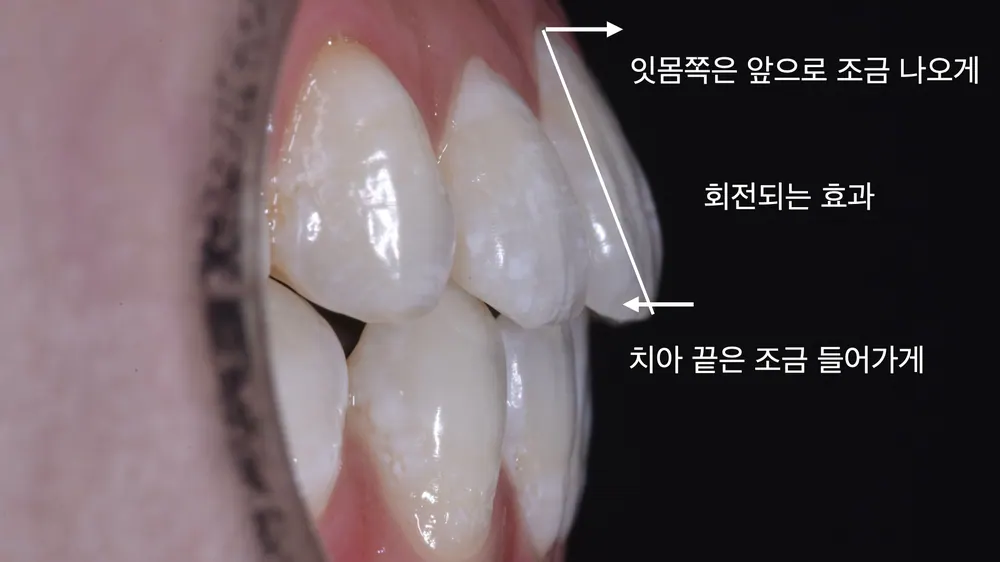
As shown in the photo, here's the solution we found:
The core strategy: the sense of "rotating" the tooth
1. Make the gum side (the cervical area) slightly thicker on the outside
We make the root side of the tooth a little thicker
This part comes out toward the outside
2. Bring the tip of the tooth inward
Conversely, the tip of the tooth is brought inward
The sense of protrusion disappears
3. The result: a rotation effect
Overall, it creates the sense that the tooth has rotated
The feeling of protrusion goes away
At the same time, tooth reduction can be minimized
The advantages of this method:
✓ You don't need to cut down the teeth very much
✓ It effectively resolves the sense of protrusion
✓ The overall tooth size is also kept at an appropriate level
A part that requires patient consent: the gum-side part of the tooth becomes slightly thicker.
The patient needs to understand and agree to this part.
Fortunately, this patient understood well and agreed to it.
Tooth reduction: kept to a minimum
[Photo 5: After tooth reduction]
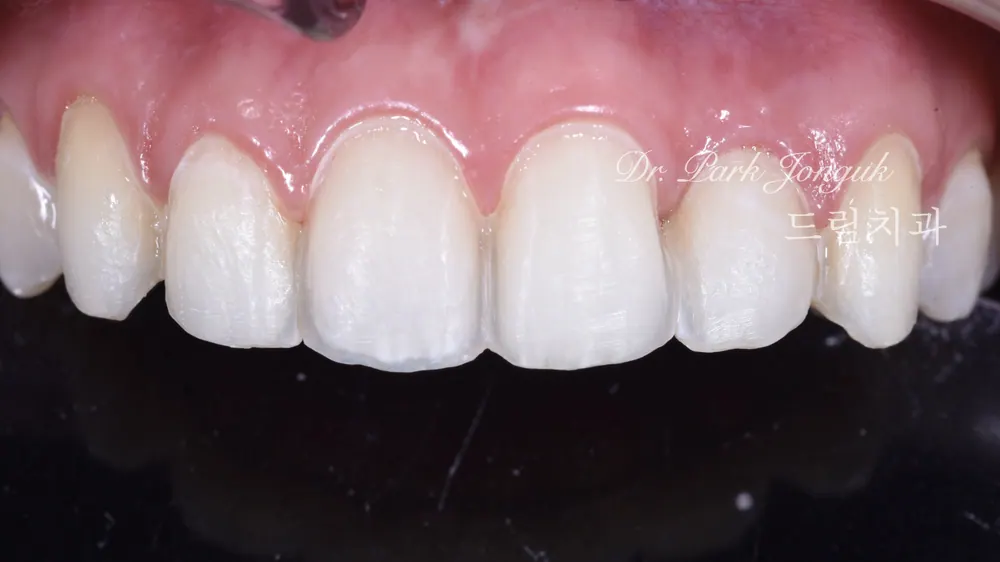
Tooth reduction was carried out according to the wax-up plan.
The reduction strategy:
At the tip of the tooth: securing space to bring it inward
In the middle of the tooth: only minimal reduction
At the gum side: almost no reduction (this is the part that would be made thicker)
Because the teeth were so large, no-prep veneers weren't possible. But thanks to the rotation strategy, we were able to reduce far less than with ordinary protruding-tooth treatment.
If we had used the ordinary method, far more would have had to be cut down.
Treatment complete: a natural transformation
[Photo 6: Front view after treatment]
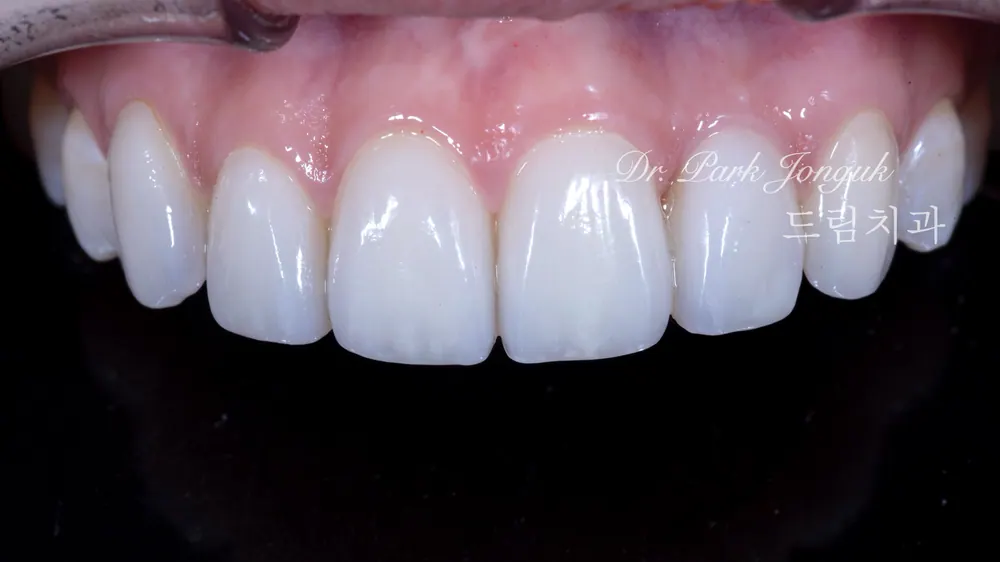
The large-tooth veneer treatment was finally complete!
A remarkable change:
✅ Natural size. The teeth are large, but they didn't get any larger. If anything, they now look proportionate.
✅ No sense of protrusion. The most important goal was achieved. There's no sense of the teeth sticking out at all.
✅ Natural shape. The gum side is slightly thicker, but it's not strange at all, and if anything looks natural.
✅ Comfortable to close the mouth. This is the part the patient was most satisfied with. She can now close her mouth comfortably.
[Photo 7: Side view comparison]
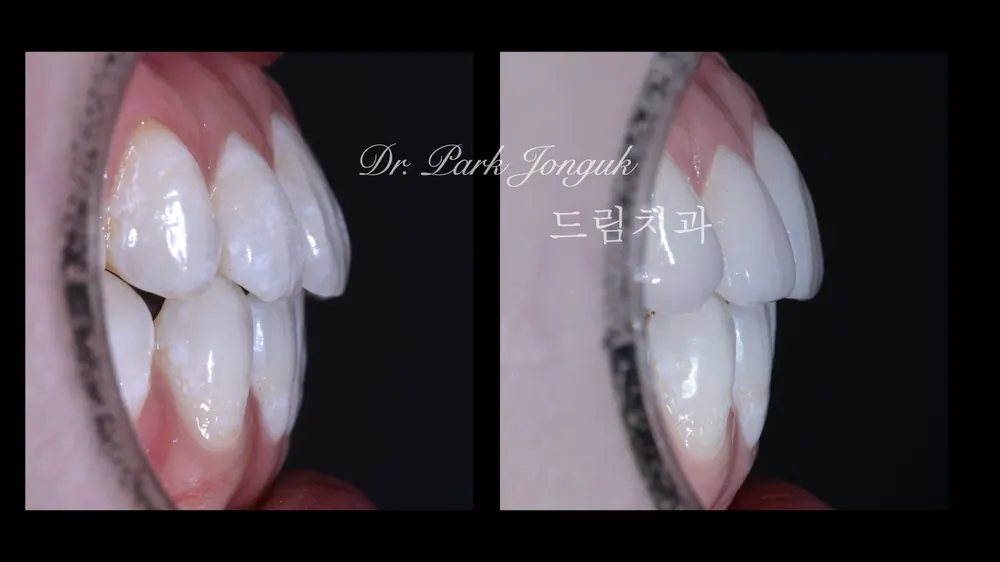
Comparing the side view before and after treatment is dramatic.
Before treatment: the tips of the teeth stuck out forward. After treatment: the tips of the teeth are brought inward, looking natural.
You can see that the protrusion has completely disappeared. The lips also close together much more naturally.
Six years later: quality proven by time
[Photos 8, 9, 10: Six years later]
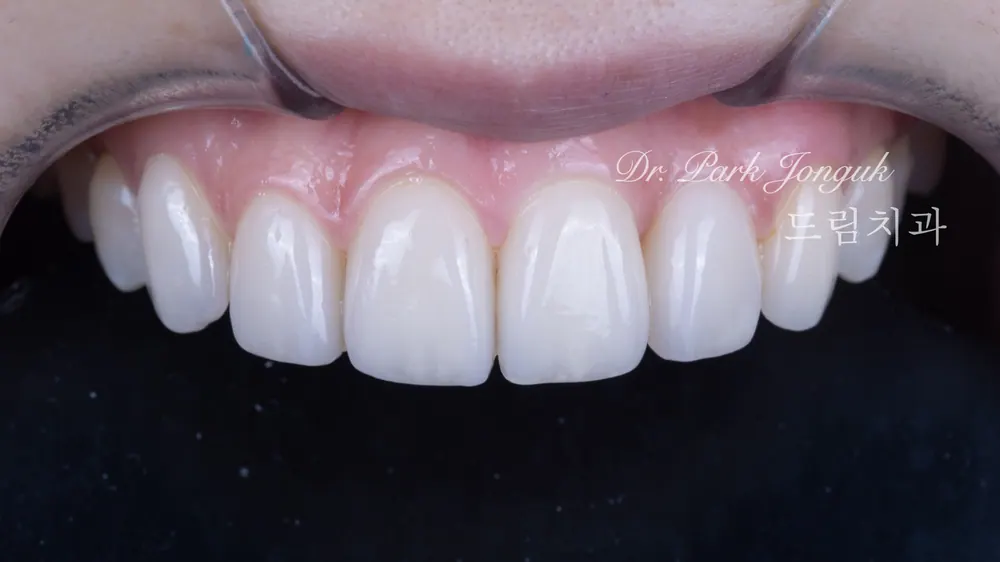
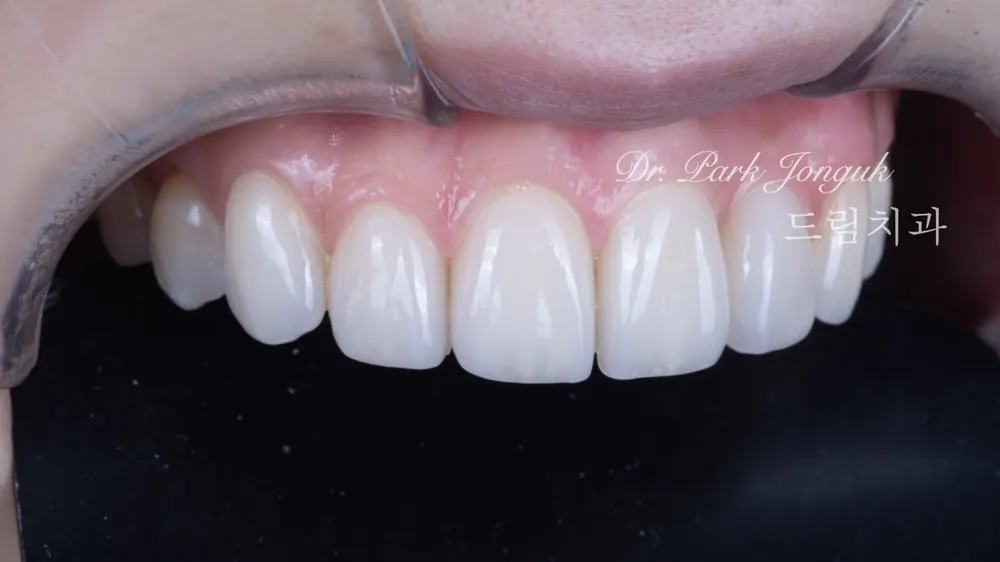
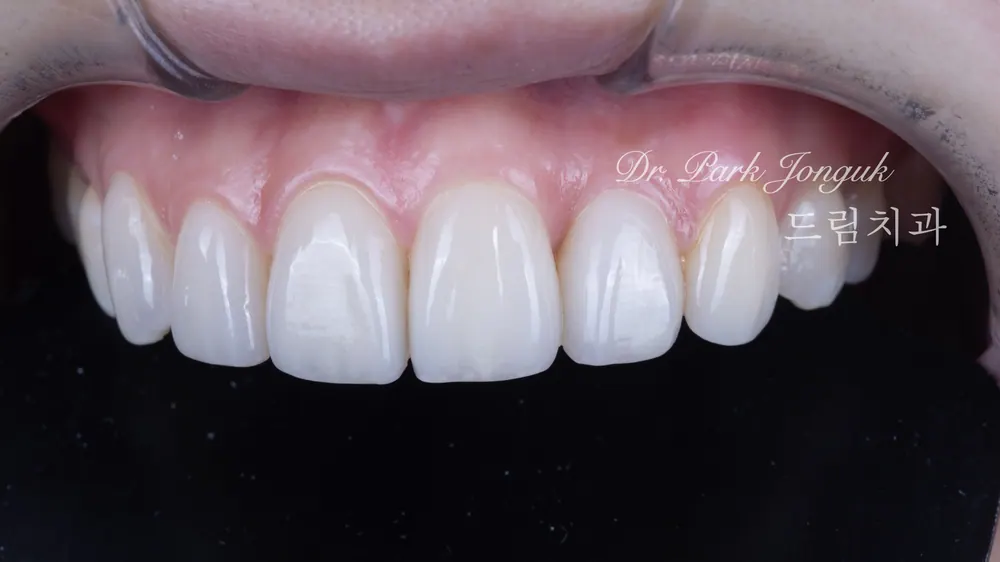
And here's the most important piece of evidence. Even six years later, it's still holding up perfectly.
The state six years later:
✅ The shape has been maintained exactly ✅ No color change at all
✅ Still no sense of protrusion ✅ Gum health is good
✅ No fracture or detachment ✅ Patient satisfaction is still at its highest
It's still being used naturally and beautifully.
In particular, veneers for protruding teeth can be harder to maintain long-term,
but thanks to a precise diagnosis and the right design, it's still holding up this healthily even after six years.
It can likely be used for another 10 years or more going forward.
Conclusion: the key to veneers for protruding teeth
Why does diagnosis matter?
Veneers for protruding teeth require a completely different approach from ordinary veneers.
❌ The wrong approach:
cutting down the tips of the teeth heavily without a plan
ignoring the protrusion and just making veneers as-is
not considering the tooth size
Result: excessive reduction, or even more protrusion
✅ The right approach:
comprehensive analysis of the face, tooth size, and degree of protrusion
finding the optimal solution with a wax-up
achieving both minimal reduction and resolving the protrusion at the same time with the rotation strategy
thorough communication and consent with the patient
Result: natural, long-lasting veneers
Dream Dental Clinic's approach to protruding teeth
1. Precise three-dimensional analysis. Rather than just looking from the front, we analyze the side view, the degree of protrusion, and the proportion with the face, all together.
2. A tailored strategy. Whether to use a "rotation" strategy like this case, or a different method, differs from patient to patient. There isn't just one right answer.
3. A wax-up is essential. For protruding teeth in particular, it's simply not possible without a wax-up. The result needs to be predicted in advance and discussed with the patient.
4. Patient understanding and consent. A bit of compromise may be needed. As in this case, the gum side may become thicker. The patient needs to understand this.
5. A long-term perspective. We design so that the result can stay healthy even 6 or 10 years later.
After 20 years specializing exclusively in veneers, writing the textbook 『최소 삭제를 위한 라미네이트 임상』, and teaching dentists nationwide every month at Lamista Academy, there's something I'm certain of.
"Treating protruding teeth isn't just about covering them, it's about rotating them and restoring balance."
Q&A: Questions about veneers for protruding teeth
Q1. Can the sense of protrusion remain even after orthodontic treatment?
A. Yes, that's entirely possible. Orthodontics can straighten the alignment of the teeth, but it's difficult for it to significantly change the angle at which the teeth themselves stick out forward, or the position of the underlying bone. In particular, when there's a tendency toward bimaxillary protrusion, orthodontics alone has its limits. In cases like this, veneers can be an effective solution.
Q2. Do veneers for protruding teeth require cutting down a lot of the tooth?
A. Done the wrong way, yes, a lot needs to be cut down. But using a "rotation" strategy like in this case, reduction can be kept to a minimum. By making the gum side thicker and bringing the tip of the tooth inward, the sense of protrusion can be eliminated without cutting down the tooth very much. A precise wax-up diagnosis is essential.
Q3. Isn't it strange if the gum side becomes thicker?
A. Many people worry about this at first, but in practice it's not strange at all. If anything, it looks natural. Even natural teeth are a bit thicker where they emerge from the gum. This can be checked in advance with temporary teeth at the wax-up stage, so the patient can feel it for herself and decide.
Q4. My teeth are already large, won't they get even bigger?
A. This can be controlled through precise diagnosis. This patient's teeth were also on the large side, but thanks to the rotation strategy, they actually ended up looking like an appropriate size. Bringing the tip of the tooth inward also has a visual effect of making the tooth look smaller. Design that takes the proportion with the face into account is important.
Q5. Is no-prep veneer treatment possible for protruding teeth?
A. It's almost impossible. If the teeth are already sticking out forward and no-prep veneers are used, they end up sticking out even more. In particular, if the teeth are also large, no-prep should absolutely not be done. But using the rotation strategy, far less reduction is needed than with the ordinary method.
Q6. Don't veneers for protruding teeth come off easily?
A. Actually, it's the opposite. When the teeth stick out forward, the bite force can be somewhat different, but if the bite is adjusted through precise design, it's not a problem. As in this case, they can hold up perfectly without coming off even after six years. The key is bite analysis and the right design.
Q7. Is it okay to get veneers in your 20s?
A. If the teeth are healthy and there's a real need, age doesn't matter much. Like this patient, if there's protrusion that orthodontics couldn't resolve and it's a major aesthetic concern, it can be well worth considering even in your 20s. If anything, resolving it while young means living with confidence for a long time afterward.
Q8. Where's a good place in Gangnam for veneers on protruding teeth?
A. Check the following: ✓ Specialized experience with protruding teeth (different from ordinary veneers) ✓ A wax-up precision diagnosis is essential ✓ Three-dimensional analysis (front, side, and bite all together) ✓ Advanced techniques like the rotation strategy ✓ Long-term follow-up photos (5 years or more)
I am the author of 『최소 삭제를 위한 라미네이트 임상』, and every month at Lamista Academy I teach challenging cases like protruding teeth. With 20 years of experience, I resolve even difficult cases naturally.
This article is a clinical note written by Dr. Park Jonguk of Dream Dental Clinic, Gangnam; the original was published on his blog. The photographs shown are real cases he treated. Results vary with each patient’s condition, and every procedure carries the possibility of individual variation and side effects.
Quick Consult
Request a Callback
Leave your number and we will call you back during clinic hours.
Request Received
We will contact you during clinic hours. For urgent matters, please call +82-2-3448-0028.