
Veneer Side Effects: Do They Really Happen? A 20-Year Clinician Answers Honestly
Hello, I am Park Jonguk, director of Dream Dental Clinic in Apgujeong.
Veneer side effects.
If you search online, you'll find plenty of frightening reviews.
Some say the sensitivity lasts a lifetime, others that their gums turned black,
and some even ended up needing root canal treatment.
Is that really true? Is veneer treatment dangerous?
As someone who has practiced veneer treatment clinically for 20 years, let me answer honestly.
Side effects definitely exist.
But in most cases, they are not a problem with veneers themselves,
they are the result of a poorly performed procedure.
Today I want to directly address the five side effects patients worry about most, and
explain how they can be avoided.
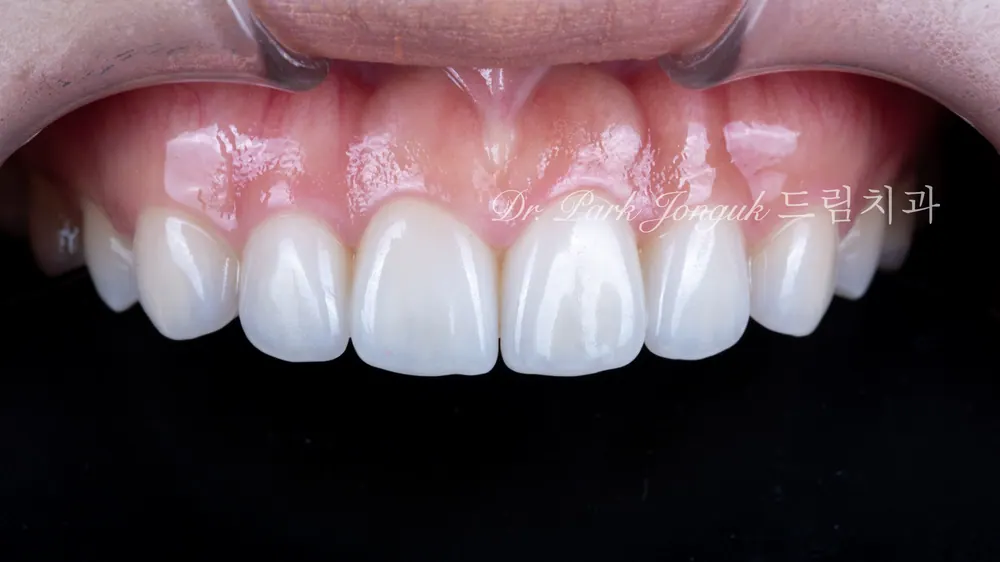
1. Sensitivity (hypersensitivity)
This is the concern patients raise most often.
Veneers involve lightly reshaping the tooth surface and then bonding ceramic onto it.
If too much enamel is removed at this stage, the dentin becomes exposed.
Because the dentin is directly connected to the nerve canal, this causes a sensitive feeling.
The key is the amount of reduction. If the reshaping stays within 0.3–0.5mm, sensitivity is rare.
No-prep veneers involve no reduction at all, so the chance of sensitivity is even lower.
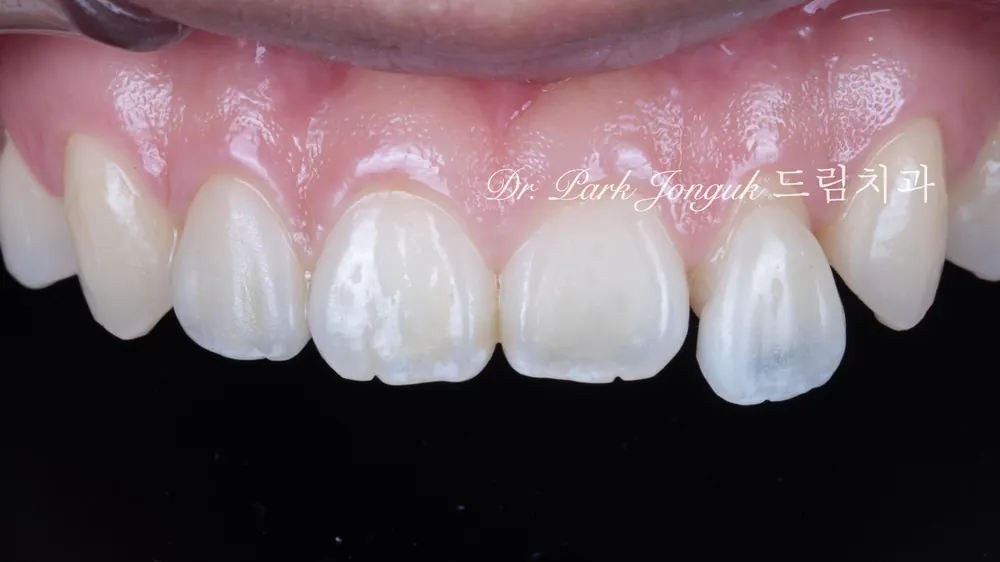
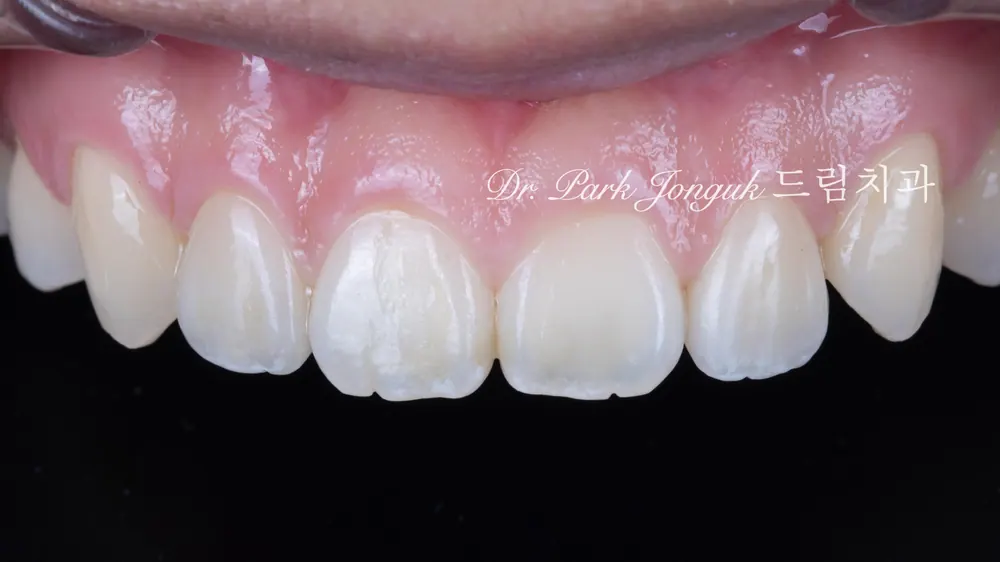
2. Gum irritation and inflammation
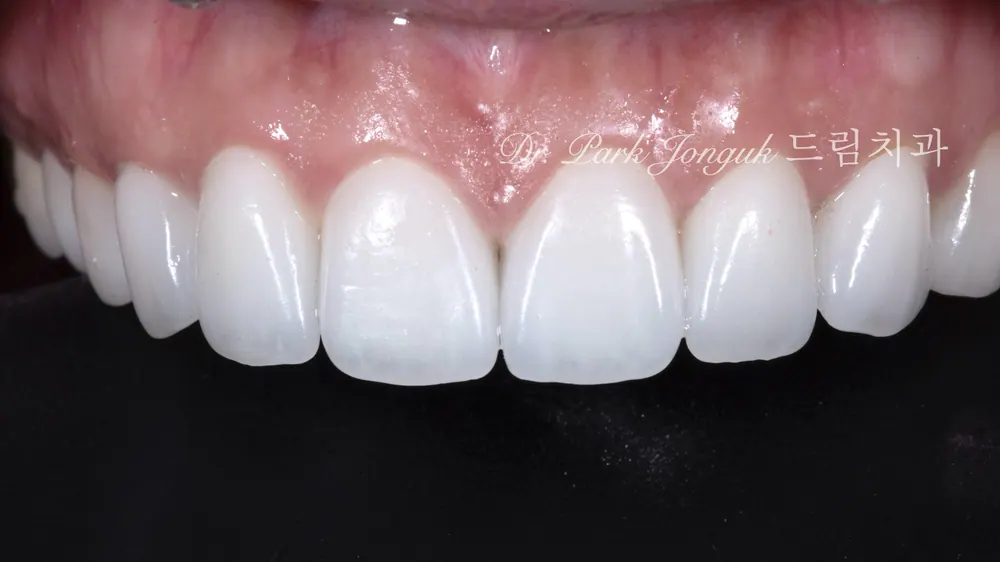
If the margin where the veneer meets the gum is not smooth, food gets trapped and the gum swells.
A poorly formed margin either presses the veneer's edge into the gum, or
leaves a step where food can get caught.
A correctly formed margin is one where the veneer flows naturally into the gumline.
This difference comes down to the precision of the margin design.
This is one of the reasons a build-up style veneer has an advantage.
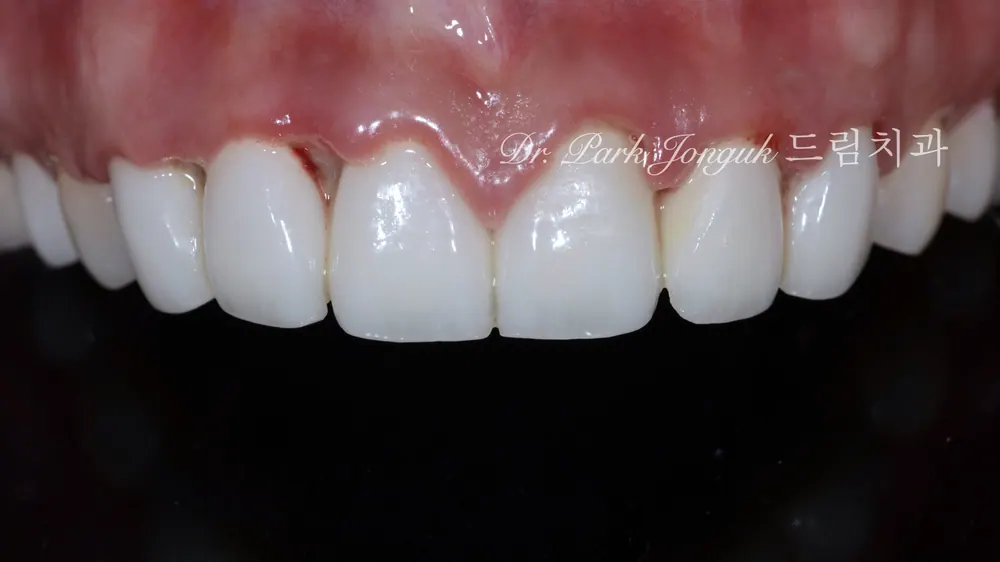
3. Debonding (coming loose)
This is when the ceramic comes off.
There are usually three causes.
First, poor adhesive technique.
Second, an incorrect bite (occlusion), where the upper and lower teeth meet in the wrong position.
Third, the patient's habits.
Habits such as teeth grinding or nail biting raise the risk of the veneer coming loose.
When properly bonded, veneers don't easily come loose in everyday life.
Trauma or a strong impact is an exception, however.
If you grind your teeth at night, we recommend using a night guard as well.
4. Chipping
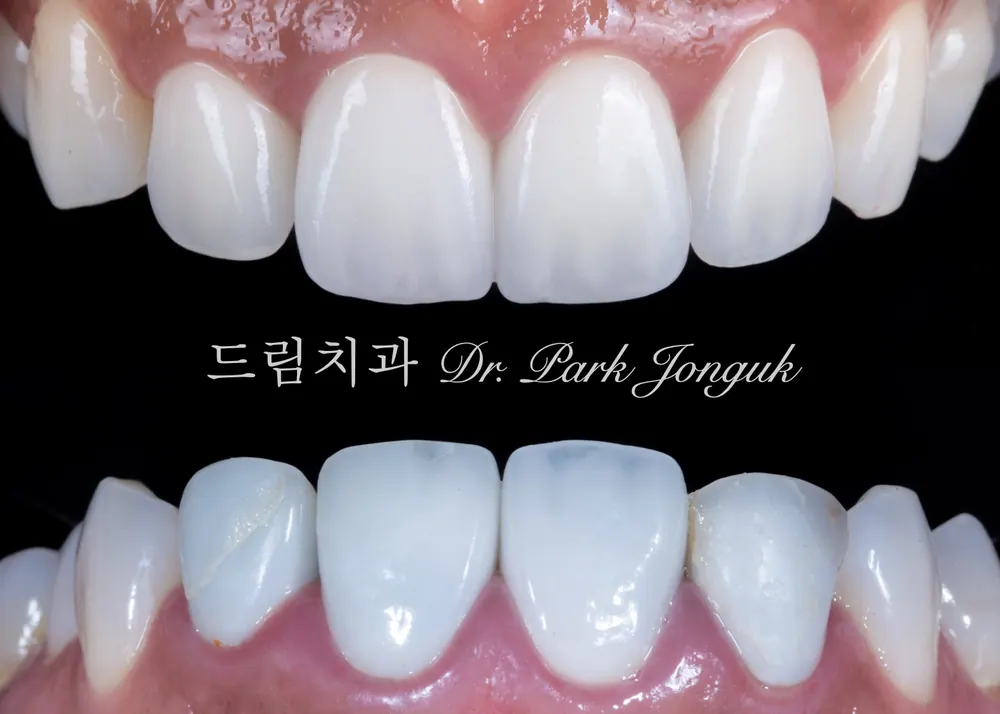
This is when part of the ceramic chips.
The biggest cause is thickness.
Too thin, and the risk of chipping is high;
too thick, and it looks unnatural.
The thickness must be precisely adjusted within 0.3–0.7mm to match the patient's bite and habits.
Another cause is the material.
A ceramic that offers both strength and aesthetics must be selected.
5. Risk of cavities
Having veneers does not mean cavities can no longer form.
In fact, if food gets trapped at the margin below the gumline, cavities can develop.
In this respect, the patient's own brushing habits matter most.
Using aids such as floss, interdental brushes, and a water flosser together greatly lowers the rate of cavities.
The surest way to avoid side effects
If you've followed these five points, you'll notice one thing they have in common.
Most side effects depend on 'how the procedure was performed.'
Precise diagnosis, minimal reduction (no-prep if possible),
accurate margin design, thickness and material selection matched to the patient's bite and habits,
and post-treatment care education — when these five elements are in place, side effects rarely occur.
Frequently Asked Questions (FAQ)
Q1. I'm putting off veneers because I'm scared of the side effects. Is it better not to get them?
It's not the side effects themselves that are frightening — it's a poorly performed procedure.
If you receive a thorough diagnosis and decide on the approach that fits you (reduction vs. no-prep, one or two teeth vs. multiple, etc.) before proceeding,
side effects rarely occur.
Rather than putting it off, we recommend starting with a diagnosis at a clinic you trust.
Q2. How common are side effects?
In our clinical experience, temporary sensitivity lasting 1–2 weeks is the most common,
while debonding, chipping, and gum inflammation together occur in under 1% of cases.
However, this figure applies only when treatment proceeds after thorough pre-treatment diagnosis, and only for patients who meet the right conditions.
Q3. If a side effect occurs, can the veneer be removed?
Yes. Using a laser, it can be removed safely without damaging the tooth.
However, we don't recommend removing and reattaching veneers frequently after the initial treatment. Getting the first procedure right is what matters most.
In closing
Veneer side effects definitely exist.
But with accurate diagnosis and precise treatment behind it, they are an area that can largely be avoided.
Dream Dental Clinic in Apgujeong has focused on veneer and cosmetic dentistry for 20 years.
For every case, we go through precise diagnosis before proposing an approach suited to the patient's tooth condition and lifestyle habits.
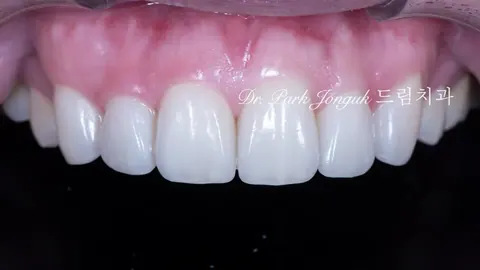
If you're considering veneer treatment or worried about side effects, feel free to come in for a consultation anytime. (Photo 5)
Park Jonguk / Conservative Dentistry Clinical Practice / Director, Lamista Academy / Medical Director, Dream Dental Clinic, Apgujeong
https://dreamlaminate.co.kr
This article is a clinical note written by Dr. Park Jonguk of Dream Dental Clinic, Gangnam; the original was published on his blog. The photographs shown are real cases he treated. Results vary with each patient’s condition, and every procedure carries the possibility of individual variation and side effects.
Quick Consult
Request a Callback
Leave your number and we will call you back during clinic hours.
Request Received
We will contact you during clinic hours. For urgent matters, please call +82-2-3448-0028.