
Veneer Side Effects — Types, Causes, and Prevention All in One Place
Among people considering veneer treatment, many people
search first for either "is it really true there are no veneer side effects,"
or "if there are, what side effects occur."
Information on side effects tends to be scattered in fragments,
often making the decision even harder.
Today, I want to organize the representative side effects of veneers, their causes, prevention methods, and how to respond, all from a clinical perspective, in one place.
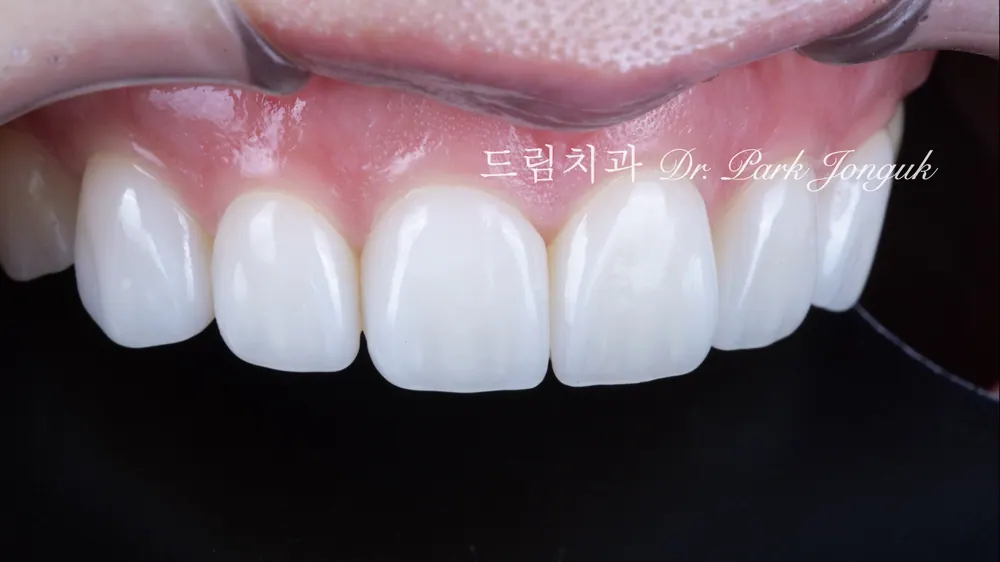
Key answer (at a glance)
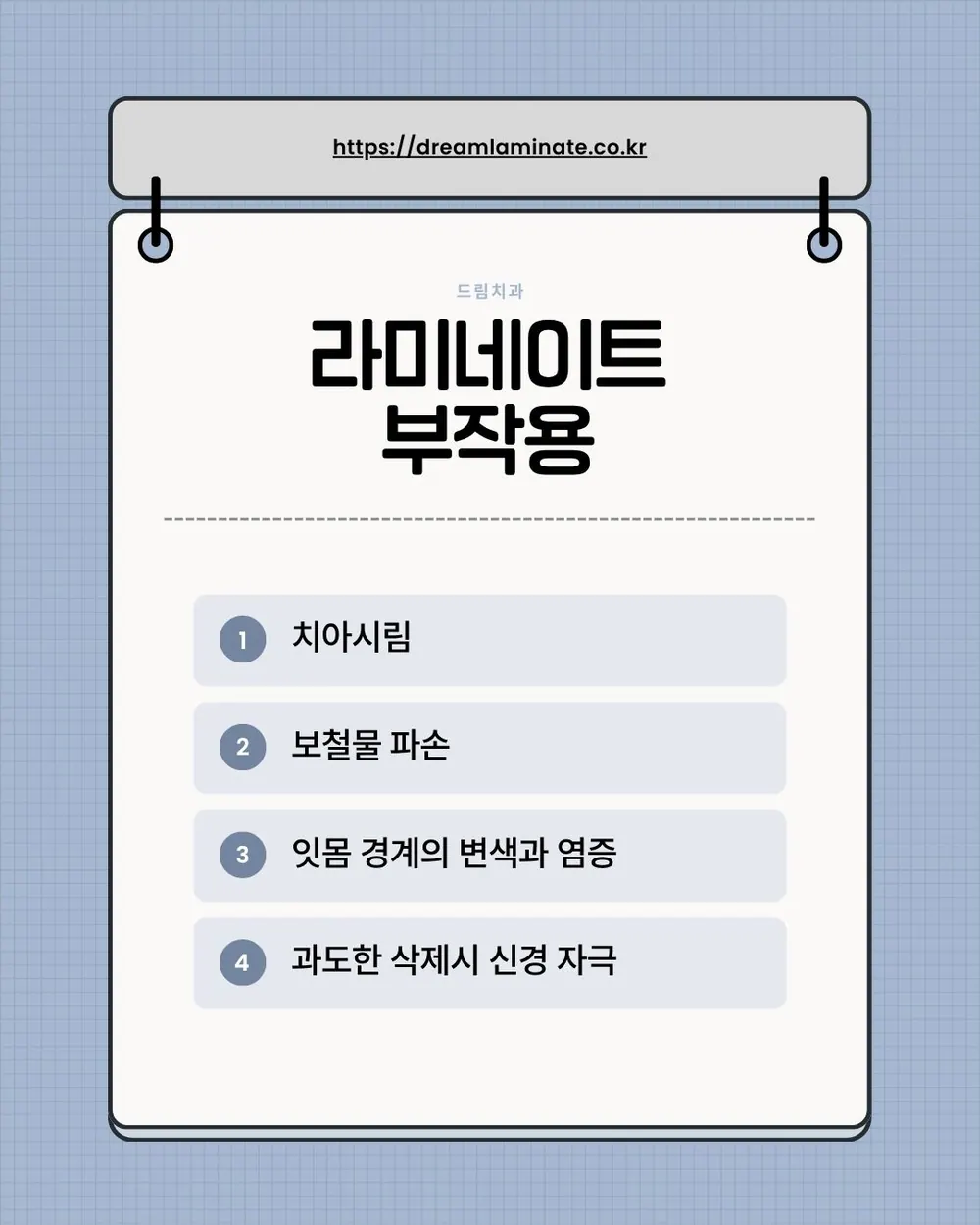
The representative side effects of veneers are
1. Tooth sensitivity
2. Debonding or breakage of the restoration
3. Discoloration or inflammation at the gum border
4. Possible nerve irritation with excessive reduction
— these four.
Most arise from excessive tooth reduction, inaccurate bonding (at the margin), or insufficient day-to-day care,
and precise diagnosis along with proper aftercare can substantially lower the likelihood of these occurring.
Treatment outcomes vary by individual, and an accurate diagnosis requires an in-person examination.
What kinds of veneer side effects are there?
The representative side effects of veneers are tooth sensitivity, debonding or breakage of the restoration, discoloration or inflammation at the gum border, and possible nerve irritation with excessive reduction
— these four.
First, tooth sensitivity. Temporary sensitivity to cold food for a few days right after the procedure is the most common symptom.
In most cases it settles down naturally, but in some cases it becomes chronic.
Second, debonding or breakage of the restoration. Depending on bonding precision, the bite, and habits,
a veneer may shift slightly or come off entirely,
or it may crack under a strong impact.
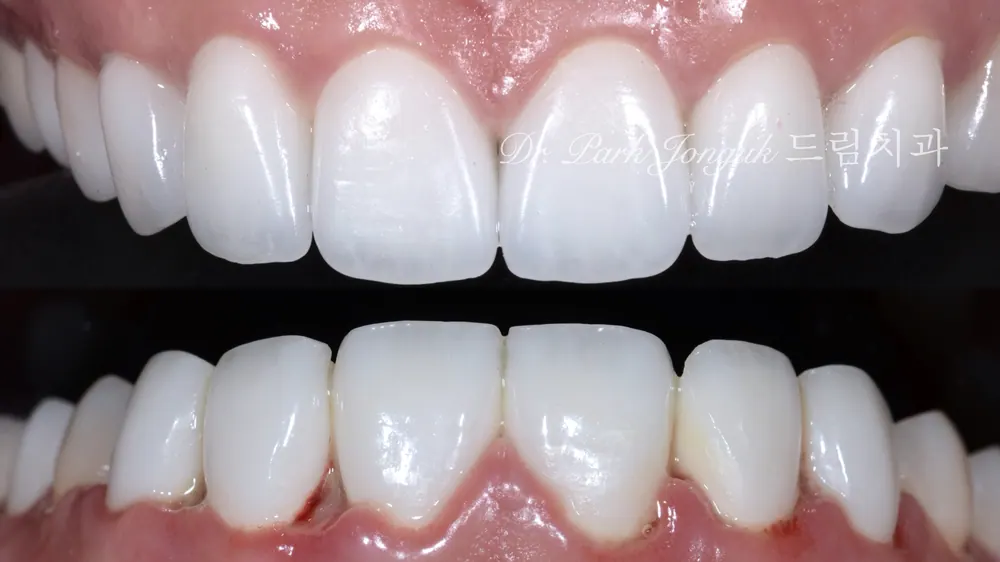
Third, discoloration or inflammation at the gum border. If the margin (the border at the gum) is loose or has a step,
food debris and bacteria accumulate there, leading to gum swelling or bleeding.
Fourth, possible nerve irritation with excessive reduction.
If the tooth is trimmed more than the case calls for, it can irritate the nerve,
and in rare cases, this leads to chronic pain.
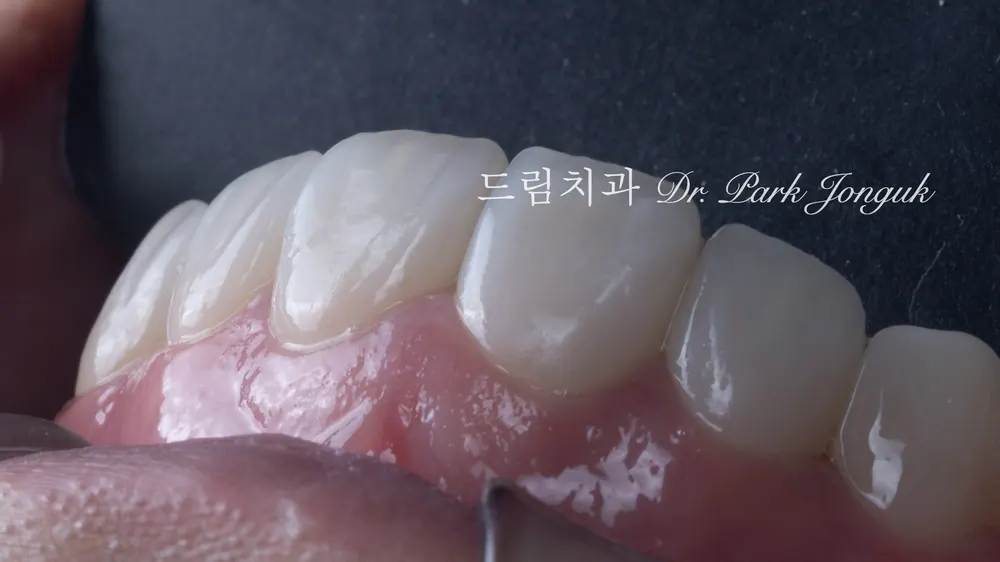
Why do veneer side effects happen?
Side effects mainly arise from excessive tooth reduction, inaccurate bonding (at the margin),
an unsuitable choice of material, habits like nighttime teeth grinding or biting hard food,
and insufficient aftercare.
The largest share of the cause lies in the details of the diagnosis and procedure stages.
Even though it's called by the same name, "veneer," the depth of diagnosis, the precision of the margin, and the suitability of the ceramic chosen
differ from clinic to clinic.
A patient's daily habits are also a factor that can bring on side effects sooner.
For someone with nighttime teeth grinding who goes without a night guard,
or who habitually bites down on hard food with the front teeth, this is the biggest cause of debonding and breakage.
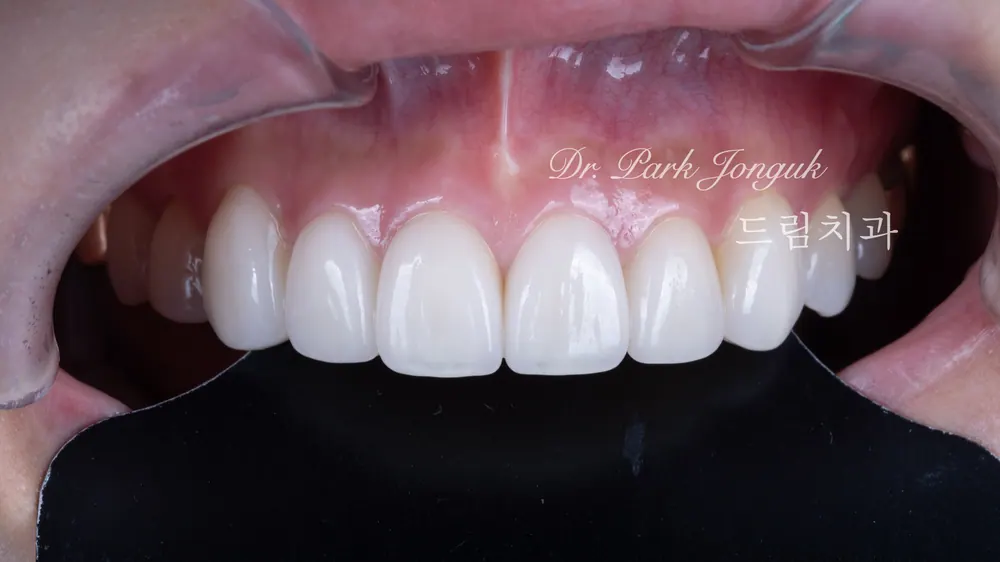
What can be done to reduce veneer side effects?
Deciding on the right procedure for the case through precise diagnosis,
considering a minimal-reduction approach wherever possible,
and combining regular 6-month checkups with daily care (a night guard, good habits) can substantially lower the likelihood of side effects.
The key to prevention comes down to three things.
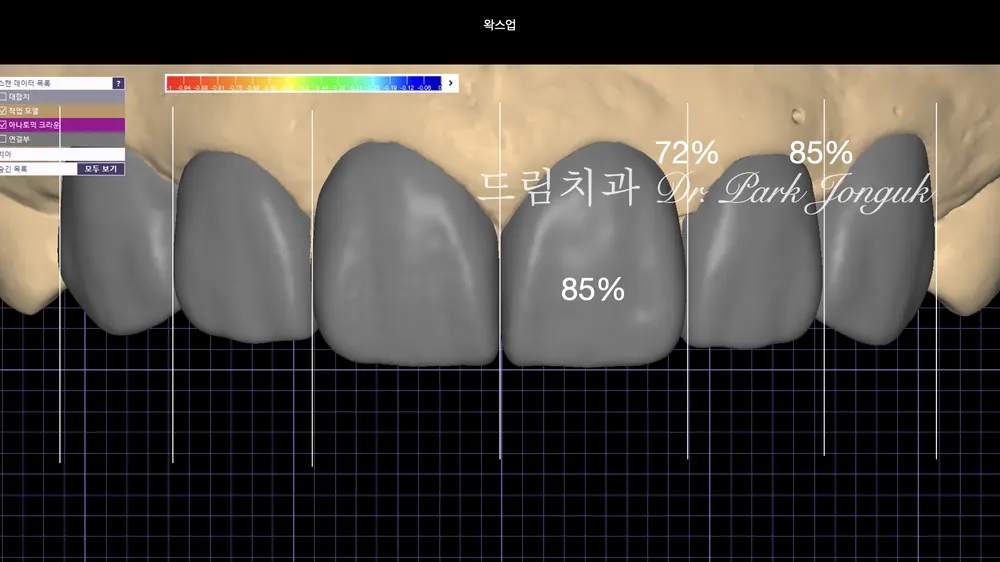
First, precision in diagnosis. Precise photographs, digital scans, and an evaluation of the smile line, gumline, and bite should all be carried out together,
which can reduce unexpected symptoms after the procedure.
Second, a procedure method matched to the case. Among no-prep, mini-prep, and standard prep,
the method suited to the patient's own case should be chosen — simply "not reducing the tooth at all" doesn't automatically lead to a natural result.
Third, aftercare. Regular 6-month checkups, wearing a night guard, and avoiding hard foods all determine how stable the veneer stays.
What should I do if a side effect has already occurred?
If a side effect appears, the principle is to return to the clinic quickly rather than trying to handle it yourself.
If sensitivity becomes chronic,
you should get a new diagnosis to check the cause of the sensitive area.
It needs to be checked whether decay, nerve irritation, or a bite problem is also involved.
For debonding or breakage, returning to the clinic as quickly as possible for rebonding or refabrication is the usual response.
Attempting to rebond a detached veneer on your own isn't recommended.
For gum inflammation or bleeding, checking the margin and treating the gum comes first,
and if a margin defect is confirmed, the veneer itself may need to be refabricated.
What are the side-effect cases seen most often in the clinic?
The side-effect case observed most often in the clinic
is "sensitivity in the first few days," which in most cases settles down naturally.
Cases that develop into chronic sensitivity often turn out to be ones where, at the diagnosis stage,
the check of decay and nerve condition wasn't thorough enough.
The frequency of debonding and breakage is observed to be highest among patients who don't use a night guard despite grinding their teeth at night.
Gum inflammation often appears not right after the procedure, but between 6 months and 1 year later, as margin defects accumulate.
Frequently Asked Questions (FAQ)
Q1. Are there truly no side effects with no-prep veneers?
There's no such thing as "a procedure with absolutely no side effects." No-prep has the advantage of minimal tooth loss, but
depending on margin precision and care, the possibility of side effects still exists.
Q2. Is veneer sensitivity permanent?
In most cases it settles down naturally within a few days. If it becomes chronic, a check at the diagnosis stage is needed.
Q3. What about redo treatment or warranties if a side effect occurs?
This varies by clinic. It's reasonable to check the warranty period and criteria for retreatment before deciding on the procedure.
Q4. Can all the veneers be removed and redone from scratch?
A redo is possible in some cases, but it depends on the original amount of reduction and bonding precision, so a diagnosis is needed.
Key takeaways
The representative side effects of veneers are 1. tooth sensitivity, 2. debonding/breakage, 3. gum discoloration/inflammation, 4. possible nerve irritation with excessive reduction.
The causes are excessive reduction, inaccurate bonding, unsuitable materials, daily habits, and insufficient care — five in total.
The key to prevention is precise diagnosis, a procedure method matched to the case, and regular 6-month checkups.
There's no such thing as "a procedure with no side effects" — the clinical goal is to lower the likelihood of them occurring.
Treatment outcomes vary greatly by individual, and accurate diagnosis and response require an in-person examination.
In closing
How likely veneer side effects are to occur depends heavily on the precision of the diagnosis, procedure, and care.
Rather than fearing side effects themselves, it's more reasonable to make your decision knowing which details actually reduce them.
Treatment outcomes and the likelihood of side effects vary greatly by individual, and accurate diagnosis is an area that requires an in-person examination.
What part of veneer side effects has worried you the most?
Leave a comment and I'll answer step by step from a clinical perspective.
Park Jonguk | Director, Dream Dental Clinic, Apgujeong | 20 years of clinical practice | Author of a related clinical textbook | M.S.
─────────────────────────────
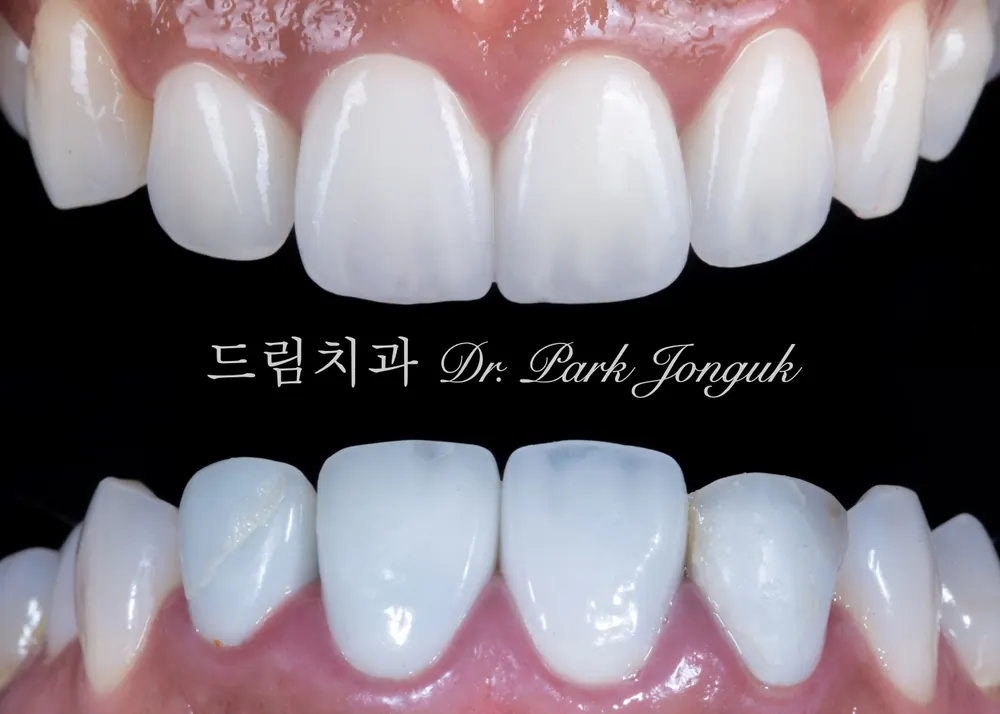
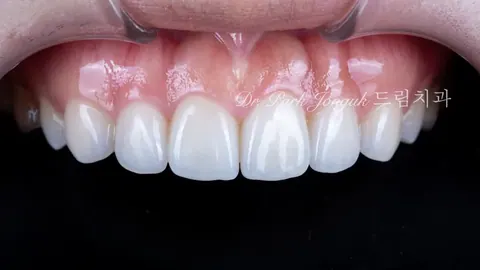
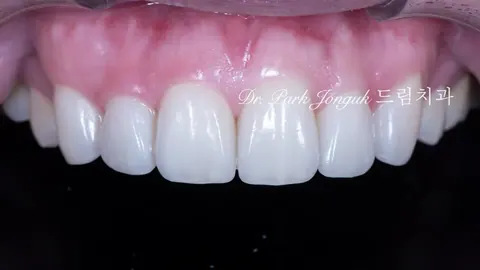
This article is a clinical note written by Dr. Park Jonguk of Dream Dental Clinic, Gangnam; the original was published on his blog. The photographs shown are real cases he treated. Results vary with each patient’s condition, and every procedure carries the possibility of individual variation and side effects.
Quick Consult
Request a Callback
Leave your number and we will call you back during clinic hours.
Request Received
We will contact you during clinic hours. For urgent matters, please call +82-2-3448-0028.