
When a Front Tooth Is Extracted but an Implant Isn't an Option — The Maryland Bridge
Hello, I'm Park Jonguk, DDS, MS, director of Dream Dental Clinic.
This blog usually talks about veneers, but today I'd like to cover something a bit different — a case where a front tooth needed to be extracted and an implant was difficult. These days, extracting a tooth is often treated as if an implant is the automatic next step. But in practice, I often come across front teeth where an implant isn't really a good answer. Two cases I finished treating recently happen to be good examples, so let me walk through the story using these two cases.
An Implant Isn't Always the Right Answer
An implant is a treatment that places a post into the jawbone. Naturally, it's only possible if there's enough bone to support it. But a large share of front-tooth extractions happen precisely because the jawbone has resorbed. The bone that should be holding the tooth in place has already largely disappeared by the time the tooth is extracted. You might ask whether a bone graft could solve that. Of course, that's an option. But the lower front teeth naturally sit in an area where the bone is narrow and the space between teeth is tight to begin with, so if a lot of bone has already resorbed, an implant remains a tough proposition even with a graft added. It becomes a genuine question — is it really right to keep insisting on an implant while continually expanding the scope of surgery?
But
there's a method besides an implant — one that's actually been around for decades. It's a treatment called the Maryland Bridge.
A Method That Bonds a Wing to the Adjacent Tooth to Connect a New Tooth
A Maryland Bridge works by bonding a thin wing to the back of the tooth next to the missing one, then attaching a single replacement tooth to that wing. You can think of it like an adhesive shelf that mounts without drilling holes in the wall. In the past, this wing was made of metal, which had the drawback of making the tooth look slightly dark, but these days it's made of high-strength ceramic, so that problem no longer exists. The biggest advantages are that the adjacent tooth is barely reduced at all, and there's no surgery involved.
Gum Shape Needs to Be Set Before the Tooth Is Even Extracted
Before I get into the cases themselves, let me share something that's genuinely important in extraction treatment but that surprisingly few people know. As the gum in the spot where a tooth was extracted heals, it flattens and settles down. The gum around a tooth naturally traces a soft curve as it wraps around the tooth, but once the tooth it was wrapping around is gone, that curve collapses. A gum that has once settled and flattened is very difficult to raise back up. No matter how pretty a tooth you make to fill the gap, if the gum curve has collapsed, that area will look somehow off. That's because a tooth only looks natural when it appears to rise up out of the gum.
So in cases like this, I make and bond a temporary tooth right at the extraction site, at the very time of extraction. While the gum heals, the temporary tooth supports that curve from the inside. Plaster has to be shaped before it sets — once it's set, it's too late. The gum works exactly the same way.
1. Lower Front Tooth Case
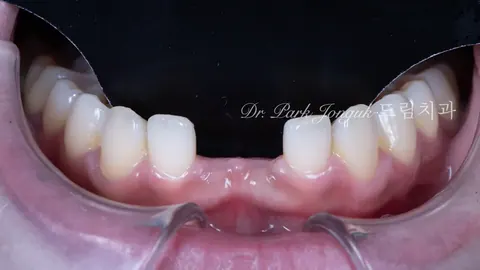
In the first case, the problem was a single lower front tooth. The jawbone had resorbed significantly and the tooth had become loose, and leaving it any longer risked harming the adjacent teeth as well, so we decided to extract it. Given the bone condition, this was a case where an implant would have been difficult. Right after extraction, we made a temporary tooth on the spot to shape the gum, and a month later, once the gum had stabilized, we finished by bonding a Maryland Bridge with a single wing on the back of the adjacent tooth.
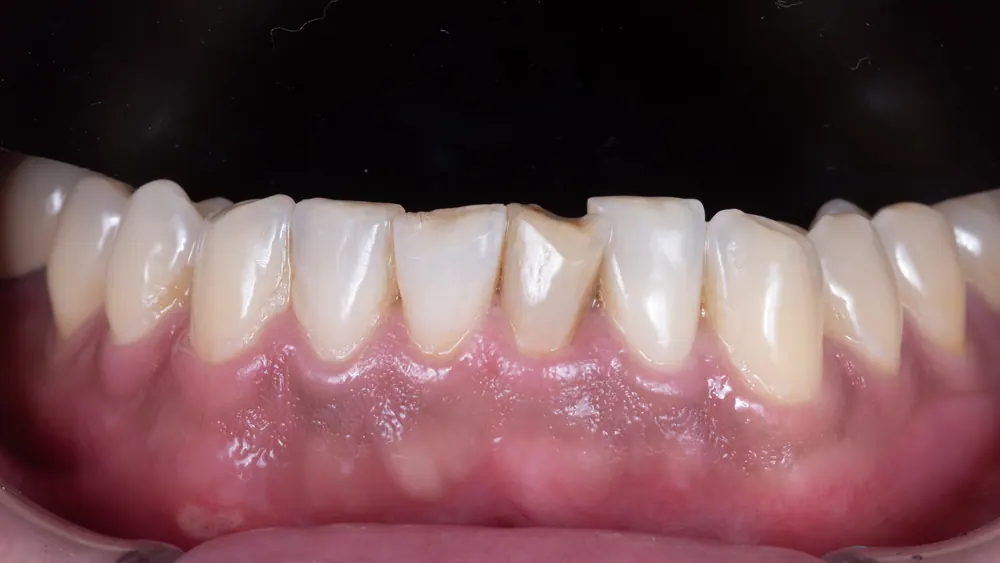
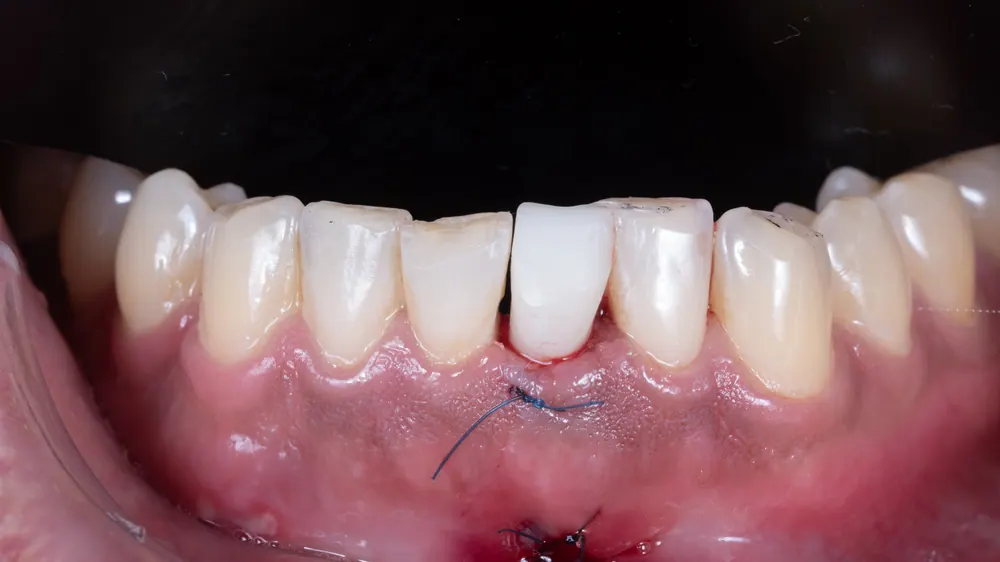
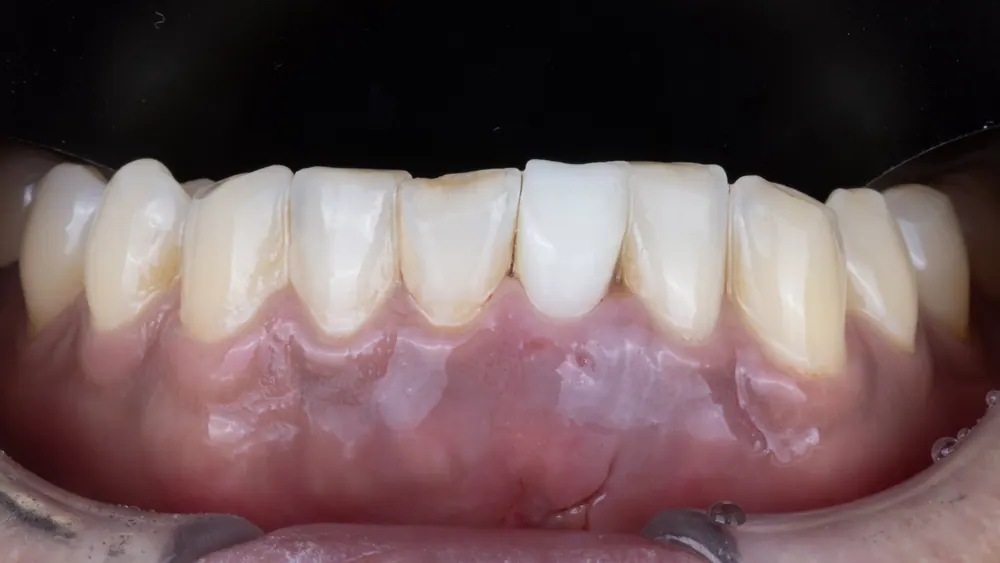
Why make only one wing? Wouldn't it be sturdier to bond one on each side?
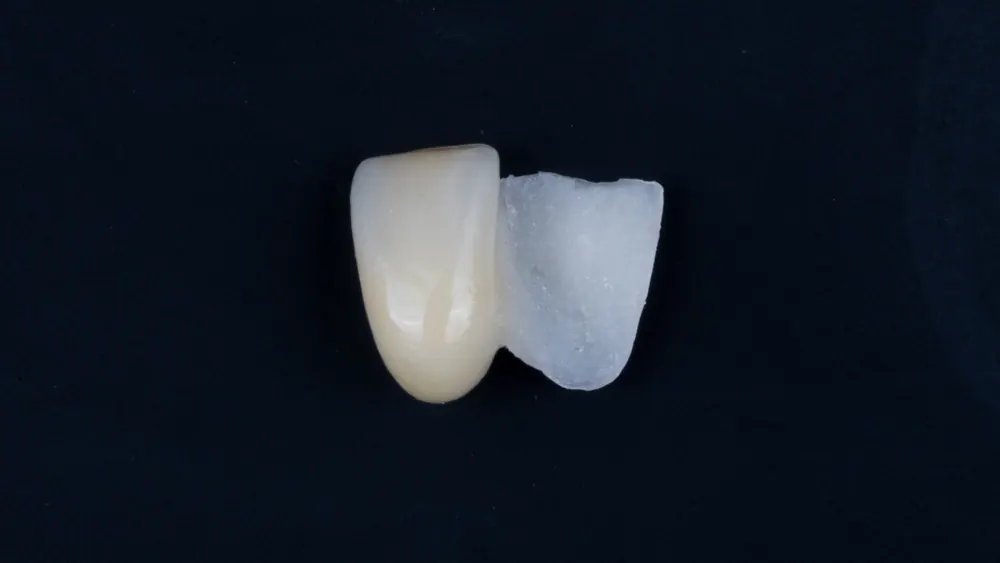
Actually, it's the opposite. Lower front teeth each move slightly and independently every time you chew. If a wing is bonded on both sides, this slight difference in movement keeps flexing the bonded surface, and eventually one wing comes loose first. The real problem is that patients often don't even realize it's come loose, and a cavity develops in that gap. With just one wing, the bridge moves together with that tooth as a single unit, so this doesn't happen. In fact, clinical studies have consistently shown that the single-wing design lasts longer.
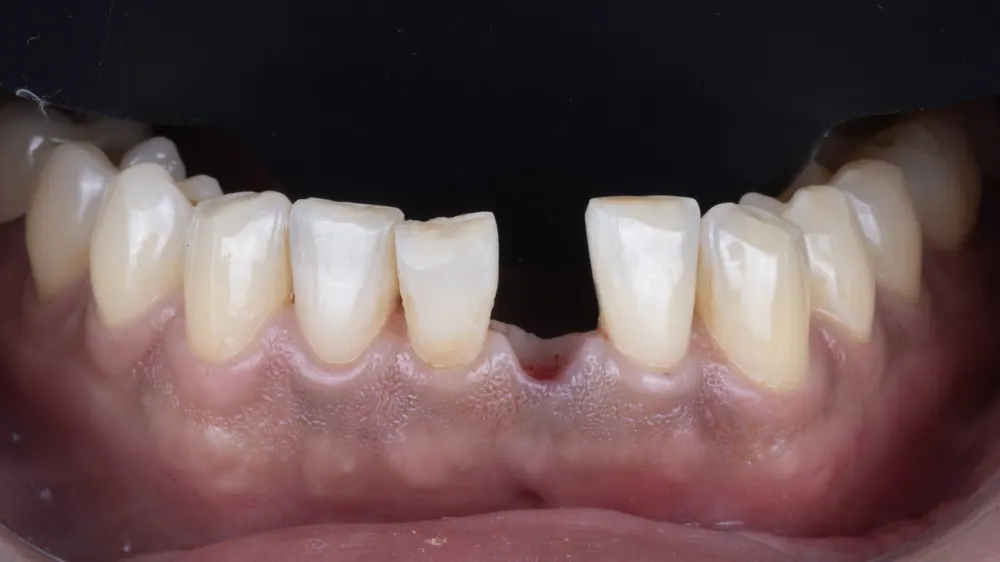
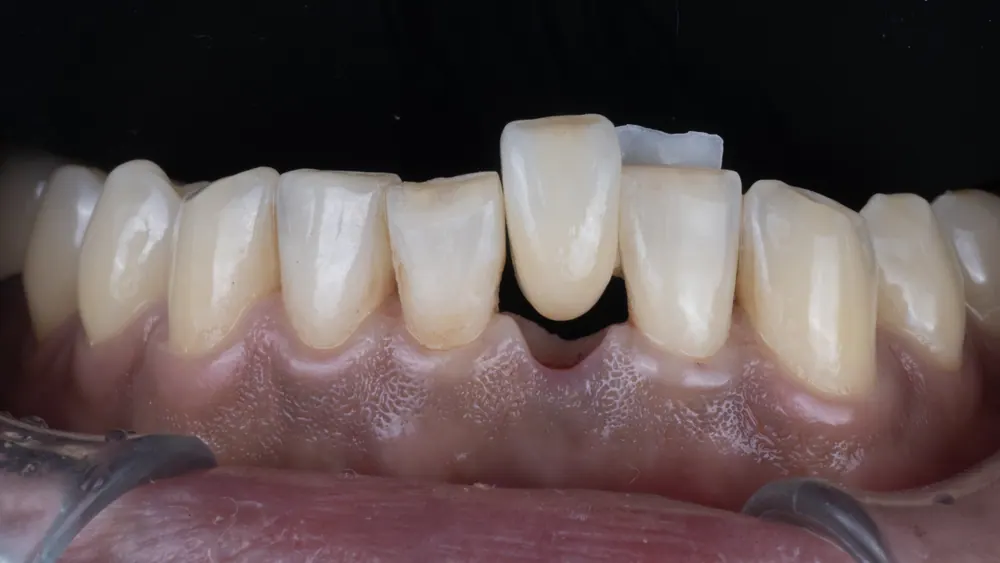
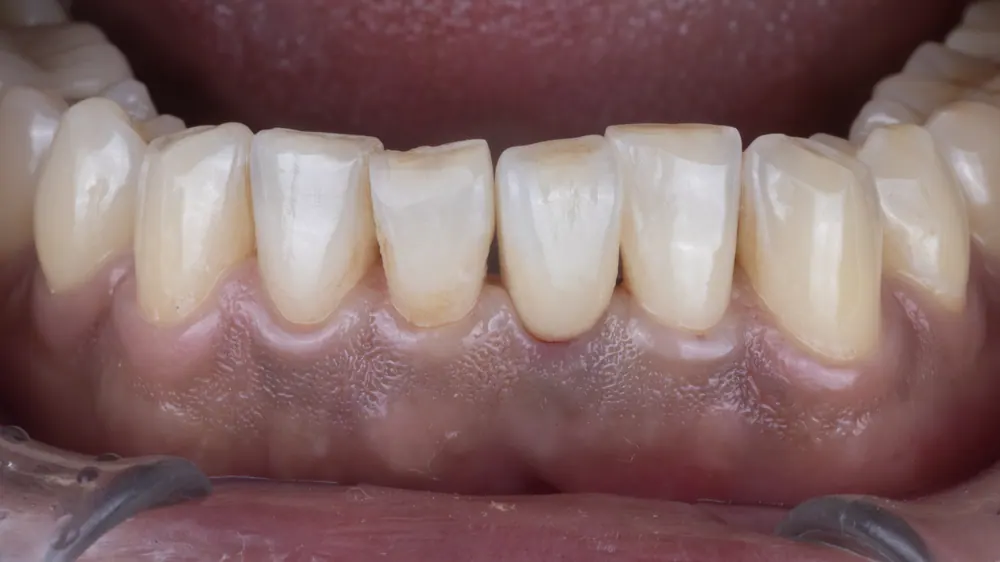
For lower teeth, when the bite force is light, even two teeth can be replaced this way.
2. Upper Front Tooth Case — Bonding the Wing to the Front Surface
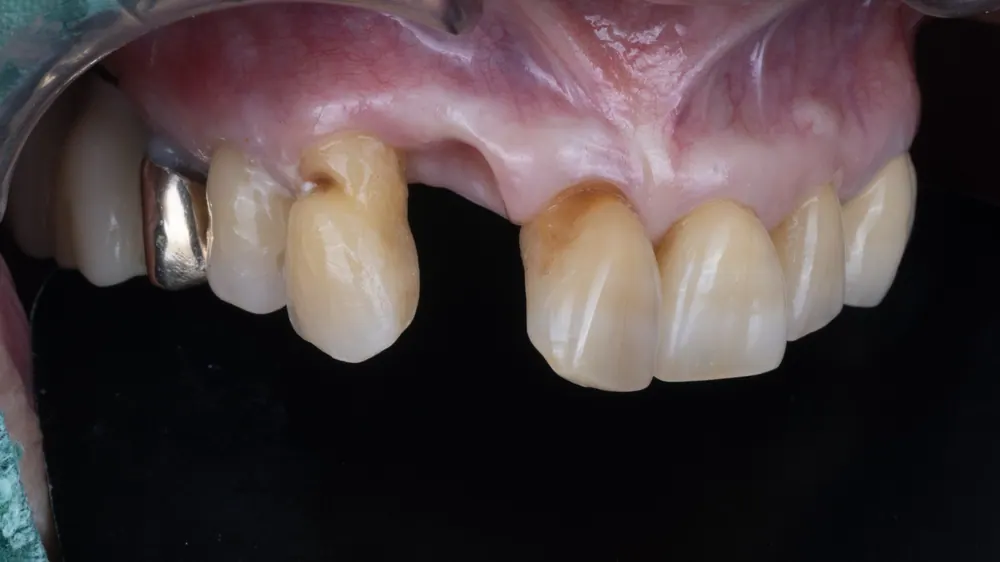
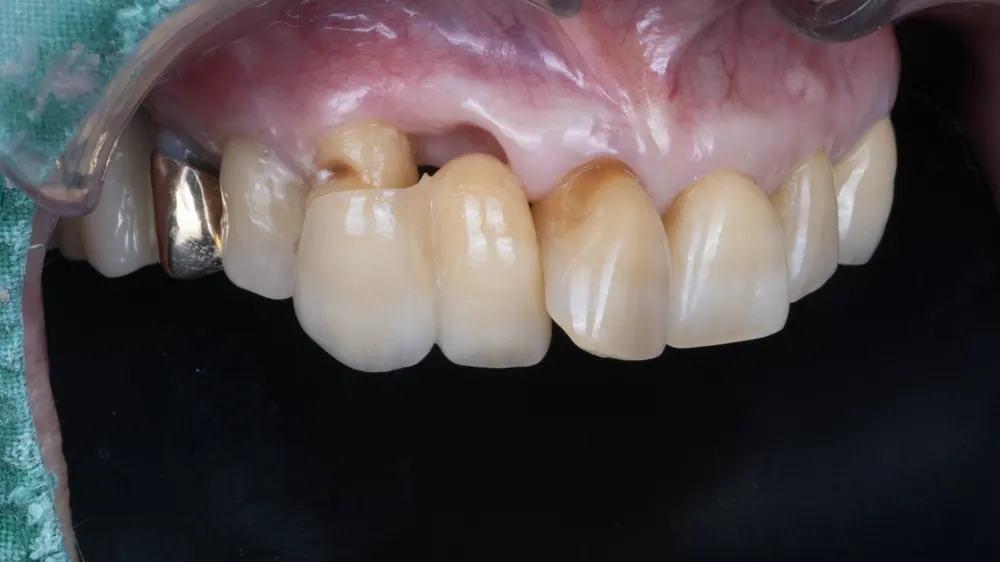
The second case involved the tooth next to an upper front tooth — a spot that shows right at the front when smiling. Just like before, a great deal of bone had resorbed, making an implant difficult, and just as in the first case, we set the gum shape with a temporary tooth on the day of extraction.
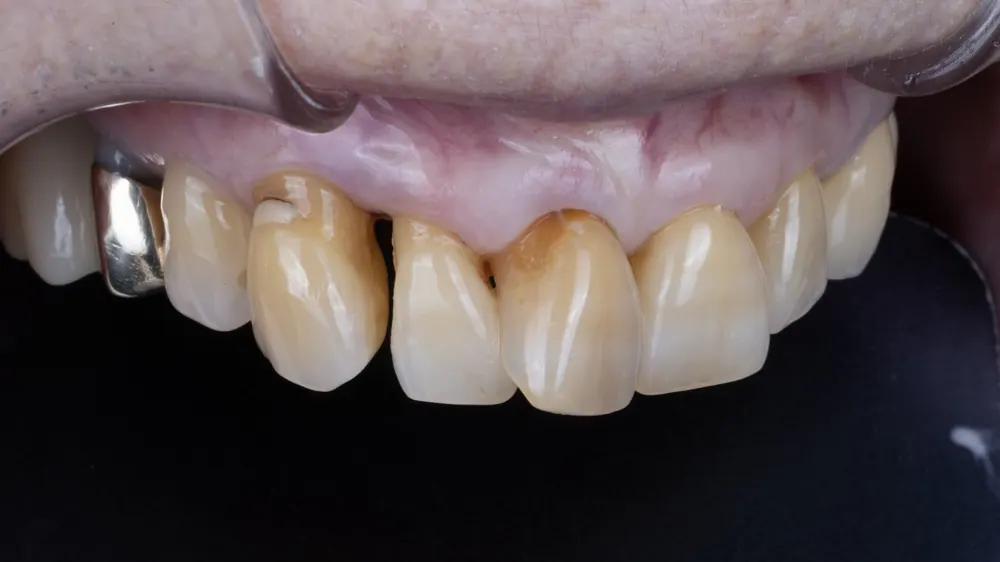
But in this case, where to bond the wing was the problem. The back surface of an upper front tooth is where the edge of the lower tooth comes into contact. Depending on the bite relationship, there sometimes isn't enough room for a wing to fit there. That was exactly the situation in this case.
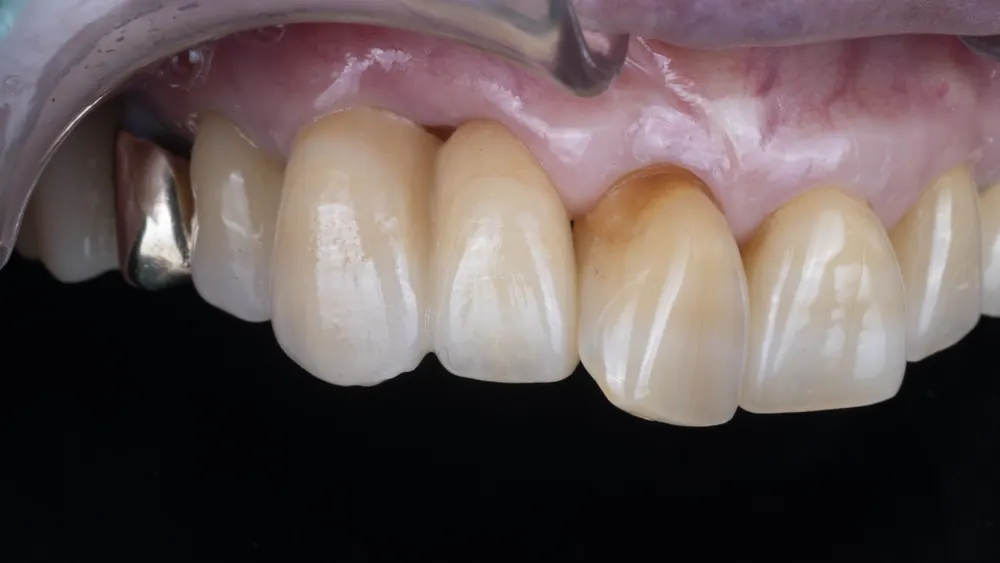
So I changed my approach. Instead of the back surface, I bonded the wing to the front surface, on the lip side. I bonded a thin ceramic wing, like a veneer, to the front surface of the adjacent canine, and attached a single replacement tooth to it. I call this method a veneer bridge. It's essentially an adaptation of the Maryland Bridge.
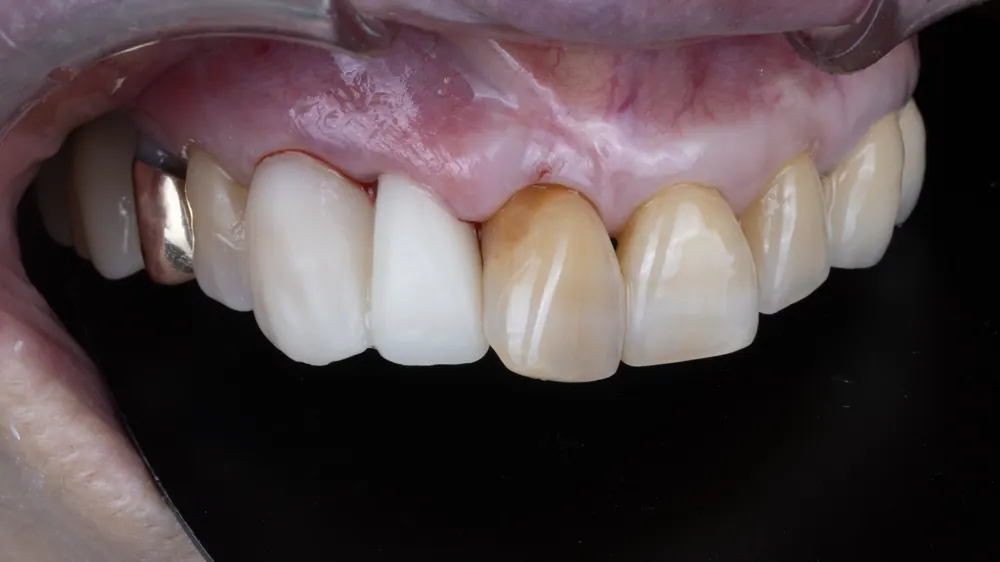
Wouldn't bonding it to the front surface be noticeable?
Making the wing look natural ultimately comes down to the same work as making a veneer — matching the color, translucency, and surface texture to the adjacent tooth. It's the work I've been doing for more than 20 years. The wing on the canine sits naturally, just like a veneer, and the tooth attached to it rises up out of the gum curve that was set in place beforehand. Unless it's the patient herself, it's hard to tell which tooth is the one that was made.
Of course, this treatment isn't the answer for every extraction case. For molar areas that bear heavy chewing force, patients with severe teeth grinding, or cases where the adjacent tooth meant to support the wing isn't in good condition, an implant or another method may be better. Diagnosis has to come first, no matter what. This is a part where it's hard to say flatly that one side is simply better.
I could go on endlessly talking about cases, but what I wanted to share today comes down to about this much, so I'll wrap up the article here.
If you've been told that a front tooth needs to be extracted,
please don't be too discouraged by hearing that an implant would be difficult,
and try asking this instead.
"How will the gum shape at the extraction site be preserved? Are there any options besides an implant?"
On the very day a tooth is extracted, the shape of the gum already begins to be determined. And the naturalness of the tooth that will eventually sit on that gum ultimately comes from those same small things I always talk about with veneers — color, translucency, and surface texture. Restoring the spot where a single tooth once was, so seamlessly that no one can tell, may in the end be exactly the same work as making a veneer.
This article is a clinical note written by Dr. Park Jonguk of Dream Dental Clinic, Gangnam; the original was published on his blog. The photographs shown are real cases he treated. Results vary with each patient’s condition, and every procedure carries the possibility of individual variation and side effects.
Quick Consult
Request a Callback
Leave your number and we will call you back during clinic hours.
Request Received
We will contact you during clinic hours. For urgent matters, please call +82-2-3448-0028.