
20 Years of Veneers in Gangnam: The Story So Far
Hello, I'm Dr. Park Jonguk, director of Dream Dental Clinic.
It's been over 20 years since I started veneer treatment in Apgujeong, Gangnam. 29 years as a dentist, 20 years of that focused on veneers.
It's remarkable to me that I've spent 20 years leading esthetic dental treatment trends in Gangnam, and looking back, a lot has happened along the way.
The early days
A few years after I started veneer treatment in Apgujeong in 2006, the phrase "veneer side effects" became a huge issue in the media and online. In particular, once a certain celebrity tearfully went on air urging people not to get veneers, a negative atmosphere around veneers began.
The biggest reason this happened, I think, was that a certain large dental clinic deceived patients by treating cases that weren't actually suited to veneers "as if" they were veneer treatment.
The goal of veneers is thorough diagnosis followed by "enamel bonding" while minimizing tooth reduction based on that diagnosis. When more reduction is needed, it becomes an "all-ceramic crown" instead. When a case is genuinely suited to veneers, there are rarely many side effects. Being suited to veneers means the treatment can be done with minimal tooth reduction.
The problem arises when someone tries to do with veneers what can't be done with veneers — that requires more tooth reduction, and more reduction leads to problems like tooth sensitivity, discoloration, gum inflammation, and detachment.
In the end, the "veneer side effects" of that period weren't side effects of veneers themselves — they were side effects of forcing cases that shouldn't have been done that way.
That tearful celebrity, too, believed she'd had veneer treatment because that's what the dental clinic told her, but in fact she'd had an "all-ceramic crown" — and an excessive one at that.
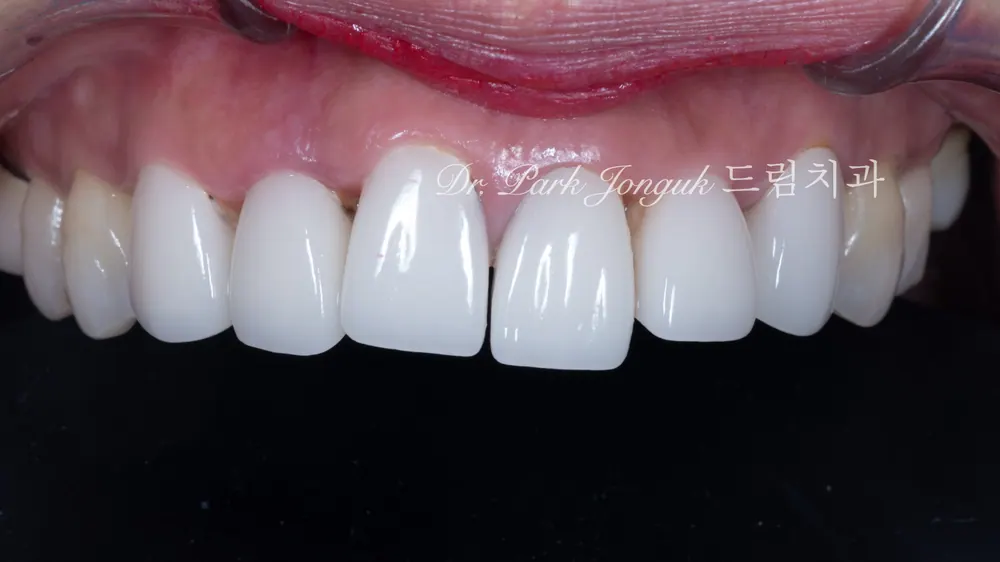
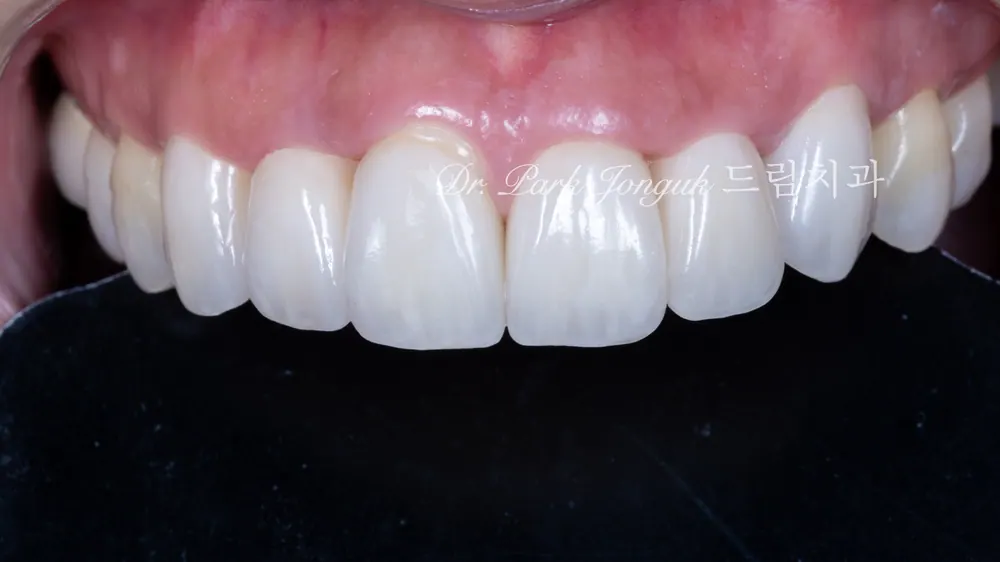
The early 2010s
This seems to have been the era of the rush of Chinese patients. Our clinic even had a Chinese interpreter on staff at the time.
Since patients coming from abroad inevitably had limited time to stay, fast treatment was what mattered most in that period.
It was a period when I experienced firsthand just how many problems come from "fast, fast, done in a day" in esthetic treatment. To produce results quickly, rather than putting care into each individual step, veneers ended up being made to a level where they could simply be "stuck on." And that gets presented to the patient as if it were beautiful.
Looking back over my 20 years of veneer treatment, I think this was probably the darkest chapter. After doing a number of cases this way, I became strongly convinced this wasn't the right approach, and in my case I switched to a method where patients who could stay long-term did so, or otherwise went home with temporary teeth and returned weeks later to finish treatment.
During this period there were truly many different side effects "caused by the treatment itself."
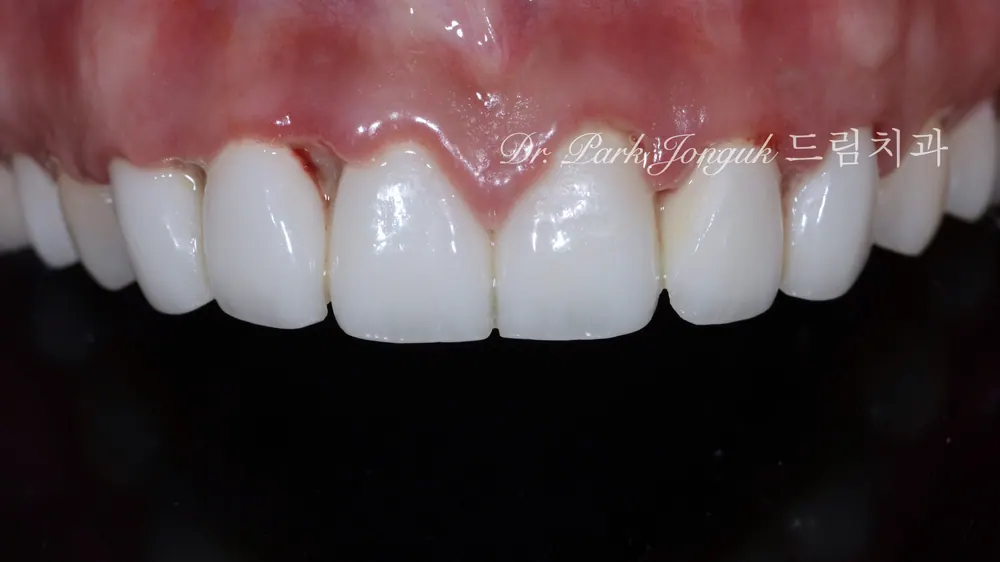
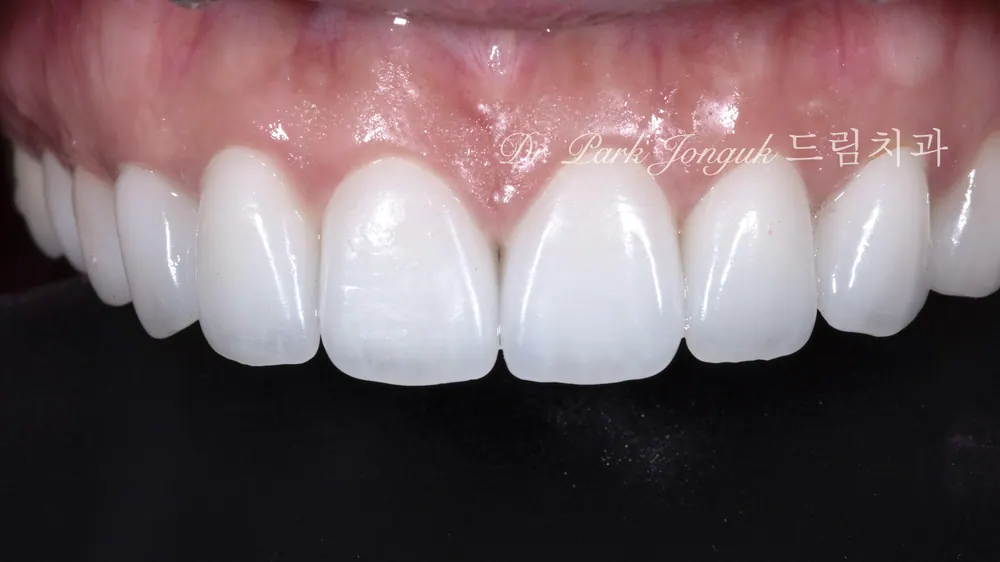
The mid-2010s
This was the era of the low-price onslaught. With implants these days, the low prices are honestly wild — 250,000 won, 300,000 won. As an aside, if you actually visit those clinics, they tack on bone grafts you don't even need and this and that add-on until they end up charging the full price anyway.
As issues like MERS and the THAAD deployment arose, the flow of foreign patients dried up almost overnight, and with veneer demand dropping sharply, going down the low-price road seems to have become a last resort. As the know-how developed for quickly and roughly finishing veneers for foreign patients, the fabrication process was simplified, the esthetic aspect was sacrificed for minimal cost, and prices were driven down by making and bonding large numbers quickly. Of course, there are still plenty of low-price veneers around today. They aim for cheap, fast treatment rather than an esthetic result.
The late 2010s to today
This has become the era of naming.
It's almost funny — the treatment itself hasn't changed, yet countless new names keep appearing. I sometimes joke that "I might be the only one in Gangnam still doing veneer treatment." Everyone is very good at coming up with names. They really do sound plausible.
But a name change can't change the treatment itself. All the materials are still selected from among a handful approved by the Ministry of Food and Drug Safety, and the bonding likewise uses materials any licensed dentist can use. No special technique has been academically developed either.
Even so, advertising claiming "OOO is different from veneers like this," "veneers are a bad treatment, OOOO is a good treatment," "our OOOOO protects the tooth," and so on has begun to flood in — the kind of claims that would make most dentists tilt their heads in disbelief.
This trend continues to this day.
The problem is that because most of these clinics are large, factory-style practices, they're using the same rushed approach they used to treat large numbers of foreign patients quickly in the 2010s — or some "upgraded" version of it — so the results haven't really changed from back then either.
Esthetics is something people have different preferences about, so there are surely people who like veneers made this way.
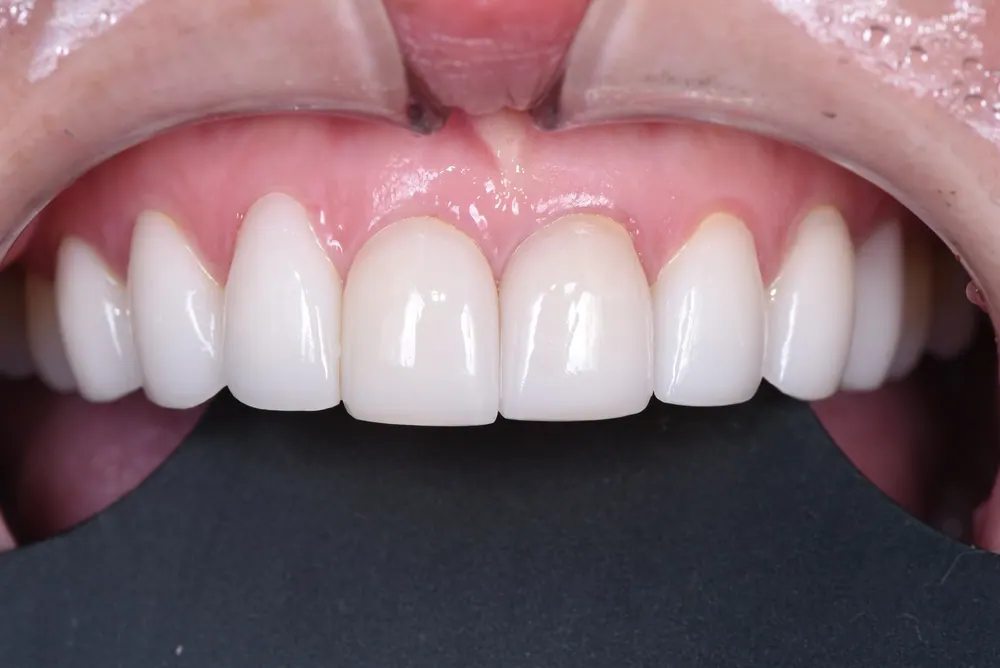
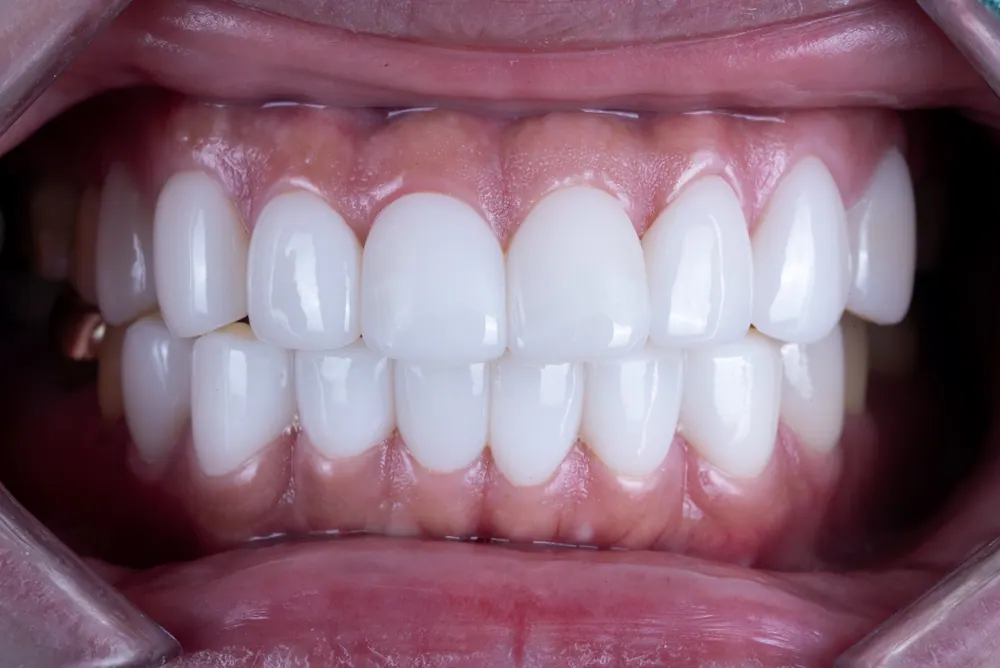
The veneer our clinic pursues
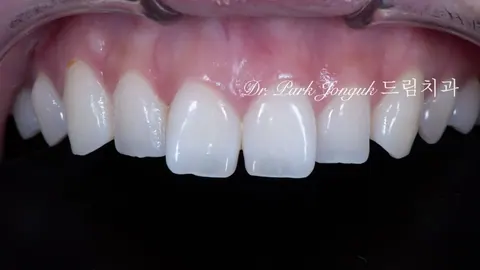
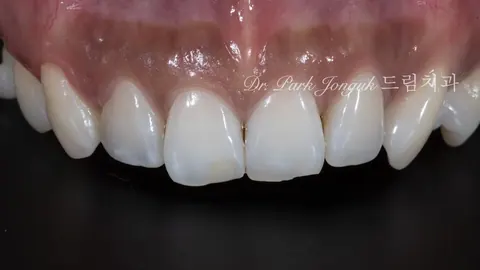
aims for the look of
"someone whose teeth were beautiful from birth."
The goal is to create beautiful teeth while still keeping all the characteristics of a natural tooth.
So why don't the large, heavily advertised clinics do treatment this way?
To make results this natural, the dentist has to take responsibility for one patient from consultation through diagnosis, treatment, bonding, and follow-up checks, and the most skilled ceramist has to make it from start to finish. On top of that, it takes a very long time. Structurally, that's simply not possible for a large clinic in terms of treatment process, revenue, or fabrication process.
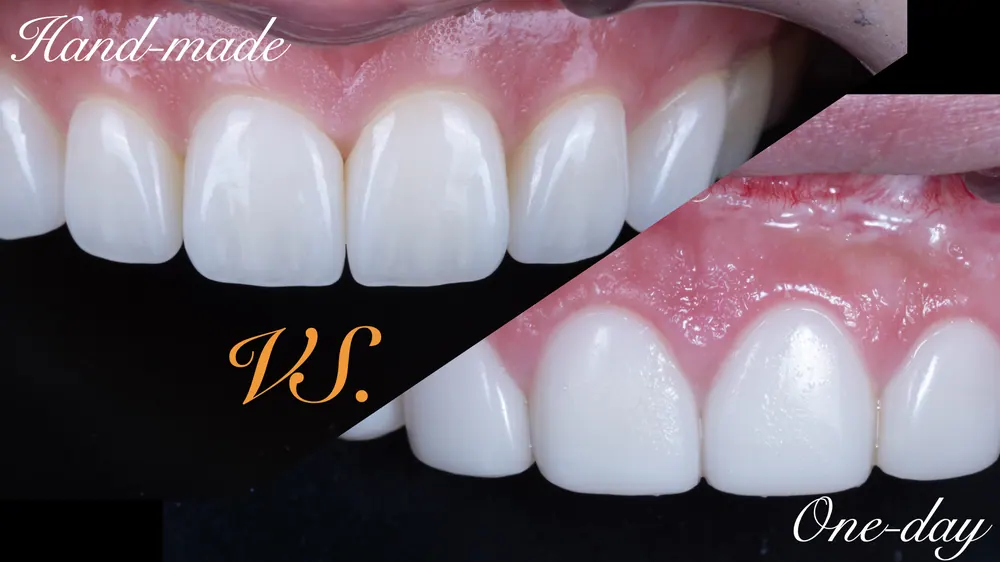
These days, most veneers are made using a "computer-designed and fabricated" method.
When made this way, the result is usually a flat, single-colored, unnatural-looking outcome. It still hasn't caught up to the naturalness and precision of the handmade veneer method. The one-day method, in particular, is still at the stage of developing the technology to catch up with the "thinness" of the handmade method.
For the past 20 years, we have steadily provided natural-looking veneer treatment in Apgujeong-dong, and Dream Dental Clinic will keep striving for the best possible treatment results going forward.
This article is a clinical note written by Dr. Park Jonguk of Dream Dental Clinic, Gangnam; the original was published on his blog. The photographs shown are real cases he treated. Results vary with each patient’s condition, and every procedure carries the possibility of individual variation and side effects.
Quick Consult
Request a Callback
Leave your number and we will call you back during clinic hours.
Request Received
We will contact you during clinic hours. For urgent matters, please call +82-2-3448-0028.