
A Front-Tooth Implant at 20? Why an Almost No-Prep 'Maryland Bridge' Is the Right Answer
Hello, I'm Park Jonguk, DDS, MS, medical director of Dream Dental Clinic, Apgujeong.
I'm a board-certified specialist in conservative dentistry trained at Seoul National University Hospital,
and for 20 years I've focused on esthetic treatment that preserves natural teeth.
I've even written a textbook on esthetic veneers —
treatment that preserves as much of your own tooth as possible is the core philosophy of my practice.
Today I'd like to talk about a treatment that many people have forgotten about because of the alternative of implants,
but one that has been completely revived by the latest technology —
the front-tooth Maryland Bridge.
1. Why I Don't Recommend an Implant to a 20-Year-Old Patient
Today's patient is a 20-year-old university student who, after finishing orthodontic treatment, came in wanting implants placed where two front teeth were missing.
I'm very cautious about front-tooth implants for patients under 30. My philosophy on this is firm.
Growth and change: Into a person's twenties, the jawbone can still grow subtly and the gum line can still shift. An implant, fixed to the bone, can't follow these changes, which can later cause esthetic problems such as the implant appearing to stick out or the gum receding.
Limits of gum shape: For front teeth especially, the gum line — the emergence profile — is everything, and it's difficult for an implant to shape the gums as beautifully as a natural tooth.
For these reasons, I recommended a 'Maryland Bridge,' which can achieve an esthetic result while barely touching the adjacent teeth.
2. Minimal Tooth Reduction, Maximum Bond Strength
A Maryland Bridge connects the missing tooth by bonding a 'wing' to the back surface of the teeth on either side.
[Photo 1] Before Treatment
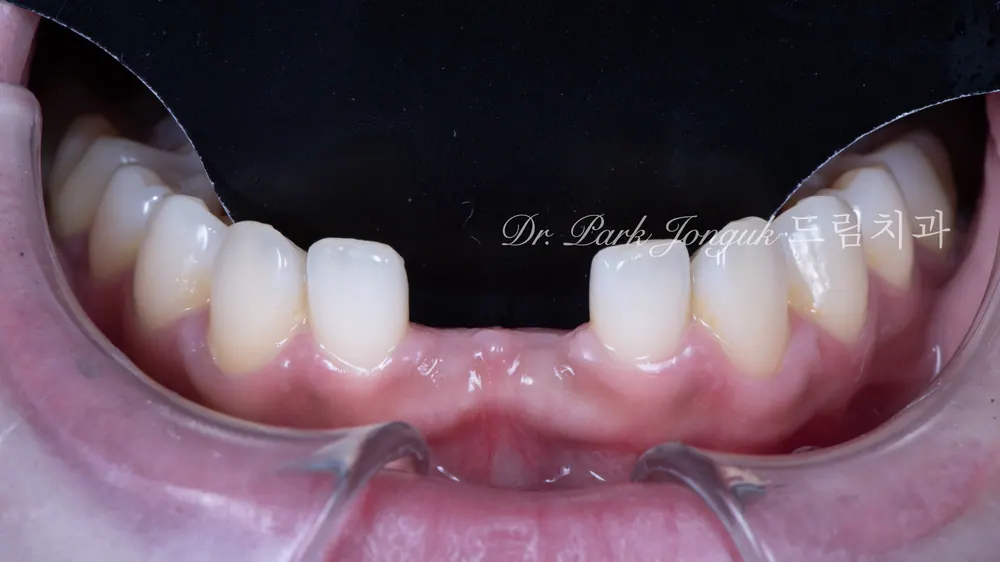
This is the state after orthodontic treatment, with two front teeth missing.
Because the lateral incisors on either side were extremely healthy,
as a dentist, I couldn't accept grinding down these healthy teeth substantially the way a conventional bridge would require.
[
Photo 2] As Seen from the Occlusal Surface
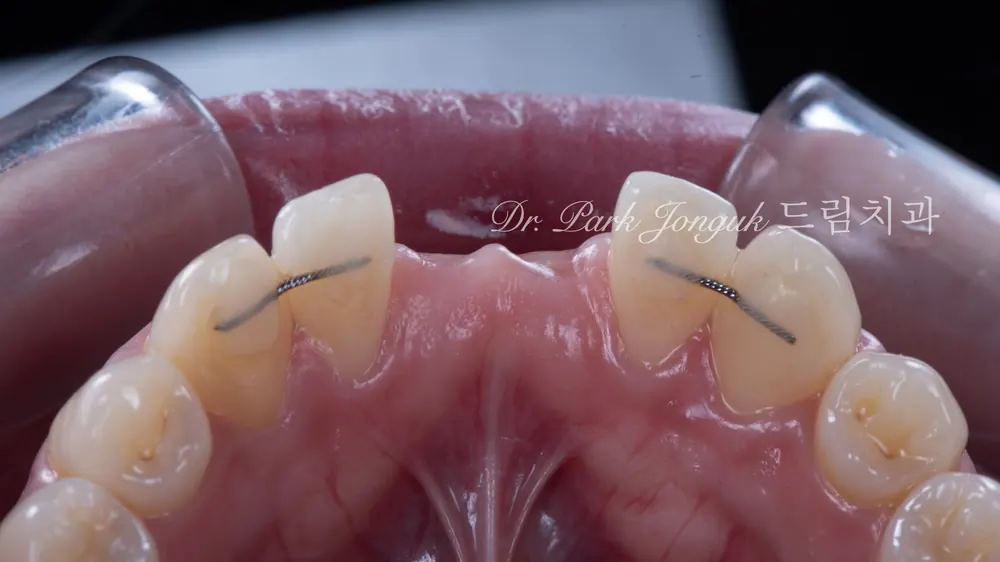
Seen from the occlusal surface (the top of the tooth), the teeth on either side have no cavities or existing restorations at all — they're extremely healthy.
The biggest advantage of the Maryland Bridge is minimizing the reduction of healthy teeth like these.
[Photo 3] Removing the Lingual Retainer and Minimal Reduction
The process is extremely minimal. Only the existing lingual retainer that had been bonded on was removed,
and only the area to be bonded received slight surface treatment.
You could fairly say there was almost no tooth reduction at all.
3. Zirconia and a Perfected Bonding System
In the past, the Maryland Bridge had a bit of a (dubious) reputation for "falling off easily," but that's completely different now.
Strong zirconia: This has eliminated the risk of fracture.
A refined bonding technique: Using the specialized bonding protocol of our clinic, veneer specialists, the zirconia and the tooth are joined mechanically and chemically into what functions as a single unit. There's now hardly any concern about it coming loose.
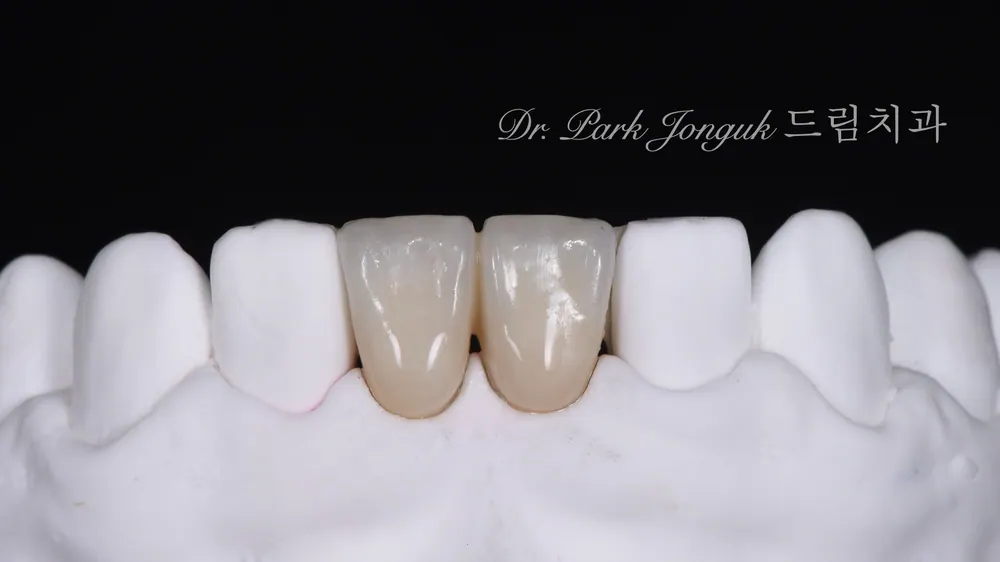
[Photos 4, 5, 6] The Process of Natural Settling (Emergence Profile)
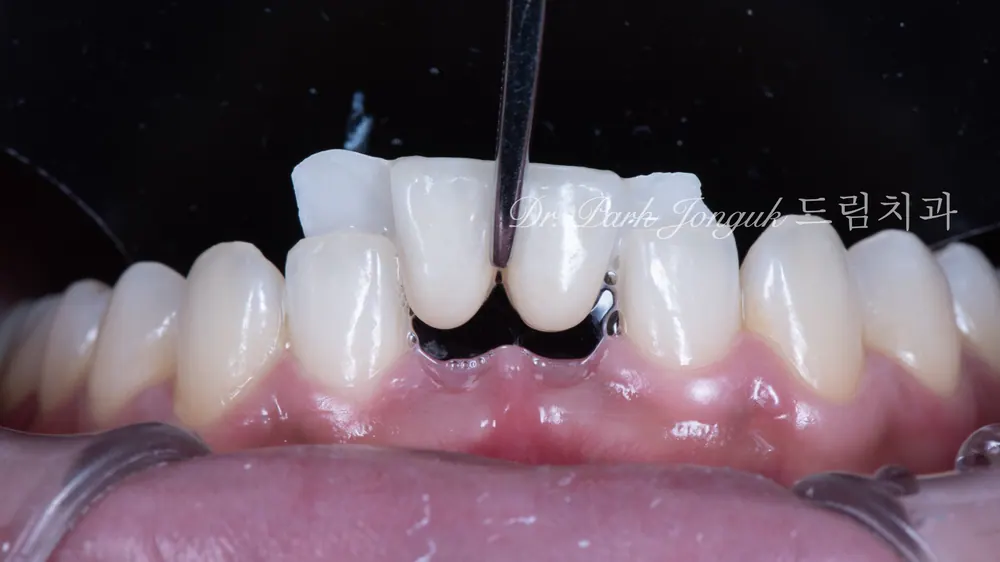
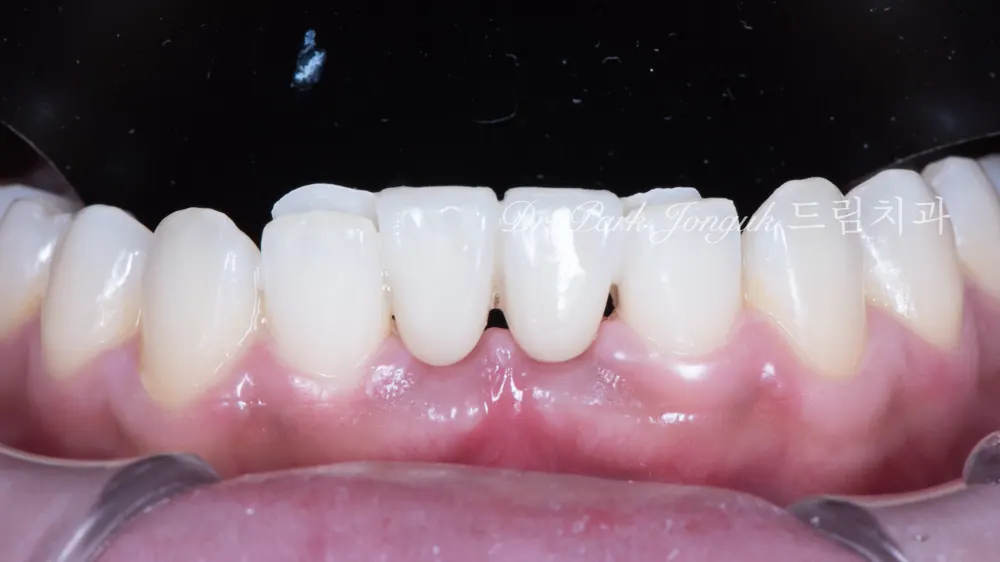
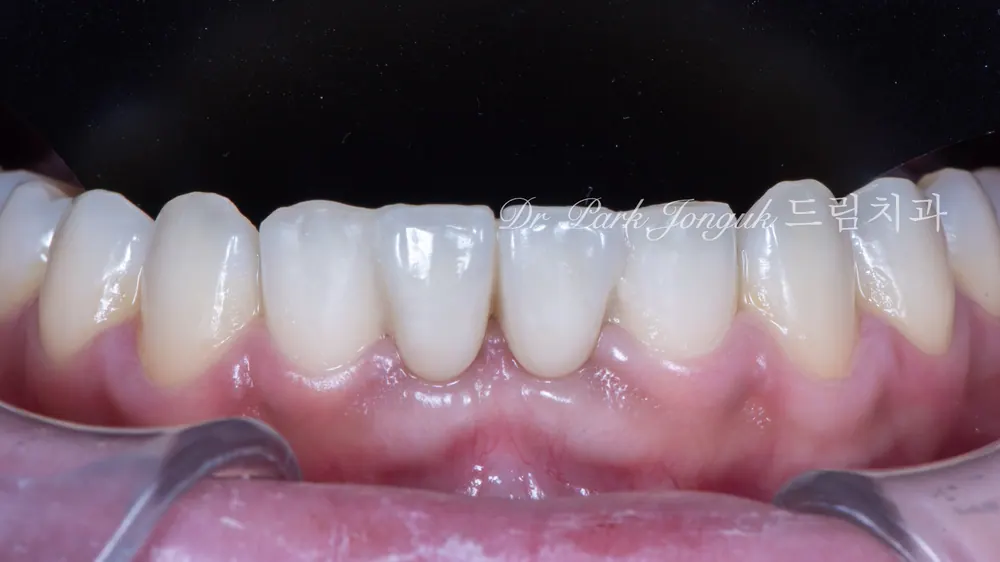
This is the process of bonding the bridge in place. From the design stage on, we designed the bridge to settle in while gently pressing against the gum. This creates an esthetic shape — an emergence profile — where the tooth appears to rise up naturally from the gum. This is an advanced technique that isn't easy for an ordinary clinic to replicate.
4. The Result: Three Months of Implant Deliberation, Resolved in One Step
[Photos 7, 8, 9] Final Appearance After Treatment
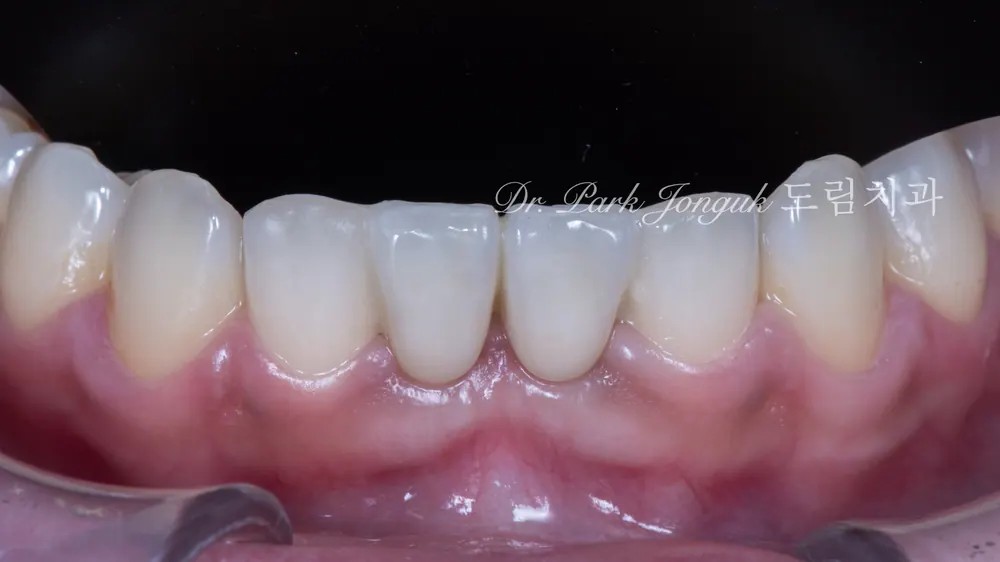
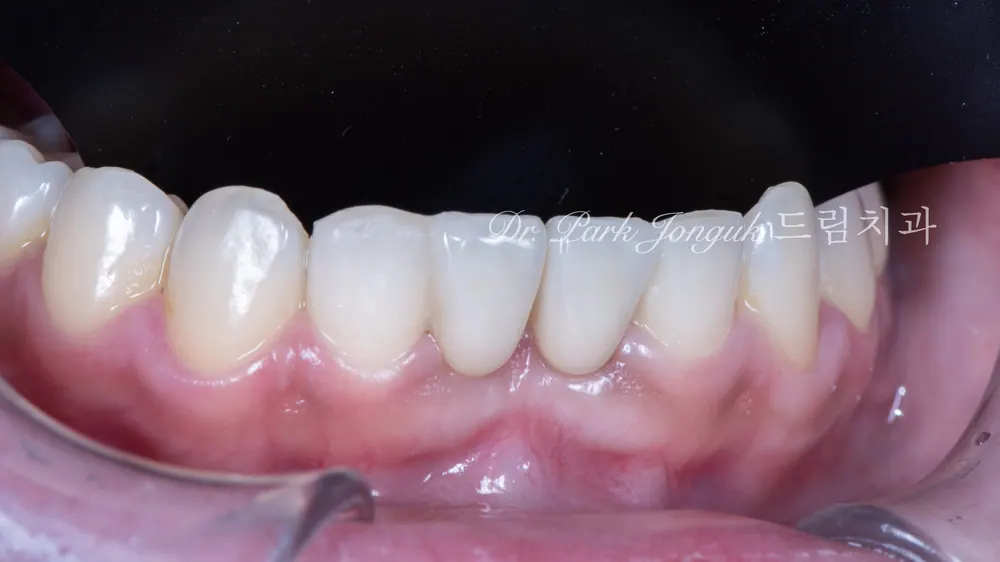
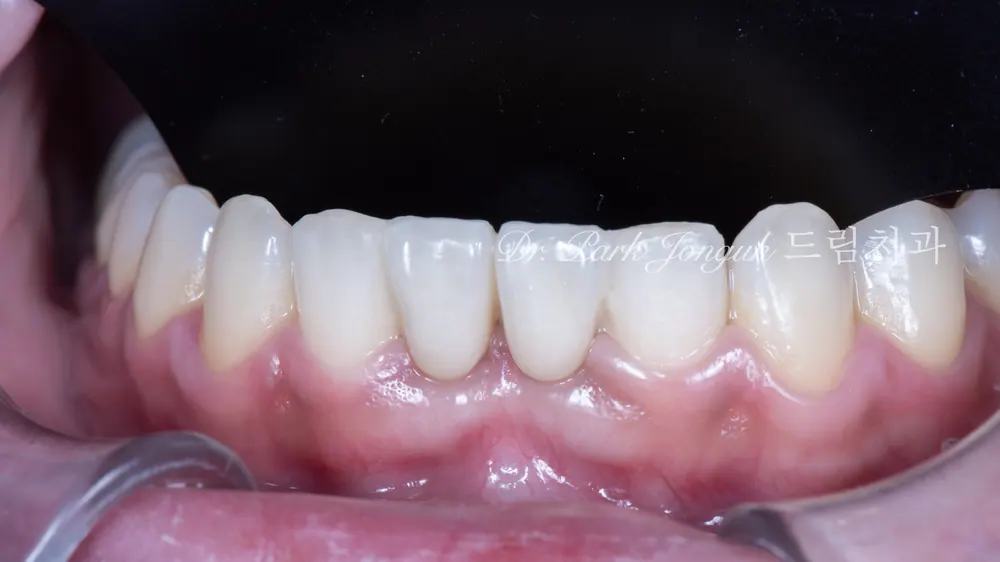
A complete smile was finished in just one to two weeks.
If this patient had chosen implants instead, she would have had to wait at least three months or more for the bone to heal and set.
In addition, in areas where the bone at the front teeth is thin, placement itself can be difficult, and even when it succeeds, problems like the following can easily arise.
With minimal tooth reduction and esthetics taken to their highest level, the Maryland Bridge is the most ideal solution for patients in their twenties.
Conclusion: A Conservative Dentistry Specialist's Choice
Implants are an excellent treatment, but they aren't a cure-all.
Especially for the front teeth of young patients, where esthetics matter so much, even greater caution is needed.
As a conservative dentistry specialist with 20 years of experience, Dream Dental Clinic
proposes the most conservative and esthetic treatment for the sake of our patients' lifelong tooth health.
For young patients weighing whether to get an implant, the Maryland Bridge
can be a fast, safe, and esthetically flawless alternative.
💡 Front-Tooth Maryland Bridge: Top 5 Q&A
Q1. Is it true that Maryland Bridges tend to fall off easily?
A. That happened often in the past, when metal frameworks and older adhesives were used.
But today, with strong zirconia materials and veneer-level modern bonding technology, the failure rate has dropped dramatically.
Q2. How long do they last?
A. It varies depending on how well the patient cares for it, but as bonding technology has advanced, long-term success rates have become very high.
With regular checkups and by following the precautions, it can be used for a long time.
Q3. Doesn't it put stress on the teeth on either side?
A. Since there's almost no tooth reduction involved, it doesn't cause the kind of significant damage to the teeth that a conventional bridge would.
The risk of tooth movement or nerve problems is extremely low.
Q4. Is it cheaper than an implant?
A. Yes. Since there's no surgical procedure and the material cost and fabrication process are different,
it's generally less expensive than an implant, and the treatment period is shorter too.
Q5. If I want to get an implant later, is that possible?
A. Yes. Since a Maryland Bridge involves almost no reduction of the other teeth,
if the patient later reaches their thirties or beyond and wants an implant, switching to one is possible at any time.
This, too, is a major advantage of the Maryland Bridge.
This article is a clinical note written by Dr. Park Jonguk of Dream Dental Clinic, Gangnam; the original was published on his blog. The photographs shown are real cases he treated. Results vary with each patient’s condition, and every procedure carries the possibility of individual variation and side effects.
Quick Consult
Request a Callback
Leave your number and we will call you back during clinic hours.
Request Received
We will contact you during clinic hours. For urgent matters, please call +82-2-3448-0028.