
How Many Veneers Do You Need? 2, 4, 6, or 8 — Here Are the Decision Criteria
Hello, I'm Park Jonguk, director of Dream Dental Clinic in Apgujeong.
There's a question I hear more than any other in consultations.
"How many veneers do I need?"
"Will 4 be enough, or do I need 6?"
"Why does one clinic recommend 2, while another recommends 8?"
Today I'll lay out how the number of veneers is decided, and the criteria behind each option — 2, 4, 6, and 8.
The Number Isn't a Matter of Price
The number of veneers isn't a figure the patient decides.
It's a clinical decision that combines the smile line, shade, gumline, and the amount of remaining tooth structure.
Get the number wrong, and the result looks off.
The most common cause behind the regret of "you can tell I got veneers" is exactly this — deciding on the wrong number.
Conversely, deciding on the right number lets you minimize the scope of the procedure while still restoring a natural smile.
5 Clinical Criteria That Determine the Number
First, the smile line.
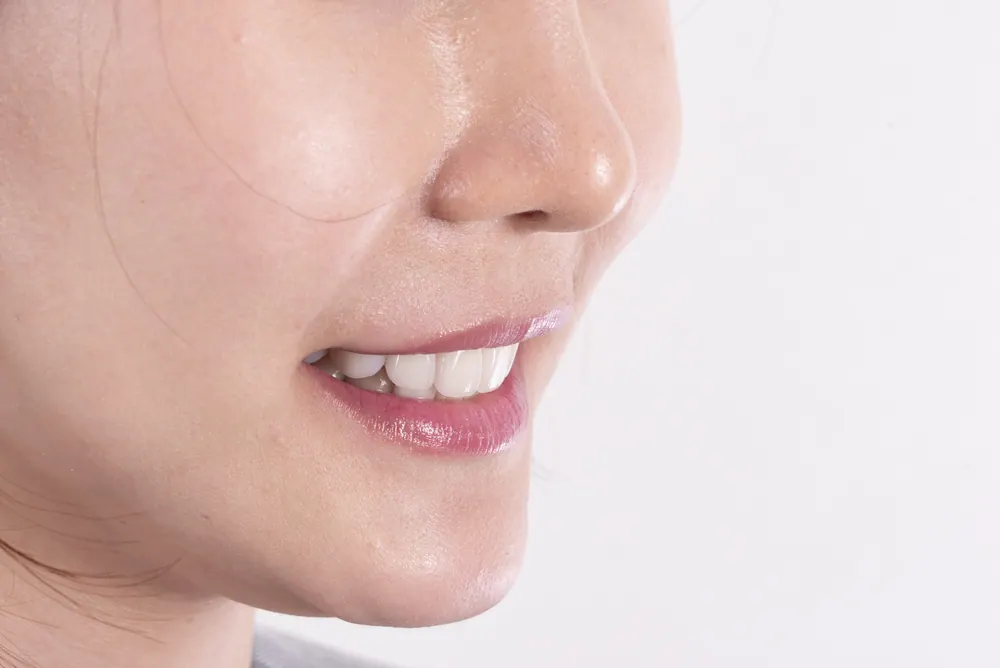
The starting point is how far the smile shows the teeth when the patient smiles naturally.
Some people only show the central incisors, while others show all the way to the canines.
Second, the color difference with the adjacent natural teeth.
If you want white veneers but the teeth on either side are yellow, you can't stop at just 2.
That's because the color boundary will be plainly visible.
Third, left-right symmetry.
A face looks most natural when it's symmetrical on either side of the midline.
That's why veneers are designed in even numbers.
Fourth, the distribution of remaining tooth structure.
The decision changes depending on where the discoloration is, where the gaps are, and which tooth position the undersized tooth is at.
Fifth, what the patient wants.
"I just want to cover the discoloration" and "I want to redesign my whole smile" lead to different decisions.
2 Veneers — The Most Conservative Choice
Only the two central incisors (#11, #21) are treated.
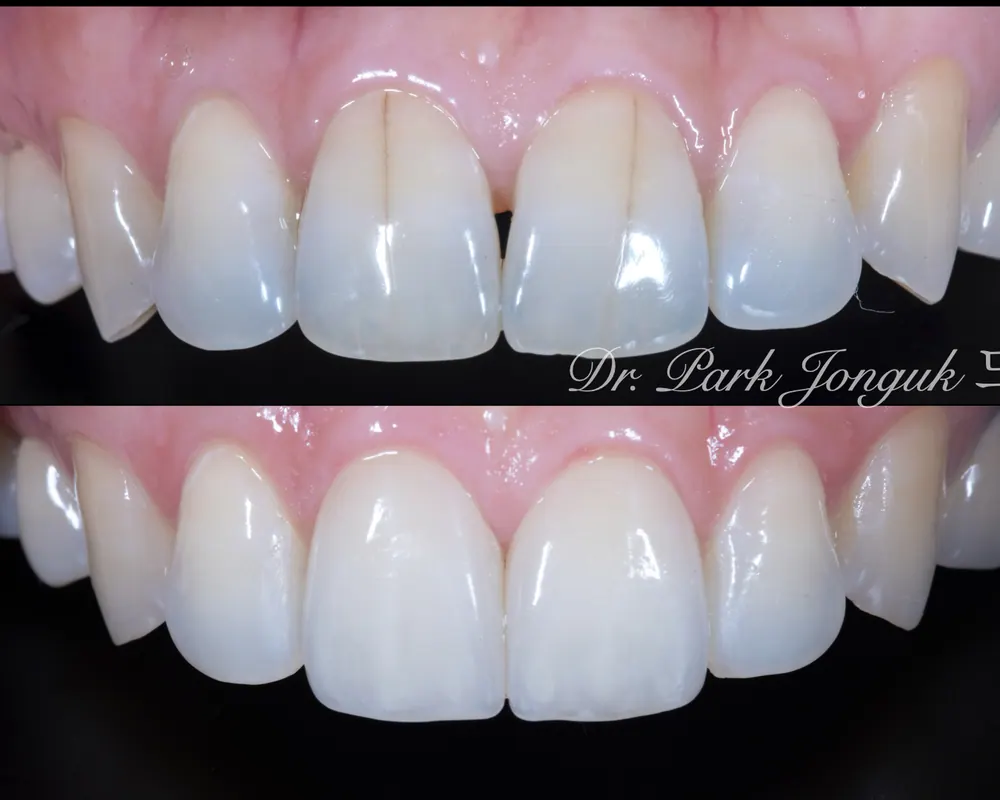
This suits cases where discoloration, wear, or gaps are limited to the two central teeth.
There's a condition, though.
The color of the adjacent lateral incisors and canines can't differ too much from the veneers.
In other words, the color, shape, and various characteristics of the veneer need to be matched to the adjacent lateral incisor.
Because this process is very demanding, many clinics are reluctant to do just 2 veneers.
In fact, most clinics simply don't do it.
In our case, we make 2 veneers so that they blend well with the other natural teeth.
When the conditions are right, this is the most natural and conservative approach.
If you settle on 2 for cost reasons when the conditions aren't right, the color boundary will be plainly visible.
4 Veneers — The Most Common Unit
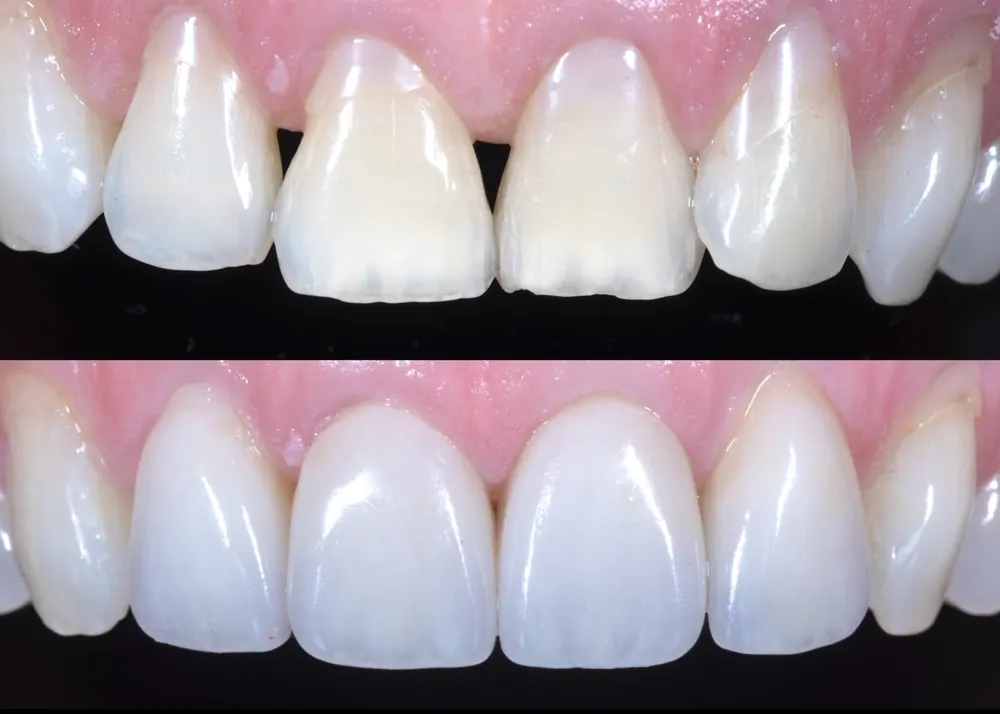
The four central and lateral incisors (#12, #11, #21, #22) are treated.
This is the unit most often chosen in clinical practice.
There's a benefit to including the lateral incisors.
The horizontal and vertical proportions of the front teeth can be adjusted together, allowing for a natural design.
The proportion imbalance that often occurs when only the central incisors are done disappears.
This is the most common choice for patients whose smile line exposes the lateral incisors as well.
6 Veneers — Including the Canines
Six teeth including the canines (#13 to #23) are treated.
Since the canines mark the left and right endpoints of the smile line, this suits patients with a wide smile line.
6 veneers are recommended in the following cases.
When the smile line is wide, so the canines are clearly visible.
When discoloration is spread across the whole front tooth region.
When, with only 4, the color difference with the canines stands out.
When you want to redesign the curve of the smile line itself.
When the canines are dark and need to be brightened
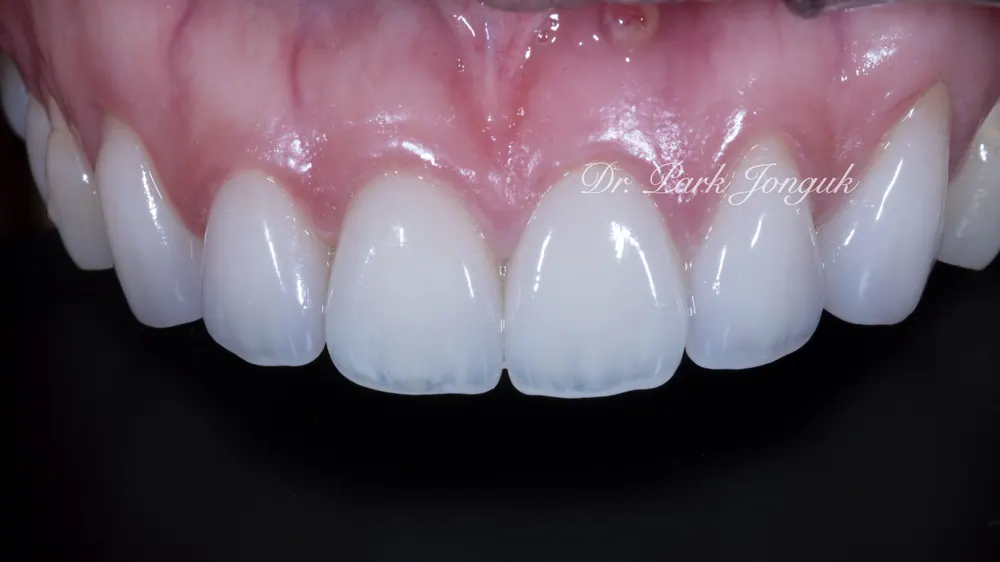
8 Veneers — Full Smile Design
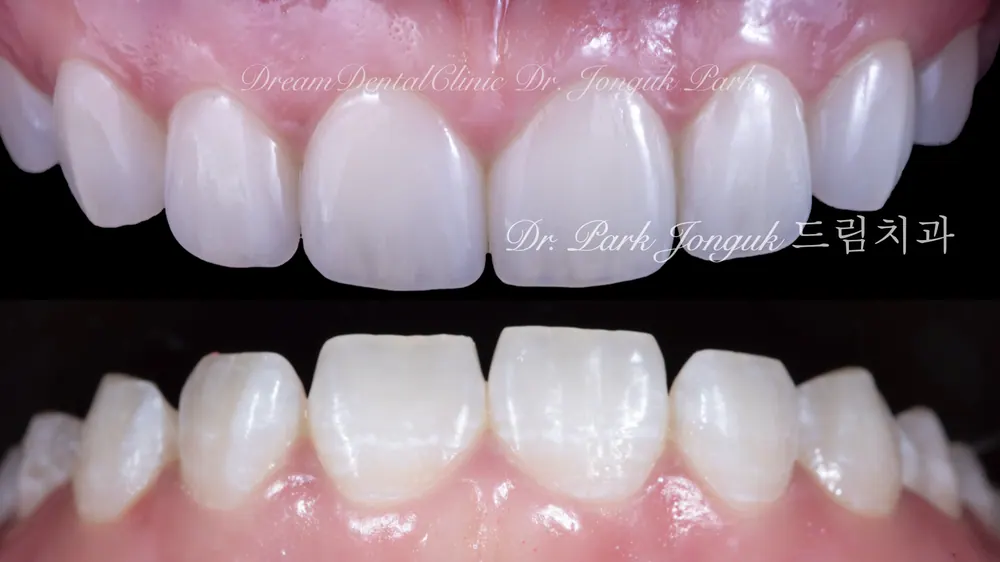
Eight teeth including the first premolars (#14 to #24) are treated.
This is limited to patients with a very wide smile line, aging cases where the buccal corridor looks empty, or patients who need full-mouth aesthetic restoration.
8 veneers create the biggest change, but they also demand the highest level of precision.
This is a unit that requires careful judgment about whether it's indicated.
Two Common Mistakes
First, forcibly cutting down the unit to save on cost.
If 4 are needed but only 2 are done, the color boundary and proportion imbalance remain.
The short-term cost is lower, but the likelihood of needing a redo goes up.
Second, expanding the unit without assessing the smile line.
Recommending 6 to a patient with a narrow smile line means even the canines, which aren't visible, end up being reduced.
This damages the preservation of a tooth that was never even visible.
Frequently Asked Questions
Q. Can I get a veneer on just one front tooth?
A. This is clinically very limited.
It's restricted to cases with almost no color difference from the natural teeth, like when only one tooth is fractured due to trauma.
Most veneers done for cosmetic purposes are designed with a minimum of 2, following the principle of left-right symmetry.
Q. I've heard 4 isn't enough. Do I really need 6?
A. This is a question that can only be answered after assessing the smile line and color difference through photos and shade measurement.
If the smile line exposes the canines enough,
or if the color boundary between the 4 veneers and the canines is noticeable enough for the patient to perceive, then 6 are needed.
As a rule, I don't give a one-size-fits-all answer without a diagnosis.
Q. I've heard that the more veneers you get, the worse the result tends to be. Is that true?
A. A higher number doesn't automatically mean lower quality.
But as the number of units increases, the design difficulty of maintaining consistency in shade and shape rises significantly.
8 veneers don't just require 4 times the precision of 2 — they require even more than that.
The clinician's clinical experience and the level of collaboration with the dental lab determine the result.
Closing
The number of veneers isn't a figure the patient decides.
It's decided at the balance point of five factors: the smile line, color, symmetry, remaining tooth structure, and the patient's own wishes.
Good veneer care doesn't answer the question "How many should I get?" on the spot.
The decision comes after taking photos, measuring the shade, making a model, and simulating the result together with the patient.
I can say that the accuracy of this decision on the number accounts for more than half of the aesthetic outcome of veneer treatment.
Dream Dental Clinic, Apgujeong
Dr. Park Jonguk (D.D.S., M.S. / Medical Director, Dream Dental Clinic / 20 Years of Veneer Clinical Experience)
This article is a clinical note written by Dr. Park Jonguk of Dream Dental Clinic, Gangnam; the original was published on his blog. The photographs shown are real cases he treated. Results vary with each patient’s condition, and every procedure carries the possibility of individual variation and side effects.
-
![[Peg Lateral Veneers] From a Strong-Looking Impression to a Soft, Feminine Smile — The Esthetics of Front-Tooth Veneers](/column-media/224178565168/thumb.webp) [Peg Lateral Veneers] From a Strong-Looking Impression to a Soft, Feminine Smile — The Esthetics of Front-Tooth Veneers
[Peg Lateral Veneers] From a Strong-Looking Impression to a Soft, Feminine Smile — The Esthetics of Front-Tooth Veneers -
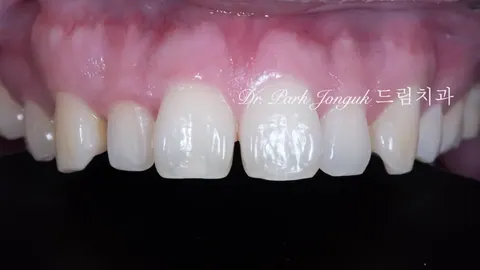 Buck-Teeth-Like Gapped Front Teeth and Peg Laterals, Resolved Together: A Veneer Treatment Case
 -
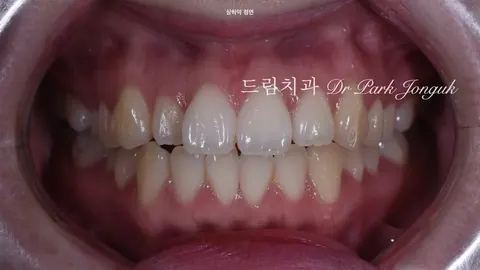 Buck-Tooth Veneers: A Fast, Natural Solution Without Braces — A Real Gangnam Veneer Case
Quick Consult
Request a Callback
Leave your number and we will call you back during clinic hours.
Request Received
We will contact you during clinic hours. For urgent matters, please call +82-2-3448-0028.