
Understanding Veneer Side Effects
Hello, I'm Park Jonguk, director of Dream Dental Clinic.
Among related search terms for veneers,
I think side effects is probably the most searched term of all.
About 10-15 years ago, veneer side effects became a fairly significant issue.
It was a time when veneers had become something celebrities felt they had to get,
and cases of aggressive, forced veneer treatment increased along with it,
and it was also a period when a few large clinics
pushed veneer treatment onto cases that weren't good candidates for it,
which led to a wave of side effects.
Even now, I occasionally still see cases where treatment was pushed too far.
Since I regularly see patients
coming in for consultation barely a month or two after getting veneers,
I end up encountering a wide variety of problems.
If the right treatment is done on the right case,
there are few dental treatments with as few side effects as a veneer.
But when it's forced onto a case where it shouldn't be,
that's when side-effect problems arise from a veneer.
Let's look at a few of the most representative veneer side effects.
1. My tooth feels sensitive
I think tooth sensitivity is probably the side effect that shows up most often after veneer treatment.
With any veneer treatment, some sensitivity can occur simply from the process of treatment itself.
Usually, most of that sensitivity goes away within 1-2 weeks after treatment.
Occasionally, in cases where a bit more of the tooth was reduced, or in more sensitive patients,
sensitivity can persist for 2-3 months,
but if sensitivity continues for more than a year, the cause needs to be considered.
If the tooth was reduced so much that inflammation developed in the root canal (the nerve canal inside the tooth's root),
root canal treatment may be needed,
and depending on the case, retreatment of the veneer may also be needed.
In most cases where root canal treatment isn't necessary, applying a desensitizing agent for the sensitivity is enough to improve things,
but that isn't always the case.
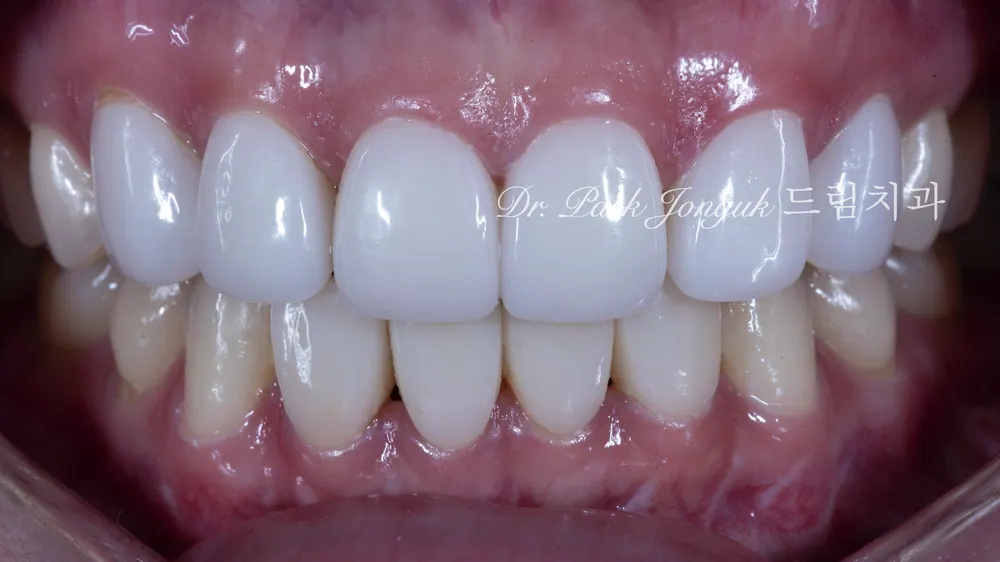
This was a case with ongoing sensitivity even several years after veneer treatment.
A desensitizing agent had been applied to the tooth several times,
but the symptoms weren't improving at all.
Since no inflammation was visible on the tooth in the X-ray,
redoing the veneer seemed like a better approach than root canal treatment,
and the patient herself also wanted a redo because of how awkwardly opaque her teeth looked.
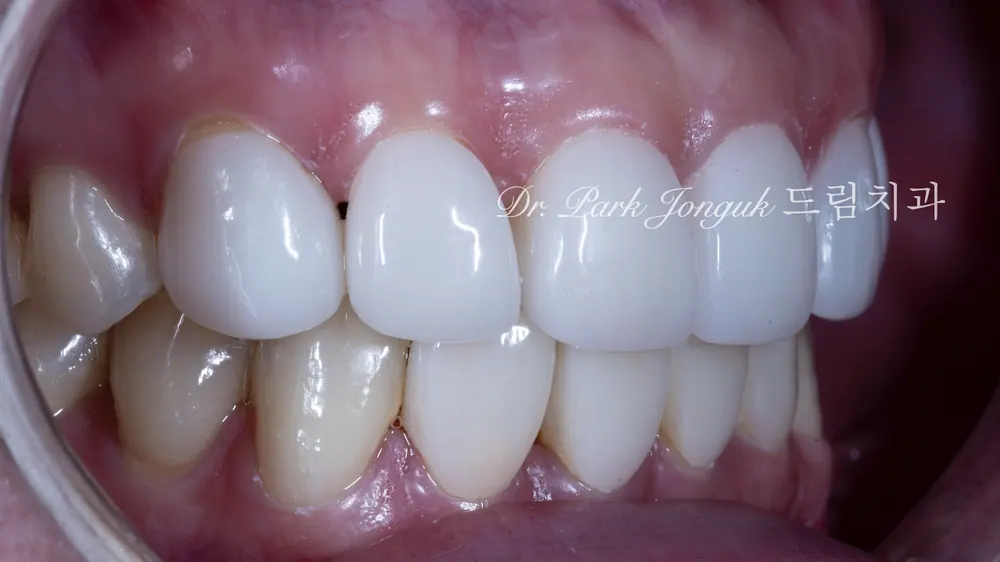
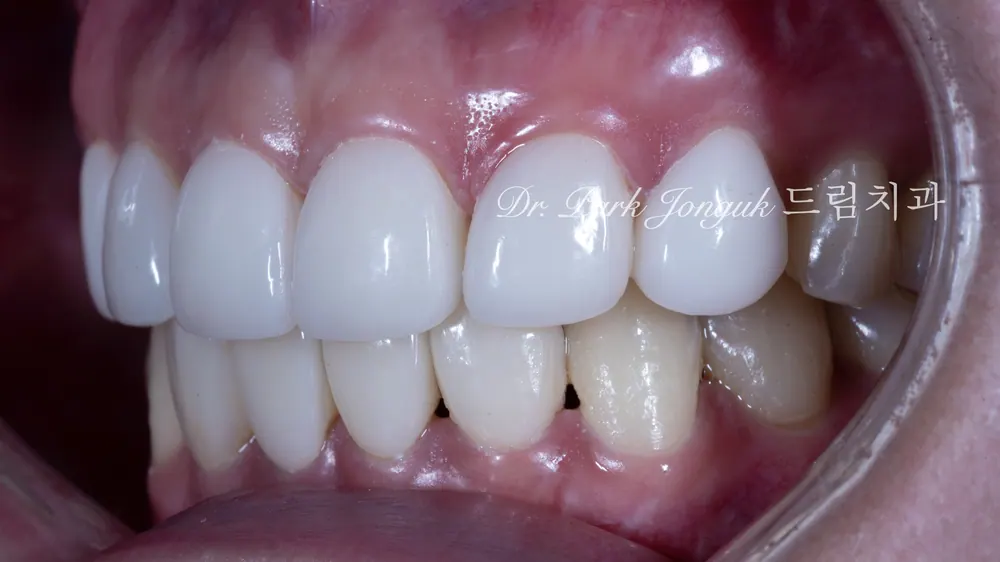
The tooth proportions were also off,
and black triangles had even developed,
so we decided to resolve all of these issues together during the redo.
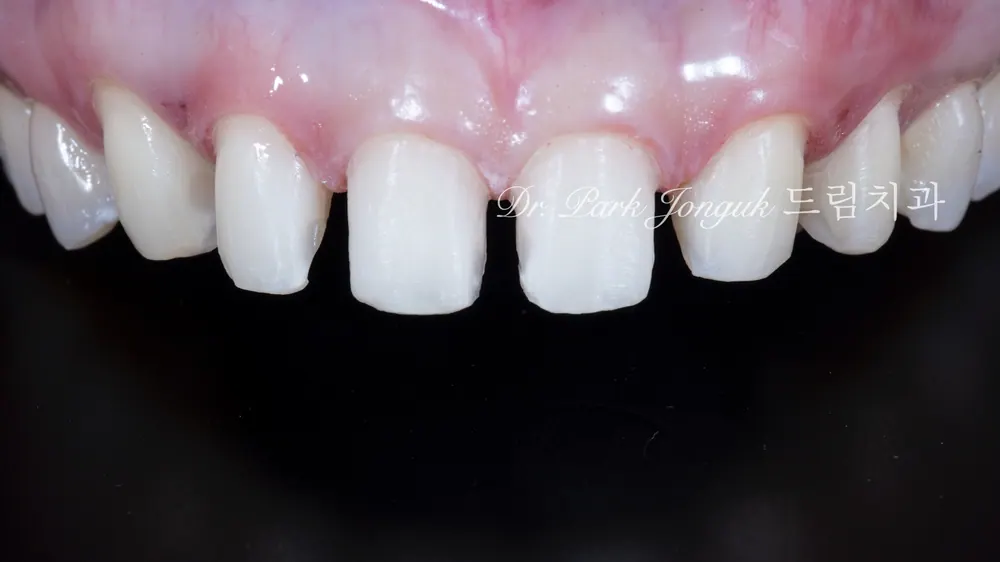
This is the state with the veneer removed.
You can see that the tooth had been reduced excessively.
Reduced this much, I do think an all-ceramic crown would have made more sense than a veneer,
but since reducing the tooth further at this point would raise the likelihood of needing root canal treatment,
treatment was carried out while minimizing further damage to the tooth.
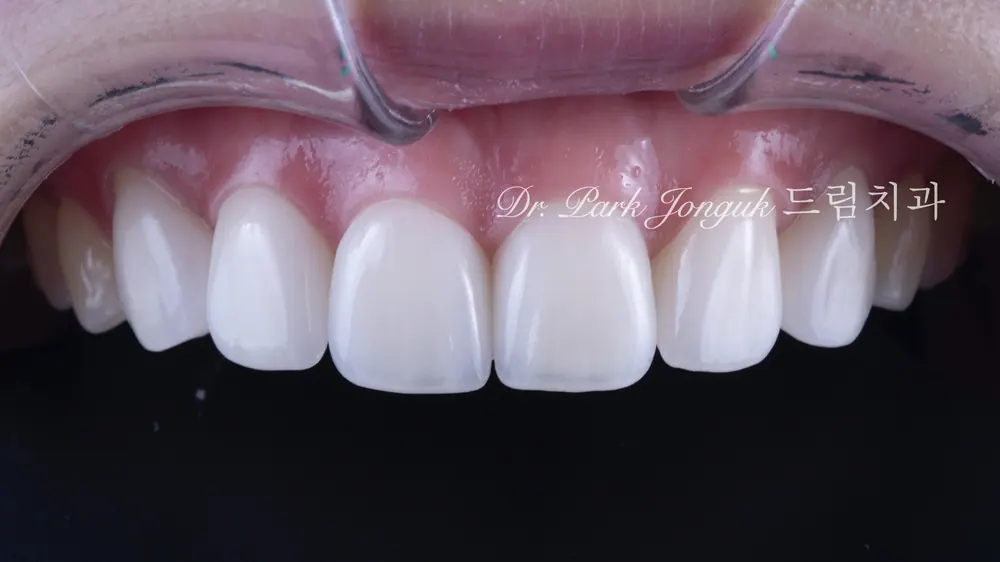
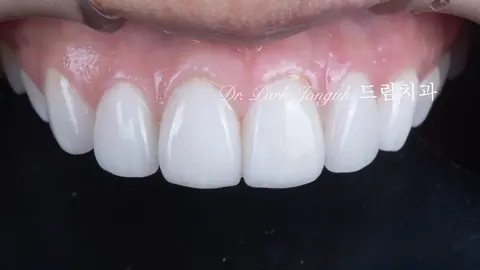
Treatment has been completed.
First, treatment was done while preserving as much of the tooth's translucency as possible.
The color of the tooth was also made to avoid looking too white or awkward.
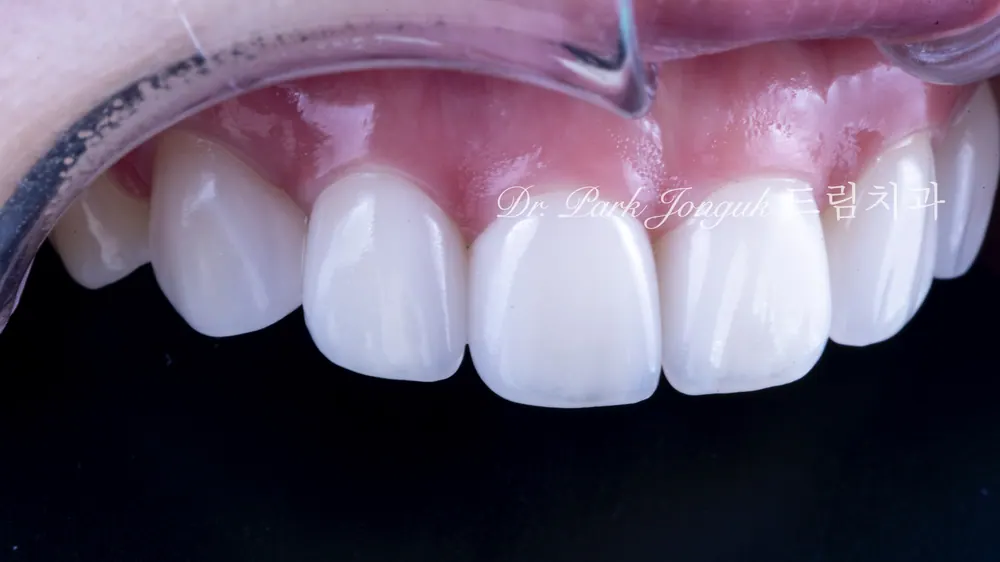
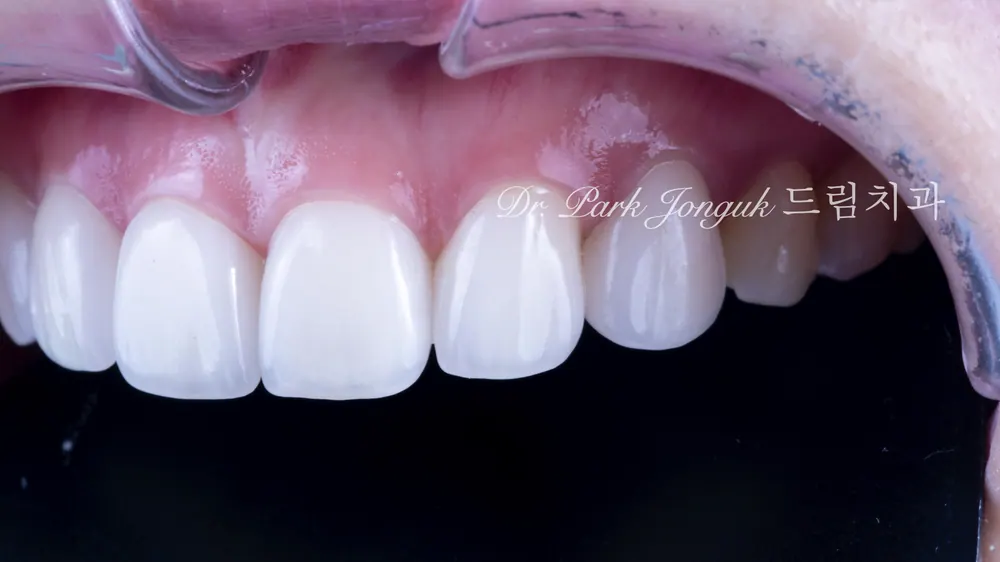
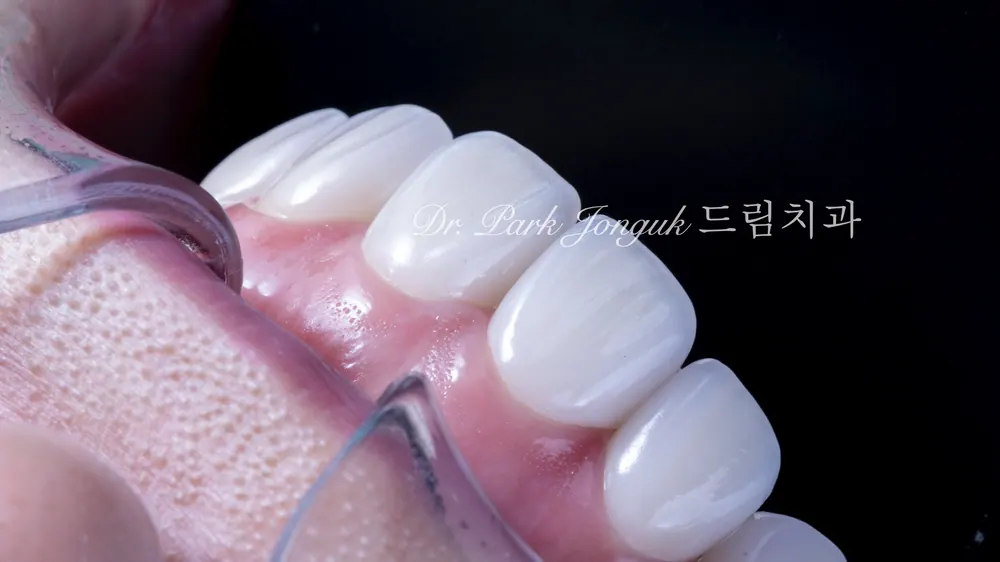
The surface of the tooth as well
was treated naturally, bringing out the texture of a natural tooth.
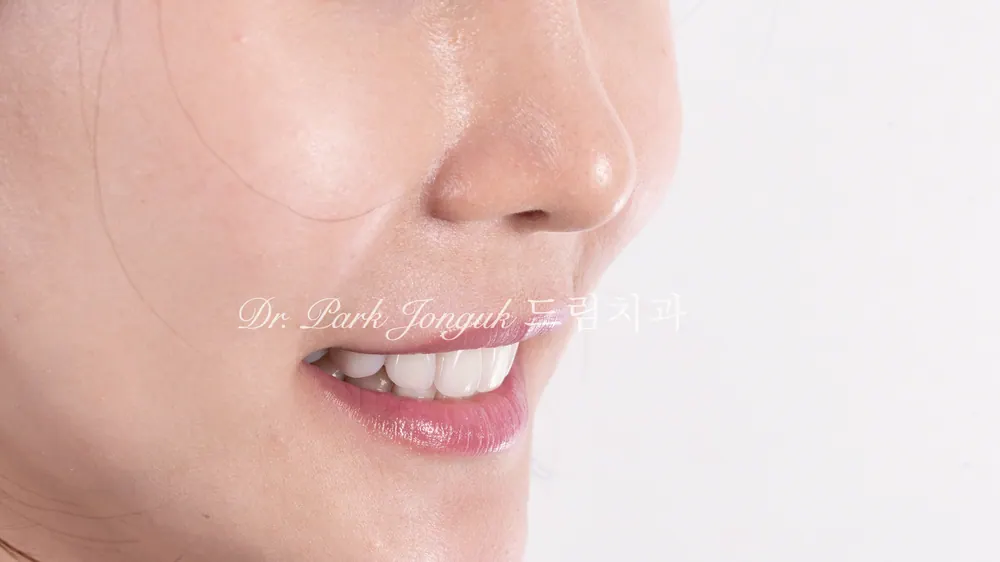
Treatment was finished with the harmony with the patient's face in mind as well.
Treatment turned out this natural and beautiful,
and the patient says even her sensitivity has completely gone away.
As the bond of the old veneer weakened,
the tooth sensitivity is thought to have gradually worsened,
and because the tooth surface was properly treated after removal before the redo,
protection of the tooth became possible and outside stimuli were blocked,
which appears to be why the sensitivity disappeared.
2. Gum inflammation
Something else experienced after veneer or all-ceramic crown treatment,
and another of the veneer side effects, is gum inflammation.
There are two ways to look at why gum inflammation occurs.
One is that gum care isn't being kept up well.
Given the nature of a veneer, the likelihood of inflammation is somewhat higher than with a natural tooth,
but in most cases, if you keep up consistent, proper brushing, there's no problem.
If care isn't kept up well, inflammation develops,
and in cases like this, getting a scaling at the dental clinic keeps things fine for a while,
but then inflammation returns once brushing lapses again.
Shortening the interval between scalings,
or brushing properly, resolves the problem in most cases.
The problem is cases where inflammation keeps recurring no matter how much scaling or gum treatment is done.
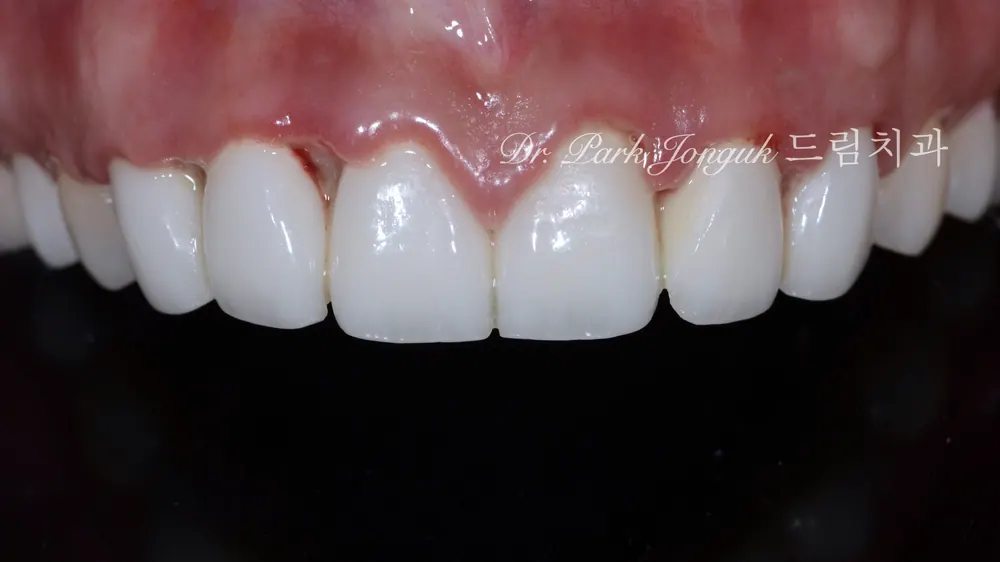
This is a somewhat extreme case of a veneer side effect,
a foreign patient who had received all-ceramic crown treatment in Korea,
and, with the gums continuing to bleed, came back to Korea and found our clinic.
Since the inflammation wasn't clearing up even with continued gum treatment,
we decided to do a redo.
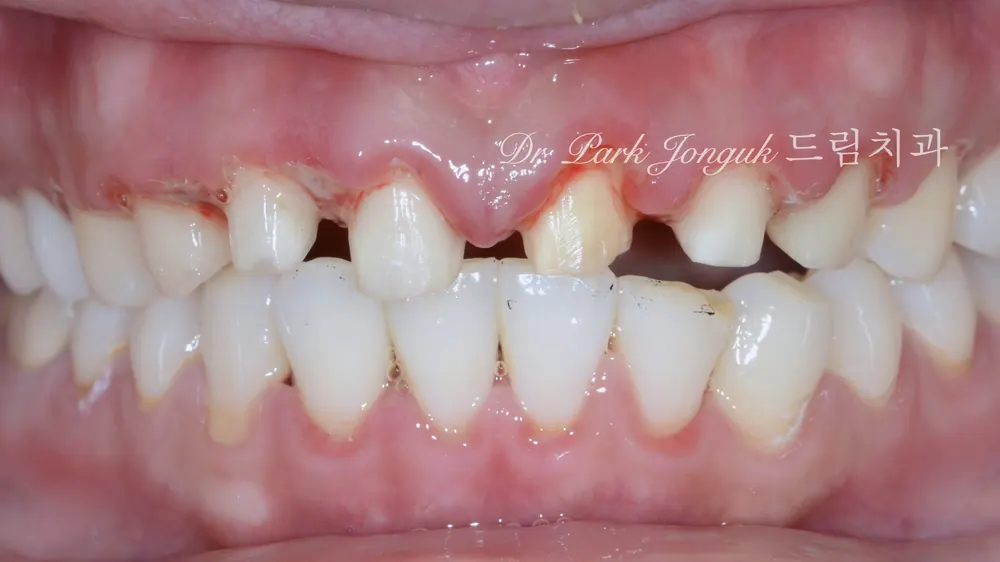
Once the all-ceramic crown was removed,
the tooth turned out to have been reduced far too much.
When a tooth is reduced this excessively, deep beneath the gumline,
the gum inflammation won't clear up unless the ceramic is fabricated extremely well.
Since she had come from abroad and didn't have much time for treatment,
treatment had to proceed somewhat urgently,
but in a case with gum inflammation like this, using temporary teeth for 1-2 months
to let the gum inflammation clear is a very important step.
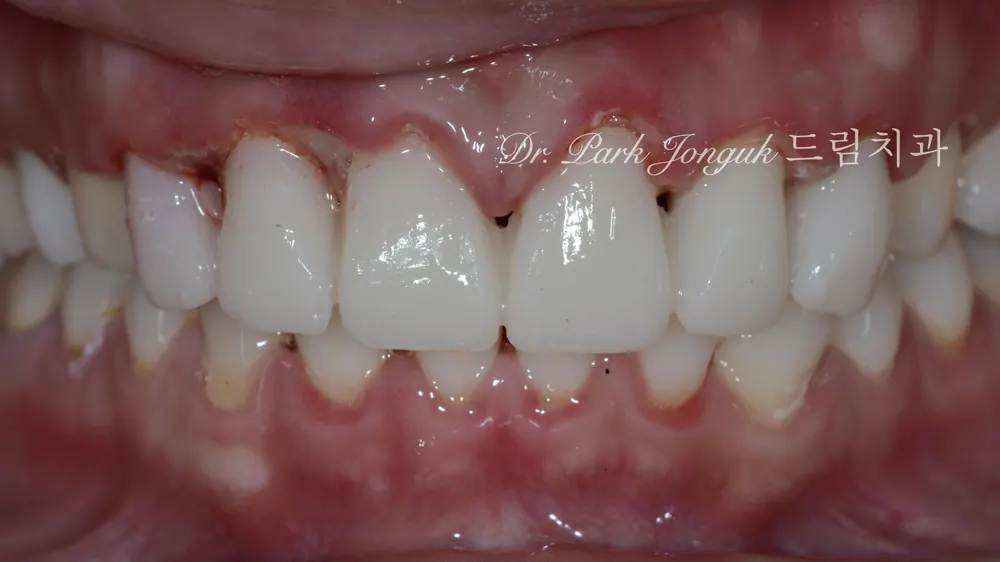
These are the temporary teeth, made under time pressure.
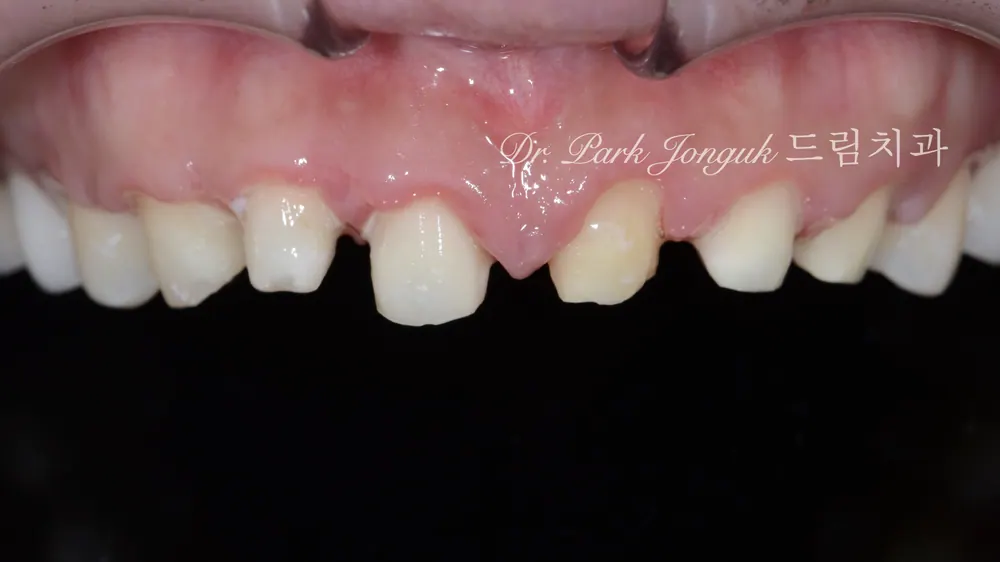
A week later, you can see the gum inflammation had decreased at least a little,
but in principle, it should be observed for another 2-3 more weeks.
Because of her departure schedule, we had no choice but to proceed with treatment urgently.
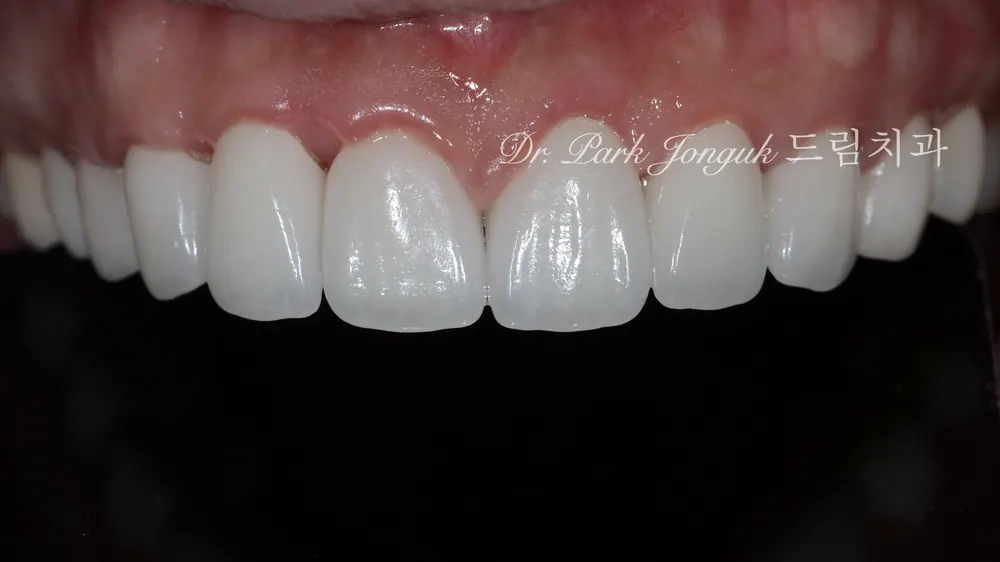
Fitting the all-ceramic crown and treating the inflammation were carried out together.
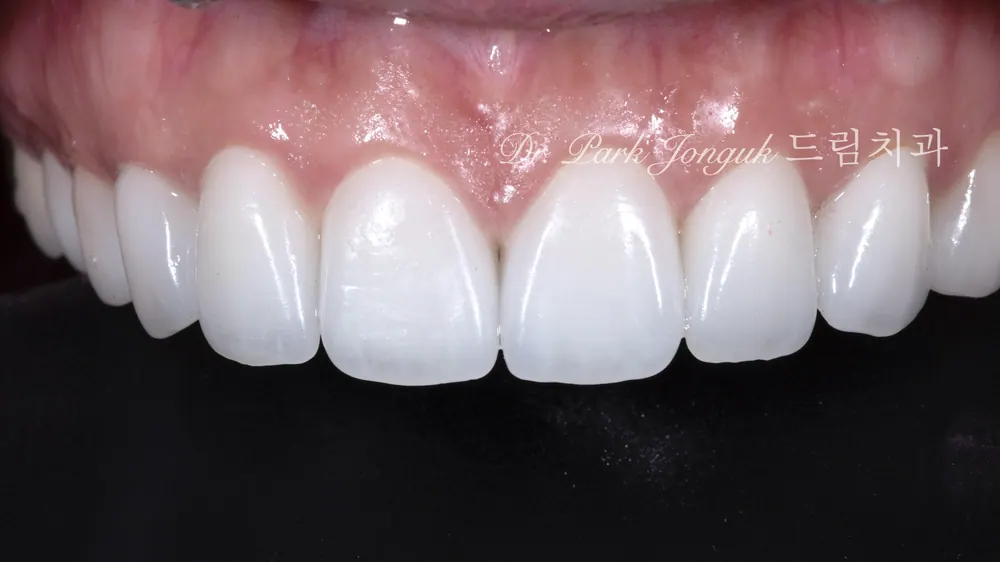
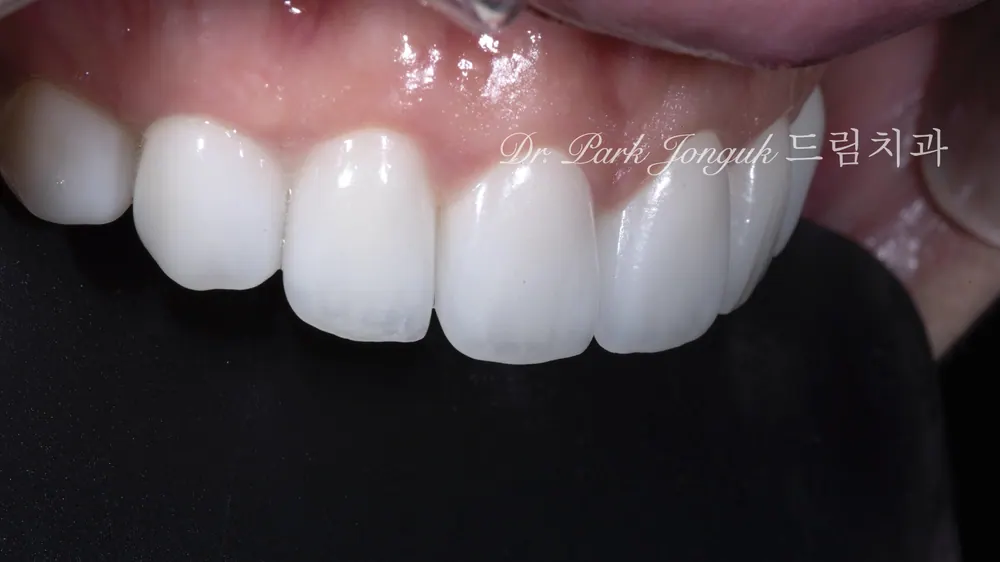
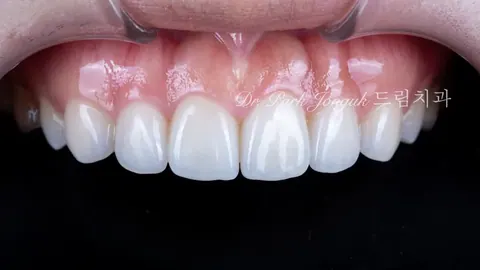
This is what she looked like when she came back to Korea again, quite a while later.
Not only the natural, beautiful shape, color, and translucency of the tooth,
but you can also see that the inflammation had completely disappeared.
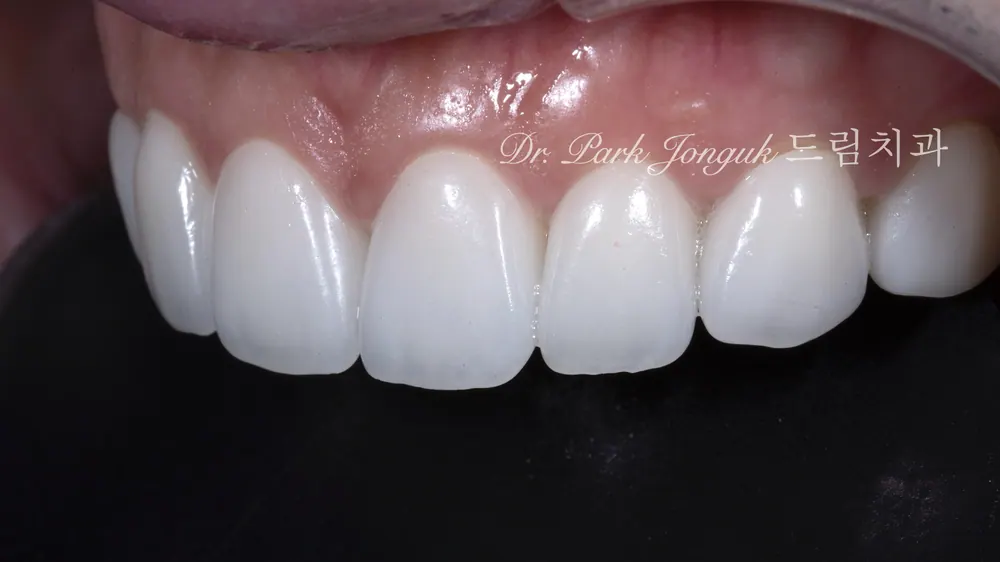
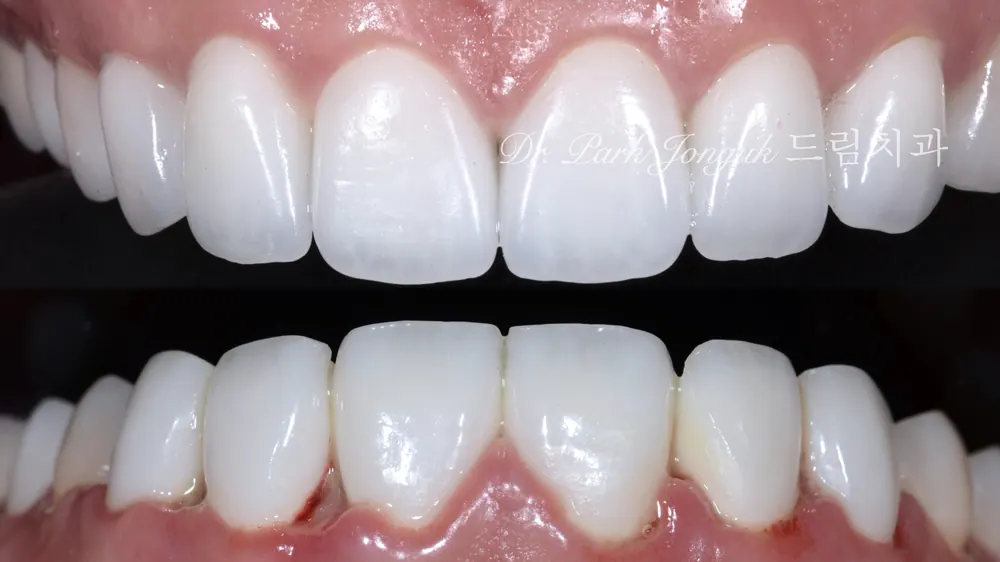
The reason for the inflammation is clear.
There's a part dentists call the margin,
which is where the tooth meets the ceramic.
That part had been designed incorrectly, which is what caused the inflammation.
First, it had been set far too deep inside the gum,
and it didn't connect naturally with the tooth, which caused irritation.
The position of the margin itself can't be changed,
but by fabricating the ceramic to fit the tooth properly, the inflammation was able to be resolved.
This is a genuinely difficult case among all the redo cases I've handled.
3. Fracture and debonding
Fracture and debonding aren't so much side effects
as they are limits inherent to all dental treatment.
Nothing in dental treatment lasts forever.
This is especially true whenever a different material is bonded onto or replaces a tooth.
That said, with veneers,
there are a few ways to minimize fracture and debonding,
and the most important one among them
is reducing as little of the tooth as possible.
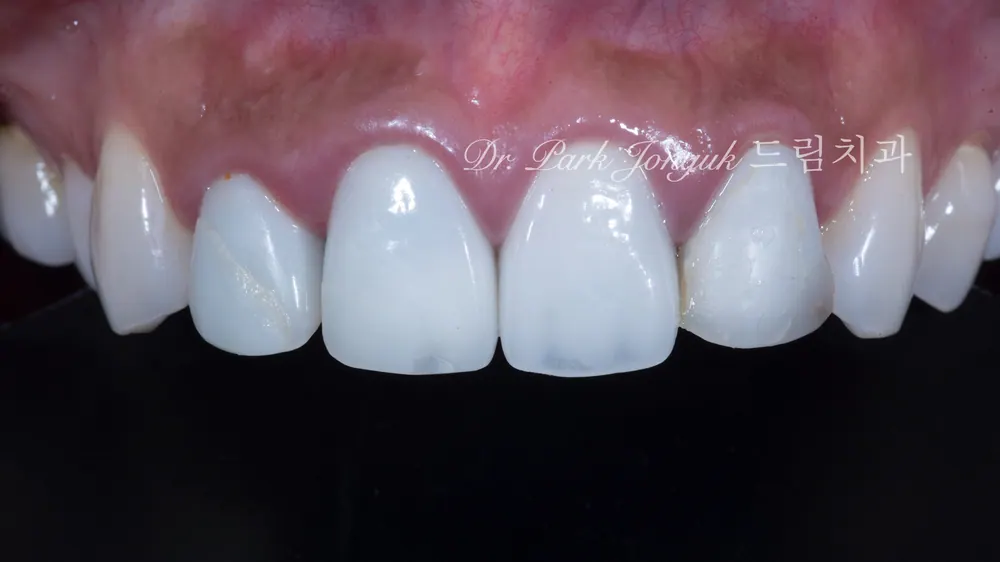
This is a case of veneers and an all-ceramic crown
with repeated fracture and debonding.
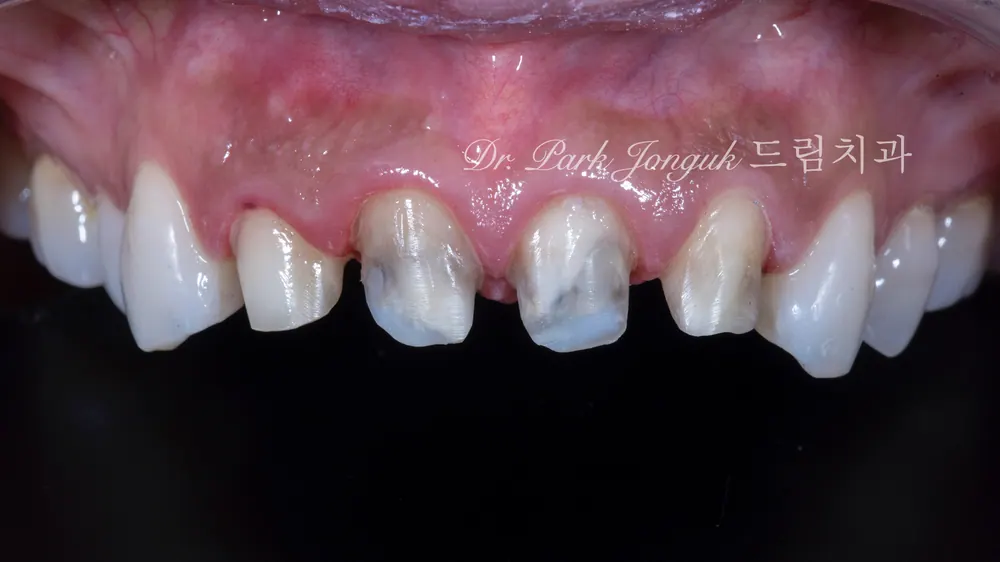
When the existing all-ceramic crown was removed,
it turned out that in every one of these cases, the tooth had simply been reduced far too much.
With so little of the tooth left, it's no wonder it struggled to stay attached.
That's not all.
The outermost layer covering the tooth, called enamel,
bonds extremely well with a veneer or all-ceramic crown.
Its bonding strength is very high.
Bonding to enamel is an essential factor for the long-term success of a veneer,
but once it's been reduced this excessively,
a veneer becomes impossible,
and treatment ends up having to be done with an all-ceramic crown instead.
In other words, only by reducing as little of the tooth as possible
does the bond last a long time,
and the likelihood of fracture and debonding drops noticeably.
Effort to reduce the amount of tooth removed needs to start from the very first treatment,
and that process begins precisely with a precise wax-up diagnostic.
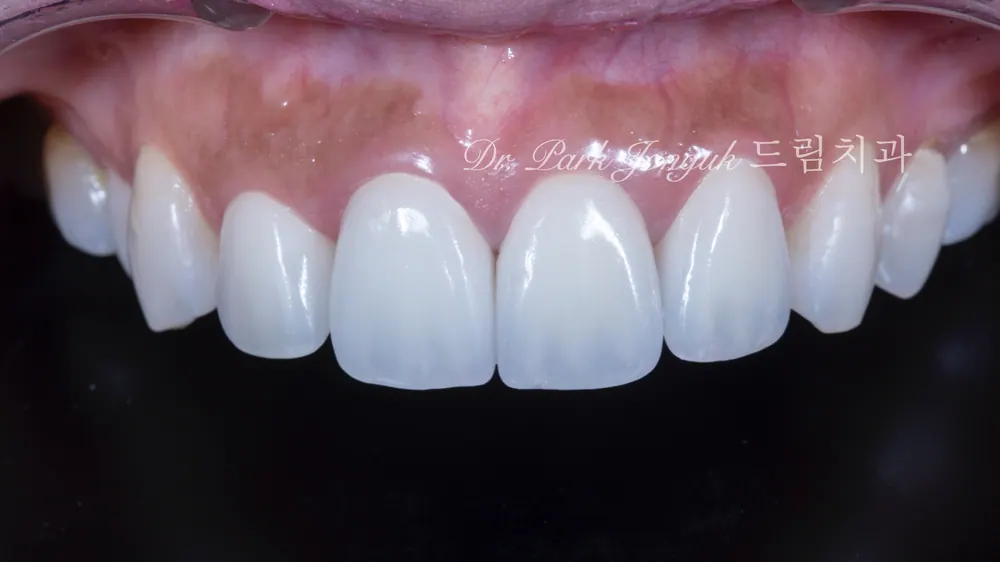
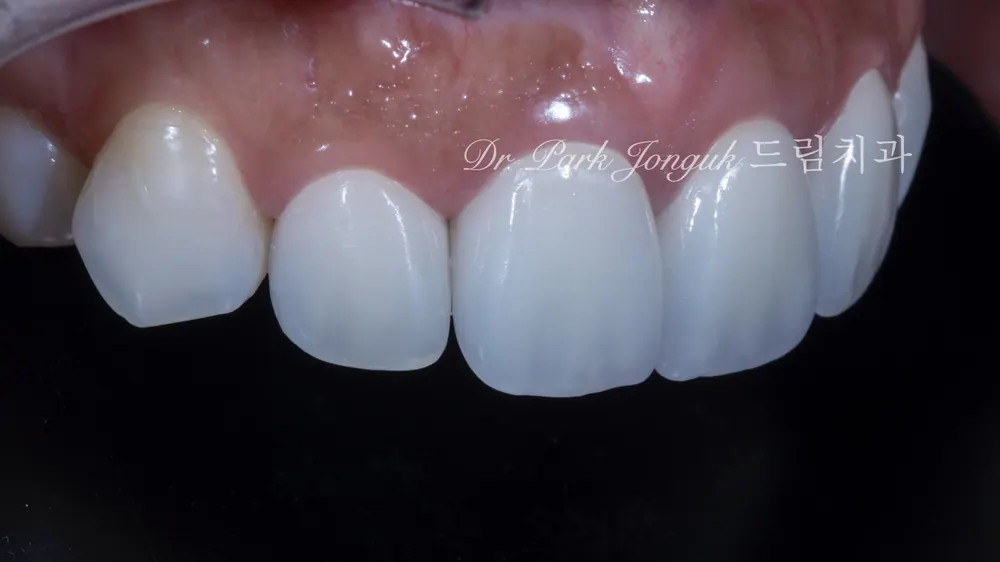
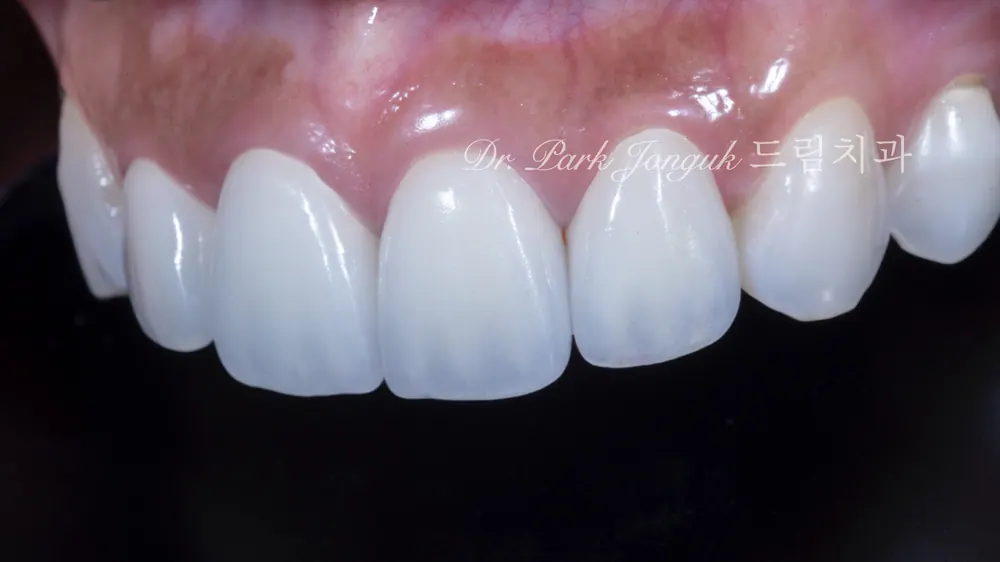
In carrying out a redo,
we finish the process with careful attention to the tooth's bonding.
From the treatment of the tooth surface onward, following proper principles,
considerable care is needed to reduce the likelihood of debonding.
In this way, most side effects from veneers or all-ceramic crowns
begin with excessive reduction of the tooth.
This is exactly why, over my many years treating front teeth,
I've studied and worked hard on minimizing tooth reduction.
Only by keeping reduction to a minimum
can side effects be minimized.
Having steadily practiced veneer treatment in Apgujeong since 2006,
I've handled a great deal of experience and many cases,
and by continuing to learn from a wide variety of cases,
I do my best to achieve the best possible veneer for each patient.
Natural beauty
Since 2006, Dream Dental Clinic
This article is a clinical note written by Dr. Park Jonguk of Dream Dental Clinic, Gangnam; the original was published on his blog. The photographs shown are real cases he treated. Results vary with each patient’s condition, and every procedure carries the possibility of individual variation and side effects.
Quick Consult
Request a Callback
Leave your number and we will call you back during clinic hours.
Request Received
We will contact you during clinic hours. For urgent matters, please call +82-2-3448-0028.