
Protruding Mouth: Can Veneers Fix It?
Hello. I'm Park Jonguk, director of Dream Dental Clinic.
Over 20 years focused on veneer clinical practice, this is one of the questions I hear most often in consultations.
"My mouth sticks out a little — can veneers pull it in without braces?"
Today I'll give you an honest answer to this question.
Let me start with the conclusion.
A truly protruding mouth cannot be fixed with veneers alone.
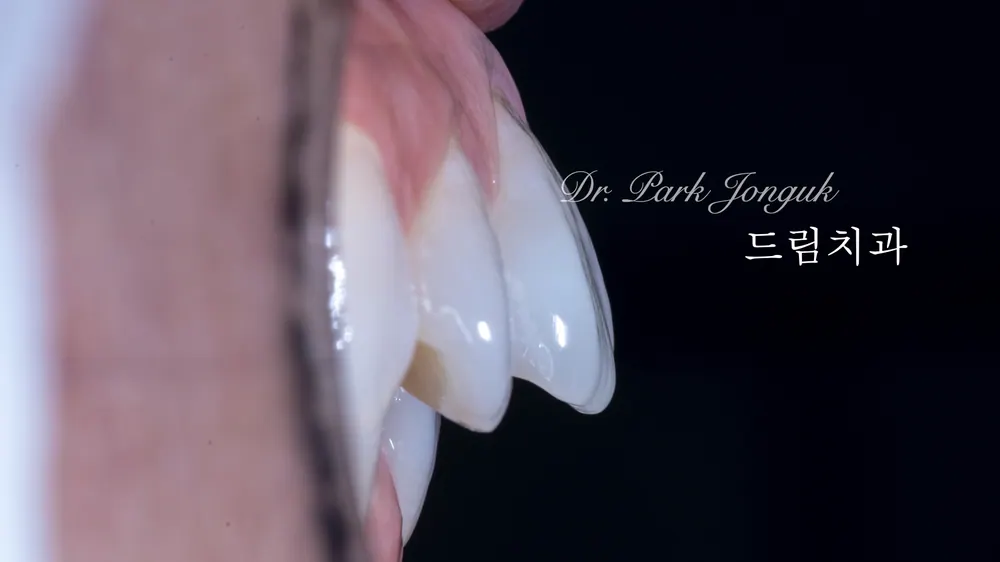
Veneers are a treatment that changes the "color and shape" of the teeth.
They are not a treatment that moves the "position" of a tooth backward.
So a truly protruding mouth, where the bone or front teeth stick forward, needs orthodontic treatment.
That said, in some cases that only "look like" a protruding mouth, veneers can help.
Knowing this difference is the first step in protecting your teeth.
A protruding mouth starts with different causes
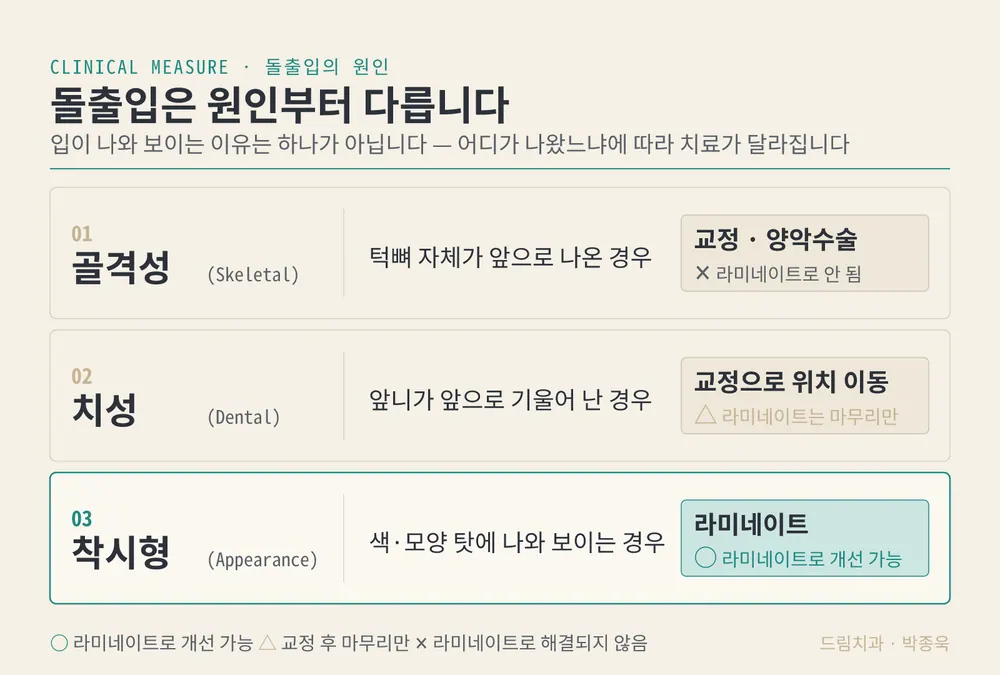
There isn't just one reason a mouth looks like it sticks out.
Depending on where the protrusion comes from, the treatment is completely different.
Skeletal — the jawbone itself protrudes forward.
Dental — the jawbone is normal, but the front teeth are tilted forward.
Optical-illusion type — the mouth looks like it protrudes because of the color or shape of the front teeth.
Skeletal and dental cases improve only by moving the "position."
Veneers can't move position. So they can't resolve the root cause.
Why veneers can't pull the mouth in
Once you understand the principle, the answer becomes clear.
The thickness of front-tooth enamel is very thin — only about 0.3-1.1mm depending on the area.
Veneers are a treatment that minimally trims this thin surface and adds a layer of ceramic on top.
In other words, the work is done on the tooth's "surface." There's no force pulling the tooth backward.
To pull a protruding front tooth inward, much more of the front surface would have to be shaved down.
That's an excessive reduction that goes past the enamel and gets close to the nerve.
It only increases the risk of side effects like sensitivity and nerve irritation.
Conversely, thickly filling in a tooth that's set back with ceramic can actually make it look even more protruding.
So when do veneers actually help?
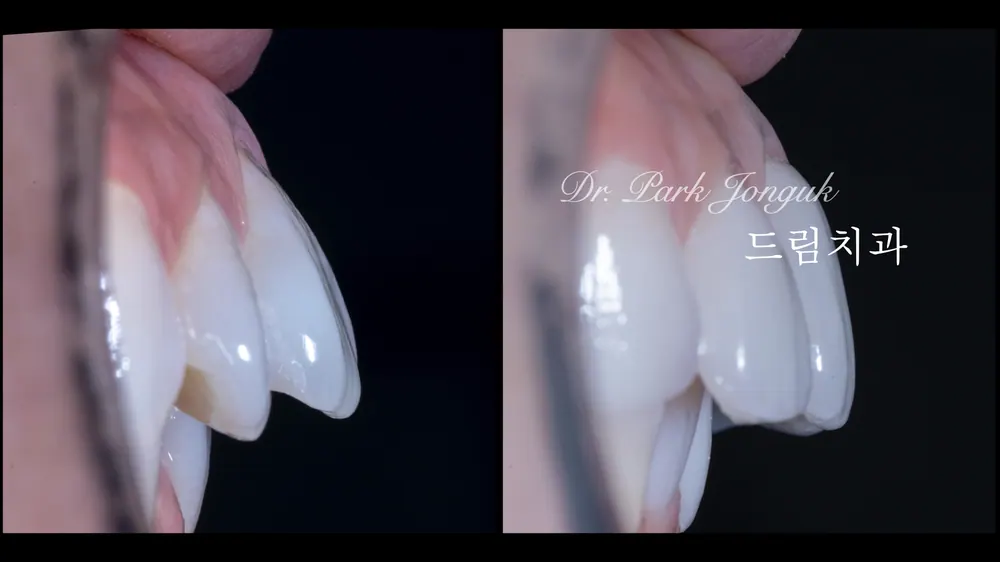
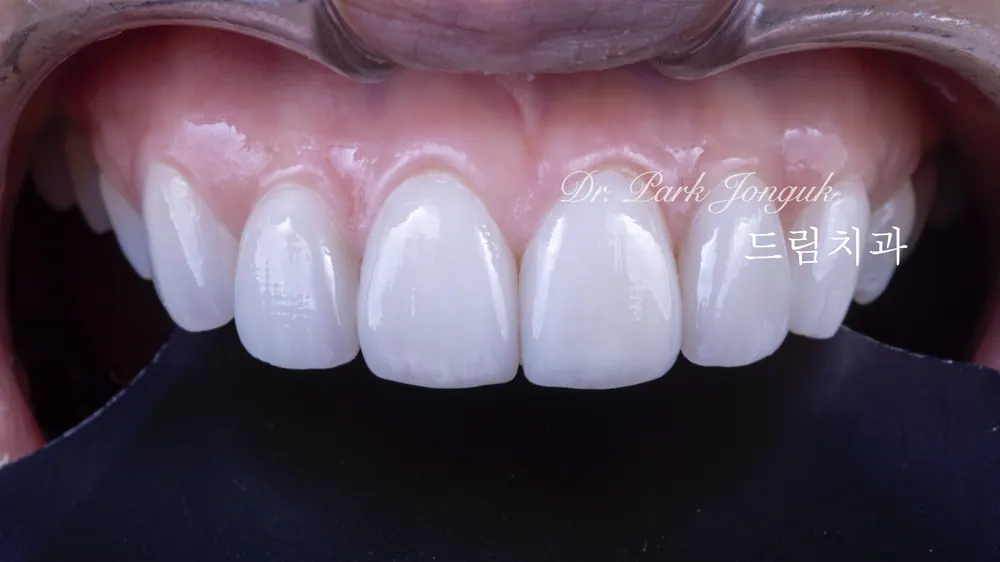
It's not that veneers are meaningless for every protruding mouth.
Optical-illusion cases — where there's almost no real protrusion, but the mouth looks like it sticks out because the front teeth are large or dark.
Very mild dental cases — if the tilt is only slight, there's a range that can be improved through shape design.
Finishing after orthodontics — a method where orthodontics corrects the position first, and veneers then complete the color and shape.
The most natural and safest path is the third option: combined treatment.
Deciding without a diagnosis is risky
If you try to force a protruding mouth to be fixed with veneers alone and end up over-reducing the teeth, it can't be undone.
Enamel doesn't regenerate once it's been cut away.
That's why the first step isn't recommending a procedure — it's identifying the cause.
I look at side-view photos, models, and, when needed, radiographic data together.
I first determine whether the protrusion comes from the bone, from the angle of the teeth, or from color and shape.
The purpose of the diagnosis is to tell you honestly whether your case can be handled with veneers or not.
Frequently asked questions
Q. Braces feel like too much of a commitment — can't veneers alone reduce a protruding mouth?
A truly protruding mouth is hard to reduce with veneers alone, because it isn't a treatment that moves the tooth backward. But if the protrusion is mild and mostly caused by color and shape, the impression can sometimes be improved. It's most accurate to first confirm the cause through diagnosis.
Q. If I shave down my front teeth, won't my mouth go in?
No, it won't. Veneers trim the surface and add a layer of ceramic, so the overall thickness doesn't change much. In fact, over-reducing in an attempt to pull the mouth in creates excessive reduction, which increases the risk of side effects like sensitivity.
Q. Is it better to do orthodontics and veneers together?
If the cause of the protrusion is a position problem, then yes. Correcting the position with orthodontics first and then finishing the color and shape with veneers gives the most natural result. The order and scope differ case by case, so it's best to plan after a diagnosis.
In summary
The answer to a protruding mouth isn't "veneers or braces."
It starts with "where does my protrusion come from."
If it's a bone or position problem, it's orthodontics; if it's a color-and-shape illusion, it's veneers; if it's a mix of both, it's combined treatment.
To avoid losing tooth structure to excessive reduction, diagnosis has to come before the procedure.
Park Jonguk, Head Director, Dream Dental Clinic
Graduate of Seoul National University School of Dentistry / Master's degree in Dentistry
Board-certified specialist in conservative dentistry / Education Director, Korean Academy of Adhesive Dentistry
Author of 『최소 삭제를 위한 라미네이트 임상』 (Veneer Clinical Practice for Minimal Reduction) / Director of Lamista Academy
This article is a clinical note written by Dr. Park Jonguk of Dream Dental Clinic, Gangnam; the original was published on his blog. The photographs shown are real cases he treated. Results vary with each patient’s condition, and every procedure carries the possibility of individual variation and side effects.
-
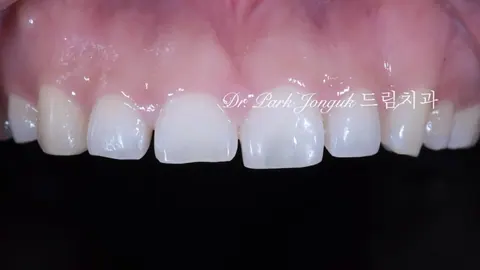 Protruding Front Teeth or a Snaggletooth: Braces or Veneers? 20 Years of Clinical Experience Weighs In
 -
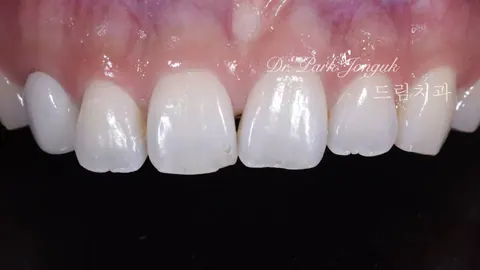 Teeth Still Crooked Even After Orthodontic Treatment: Can Veneers Fix It?
 -
![[Veneers for Protruding Teeth] Solving Protruding Teeth Without Braces? A Difficult Case in a Woman in Her 50s — 4-Year Follow-Up Revealed](/column-media/224094075985/thumb.webp) [Veneers for Protruding Teeth] Solving Protruding Teeth Without Braces? A Difficult Case in a Woman in Her 50s — 4-Year Follow-Up Revealed
[Veneers for Protruding Teeth] Solving Protruding Teeth Without Braces? A Difficult Case in a Woman in Her 50s — 4-Year Follow-Up Revealed
Quick Consult
Request a Callback
Leave your number and we will call you back during clinic hours.
Request Received
We will contact you during clinic hours. For urgent matters, please call +82-2-3448-0028.