
Why Veneer Retreatment Shouldn't Be Rushed: The Role of Temporary Teeth and the Importance of the Initial Diagnosis
After getting veneers or an all-ceramic crown,
gum inflammation can develop,
or the position of the teeth can shift slightly, on occasion.
When that happens, there's a decision patients make most often.
"Please just redo it quickly, it's uncomfortable."
This is the trap I've run into most often in 20 years of working with veneers.
A retreatment needs to be handled even more carefully than the first treatment.
If you rush it, the same problem comes right back.
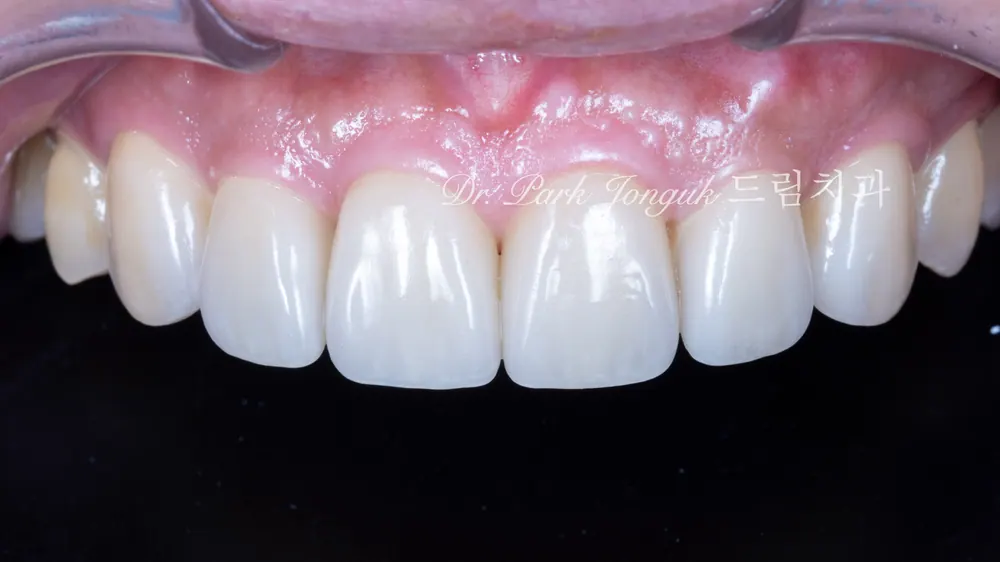
1. Two common situations that call for retreatment
There are broadly two situations where retreatment is considered after veneers or an all-ceramic crown.
First, gum inflammation
When a veneer doesn't line up precisely with the gumline,
or the margin (the joint where it meets the tooth) isn't perfectly sealed, food and bacteria get trapped in between and cause chronic inflammation.
This comes with symptoms like swollen gums, frequent bleeding, and discoloration around the treated area.
Second, a change in tooth position
As neighboring teeth and the bite shift over time,
the edge of a veneer can start to stand out or look unnatural.
In particular, when a patient's original bite misalignment wasn't diagnosed thoroughly enough before treatment,
these changes accumulate as time passes.
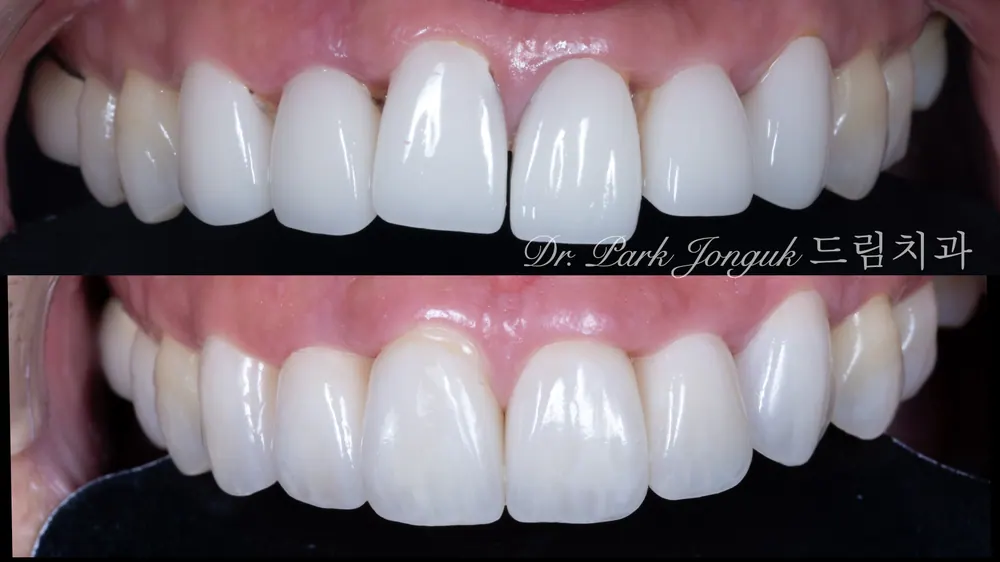
2. Why you shouldn't rush into retreatment
The most common mistake is "quickly removing the original veneer and bonding on a new one."
There are three traps here.
Rebonding while inflammation is still present just repeats the same problem
If an impression is taken while the gums are swollen, an accurate margin line can't be captured.
Bonding a new veneer over gums that later settle back down causes the same lifting and the same inflammation all over again.
Treatment while tooth position hasn't stabilized soon looks unnatural again
If a new veneer is bonded on without sorting out the bite and neighboring teeth first, the same spot ends up looking unnatural again within a few months.
The cumulative damage from the procedure itself is significant
A veneer is a procedure that bonds onto the tooth surface after it has been lightly reshaped.
Repeating retreatment adds up to a real burden on the tooth itself. That's why it needs to be done right the first time.
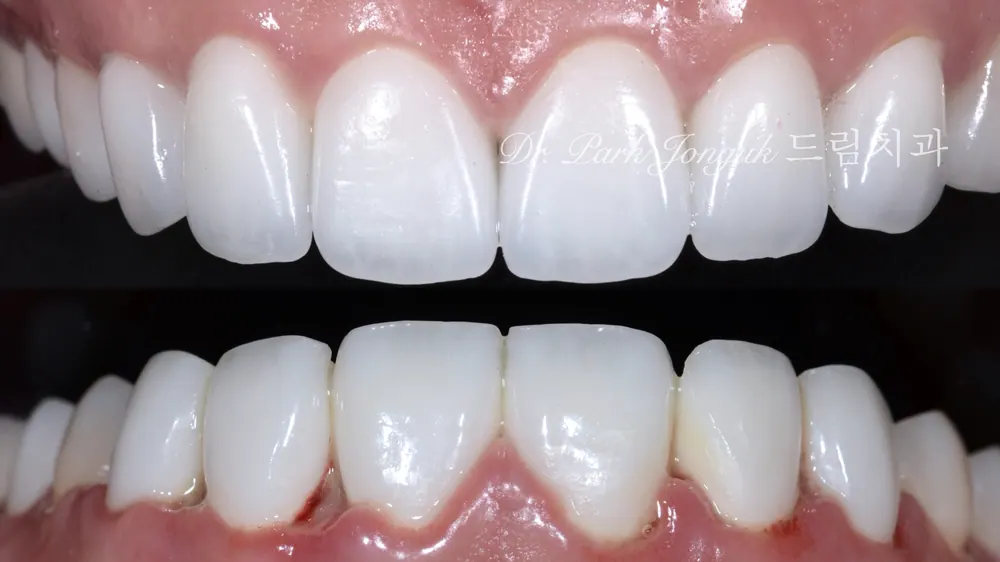
3. The role of temporary teeth: time is what creates the result
The core of the retreatment process is the "temporary teeth stage."
Temporary teeth aren't just there to fill an empty space.
They serve three roles at once.
Calming the inflammation
When the margin of a temporary tooth is fitted well against the gum, irritation decreases and the gum slowly returns to its original state.
Settling the tooth position
Adjusting the shape and bite of the temporary teeth stabilizes the relationship with the neighboring teeth.
Previewing the final result
The shape and color of the temporary teeth let the patient preview the change to their own teeth in advance.
This is a stage where adjustments can still be made before moving to the final veneer.
Only after this stage has been gone through thoroughly should treatment move to the final veneer, and that's what makes the result last.
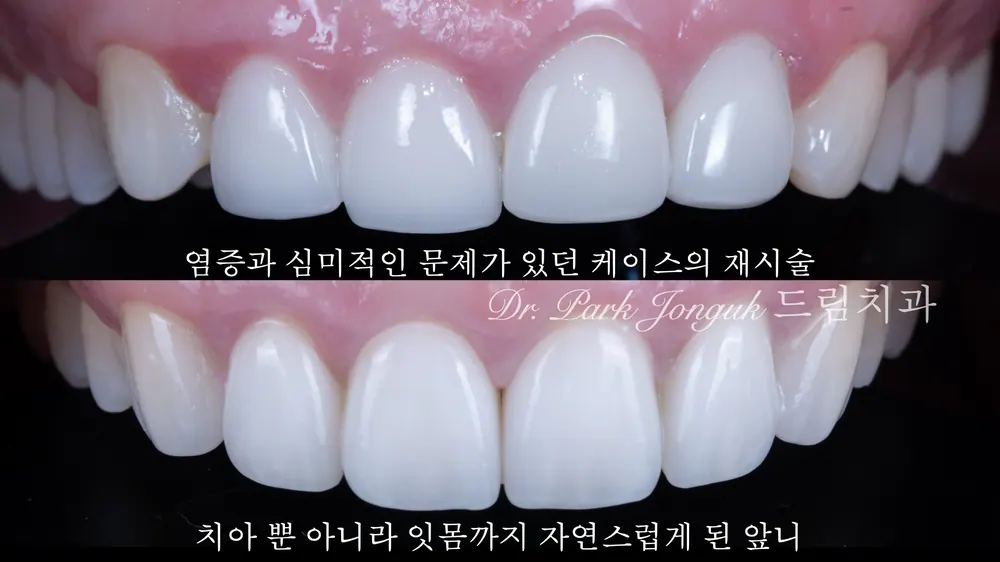
4. The appropriate timeframe: as short as 4 weeks, typically 2 to 3 months
The appropriate timeframe for the retreatment process varies by case, but generally follows this pattern.
If there's no underlying problem and it's simply a chip, a loose veneer, or an aesthetic issue, the timeframe can be short,
but if there's also gum inflammation, a change in gum shape, or a shift in the bite,
a total of about 2 to 3 months is the typical, appropriate timeframe.
Patients sometimes ask to "have it all done within a month."
It's possible, but in that case the odds of the same problem coming back rise significantly.
5. But something even more important: the initial diagnosis
There's something far more important than doing a good job at retreatment.
It's looking closely enough at the diagnosis when veneer treatment first begins.
Most cases that end up needing retreatment are ones where something was missed at the initial diagnosis stage, and it surfaced only after time passed.
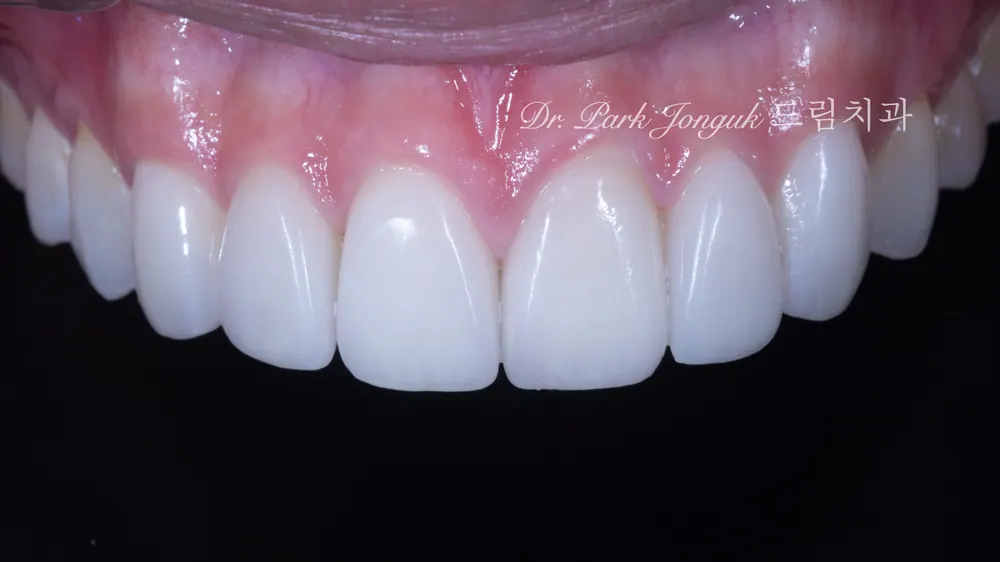
6. What must be checked at the initial diagnosis
There are items that need to be confirmed at the diagnosis stage before getting veneers.
Bite analysis
How the upper and lower teeth meet, and whether there's nighttime grinding or clenching.
Gum condition
Whether there's inflammation, the balance of the gumline, and periodontal health.
Alignment of neighboring teeth
How bite misalignment, rotated front teeth, and gaps between teeth affect the result after veneers.
Advance simulation of color and shape
Previewing the post-treatment look through the temporary-teeth stage or a digital simulation.
The patient's lifestyle
The suitable color and strength differ depending on occupation, hobbies, and daily habits.
If these five factors aren't covered thoroughly enough at the first consultation and treatment goes ahead anyway,
the likelihood of needing retreatment down the road increases.
Frequently Asked Questions (FAQ)
Q1. My gums are swollen after getting veneers. Should I get retreatment right away?
Removing them right away isn't recommended.
First, the cause of the inflammation (an ill-fitting margin, bacterial buildup, food trapped underneath, etc.) should be diagnosed,
and if needed, it's best to go back to the temporary-teeth stage to stabilize the gums before deciding.
Q2. Does retreatment reduce more of the natural tooth?
Beyond the amount reduced during the first treatment, additional damage is generally minor, but it does add up the more times it's repeated.
That's why looking closely at the diagnosis the first time matters most of all.
Q3. Can I go about daily life with just the temporary teeth?
Yes, you can.
You should be careful with hard foods, but eating, talking, and smiling are usually not affected.
The temporary teeth themselves can also be made with a natural color and shape.
Q4. I'm worried the same problem might come back after retreatment.
With an accurate diagnosis, a thorough temporary-teeth stage,
and the patient's own care afterward (a night guard, regular checkups, etc.), the odds of the same problem happening again become very low.
Aftercare guidance is also something we walk you through during your visit.
In closing
The core of veneer retreatment comes down to two things.
Not rushing it.
And looking closely enough at the diagnosis from the very start.
There's a phrase that comes to mind most often after 20 years of clinical practice.
"The best retreatment is starting things right the first time, so that retreatment is never needed at all."
That's the most important standard to keep in mind when deciding on veneers.
This article is a clinical note written by Dr. Park Jonguk of Dream Dental Clinic, Gangnam; the original was published on his blog. The photographs shown are real cases he treated. Results vary with each patient’s condition, and every procedure carries the possibility of individual variation and side effects.
Quick Consult
Request a Callback
Leave your number and we will call you back during clinic hours.
Request Received
We will contact you during clinic hours. For urgent matters, please call +82-2-3448-0028.