
Can Everyone Get No-Prep Veneers?
Hello, I'm Park Jonguk, director of Dream Dental Clinic, specializing in no-prep veneers.
Cosmetic treatment is a fairly subjective kind of treatment.
There are objective standards of beauty,
but first, teeth that suit you personally are what make them beautiful,
and they also have to look beautiful in your own eyes.
Objectively, there are guidelines like which tooth color suits which skin tone,
which tooth shape suits which face shape,
and which tooth proportions suit a given bite, jaw arch, and overall tooth condition, and so on.
There are a variety of objective indicators like these,
but in the end, tooth shape, size, and color
have a built-in constraint: they need to look good to the person
when they look at them themselves.
So, in creating a wide variety of teeth,
focusing on the diversity from person to person
and, within what's possible,
matching each patient's subjective likes and dislikes
is also quite important.
Of course, there still needs to be a basic baseline for tooth shape and the like.
Keeping this diversity in mind
while still working to match the basic shape and color of the teeth
is really where cosmetic dentistry begins.
Especially now that COVID is over, patients of many different nationalities
are coming to Korea for veneer treatment,
so we now also need to accommodate the tastes of each country.
To treat a patient while considering both the subjective and objective sides,
thorough preparation before treatment is essential.
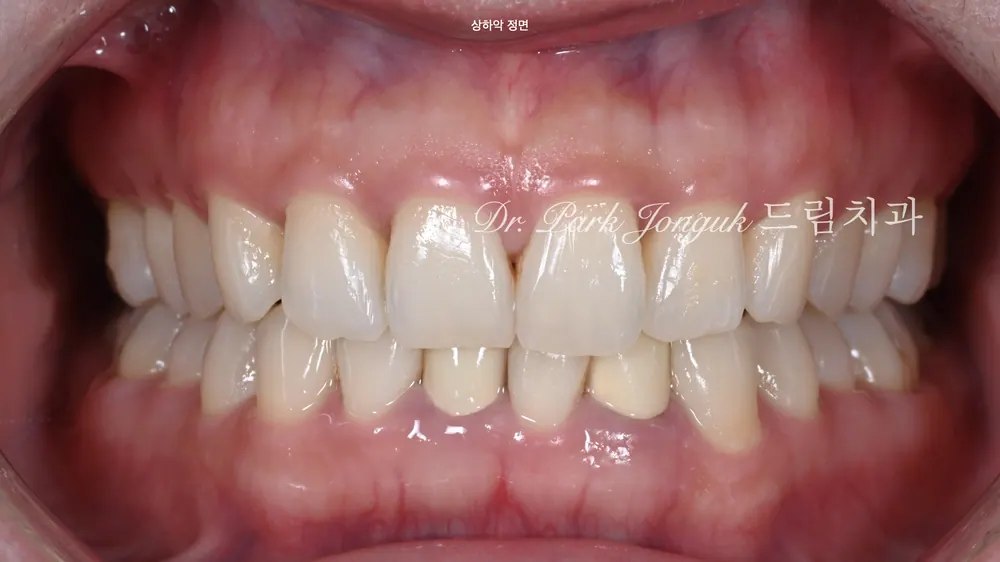
The biggest reason this patient wanted veneer treatment
was that she wanted brighter teeth.
She decided on veneer treatment to brighten teeth that overall had a yellowish tone,
and although she had already tried whitening several times,
she said it just caused sensitivity without much real effect.
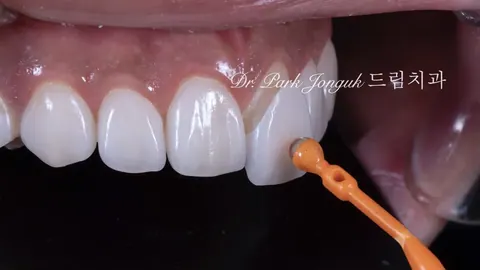
On top of that, she also wanted to improve the black triangles visible between her teeth.
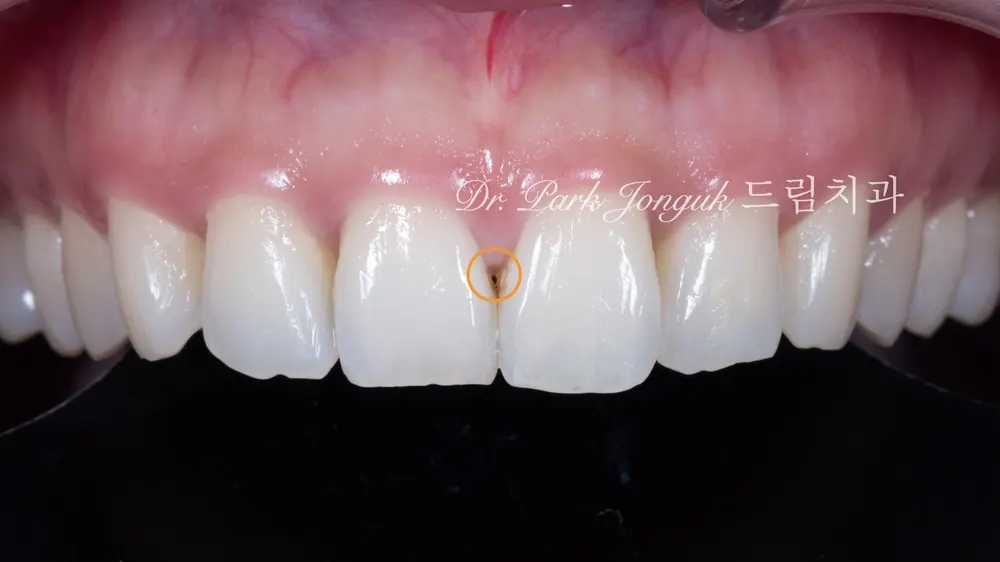
This dark area you can see here is called a black triangle.
Not just in this spot, but between nearly every tooth,
black triangles like this were present.
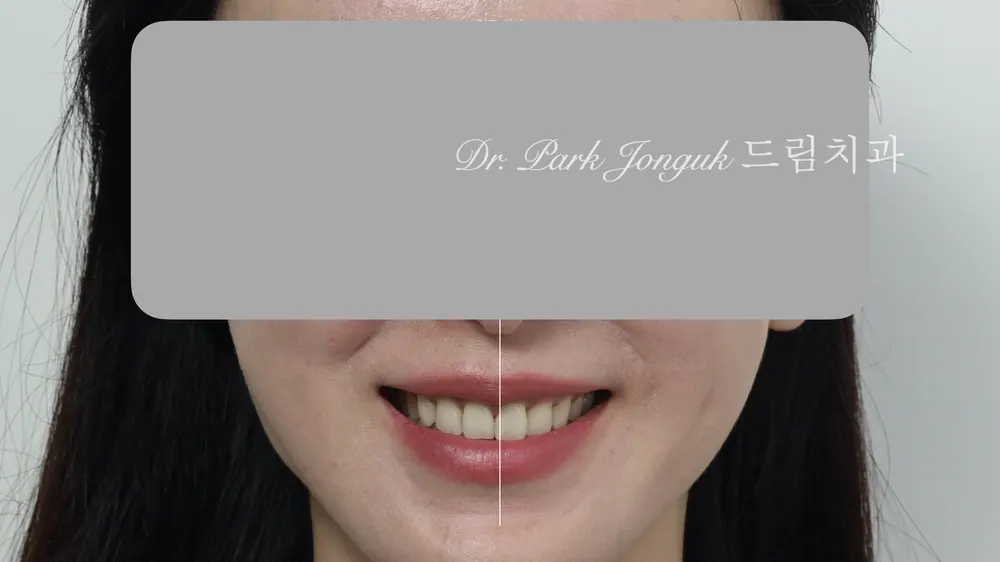
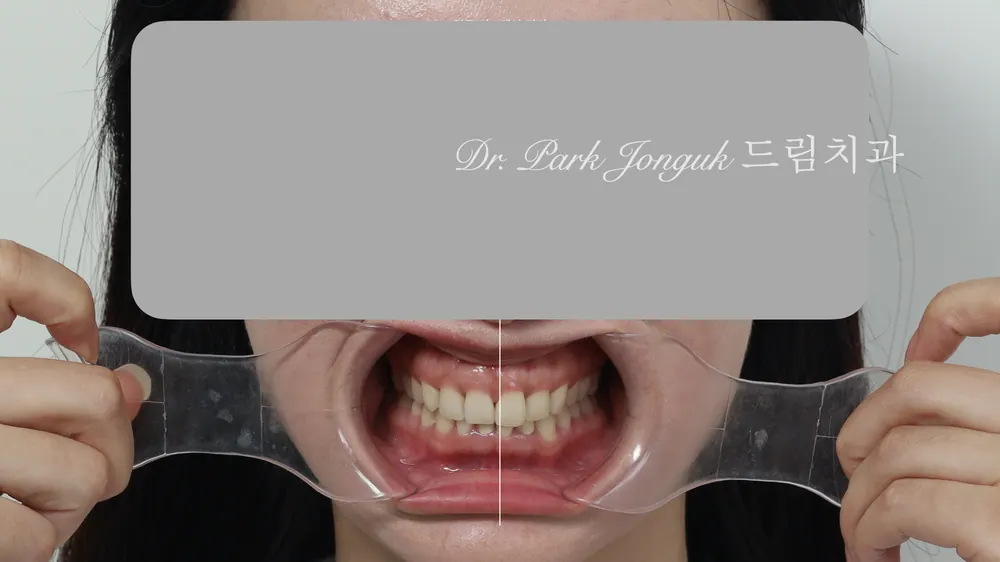
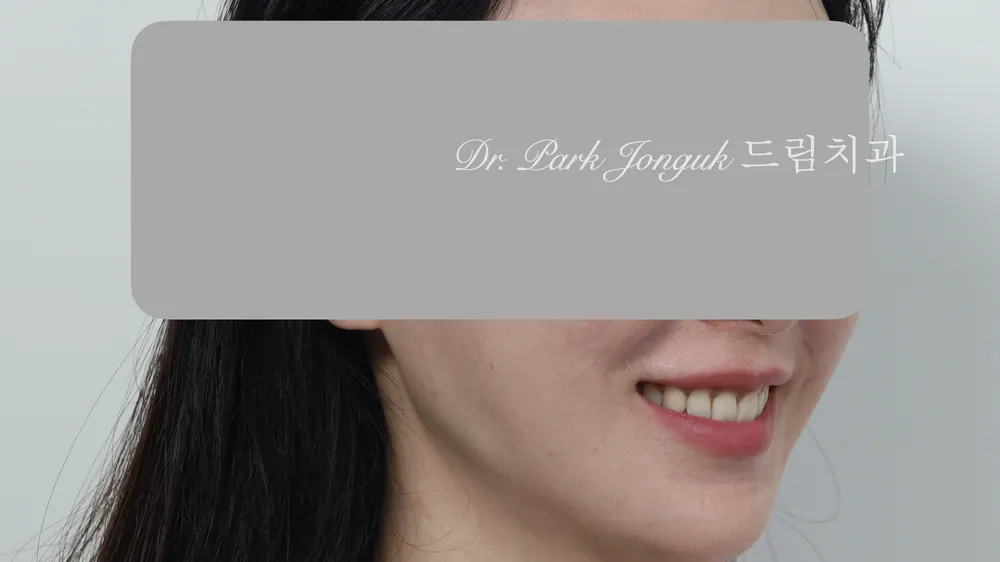
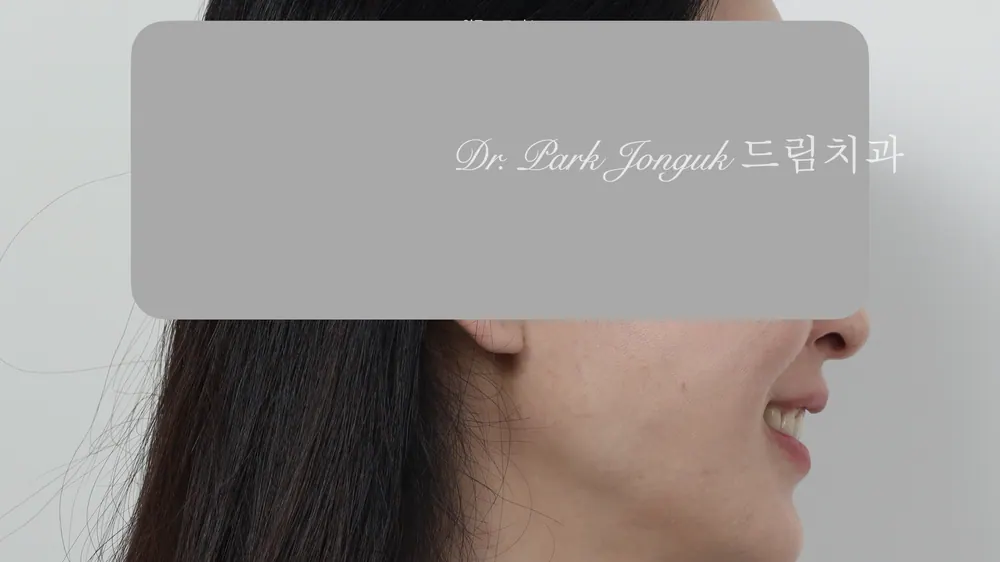
The positional relationship between the face and the teeth,
the degree of any tilt,
and factors like protrusion or the position of the midline all need to be examined closely.
We examine the face shape and talk with the patient about what kind of tooth impression she's looking for.
In most cases where color is the only real complaint driving treatment,
keeping the current tooth shape largely unchanged tends to produce higher satisfaction.
In this case, though, the current tooth shape felt a bit too strong, so we decided to soften it slightly.
Her teeth show quite prominently when she smiles.
We'd describe this as having a "trained smile."
Because she has a textbook-style smile,
the no-prep veneer treatment needed to address both the gumline and the black triangles as well.
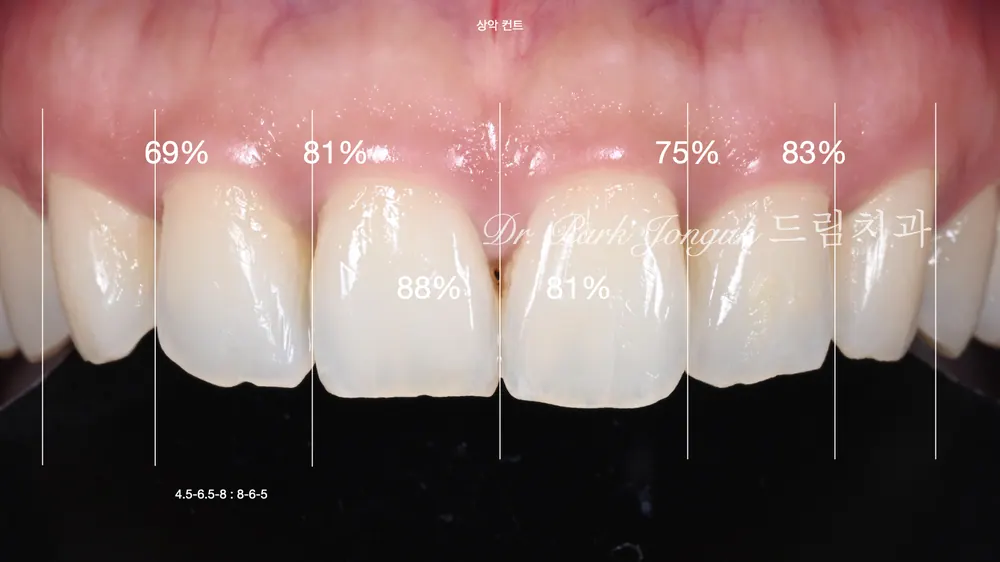
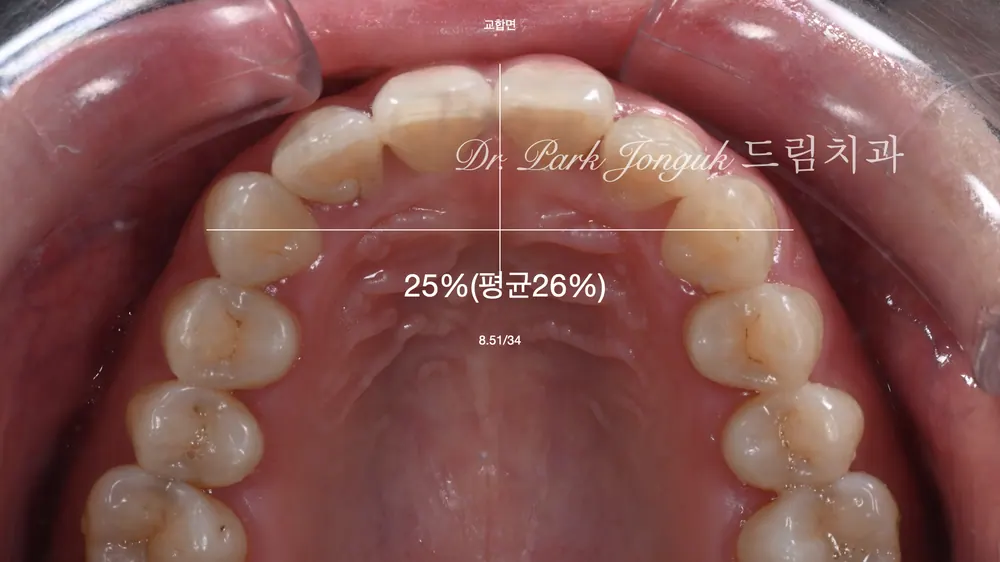
We measure the current size and proportions of the teeth.
The width-to-height ratio of each individual tooth,
the proportions between teeth as seen from the front,
and the degree of protrusion are all evaluated.
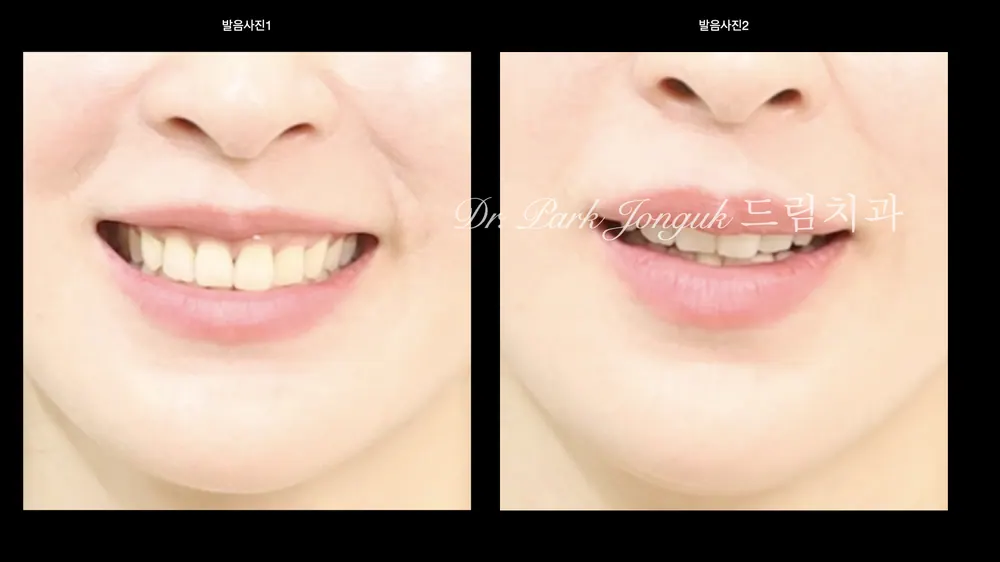
Using video of the patient speaking, smiling, and at rest,
we evaluate how much of the teeth show.
When the entire tooth shows like this while speaking, the shape of the gums needs attention as well.
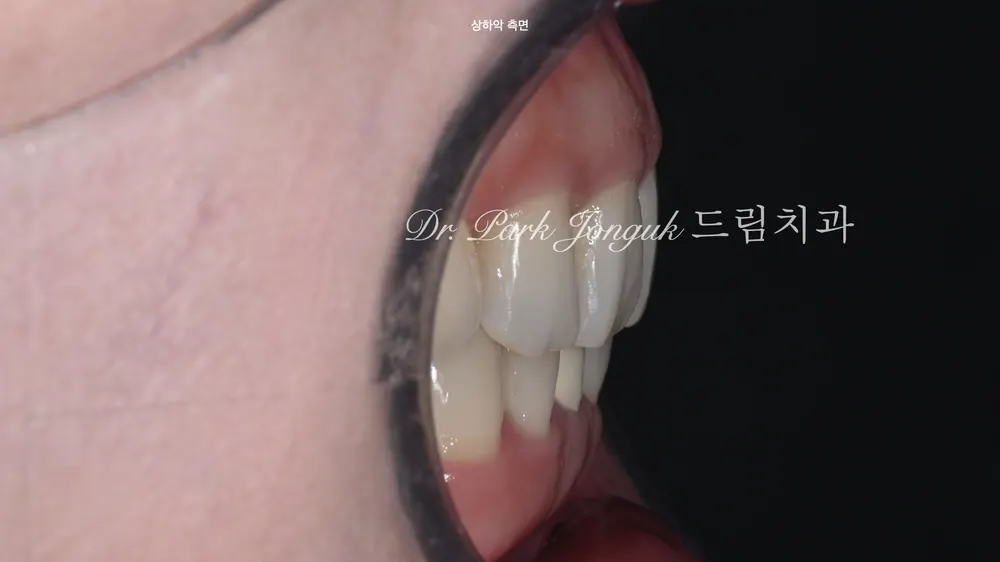
Looking at the shape of the teeth from the side,
we double-check the angle of the teeth.
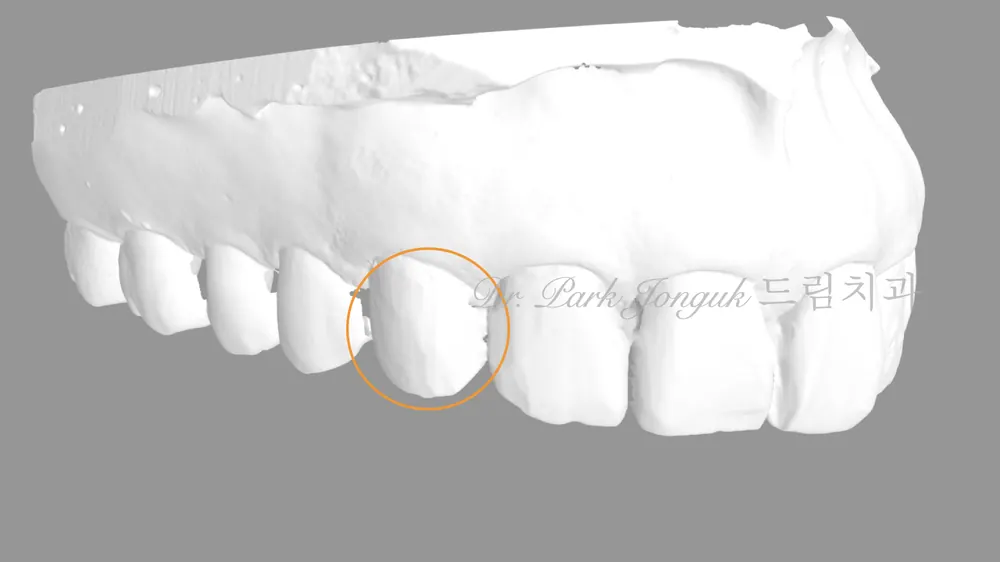
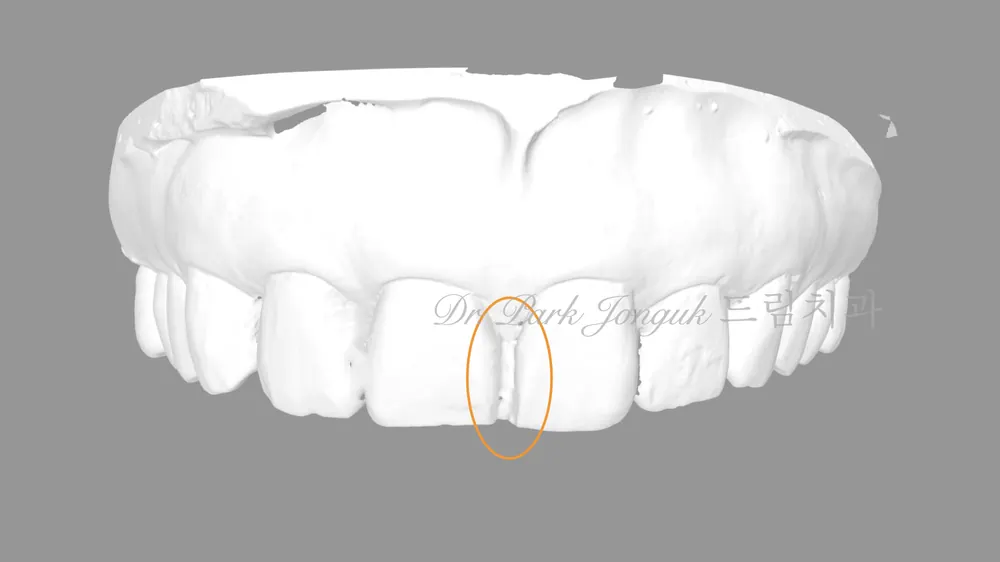
The amount of tooth reduction needed for the veneers
is simulated in advance.
One canine was slightly more prominent than the other,
so some reduction was needed there,
and to close the black triangles between the front teeth,
minimal reduction was needed in that area as well.
For the rest of the teeth, we decided to proceed with no-prep veneers.
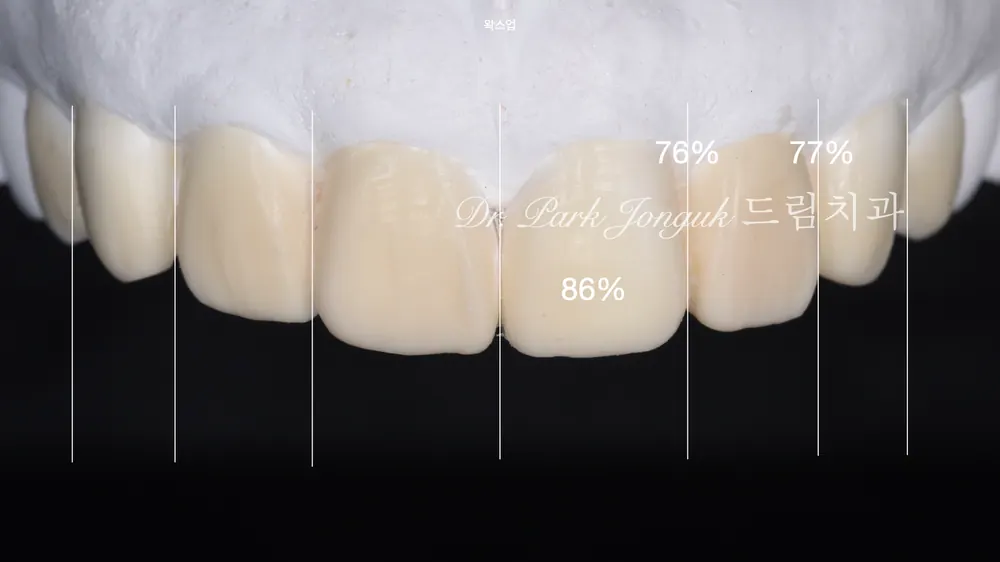
Once the amount of reduction was confirmed,
we build a wax mock-up of the intended tooth shape.
In this way, across both the static and dynamic aspects — face and teeth, speech and smile —
we carry out a multi-angle evaluation,
and based on this data, we work out how to treat the case and assess how much tooth needs to be reduced.
This whole process of building the teeth in wax
is called precision wax-up diagnosis.
Once the treatment plan is set this way,
we move into treatment.
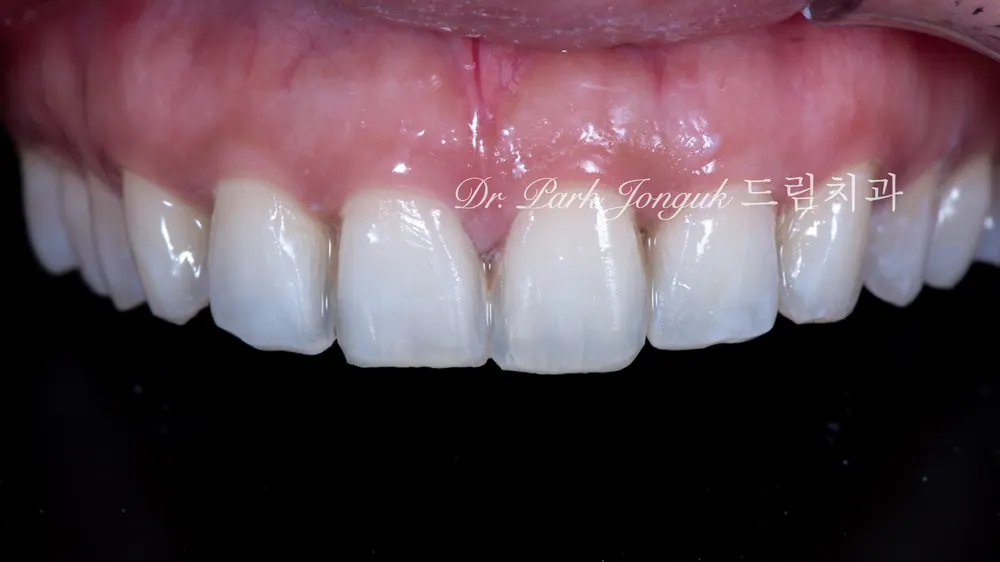
Tooth reduction is carried out according to the plan.
Depending on the tooth, treatment proceeds either as minimal-prep veneers
or as no-prep veneers.
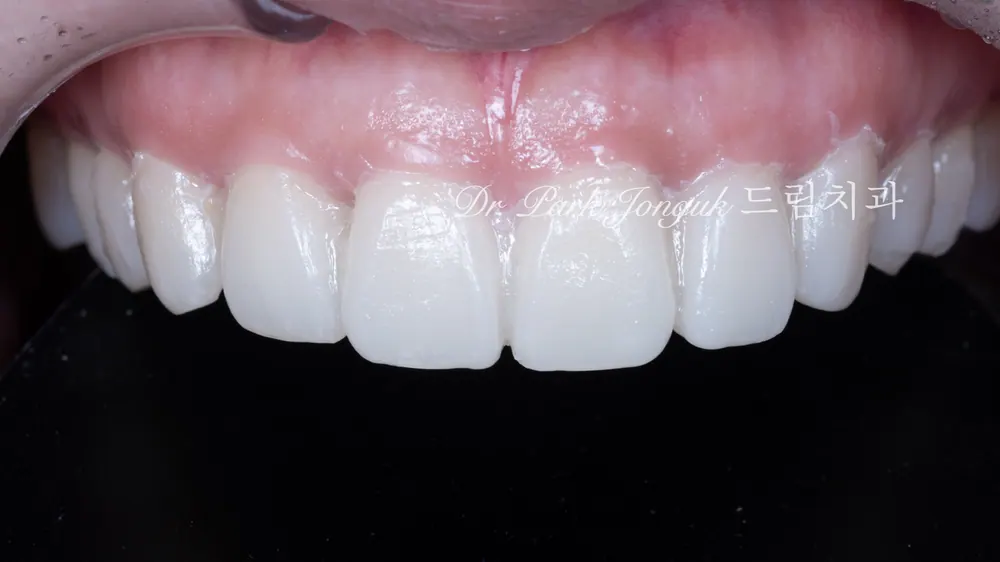
Temporary veneers are made,
and we discuss the shape of the teeth with the patient.
Up to this point, treatment had been guided by objective data,
but from here on, treatment guided by the patient's subjective perspective begins.
Many clinics don't fully understand this combined objective-and-subjective treatment process
and end up treating cases in a vague, undifferentiated way.
Skillfully carrying out this whole sequence of steps
is extremely important in cosmetic treatment.
Starting from the tooth shape I consider suited to the patient's face shape,
and incorporating, to some degree, the shape the patient wants,
we work toward finding the ideal shape and color.
Some people prefer a more translucent look,
while others prefer a more opaque one.
In particular, when a patient wants a very white result like this, it's difficult to add much translucency.
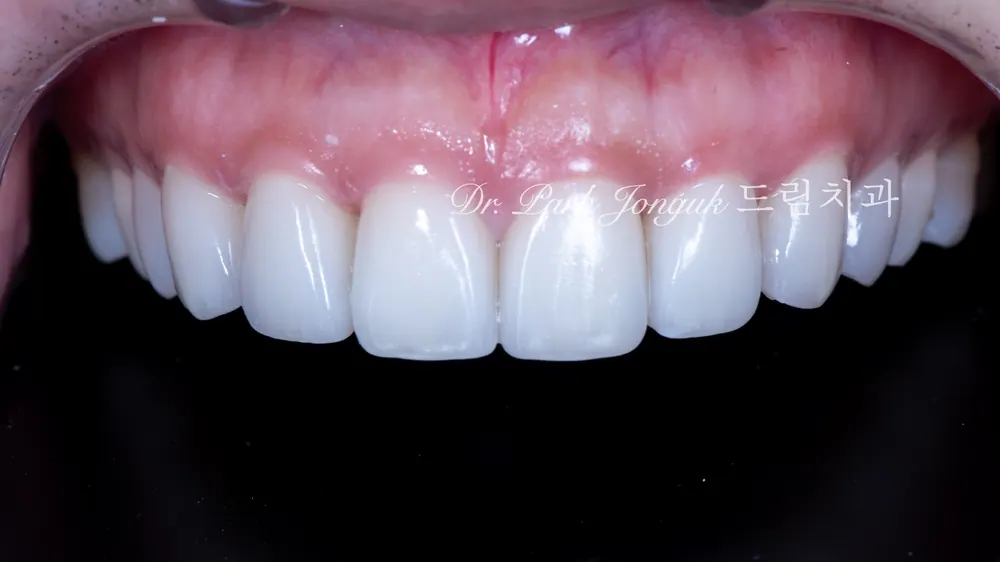
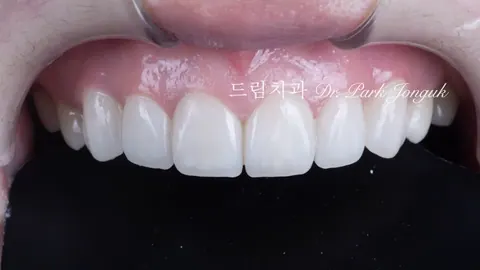
The no-prep and minimal-prep veneer treatment is now complete.
The teeth are now as bright as the patient wanted.
When I discuss this with patients, going overly bright
is not something I recommend.
Among the whitening-brightness levels on the shade guide we use in the clinic,
I recommended a shade slightly darker than the middle,
but the patient wanted a shade one step brighter than that.
In cases like this, it's difficult to make the shade darker first and then brighten it afterward,
so we make it brighter first, then check and adjust it in the mouth.
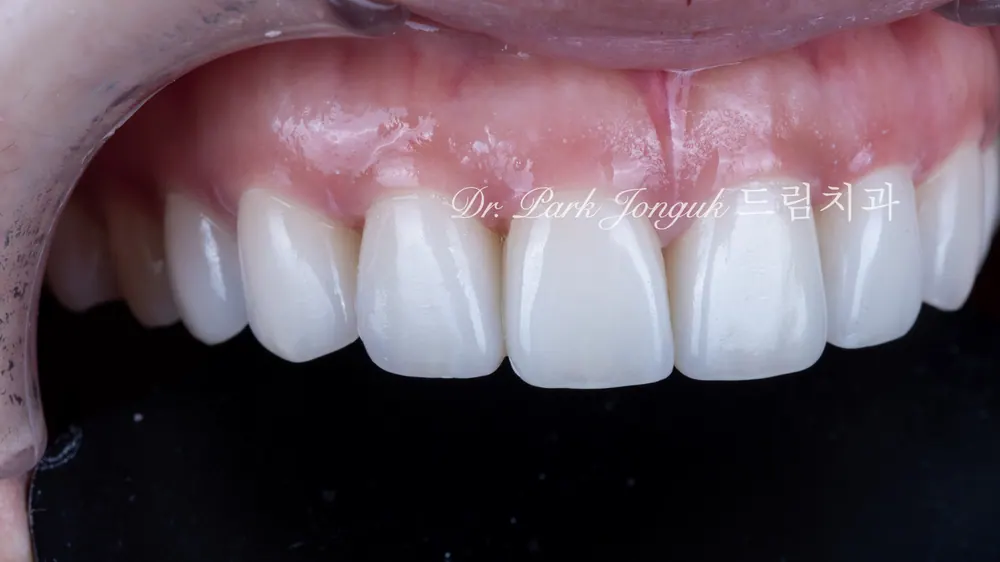
The black triangles that had been present between the teeth
can be seen to have resolved nicely.
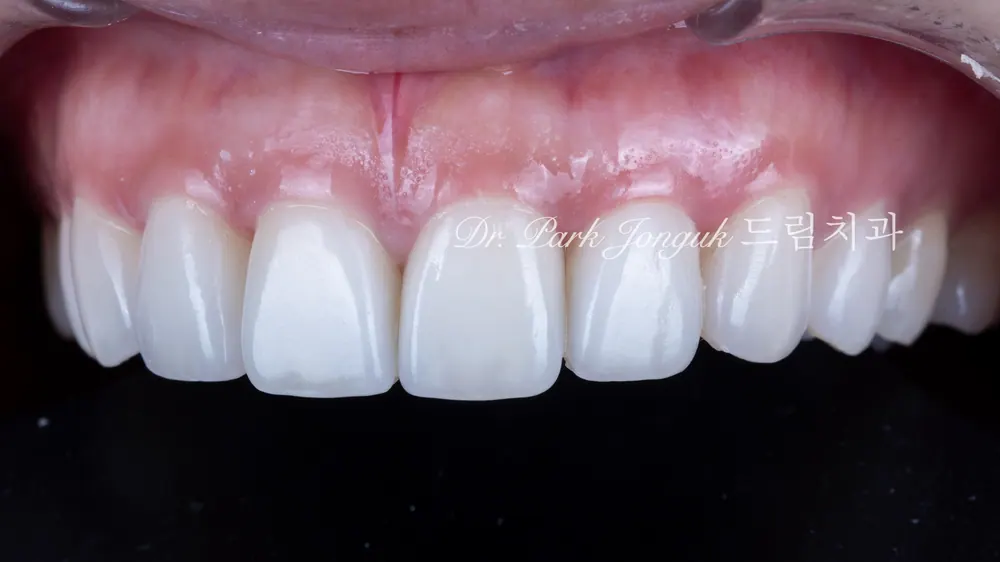
The gumline is also well harmonized.
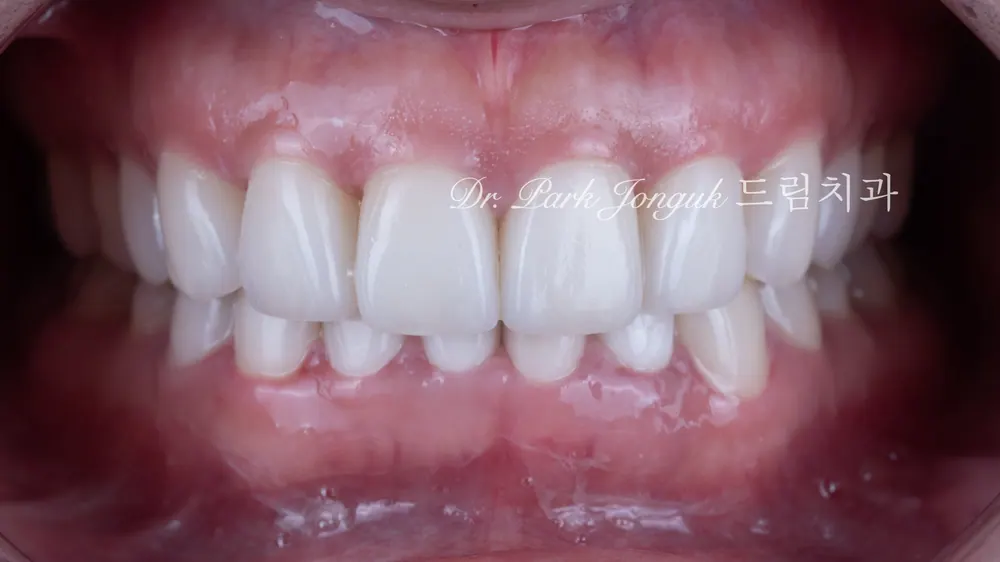
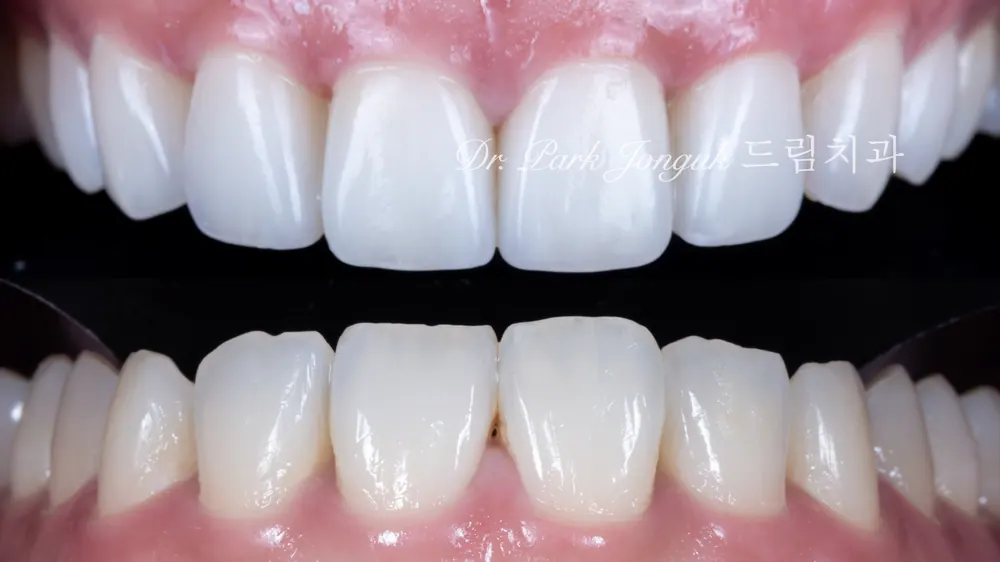
Even while brightening the tooth color,
the natural translucency of the teeth has been well preserved.
Depending on the tooth,
some received minimal reduction and others were treated with no-prep veneers.
If every tooth had been done with no-prep veneers,
the teeth would have ended up too large and looked unnatural.
Since the patient's face was quite small, this was a point that was hard to compromise on.
Both the proportions and the size of the teeth were improved,
showing substantial improvement even by objective measures,
and the patient was also very satisfied on a subjective level.
Natural Beauty
Since 2006, Dream Dental Clinic
This article is a clinical note written by Dr. Park Jonguk of Dream Dental Clinic, Gangnam; the original was published on his blog. The photographs shown are real cases he treated. Results vary with each patient’s condition, and every procedure carries the possibility of individual variation and side effects.
Quick Consult
Request a Callback
Leave your number and we will call you back during clinic hours.
Request Received
We will contact you during clinic hours. For urgent matters, please call +82-2-3448-0028.