
Gangnam Veneer Side Effects: The Problem of Excessive Tooth Reduction
Hello, I'm Park Jonguk, director of Dream Dental Clinic.
Veneers were once notorious for their side effects.
On broadcast programs, some celebrities said never to get veneers,
and even in places like the news,
the side effects of veneers were covered as well.
Are veneers really such a bad treatment??
In fact, most veneer side effects
begin with the reduction of the tooth.
It would be ideal if a veneer never required any tooth reduction,
but since not every case can be done as no-prep,
reduction is often necessary.
The problem is excessive reduction.
If proper reduction is carried out
the way a veneer is meant to be done, side effects shouldn't really occur very often.
So rather than thinking of Gangnam veneer side effects as one single problem,
it helps to think of them in two categories: problems that can arise from improper treatment,
and problems that inevitably show up over time even when treatment was done properly.
First, what I mean by "improper treatment" is
a case where a proper treatment plan wasn't established,
and, as a result, "the tooth ended up being reduced far too much through unplanned reduction."
That's what it comes down to.
Planning before treatment is extremely important.
Please see the link below for how a treatment plan is established and carried out.
The problems that come with excessive reduction are, most significantly,
sensitivity after treatment
and fracture or debonding.
These two would be the biggest problems.
When a tooth is reduced a lot, the nerve tissue inside becomes more sensitive to outside stimuli,
so it reacts faster to hot and cold, causing sensitivity.
If this sensitivity is too severe, root canal treatment may become necessary.
A tooth is made up of enamel and dentin,
and enamel bonds very well with a veneer.
Dentin, on the other hand, has somewhat weaker bonding,
so if all the enamel is removed during tooth reduction,
the veneer becomes prone to debonding or fracturing.
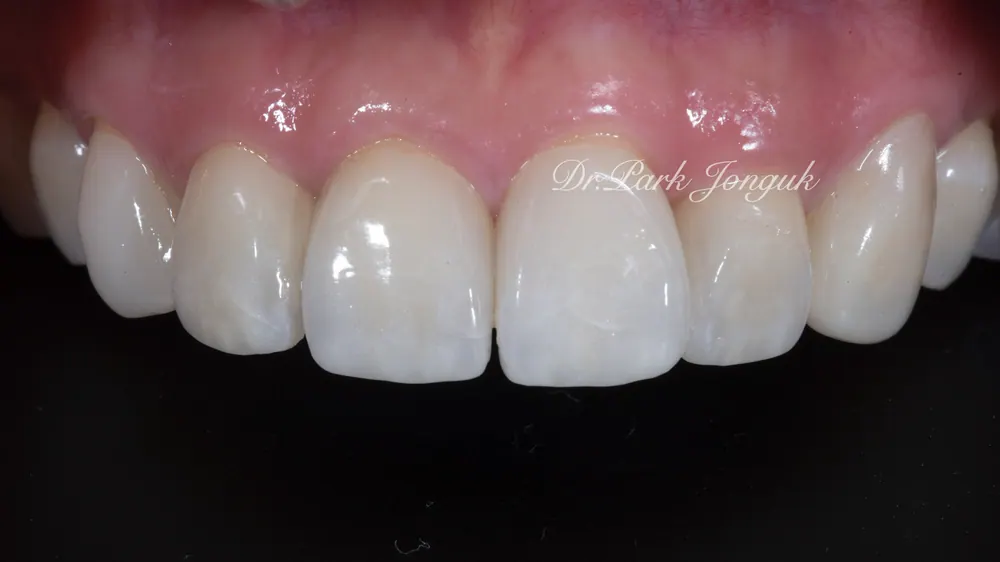
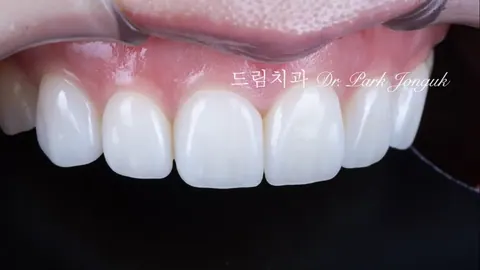
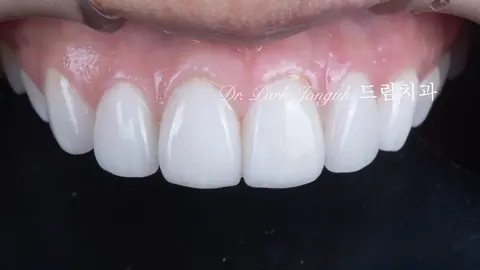
This patient had received veneer treatment,
and came in for retreatment because cracks had developed in every single tooth.
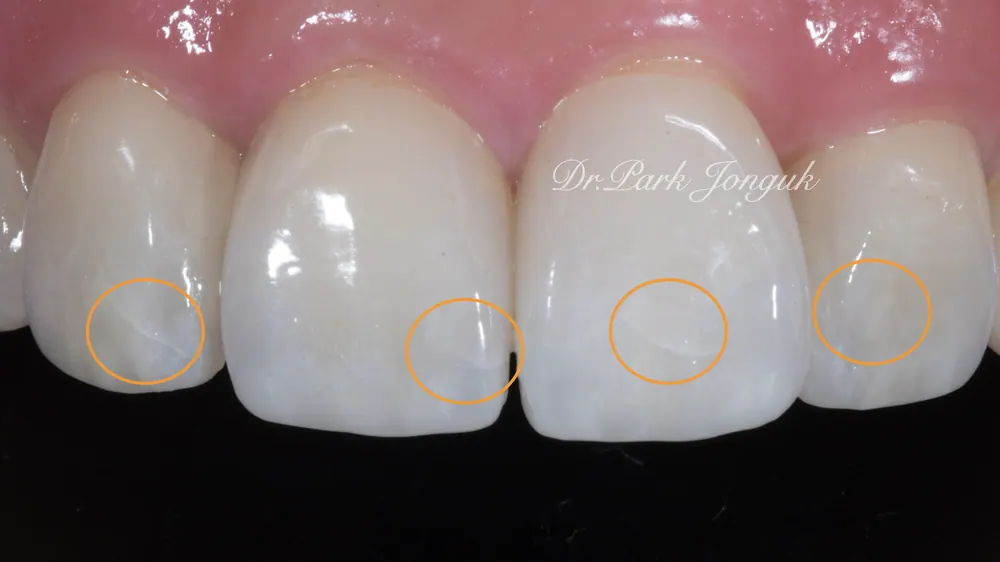
Crack lines like this can be seen in several places.
It's uncommon
for veneers to develop cracks like this all at once, across multiple teeth.
Why did this problem happen in this case???
First, cracks like this can occur even when there's simply an occlusal problem.
In this case, along with an occlusal problem,
the bond had weakened, so the ceramic no longer had proper support from the tooth,
and that made it more vulnerable to outside impact, which is thought to have caused the cracking.
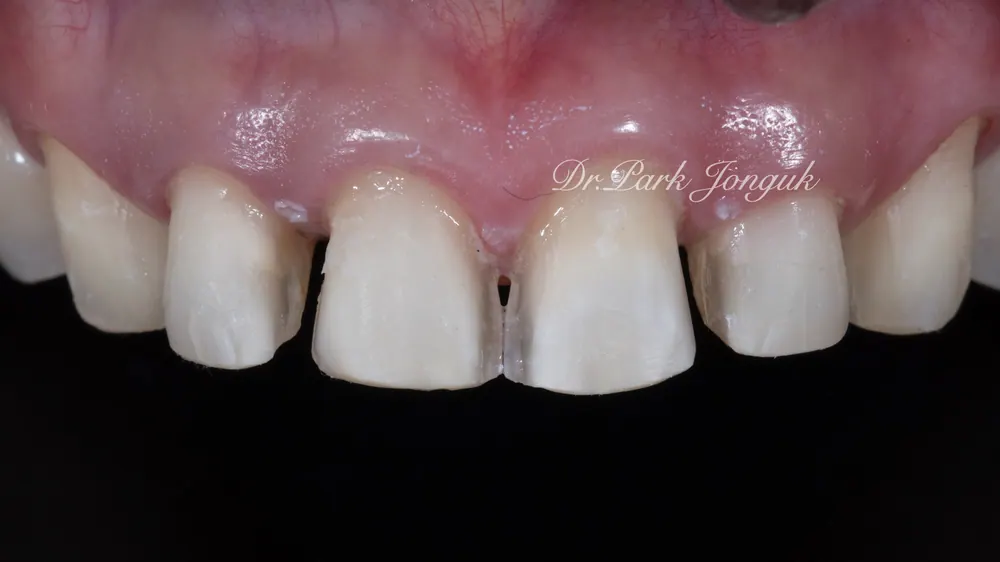
When the veneer was removed,
the canine, which had no cracks, hadn't been reduced excessively,
but the 4 front teeth that had cracks showed clearly excessive reduction.
Even the veneer removal itself went far too easily.
When none of the enamel remains and only dentin is left like this —
in other words, when the tooth has been reduced excessively —
veneer fracture and debonding happen easily.
In a process like this, when removing the veneer,
it's important not to cause further damage to the tooth, right??
In retreating a tooth that's already been excessively reduced like this,
the most important thing is that, because of the Gangnam veneer side effects involved, damage to the tooth during removal needs to be minimal.
Please see the link below for the method used to remove a veneer while minimizing damage.
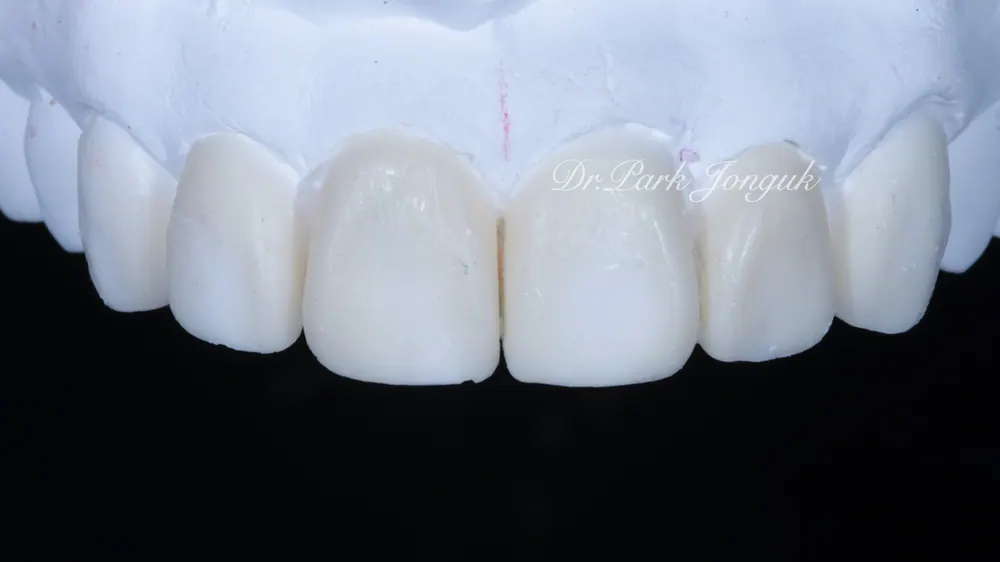
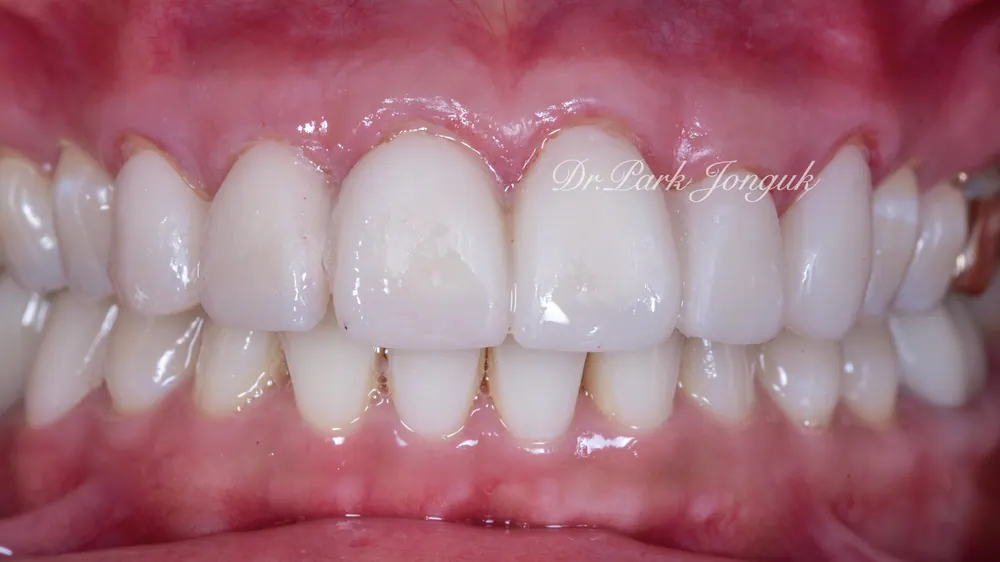
Using a wax-up prepared in advance,
temporary teeth are made,
and we discuss with the patient in advance what shape to work toward.
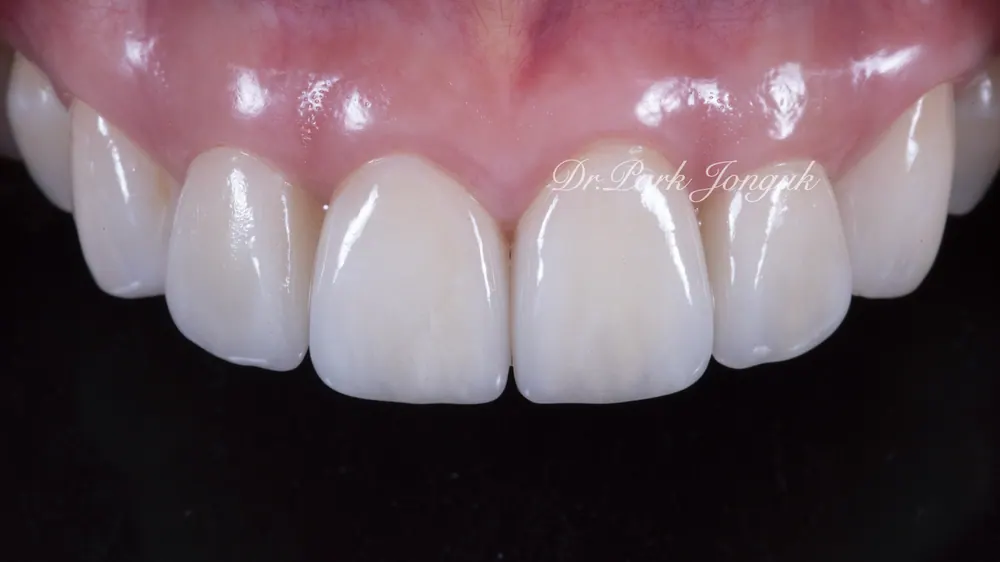
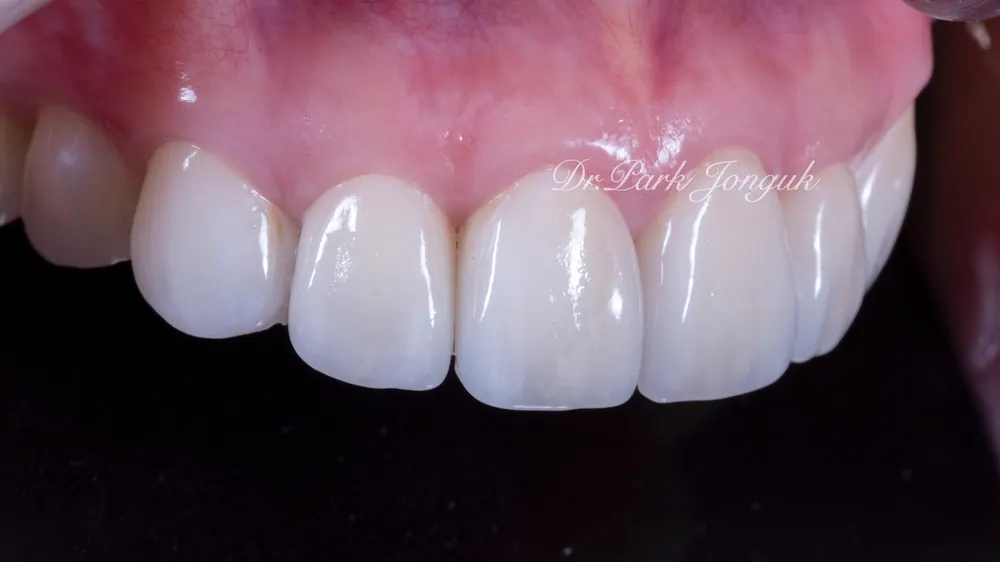
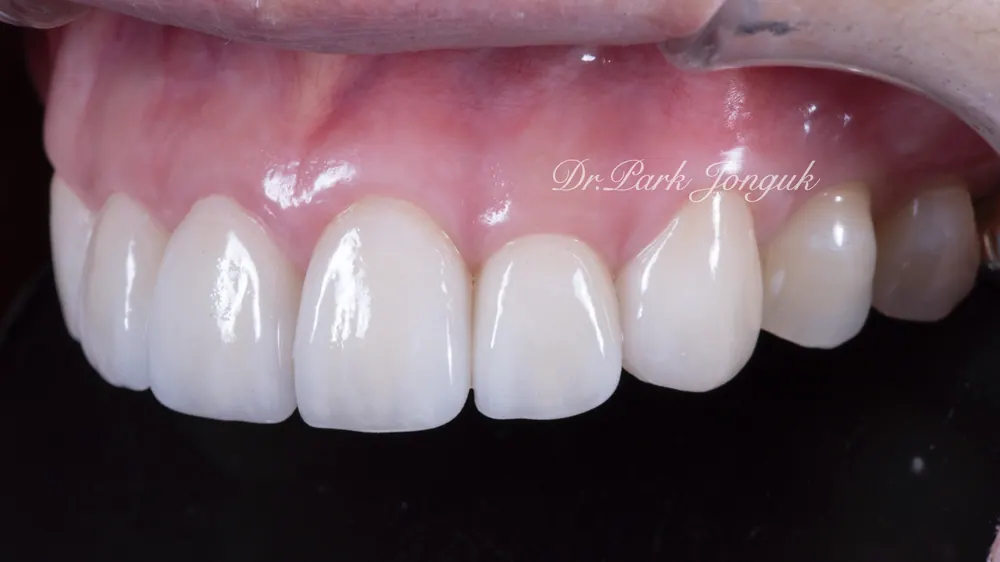
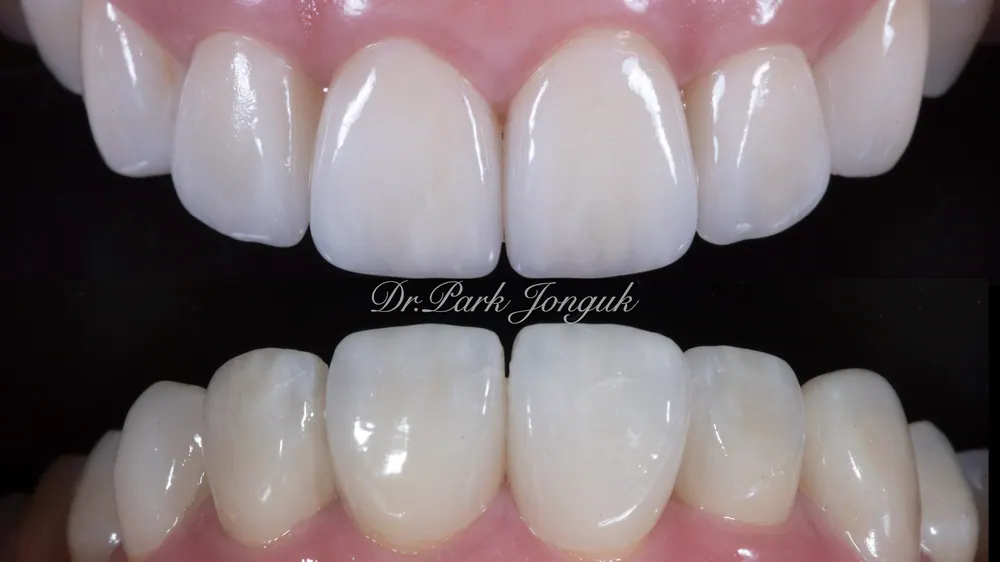
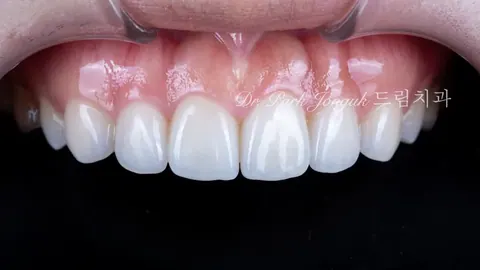
The veneer retreatment was completed this way.
The color, translucency, shape, and dimensionality of a natural tooth are all well preserved.
When bonding to a tooth that's already been excessively reduced,
proper "dentin bonding" needs to be carried out.
It's a demanding process,
but drawing on years of experience in veneer treatment,
the bonding is done in a way that prevents this same problem from happening again.
How do you prevent Gangnam veneer side effects??
First and foremost, a thorough plan needs to be established in advance.
As shown in the link earlier, veneer diagnosis matters a great deal,
and treatment also needs to be carried out properly according to that diagnosis.
If, during diagnosis, the likelihood of side effects from a veneer looks high,
a different approach should be considered instead.
For that reason,
you should be sure to find a clinic that carries out proper diagnosis and treatment.
Fast, same-day completion isn't what matters here.
A veneer, once treated, is meant to be used for 10 years,
so please don't put too much weight on getting it done in a single day.
Also, if you've already had treatment done
and you're experiencing side effects like the ones above,
look for a clinic that properly knows how to remove the existing veneer while minimizing damage to the tooth.
Since 2006, Dream Dental Clinic
This article is a clinical note written by Dr. Park Jonguk of Dream Dental Clinic, Gangnam; the original was published on his blog. The photographs shown are real cases he treated. Results vary with each patient’s condition, and every procedure carries the possibility of individual variation and side effects.
Quick Consult
Request a Callback
Leave your number and we will call you back during clinic hours.
Request Received
We will contact you during clinic hours. For urgent matters, please call +82-2-3448-0028.