
Veneer Redo
Hello, I'm Park Jonguk, lead director of Dream Dental Clinic in Apgujeong.
When treating a molar, the most important thing I consider is function.
Whether it chews food properly, whether it's in good occlusal harmony with the other teeth,
and whether that tooth causes occlusal interference that leads to other problems —
these are the functional aspects I mainly think about during treatment.
For front teeth, rather than this kind of chewing function,
the esthetic, visual side needs far more attention.
If front teeth are treated with veneers or all-ceramic crowns,
and the shape or color is disregarded simply because there's no problem eating or speaking,
that can't really be called a job well done.
For front teeth, the esthetic side inevitably takes priority.
One of the things that needs attention for a beautiful front tooth is proportion.
The color, overall shape, and translucent feel of the tooth are all important, one by one,
but proportion is the foundation before you even start on those details.
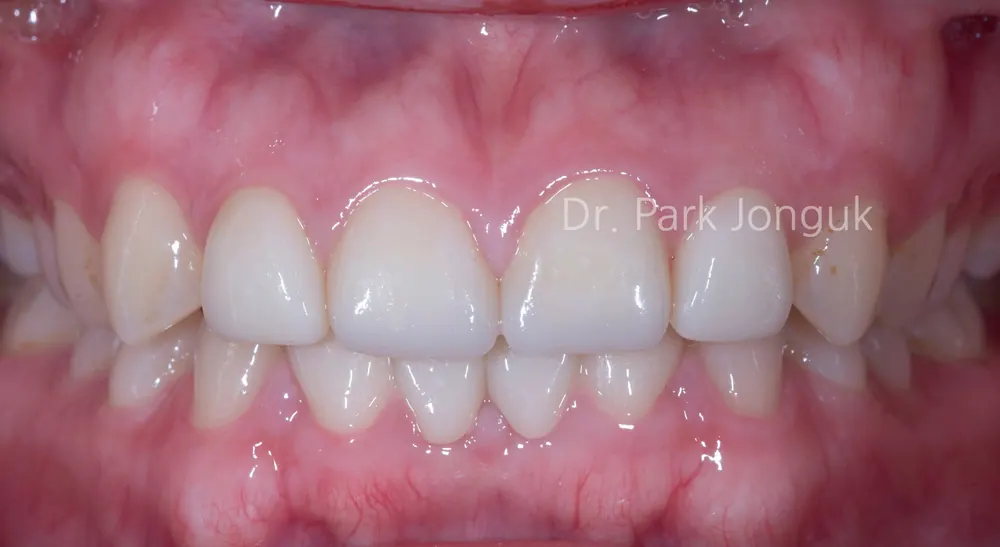
The tooth at the very center is called the central incisor.
The width-to-height ratio of the central incisor is one of the most esthetically important proportions.
The tooth shouldn't feel too wide and flat, nor too long and thin.
An appropriate ratio is also related, to some degree, to facial proportions.
There's various data on this, but generally, if you set the height at 100, once the width falls outside the 75-85 range,
the tooth ends up looking either too wide or too narrow.
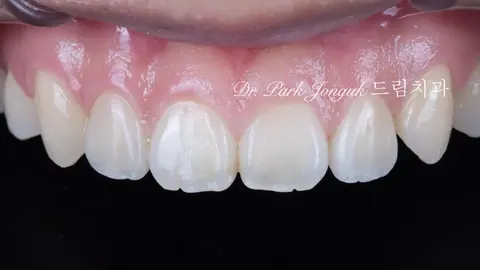
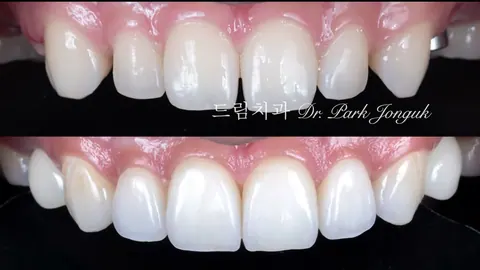
In the case above, the teeth ended up looking too short and wide.
It would be nice if this ratio could always be adjusted freely,
but because the tooth's original condition, the bite situation, and the gums all have to be taken into account,
an ideal ratio can't be achieved in every case.
When the ratio can't be matched exactly, design should be used to avoid teeth looking too wide, as in the case above.
Treatment is meant to make teeth beautiful,
so it shouldn't end up having the opposite effect.
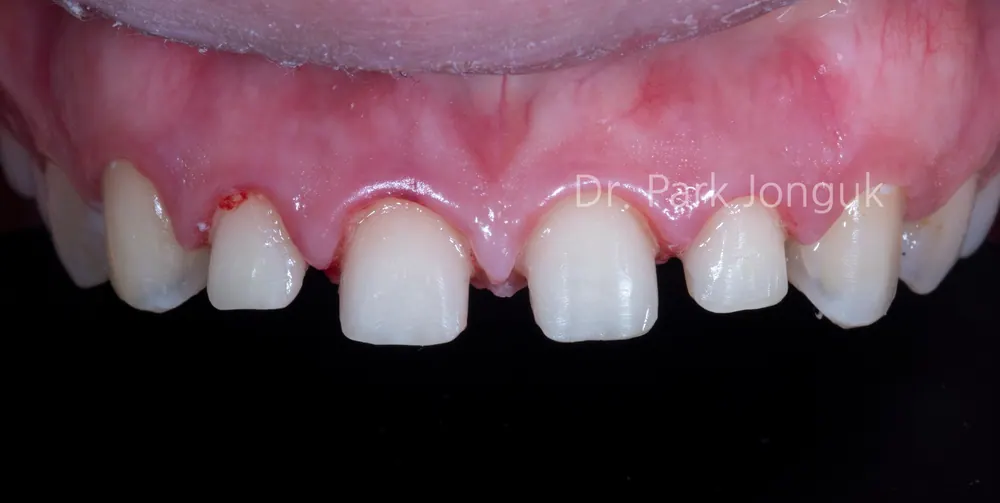
When I removed the ceramic, I was rather surprised at how much of the tooth had already been reduced.
In most cases, this much reduction isn't actually necessary.
For several years now, I've been teaching veneer courses to fellow dentists,
and I repeatedly emphasize how to reduce the amount of tooth removed,
since the more experience you have, the more you can reduce that amount.
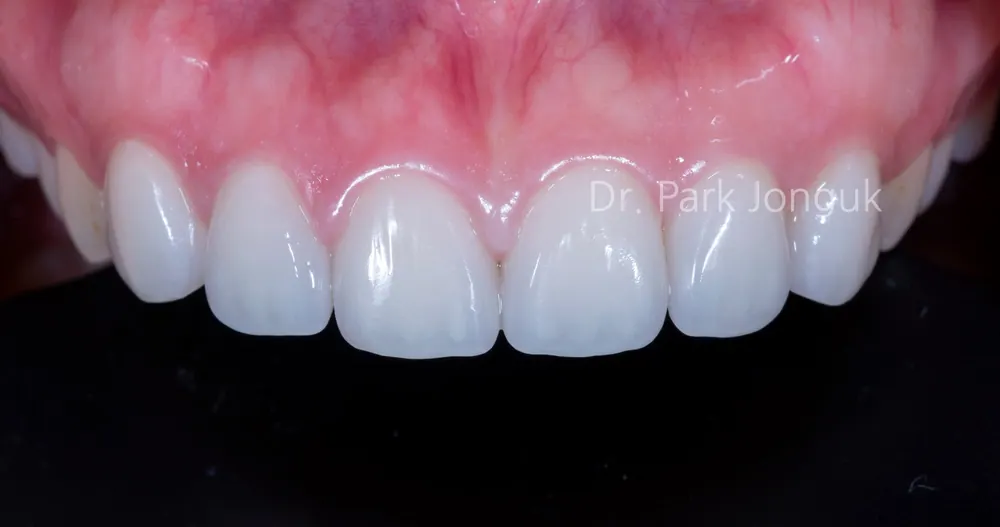
Even working within the same space,
it's very important to design the proportions between teeth well so they don't end up looking too wide.
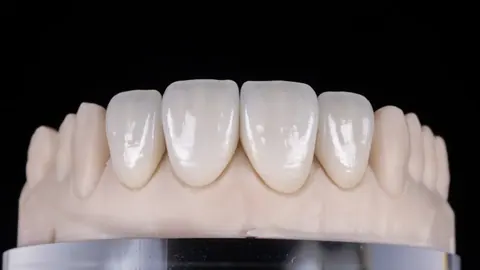
One design element used for this is called a line angle.
Using line angles well can make the proportions look visually better.
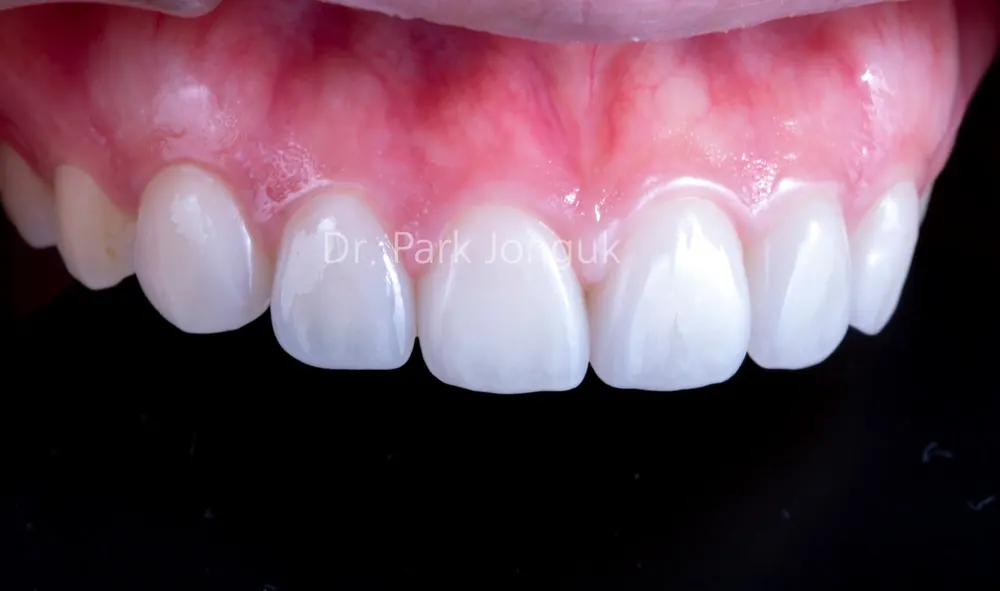
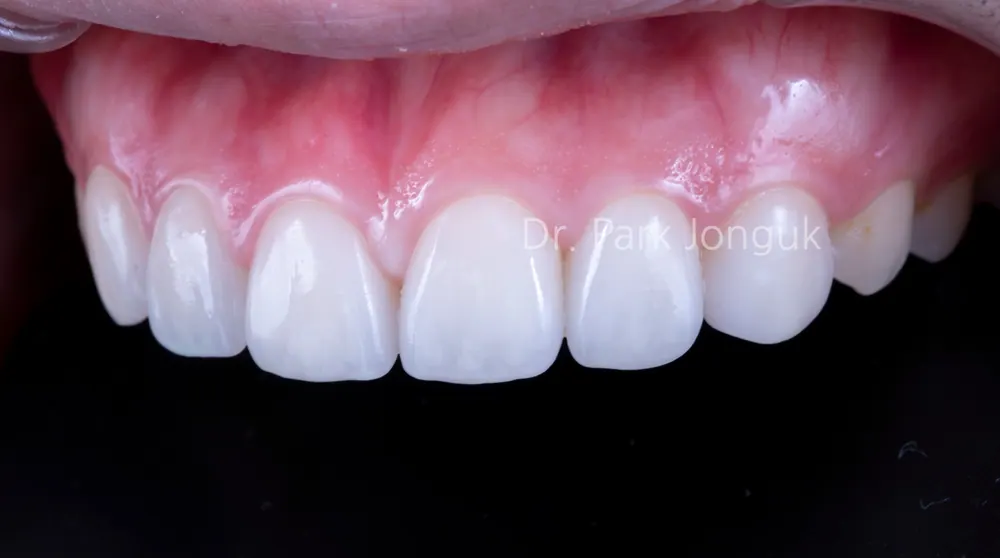
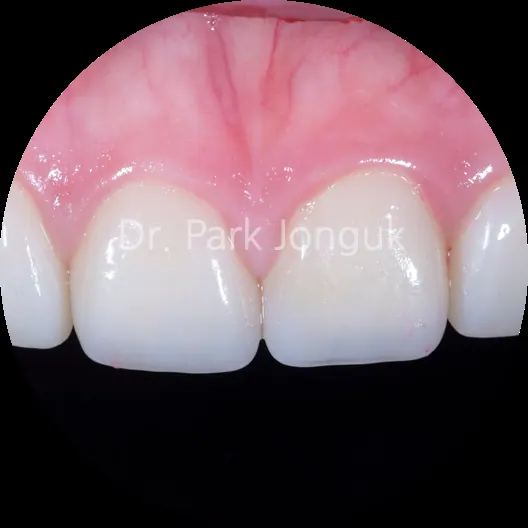
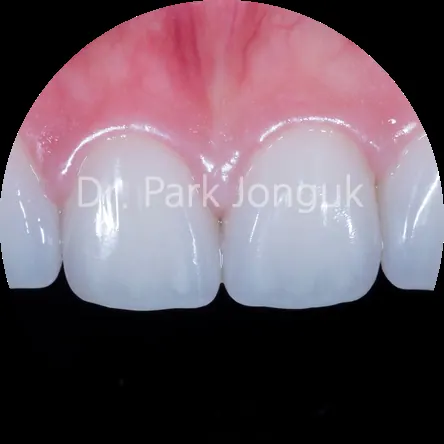
If you look at this before-and-after, even though both are veneers,
you can see how much the result can differ.
There's a difference in tooth color too, but even more than that, in the design of the teeth themselves,
what was once almost jar-shaped changed into the shape of a beautiful natural tooth.
On top of that, the tooth's translucency was brought out naturally, giving a clearly youthful impression.
Since 2006, Dream Dental Clinic, located at Apgujeong Station
This article is a clinical note written by Dr. Park Jonguk of Dream Dental Clinic, Gangnam; the original was published on his blog. The photographs shown are real cases he treated. Results vary with each patient’s condition, and every procedure carries the possibility of individual variation and side effects.
Quick Consult
Request a Callback
Leave your number and we will call you back during clinic hours.
Request Received
We will contact you during clinic hours. For urgent matters, please call +82-2-3448-0028.