
Veneer Redo: Is It Possible Without Reducing the Tooth Again? From the Causes of Failure to Safe Removal
"It's only been a few years since I got my veneers, and they're already lifting and discolored. Do I need to redo them?"
This is a question I hear very often in consultations.
It's only natural to be upset when veneers you got after a lot of thought start giving you trouble sooner than expected.
To give the conclusion first: a veneer redo is entirely possible.
That said, it's important to first accurately understand "why the original one failed."
If you redo it without knowing the cause, the same problem is likely to happen again.
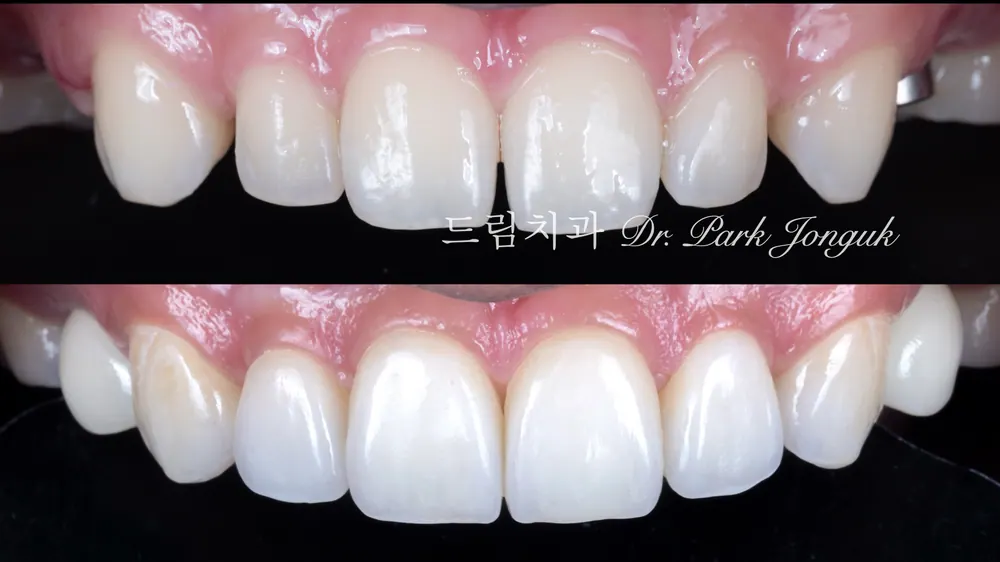
5 causes of veneer failure that lead to a redo
Looking at the existing veneers of patients who come in for a redo, the cause usually narrows down to one of the following five.
1. Excessive tooth reduction
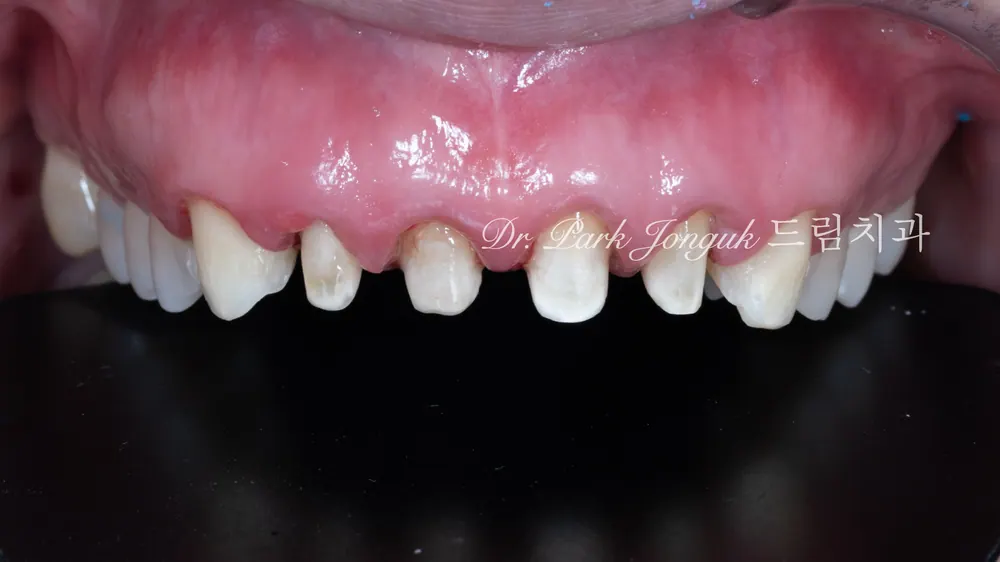
The enamel on the surface of a front tooth is thin, roughly 0.3-1.1mm depending on the location.
Reducing beyond this thin layer weakens the tooth and makes it prone to sensitivity or discoloration.
Since a tooth that's been reduced can never be restored, how much is removed the first time matters enormously.
2. Inaccurate bonding
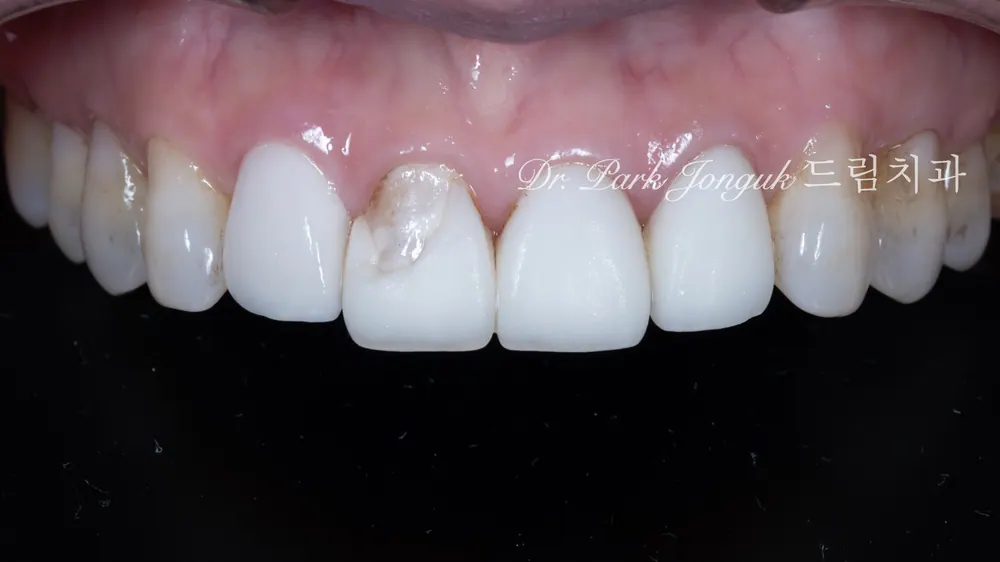
The core of a veneer is the "bond" that firmly attaches it to the tooth.
If it's bonded without properly controlling saliva or moisture, the bond strength drops.
Over time, this becomes a cause of lifting, or of discoloration seeping in at the edges.
3. Choosing the wrong material
Tooth color, gum condition, and bite force all differ from person to person.
Choosing a material without considering these can result in an awkward color or a veneer that chips easily.
If the diagnostic process of matching material to the patient's own condition is skipped, the result becomes unreliable.
4. Ignoring the bite (chewing force)
No matter how beautifully it's made, ignoring the direction of chewing force means it won't last long.
If force is concentrated on one side from clenching or grinding, the veneer can crack or come off.
This is a common problem with veneers made with only the shape in mind.
5. Failure in gumline design
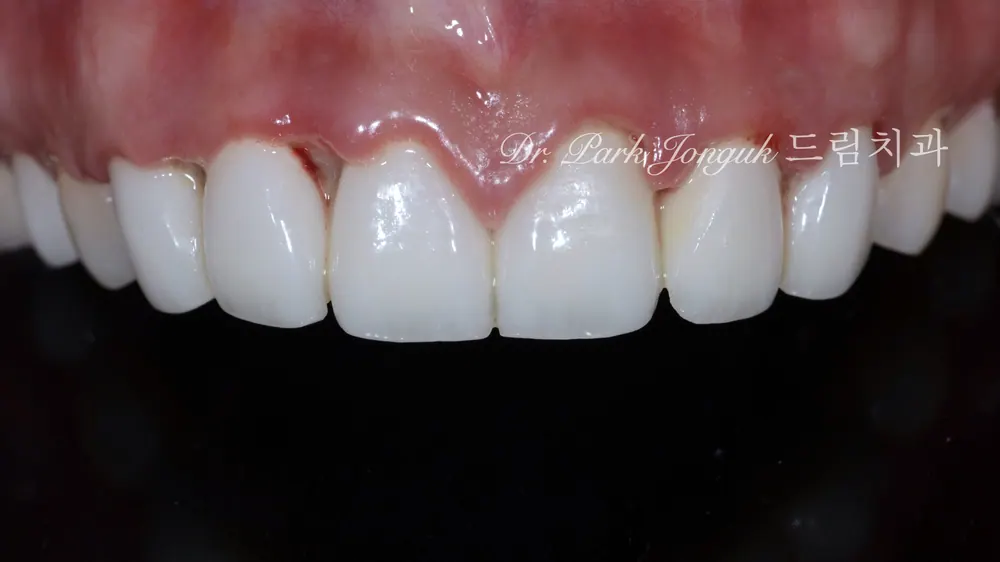
A veneer looks natural only when not just the tooth, but also the border where it meets the gum, is designed together.
If this border is off, the gum can swell, or a dark gap can show through.
This matters even more because it's the part that stands out most when smiling.
Partial redo vs. full remake — how is this decided?
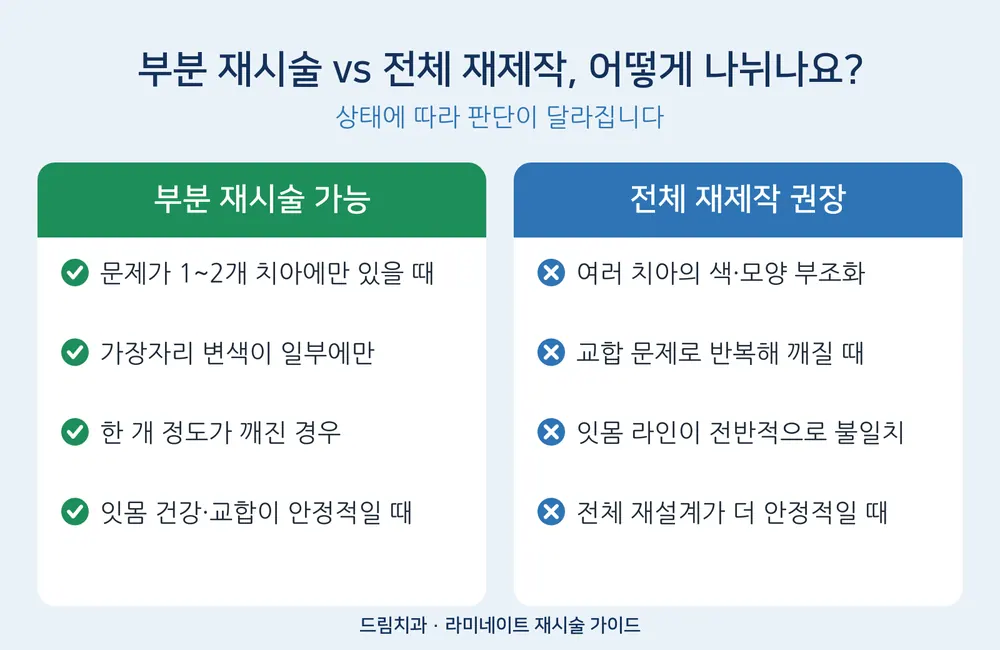
Not every veneer needs to be entirely redone as a set. The right approach depends on the condition.
When a partial redo is possible
This applies when the problem is limited to one or two teeth, and the rest remain stable in terms of bonding and shape.
If discoloration at the edge is limited to a small area, or only one tooth is chipped, replacing just that part can be considered.
This is more likely to be an option when the gums are healthy and there's no major issue with the bite.
When the full set needs to be redone
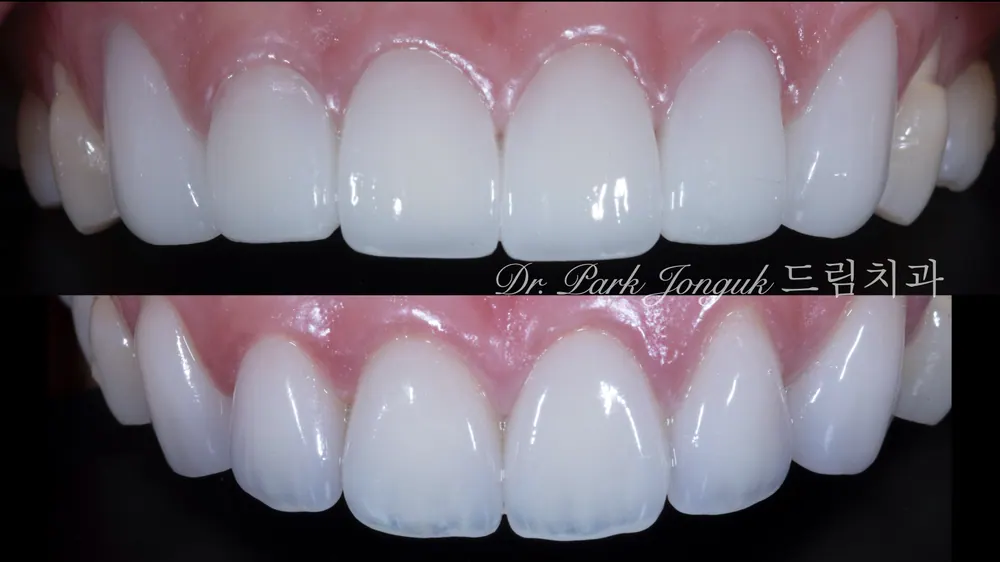
This applies when the color and shape of several teeth are collectively off, breaking the overall harmony,
or when there's a problem with the bite itself, causing repeated chipping. The same applies when the gumline is off across the board.
In these cases, redesigning the whole set, rather than making partial corrections, tends to give a more stable result in the end.
Why doing it right from the start, and safe removal, both matter
There are two keys to a redo.
One is identifying the cause of failure so it doesn't happen again.
The other is "safely" removing the existing veneer.
Checkpoints to prevent failure
Before a redo, a precise diagnosis comes first.
We check the current amount of tooth reduced and the condition of the gums, and examine the bite to see where the force lands when chewing.
After that, the design is set taking both tooth color and the gumline into account together.
Skipping this process makes the same failure likely to repeat.
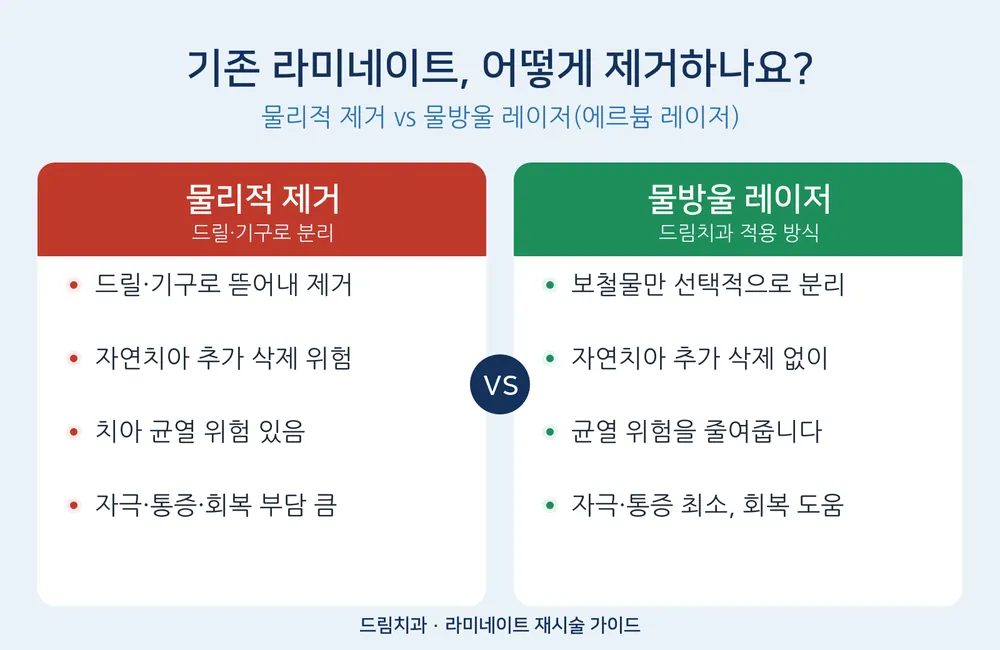
Differences in how the existing veneer is removed — physical removal vs. water laser
The part many people find most unsettling about a redo is the worry that "won't this damage the tooth even more, when it's already been reduced once?"
This worry is closely tied to the method used for "veneer removal."
Physical removal, where a drill or instrument is used with force to pry it off, can end up reducing the natural tooth further,
or risk creating cracks in the tooth.
At Dream Dental Clinic, we use a water laser (an Er:YAG-type laser) to remove existing veneers.
Water laser removal is aimed at selectively separating only the existing restoration, without reducing the natural tooth any further.
It reduces the risk of tooth cracking that can occur with forceful physical removal,
and is known to also help lower irritation and pain to the gum and tooth, aiding recovery.
The more a tooth has already been reduced, the more "how it's removed" matters just as much as "how it's re-bonded."
That's why a redo calls for an even more careful approach than the initial procedure.
Frequently Asked Questions (Q&A)
Q1. Does a redo hurt a lot too?
Since it involves removing the existing veneer and bonding on a new one, many people worry about pain. The level of irritation depends on the removal method, and the less the natural tooth is disturbed, the less discomfort and recovery burden there tends to be. It can be adequately managed with anesthesia and other measures depending on the condition before treatment.
Q2. Can a tooth that's already been reduced be restored to how it was?
Enamel that's been reduced once doesn't grow back. So the goal of a redo isn't to "undo" anything — it's to protect the remaining tooth without reducing it further while restoring a natural look. This is why minimizing additional reduction matters so much.
Q3. Is laser removal safe?
A water laser is a method used to selectively separate the existing restoration. Compared with prying it off with a drill, it's reported to help reduce irritation to the natural tooth and gum. That said, it isn't applied identically in every situation — the appropriate method is decided after diagnosis, based on the tooth's condition.
Q4. How often do veneers need to be redone?
There's no fixed replacement interval. How long they last varies greatly depending on care habits, the bite, and how well the initial procedure was done. The more regularly they're checked and problems caught early, the longer they tend to stay stable.
In closing
A veneer redo starts with accurately diagnosing "why it failed." If you're wondering whether your existing veneers need attention, I'd recommend first checking the current condition of your teeth and deciding only after a thorough consultation.
Dream Dental Clinic | 2F, 841 Nonhyeon-ro, Gangnam-gu, Seoul (Apgujeong Station Exit 4)
Written by Dr. Park Jonguk (M.S. / 20 years of veneer clinical practice, author of Korea's first veneer textbook, 『최소 삭제를 위한 라미네이트 임상』 (Veneer Clinical Practice for Minimal Tooth Reduction))
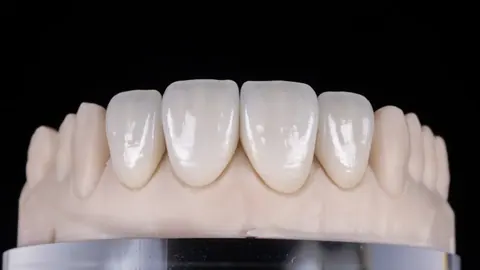
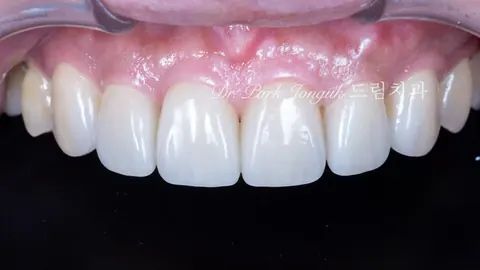
This article is a clinical note written by Dr. Park Jonguk of Dream Dental Clinic, Gangnam; the original was published on his blog. The photographs shown are real cases he treated. Results vary with each patient’s condition, and every procedure carries the possibility of individual variation and side effects.
Quick Consult
Request a Callback
Leave your number and we will call you back during clinic hours.
Request Received
We will contact you during clinic hours. For urgent matters, please call +82-2-3448-0028.