
Key Rules to Follow When Redoing Veneers
Hello, I'm Park Jonguk, DDS, MS, medical director of Dream Dental Clinic, Apgujeong.
There are many different reasons patients need their veneers redone after treatment.
Veneers chipping or debonding is a fairly common reason for redo treatment.
With older veneers, many patients also come back simply because they're no longer happy with how the veneers look.
Each patient's reason for needing redo treatment must be heard and confirmed in detail, and we need to check how much can realistically be improved before proceeding.
If a veneer has come off or chipped and needs to be redone,
the first step is to identify why the problem happened.
There are quite a few different causes of debonding.
One is when excessive tooth reduction has weakened the bond.
Over more than 16 years dedicated to veneer treatment,
the amount of tooth reduction is something I've always paid close attention to.
I focus on achieving the best possible result with only minimal reduction.
Reducing less tooth structure is important first of all because it's less harmful to tooth health,
but also because nothing bonds as firmly as a veneer bonded to enamel, so I put even more effort into minimizing the amount of reduction.
If the cause of debonding is excessive reduction, it's often necessary to switch from a veneer to a crown instead.
If the debonding was caused by a bite problem or a teeth-grinding habit, the bite needs to be corrected accordingly.
Because of this, the shape of the teeth and the way the bite is set may need to change as well.
In cases of severe teeth grinding, a night guard is often needed to reduce the excessive pressure placed on the teeth.
As you can see, there's a lot to consider in redo treatment.
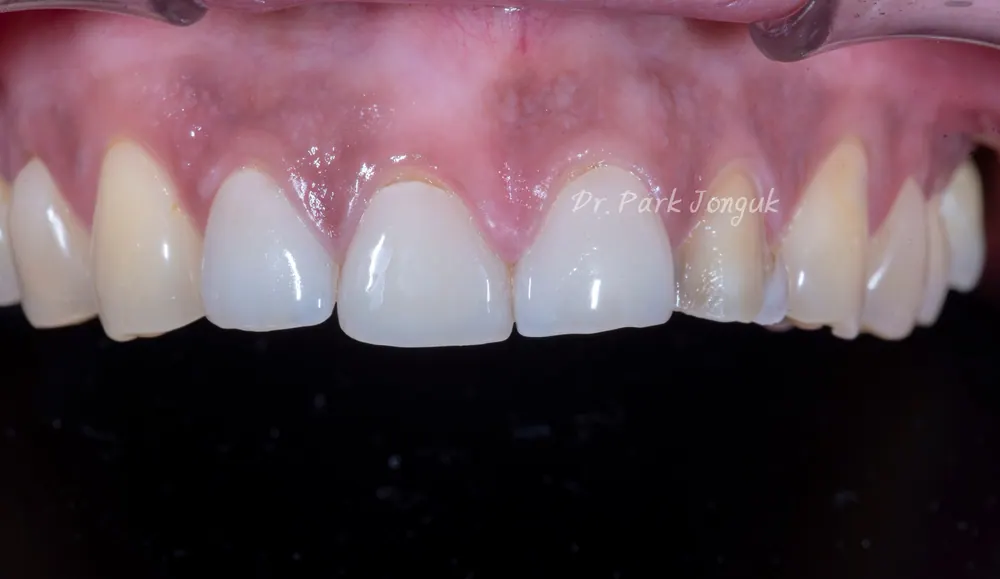
First, one veneer had come off.
Looking at the front teeth, you can also see areas where the gum shape has changed, exposing part of the tooth.
The ceramic itself also didn't blend well with the natural teeth, making the front teeth stand out too much.
What must absolutely be kept in mind for redo treatment is
what can be improved and what can't,
how the current problem will be addressed,
and whether the current problem is likely to recur —
in short, the treatment plan needs to be properly built around solving these problems.
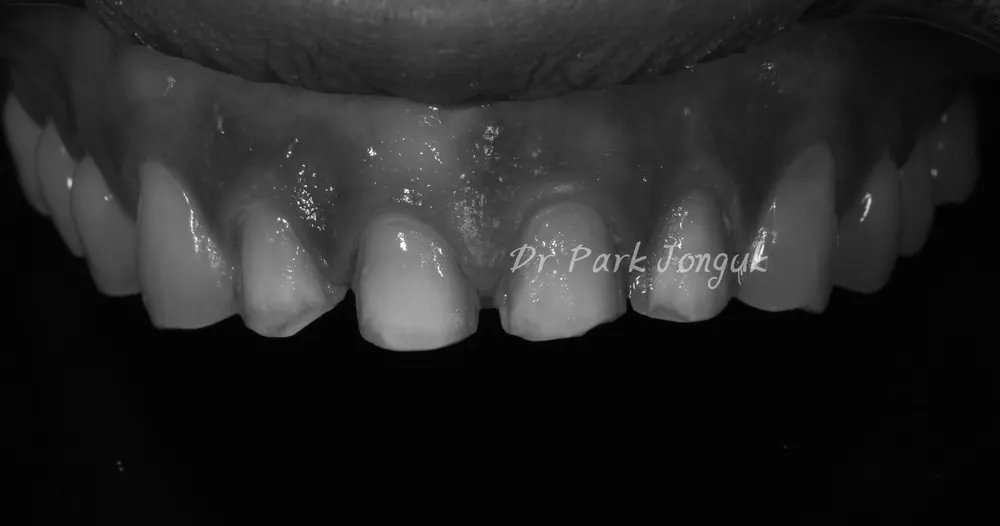
The issue in this case is that although it was a veneer, far too much tooth structure had been reduced.
With this much reduction already done, it might actually have been better to reduce a bit more and treat it with a crown instead.
Still, keeping reduction to a minimum is better for tooth health,
so we decided to proceed by achieving the best possible bond to dentin rather than enamel,
and removed the old ceramic using a laser without damaging the tooth.
Removing the old ceramic is a very important step in redo treatment.
In many cases, a rotating instrument is used — probably the one making that whirring sound
you all know from the dentist's office, a high-speed handpiece.
The best method, however, is to use a laser to melt away the adhesive between the ceramic and the tooth and remove it that way.
It takes a bit longer, but it minimizes damage to the tooth.
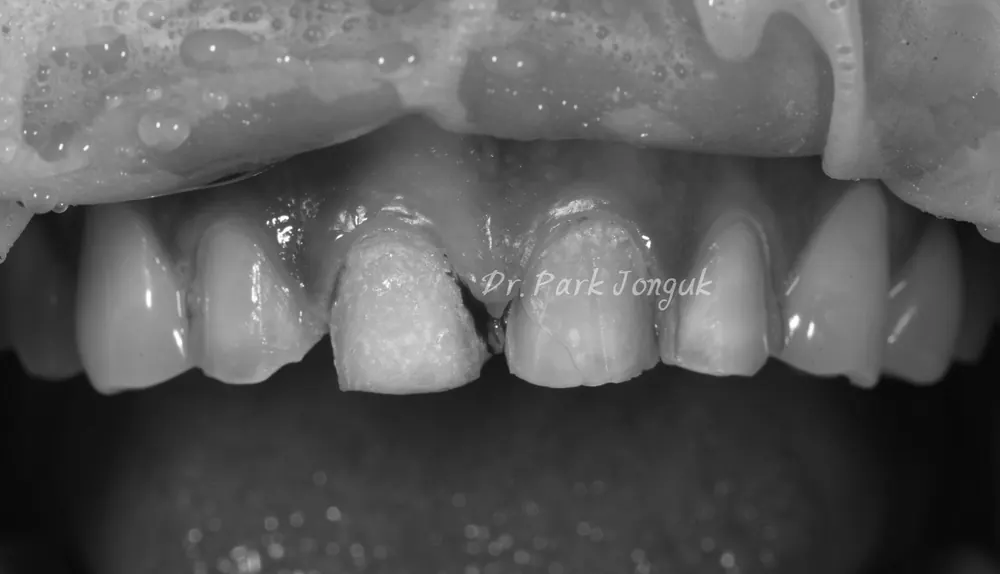
It's hard to see clearly in the photo, but the ceramic has been removed and you can see the adhesive left melted white on the tooth surface,
with almost no damage to the tooth — from here, only the remaining adhesive needs to be carefully removed.
The treatment plan is worked out considering both esthetics and the bite,
and treatment proceeds to match the remaining natural teeth.
When the canines aren't being treated with veneers, matching their color exactly would make the veneers look too yellow,
so we make the veneers a bit brighter than that.
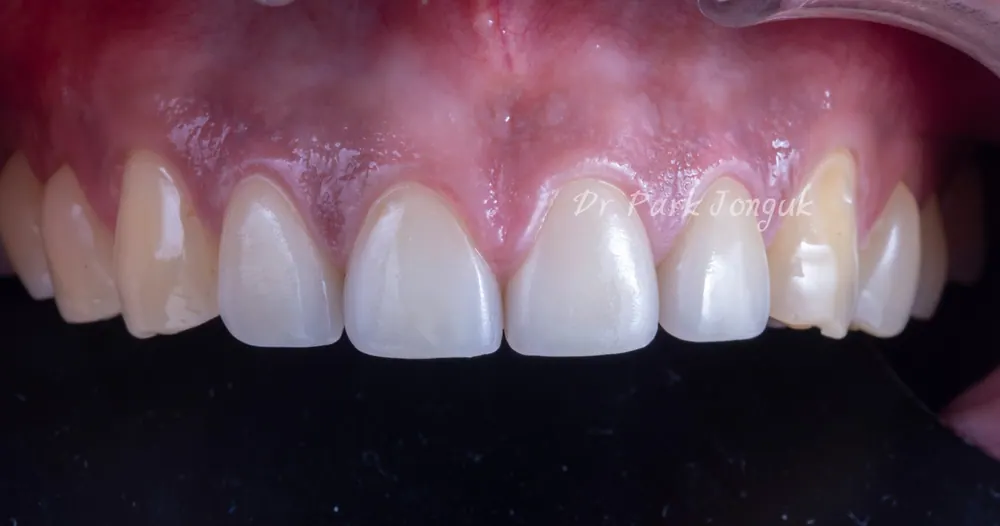
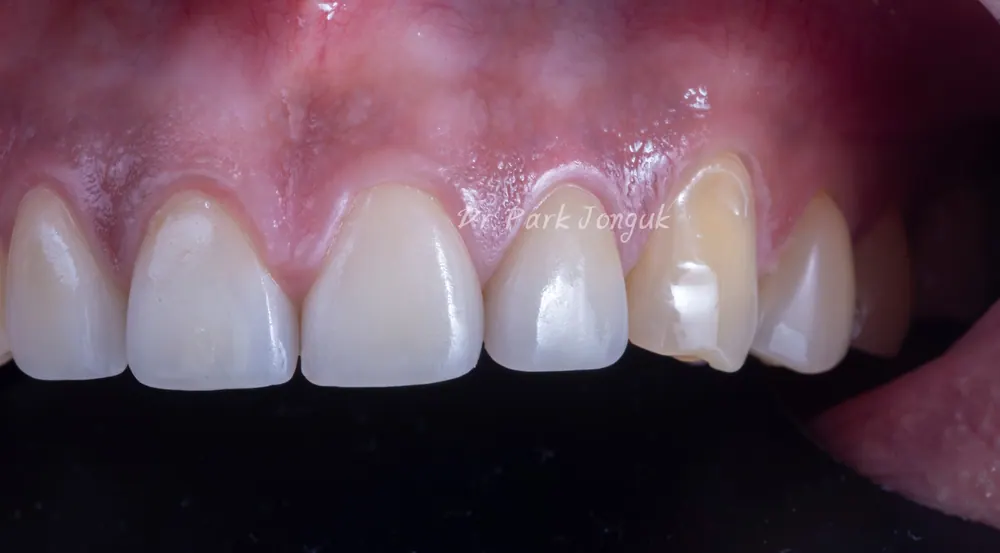
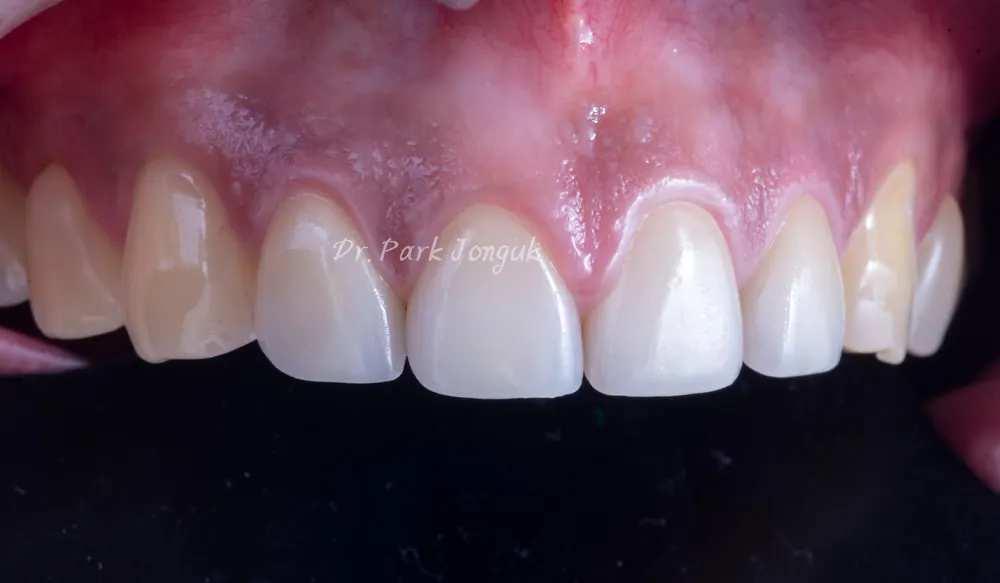
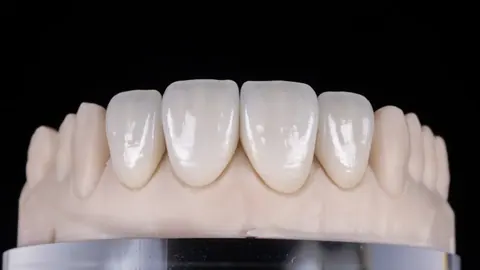
Both the color and shape of the teeth are coming through with a strong sense of naturalness.
One more thing to look at is healthy gum tissue.
The gums fill in fully between the teeth while still looking healthy.
This article is a clinical note written by Dr. Park Jonguk of Dream Dental Clinic, Gangnam; the original was published on his blog. The photographs shown are real cases he treated. Results vary with each patient’s condition, and every procedure carries the possibility of individual variation and side effects.
Quick Consult
Request a Callback
Leave your number and we will call you back during clinic hours.
Request Received
We will contact you during clinic hours. For urgent matters, please call +82-2-3448-0028.