
No-Prep Veneers
Hello, I'm Park Jonguk, head director of Dream Dental Clinic in Apgujeong.
I suspect quite a few people think of something negative first when they hear the word "veneer."
It was quite a while ago now, but several celebrities talked extensively
on TV and YouTube about side effects after veneer treatment,
and that led many people to view veneers as a bad treatment.
When the treatment itself is done by the book, it isn't a treatment with more side effects than any other.
If you actually look at the treatments that produced a lot of side effects, the patients thought they were getting veneers,
but in many cases what they actually received was an all-ceramic crown, not a veneer.
The side effects of veneers
Tooth sensitivity
Coming loose or chipping
Bite problems
Gum inflammation
boil down to about this list.
Items 1 and 2 are related to tooth reduction.
Naturally, reducing less of the tooth means less or no sensitivity.
With properly done veneers, sensitivity usually lasts one or two days, and at most about a month.
In cases with a lot of tooth reduction, the sensitivity can fail to resolve, sometimes requiring root canal treatment.
The less the tooth is reduced, the stronger the bond between the veneer ceramic and the tooth.
So to reduce the most significant side effects, the tooth needs to be reduced as little as possible.
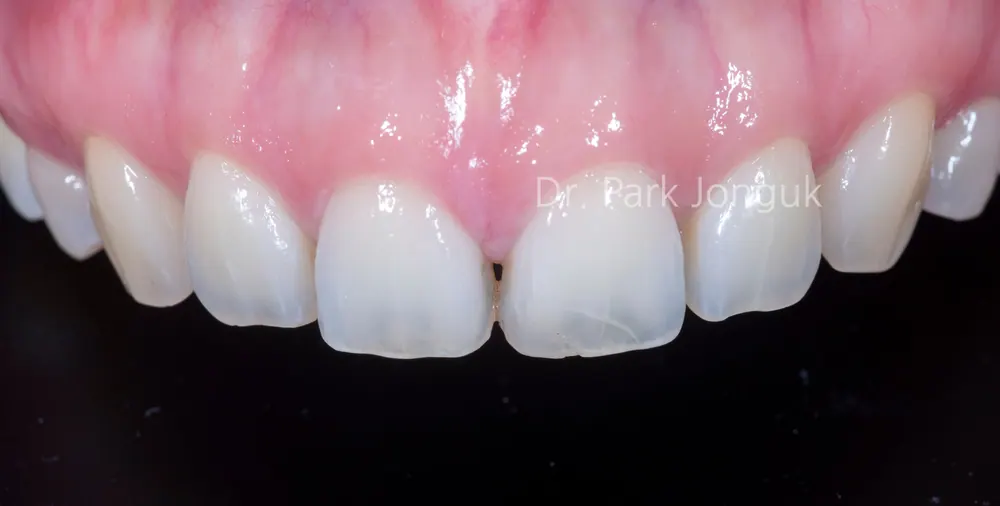
One point I always stress in the many articles I write about no-prep veneers
is that not every case can be done without any reduction at all.
Since no-prep treatment makes the tooth larger than it currently is,
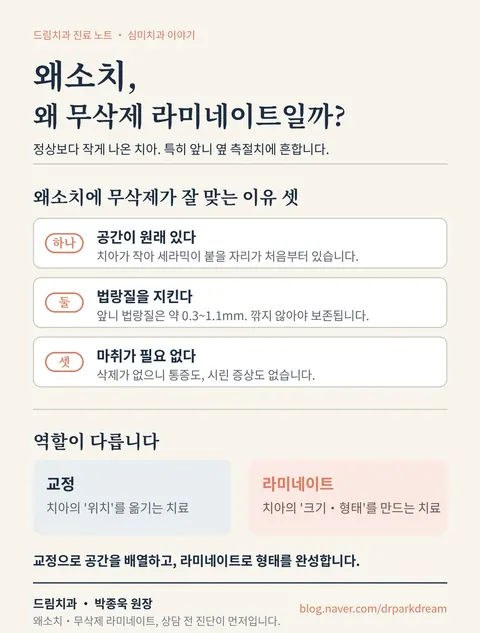
it's advantageous for the tooth to be small to begin with.
And the alignment needs to be good for the result to look attractive.
On top of that, the teeth need to be positioned inward.
This is usually called retroclined, or "ok-ni."
A retroclined case with small teeth and good alignment is the ideal candidate for no-prep.
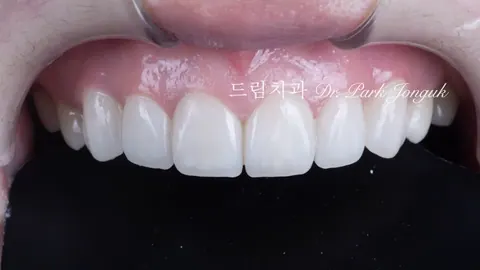
The case above is exactly that kind of case.
To make the teeth more attractive and brighter in this state, and to enlarge them since they were too small,
we proceeded with veneer treatment.
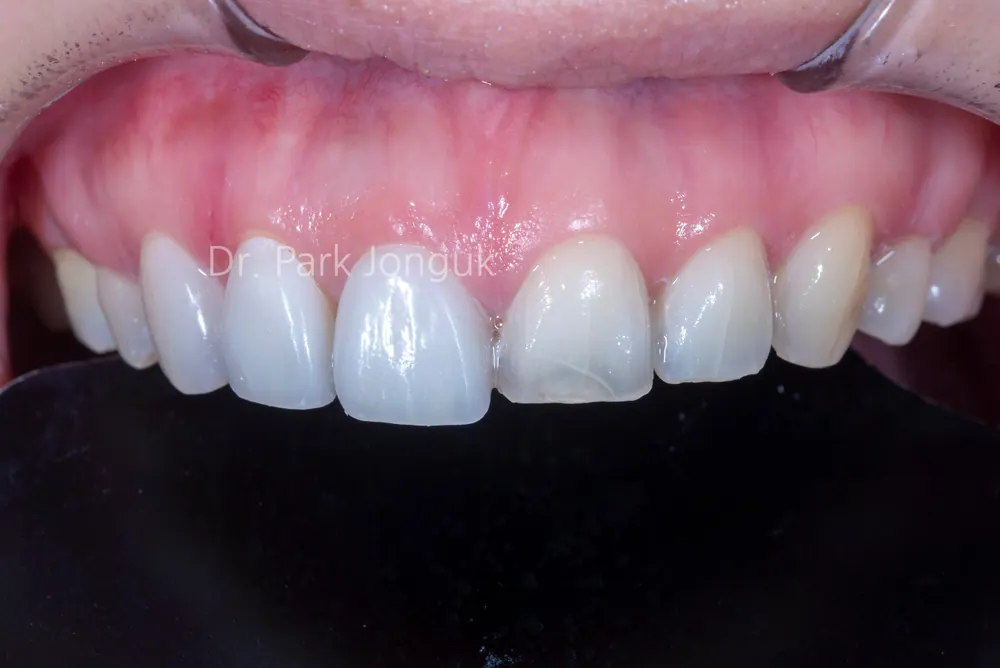
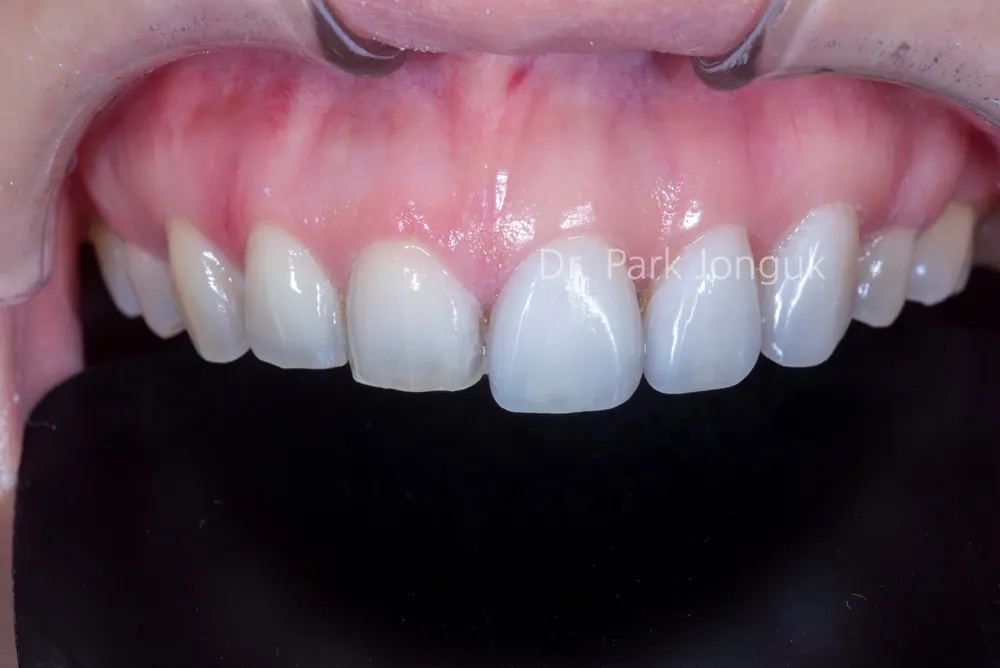
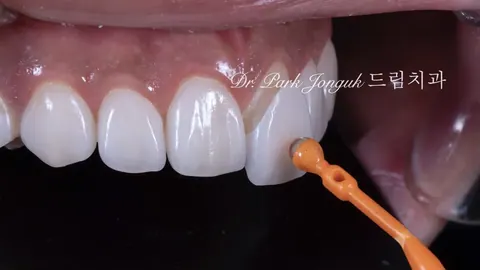
Before seating, we placed the finished ceramic veneer on the tooth.
We took a photo with it on just half, so the original tooth and the result could be compared side by side.
As I mentioned, the tooth ends up a bit larger.
The tooth color becomes noticeably brighter than the natural tooth, while still keeping the natural tooth's translucent feel and shape.
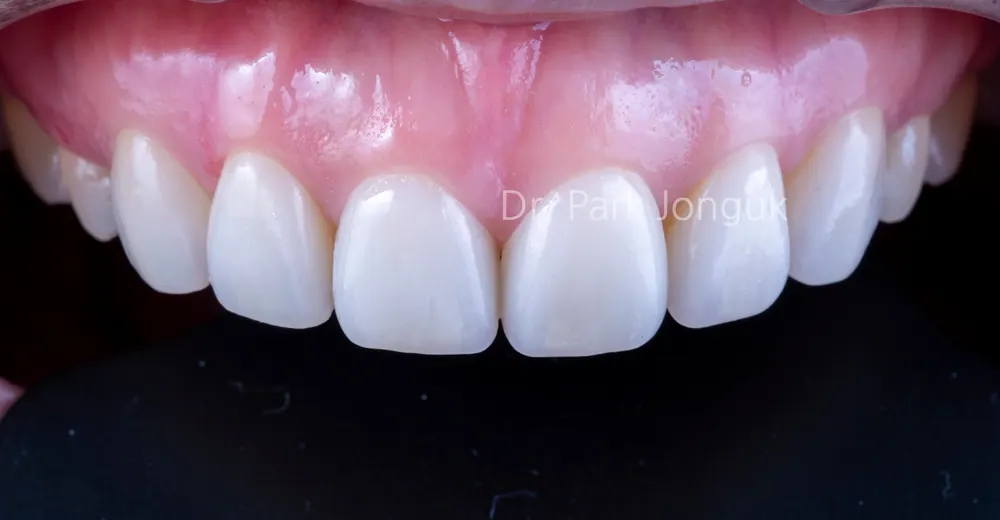
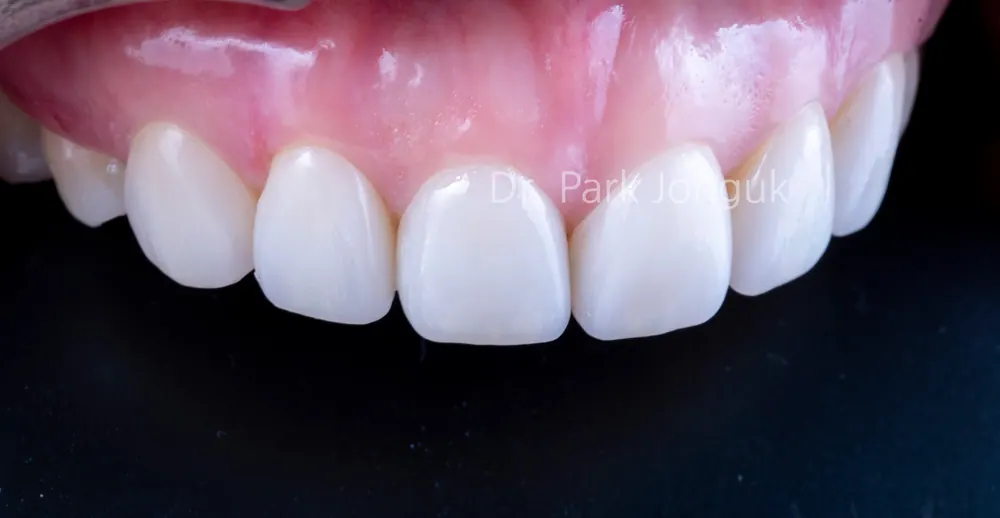
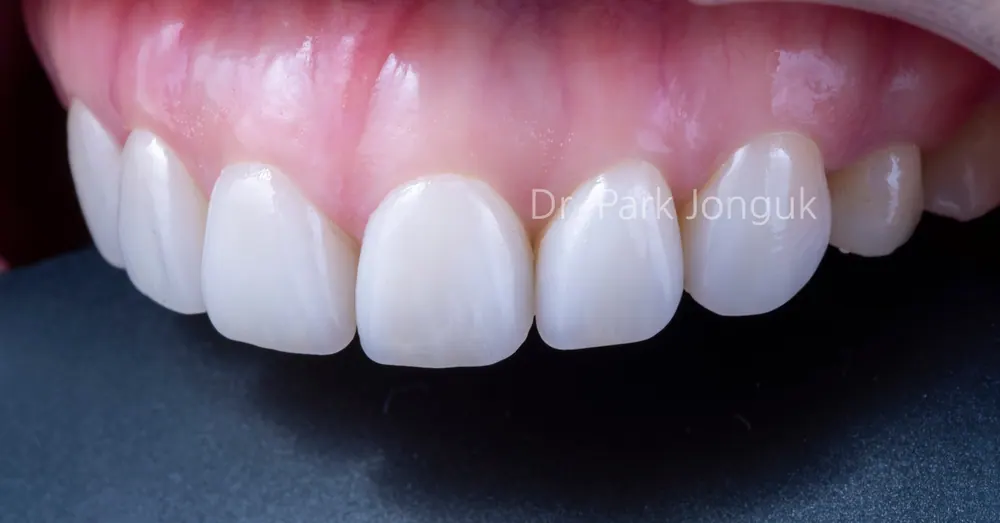
Veneers at Dream Dental Clinic always aim for natural beauty.
It's a level that a same-day method, made in a day or two, can never match.
What matters even more on top of that is minimizing the reduction of the tooth.
As I mentioned earlier, the best way to minimize the side effects of veneers is simply to reduce less.
And if there's no reduction at all, all the better.
This article is a clinical note written by Dr. Park Jonguk of Dream Dental Clinic, Gangnam; the original was published on his blog. The photographs shown are real cases he treated. Results vary with each patient’s condition, and every procedure carries the possibility of individual variation and side effects.
Quick Consult
Request a Callback
Leave your number and we will call you back during clinic hours.
Request Received
We will contact you during clinic hours. For urgent matters, please call +82-2-3448-0028.