
Side Effects Seen Through Veneer Redo Cases, and What to Watch For When Redoing Veneers
These days, the most common case I see is redoing veneers.
Redoing veneers that were done in the past — there was a veneer craze about 10 to 15 years ago. Back then, some clinics advertised heavily using the term "rapid orthodontics" rather than "veneers," for commercial purposes. In fact, "rapid orthodontics" is a separate treatment that already exists, so this was a dark age for veneers, marked by excessive advertising and procedures meant to mislead people.
After that, countless side effects were widely covered in the press and on TV, to the point that veneers came to be seen as a "bad treatment." Because of this, these days I'm starting to see clinics that perform veneers while advertising that what they do isn't veneers. It reminds me of the old ad copy, "A bed is not furniture..."
A veneer is simply defined as "a treatment that attaches a thin material to the front surface of a tooth." Sometimes resin is used, but most veneers use ceramic, so ceramic veneers make up the vast majority. I've seen some clinics claim they use a special material found only at their clinic... but you can't just freely use a material that hasn't been approved by the Ministry of Food and Drug Safety. Developing a single such material requires enormous capital, so it's extremely rare for a single dental clinic to develop its own material.
Coining a special name for advertising purposes, to make it seem like a treatment different from what already exists, is actually a violation of the Medical Service Act. No matter how much the image of veneers has suffered, they're not Hong Gil-dong, forbidden from calling his own father "father" — I wish people would just call a veneer a veneer.
I've gone off on quite a tangent — let's get back to talking about redoing veneers.
Having provided veneer treatment for nearly 20 years, I've handled a great many redo cases. The reasons patients need a redo are quite varied.
1. Gum Inflammation
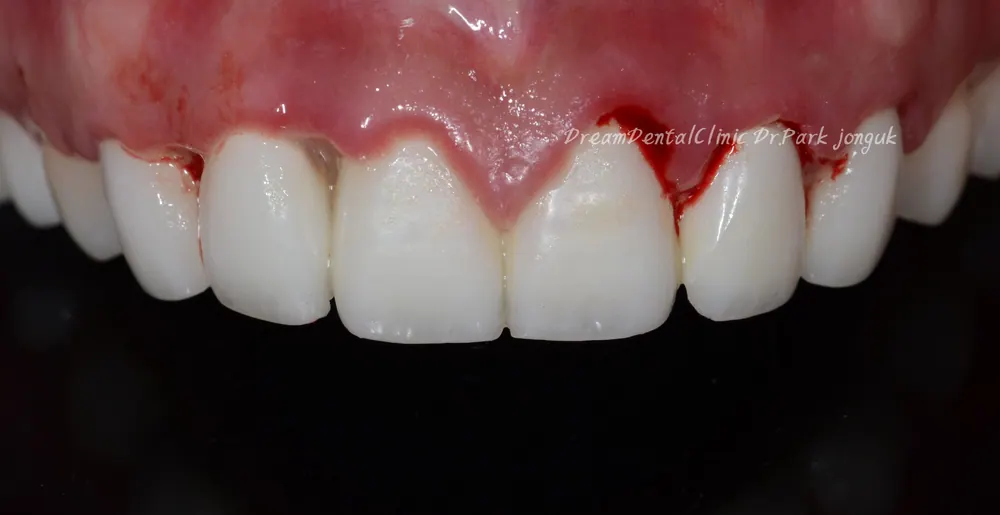
Among the side effects of poorly done veneers, tooth sensitivity and gum inflammation are probably the most common.
For tooth sensitivity, redoing the veneer is often not the solution — a different treatment is usually needed.
So the first thing I'll talk about here is gum inflammation.
If you look at the photo above... even without being a dentist, you can probably tell that something is wrong.
The gums were bleeding constantly. The entire gum line was inflamed. No matter how carefully the patient brushed or took care of it, the inflammation wouldn't stop and the bleeding continued.
You could call this a fairly extreme case. It's not common for a patient to come in with inflammation this severe.
Why did this happen?
The answer is simple.
The veneer treatment was done incorrectly. There was no plan, no principle, and no philosophy behind the treatment.
This patient was Chinese, so I naturally assumed she had been treated in China. I thought, surely a clinic in Korea wouldn't have done such a ridiculous treatment?
But, to my genuine embarrassment, she had actually been treated in Korea. After the treatment she went back to China, but the inflammation became so unbearable that she came back — only to find that the clinic where she'd been treated no longer existed, so she came to our clinic instead.
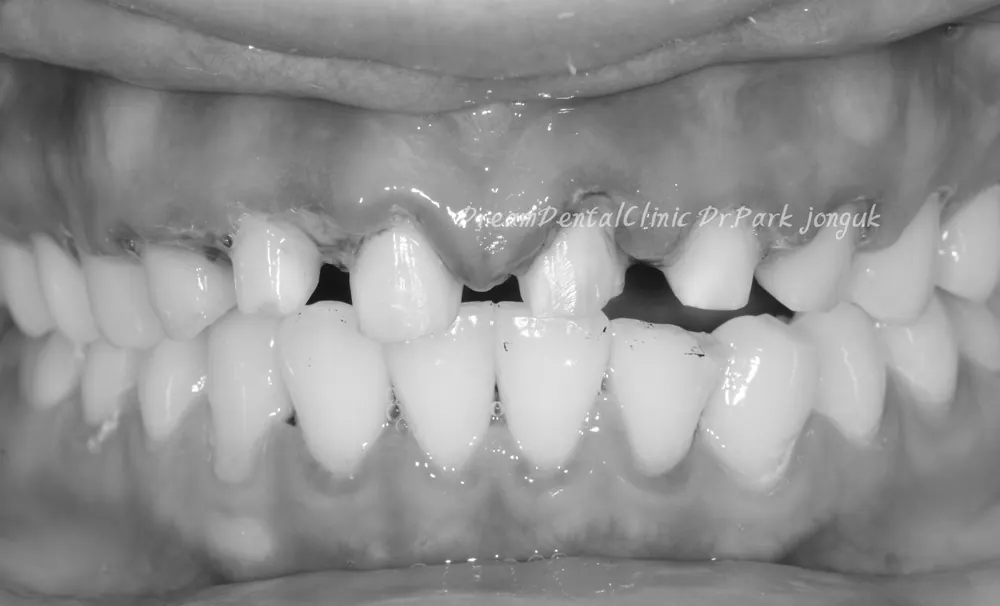
This is the state after the veneers were removed.
I couldn't help but wonder whether this much tooth reduction was really necessary. Of course, since I don't know the original condition of the teeth, it's not easy to point to the amount of reduction as the problem, but if the situation truly required this much reduction, then a treatment other than veneers should have been chosen.
On top of that, the tooth was excessively reduced even below the gum line. The most common mistake in veneer treatment is over-reducing the tooth structure beneath the gumline. It varies from case to case, but ultimately reduction should stay "within a limit that doesn't put gum health at risk" — and that principle was violated here.
For a case like this, the best approach is to use temporary teeth over an extended period to let the inflammation heal, and then finish with a veneer redo.
A few teeth already had all-ceramic crowns, and the rest had veneers in a condition too poor to even call veneers, so we decided to treat all of them with crowns.
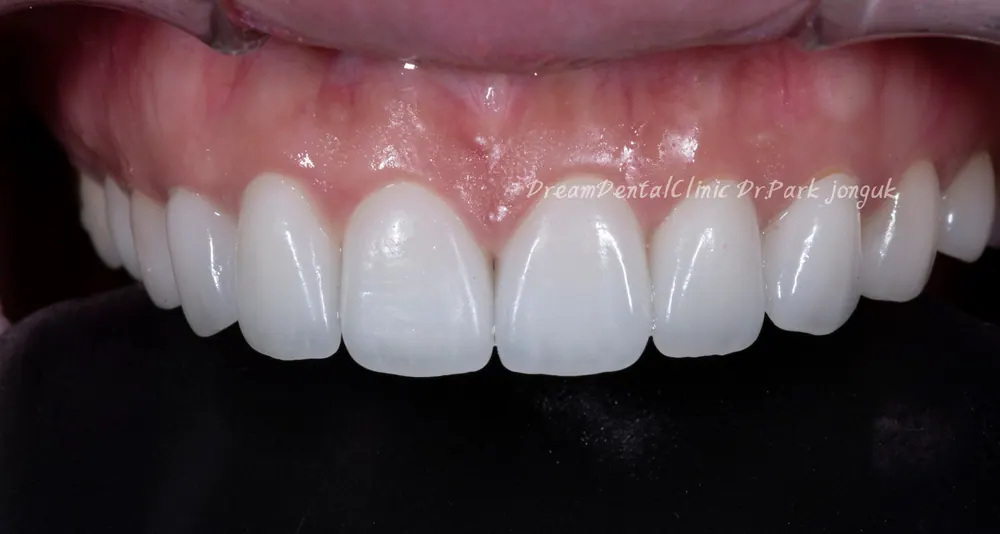
This is a photo taken a few years after the veneer redo was completed.
First, the gum inflammation has cleared up completely. It's almost surprising — even I was amazed, given how dire the initial condition was.
The shape, color, and translucency of the teeth all improved dramatically, to a degree that's simply not comparable to the initial state.
This is something I always emphasize: realizing "beautiful, natural-looking teeth" is, I believe, the most important and most difficult task for any dentist who practices esthetic dentistry.
The result — not an artificial-looking, obviously fake set of teeth, but one that maximizes the beauty of natural teeth — along with healthy gums, was successfully achieved.
2. Esthetic Failure
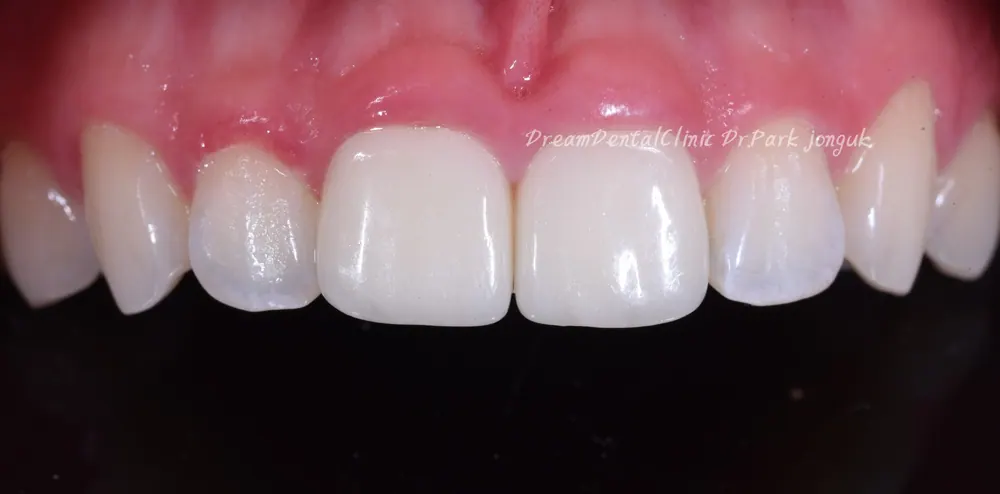
Esthetic failure is quite subjective. Sometimes a patient with veneers made to look like natural teeth asks to change to a more artificial look because they prefer it, and in other cases a patient is satisfied even when the result looks off to everyone else.
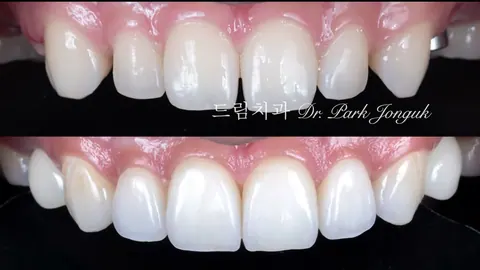
But the case above leaves no room for debate. The two front teeth stand out far too much compared to the surrounding teeth — not only is the color mismatched, but the shape is very different from a typical front tooth shape and doesn't blend with the other natural teeth at all.
When redoing a case like this, the things you absolutely must consider are, first, harmony with the natural teeth, and second, correct proportions.
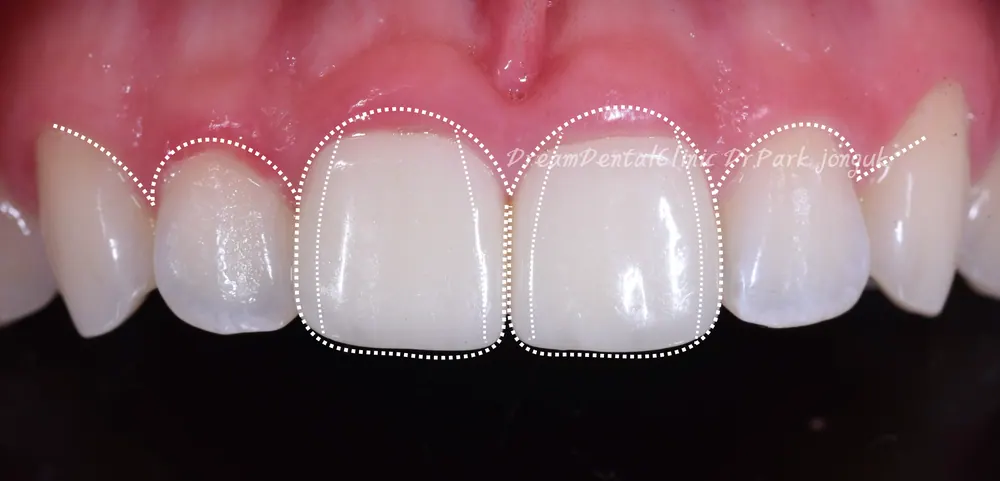
We build a treatment plan around achieving good tooth proportions. To create the correct proportions between the front teeth and the neighboring lateral incisors and canines, we set virtual reference lines and adjust the proportions accordingly, sometimes combined with gum contouring. Based on this analysis, we perform a wax-up diagnosis and then remove the existing veneers.
A quick note here!!
How should old veneers be removed???
This is a very important topic, so I'll cover it in detail in my next post. Please look forward to it.
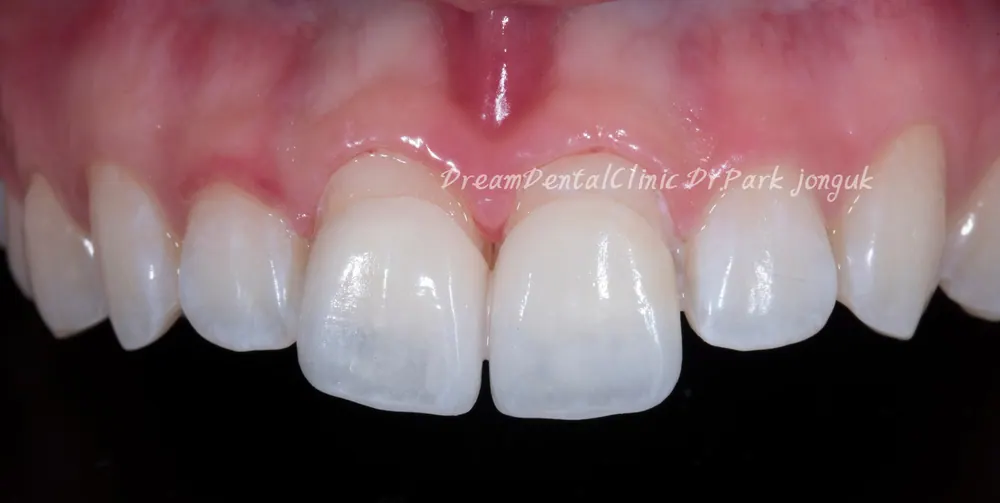
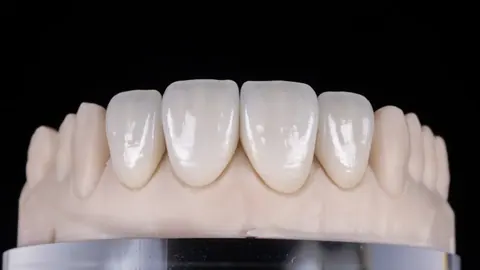
After removing the ceramic, new veneers were fabricated.
The original veneers were made of ceramic with no translucency at all. This time, they were fabricated using a method that produces rich, natural translucency.
This is a method that uses feldspathic ceramic.
It requires a highly demanding fabrication process, which is why it's often called the most beautiful ceramic — but these days, with so many simpler methods available, it's also a technique many tend to avoid. It takes far more time and effort than other veneer fabrication methods, but the beauty of the result is enough to make you forget all of that.
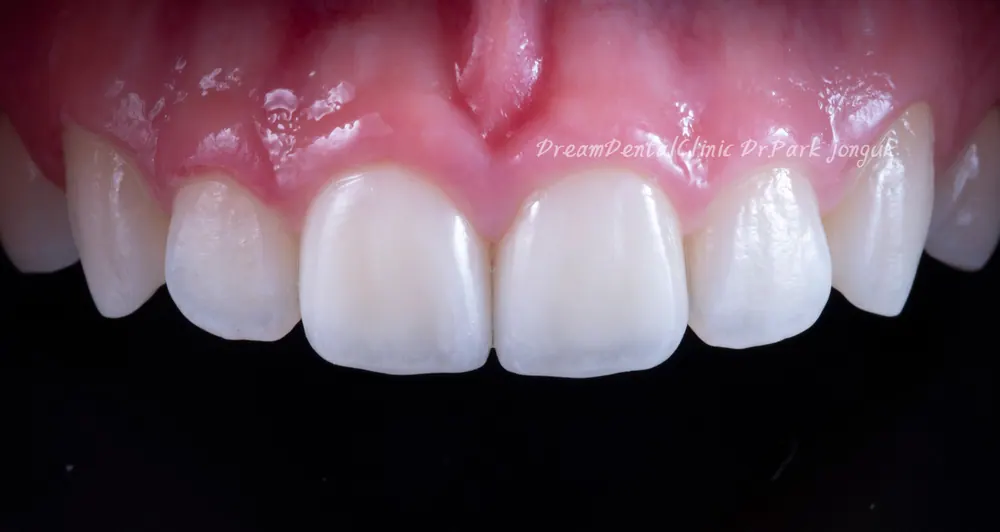
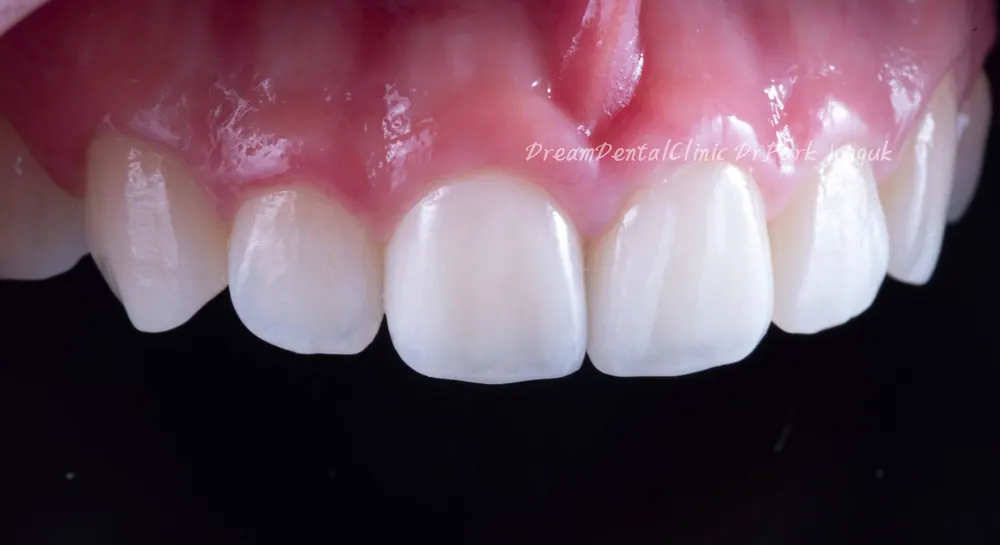
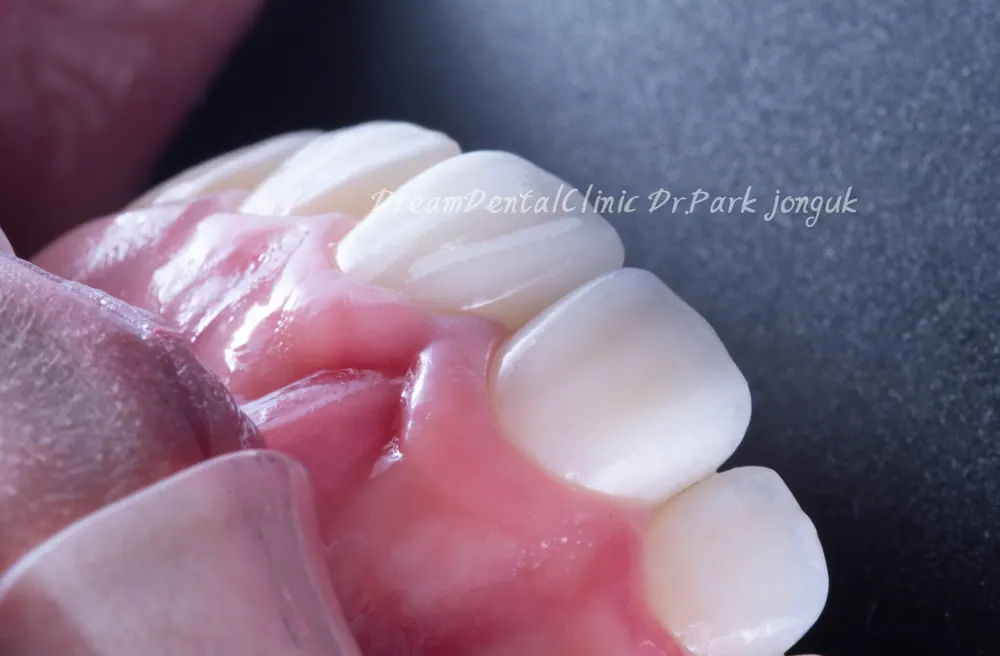
With the same-day method, it's still not possible to make veneers that blend in with natural teeth to this degree.
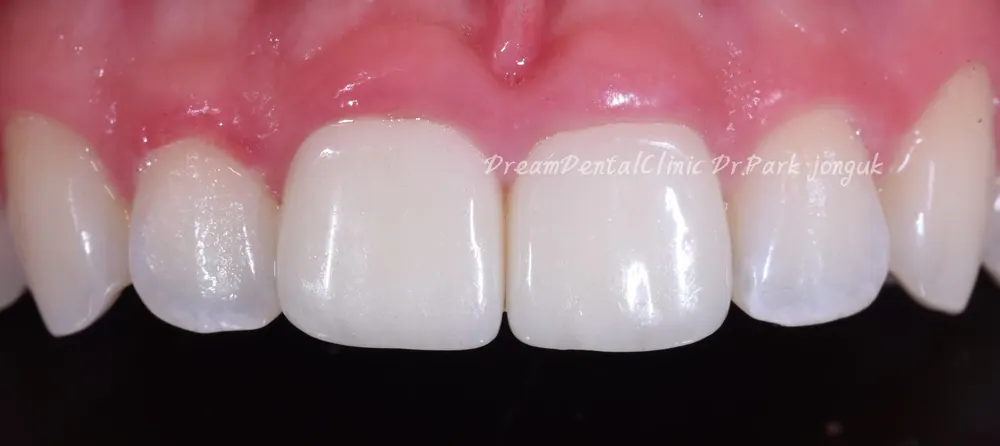
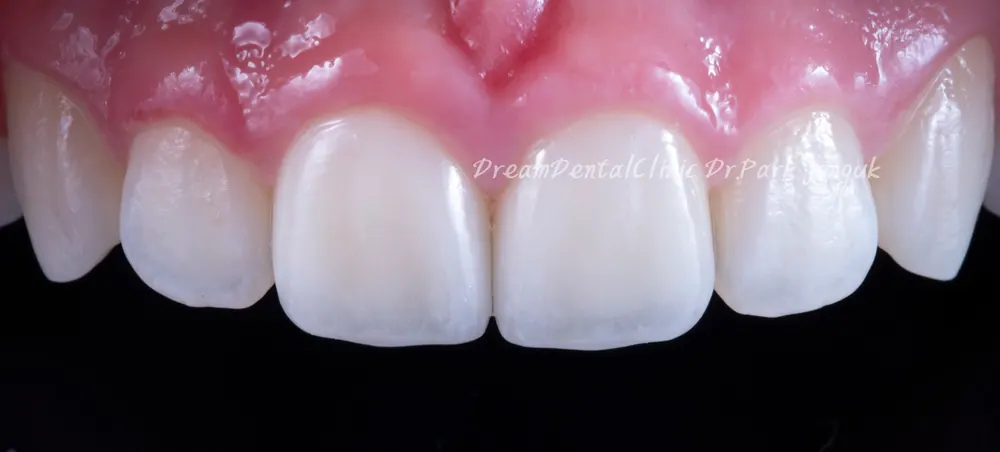
Placed side by side like this, the difference becomes even clearer.
Now, let me wrap up by going over a few points to watch for when redoing veneers.
1. You need an accurate diagnosis of the current condition and a method that can actually address the underlying cause.
2. If there is inflammation, you need an overall treatment plan for how to resolve it.
3. If there is an esthetic problem, you need a plan for how to resolve it.
4. You need the know-how to remove the veneers while minimizing damage to the teeth.
This article is a clinical note written by Dr. Park Jonguk of Dream Dental Clinic, Gangnam; the original was published on his blog. The photographs shown are real cases he treated. Results vary with each patient’s condition, and every procedure carries the possibility of individual variation and side effects.
Quick Consult
Request a Callback
Leave your number and we will call you back during clinic hours.
Request Received
We will contact you during clinic hours. For urgent matters, please call +82-2-3448-0028.