
What Matters Most in Veneer Treatment?
What's the most important thing in veneer treatment?
It's a question I always ask when I lecture. Dentists tend to have a habitual answer to this question.
The margin (the boundary line where the ceramic meets the tooth) has to fit well, the impression has to be taken well, the lab work has to be done well, the bonding has to be done well... these are all fairly clinical answers. They're all correct, but for the most part they're answers from the dentist's point of view — they answer what matters clinically when a dentist is performing the actual treatment.
But think about it from the patient's point of view.
The treatment has to be safe first, it shouldn't hurt, it should last, there shouldn't be any chewing problems later, it should look good aesthetically, and most important of all, the patient has to be happy with the result.
So how can these things that matter to the patient be shared with them before treatment even begins?
That question is where my "veneer diagnosis" process began.
In orthodontics, there are countless orthodontic specialists and professors around the world, and years of research have produced internationally accepted diagnostic methods. Unfortunately, though, there are relatively few dentists worldwide who treat veneers as a specialty, so systematic research into the diagnostic process hasn't really been done. A few books do discuss the diagnostic process, but it hasn't become standardized.
Through roughly 20 years of experience treating veneers, I've tried out a variety of diagnostic methods myself. Through those trials, I've built up my own know-how, and I continue to share this method with other dentists through lectures.
1. The Importance of Diagnosis
When you do a lot of veneer retreatment, you often come across cases that make you wonder, why was this tooth reduced so much?
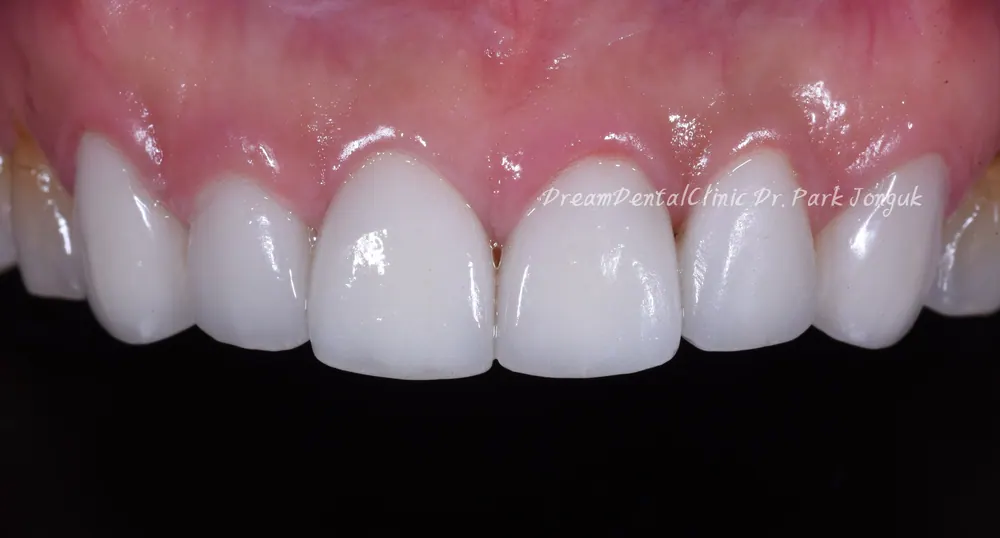
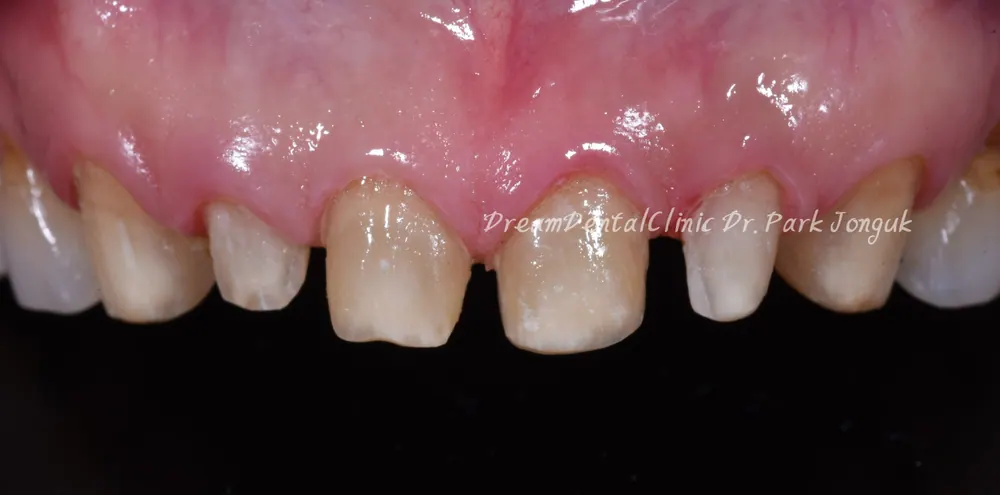
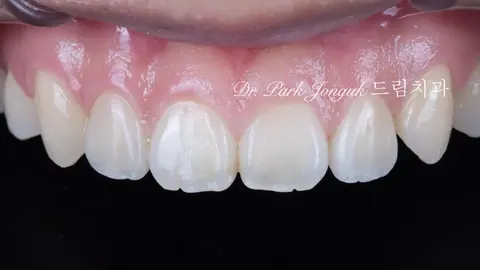
This patient came in for retreatment. The teeth were white, opaque — a textbook case of unnatural-looking teeth.
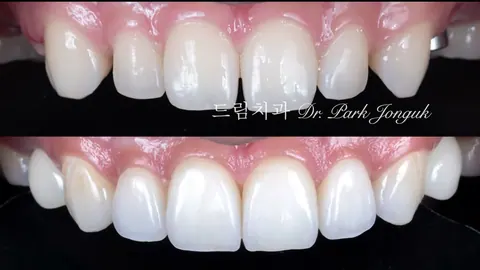
On the right is a photo after the veneer was removed. Reduction like this should really be considered crown preparation, not veneer preparation. Why was it reduced this much?
In most cases, it's because no plan was made before treatment. No matter how experienced a dentist is, without a proper treatment plan, excessive reduction becomes almost unavoidable.
A veneer treatment plan needs to include an analysis of the current condition, a plan for how treatment will proceed, and the full process for determining how much of the tooth will be reduced.
When the diagnostic process is done thoroughly like this, the amount of tooth reduction can be minimized, and side effects afterward can be minimized as well.
2. The Diagnostic Process
We call this process wax-up diagnosis. Wax is used to plan out how treatment will proceed in advance.
A variety of analyses are carried out using facial photos, videos of the patient speaking, tooth photos, and tooth models.
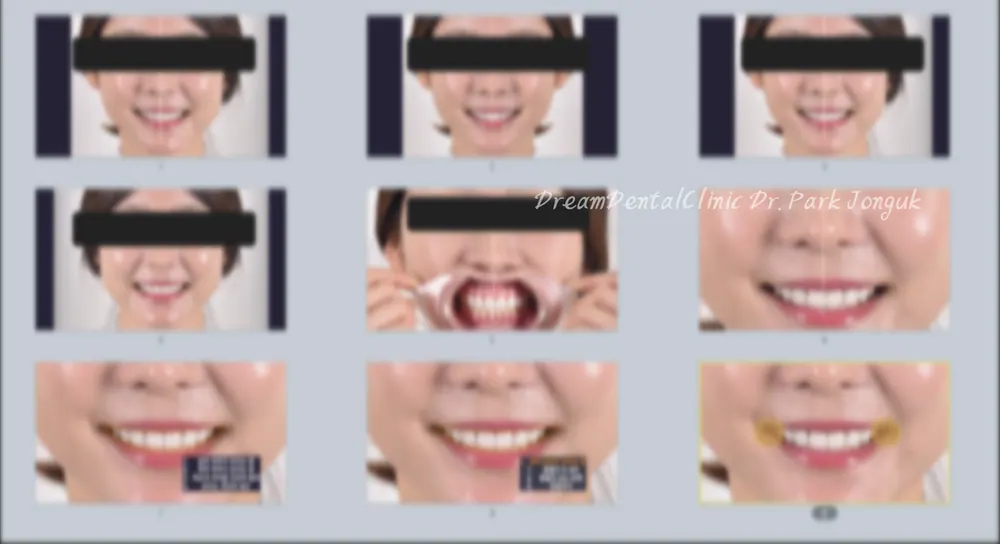
First, an analysis of the face is carried out.
This is a part many dentists skip or overlook. Facial analysis is quite important, because if the teeth don't suit the face, it isn't proper veneer treatment.
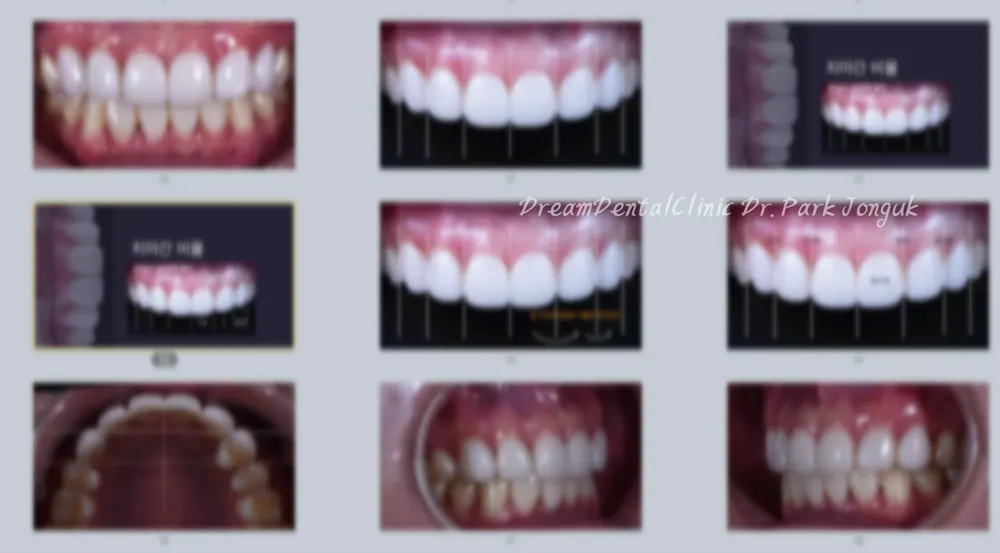
Next comes tooth analysis. Proportion matters a great deal in tooth analysis, and this proportional analysis is carried out from various angles.
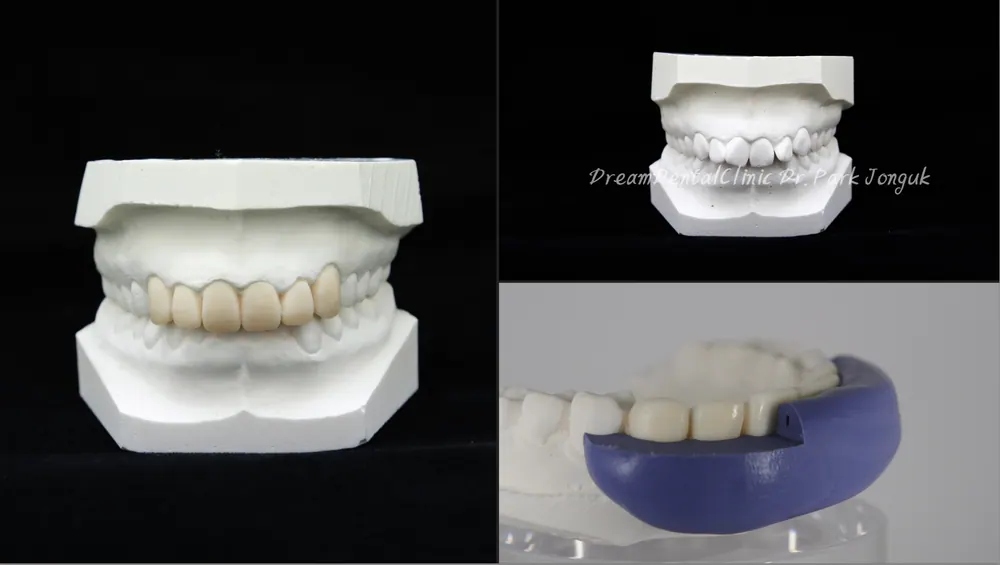
Through this analysis, the expected tooth shape is built in wax.
This analysis process draws on my own know-how, built up over 20 years. It took a great deal of effort — analyzing countless papers and texts, and working out how to apply data that's mostly based on Western populations to our own patients.
This article is a clinical note written by Dr. Park Jonguk of Dream Dental Clinic, Gangnam; the original was published on his blog. The photographs shown are real cases he treated. Results vary with each patient’s condition, and every procedure carries the possibility of individual variation and side effects.
Quick Consult
Request a Callback
Leave your number and we will call you back during clinic hours.
Request Received
We will contact you during clinic hours. For urgent matters, please call +82-2-3448-0028.