
Retreating Gum Discoloration After Veneers, Crowns, and Other Tooth Reshaping
Hello. I'm Park Jonguk, director of Dream Dental Clinic, Apgujeong.
Gum discoloration is one of the phenomena seen most often when retreating old tooth reshaping work.
There are broadly two reasons gum discoloration occurs.
First, in older cases, instead of an all-ceramic crown, a method called PFM or PFG, which has metal inside, was often used.
The metal shows through the gum, and this often looks bluish.
These days, this type of crown is rarely used, so it's not much of an issue anymore, but it's still quite common in cases that are just over 10 years old.
Zirconia and e.max, which are widely used for all-ceramic crowns today, haven't been mainstream for all that long, and before that, all-ceramic crowns fractured far too often, so metal-backed crowns were used a great deal.
The second reason is cases that had root canal treatment.
Root canal treatment doesn't actually treat the nerve — it removes the nerve and all of the surrounding tissue.
That's why its proper name is endodontic (root canal) treatment.
When all of that tissue is removed, blood can remain inside the canal,
or if a material that can discolor the tooth is used,
severe discoloration can result,
and root canal treatment itself inevitably changes the tooth's color over the long term.
These days, when a front tooth has root canal treatment, the inside is usually whitened afterward to finish with somewhat less discoloration.
But if root canal treatment was done a long time ago, the material used for it often caused discoloration on its own, in many cases turning the tooth nearly black.
Today, materials with almost no discoloring effect are used, so discoloration is far less common than in the past.
There's one more reason worth mentioning: gum inflammation.
In this case, rather than turning black, the gum tends to turn a deep red, which is somewhat different.
With good gum care, this kind of problem mostly goes away.
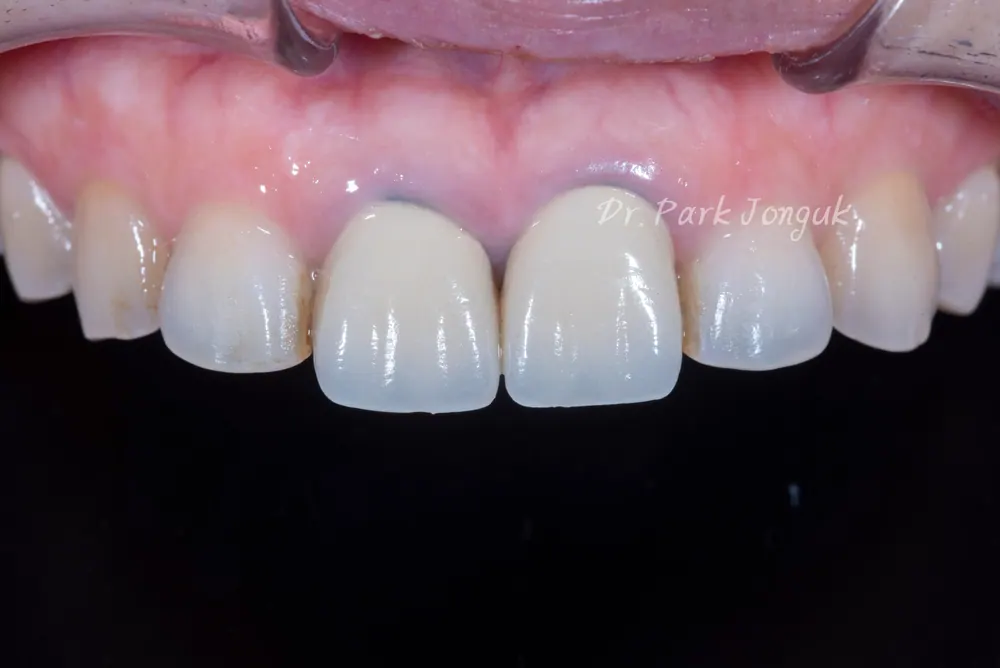
This case is also one where discoloration came from root canal treatment, as mentioned above.
With a metal-backed crown, simply replacing the crown with an all-ceramic one resolves the problem,
but discoloration from root canal treatment is a state where the color of the tooth itself has changed, so it's not an easy fix.
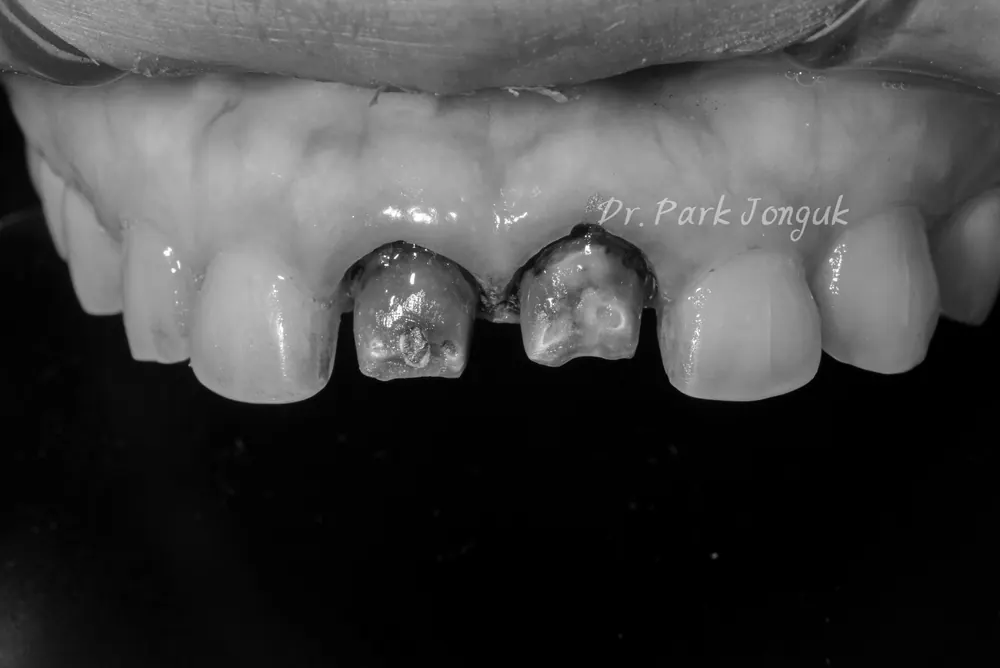
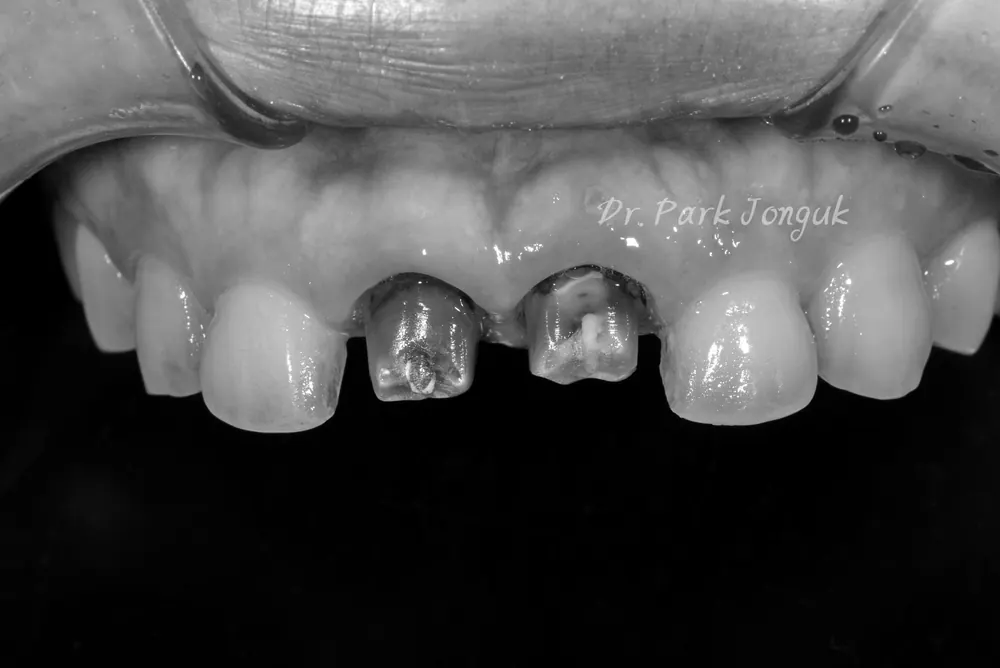
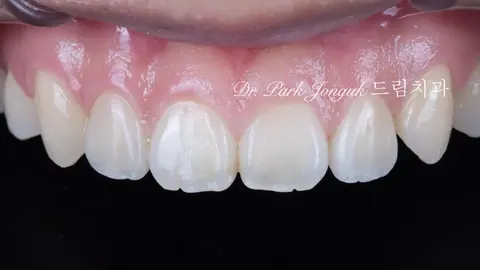
This is what it looked like after the crown was removed.
The area near the gum had turned nearly black.
This discoloration shows through the gum, making the gum look dark or bluish.
The best way to solve this would be to reverse the discoloration of the tooth itself.
But that isn't an easy thing to do.
As in this case, when the discoloration is close to the gum, whitening becomes very difficult and can cause serious side effects,
so in my own practice, I don't perform whitening in cases like this.
For cases like this, it's better to resolve it by handling the gum carefully and fabricating the crown well.
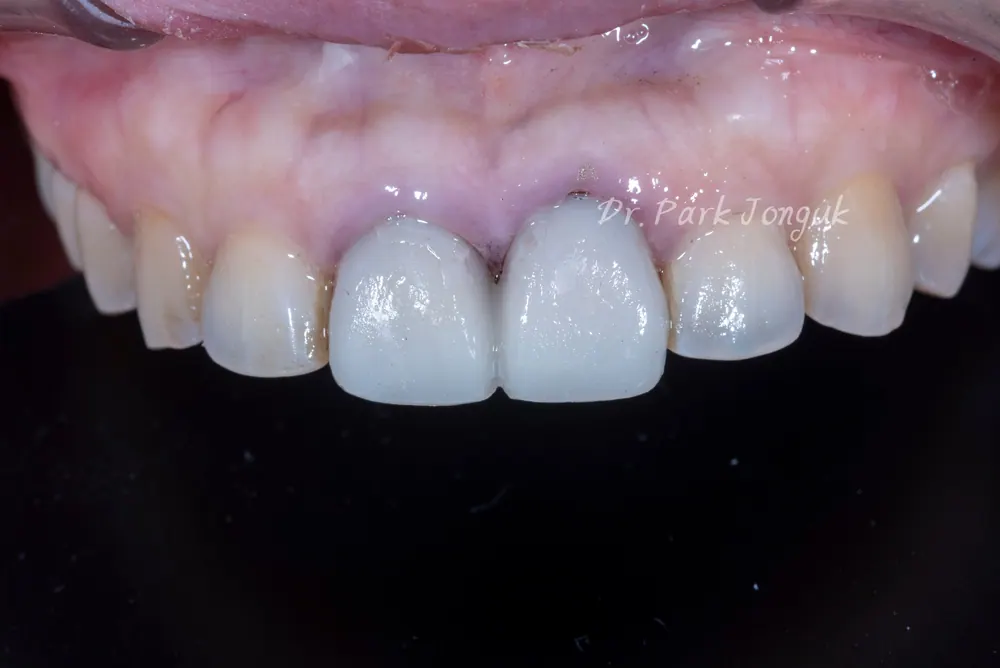
First, a temporary tooth is made right on the first day.
This temporary tooth is only used for a short while.
An impression is then taken to make a more precise temporary tooth that will stabilize the gum.
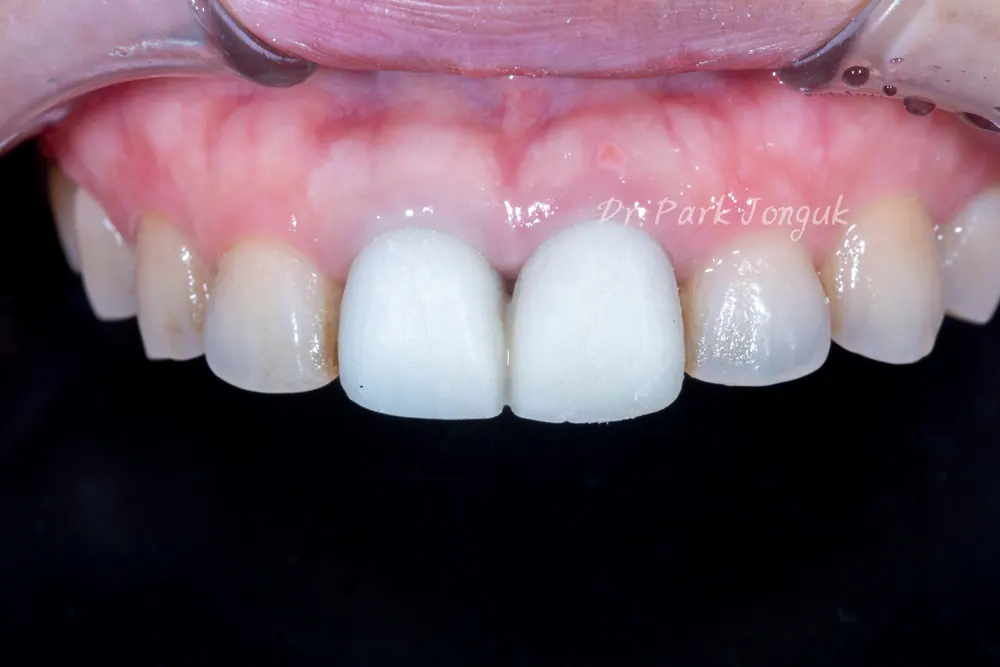
This is the more precise temporary tooth made to stabilize the gum.
You can see how much cleaner the area near the gum looks already, can't you?
Making a temporary tooth like this requires a great deal of know-how.
It's the most important step in restoring the gum color, and the result depends heavily on how the temporary tooth is made.
Not every case can have its gum color restored this way.
It depends on the type of gum tissue, and the treatment method varies accordingly.
As the gum stabilizes, you can see that the darkened area starts to be covered up considerably by the gum.
We're proceeding by thickening the gum tissue to cover as much of the tooth discoloration as possible.
It's best to keep the temporary tooth in place for about a month or longer.
Koreans may be known for wanting things done quickly, but some things are worth waiting for.
These days, quite a few clinics finish this kind of treatment in a single day.
We take plenty of time and proceed carefully.
That's because a fine piece of work can't be made in a single day.
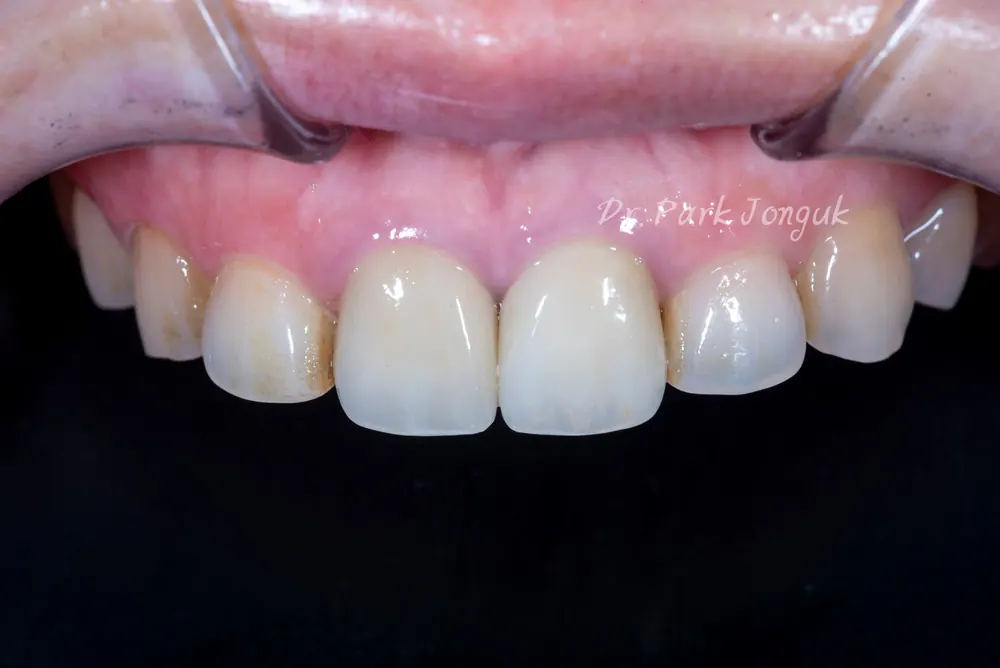
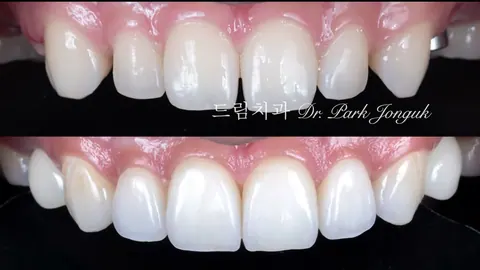
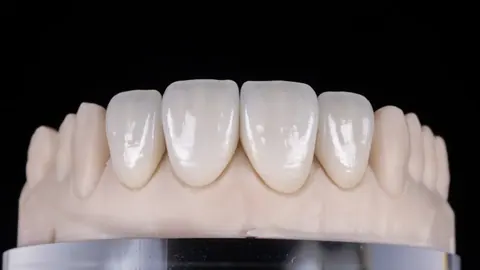
This is the state after finishing with the final crown.
You can see that the gum discoloration has improved considerably.
Shall we compare it side by side?
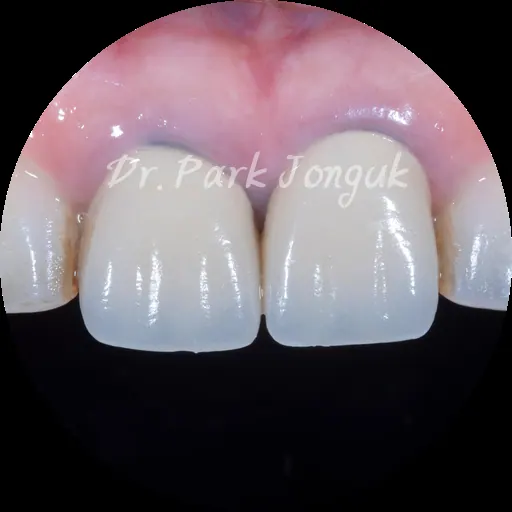
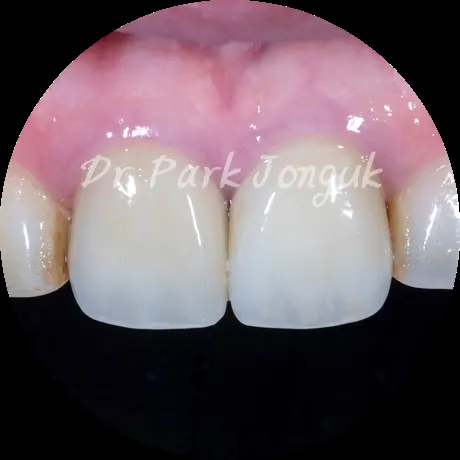
Treating gum discoloration is a fairly delicate process.
It's very important to treat in a way that prevents discoloration from occurring in the first place, or at least minimizes it.
If discoloration has already occurred, treatment needs to proceed in a way that minimizes it as much as possible.
This article is a clinical note written by Dr. Park Jonguk of Dream Dental Clinic, Gangnam; the original was published on his blog. The photographs shown are real cases he treated. Results vary with each patient’s condition, and every procedure carries the possibility of individual variation and side effects.
Quick Consult
Request a Callback
Leave your number and we will call you back during clinic hours.
Request Received
We will contact you during clinic hours. For urgent matters, please call +82-2-3448-0028.