
Resin Cannot Replace Ceramic Veneers
Dental materials are advancing incredibly fast.
Many of the materials I learned about back in school aren't used much anymore.
In fact, most of the materials I use the most today are ones that came out after I graduated.
Because the pace of progress is so fast, a lot of new approaches keep getting tried.
In particular, a lot of methods have come out aimed at making treatment easier.
The most representative example is the one-day veneer made using CAD/CAM.
I've mentioned this several times before on my blog.
To give you the conclusion up front, there's still a long way to go.
If it were fine to remove a lot of tooth structure and end up with an unnatural result, it wouldn't matter,
but if what you want is natural, beautiful teeth with minimal damage to the tooth,
I still think it's too early for that method.
Resin, a material that has been widely used for a long time, has also advanced quite a lot,
and it's now producing aesthetic results that come close to rivaling ceramic veneers.
Because of this, there's been a fair amount of talk among dentists about resin-based veneers.
But the biggest problem with resin is discoloration.
Just like a plastic container discolors after kimchi has been stored in it for a long time,
resin is essentially a type of plastic, so it discolors over time.
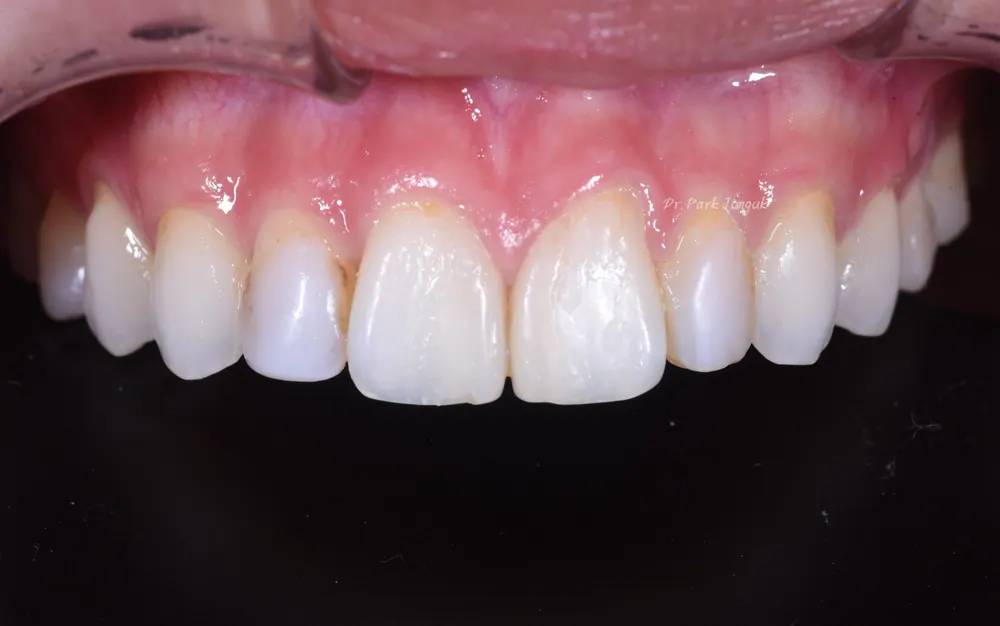
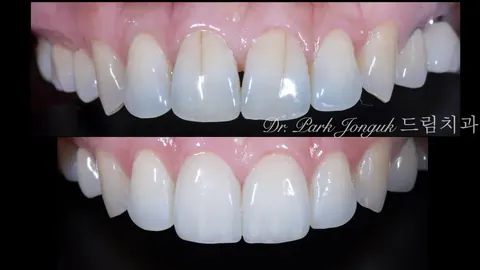
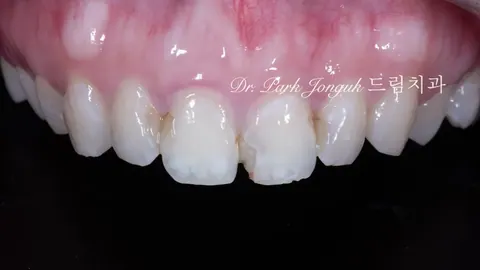
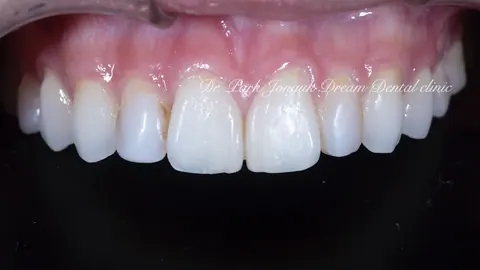
This case involved resin treatment between the front teeth and on the tooth next to the front tooth.
Fortunately, the area between the front teeth hadn't discolored much yet,
but the resin on the lateral incisor had already started discoloring noticeably, and the color no longer matched, so retreatment was carried out.
Resin has improved a lot recently and its translucency has gotten much better,
but it's still hard for it to achieve the same shine as a natural tooth.
It's a quite good material for molars or areas that aren't very visible,
but it still falls considerably short for use in veneers.
The resin is removed, and the veneer is prepared with minimal tooth reduction.
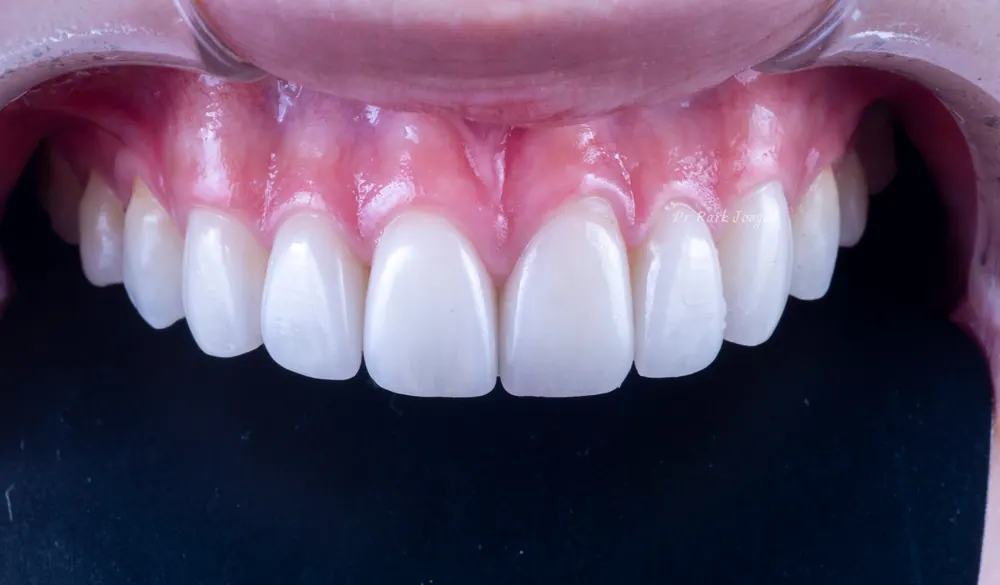
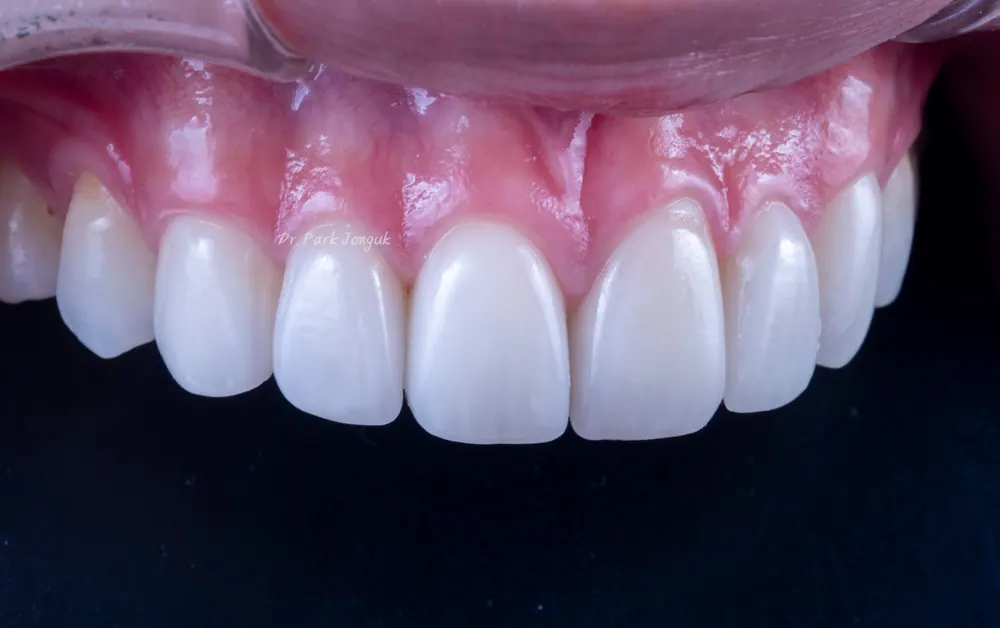
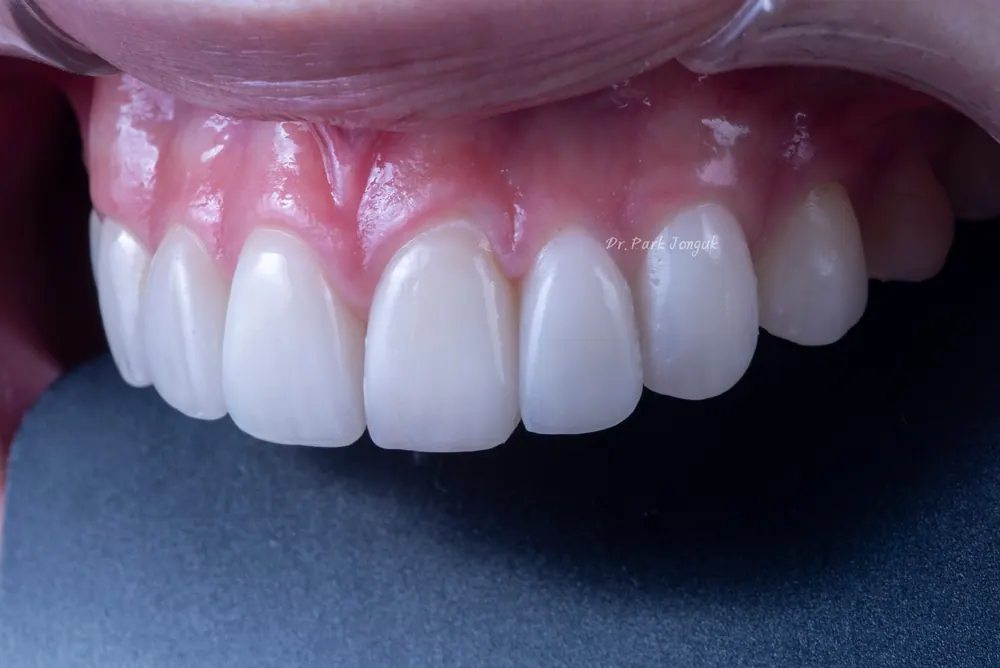
This is how it's reborn as a natural, beautiful veneer.
The patient herself said that if it could turn out this pretty, she wished she had gone with a ceramic veneer from the start.
Detail matters a great deal in veneers.
It's a very small difference, but it's the kind of element that makes something feel like a luxury piece of work.
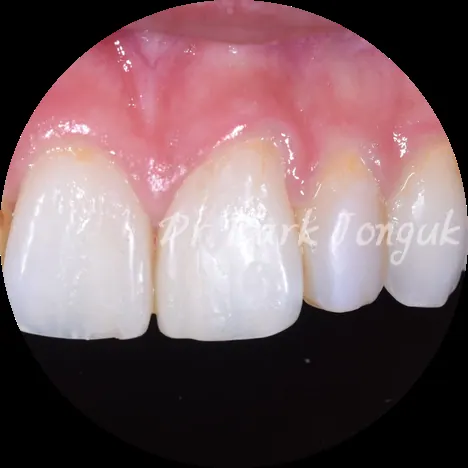
You can see that part of the front-tooth gumline had risen up noticeably higher.
It would be nice if there were a way to bring the gum back down to create left-right symmetry, and there are papers on various methods for this,
but in most cases it returns to its current state over time, so we have no choice but to work with the shape as it is now.
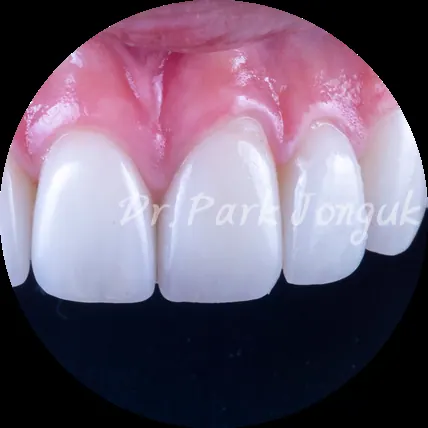
In most cases, that area is handled by leaving it flat, which makes the tooth look overly long,
or by matching the color uniformly, which ends up looking unnatural,
but when this area is also handled to match the feel of a natural tooth, the unnatural look is almost entirely eliminated.
In particular, making it this thin also reduces irritation to the gum, which helps prevent the gum from receding further up to some degree.
This article is a clinical note written by Dr. Park Jonguk of Dream Dental Clinic, Gangnam; the original was published on his blog. The photographs shown are real cases he treated. Results vary with each patient’s condition, and every procedure carries the possibility of individual variation and side effects.
Quick Consult
Request a Callback
Leave your number and we will call you back during clinic hours.
Request Received
We will contact you during clinic hours. For urgent matters, please call +82-2-3448-0028.