
The Limits of the One-Day Method in Veneer Redo Treatment
Hello, I'm Park Jonguk, DDS, MS, medical director of Dream Dental Clinic, Apgujeong.
Veneer fabrication methods fall broadly into two types.
One is usually called the one-day method, in which the shape is designed by computer using CAD/CAM and the ceramic is milled by a milling machine.
The other method makes the ceramic the way pottery is made, by firing it in stages.
The one-day method mostly uses a piece of equipment called CEREC. I'd guess that most clinics making one-day veneers, not just in Korea but around the world, use CEREC. Almost all of them also use essentially the same material. In the end, since the machine, software, and material used in the one-day method are all the same, there ends up being little difference from one clinic to another. And it has clear limitations.
As a result, many clinics coin a somewhat unique name and hope it will be called something other than "veneer." Veneer is simply the name of the treatment, and all of these fall under that name, so I'm not sure there's really a need to say "what we do isn't a veneer, it's XYZ."
One-day veneers have the advantage of being finished in a single day, but when made with CAD/CAM, the ceramic needs to be at least a certain thickness, and achieving that requires reducing the tooth by at least a certain amount, no matter what.
And because most use a single-shade, opaque ceramic, the result often looks unnatural. It ends up finished in a form that anyone can tell looks awkward and doesn't resemble a natural tooth.
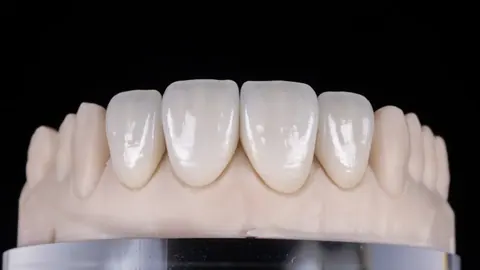
The way we make veneers proceeds like making pottery, so it takes a long time and can't be finished in a single day, but it results in a far more natural shape, color, and translucency. It can replicate a natural tooth in such fine detail that even a dentist has a hard time telling whether it's ceramic or a real tooth.
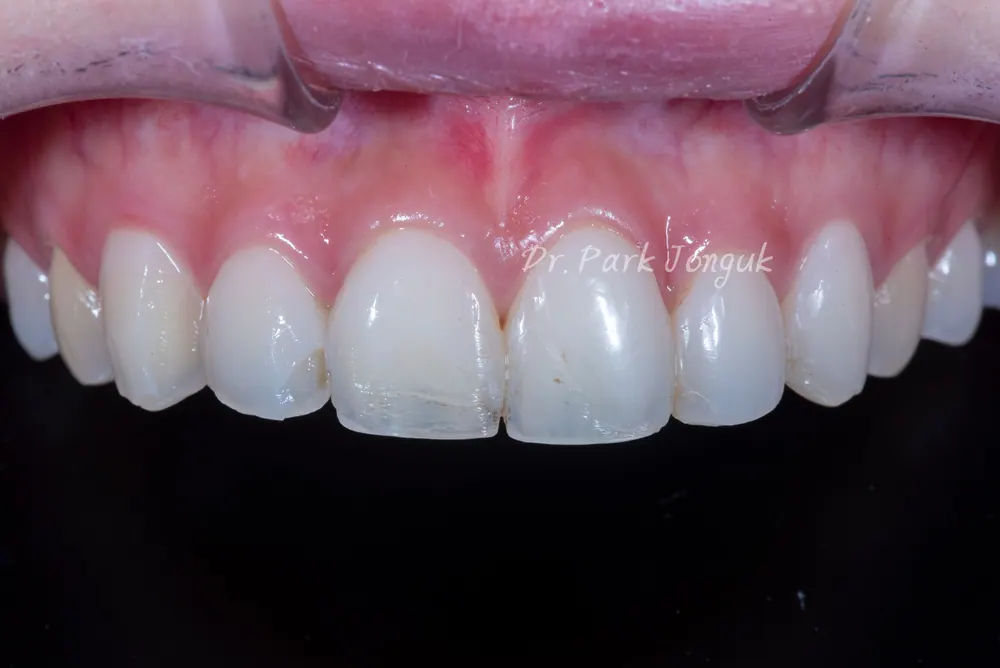
This patient had gotten veneers not long before, but they started chipping little by little, and problems developed on several teeth, so she came in for veneer redo treatment.
It's not that the one-day method necessarily chips easily,
but as interest in reducing the amount of tooth reduction has grown recently, various methods have come into use to allow the one-day method with less tooth reduction.
As I mentioned earlier, the one-day method is only possible if the tooth is reduced by at least a certain amount,
so to get around that limitation, an analog, non-digital method is sometimes used instead.
It involves grinding the fabricated ceramic down by hand to make it thinner.
Reworking by hand a ceramic that was precisely designed by computer and milled by machine isn't a good thing.
Since a hand can't apply consistent pressure across the entire ceramic while shaping it,
adding this manual processing is likely to make fine cracks more prone to forming in the ceramic.
On top of that, because everything is rushed, situations like the case above arise, where the size and shape of the two front teeth don't even match symmetrically.
In this case as well, the post-processing done on the ceramic led to several veneers fracturing.
On top of that, since most of the veneers deviated from the shape, color, and translucency of a natural tooth,
we decided to remake them for a natural, beautiful result.
We proceeded with removing the veneers.
Removal was done using a laser to minimize damage to the natural teeth.
After that, through consultation with the patient, we proceeded with remaking the veneers to bring out the shape, color, and translucency she wanted.
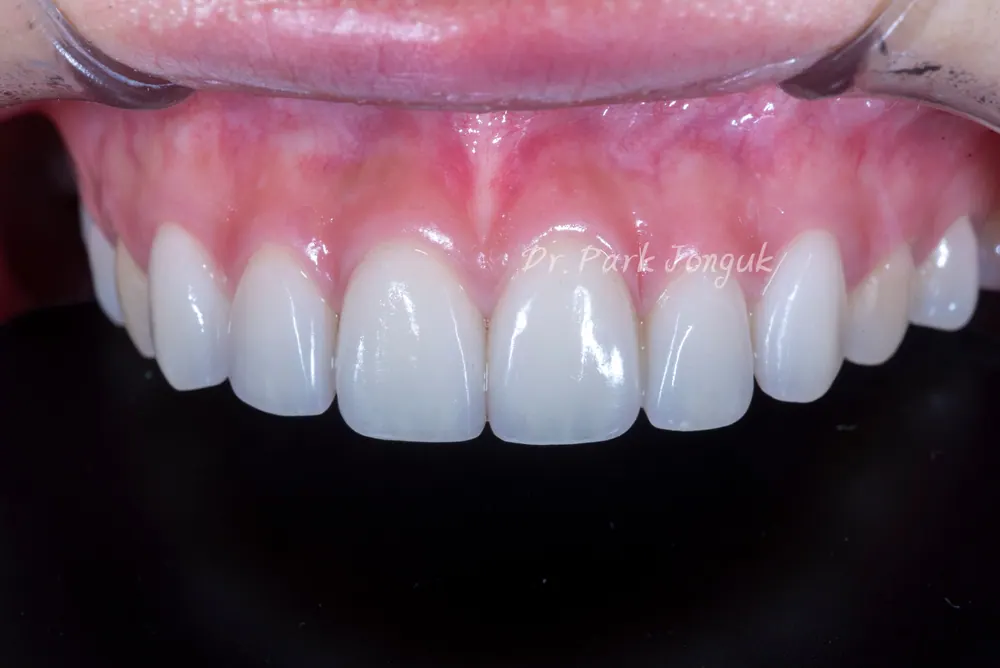
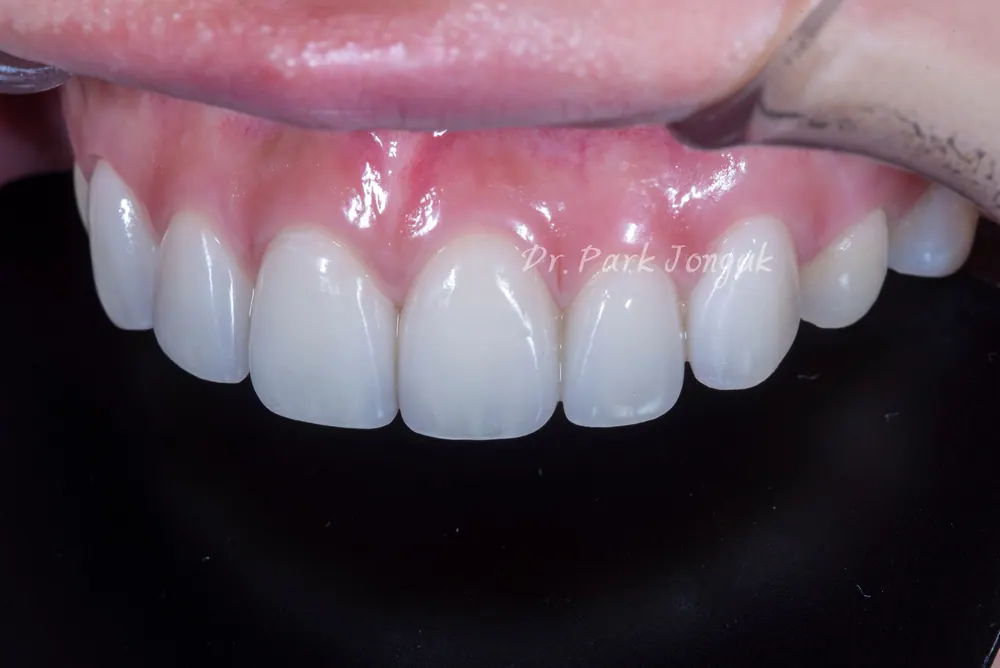
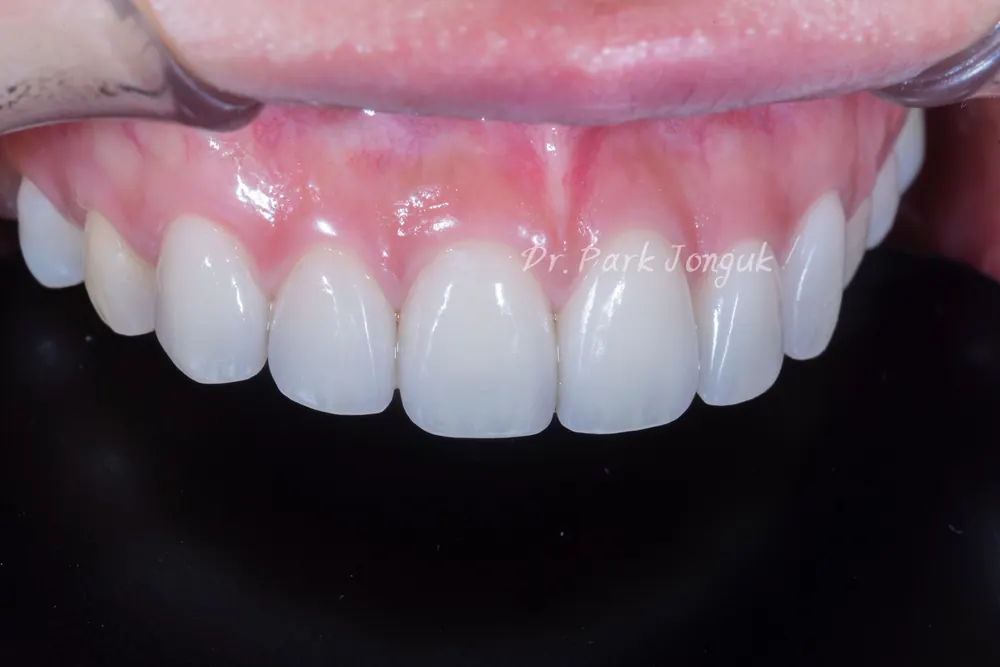
After the veneer redo treatment, they were remade to look this natural.
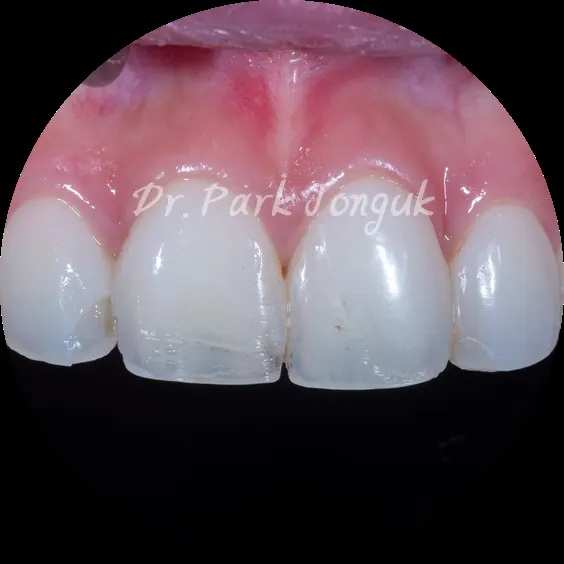
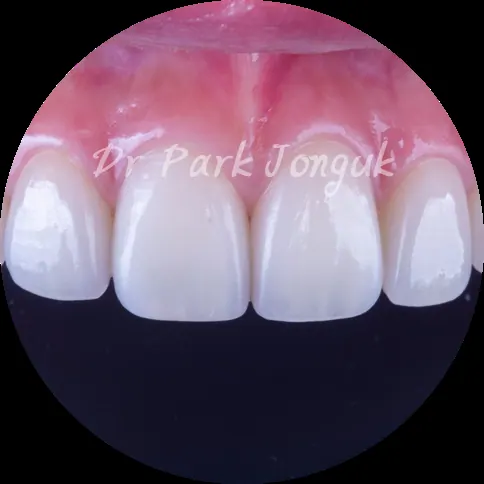
Comparing the two photos, you can see that not all veneers are the same.
This clearly shows the limitations of one-day veneers in particular.
Tooth shape also matters a great deal. A jar-shaped tooth rarely looks pretty. When treatment proceeds without a proper plan,
there's no simulation of the outcome, and patients shouldn't have to find out what their teeth will look like only after the ceramic veneer has already been made.
The desired shape should already be fully applied at the temporary-tooth stage, and the ceramic should be fabricated based on that,
but since the one-day method doesn't involve making a temporary tooth, adjustments end up being made after the ceramic veneer has already been fabricated,
and that can cause fine cracks to develop in the ceramic, becoming a problem.
This article is a clinical note written by Dr. Park Jonguk of Dream Dental Clinic, Gangnam; the original was published on his blog. The photographs shown are real cases he treated. Results vary with each patient’s condition, and every procedure carries the possibility of individual variation and side effects.
Quick Consult
Request a Callback
Leave your number and we will call you back during clinic hours.
Request Received
We will contact you during clinic hours. For urgent matters, please call +82-2-3448-0028.