
Front Teeth All-Ceramic Crowns: The Veneer Diagnosis Chosen After Repeated Composite Bonding
If you keep struggling with front tooth resin fillings, cavities, or veneers, be sure to read this.
When front tooth cavities are treated with resin fillings again and again,
the teeth gradually get shorter, darker in color, and lose their overall appearance.
In this article,
we'll cover the limits of front tooth resin treatment,
and why diagnosis matters so much when choosing between all-ceramic crowns and veneers,
explained through a real case.
Introduction
Many patients who visit us for front tooth cavities
have already had resin treatment several times before.
At first, it was just a small cavity.
Resin treatment, which can be done in a single visit and costs less, seemed like enough.
But as time passed,
new cavities formed around the resin,
and each time, the existing resin had to be removed
and a bit more of the tooth had to be shaved away, over and over.
After this cycle repeats a few times,
the tooth gradually becomes thinner and shorter,
losing its original shape and color.
This patient was no exception —
she had already undergone resin treatment for front tooth cavities several times,
and came to us because she no longer wanted to repeat this vicious cycle.
That's why she visited our clinic.
She initially came in thinking about all-ceramic crowns for her front teeth,
but before starting any actual treatment, what mattered most
wasn't 'what treatment to do,'
but 'how to diagnose the case properly.'
Main Content
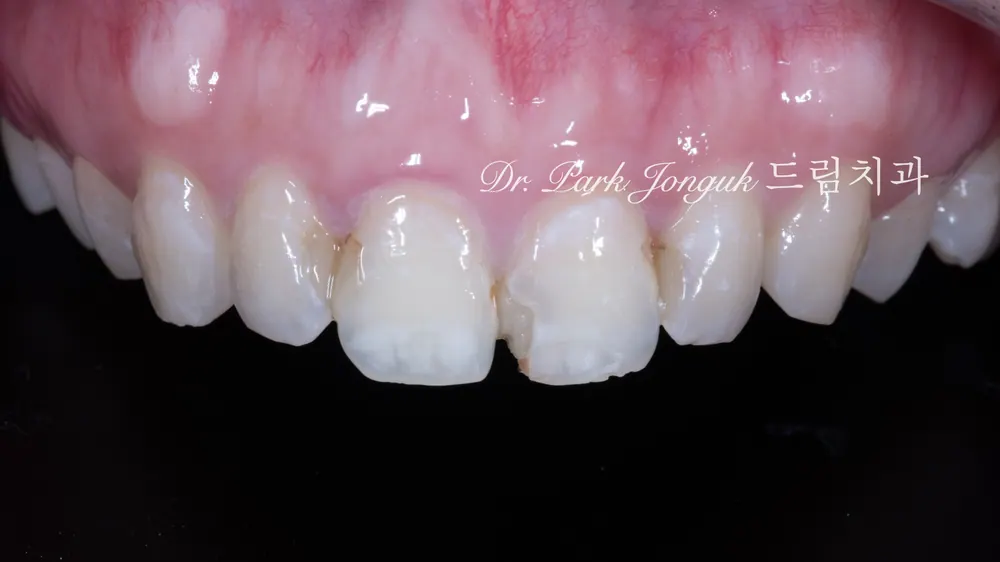
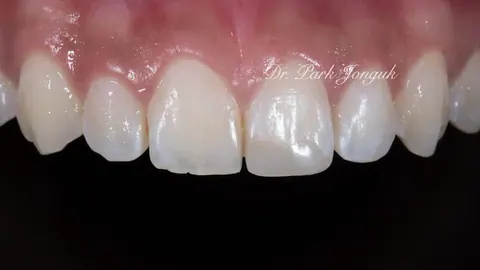
Photo 1. Before treatment
Across the front teeth,
traces of resin treatment can be seen in several places.
Discoloration had developed around the resin,
and repeated cavities had left the tooth shape significantly compromised.
Even to the naked eye,
the tooth color was uneven,
and the natural translucency typical of front teeth had almost completely disappeared.
The patient herself
said that her front teeth were what bothered her most whenever she smiled.
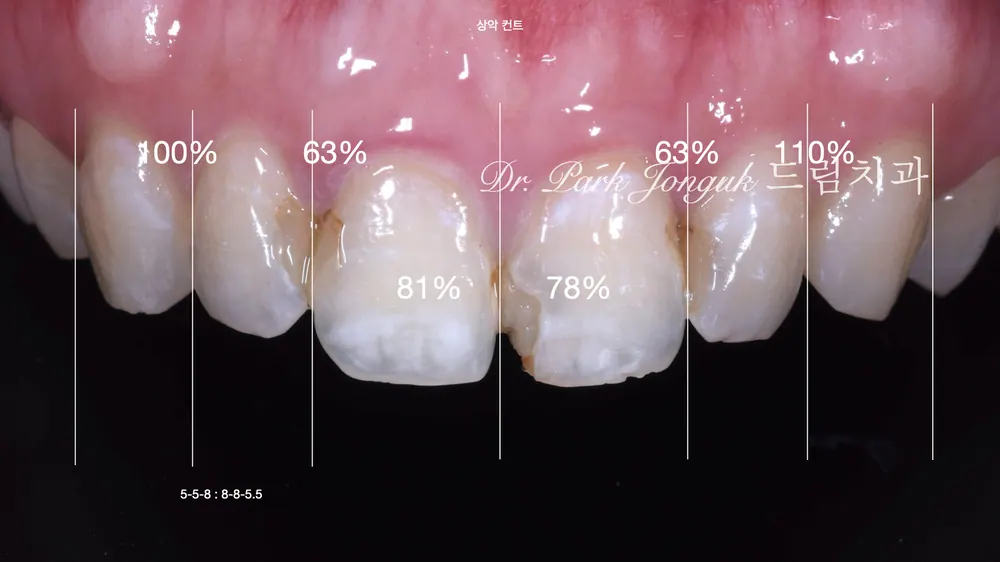
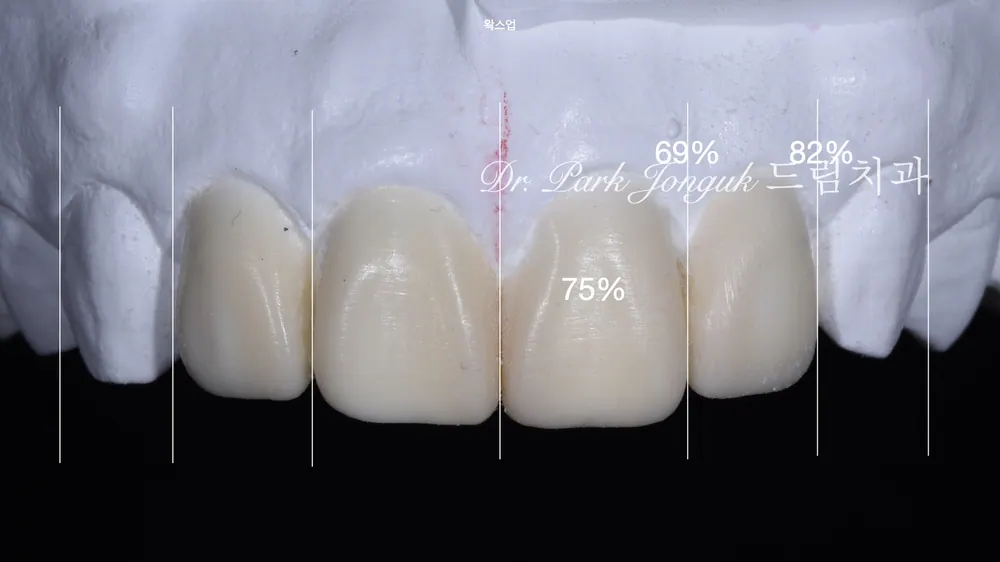
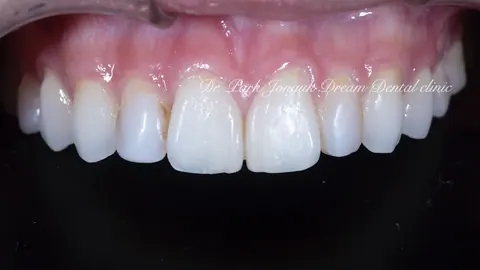
Photos 2, 3. The diagnostic process — why diagnosis matters, whether it's a crown or a veneer
Many people
think of all-ceramic crowns as a treatment that simply 'covers' the tooth,
and veneers as a treatment that just 'attaches a thin layer.'
But in reality,
diagnosis is the key factor in both treatments.
The current amount of tooth structure already removed,
how much enamel remains,
the depth and location of the cavity,
the bite condition,
and even the length of teeth visible when smiling
all need to be taken into account.
In this case,
the tooth structure had already been significantly weakened by repeated resin treatment,
and the risk of the cavity recurring was high,
so a simple veneer alone could have compromised the stability of the result.
For that reason,
an all-ceramic crown designed to the same aesthetic standard as a veneer
was what we ultimately planned.
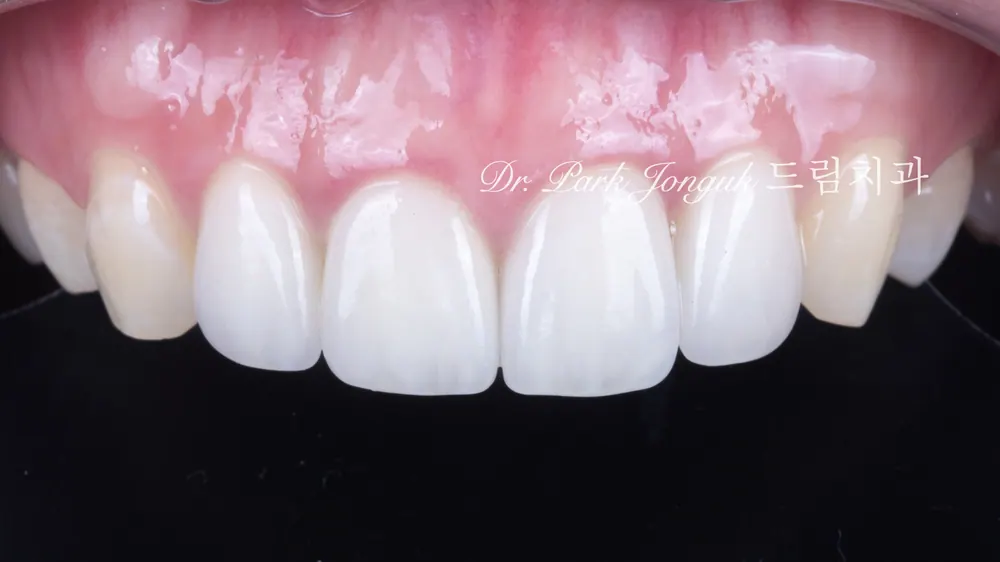
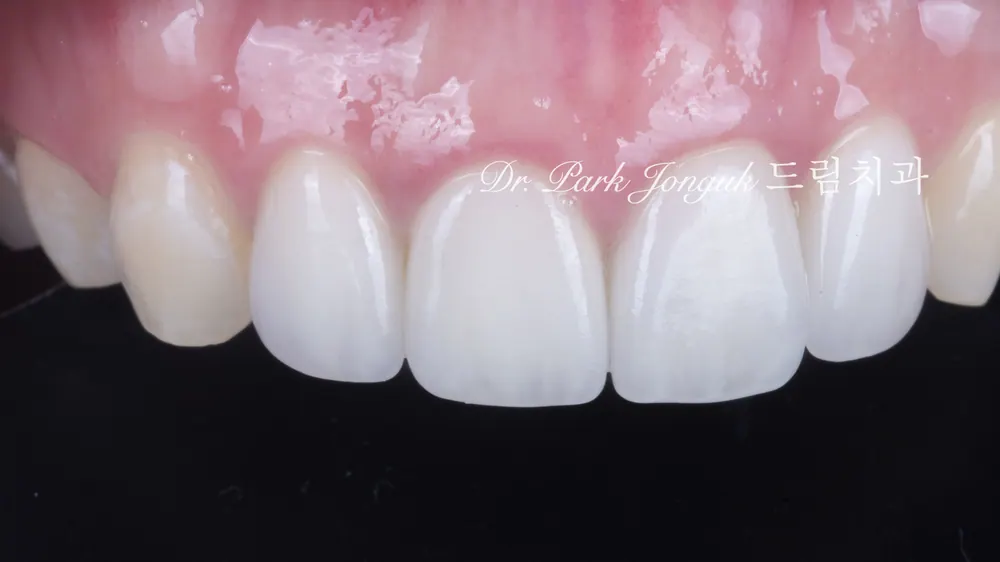
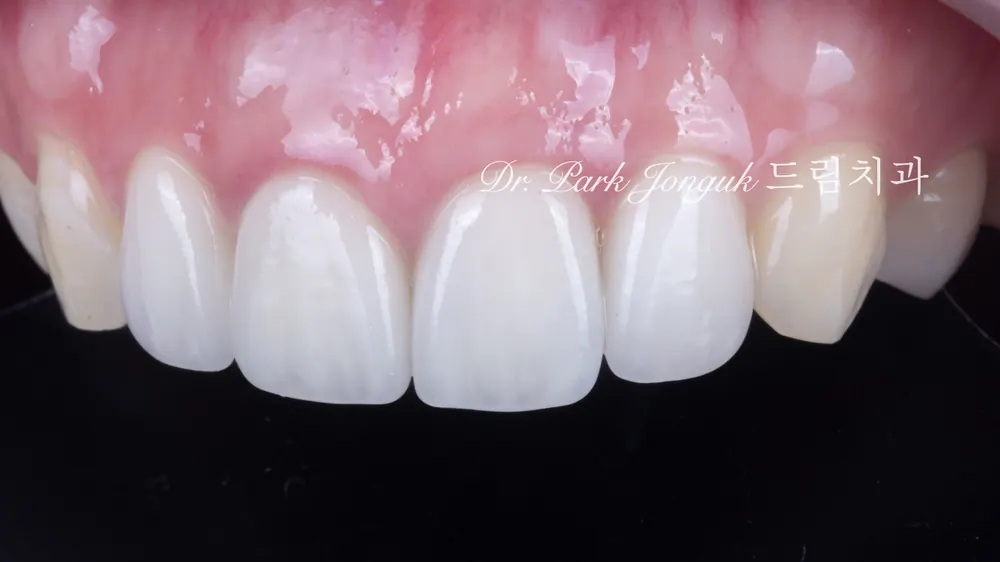
Photos 4, 5, 6. After treatment
The biggest change after treatment
wasn't that the teeth became 'white,'
but that they became natural.
The tooth color became brighter,
but without looking artificially stark,
it blends naturally with the surrounding teeth.
At the edges of the front teeth,
the translucency characteristic of natural teeth has been preserved,
and the surface texture isn't overdone either.
Above all,
the very structure that kept developing recurring cavities
was now stably enclosed and protected,
which also put the tooth in a far more favorable functional state.
The patient
said several times, 'I wish I had done this sooner.'
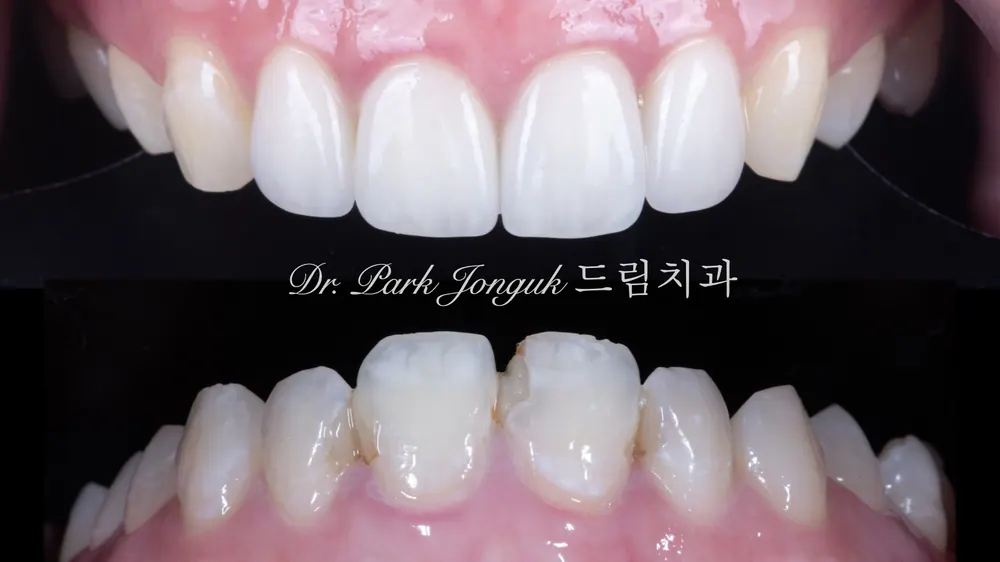
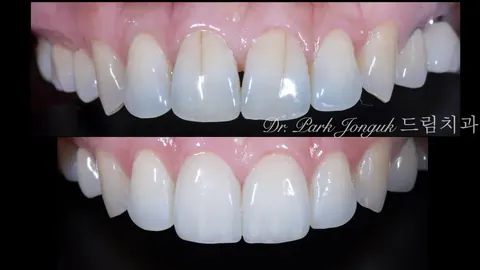
Photo 7. Before-and-after comparison
Placing the before and after photos side by side,
the difference is clear.
The front teeth, once darkened and uneven
from repeated resin treatment,
now have a uniform shape, color, and length.
But
instead of looking like they were obviously 'treated,'
they simply look like naturally beautiful teeth.
This difference
isn't about the materials used,
but about the diagnosis and design behind the treatment.
Conclusion
If your front tooth cavities keep recurring
and you keep going back for resin treatment,
there will eventually come a point where you need to consider a different option.
At that point,
an all-ceramic crown isn't automatically the right answer,
and a veneer isn't automatically the right answer either.
What matters is
given the current state of your teeth,
which treatment will last the longest,
look the most natural,
and stay the safest —
an accurate diagnosis of that is what matters most.
Front tooth resin,
front tooth cavities,
front tooth all-ceramic crowns,
or front tooth veneers — if you're weighing these options,
before deciding on a treatment method,
we recommend carefully checking the diagnostic process first.
Q&A
Q1. Do front tooth cavities always require a crown?
A. No. Depending on the location and depth of the cavity and how much tooth structure has already been removed, a veneer may be possible instead. Diagnosis matters most.
Q2. Why is it a problem to keep repeating resin treatment?
A. Over time, resin can discolor and develop micro-leakage, and each repeat treatment removes more tooth structure.
Q3. Can all-ceramic crowns also look natural?
A. Yes. They need to be designed and fabricated to the same aesthetic standard as veneers to achieve a natural result.
This article is a clinical note written by Dr. Park Jonguk of Dream Dental Clinic, Gangnam; the original was published on his blog. The photographs shown are real cases he treated. Results vary with each patient’s condition, and every procedure carries the possibility of individual variation and side effects.
Quick Consult
Request a Callback
Leave your number and we will call you back during clinic hours.
Request Received
We will contact you during clinic hours. For urgent matters, please call +82-2-3448-0028.