
Remaking an All-Ceramic Crown
Hello. I'm Park Jonguk, director of Dream Dental Clinic, Apgujeong.
The general term for treatments that make front teeth beautiful is tooth reshaping.
Just as with nose or eye plastic surgery, teeth can also be reshaped.
Among the methods used for this are veneers and all-ceramic crowns.
A veneer is a method that removes only the front surface of the tooth and places a thin ceramic layer on top,
while an all-ceramic crown is a method that caps the tooth like putting a hat on it, made entirely of ceramic,
which is why the term "all-ceramic" is attached to its name.
An all-ceramic crown requires a large amount of tooth reduction, so while it is one method of tooth reshaping,
it's only used in cases where the tooth is badly broken, has had root canal treatment, or is severely discolored.
Many patients believe they received veneer treatment when they actually had an all-ceramic crown.
I think this happens because dentists don't always explain it properly.
The terminology itself isn't hugely important, of course,
but sometimes a clinic gives a veneer or all-ceramic crown treatment an unusual name, as if it were something entirely different.
The correct picture is that tooth reshaping is the treatment that improves the shape and color of teeth, and veneers and all-ceramic crowns are the two methods used for it,
and it's misleading when a clinic describes its own treatment as though it's something other than a veneer.
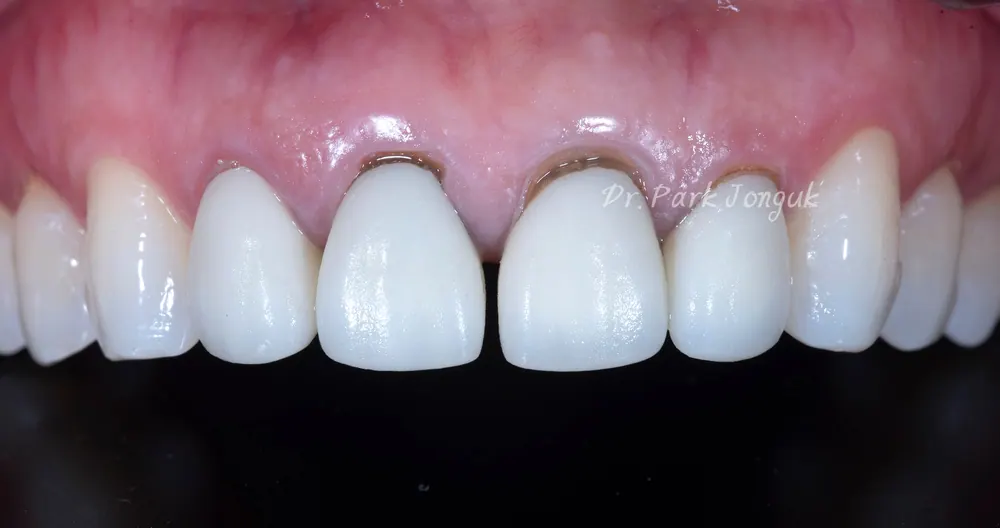
In this case, the patient had received all-ceramic crowns a long time ago.
Every tooth had had root canal treatment, with the entire tooth reduced and capped.
These days ceramic materials have improved a great deal, so they rarely fracture or come off even after a long time,
and the reason for needing retreatment is usually something else entirely.
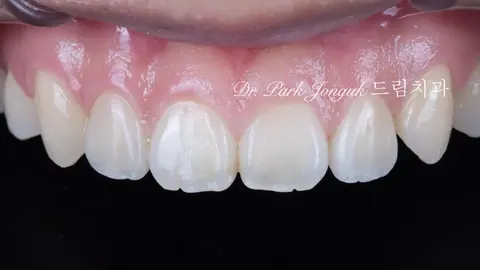
In the photo above, two problems had developed.
One was a gap that had opened up between the teeth.
The other was that the area near the gum had turned dark.
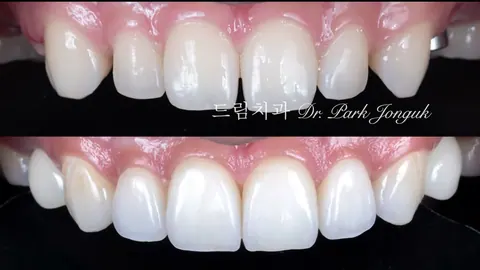
Retreatment was carried out to resolve both of these issues.
The gap itself could be resolved by making the teeth larger, but the problem is that if only the two teeth were enlarged,
the proportions between the teeth wouldn't match, and it would look quite unnatural.
Even in the current state, the two adjacent teeth were noticeably smaller compared to the two front teeth, so getting these proportions right was important.
The darkening near the gum is a characteristic of teeth that have had root canal treatment.
These days, teeth don't usually darken as much as shown in the photo above even after root canal treatment,
but with older root canal treatments, discoloration was common due to the properties of the materials used at the time and various factors during the procedure.
As gum recession occurred on top of this discoloration, the dark tooth became exposed as shown in the photo above.
Both of these issues needed to be resolved while also improving the opaque, unnatural shape and color that made the teeth look nothing like natural teeth.
If an opaque material is used automatically just because a tooth is severely discolored, this kind of problem results.
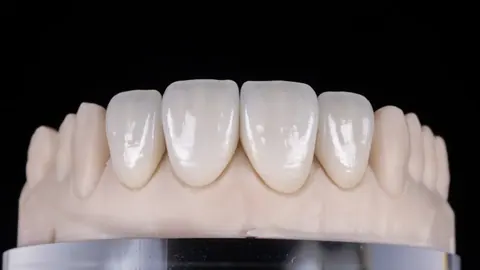
It's important to preserve a sense of translucency by taking the degree of discoloration and the shape of the tooth into account.
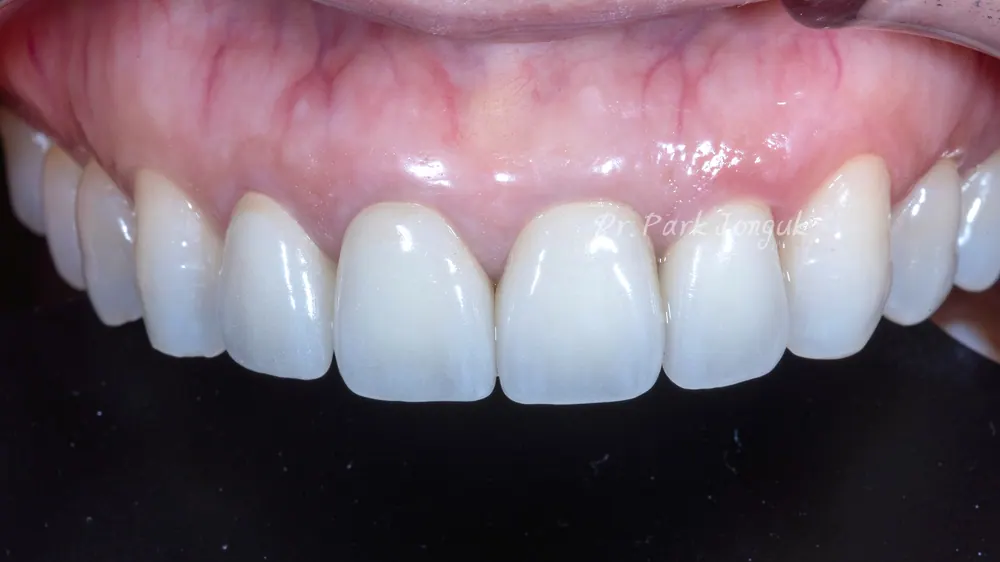
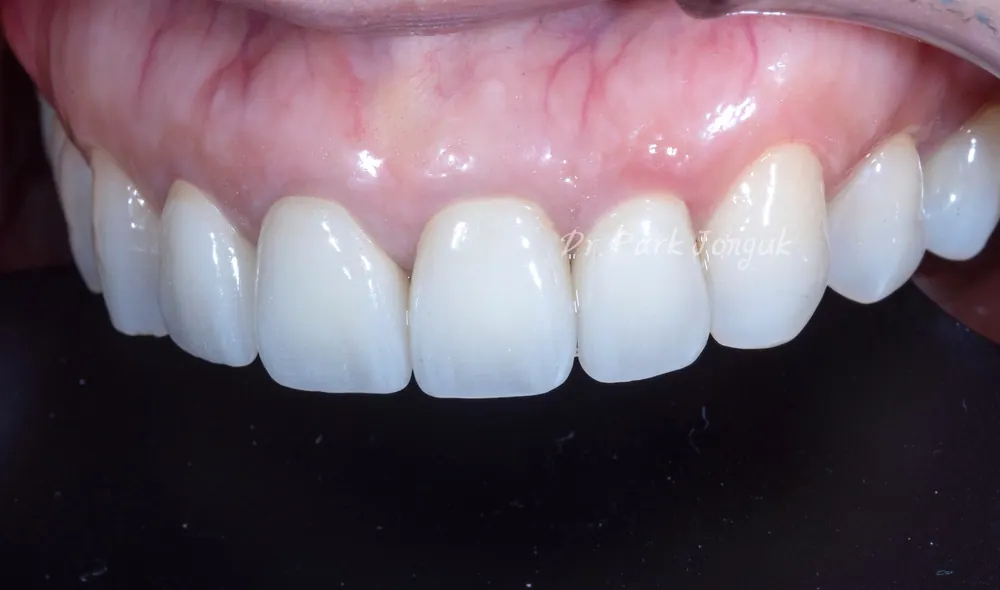
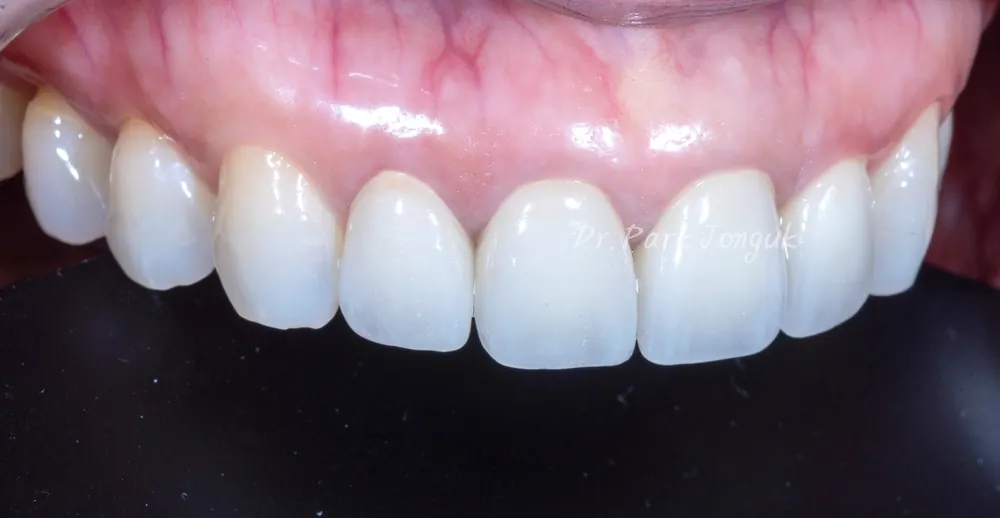
From the canine onward, these are natural teeth.
There's no sense of mismatch at all between the natural teeth and the all-ceramic crown.
The tooth color, which had turned almost completely black, was covered,
and treatment was finished with the beautiful, bright look of a natural tooth faithfully recreated, while still keeping a good sense of translucency alive.
This article is a clinical note written by Dr. Park Jonguk of Dream Dental Clinic, Gangnam; the original was published on his blog. The photographs shown are real cases he treated. Results vary with each patient’s condition, and every procedure carries the possibility of individual variation and side effects.
Quick Consult
Request a Callback
Leave your number and we will call you back during clinic hours.
Request Received
We will contact you during clinic hours. For urgent matters, please call +82-2-3448-0028.