
How to Reduce the Side Effects of No-Prep Veneers
Hello. I'm Park Jonguk, director of Dream Dental Clinic.
Veneer treatment is done for all kinds of reasons.
Treatment can be motivated by the shape, color, brightness, or size of the teeth.
If the arrangement of the teeth — meaning the alignment — isn't good,
the chance that tooth reduction will be needed goes up,
and if the alignment is good, the chance of being able to go no-prep increases.
Many patients want no-prep veneers,
but the cases where it's actually possible are quite limited.
A few times a year, once or twice a quarter,
I give lectures on veneers to fellow dentists.
Many dentists are also quite curious about whether no-prep veneers are possible
and often ask a lot of questions about the treatment method as well.
What matters with no-prep veneers is,
first, screening whether the case is actually eligible,
second, whether the result can turn out satisfactorily good if it is possible,
and finally, whether, even while fabricating extremely thin ceramic,
it can still turn out natural and beautiful.
First, for no-prep veneers to be possible, the following three conditions need to be met.
1. The tooth alignment must be good.
2. The teeth must be small.
3. The teeth must not be protruding.
These three conditions are essential.
However, if not all of these conditions are met,
we sometimes proceed with the veneer while doing an extremely minimal partial reduction.
Just a slight amount of shaping without anesthesia
can make the result far better.
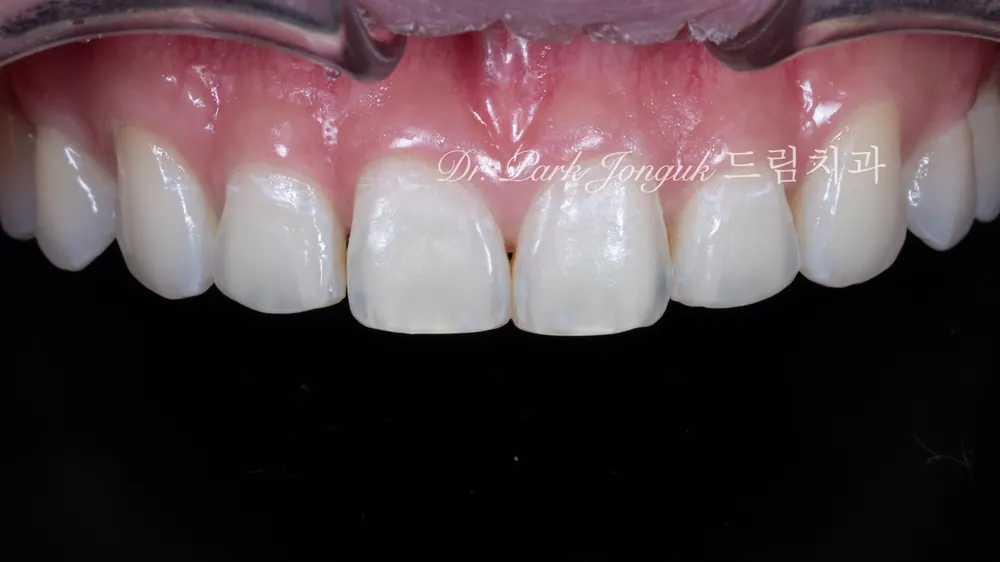
Most cases that meet the three conditions above
are situations where orthodontic treatment pulled the teeth in too far, leaving them retroclined.
Retroclined teeth after orthodontic treatment make for the best possible case for no-prep veneers.
In the photo above as well, orthodontic treatment left the teeth retroclined,
and because too little tooth showed when speaking or smiling,
we decided on veneer treatment.
First, we need to run a diagnosis,
which is the process of testing whether no-prep veneers are actually feasible.
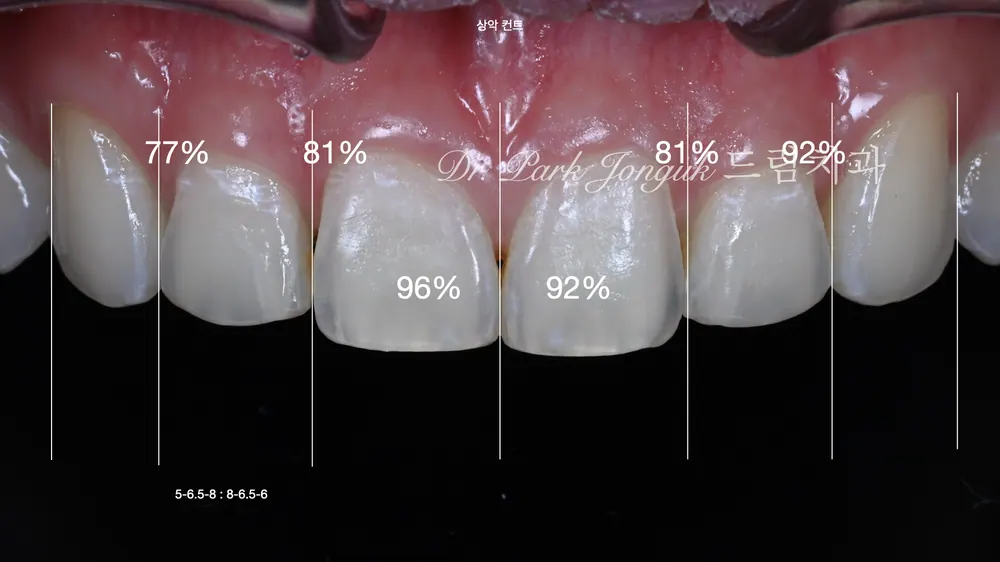
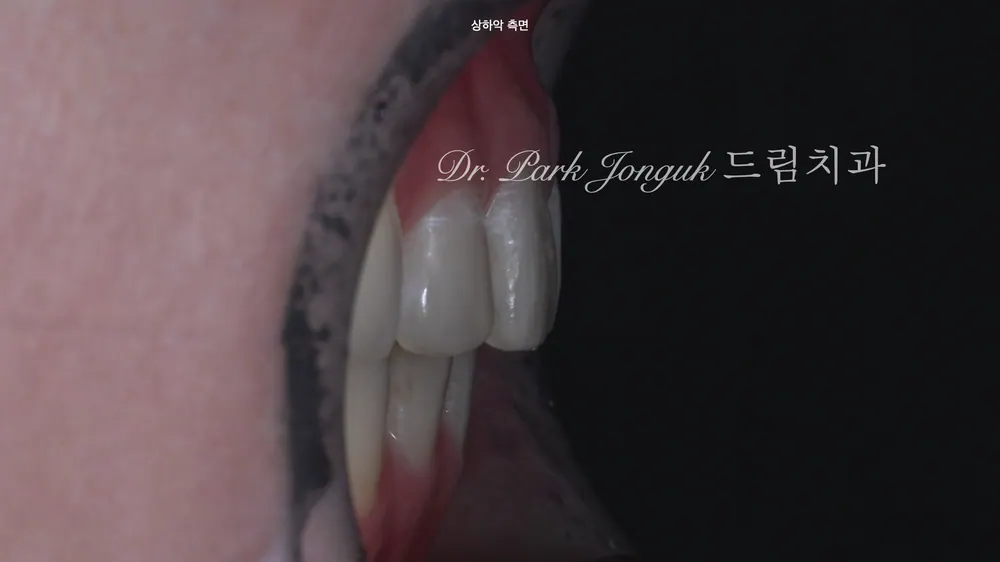
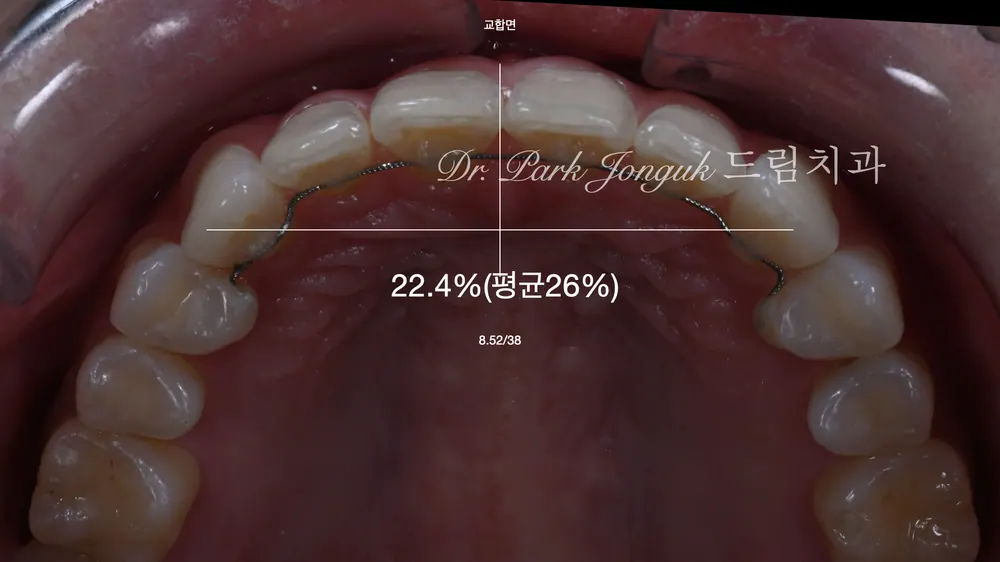
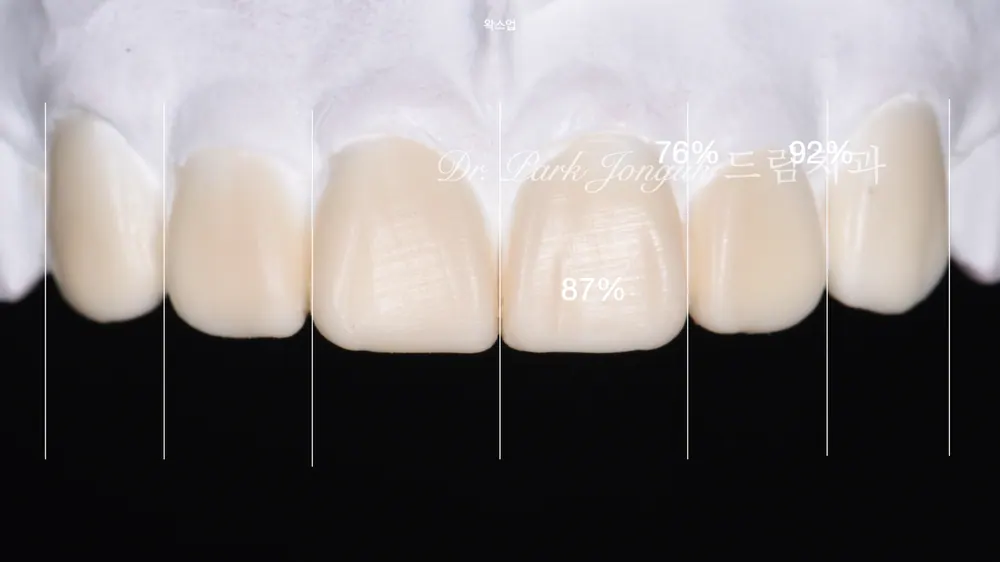
Starting from the relationship between the whole face and the teeth, we analyze the current teeth,
and through this we predict how the teeth will change after the veneers.
What needs to be checked here
is the size relationship between the face and teeth, how much tooth shows when speaking or smiling,
and, through analysis of the dental arch, whether the teeth are retroclined,
along with a range of other analyses.
We then layer wax over a plaster model to preview the post-treatment result.
The wax-up model made this way is used to fabricate the temporary teeth,
and through the temporary teeth, the patient can preview how their teeth will look after treatment.
During the analysis process for this case,
because of a shape issue in the lateral incisor next to the front tooth,
if we went with a completely no-prep veneer,
it seemed unlikely the tooth shape would come out looking attractive,
so a minimal amount of reduction on the lateral incisor became necessary.
The issues that needed to be resolved through treatment were:
1. Correcting the retroclination
2. Making the currently too-small teeth larger
3. Making the dark, blotchy teeth bright and beautiful
Treatment proceeds with these three goals in mind.
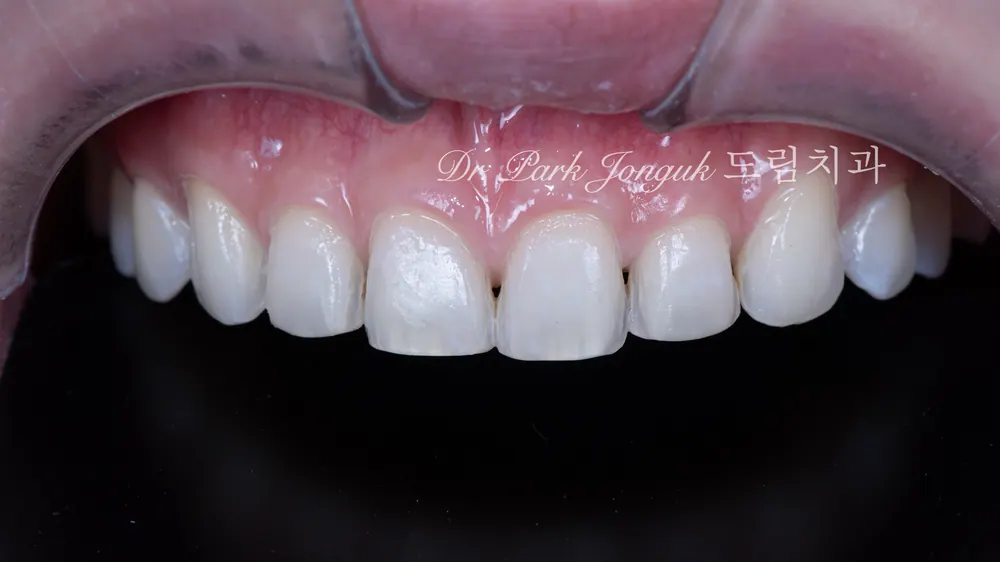
This is the state after reducing the lateral incisor according to the plan.
Only as much is reduced as is possible without anesthesia.
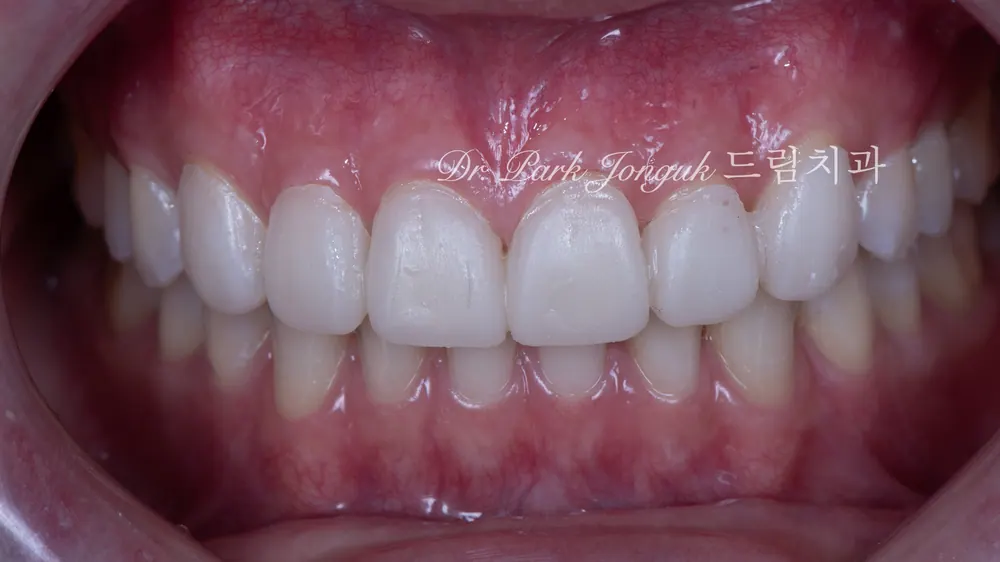
Using the wax-up model, we make the temporary teeth
and actually check the post-treatment shape in the mouth.
Since it's made of resin, things like color, translucency, and detailed surface texture
can't fully be checked,
but the overall volume and size proportions can be confirmed,
and especially in no-prep veneer cases,
since the relationship between the changed teeth and the lips matters a great deal,
this can be checked first.
Whatever the veneer treatment,
this kind of precise temporary-tooth fabrication and confirmation is a very important step.
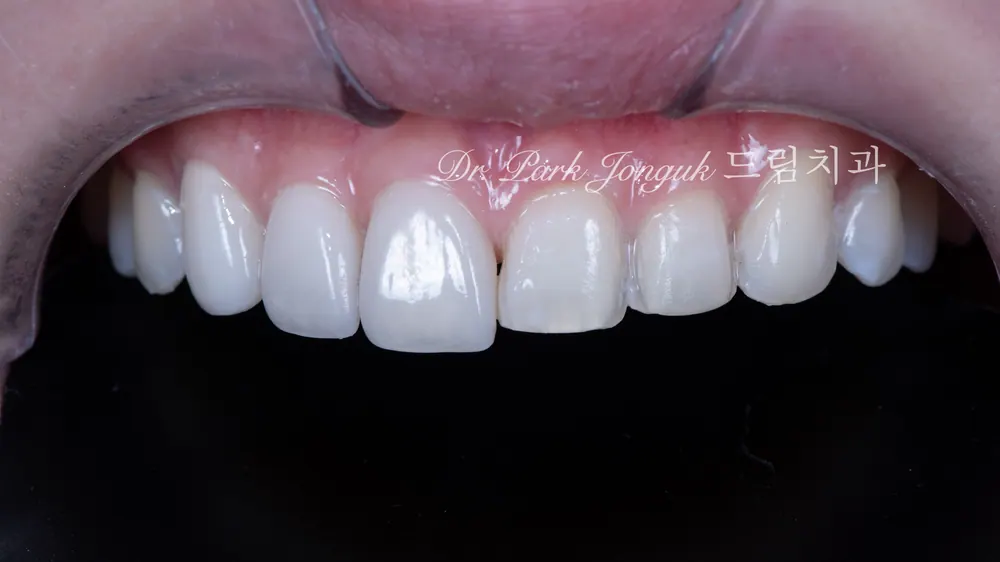
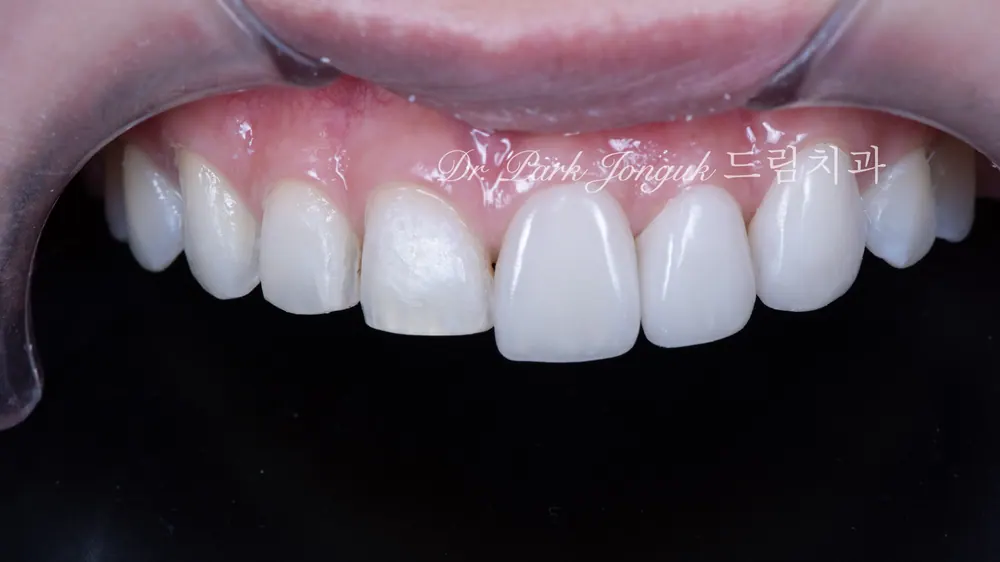
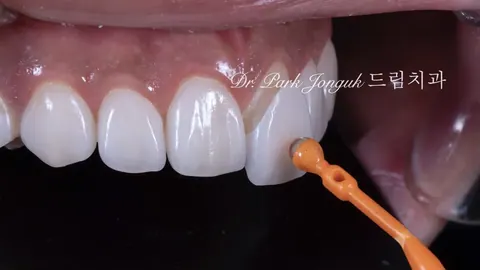
Once the ceramic veneer was fabricated,
we placed it on half the teeth and took a photo.
The teeth clearly become larger.
The teeth had been retroclined, but they were also too small,
so making them bigger was another key goal, and it was clearly achieved.
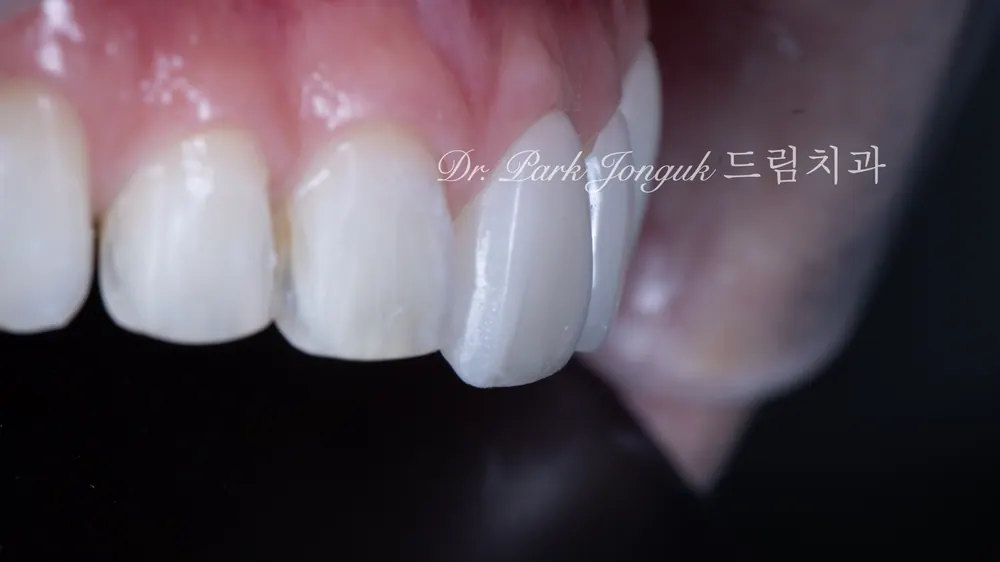
You can also clearly see the retroclined look improving.
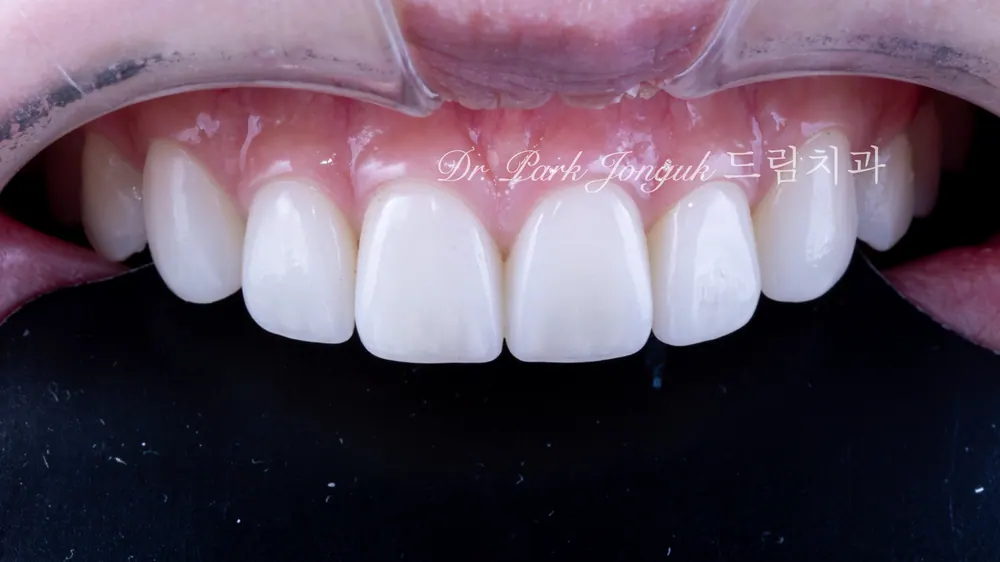
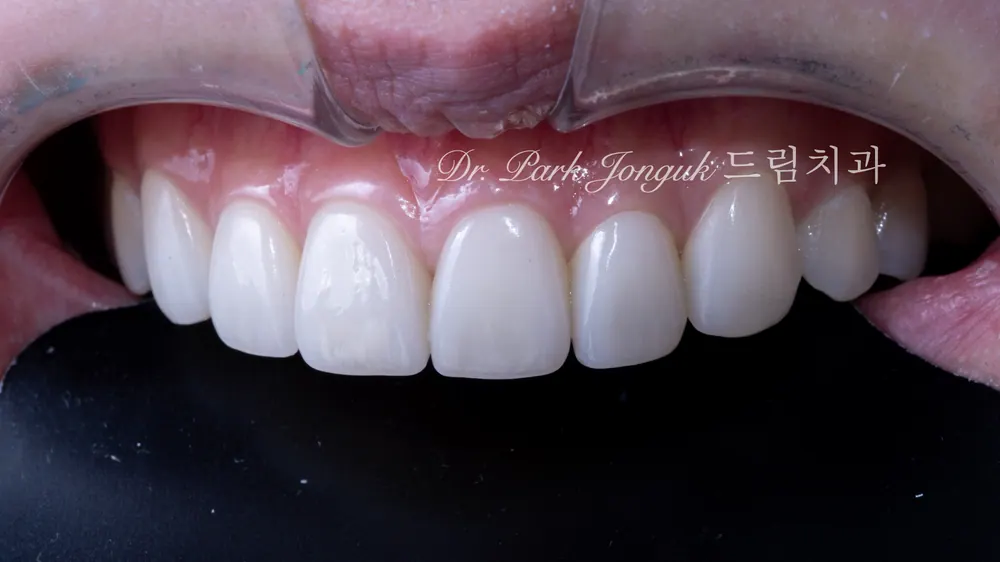
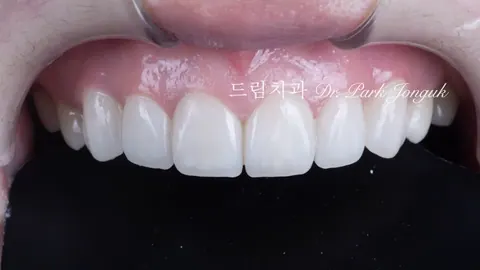
The no-prep veneer treatment has been completed.
While achieving everything the patient wanted,
it clearly retains a natural feel.
Into the extremely thin ceramic,
all the characteristics of a natural tooth were captured.
Even though the teeth became larger,
they were fitted to the best proportions and became far more beautiful.
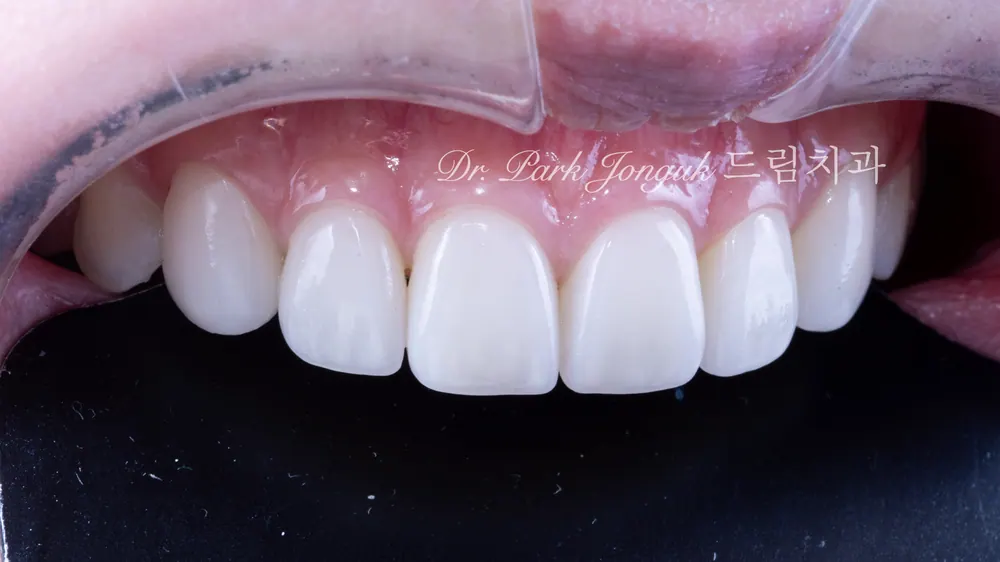
Natural beauty
Since 2006, Dream Dental Clinic
This article is a clinical note written by Dr. Park Jonguk of Dream Dental Clinic, Gangnam; the original was published on his blog. The photographs shown are real cases he treated. Results vary with each patient’s condition, and every procedure carries the possibility of individual variation and side effects.
Quick Consult
Request a Callback
Leave your number and we will call you back during clinic hours.
Request Received
We will contact you during clinic hours. For urgent matters, please call +82-2-3448-0028.