
Redoing Awkward, Unnatural-Looking Veneers
Hello. I'm Park Jonguk, director of Dream Dental Clinic.
Veneer treatment is a cosmetic procedure that transforms teeth beautifully.
No dental treatment, whatever it may be, lasts forever.
Veneers also have a lifespan.
The figures reported vary somewhat from paper to paper.
Some cases report 10 years, other papers 20 years,
and depending largely on the age group of the patient being treated,
the reason for treatment, and the pre-treatment condition,
the lifespan can differ quite a lot.
Eating habits in particular have a strong influence as well.
When the lifespan runs out like this — meaning fracture, debonding, or discoloration occurs —
veneer retreatment follows.
Veneer retreatment is sometimes done for problems like fracture or debonding,
but it's also done for aesthetic reasons.
Whatever the various reasons behind retreatment,
it's important to clearly identify why retreatment is needed
so that the same problem doesn't happen again after the veneer is redone.
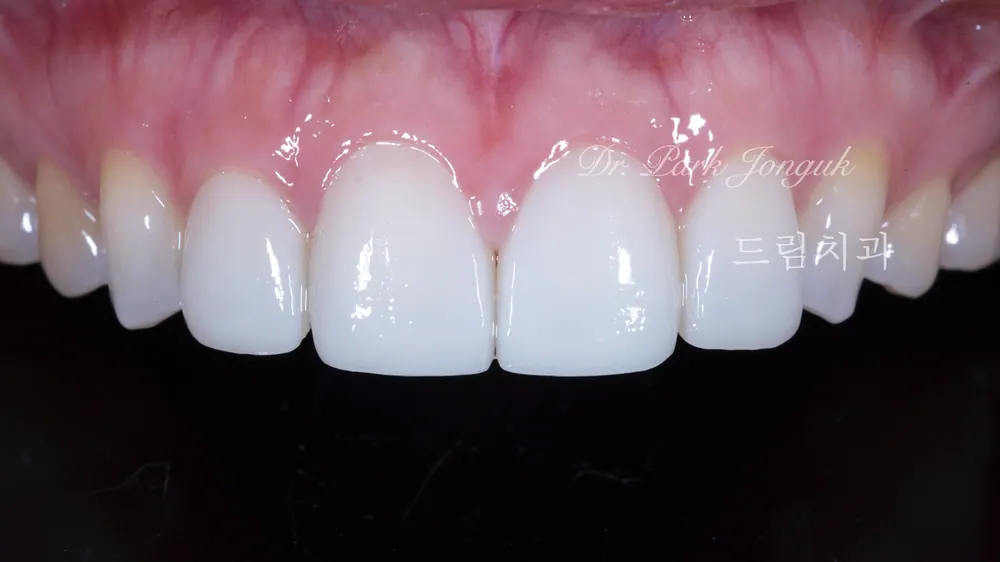
This patient visited us less than a month after receiving veneer treatment.
She had wanted natural-looking veneers,
but without much explanation the teeth were reduced,
and she reportedly received one-day veneer treatment.
One-day veneers are made using a computer and a milling machine.
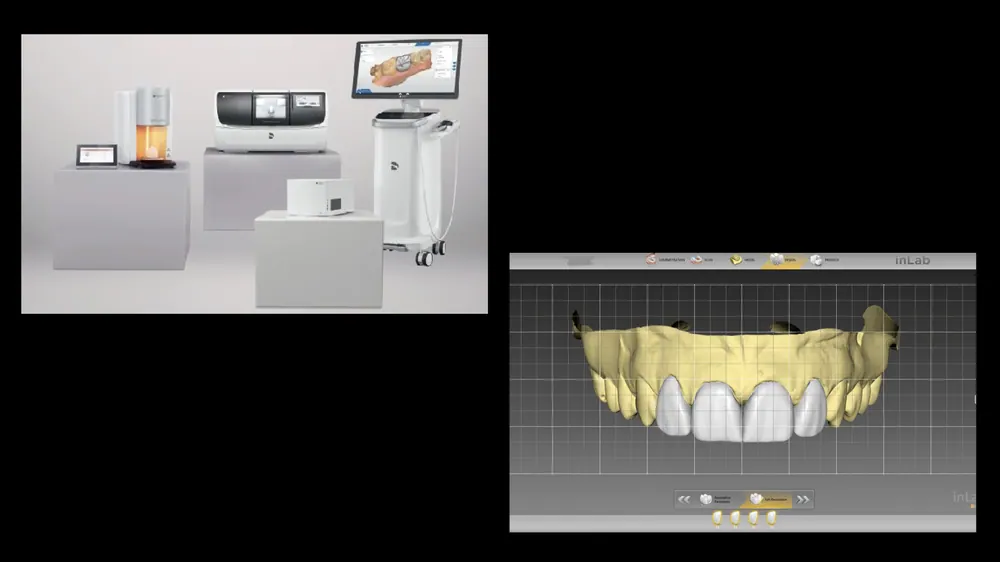
Most clinics use the same equipment,
and the computer handles the design.
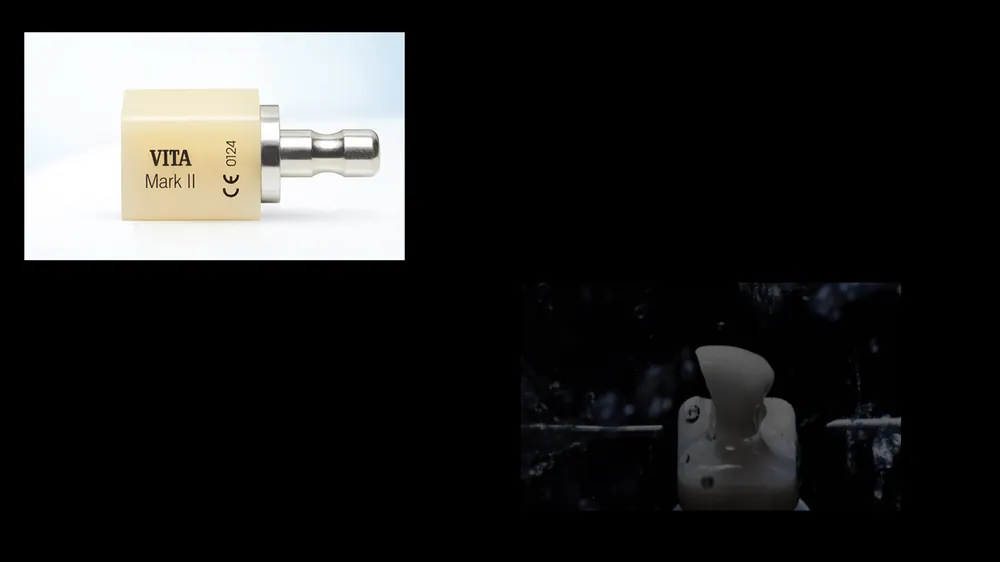
Once a ceramic block is loaded into the milling machine,
the machine mills it into the shape of a veneer.
Most clinics also use essentially the same ceramic blocks,
and although some claim it's "a block our clinic developed,"
that usually just means the clinic's name is printed on the block —
it's the same block underneath.
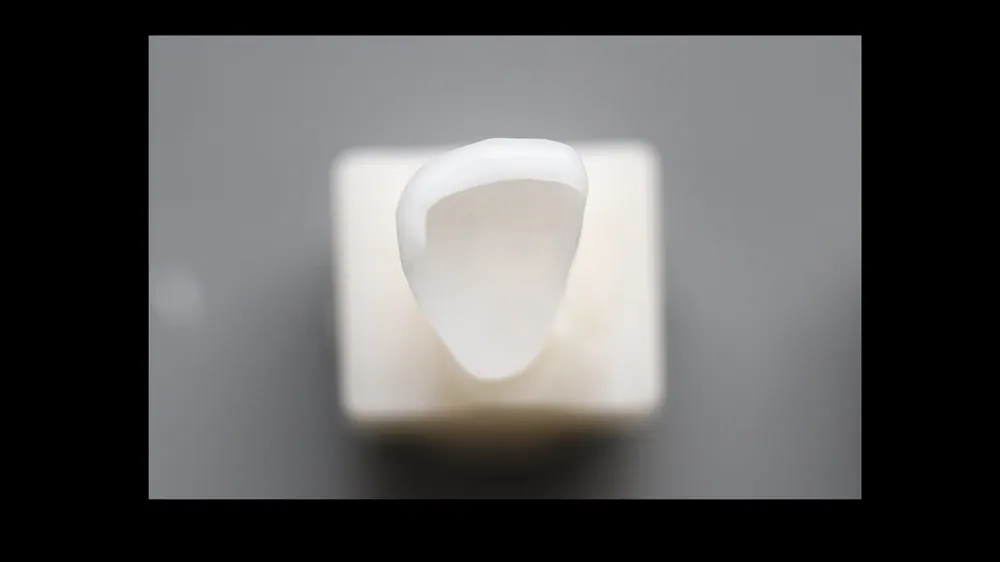
Since milling a single veneer this way takes around 20 minutes,
the whole set can be made in a single day,
which is why it's commonly called a one-day veneer.
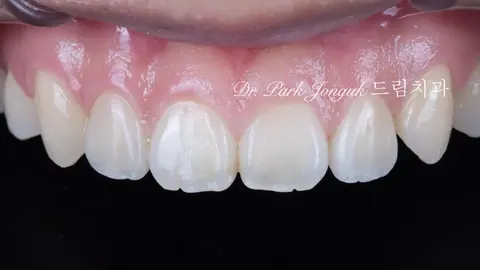
As shown in the photo below, this method
leaves the whole tooth a uniform color and mostly opaque,
resulting in an artificial, unnatural feel.
This patient also disliked that feeling
and came in for retreatment even though it had barely been any time since her veneer treatment.
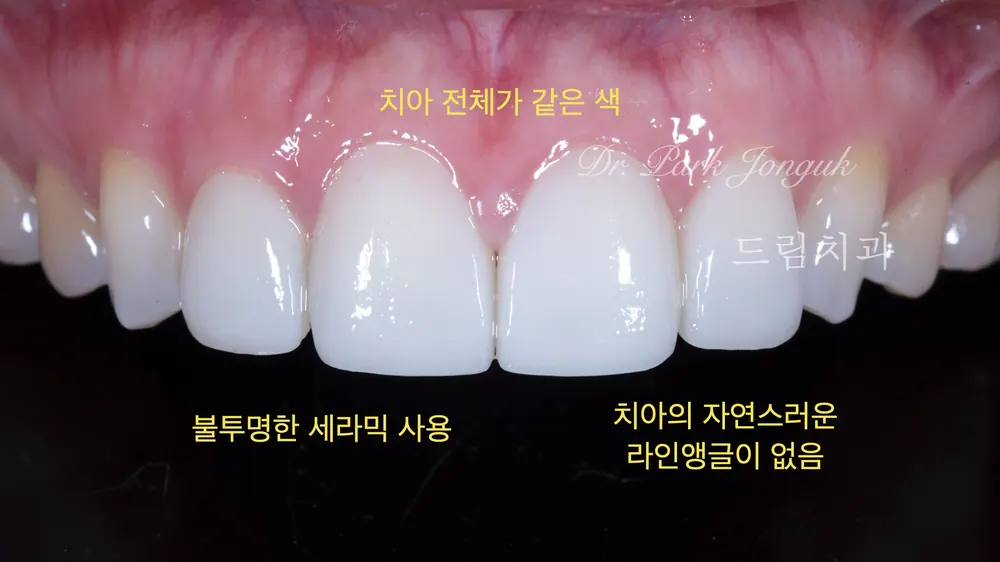
To resolve this kind of aesthetic problem, we proceeded with veneer retreatment.
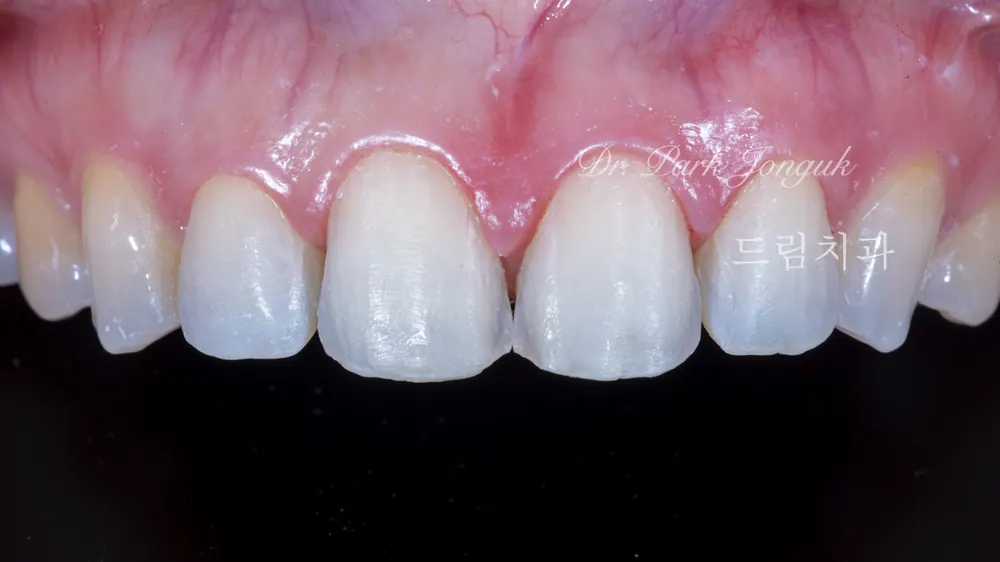
We remove the veneer.
Veneer removal needs to be done safely using a laser.
Typically, veneer removal is done with a high-speed handpiece,
the whirring instrument used in dental clinics to grind away tooth structure,
and in this case it's hard to tell the ceramic apart from the tooth,
which makes it easy to accidentally damage the tooth.
Using a laser instead,
the cement between the ceramic and the tooth is melted away and removed,
which minimizes damage to the tooth.
The video below shows the process of removing a veneer with a laser.
This time, instead of the one-day method described above,
the veneer is made by hand,
built up layer by layer with ceramic.
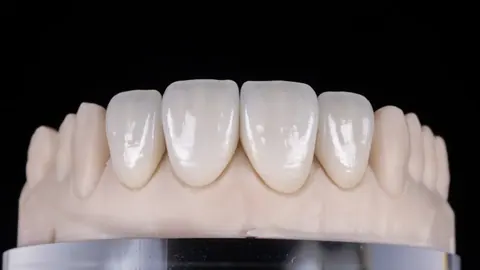
The example below isn't from this particular case,
but it shows the fabrication process
of a hand-made, multilayer veneer.
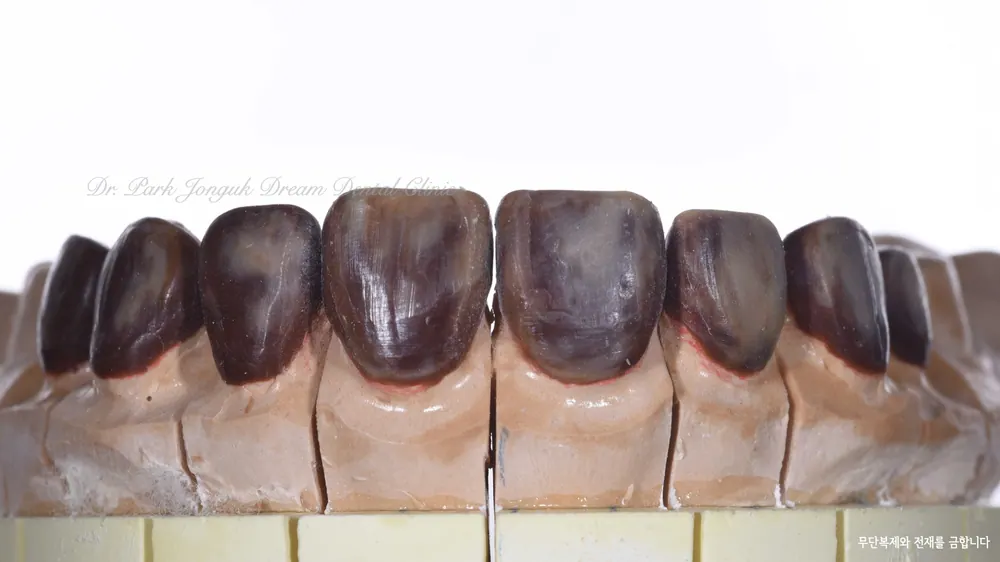
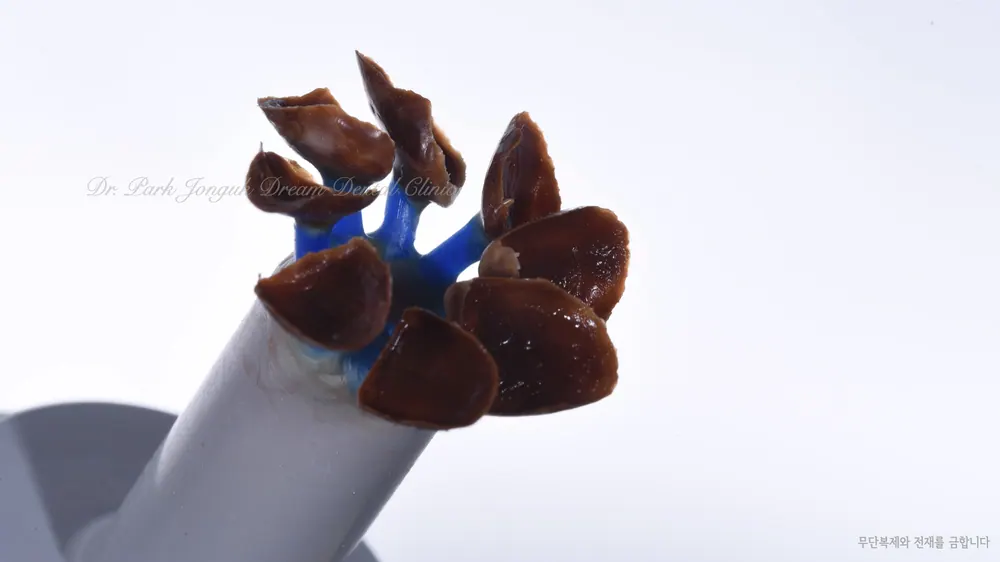
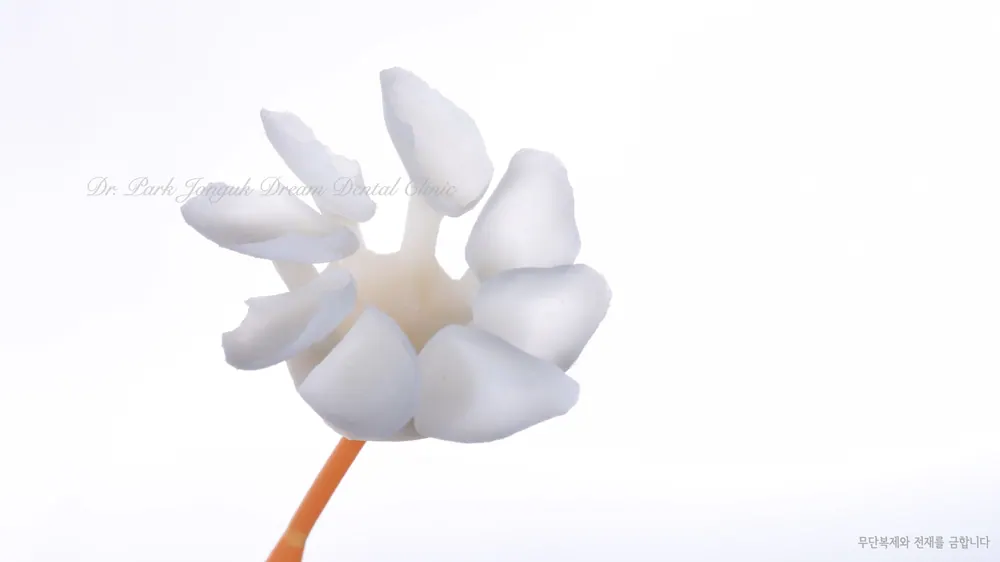
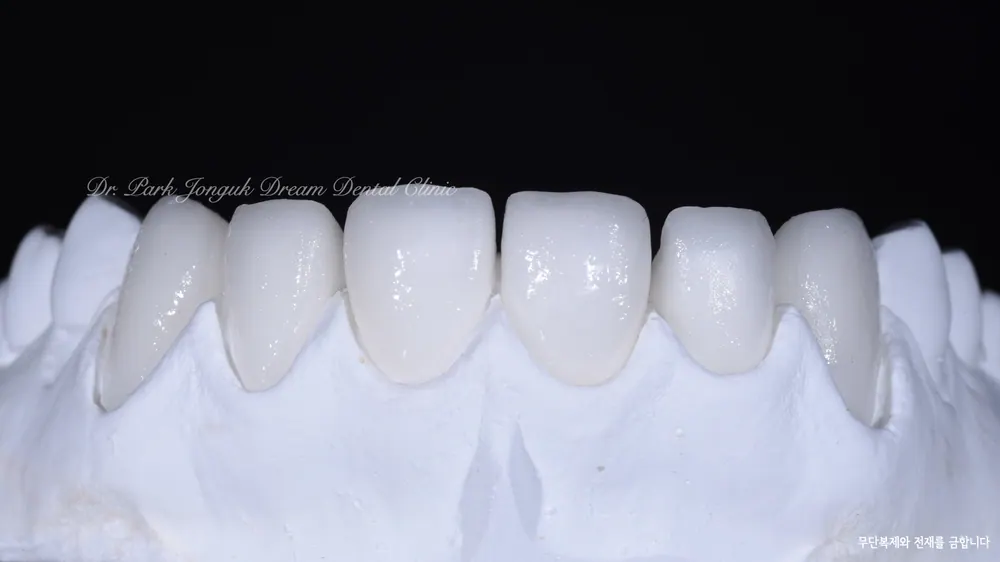
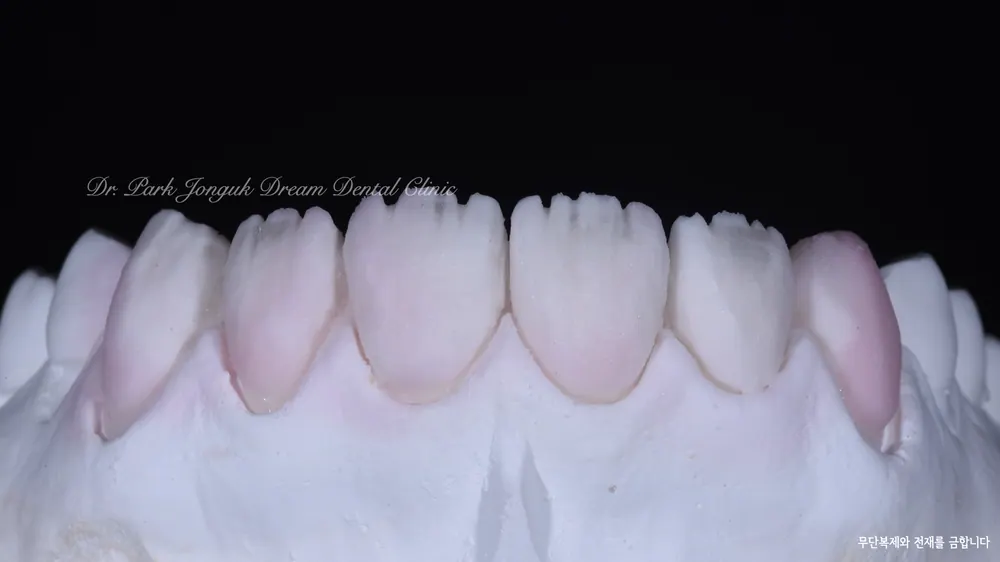
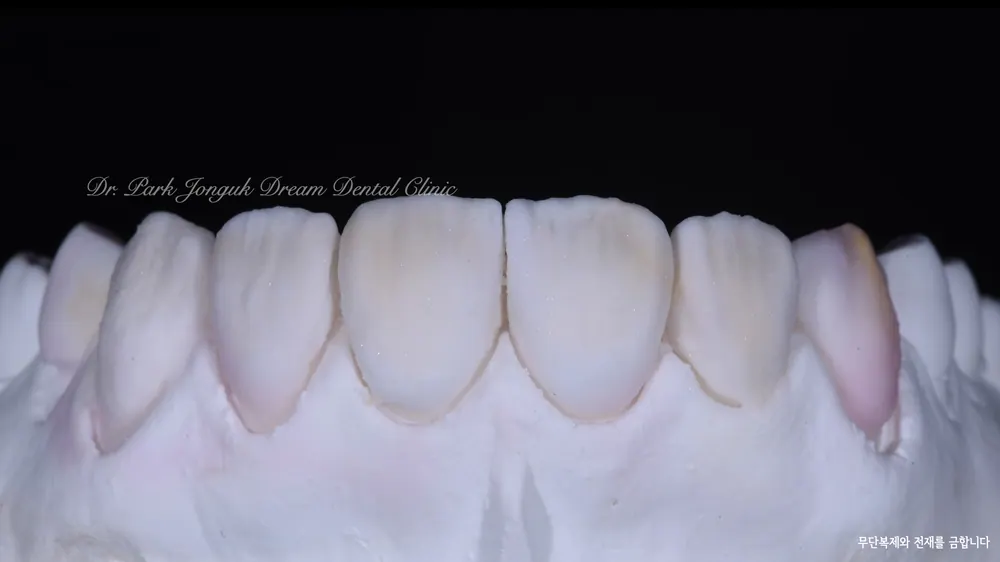
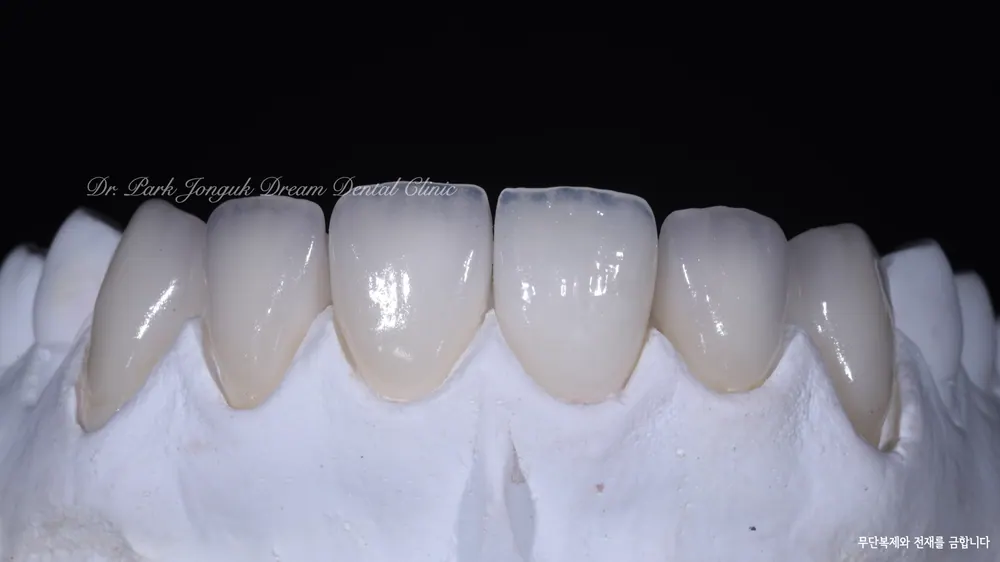
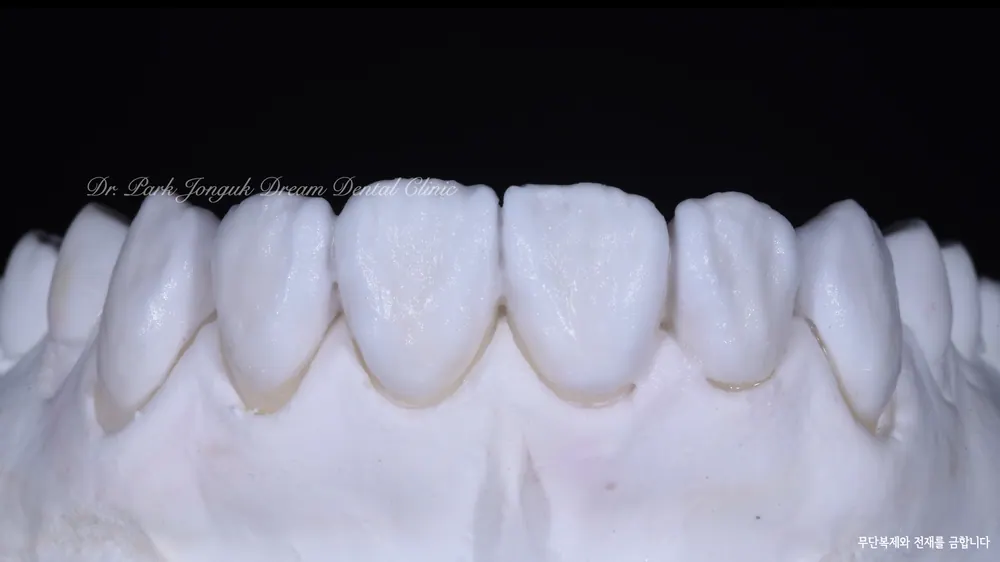
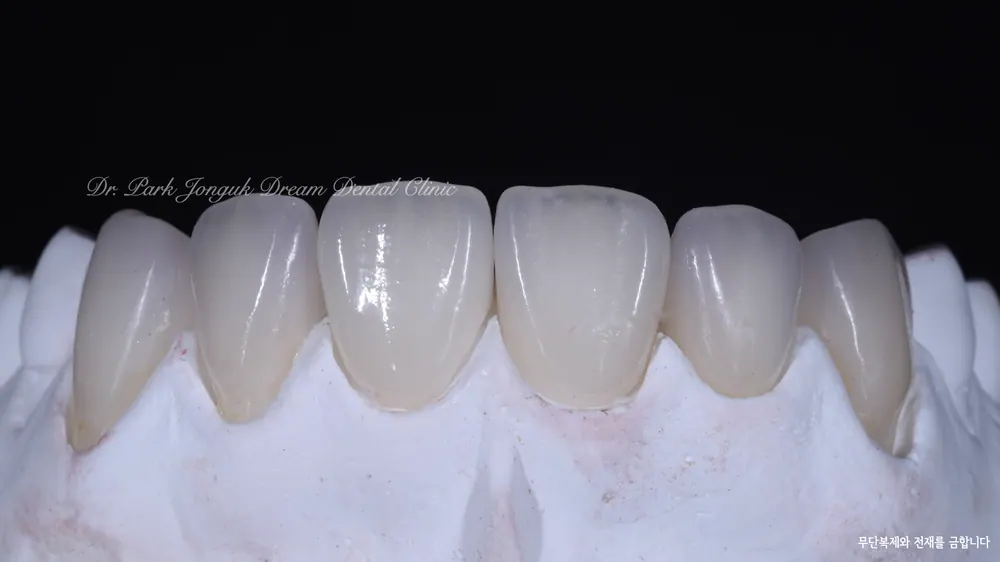
This is how a veneer is built, layer after layer.
It allows a tooth to be made that feels almost like a natural tooth,
and it can be made far thinner than the one-day method,
which has the advantage of requiring less tooth reduction.
In summary, the one-day veneer method has the advantage of being fast and inexpensive to produce,
while the hand-made multilayer veneer is a method that can be thin while still capturing a natural feel.
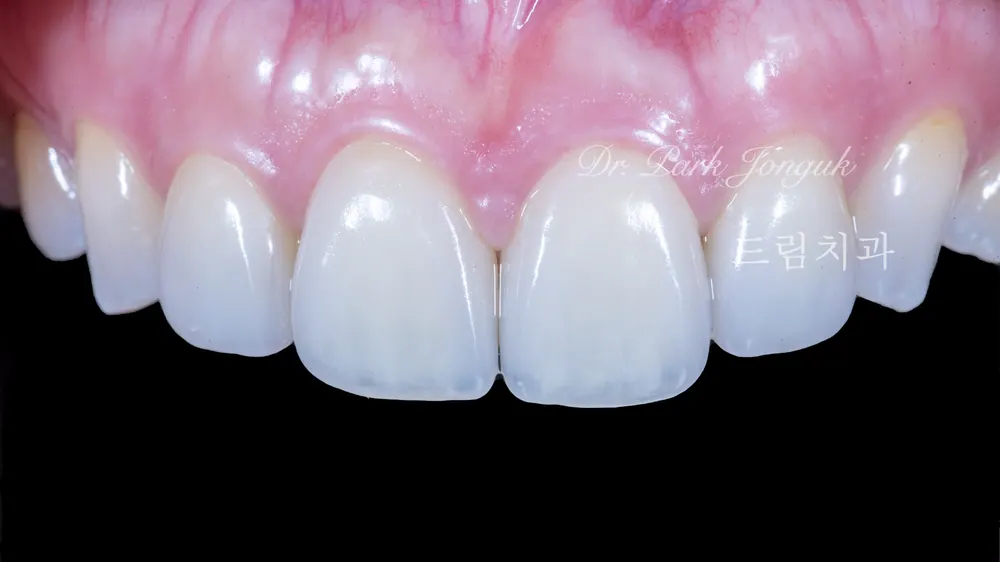
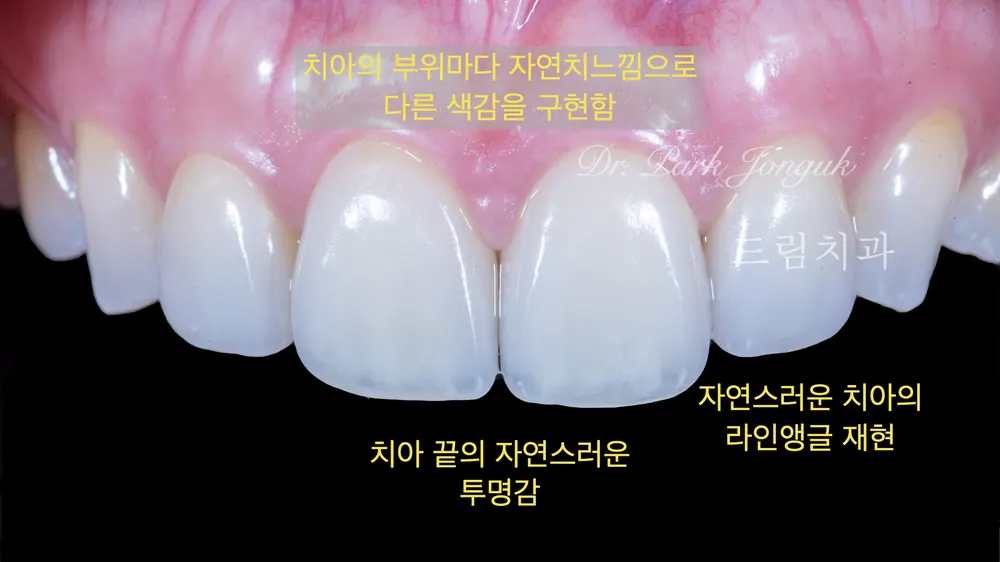
As for the feel of a natural tooth,
first of all, a single tooth is not the same color all over.
Different parts of the tooth carry subtly different shades.
The tip of the tooth has a translucent feel, which is a characteristic of young teeth.
Dimensionality matters just as much. Natural dimensionality is achieved through line angles.
The only way to fabricate a veneer that captures all these characteristics
is the hand-made method.
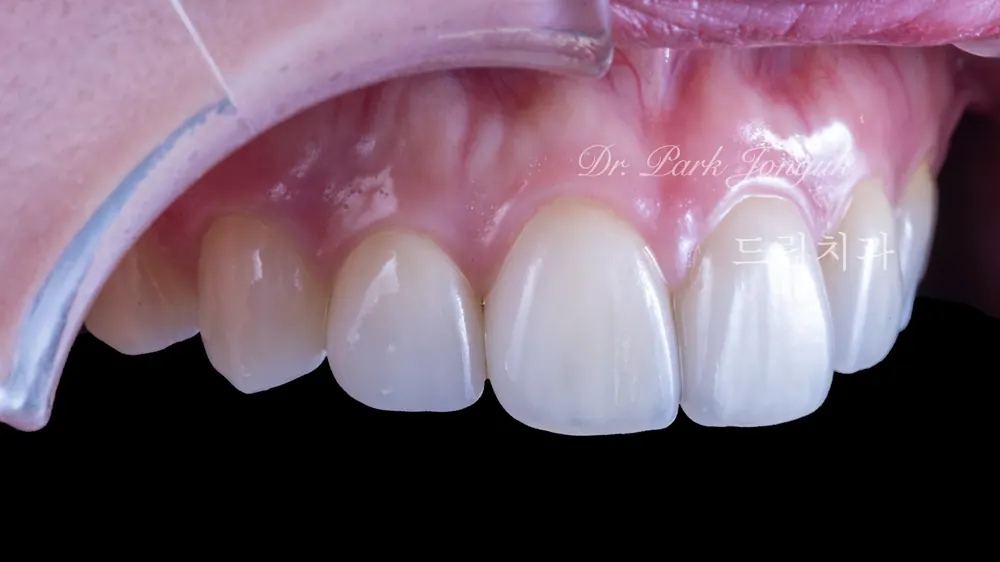
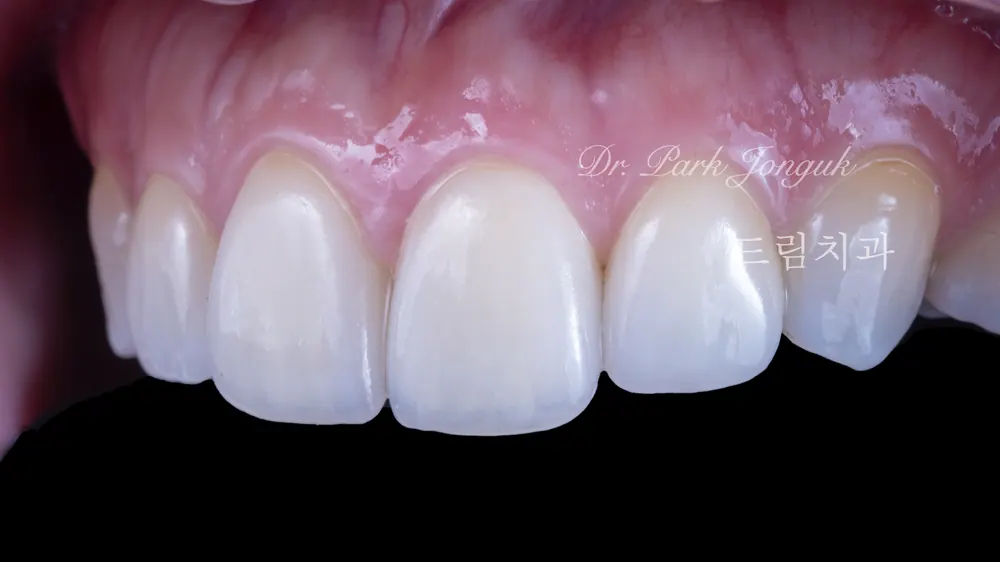
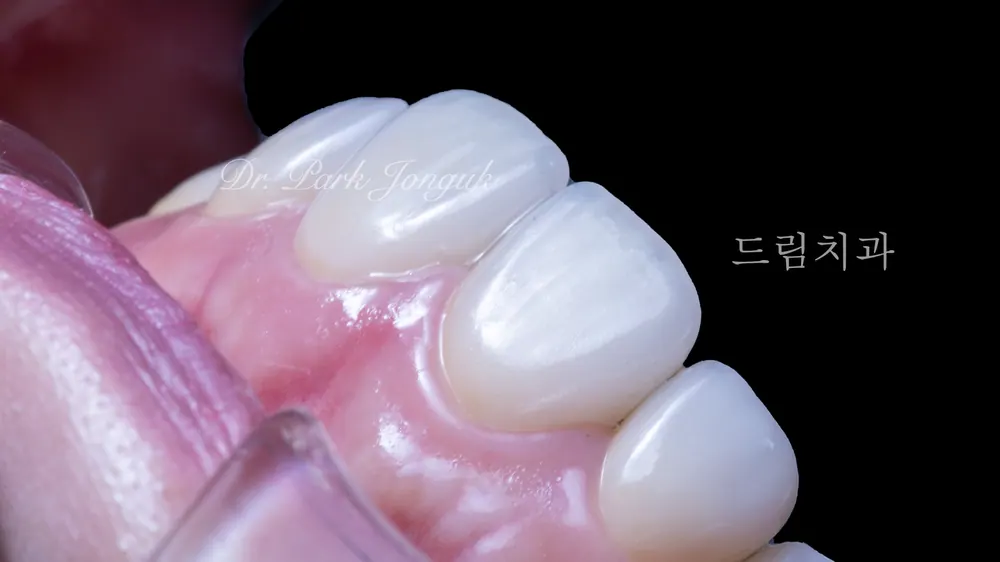
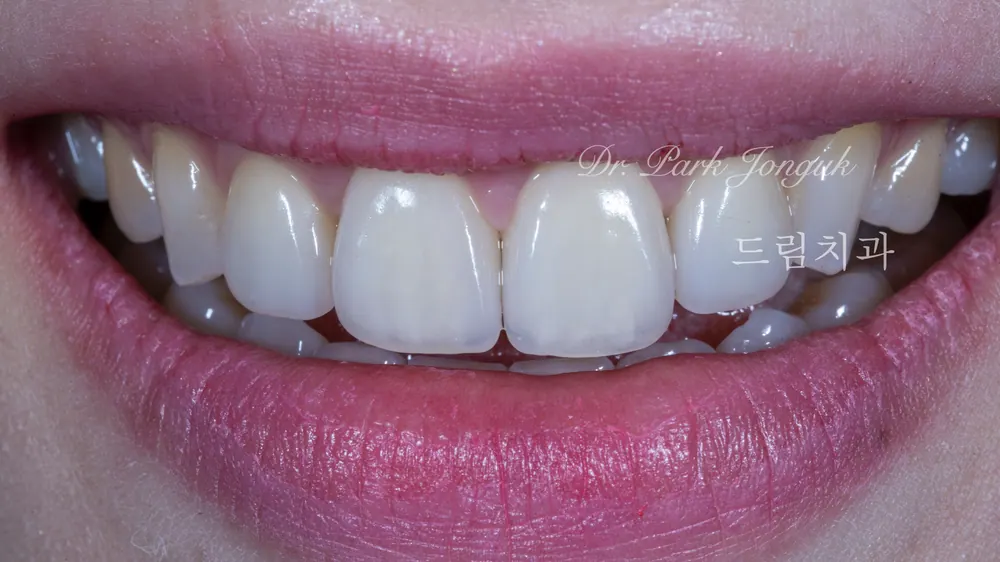
A natural, beautiful tooth was completed.
It harmonizes well with the smile,
completing a beautiful smile.
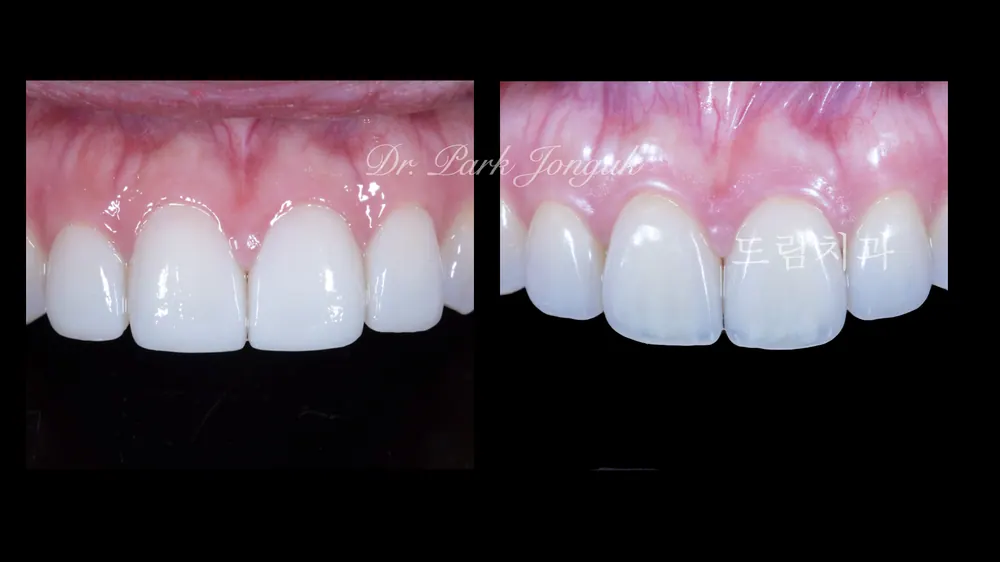
There's a significant difference between the two methods of making veneers, one-day and hand-made.
Aside from the advantage of being made in a single day,
the one-day veneer still has mostly technical drawbacks at this point.
Thickness in particular is a major issue.
Because of the limitations of the CAD/CAM fabrication method, it's difficult to make veneers thinner than 0.5mm.
As a result, more tooth structure has to be removed.
The unnatural, artificial-looking result is also a problem.
The hand-made method can achieve a considerably thinner result,
as thin as 0.1mm in some cases, which allows less tooth reduction.
It also has the advantage that the veneer can be made to look natural and beautiful.
That said, it does take more time and cost more, which is a drawback.
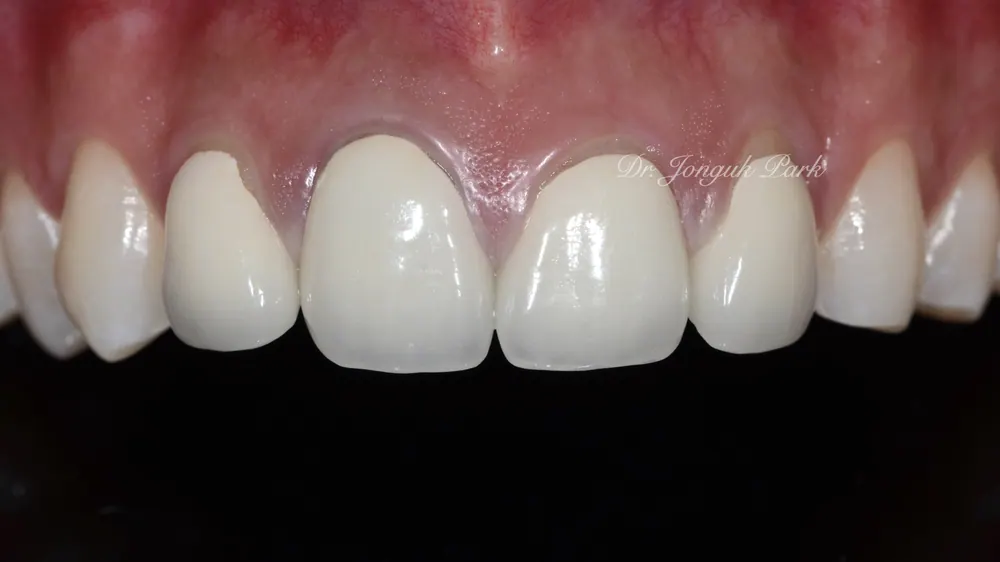
This case was made using the hand-made method,
yet the shade came out dark and unnatural.
Not everything made by hand comes out natural.
This turned out to be an all-ceramic crown rather than a veneer.
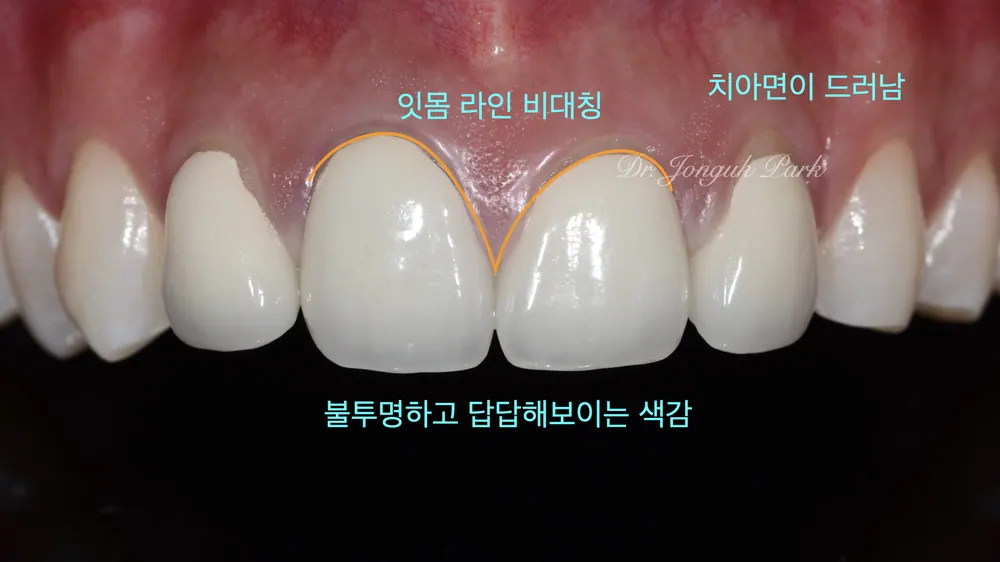
To resolve this range of aesthetic problems,
we proceeded with retreating the all-ceramic crowns.
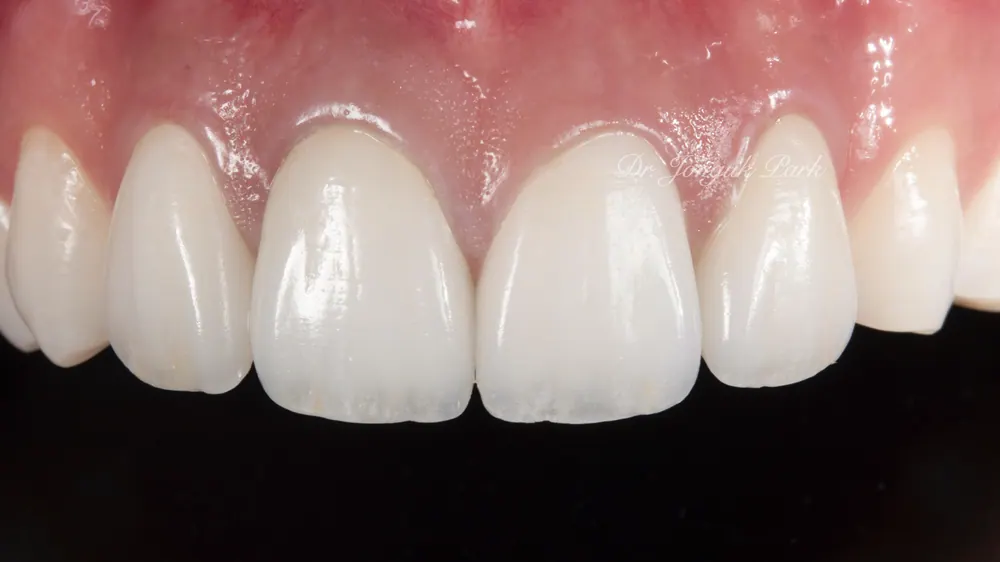
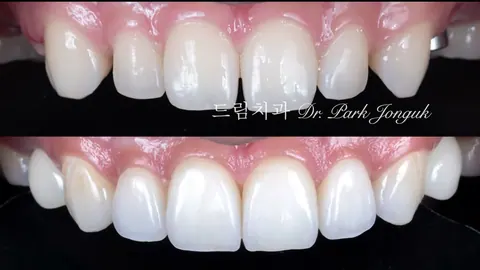
This is after the all-ceramic crown retreatment.
Both the shape and proportions of the teeth improved,
and the shade also became bright and beautiful.
By bringing out the translucent feel of the teeth, they became natural, translucent teeth appropriate for the patient's age.
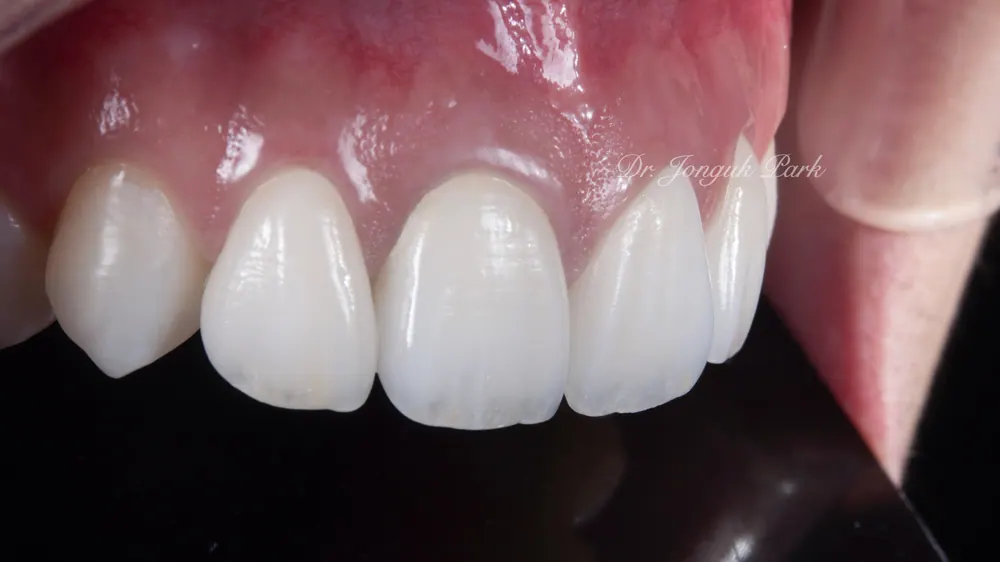
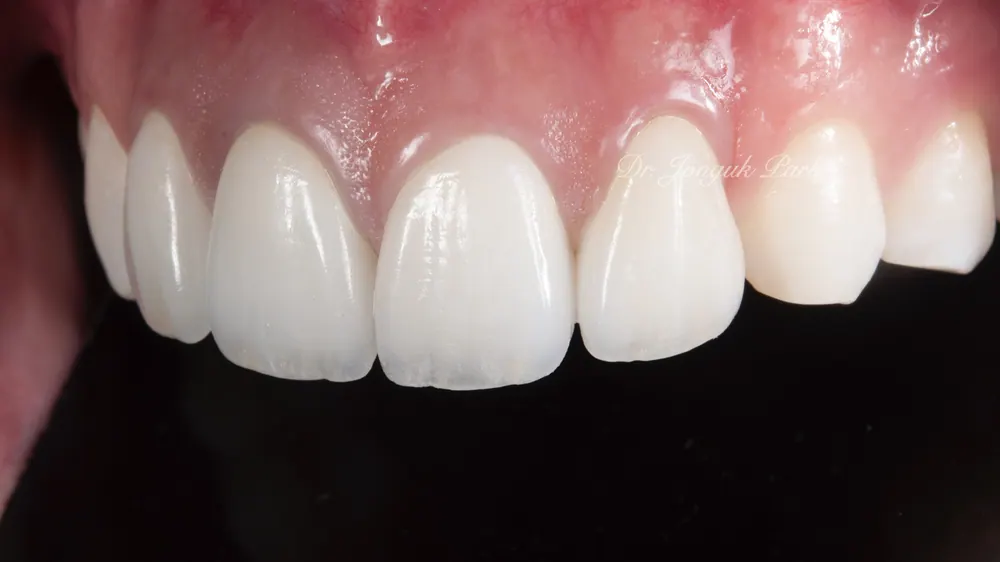
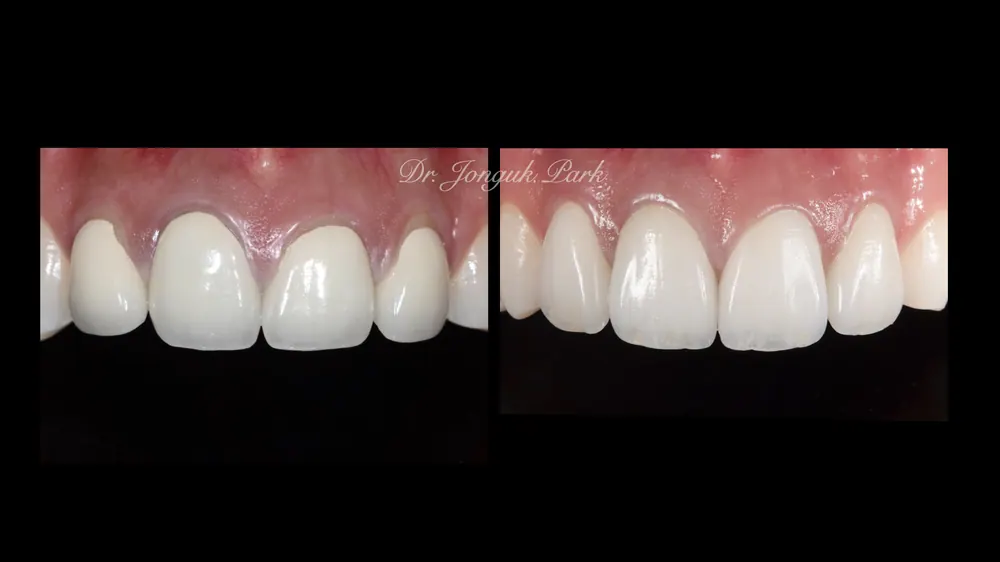
Comparing before and after,
the symmetry of the teeth is now well matched,
and the shape and dimensionality of the teeth feel even more natural.
The translucency of the ceramic also improved,
and the treatment finished with teeth that look young and beautiful.
Natural beauty
Since 2006, Dream Dental Clinic
This article is a clinical note written by Dr. Park Jonguk of Dream Dental Clinic, Gangnam; the original was published on his blog. The photographs shown are real cases he treated. Results vary with each patient’s condition, and every procedure carries the possibility of individual variation and side effects.
Quick Consult
Request a Callback
Leave your number and we will call you back during clinic hours.
Request Received
We will contact you during clinic hours. For urgent matters, please call +82-2-3448-0028.