
Teeth with Congenital Discoloration: Restoring Aesthetics with Veneers
Hello, I am director Park Jonguk.
The causes of front-tooth discoloration are quite varied.
The most common is 1. discoloration caused by tooth decay.
When a tooth develops a cavity, it darkens, but
in most such cases, treating the cavity resolves it.
Another common cause is 2. staining from food.
Since this is a form of surface staining, it improves considerably with whitening or surface polishing.
3. Teeth that have had root canal treatment can also become discolored.
4. Trauma to a tooth can also cause discoloration.
There are many such varied causes of discoloration, and
the treatment method differs depending on the cause.
The problematic type is 5. congenital discoloration, or discoloration that occurs during the growth period.
This kind of case occurs across multiple teeth at once, and
whitening has almost no effect.
Even though congenital discoloration or discoloration from the growth period has various causes,
the treatment converges on a single method: veneers.
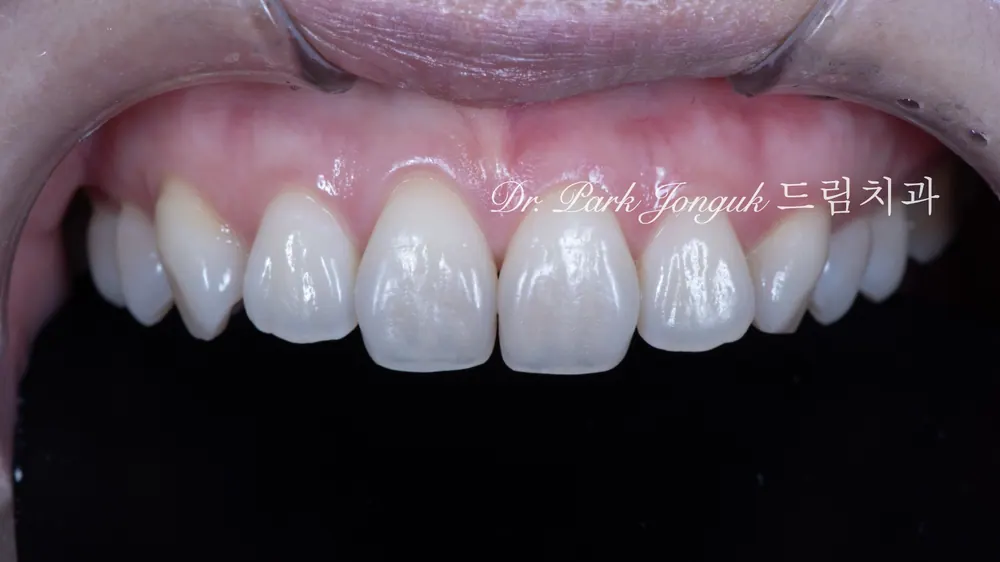
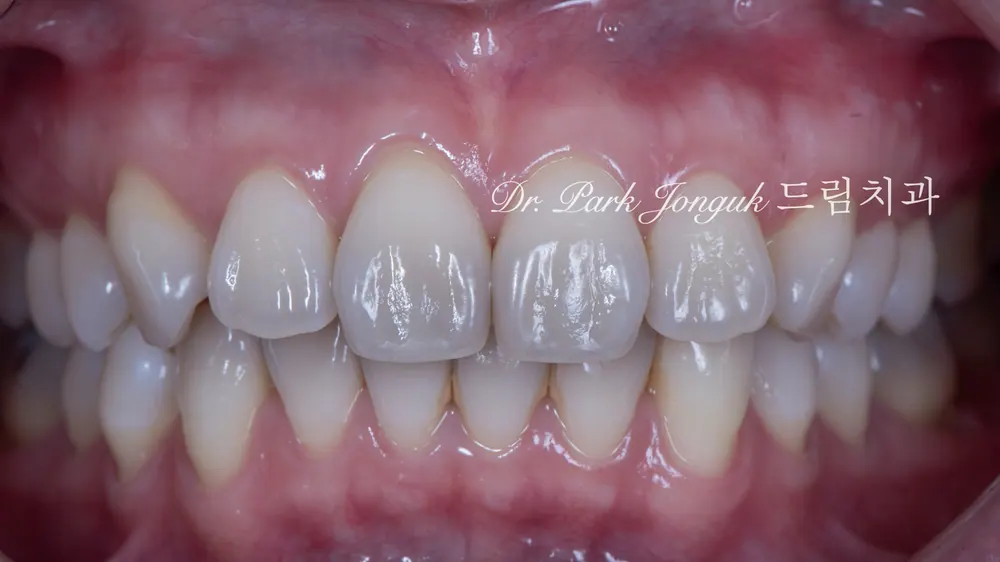
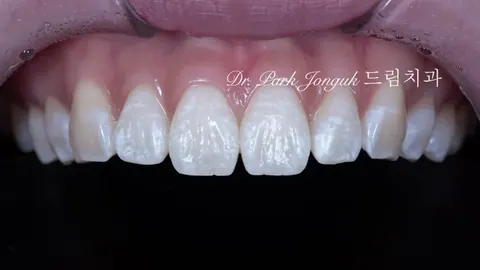
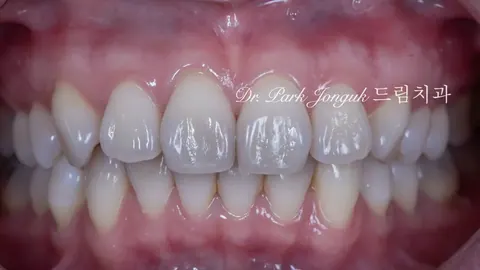
It's hard to make out clearly in photos, but
this was a case where the discoloration looked very pronounced depending on the viewing angle.
The tooth shape wasn't good either,
showing what I call a "jar shape" — an aesthetically unappealing tooth form.
To brighten the teeth and improve their shape,
the patient came in for veneer treatment.
For veneer treatment addressing discoloration, securing enough ceramic thickness is very important.
If you try to blindly minimize tooth reduction no matter what,
you won't be able to effectively cover the tooth's color.
For the right amount of tooth reduction,
a wax-up precision diagnosis process is essential.
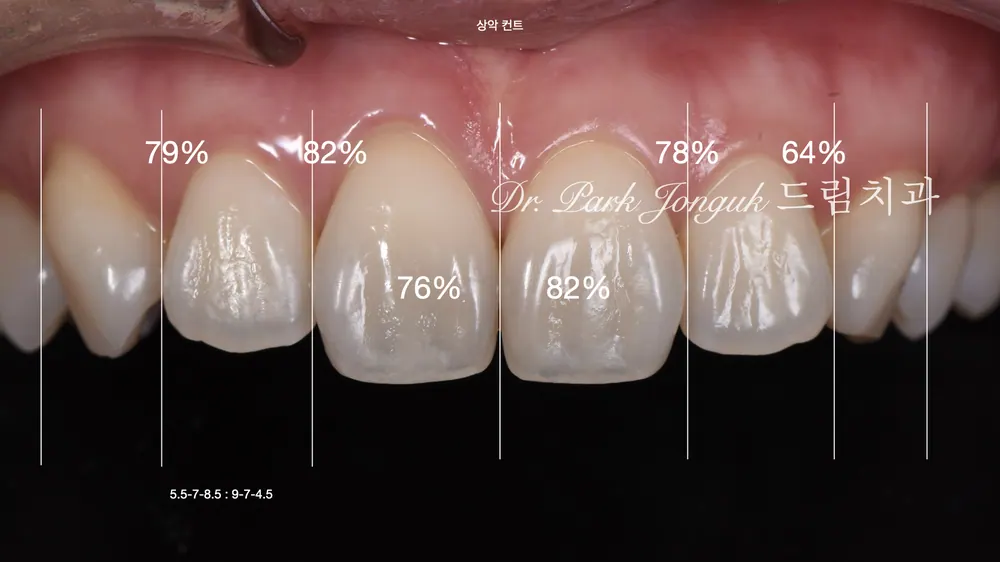
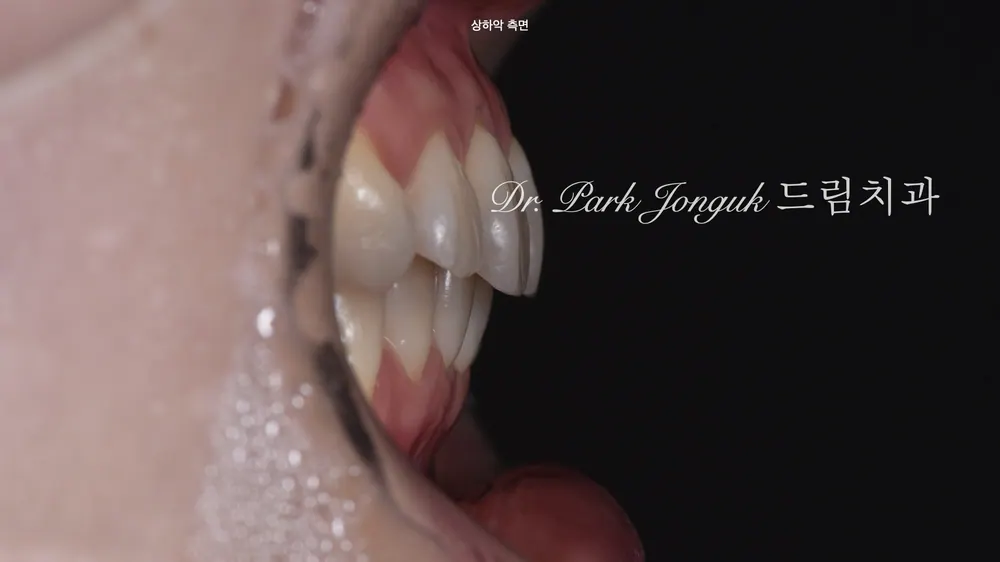
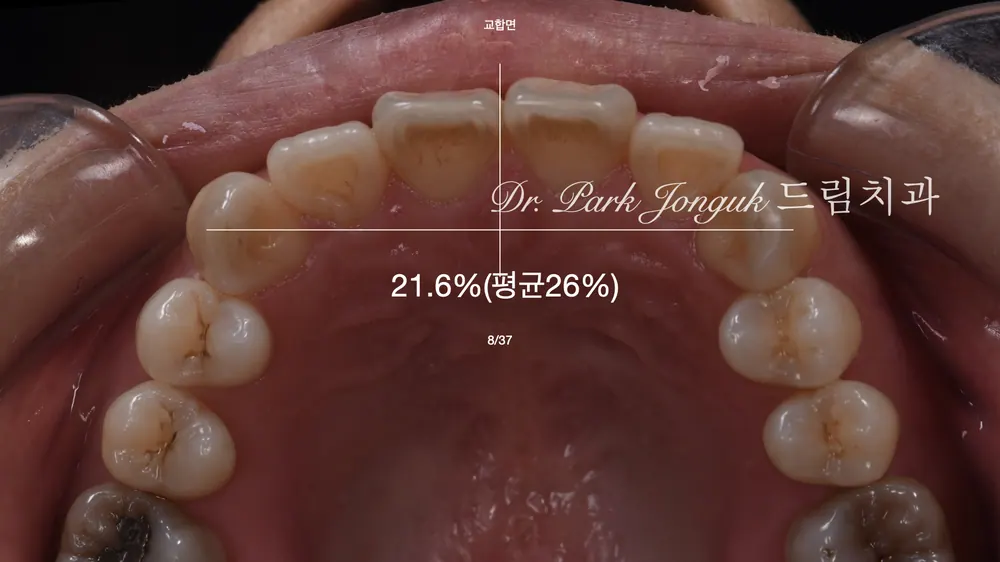
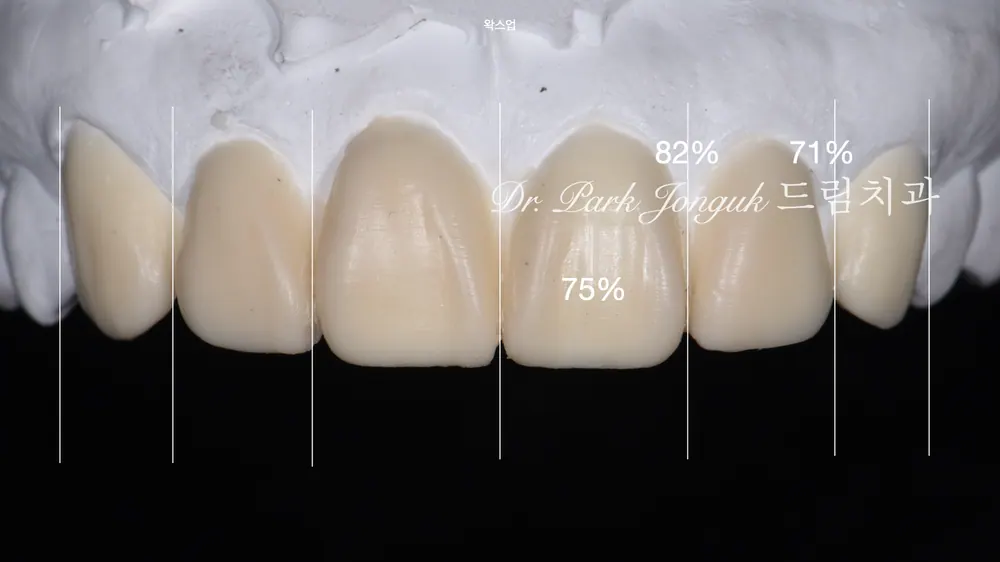
Measuring the proportions and size of the teeth, and
checking the arrangement of the teeth and the shape of the dental arch, is more important than anything else.
Reduction should be kept as minimal as possible, but
enough ceramic thickness has to be secured to cover the discoloration.
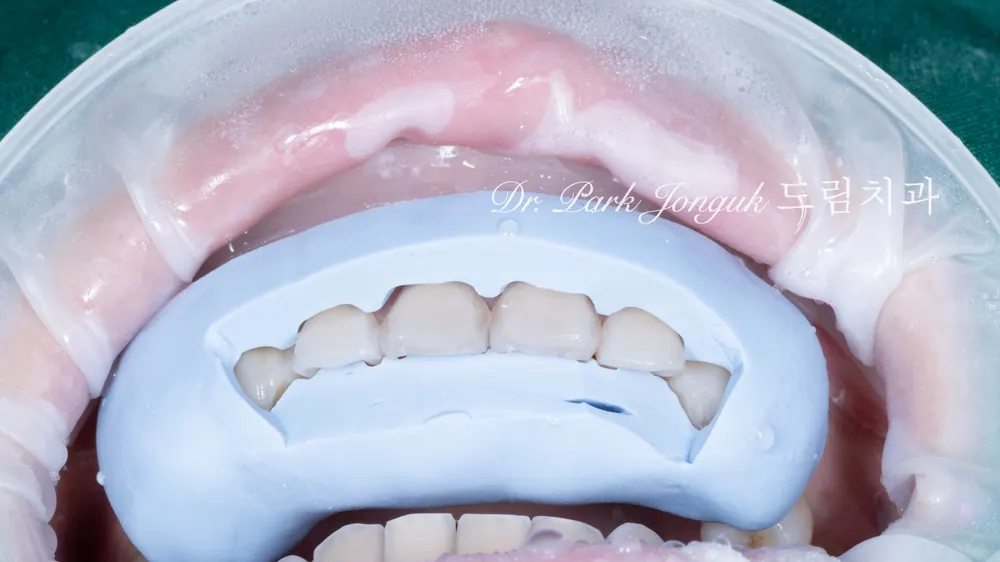
A guide should always be used for tooth reduction.
Reducing the tooth precisely is very important both for the health of the tooth and
for minimizing side effects that could arise from the veneer later on.
The less the tooth is reduced, the fewer the side effects.
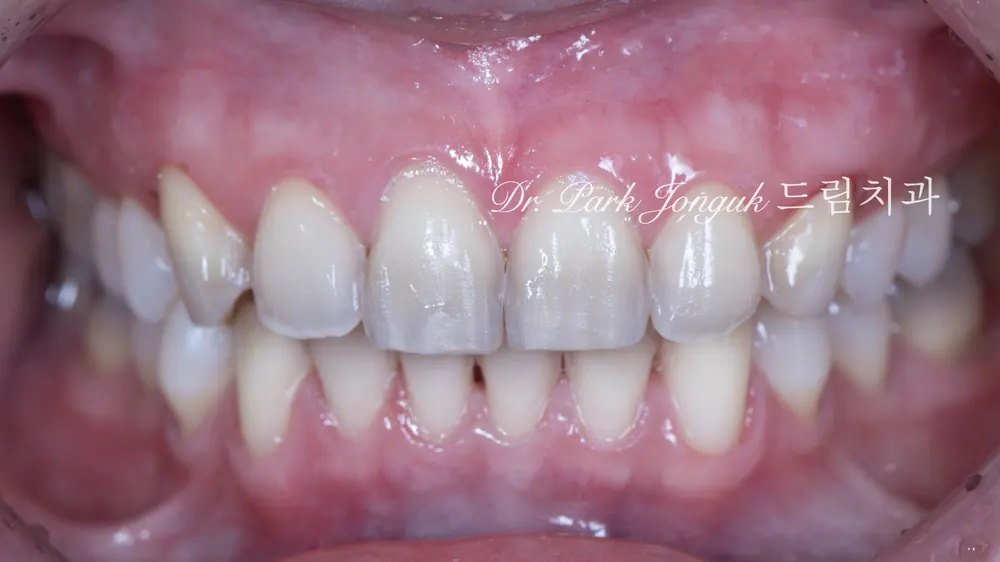
Tooth reduction for the veneers has been completed.
The discoloration of the tooth is clearly visible.
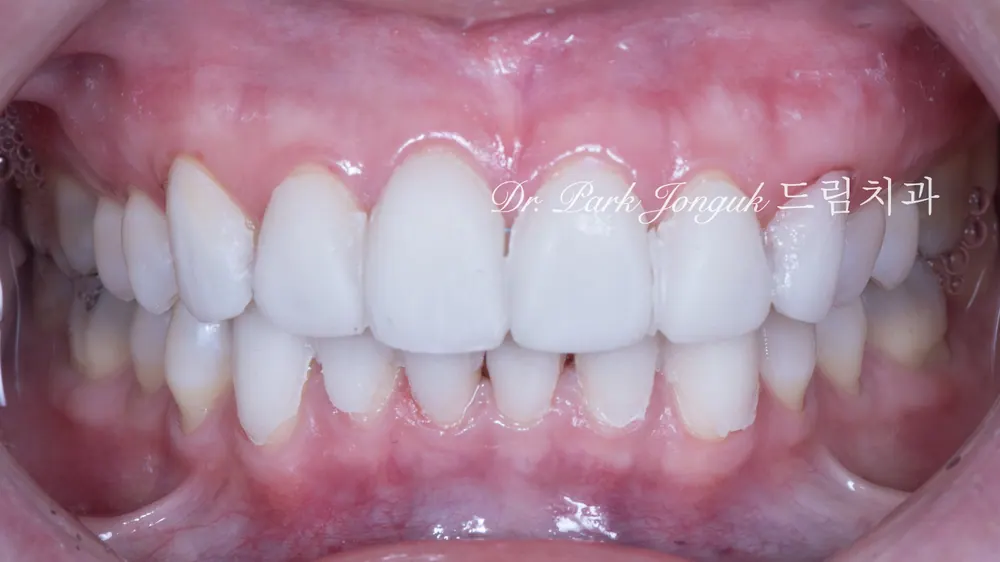
Using the veneer's temporary teeth,
we check the change in tooth shape, and
also check whether the discoloration is properly covered.
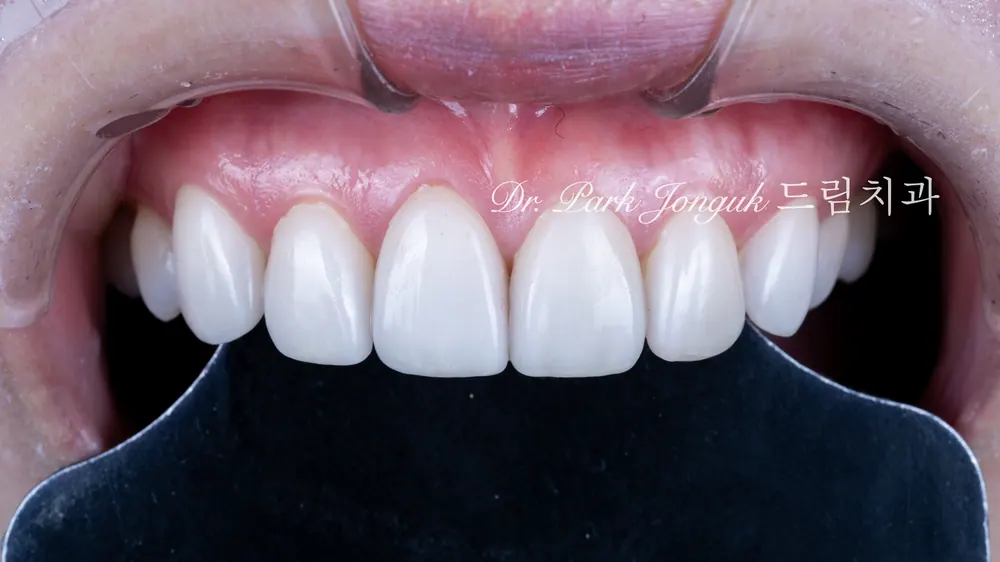
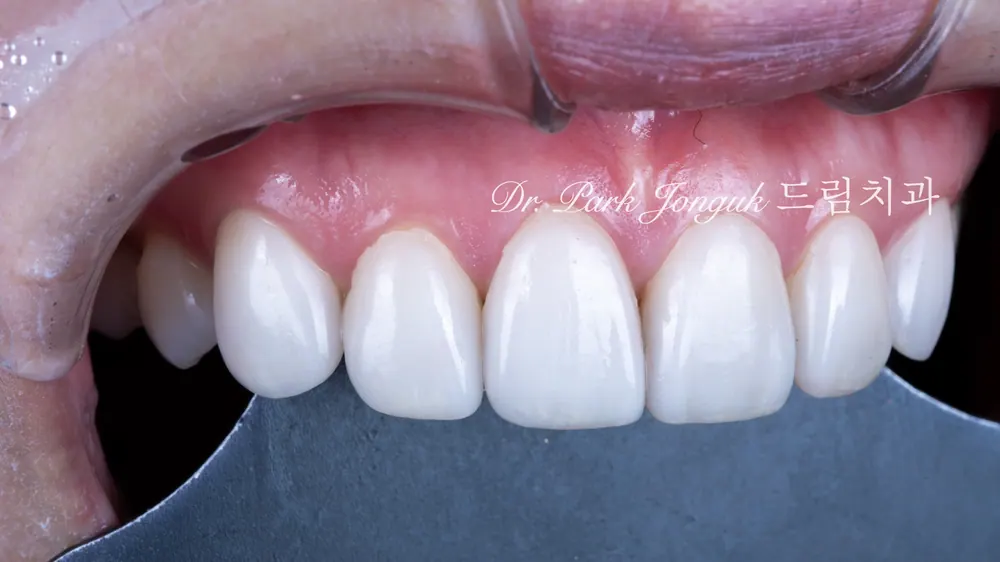
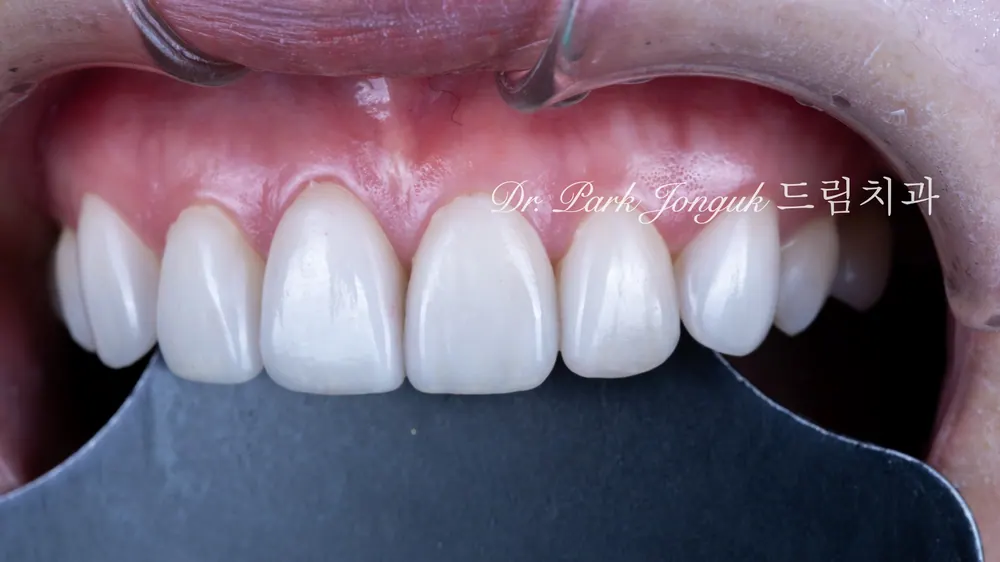
The veneer treatment has been completed.
You can see that both the shape and color of the teeth have clearly improved.
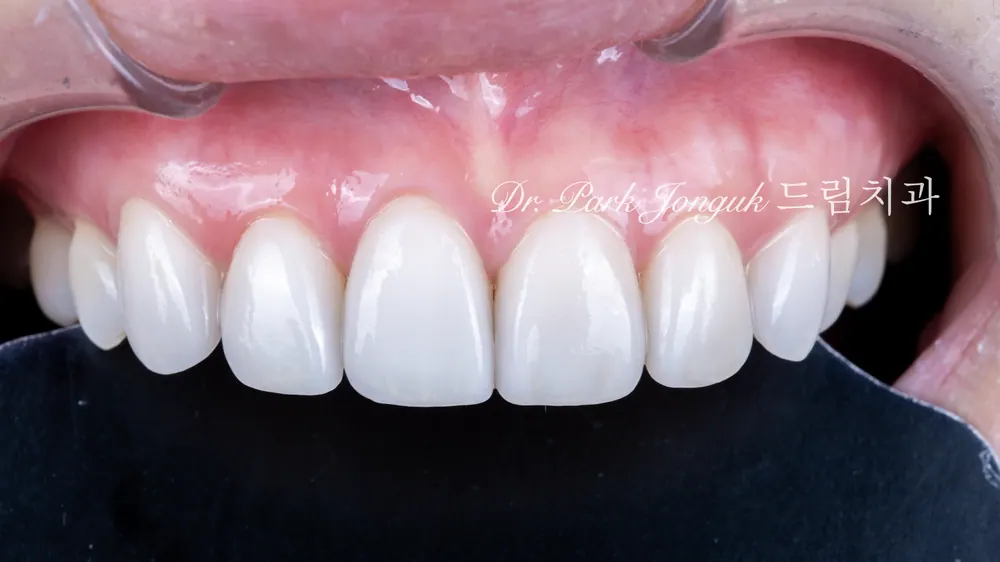
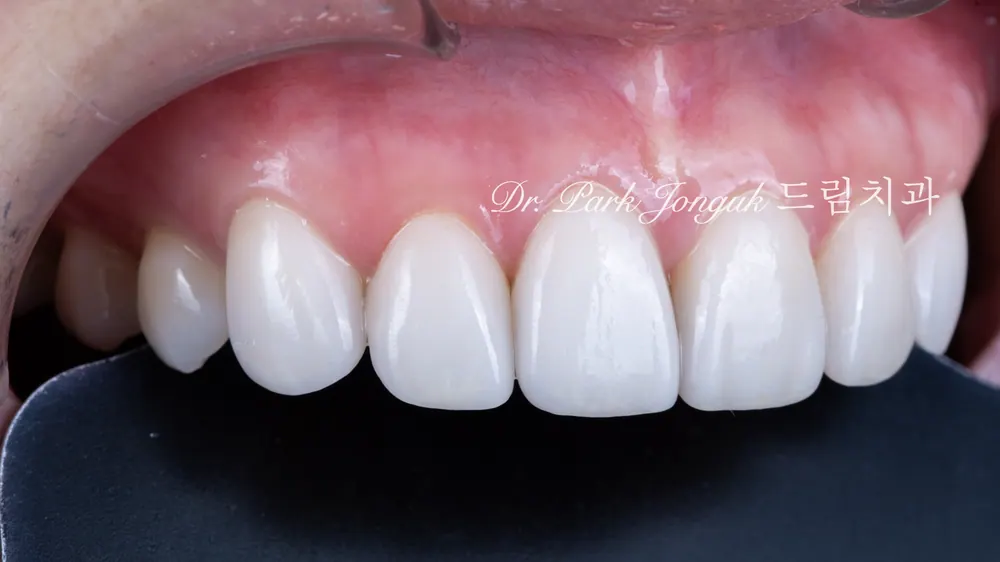
The appearance one year after treatment also shows the result has held up well.
Natural beauty, Since 2006
This article is a clinical note written by Dr. Park Jonguk of Dream Dental Clinic, Gangnam; the original was published on his blog. The photographs shown are real cases he treated. Results vary with each patient’s condition, and every procedure carries the possibility of individual variation and side effects.
Quick Consult
Request a Callback
Leave your number and we will call you back during clinic hours.
Request Received
We will contact you during clinic hours. For urgent matters, please call +82-2-3448-0028.