
Redoing an Old All-Ceramic Crown After the Gum Turned Dark from Root Canal Treatment
Hello. I'm Park Jonguk, director of Dream Dental Clinic.
When a tooth decays extensively or fractures
and needs root canal treatment,
a crown is generally required.
For front teeth,
not every case that has had root canal treatment
gets a crown,
but when discoloration develops after root canal treatment,
all-ceramic crown treatment becomes necessary.
The problem is that discoloration occurs not only in the visible part of the tooth
but also down to the tooth root beneath the gum,
so over time the gum gradually turns bluish or even black.
Even with an all-ceramic crown in place,
this darkening of the gum cannot be prevented.
Let's look at how a case like this, with discolored gum, is treated.
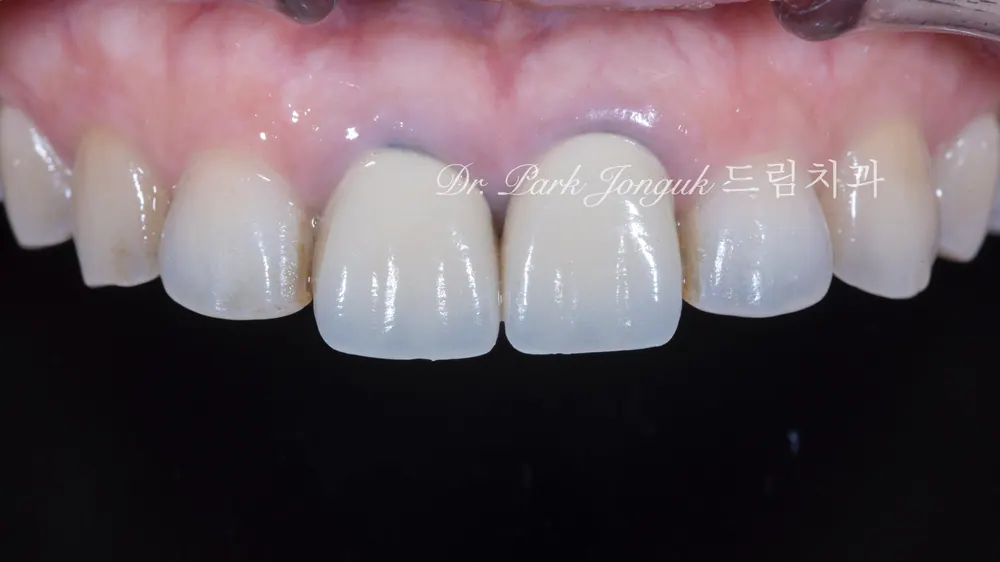
The two front teeth had all-ceramic crowns.
You can see that the gum color has turned dark,
which is discoloration of the tooth caused by root canal treatment.
Not every case that has had root canal treatment turns dark like this.
Some degree of discoloration occurs,
but some of the root canal materials used in the past were prone to discoloring,
and that has caused many cases to turn dark.
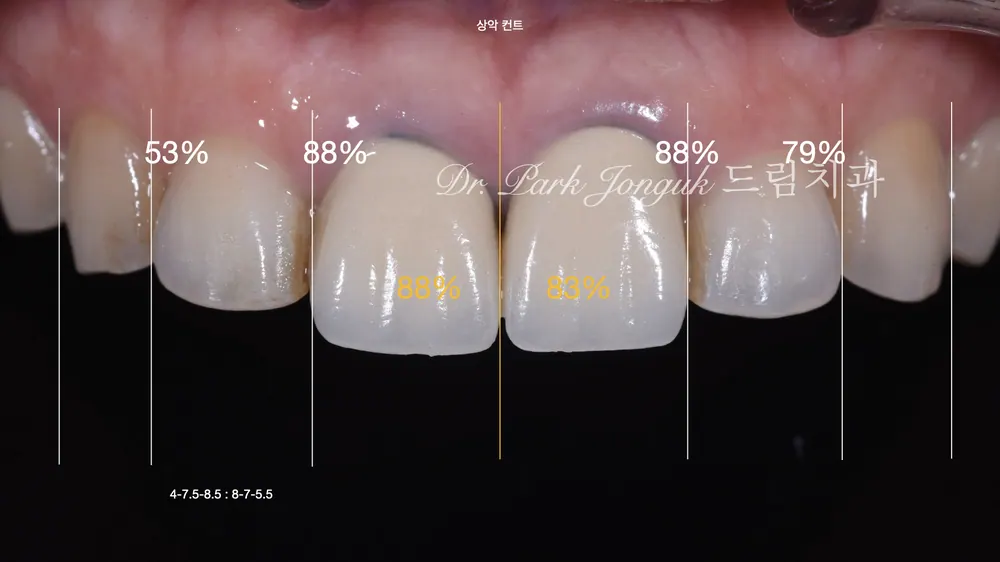
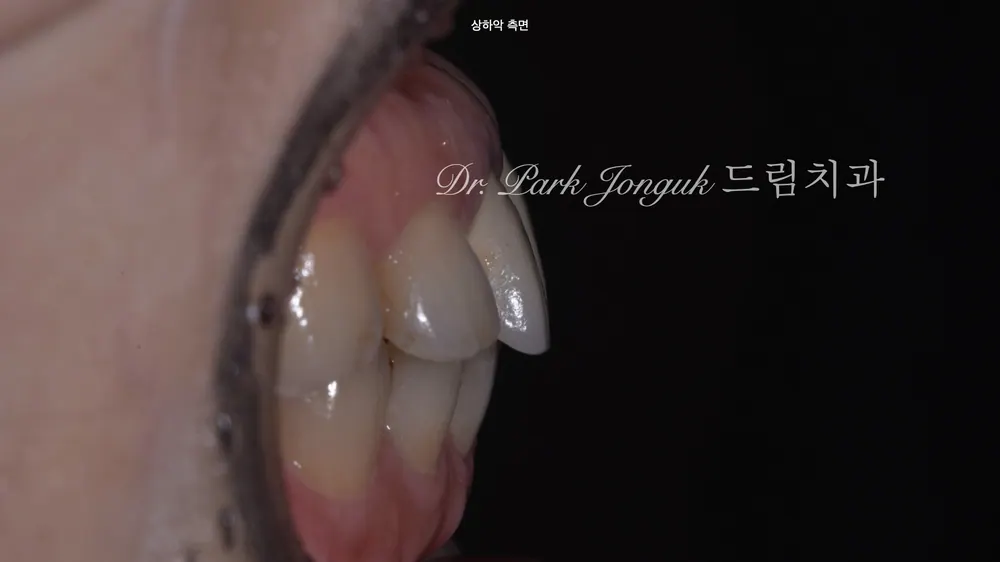
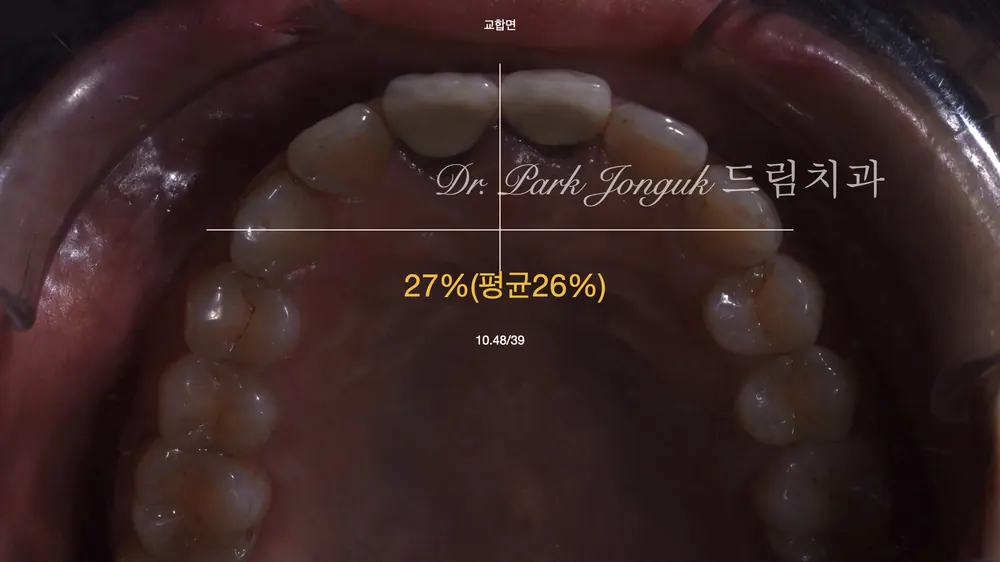
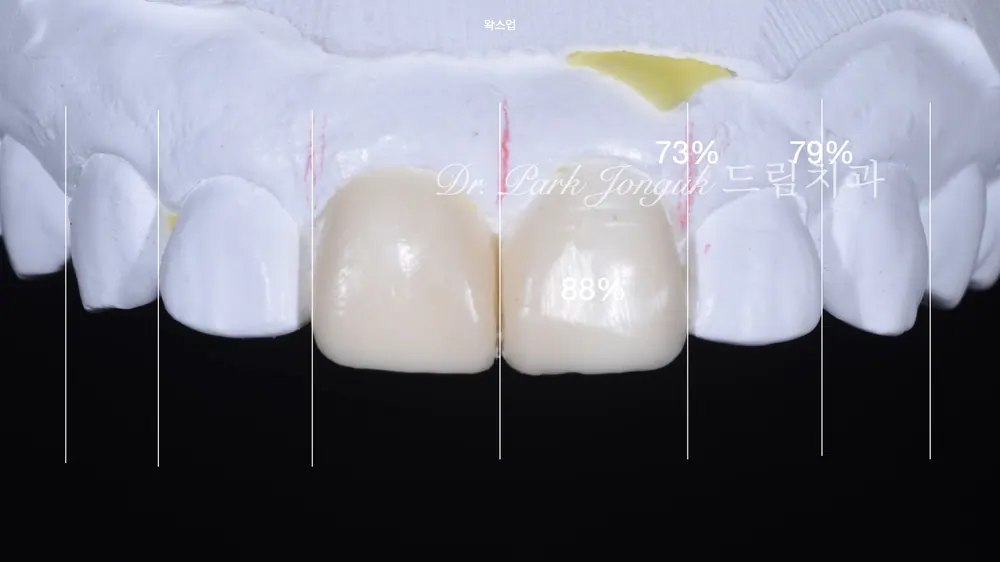
We carry out the usual analysis of the teeth.
Since the goal here is the gum discoloration,
treatment focuses more heavily on that area.
There are two ways to address discoloration.
The first method is to whiten the tooth itself
to reduce the discoloration.
This is somewhat effective in most cases, but it has a few problems.
One is that the tooth color often darkens again over time,
and the other is that the problem above is caused by discoloration at the root,
and whitening barely affects discoloration at the tooth root.
Moreover, if whitening agent is pushed down toward the root to treat the root discoloration,
side effects such as resorption of the tooth root can occur,
so this is a treatment that requires considerable caution.
It also doesn't apply to every case,
and it's impossible if a post has been placed inside the tooth after root canal treatment.
The second method
places ceramic deep down toward the gum
so that the ceramic itself covers the discoloration.
This method is only possible when the gum has a certain amount of thickness.
In other words, the gum tissue needs to be thick enough
that there's no problem even when the ceramic extends further in.
The two methods need to be used appropriately depending on the case.
This case was distinctive in that the discoloration was only at the tooth root,
making it a case where whitening would have no effect.
Rather than forcing whitening on the root discoloration,
we decided to cover it
by redoing the all-ceramic crowns.
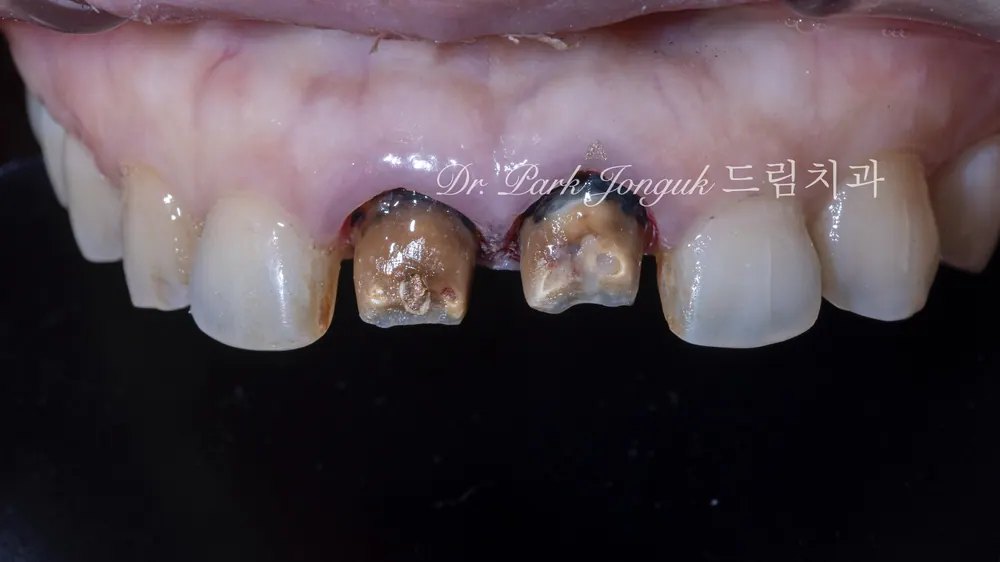
After removing the two all-ceramic crowns,
this was the condition we found.
Since the destruction of the tooth was so extensive,
treatment had to preserve as much of the current state as possible.
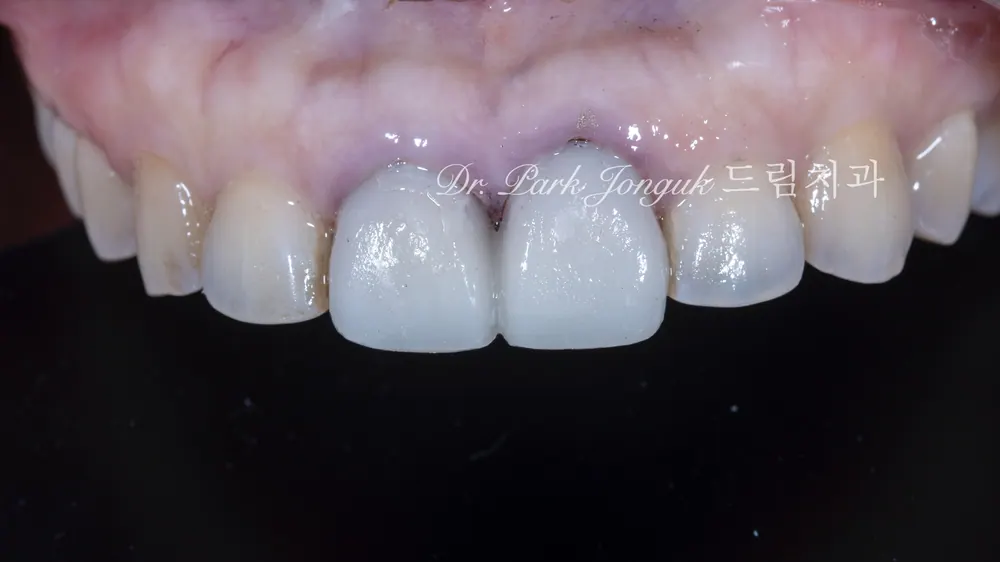
What matters in a case like this
is using a temporary tooth to check how the shape of the gum changes.
By precisely fabricating the temporary tooth
and calmly waiting and observing whether the gum shape adapts well,
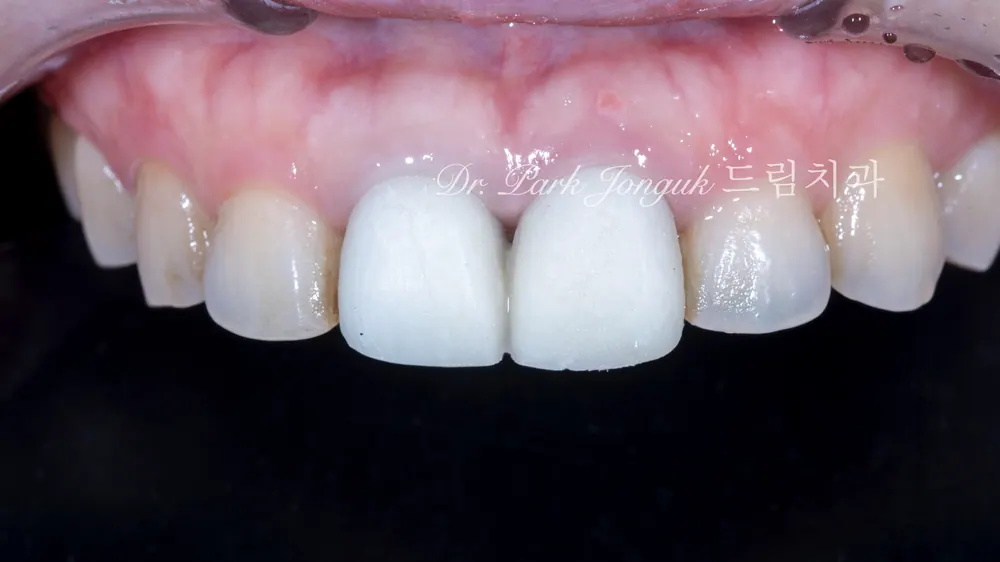
the temporary tooth ends up being made several times.
It's brought as deep toward the gum as possible, though of course there is a limit.
It can only go as far as the gum can physiologically tolerate.
Comparing with the photo above, you can see that as the gum shape changed, much of the discoloration has been covered.
By gradually reshaping the temporary tooth, the gum shape is adjusted to cover the discoloration.
After waiting long enough,
the all-ceramic crown retreatment is finished.
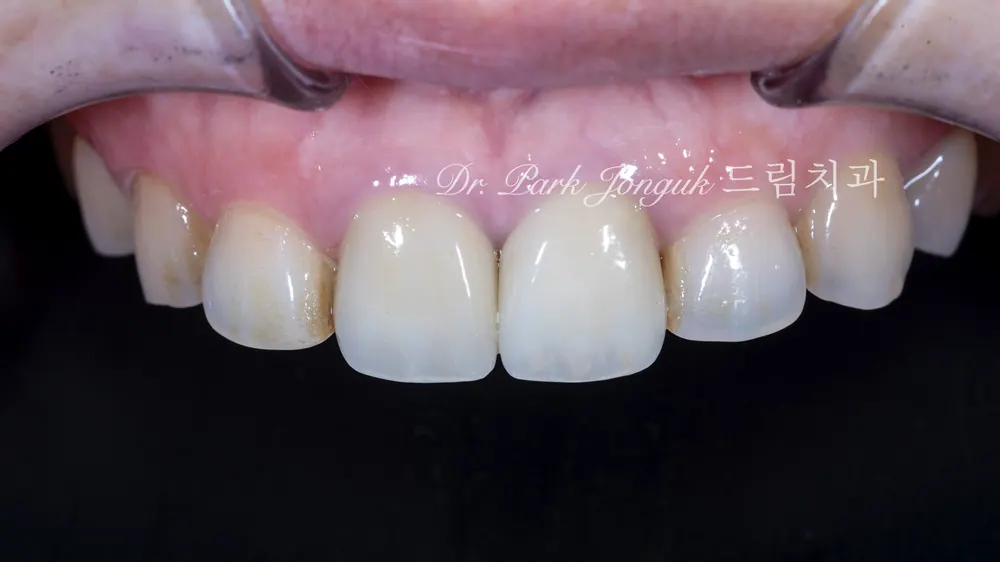
After the all-ceramic crown retreatment, you can see that the gum discoloration is completely covered.
After retreatment like this,
gum care is very important.
Without ongoing care,
there's a high chance that changes in gum shape will make the discoloration visible again.
Natural beauty
Since 2006, Dream Dental Clinic
This article is a clinical note written by Dr. Park Jonguk of Dream Dental Clinic, Gangnam; the original was published on his blog. The photographs shown are real cases he treated. Results vary with each patient’s condition, and every procedure carries the possibility of individual variation and side effects.
Quick Consult
Request a Callback
Leave your number and we will call you back during clinic hours.
Request Received
We will contact you during clinic hours. For urgent matters, please call +82-2-3448-0028.