
All-Ceramic Crown Redo and No-Prep Veneers
Hello, I am Park Jonguk, director of Dream Dental Clinic.
Dental treatment mostly has a lifespan.
This includes cavity treatment;
most treatments involve reducing part of an existing tooth
and filling that area with a different material,
so the material itself has a lifespan,
and the bonding between the material and the tooth also has a lifespan.
These two factors together
determine the lifespan of the dental treatment.
Treatment that beautifully changes the shape of teeth
is divided into two methods: veneers and all-ceramic crowns.
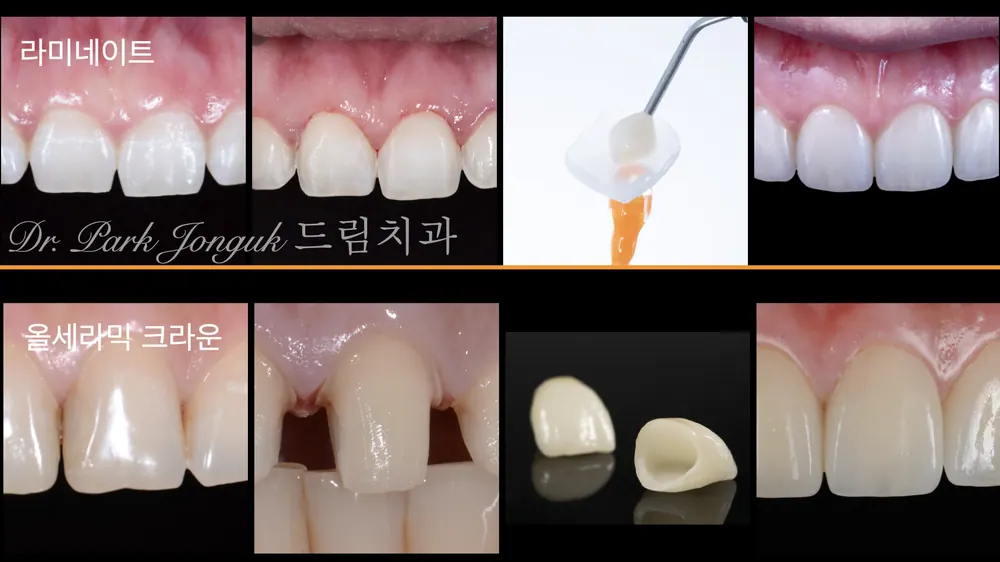
As shown in the photo above, a veneer
reduces only the front surface of the tooth,
and bonds a thin ceramic plate onto the front surface of the tooth,
while an all-ceramic crown reduces the entire tooth
and caps it in ceramic like putting on a hat.
There are materials usable only for veneers,
and materials usable only for all-ceramic crowns.
Of course, there are also materials usable for both methods.
The hardness varies by material,
and the bonding properties to the tooth also differ,
so it can't be said that one method unconditionally has a longer lifespan.
Material differences like this also determine lifespan,
but what has even more influence is how the treatment is maintained.
Once treated,
if you don't get regular checkups at the dental clinic,
the lifespan shortens for various reasons.
For front teeth, when an aesthetic problem develops,
that should also be regarded as the treatment having reached the end of its lifespan,
so maintenance really needs a lot of attention.
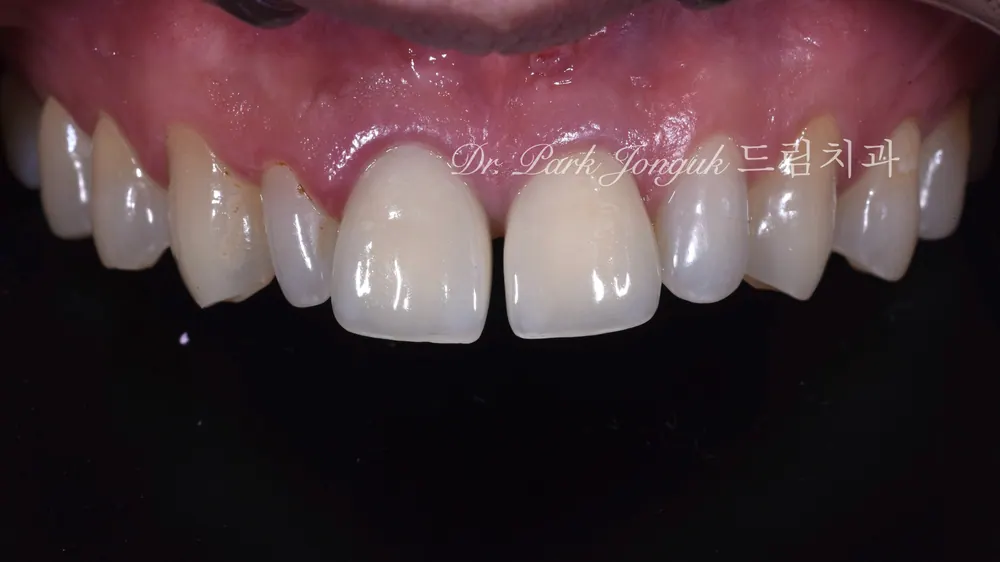
The two front teeth have all-ceramic crown treatment.
The problem is that a gap has opened up widely between the two teeth.
The material hasn't chipped or come off,
but even so, a redo is needed in this situation.
Once the tooth position starts to shift, this is a case where a retainer should have been used right away.
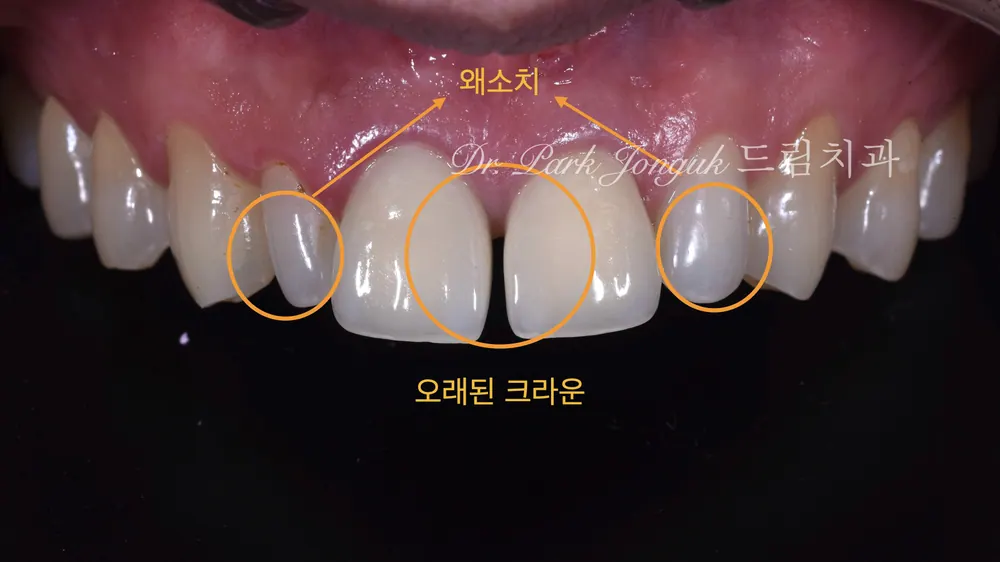
Besides the two front teeth,
we decided to treat the undersized tooth next to them at the same time.
We proceed with the redo of the all-ceramic crowns on the two front teeth
and the no-prep veneer treatment on the undersized tooth simultaneously.
What matters in a case like this is that
the material used for the all-ceramic crown
and the material used for the no-prep veneer are different,
with different thicknesses and different tooth colors,
so matching the tooth color is quite a demanding process.
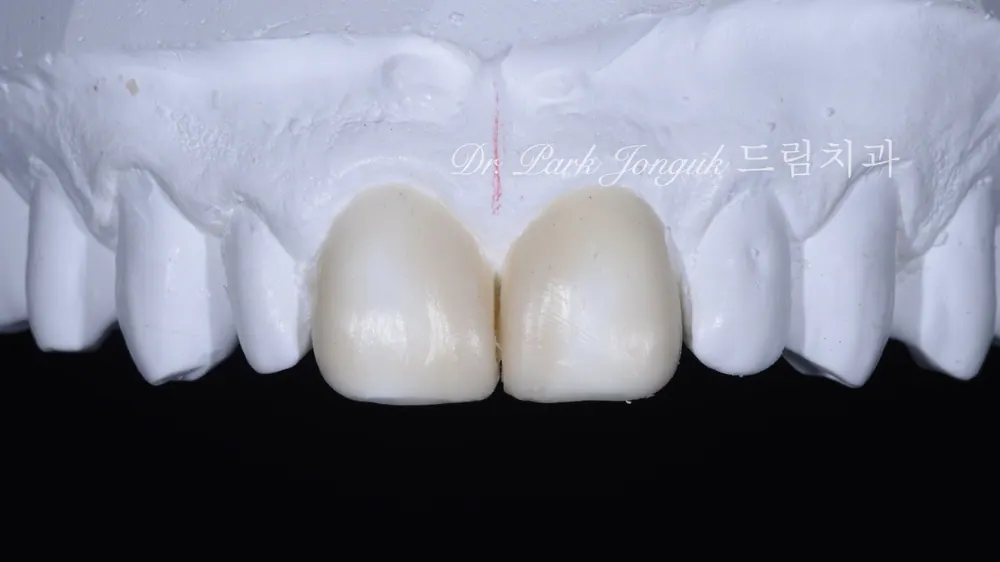
We use wax to check what it would look like if the two crowns were redone.
As the tooth gets too large,
the size difference with the undersized tooth becomes too great.
So we decided to treat four teeth.
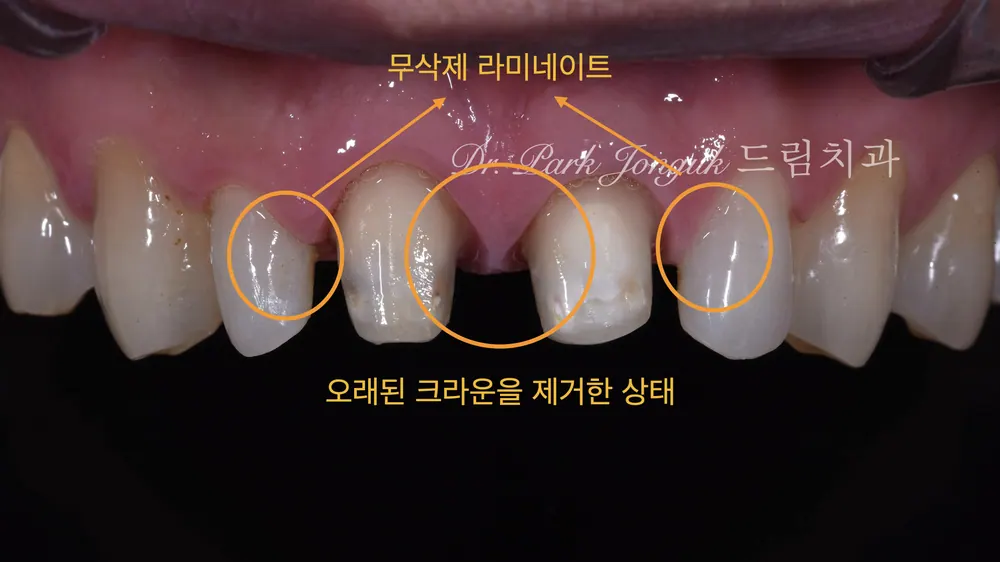
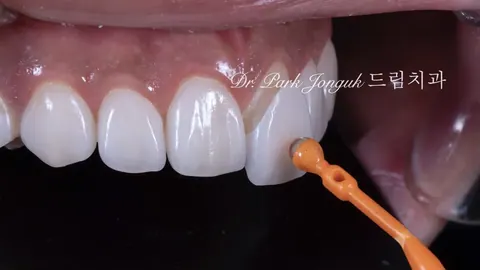
For the undersized tooth, since it can be treated with a veneer
without any reduction,
the burden is also lower.
The less a tooth is reduced, the better a veneer's bonding strength,
so a no-prep veneer has many advantages in various ways.
In particular, because the ceramic in a no-prep veneer is quite thin,
in many cases it can't express a variety of shades,
and often ends up as a single opaque color.
Being able to achieve a variety of expression in such a thin ceramic
should be seen as the culmination of long experience and know-how.
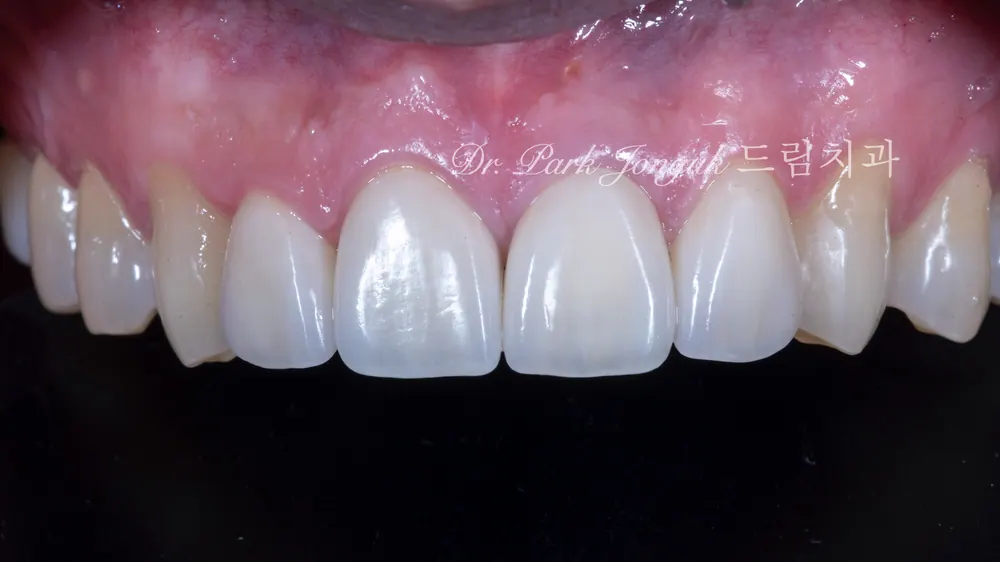
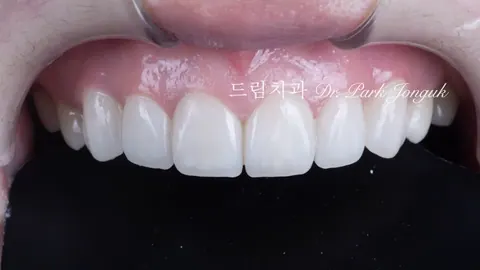
The redo of the all-ceramic crowns
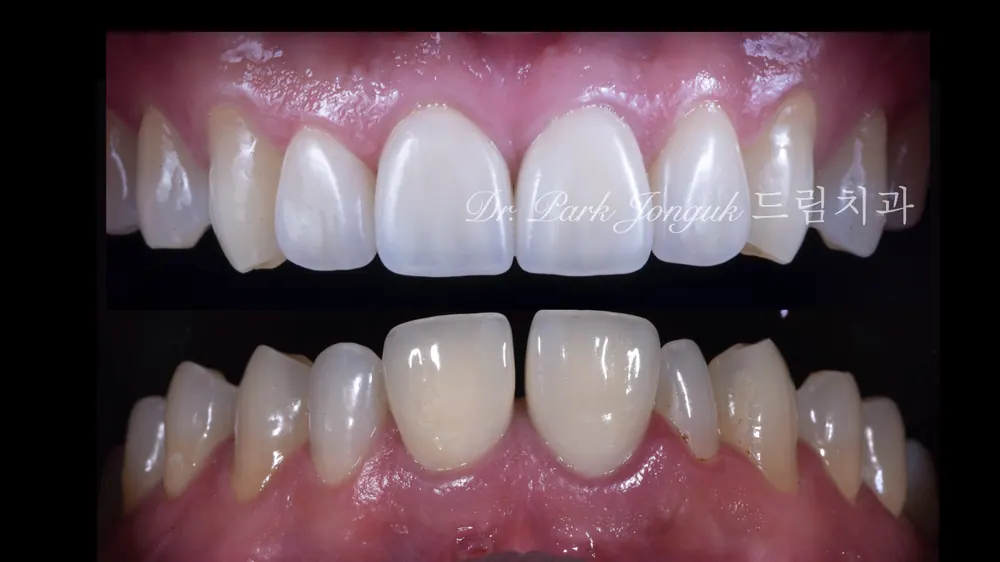
and the no-prep veneer treatment has been completed.
As mentioned earlier,
matching the color and translucency of the two materials is very important.
Tooth color isn't a single shade — it varies considerably from part to part of the tooth.
While expressing this kind of varied color,
we also brought out the translucent feel at the tooth edge.
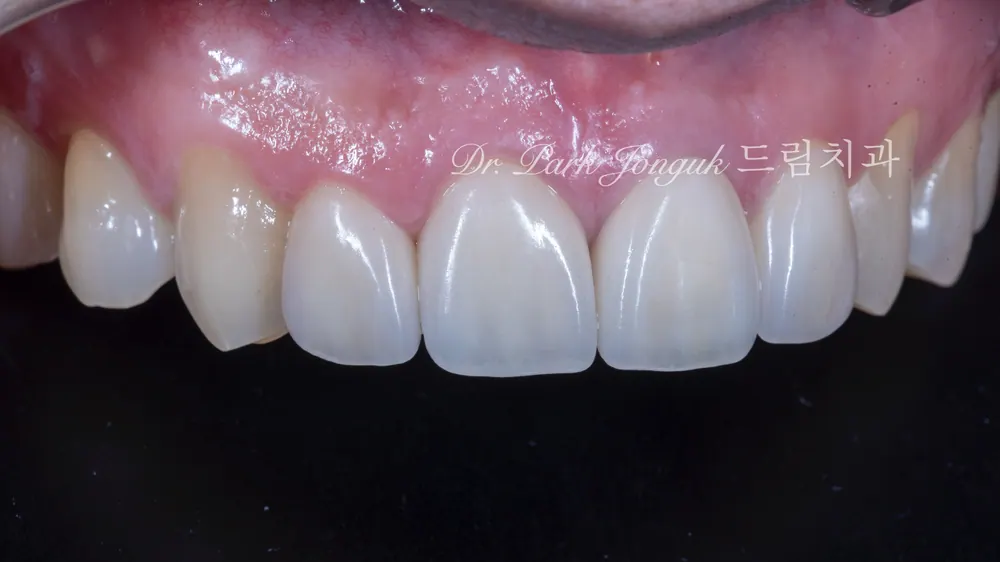
In many cases, the canine is the most yellow tooth.
If we treat four front teeth and match them to the canine color,
the teeth end up looking far too yellow overall.
It's more natural to make them a bit brighter than the canine.
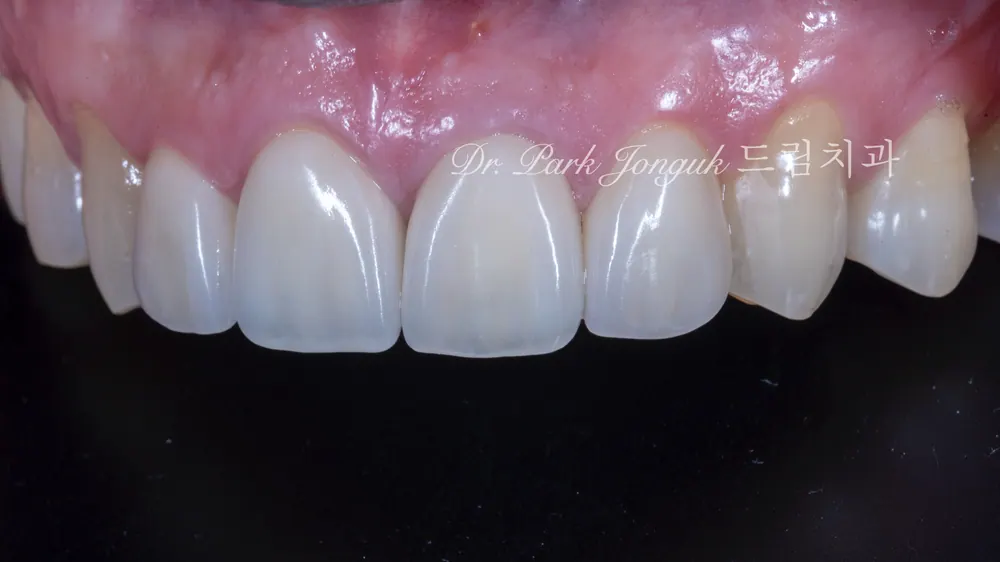
With good, natural adaptation to the gums as well,
the redo was completed with a good result.
Natural beauty —
Since 2006, Dream Dental Clinic
This article is a clinical note written by Dr. Park Jonguk of Dream Dental Clinic, Gangnam; the original was published on his blog. The photographs shown are real cases he treated. Results vary with each patient’s condition, and every procedure carries the possibility of individual variation and side effects.
Quick Consult
Request a Callback
Leave your number and we will call you back during clinic hours.
Request Received
We will contact you during clinic hours. For urgent matters, please call +82-2-3448-0028.